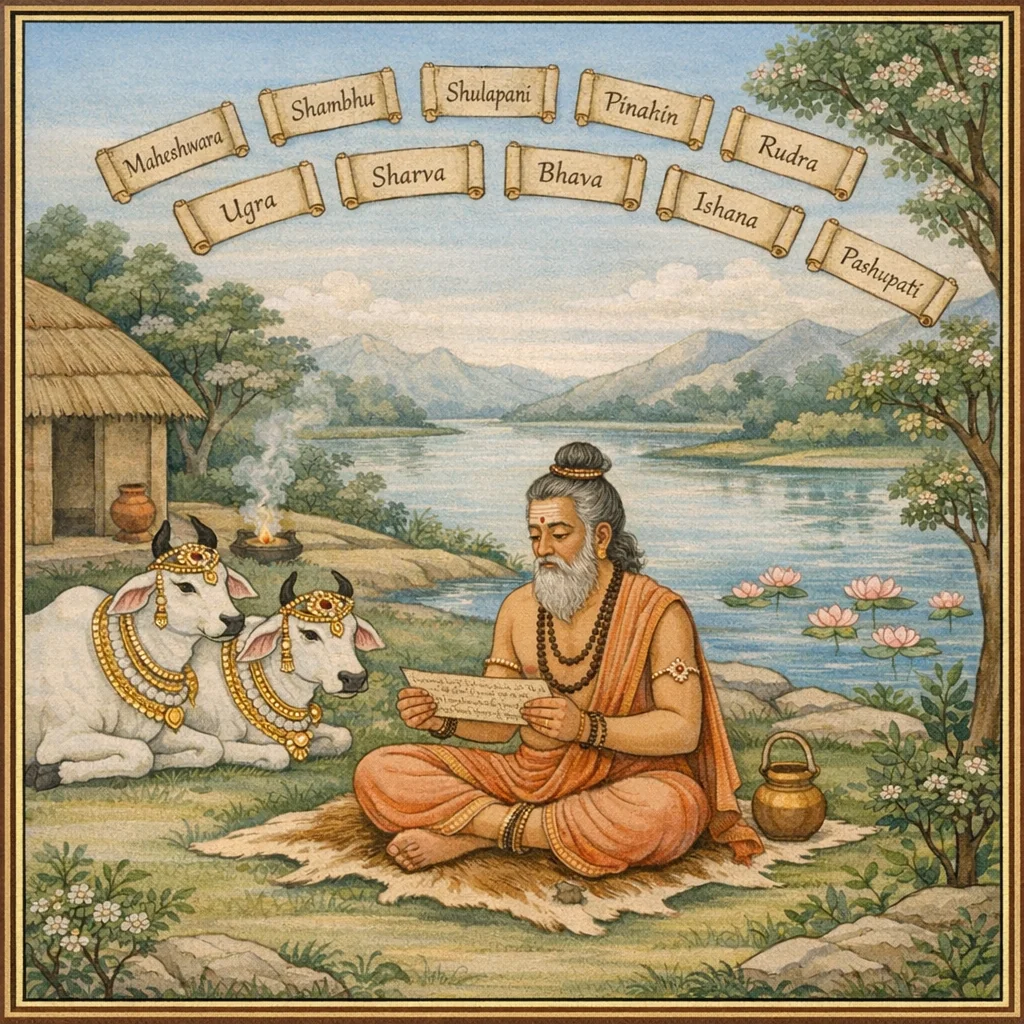
Adhyaya 277
This chapter unfolds as a theological dialogue in question and response. The sages ask the narrator to identify the eleven Brahmin-associated designations at Vārāṇasī, described as an elevenfold grouping connected with Rudra. The narrator lists the names—Mṛgavyādha, Sarvajña, Nindita, Mahāyaśas, Ajāikapād, Ahirbudhnya, Pinākī, Paraṃtapa, Dahana, Īśvara, and Kapālī—declaring them to be Rudra-forms ordained by Hari. The sages then seek instruction on proper gifts (dāna) and the previously mentioned japa. The narrator prescribes an ordered dāna: “visible, actual” cows (pratyakṣā dhenu) are to be given in sequence, each linked with offerings of specific kinds—such as jaggery, butter, ghee, gold, salt, rasa/sweet essence, food, and water. The chapter ends with a clear phalāśruti: one who makes these gifts becomes a cakravartin (universal ruler), and gifts offered near the sacred Presence bear heightened fruit; if one cannot give all, one should at least strive to offer a single cow, intending it as an offering to all the Rudras.
Shlokas
Verse 1
ऋषय ऊचुः । कि नामानो द्विजास्ते च वाराणस्याः समागताः । एकादशप्रकारोऽसौ येषां रुद्रः प्रभक्तितः । तत्संज्ञाश्च समाचक्ष्व विस्तरेण महामुने
The sages said: “What are the names of those twice-born who have assembled at Vārāṇasī—those who are connected with Rudra in an elevenfold manner? O great sage, declare their designations to us in detail.”
Verse 2
सूत उवाच । एकस्तेषां मृगव्याधो विख्यातो भुवनत्रये । द्वितीयः सर्वसंज्ञश्च निंदितश्च तृतीयकः
Sūta said: “Among them, one is Mṛgavyādha, renowned in the three worlds. The second is called Sarvasaṃjña, and the third is known as Nindita.”
Verse 3
महायशाश्चतुर्थस्तु कथ्यते मुनिसत्तमाः । अजैकपाद इत्युक्तः पंचमो मुनि सत्तमाः
“O best of sages, the fourth is said to be Mahāyaśas. The fifth, O foremost sage, is called Ajaikapāda.”
Verse 4
अहिर्बुध्न्यस्तथा षष्ठः पिनाकी सप्तमस्तथा । परं तपस्तथान्यस्तु दहनो नवमस्तथा
“The sixth is Ahirbudhnya; the seventh is Pinākī. Another is called Paraṃtapas, and the ninth is Dahana.”
Verse 5
ईश्वरो दशमः प्रोक्तः कपाली चांति मस्तथा । तेषामेतानि नामानि स्थितान्येव हि यानि च । रुद्राणामपि तान्येव विहितानि हरेण तु
“Īśvara is declared the tenth, and likewise Kapālī is the last. These are indeed their established names; and those very names of the Rudras were ordained by Hari.”
Verse 6
ऋषय ऊचुः । कानि दानानि शस्यानि तदर्थं वद नो द्रुतम् । जपश्चैव पुरा प्रोक्तस्त्वया कार्यो यथैव च
The sages said: “Tell us quickly what gifts (dānas) are most commendable for that purpose. And as you previously taught, what japa should be performed, and in what manner?”
Verse 7
सूत उवाच । तदुद्दिश्य प्रदातव्यमेकैकस्य पृथक्पृथक् । प्रत्यक्षाश्च महाभाग दातव्या धेनवः क्रमात्
Sūta said: “Keeping them in mind, one should offer gifts to each, separately, one by one. And, O noble one, tangible, real cows are to be bestowed in proper sequence.”
Verse 8
मृगव्याधाय प्रत्यक्षा गौर्देया च गुडोद्भवा । कपालिने प्रदातव्या नवनीतसमुद्भवा
“To Mṛgavyādha one should give an actual cow associated with jaggery (guḍa). To Kapālī one should offer a cow associated with fresh butter (navanīta).”
Verse 9
अजपादाय चाज्योत्था अहिर्बुध्न्याय हेमजा । पिनाकिने प्रदातव्या धेनुर्लवणसम्भवा
A cow born of ghee (ājya) is to be gifted to Ajapāda; a cow born of gold to Ahirbudhnya; and a cow born of salt is to be offered to Pinākin (Śiva, bearer of the bow Pināka).
Verse 10
परंतपाय विप्रेन्द्रास्तथैव रसस म्भवा । अन्नजा दहनायोक्ता ईश्वराय जलोद्भवा
O best of brāhmaṇas, likewise a cow born of sweet essence (rasa) is to be given to Parantapa; a cow born of food-grain is prescribed for Dahana; and a cow born of water is to be offered to Īśvara.
Verse 11
एता ददाति यो विप्रा एतेषां च महात्मनाम् । चक्रवर्ती भवेन्नूनमेतदाह पितामहः
O brāhmaṇas, whoever gives these prescribed gifts to these great ones surely becomes a universal sovereign (cakravartin); thus has Pitāmaha (Brahmā) declared.
Verse 12
अन्यत्रापि प्रदत्ताश्च किं पुनर्भवसंनिधौ । तस्मात्सर्वप्रयत्नेन एता देयाः प्रयत्नतः
Even when offered elsewhere, these gifts bear fruit—how much more in the very presence of Bhava (Śiva). Therefore, with every effort, one should give these offerings with diligent care.
Verse 13
धेनवो यो न शक्तः स्यादेका देया प्रयत्नतः । सर्वेषामेव रुद्राणां भर्तृयज्ञवचो यथा
If one is not able to give many cows, then with earnest effort one cow should be given—for it is received as belonging to all the Rudras, in accordance with the statement of Bhartṛyajña.
Verse 277
इति श्रीस्कान्दे महापुराण एकाशीतिसाहस्र्यां संहितायां षष्ठे नागरखण्डे हाटकेश्वरक्षेत्रमाहात्म्ये एकादशरुद्रसमीपे दानमाहात्म्यवर्णनं नाम सप्तसप्तत्युत्तरद्विशततमोऽध्यायः
Thus ends the two-hundred-and-seventy-seventh chapter, titled “The Description of the Glory of Charity near the Eleven Rudras,” in the Hāṭakeśvara-kṣetra-māhātmya of the sixth book, the Nāgara-khaṇḍa, within the Śrī Skanda Mahāpurāṇa, the compilation of eighty-one thousand verses.