Adhyaya 275
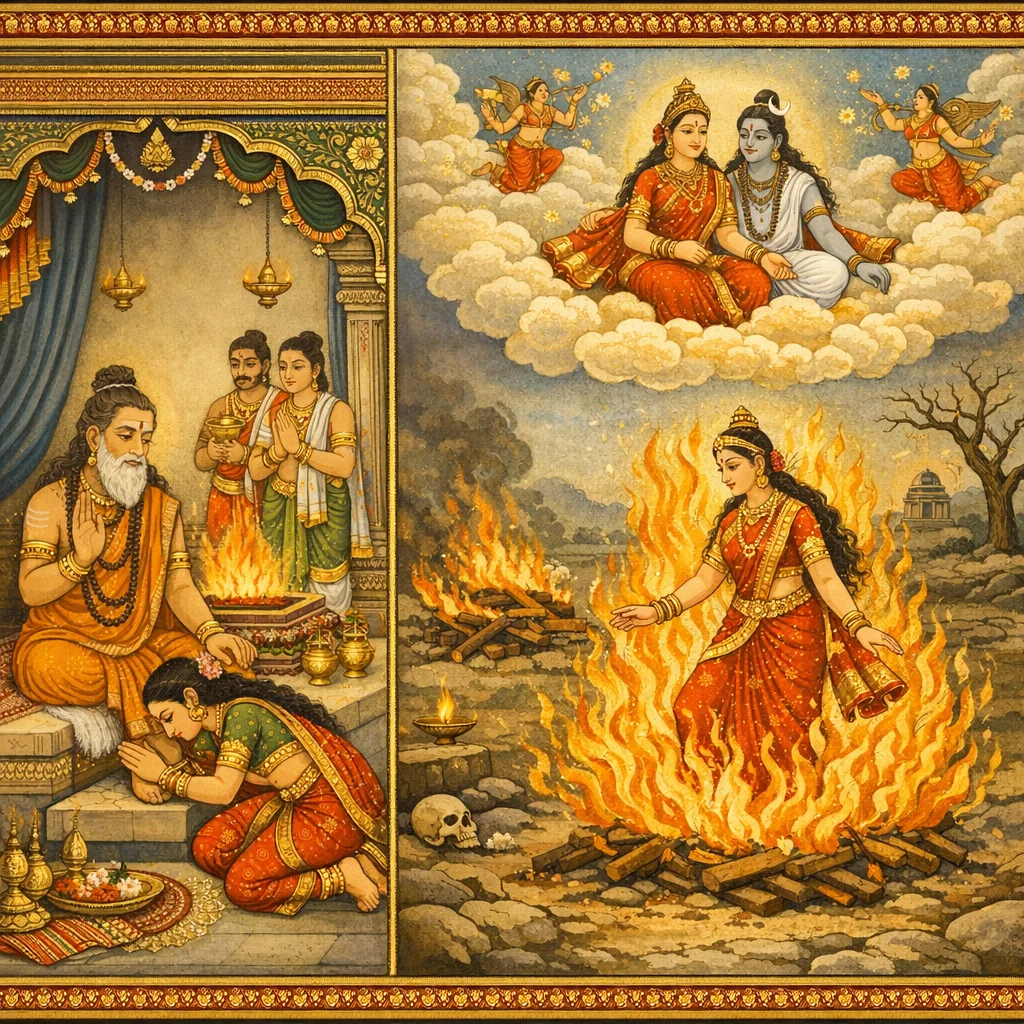
Sūta relates an origin tale: a man named Duḥśīla, though flawed in conduct, establishes a Śiva shrine in his guru’s name. The temple becomes known as Nimbēśvara and is described as lying toward the southern direction. Remembering the guru’s feet with intense bhakti, he performs the founding rite in devotion. His wife, remembered as Śākambharī, installs an image of Durgā bearing her own name, creating a paired Śiva–Goddess sacred complex. The couple sets aside their remaining wealth for pūjā and offers it to the deities and to Brahmins, then lives by alms. In time Duḥśīla dies; Śākambharī, steadfast in mind, enters the funeral fire holding his body (presented as a theological exemplar of wifely fidelity, not a legal injunction). Both are depicted ascending to heaven in a celestial vehicle attended by excellent apsarases. The concluding phalaśruti declares that one who reads this “excellent” account is freed from sins committed through ignorance, emphasizing transformative devotion, gifting, and affiliation with a holy site.
Shlokas
Verse 1
सूत उवाच । दुःशीलोऽपि च तत्कृत्वा गुरोर्नाम्ना शिवालयम् । निम्बेश्वर इति ख्यातं दक्षिणां दिशमाश्रितम्
Sūta said: “Duḥśīla too, having done that, established a Śiva-temple in his guru’s name—renowned as Nimbēśvara—situated toward the southern direction.”
Verse 2
चकार परया भक्त्या तत्पादाब्जमनुस्मरन् । तथा तस्य तु भार्या या नाम्ना शाकंभरी स्मृता
With supreme devotion, remembering the Lord’s lotus-feet, he carried out the prescribed act. And his wife, known by the name Śākaṃbharī, did likewise.
Verse 3
स्वनामांका तत्र दुर्गा तथा संस्थापिता तया । ततस्तु तद्धनं ताभ्यां किचिच्छेषं व्यवस्थितम्
There she installed Durgā, bearing her own name. Thereafter, of their wealth, the two of them kept back only a small remainder.
Verse 4
पूजार्थं देवताभ्यां च ब्राह्मणेभ्यः समर्पितम् । भिक्षाभुजौ ततो जातौ दम्पती तौ ततः परम्
For the sake of worship, that wealth was offered to the deities and also bestowed upon the Brāhmaṇas. Thereafter, that couple lived on alms from that time onward.
Verse 5
कस्यचित्त्वथ कालस्य दुःशीलो निधनं गतः
After some time, the man of ill conduct met his death.
Verse 6
शाकंभर्यपि तत्कायं गृहीत्वा हव्यवाहनम् । प्रविष्टा नृपशार्दूल निर्विकल्पेन चेतसा
Śākaṃbharī too, taking up his body, entered the sacrificial fire (Havyavāhana)—O tiger among kings—with a mind free of wavering.
Verse 7
ततो विमानमारुह्य वराप्सरःसुसेवितम् । गतौ तौ द्वावपि स्वर्गं संप्रहृष्टतनूरुहौ
Then, mounting a celestial chariot attended by excellent Apsarases, the two of them went to heaven, their bodies thrilled with joy.
Verse 8
एतं दुःशीलजं यस्तु पठेदाख्यानमुत्तमम् । स सर्वैर्मुच्यते पापैरज्ञानविहितैर्नृप
But whoever recites this excellent account born of the story of the ill-conducted man—O king—is freed from all sins committed through ignorance.
Verse 275
इति श्रीस्कान्दे महापुराण एकाशीतिसाहस्र्यां संहितायां षष्ठे नागरखण्डे हाटकेश्वरक्षेत्रमाहात्म्ये निम्बेश्वरशाकंभर्युत्पत्तिमाहात्म्यवर्णनं नाम पञ्चसप्तत्युत्तरद्विशततमोद्भयायः
Thus ends, in the glorious Skanda Mahāpurāṇa—within the Ekāśītisāhasrī Saṃhitā, in the sixth Nāgara-khaṇḍa, in the Māhātmya of the sacred Hāṭakeśvara region—the chapter entitled “The Glorification describing the origin of Nimbēśvara and Śākaṃbharī,” being Chapter 275.