Adhyaya 273
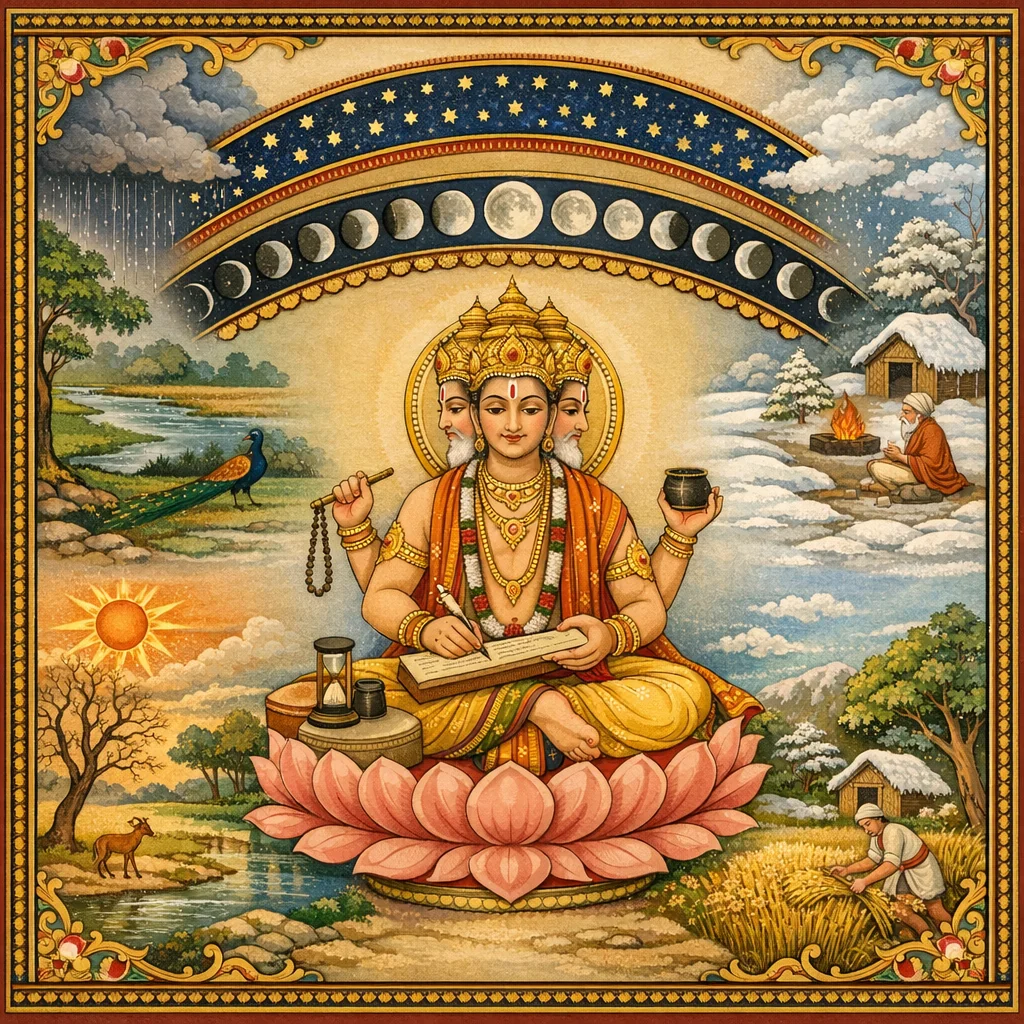
In this chapter, Sūta delivers a technical theological account of pramāṇa—cosmic and calendrical measures of time—connected with yugas, manvantaras, and the divine office of Śakra (Indra). He lists the successive Śakras and identifies the present Śakra as “Jāyanta,” with the current Manu named Vaivasvata. He then foreshadows a future Śakra, Bali, whose appointment is tied to Vāsudeva’s favor (Vāsudeva-prasāda) and an earlier promise of rulership in a later manvantara. The discourse turns to timekeeping: Brahmā’s time-accounting is outlined, and four practical measures are taught—solar (saura), civil/day-count (sāvana), lunar (cāndra), and stellar/nakṣatra-based (nākṣatra/ārkṣa). Seasons, agriculture, and great yajñas align with the solar measure; social dealings and auspicious timings with sāvana; the lunar measure requires an intercalary month (adhimāsa); and planetary computations depend on nakṣatra reckoning. The chapter ends with a phalaśruti, declaring that devout recitation of these yuga and time measures grants protection, including freedom from fear of untimely death.
Shlokas
Verse 1
सूत उवाच । एतेषां तु सहस्रेण भवेद्ग्राह्यं दिनं द्विजाः । चतुर्दश सहस्राक्षा जायंते तत्र वासरे
Sūta said: O twice-born ones, by a thousand of these, a single day is to be reckoned; and on that day, fourteen thousand Akṣas come into being.
Verse 2
सप्तमस्तु सहस्राक्षः सांप्रतं वर्ततेऽत्र यः । एकसप्ततिसंवर्तचतुर्दशदिने विधेः
Here, in the present cycle, the seventh Indra—Sahasrākṣa, the Thousand-eyed—presides. O Brahmā, his period is reckoned as fourteen days within a single saṃvarta, whose measure is counted as seventy-one.
Verse 3
युगानां कुरुते राज्यं मनवश्च तथा परे । स्वायंभुवप्रभृतयो यथा शक्रास्तथा स्थिताः
Across the ages, the Manus likewise exercise sovereignty, and so do the others. Beginning with Svāyambhuva, they stand established—just as the Indras (Śakras) are established in their respective turns.
Verse 4
जायन्तो नाम शक्रोऽयं सांप्रतं वर्तते तु यः । वैवस्वतो मनुश्चैव अष्टाविंशत्प्रमाणकः
The Indra who now presides is named Jāyanta. And Vaivasvata Manu too is in office—his measure being counted as the twenty-eighth in the stated reckoning.
Verse 5
चतुर्युगस्य संजातो गतेस्मिञ्छेषमात्रके । भविष्यति बलिः शक्रो वासुदेवप्रसादतः
When this remaining portion of the caturyuga has passed, Bali will become Indra (Śakra), by the grace of Vāsudeva.
Verse 6
तेन तस्य प्रतिज्ञातं राज्यं चैवाष्टमे मनौ
Therefore, for him (Bali) sovereignty was promised—indeed, in the eighth Manvantara.
Verse 7
एवं सर्वे सुराश्चान्ये त्रयस्त्रिंशत्प्रमाणतः । कोटयः प्रभविष्यंति यथा चैव तथा पुरा
Thus, all the other gods as well—numbered according to the Thirty-three—will come forth in countless crores, just as it was in former times.
Verse 8
योऽयं ब्रह्मा स्थितो विप्राः सांप्रतं सृष्टिकारकः । तस्यानेन प्रमाणेन जातं संवत्सराष्टकम्
O brāhmaṇas, this Brahmā who now stands as the maker of creation—by this very measure of reckoning, eight years have elapsed for him.
Verse 9
षण्मासाश्च दिनार्धं च प्रथमं शुक्लपूर्वकम् । सौरसावनचंद्रार्क्षैर्मानैरेभिश्चतुर्विधैः
Six months and half a day—beginning first with the bright fortnight—are computed by these four kinds of measures: solar, civil (sāvana), lunar, and stellar (nākṣatra).
Verse 10
कलौ निर्याति सर्वेषां भूतानां क्षितिमण्डले । पंचषष्ट्याऽधिकैश्चैव दिनानां च शतैस्त्रिभिः । भवेत्संवत्सरं सौरं पञ्चोनैस्तैश्च सावनम्
In the Kali age, for all beings upon the circle of the earth, a solar year is three hundred days plus sixty-five; and five days fewer than that is the sāvana (civil, day-counted) year.
Verse 11
चांद्र एकादशोनस्तु त्रिंशद्धीन उडूद्भवः । शीतातपौ तथा वृष्टिः सौरमानेन जायते
The lunar year is shorter by eleven days, while the stellar (nakṣatra) year is shorter by thirty. Cold and heat, and likewise rainfall, arise according to the solar measure.
Verse 12
वृक्षाणां फलनिष्पत्तिः सस्यानां च तथा परा । अग्निष्टोमादयो यज्ञा वर्तंते ये धरातले
Upon the earth’s surface, the fruits of trees come to ripeness, and crops likewise reach full maturity; and sacrifices such as the Agniṣṭoma and other yajñas also proceed here in the world.
Verse 13
उत्साहाश्च विवाहाश्च सावनेन भवंति च । कुसीदाद्याश्च ये केचिद्व्यवहाराश्च वृत्तिजाः
Festive undertakings and marriages, too, are arranged according to the sāvana (day-based) reckoning; and so are various transactions—such as interest-bearing loans and other dealings tied to one’s livelihood.
Verse 14
अधिमासप्रयुक्तेन ते स्युश्चांद्रेण निर्मिताः । नाक्षत्रेण तु मानेन सिध्यंते ग्रहचारिकाः
These are established by the lunar (cāndra) system when the intercalary month (adhimāsa) is applied; but by the nakṣatra-based measure, the motions of the planets are properly determined.
Verse 15
नान्यत्किंचिद्धरापृष्ठ एतन्मानचतुष्टयात् । एतेन तु प्रमाणेन देवदैत्याश्च मानवाः
O listener, upon the earth’s surface there is nothing apart from this fourfold standard of measurement; by this very rule of reckoning, gods, asuras, and human beings order their affairs.
Verse 16
वर्त्तंते ब्राह्मणश्रेष्ठाः श्रुतिरेषा पुरातनी । एतद्युगप्रमाणं तु यः पठेद्भक्तिसंयुतः
Thus it stands, O best of Brāhmaṇas—this is an ancient sacred tradition. Whoever recites this account of the measures of the yugas with devotion gains its merit.
Verse 17
एतेषामेव लिंगानां सप्तानां ब्राह्मणोत्तमाः । नापमृत्यु भयं तस्य कथंचित्संभविष्यति
O excellent Brāhmaṇas, for one who is grounded in these very seven indicators, the fear of untimely death will never arise in any way.
Verse 273
इति श्रीस्कांदे महापुराण एकाशीतिसाहस्र्यां संहितायां षष्ठे नागरखण्डे हाटकेश्वरक्षेत्रमाहात्म्ये युगप्रमाणवर्णनंनाम त्रिसप्तत्युत्तरद्विशततमोऽध्यायः
Thus ends the chapter called “Description of the Measures of the Yugas,” being the two-hundred-and-seventy-third chapter in the Hāṭakeśvara-kṣetra-māhātmya of the sixth, Nāgara Khaṇḍa, within the Śrī Skanda Mahāpurāṇa (in the eighty-one-thousand-verse compilation).