Adhyaya 266
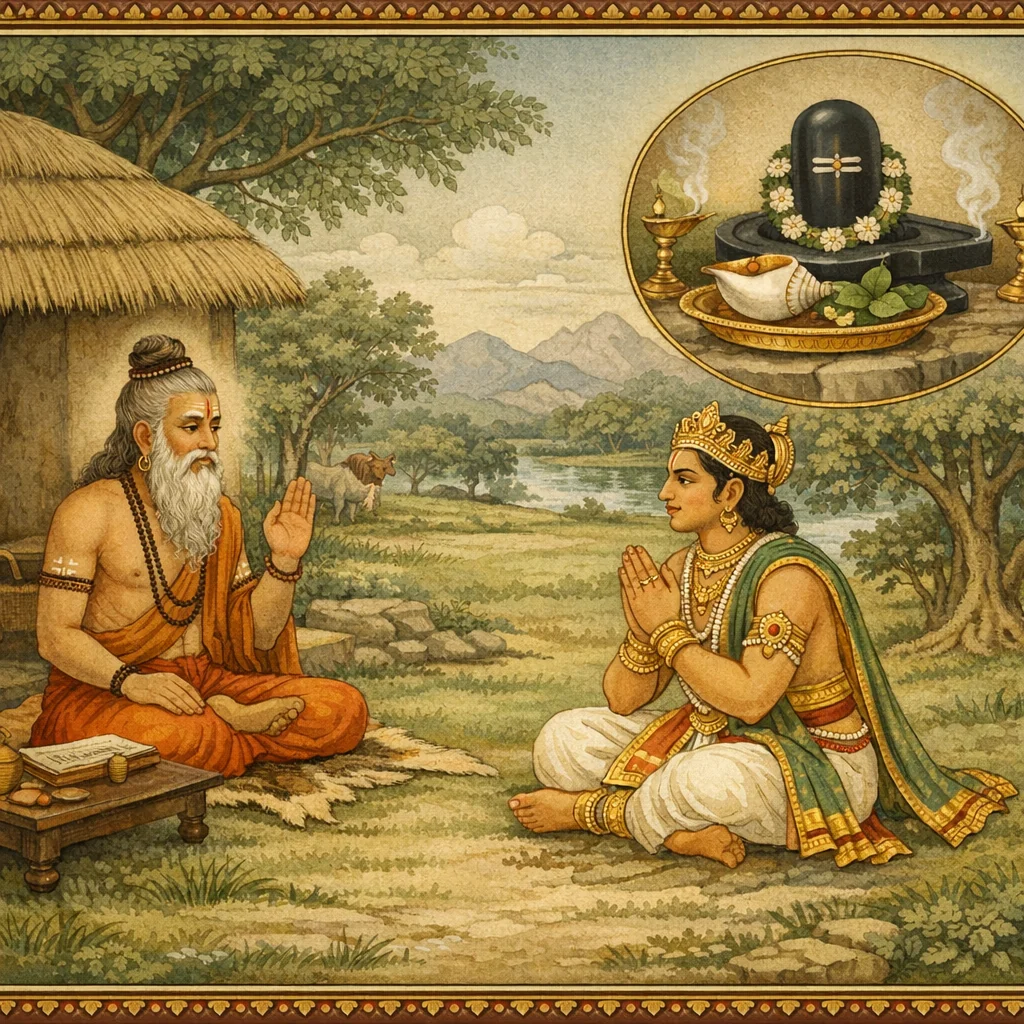
Chapter 266 begins with the sages asking Sūta to list the chief tīrthas and renowned liṅgas whose mere darśana grants complete merit. Sūta names principal liṅgas—among them Maṅkaṇeśvara and Siddheśvara—and then dwells on the special fruit of Maṅkaṇeśvara, especially when approached through the Śivarātri observance. Śivarātri is defined as the caturdaśī night of the dark fortnight in the month of Māgha; on that night Śiva is understood to enter and pervade all liṅgas, with particular fame at Maṅkaṇeśvara. A narrative frame follows: King Aśvasena asks the sage Bhartṛyajña for a low-effort, high-merit vow suited to Kali-yuga, and the sage commends Śivarātri—one night of vigil that makes gifts, offerings, and recitations “imperishable.” A divine rationale is added: the gods request a single day-and-night practice for human purification; Śiva agrees to descend on that calendrical night and gives a concise pañcavaktra-style mantra sequence and a worship protocol (offerings, arghya, honoring a brāhmaṇa, devotional storytelling, music and dance). A moral exemplar then shows the vow’s potency: a thief inadvertently keeps awake in a tree near a liṅga and drops leaves; despite impure intent he gains ritual benefit, attains a better rebirth, and later builds a shrine. The chapter closes by praising Śivarātri as supreme tapas and purifier, and by stating the phala of recitation.
Shlokas
Verse 1
ऋषय ऊचुः । श्रुतानि मुख्यतीर्थानि तत्क्षेत्रप्रोद्भवानि च । येषु स्नातो नरः स्म्यक्सर्व तीर्थफलं लभेत्
The sages said: We have heard of the chief tīrthas, the sacred bathing-places that arise within that holy region; by bathing there properly, a man gains the merit of all tīrthas.
Verse 2
लिंगानि च महाभाग तत्र मुख्यानि यानि च । यैर्दृष्टैर्लभ्यते श्रेयः सर्वेषां तानि नो वद
And, O greatly fortunate one, tell us also of the principal liṅgas found there—by whose darśana (sacred sight) all people obtain the highest good.
Verse 3
सूत उवाच । तत्र च मंकणाख्यं तु लिंगमस्ति सुशोभनम् । तथा सिद्धेश्वरं नाम गौतमेश्वरसंयुतम्
Sūta said: “There, a beautifully resplendent Liṅga known as Maṃkaṇa is present. There is also a Liṅga named Siddheśvara, associated with Gautameśvara.”
Verse 4
कपालेश्वमन्यच्च चतुर्थं परिकीर्तितम् । एकैकं सर्वलिंगानां फलं यच्छत्यसंशयम् । यथोक्तविधिना सम्यग्यथोक्तं द्विजसत्तमाः
“And another Liṅga, Kapāleśvara, is proclaimed as the fourth. Each of these Liṅgas bestows, without doubt, the fruit of all Liṅgas when duly worshipped according to the stated procedure, O best among the twice-born.”
Verse 5
तत्र तावत्प्रवक्ष्यामि मंकणेश्वरजं फलम् । मकाराक्षरयुक्तस्य लिंगस्यात्र द्विजोत्तमाः
“Now, in that very place, I shall declare the fruit arising from Maṃkaṇeśvara—the Liṅga here that is associated with the syllable ‘ma’, O best of the twice-born.”
Verse 6
शिवरात्रिं समासाद्य यस्तस्य पुरुषो द्विजाः । कुर्याज्जागरणं रात्रौ निराहारः स्थितः शुचिः
O twice-born ones, when Śivarātri arrives, whoever is His devotee and keeps vigil through the night—fasting, steadfast, and pure—attains the promised merit.
Verse 7
सर्वलिंगोद्भवं चैव फलं दर्शनसंभवम् । जायते नात्र संदेह इत्युवाच हरः स्वयम्
The fruit born of sacred vision (darśana) is indeed the fruit born of all Liṅgas; of this there is no doubt—so declared Hara (Śiva) Himself.
Verse 8
ऋषय ऊचुः । शिवरात्रिर्महाभाग कस्मिन्काले तु सा भवेत् । विध्यानं चैव माहात्म्यं सर्वं नो विस्तराद्वद
The sages said: “O greatly fortunate one, at what time does Śivarātri occur? And tell us in detail its proper observance and its greatness—everything.”
Verse 9
सूत उवाच माघस्य कृष्णपक्षे या तिथिश्चैव चतुर्दशी । तस्या रात्रिः समाख्याता शिवरात्रिसमुद्भवा
Sūta said: “In Māgha’s dark fortnight (kṛṣṇa-pakṣa), the fourteenth lunar day (caturdaśī)—its night is declared to be Śivarātri, the night known as Śivarātri.”
Verse 10
तस्यां सर्वेषु लिंगेषु सदा संक्रमते हरः । विशेषात्सर्वपुण्येषु ख्यातेयं मंकणेश्वरे
On that night (Śivarātri), Hara (Śiva) continually enters into all Liṅgas. Yet among all holy and meritorious places, this observance is especially renowned at Maṃkaṇeśvara.
Verse 11
ऋषय ऊचुः । शिवरात्रिः कथं जाता केनैषा च विनिर्मिता । कस्माद्बहुफला जाता सर्वं नो विस्तराद्वद
The sages said: “How did Śivarātri arise, and by whom was it established? For what reason did it become so abundantly fruitful? Tell us everything in full detail.”
Verse 12
सूत उवाच । अत्र वः कीर्तयिष्यामि पूर्ववृत्तं कथानकम् । भर्तृयज्ञस्य संवादमश्वसेनस्य भूपतेः
Sūta said: “Here I shall recount to you an ancient tale—namely, the dialogue between Bhartṛyajña and King Aśvasena.”
Verse 13
आनर्ताधिपतिः पूर्वमश्वसेन इति स्मृतः । आसीद्धर्मपरो नित्यं वेदवेदागंपारगः
Formerly, the ruler of Ānarta was known as Aśvasena. Ever devoted to dharma, he was a master of the Vedas together with their auxiliary limbs (Vedāṅgas).
Verse 14
भर्तृयज्ञः पुरा तेन इदं पृष्टः कुतूहलात् । कलिकालं समुद्वीक्ष्य वर्धमानं दिनेदिने
Out of curiosity, he once questioned Bhartṛyajña about this, seeing the Age of Kali increasing day by day.
Verse 15
अश्वसेन उवाच । कलिकालकृते किंचिद्व्रतं मे वद सन्मुने । स्वल्पायासं महत्पुण्यं सर्वपापप्रणाशनम्
Aśvasena said: “O virtuous sage, tell me a vow suited for the Age of Kali—one that requires little exertion yet yields great merit and destroys all sins.”
Verse 16
स्वल्पायुषः सदा मर्त्या ब्रह्मन्कृतयुगे पुरा । त्रेतायां द्वापरे चैव किमु प्राप्ते कलौ युगे
O Brahmin, mortals have ever been short-lived—even in the ancient Kṛta-yuga, and likewise in Tretā and Dvāpara; how much more so now that the Kali-yuga has arrived!
Verse 17
तस्माद्वर्षव्रतं त्यक्त्वा किंचिदेकाह्निकं वद
Therefore, setting aside year-long vows, tell me some one-day observance.
Verse 18
श्वः कार्यमद्य कुर्वीत पूर्वाह्णे चापराह्णिकम् । न हि प्रतीक्षते मृत्युः कृतं वास्य न वा कृतम्
What is to be done tomorrow should be done today; and what is meant for the afternoon should be done in the forenoon. For death does not wait to see whether one’s work is done or not.
Verse 19
तस्य तद्वचं श्रुत्वा भर्तृयज्ञ उदारधीः । अब्रवीत्सुचिरं ध्यात्वा ज्ञात्वा दिव्येन चक्षुषा
Hearing his words, the noble-minded Bhartṛyajña spoke—after meditating for a long while and perceiving with divine insight.
Verse 20
अस्ति राजन्व्रतं पुण्यं शिवरात्रीतिसंज्ञितम् । एकाह्निकं महाराज सर्वपातकनाशनम्
O King, there is a holy vow called Śivarātri. It is a one-day observance, O great king, and it destroys all grave sins.
Verse 21
तत्र यद्दीयते दानं हुतं जप्तं तथैव च । सर्वमक्षयतां याति रात्रि जागरणे कृते
On that occasion, whatever charity is given, whatever oblation is offered, and whatever mantra is recited—all becomes imperishable when the night vigil is kept.
Verse 22
अपुत्रो लभते पुत्रानधनो धनमाप्नुयात् । स्वल्पायुर्दीर्घमायु्ष्यं शत्रूणां चैव संक्षयम्
The childless obtains children; the poor attains wealth. One of short life gains longevity, and one’s enemies, too, are brought to decline.
Verse 23
यंयं काममभिध्यायन्व्रतमेतत्समाचरेत् । तंतं समाप्नुयान्मर्त्यो निष्कामो मोक्षमाप्नुयात्
Whatever desire a mortal keeps in mind and then undertakes this vow for that end—he attains that very aim; but one who performs it without desire attains liberation.
Verse 24
कार्पण्येनाथ वित्तेन यदि कुर्यात्प्रजागरम् । तथा वर्षकृतात्पापान्मुच्यते नात्र संशयः
Whether through humble means or with wealth, if one keeps the night-long vigil, one is freed from the sins accumulated over a year—of this there is no doubt.
Verse 25
यानि कान्यत्र लिंगानि स्थावराणि चराणि च । तेषु संक्रमते देवस्तस्यां रात्रौ यतो हरः
Whatever liṅgas exist here—whether fixed or movable—into them the Deity enters on that night, for it is then that Hara (Śiva) makes His sacred descent.
Verse 26
शिवरात्रिस्ततः प्रोक्ता तेन सा हरवल्लभा । प्रार्थितः स सुरैः सर्वैर्लोकानुग्रहकाम्यया
Therefore it is called “Śivarātri”; thus that night is dear to Hara (Śiva). And He was entreated by all the gods, who sought the welfare and gracious favor of the worlds.
Verse 27
भगवन्कलिकालेऽस्मिन्सर्वपापसमन्विते । वर्षपापविशुद्ध्यर्थं दिनमेकं क्षितौ व्रज । येन त्वत्पूजया पूता मर्त्याः शुद्धिमवाप्नुयुः
O Blessed Lord, in this Kali age filled with every kind of sin, descend to the earth for but a single day, so that by worship of You mortals may be purified and cleansed of a year’s sins.
Verse 28
ततो दत्तं हुतं तेषामस्माकमुपतिष्ठति । यदुच्छिष्टं नरैर्दत्तं तद्वृथा जायतेऽखिलम्
Then what is given in charity and what is offered into the sacred fire truly reaches us (the gods). But whatever humans offer while impure becomes wholly fruitless.
Verse 29
कलिकाले न चास्माकं किंचिदेवोपतिष्ठति । अशुद्धैर्मानवैर्दत्तं प्रभूतमपि शंकर
In the Kali age, nothing at all truly reaches us when it is given by impure humans—even if the gift is abundant, O Śaṅkara (Śiva).
Verse 30
श्रीभगवानुवाच । माघमासस्य कृष्णायां चतुर्दश्यां सुरेश्वर । अहं यास्यामि भूपृष्ठे रात्रौ नैव दिवा कलौ
The Blessed Lord said: O Lord of the gods, on the fourteenth lunar day of the dark fortnight in the month of Māgha, I shall go to the surface of the earth—at night, not by day—in the Kali age.
Verse 31
लिंगेषु च समस्तेषु चलेषु स्थावरेषु च । संक्रमिष्याम्यसंदिग्धं वर्षपापविशुद्धये
Without doubt, I shall enter into all liṅgas—both movable and fixed—for the purification of the sins of a year.
Verse 32
तस्यां रात्रौ हि मे पूजां यः करिष्यति मानवः । मंत्रैरेतैः सुरश्रेष्ठ विपाप्मा स भविष्यति
Indeed, the human who will perform My worship on that night with these mantras, O best of the gods, shall become free from sin.
Verse 33
ॐ सद्योजाताय नमः । ॐ वामदेवाय नमः । ॐ घोराय नमः । ॐ तत्पुरुषाय नमः । ॐ ईशानाय नमः । एवं वक्त्राणि संपूज्य गन्धपुष्पानुलेपनैः । वस्त्रैर्दीपैश्च नैवेद्यैस्ततोऽर्घं संप्रदापयेत् । मंत्रेणानेन संपूज्य मां ध्यात्वा मनसि स्थितम्
“Om, obeisance to Sadyojāta; Om, obeisance to Vāmadeva; Om, obeisance to Ghora; Om, obeisance to Tatpuruṣa; Om, obeisance to Īśāna.” Thus worshipping the five faces with fragrance, flowers, and unguents—along with garments, lamps, and food-offerings—one should then duly present the arghya. Having worshipped with this mantra, one should meditate upon Me, established within the mind.
Verse 34
गौरीवल्लभ देवेश सर्वाद्य शशिशेखर । वर्षपापविशुद्ध्यर्थमर्घो मे प्रतिगृह्यताम्
O beloved of Gaurī, O Lord of gods, O primal One, O Moon-crested Śiva—for the purification from the sins of the year, may this arghya offered by me be accepted.
Verse 35
ततः संपूजयेद्विप्रं भोजनाच्छादनादिभिः । दत्त्वाथ दक्षिणां तस्मै वित्तशाठ्यं विवर्जयेत्
Thereafter, one should honor a brāhmaṇa with food, clothing, and the like; and having given him dakṣiṇā, one should avoid stinginess or deceit regarding wealth.
Verse 36
धर्माख्यानकथाभिश्च सलास्यैस्तांडवैस्तथा
And also with recitations of dharmic narratives, with graceful dances, and likewise with tāṇḍava performances.
Verse 37
एवं करिष्यते योऽत्र व्रतमेतत्सुरेश्वर । वर्षपापविशुद्ध्यर्थं प्रायश्चित्तं भविष्यति
O Lord of the gods, whoever performs this vow here in this manner—this will become an expiation leading to purification from the sins of the year.
Verse 38
तच्छ्रुत्वा त्रिदशाः सर्वे प्रणम्य शशिशेखरम् । संप्रहृष्टा नरश्रेष्ठ स्वानि स्थानानि भेजिरे
Hearing that, all the gods bowed to Śaśiśekhara (Śiva). Delighted, O best of men, they returned to their own abodes.
Verse 39
प्रेषयामासुरुर्व्यां च नारदं मुनिसत्तमम् । प्रबोधनाय लोकानां शिवरात्रिकृते सदा
And they dispatched Nārada, the best of sages, to the earth—so that he might always awaken the people for the sake of Śivarātri.
Verse 40
सोऽपि गत्वा धरापृष्ठं श्रावयामास सर्वतः । शिवरात्रेस्तु माहात्म्यं यदुक्तं शूलपाणिना
He too, having gone upon the surface of the earth, proclaimed everywhere the greatness of Śivarātri—just as it had been spoken by the Trident-bearer (Śiva).
Verse 41
ततः प्रभृति संजाता शिवरात्रिर्धरातले । सर्वकामप्रदा पुण्या सर्वपातकनाशिनी
From that time onward, Śivarātri was established upon the earth—holy, granting all desired aims, and destroying all sins.
Verse 42
अत्र वः कीर्तयिष्यामि पुरावृत्तं कथानकम् । यद्वृत्तं नैमिषारण्ये लुब्धकस्यात्र कस्यचित्
Now I shall relate to you an ancient episode—what occurred in Naimiṣāraṇya, concerning a certain hunter there.
Verse 43
तत्रासील्लुब्धकः कश्चिज्जातिमात्रान्न कर्मतः । व्यसेनानाभिभूतात्मा परवित्तापहारकः
There lived a certain hunter—noble only by birth, not by conduct—whose mind was overpowered by vices, and who lived by stealing the wealth of others.
Verse 44
न कदाचिद्व्रतं तेन न दत्तं न जपः कृतः । केवलं च हृतं वित्तं लोकानां छलसंश्रयात्
He never observed any vow, never gave in charity, nor performed any recitation; instead, taking refuge in deceit, he only robbed people of their wealth.
Verse 45
कस्यचित्त्वथ कालस्य शिवरात्रिः समागता । माघमासेऽसितेपक्षे सर्वपातकनाशिनी
Then, in the course of time, Śivarātri arrived—occurring in the dark fortnight of the month of Māgha—renowned as the destroyer of all sins.
Verse 46
तत्रास्त्यायतनं पुण्यं देवदेवस्य शूलिनः । तत्र जागरणं रात्रौ प्रारब्धं बहुभिर्ज्जनैः
There stood a holy, meritorious sanctuary of Śūlin, the God of gods; and there many people had begun the night-long vigil.
Verse 47
नारीभिर्नरशार्दूल भूषिताभिः सुभूषणैः । अथासौ चिंतयामास चोरो दृष्ट्वाथ जागरम्
O tiger among men, seeing the vigil—women adorned with splendid ornaments—this thief began to scheme.
Verse 48
गच्छामि यदि कांचित्स्त्रीं भूषणैः परिभूषिताम् । निष्क्रांतां बाह्यतश्चास्य प्रासादस्याप्नुयामहम्
“If I can approach some woman richly adorned with ornaments, when she comes out beyond this temple, I shall get my chance.”
Verse 49
ततो हत्वा समादाय भूषणानि व्रजाम्यहम्
“Then, having killed her, taking the ornaments, I will depart.”
Verse 50
एवं निश्चित्य मनसा गतस्तस्य समीपतः । कर्णिकारं समारुह्य स्थितो गुप्तस्ततो हि सः
Having resolved thus in his mind, he went near that place; climbing a karṇikāra tree, he remained hidden there.
Verse 51
वीक्षमाणो दिशः सर्वा नारीनिष्क्रामणोद्भवाः । चौरकर्मप्रवृत्तस्य शीतार्तस्य विशेषतः
He watched all directions, waiting for women to come out of the precinct; intent on a thief’s work and especially tormented by the cold, he remained on guard.
Verse 52
अल्पापि निद्रा नायाता न च नारी विनिर्गता । तस्याधस्तात्ततो लिंगमभवत्तु धरोद्भवम् । गत्वा च पत्राण्यादाय प्रचिक्षेपास्य चोपरि
Not even a little sleep came to him, and no woman came out. Then, beneath him, a liṅga arose from the earth; he went, took leaves, and scattered them upon it.
Verse 53
एतस्मिन्नेव काले तु प्रोद्गतस्तीक्ष्णदीधितिः । असतीनां च चौराणां कामिनामसुखावहः
Just then the sun rose, fierce with sharp-rayed brilliance, bringing distress to the unchaste, to thieves, and to men driven by lust.
Verse 54
ततो नराश्च नार्यश्च जग्मुः स्वंस्वं निकेतनम् । उपचारपराः शांताः प्रणिपत्य महेश्वरम्
Then men and women returned each to their own homes—peaceful in mind, devoted to proper worship, having bowed down to Maheśvara.
Verse 55
सोऽपि चौरो निराशश्च क्षुत्क्षामः शीतविह्वलः । अवतीर्य द्रुमात्तस्मादुपायं कंचिदाश्रितः
That thief too—hopeless, emaciated by hunger and trembling with cold—climbed down from that tree and resorted to some plan.
Verse 56
ततः कालेन महता पंचत्वं समपद्यत । जातो जातिस्मरः सोऽथ दशार्णाधिपतेर्गृहे
After a long span of time, he attained the state of pañcatva (death); then he was born again, as one who remembers former births, in the house of the ruler of Daśārṇa.
Verse 57
उपवासप्रभावेन बलादपि प्रजागरात् । शिवरात्रेस्तथा तस्य लिङ्गस्यापि प्रपूजया
By the power of fasting, by the wakeful night-long vigil (even if compelled), and by the thorough worship of that liṅga on Śivarātri—
Verse 58
ततो राज्यं समासाद्य पितृपैतामहं महत् । कारयामास लिंगस्य प्रासादं तस्य शोभनम्
Then, having attained the great ancestral kingdom of his fathers and grandfathers, he had a splendid temple built for that liṅga.
Verse 59
वर्षेवर्षे समाश्रित्य शिवरात्रौ प्रजागरात् । उपवासपरोभूत्वा गीतवादित्रनिःस्वनैः
Year after year, on Śivarātri, he kept the night-long vigil—devoted to fasting—while songs and musical instruments resounded.
Verse 60
धर्माख्यानकथाभिश्च गीतध्वनिभिरेव च । पूर्वोक्तमंत्रैः संपूज्य अर्घं दत्त्वा विधानतः । संतर्प्य ब्राह्मणान्कामैर्जगाम निलयं निजम्
With recitations of dharma-tales and with the very sound of devotional songs, he worshiped (the liṅga) fully using the previously stated mantras; then, according to rule, he offered arghya. Having satisfied the brāhmaṇas with desired provisions, he returned to his own abode.
Verse 61
कस्यचित्त्वथ कालस्य शिवरात्रौ समागताः । प्रासादे तत्र मुनयः प्राप्ता शाण्डिल्यपूर्वकाः
Now at a certain time, on the holy night of Śivarātri, sages came to that shrine; foremost among them was Śāṇḍilya.
Verse 62
शांडिल्योऽथ भरद्वाजो यवक्रीतोऽथ गालवः । पुलस्त्यः पुलहो गार्ग्यस्तथान्ये बहवो नृप
There were Śāṇḍilya, Bharadvāja, Yavakrīta, and Gālava; Pulastya, Pulaha, and Gārgya—and many other sages besides, O king.
Verse 63
सोऽपि राजा बृहत्सेनो दशार्णाधिपतेः सुतः । संप्राप्तो जागरं कर्तुं तस्य लिंगस्य चाग्रतः
That king too—Bṛhatsena, son of the lord of Daśārṇa—arrived there, intending to keep the sacred night‑vigil (jāgaraṇa) before that very Śiva‑liṅga.
Verse 64
पूजयित्वा ततो देवं प्रणिपत्य मुनीश्वरान् । उपविष्टस्तस्य चाग्रे ह्यनुज्ञातो द्विजोत्तमैः
Then, having worshipped the Lord and bowed down to the lordly sages, he sat before Him, having received permission from those best of the twice-born.
Verse 65
ततस्तस्याग्रतश्चक्रुः कथास्ते बहुधा नृप । राजर्षीणामतीतानां ब्रह्मर्षीणां विशेषतः
Then, O king, they held many sacred conversations before him—especially concerning the royal seers of old and, most particularly, the great brahma-seers.
Verse 66
अथ कस्मिन्कथांते स तैः पृष्टो ब्रह्मवादिभिः । कौतुकाविष्टचित्तैश्च विस्मयोत्फुल्ललोचनैः
Then, at the close of a certain discourse, he was questioned by those expounders of Brahman, their minds seized by curiosity and their eyes widened with wonder.
Verse 67
राजन्पृच्छामहे सर्वे वयं कौतूहलान्विताः । यदि ब्रवीषि नः सत्यं देवतायतने स्थितः
O king, we all ask you, filled with curiosity: if you will speak the truth to us—standing within the very abode of the deity—
Verse 68
राजोवाच । यदि ज्ञास्यामि विप्रेंद्राः कथयिष्याम्यसंशयम् । देवस्याग्रे च संपृष्टः सत्येनात्मानमालभे
The king said: “If I know, O best of brāhmaṇas, I will tell you without doubt. And being questioned before the Lord, I bind myself by truth.”
Verse 69
ऋषय ऊचुः । पुष्कलानि परित्यज्य कस्माद्दानान्यनेकशः । जागरं कर्तुकामोऽत्र स्वदेशादुपतिष्ठसि
The sages said: “Setting aside abundant gifts and manifold charities, why do you come here from your own land, desiring instead to perform the night‑vigil?”
Verse 70
वर्षेवर्षे सदा प्राप्ते नूनं त्वं वेत्सि कारणम् । रहस्यं यदि ते न स्यात्तद्ब्रवीहि नराधिप
Since you come unfailingly year after year, surely you know the reason. If it is not a secret for you, then tell it, O ruler of men.
Verse 71
सूत उवाच । सवैलक्ष्यं स्मितं कृत्वा ततः प्राह स दुर्मनाः । रहस्यं परमं ह्येतदवाच्यं हि द्विजोत्तमाः
Sūta said: With an embarrassed smile, the downcast king then spoke: “This is indeed a supreme secret—hard to utter, O best of the twice-born.”
Verse 72
तथापि च वदिष्यामि पृष्टो देवाग्रतो यतः
“Yet I will speak, for I have been questioned here, before the very face of the Lord.”
Verse 73
ततः स कथयामास पूर्वदेहसमुद्भवम् । मलिम्लुचस्ततो नूनं शिवरात्रिसमुद्भवम्
Then he recounted what had arisen from his former body—how indeed that outcaste state had come about through his connection with the rite of Śivarātri.
Verse 74
चौर्यभावेन देवस्य पूजनं जागरस्तथा । उपवासं विना तेन शिवरात्रौ पुरा कृतम्
Formerly, on Śivarātri, he worshiped the Lord and kept vigil as well—yet he did so with a thief’s intent, and without fasting.
Verse 75
जातिस्मरणसंयुक्तं जन्मजातं यथातथम् । ततस्ते मुनयः सर्वे साधुवादान्पृथग्विधान्
Endowed with remembrance of his births, he recounted events from birth onward just as they had occurred; then all those sages offered various words of approval and benediction.
Verse 76
नृपोत्तमस्य राजर्षेर्दत्त्वाशीर्भिः समन्वितान् । रात्रौ जागरणं कृत्वा प्रजग्मुस्ते निजाश्रमान्
Having bestowed blessings upon that best of kings, the royal sage (rājarsi), they kept the night-vigil and then departed to their own āśramas.
Verse 77
सोऽपि राजासमभ्यर्च्य तं देवं तान्द्विजोत्तमान् । जगाम स्वपुरं पश्चात्कृत्वा रात्रौ प्रजागरम्
That king too, having duly honored that God and those best of brāhmaṇas, later returned to his own city, after keeping vigil through the night.
Verse 78
भर्तृयज्ञ उवाच । शिवरात्रिः समुत्पन्ना एवं भूमितले नृप । एवंविधं च माहात्म्यं तस्यास्ते परिकीर्तितम्
Bhartṛyajña said: “O king, thus did Śivarātri arise upon the earth; and such, indeed, is its greatness, as has been declared to you.”
Verse 79
तस्मात्सर्वप्रयत्नेन कार्या स नृपसत्तम । कलिकाले विशेषेण य इच्छेद्भूतिमात्मनः
Therefore, O best of kings, it should be observed with every effort—especially in the age of Kali—by anyone who desires prosperity and well-being for himself.
Verse 80
एषा कृता दिलीपेन नलेन नहुषेण च । मान्धात्रा धुंधुमारेण सगरेण युयुत्सुना
This Śivarātri observance was performed by Dilīpa, by Nala, and by Nahūṣa; by Māndhātṛ, by Dhuṃdhumara, by Sagara, and by Yuyutsu as well.
Verse 81
तथान्यैश्च विशेषेण सम्यक्छ्रद्धासमन्वितैः । प्राप्ताश्च हृद्गताः कामा ये दिव्या ये च मानुषाः
Likewise, many others too—especially those endowed with proper faith—obtained the desires cherished in the heart, whether heavenly or human.
Verse 82
तथा चैव तु सावित्र्या श्रिया देव्या तु सीतया । अरुंधत्या सरस्वत्या मेनया रंभया तथा
So too was it observed by Sāvitrī, by the goddess Śrī, and by Sītā; by Arundhatī, by Sarasvatī, by Menā, and likewise by Rambhā.
Verse 83
इंद्राण्याथ दृषद्वत्या स्वधया स्वाहया तथा । रत्या प्रीत्या प्रभावत्या गायत्र्या च नृपोत्तम । सर्वाः प्राप्ताः प्रियान्कामानतिसौभाग्यसंयुतान्
Then Indrāṇī, and Dṛṣadvatī, and Svadhā, and Svāhā; likewise Ratī, Prītī, Prabhāvatī, and Gāyatrī—O best of kings—each attained her cherished desires, endowed with extraordinary good fortune.
Verse 84
यश्चैतां पठते व्युष्टिं भावेन शिवसंनिधौ । दिनजात्पातकात्सोऽपि मुच्यते नात्र संशयः
And whoever recites this passage at dawn with sincere devotion in Śiva’s presence—even he is freed from the sin incurred in a single day; of this there is no doubt.
Verse 85
नास्ति गंगासमं तीर्थं नास्ति देवो हरोपमः । शिवरात्रेः परं नास्ति तपः सत्यं मयोदितम्
There is no sacred ford equal to the Gaṅgā; there is no deity comparable to Hara (Śiva). And there is no austerity higher than Śivarātri—this truth have I declared.
Verse 86
सर्वरत्नमयो मेरुः सर्वाश्चर्यमयं तपः । सर्वधर्ममयी राजञ्छिवरात्रिः प्रकीर्तिताः
Meru is said to be fashioned of all jewels; tapas is said to be filled with every wonder. Likewise, O king, Śivarātri is proclaimed as embodying all dharmas.
Verse 87
गरुडः पक्षिणां यद्वन्नदीनां सागरो यथा । प्रधानः सर्वधर्माणां शिवरात्रिस्तथोत्तमा
As Garuḍa is foremost among birds, and as the ocean is chief among rivers, so too is Śivarātri—supreme and principal among all dharmas.
Verse 266
इति श्रीस्कांदे महापुराण एकाशीतिसाहस्र्यां संहितायां षष्ठे नागरखण्डे हाटकेश्वरक्षेत्रमाहात्म्ये शिवारात्रिमाहात्म्यवर्णनं नाम षट्षष्ट्युत्तरद्विशततमोऽध्यायः
Thus, in the Śrī Skanda Mahāpurāṇa, in the eighty-one-thousand-verse Saṃhitā, in the sixth—Nāgara Khaṇḍa—within the Māhātmya of Hāṭakeśvara-kṣetra, ends the chapter entitled “Description of the Greatness of Śivarātri,” being Chapter 266.