Adhyaya 264
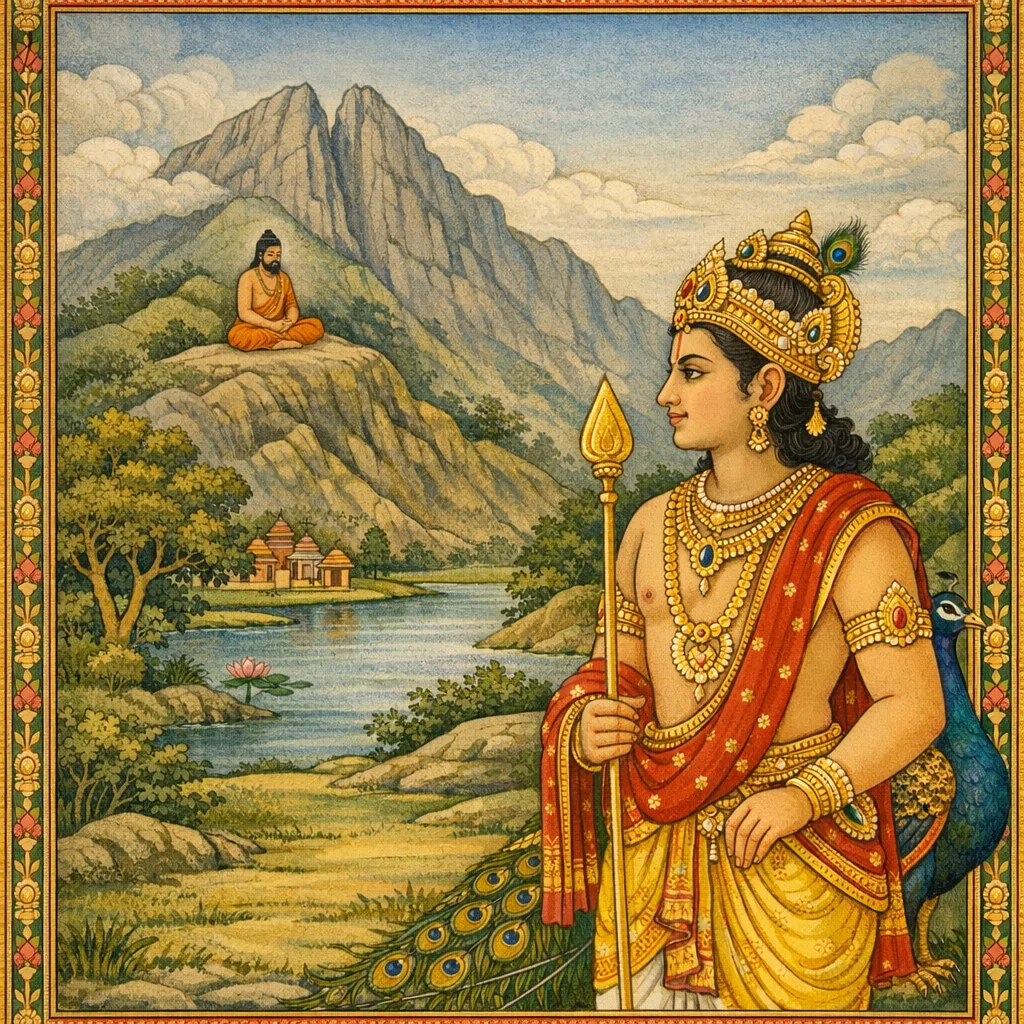
This adhyāya weaves a layered theological account that joins a mythic war-chronicle with instruction aimed at liberation. Brahmā first describes the youthful Skanda/Kārttikeya’s divine play near Pārvatī and Śiva on the bank of the Gaṅgā, revealing the deity’s intimacy with sacred landscape. Troubled by Tāraka, the devas appeal to Śaṅkara; Skanda is appointed senāpati amid celestial acclamations, instruments, and cosmic support such as Agni’s śakti. At Tāmravatī, Skanda’s conch-call summons the opposing hosts; devas and asuras clash in vast combat marked by rout and devastation. Tāraka is finally destroyed, victory rites and celebrations follow, and Pārvatī embraces Skanda. The discourse then turns to teaching: Śiva raises the matter of marriage (pāṇigrahaṇa), and Skanda replies from a jñāna-vairāgya stance—non-attachment, universal vision, and the rarity of knowledge that must be safeguarded. With realization of the all-pervading Brahman, he says, action ceases for the yogin; he contrasts attachment-prone minds with the equanimous and presents knowledge as the decisive, difficult attainment. Skanda departs to Krauñcaparvata for tapas, mantra-japa (a dvādaśākṣara bīja), restraint of the senses, and overcoming siddhi-distractions. The chapter closes with Śiva consoling Pārvatī and proclaiming the sin-destroying greatness of cāturmāsya, while Sūta invites further listening, preserving the Purāṇic dialogic frame.
Shlokas
Verse 1
ब्रह्मोवाच । कार्तिकेयश्च पार्वत्याः प्राणेभ्यश्चातिवल्लभः । संक्रीडति समीपस्थो नानाचेष्टाभिरुद्यतः
Brahmā said: Kārtikeya—dearer to Pārvatī than even her own life-breaths—plays nearby, lively with many gestures and activities.
Verse 2
रक्तकांतिर्महातेजाः षण्मुखोऽद्भुत विक्रमः । क्वचिद्गायति चात्यर्थं क्वचिन्नृत्यति स्वेच्छया
Of ruddy splendour and great brilliance, the Six-faced One of wondrous prowess—at times he sings in overflowing delight, and at times he dances freely as he wills.
Verse 3
मातरं पितरं दृष्ट्वा विनयावनतः क्वचित् । क्वचिच्च गंगापुलिने सिकतालेपनाकृतिः
Sometimes, on seeing his mother and father, he bows down in humble reverence; and sometimes, on the bank of the Jāhnavī (Gaṅgā), he plays, smearing and shaping the sand.
Verse 4
गणैः सह विचिन्वानो विविधान्वनभूरुहान् । एवं प्रक्रीडितस्तस्य दिवसाः पंच जज्ञिरे
Accompanied by his gaṇas, he roamed about, observing the many kinds of trees and plants of the forest. Thus, as he sported in this manner, five days passed.
Verse 5
ततो देवा महेन्द्राद्यास्तारकत्रासविद्रुताः । स्तुवन्तः शंकरं सर्वे तारकस्य जिघृक्षया
Then the gods—beginning with great Indra—fleeing in fear of Tāraka, all praised Śaṅkara, desiring to seize and subdue Tāraka.
Verse 6
चक्रुः कुमारं सेनान्यं जाह्नव्यां स्वगणैः सुराः । सस्वनुर्देववाद्यानि पुष्पवर्षं पपात ह
Upon the Jāhnavī (Gaṅgā), the gods—together with their own retinues—appointed Kumāra as commander of the hosts. The divine instruments resounded, and a rain of flowers fell.
Verse 7
वह्निस्तु स्वां ददौ शक्तिं हिमवान्वाहनं ददौ । सर्वदेवसमुद्भूतगणकोटिसमावृतः
Agni bestowed his own spear-power (śakti), and Himavān granted a mount. Surrounded by crores of gaṇas born from all the gods, he stood arrayed.
Verse 8
प्रणम्य मुनिसंघेभ्यः प्रययौ रिपुविग्रहे । ताम्रवत्यां नगर्यां च शंखं दध्मौ प्रतापवान्
Having bowed to the assemblies of sages, he set forth to battle the foe. And in the city of Tāmravatī, the mighty one blew his conch.
Verse 9
ततस्तारकसैन्यस्य दैत्यदानवकोटयः । समाजग्मुस्तस्य पुराच्छंखनादभयातुराः
Then, from that city, crores of Daityas and Dānavas of Tāraka’s army gathered together, distressed with fear at the sound of the conch.
Verse 10
स्ववाहनसमारूढाः संयता बलदर्पिताः । देवाः सर्वेऽपि युयुधुः स्कन्दतेजोपबृंहिताः
Mounted upon their own vehicles, disciplined and proud of their strength, all the gods fought, fortified by the radiance of Skanda.
Verse 11
तदा दानवसैन्यानि निजघान च सर्वशः । विष्णुचक्रेण ते छिन्नाः पेतुरुर्व्यां सहस्रशः
Then the Dānava armies were struck down on every side; cut by Viṣṇu’s discus, they fell upon the earth by the thousand.
Verse 12
ततो भग्नाश्च शतशो दानवा निहतास्तदा । नद्यः शोणितसंभूता जाता बहुविधामुने
Then hundreds of Dānavas were broken and slain. O sage, rivers of many kinds arose, born of blood.
Verse 13
तद्भग्नं दानवबलं दृष्ट्वा स युयुधे रणे । बभंज सद्यो देवेशो बाणजालैरनेकधा
Seeing the Dānava host already shattered, he fought on in the battle. At once the Lord of the gods crushed them in many ways with nets of arrows.
Verse 14
शक्तिनायुध्य गंगिन्याश्चिक्षेप कृष्णप्रेरिताः । सरथं च सयंतारं चक्रे तं भस्मसात्क्षणात्
Urged on by Kṛṣṇa, the divine hosts hurled their śaktis and weapons; and in an instant they reduced him—together with his chariot and charioteer—to ashes.
Verse 15
शेषाः पातालमगमन्हतं दृष्ट्वाऽथ तारकम् । ततो देवगणाः सर्वे शसंसुस्तस्य विक्रमम्
Seeing Tāraka slain, the remaining foes fled down to Pātāla; then all the hosts of gods praised his heroic prowess.
Verse 16
देवदुन्दुभयो नेदुः पुष्पवृष्टिस्तथाऽभवत् । ते लब्धविजयाः सर्वे महेश्वरपुरोगमाः
The heavenly drums resounded, and a rain of flowers fell. All of them—led by Maheśvara—rejoiced, having attained victory.
Verse 17
सिषिचुः सर्वदेवानां सेनापत्ये षडाननम् । ततः स्कंदं समालिंग्य पार्वती हर्षगद्गदा
All the gods consecrated the Six-faced One as commander of their celestial hosts. Then Pārvatī, her voice trembling with joy, embraced Skanda.
Verse 18
मांगल्यानि तदा चक्रे स्वसखीभिः समावृता । एवं च तारकं हत्वा सप्तमेऽहनि बालकः
Surrounded by her companions, she then performed auspicious rites. Thus, having slain Tāraka, the divine Child brought it to completion on the seventh day.
Verse 19
मंदराचलमासाद्य पितरौ संप्रहर्षयन् । उवाच सकलं स्कन्दः परमानंदनिर्भरः
Reaching Mount Mandara and delighting his parents, Skanda—overflowing with supreme bliss—spoke everything in full.
Verse 20
काले दारक्रियां तस्य चिन्तयामास शंकरः । स उवाच प्रसन्नात्मा गांगेयममितद्युतिम्
In due time, Śaṅkara began to consider his son’s marriage rite. With a serene heart he addressed the Gaṅgā-born one, of immeasurable splendor.
Verse 21
प्राप्तः कालस्तव विभो पाणिग्रहणसंमतः । कुरु दारान्समासाद्य धर्मस्ते पुंससंमतः
“O Lord, the fitting time has come for you to accept the marriage rite. Take a wife and establish a household—this is the dharma approved for one of your station.”
Verse 23
क्रीडस्व विविधैर्भोगैर्विमानैः सह कामिकैः । तच्छ्रुत्वा भगवान्स्कन्दः पितरं वाक्यमब्रवीत् । अहमेव हि सर्वत्र दृश्यः सर्वगणेषु च । दृश्यादृश्यपदार्थेषु किं गृह्णामि त्यजामि किम्
“Sport in diverse enjoyments, with celestial vimānas and with beloved companions.” Hearing this, Lord Skanda said to his father: “I alone am present everywhere—manifest among all hosts. In things seen and unseen, what is there for me to take, and what to abandon?”
Verse 24
याः स्त्रियः सकला विश्वे पार्वत्या ताः समा हि मे । नराः सर्वेऽपि देवेश भवद्वत्तान्विलोकये
“All women in the world are, to me, the same as Pārvatī; and all men too, O Lord of the gods, I behold as equal to you.”
Verse 25
त्वं गुरुर्मां च रक्षस्व पुनर्नरकमज्जनात् । येन ज्ञातमिदं ज्ञानं त्वत्प्रसादादखंडितम्
You are my guru—protect me again from sinking into hell. By your grace, this unbroken, integral knowledge has been understood; may it not be lost.
Verse 26
पुनरेव महाघोरसंसाराब्धौ निमज्जये । दीपहस्तो यथा वस्तु दृष्ट्वा तत्करणं त्यजेत्
May I not sink again into the vast, terrifying ocean of saṃsāra—just as one holding a lamp, upon seeing the object, sets aside the act of searching.
Verse 27
तथा ज्ञानमधिप्राप्य योगी त्यजति संसृतिम् । ज्ञात्वा सर्वगतं ब्रह्म सर्वज्ञ परमेश्वर
So too, having fully attained knowledge, the yogin abandons transmigratory existence. Having realized Brahman, all-pervading—O omniscient Supreme Lord—(he is freed).
Verse 28
निवर्त्तंते क्रियाः सर्वा यस्य तं योगिनं विदुः । विषये लुब्धचित्तानां वनेऽपि जायते रतिः
He in whom all compulsive actions come to rest—him they know as a yogin. But for those whose minds are greedy for sense-objects, attachment arises even in the forest.
Verse 29
सर्वत्र समदृष्टीनां गेहे मुक्तिर्हि शाश्वती । ज्ञानमेव महेशान मनुष्याणां सुदुर्लभम्
For those who see equally everywhere, liberation is indeed everlasting—even while living at home. O Maheśāna, it is knowledge alone that is exceedingly rare for human beings.
Verse 30
लब्धं ज्ञानं कथमपि पंडितो नैव पातयेत् । नाहमस्मि न माता मे न पिता न च बांधवः
However it may be obtained, a wise person should never let the gained knowledge fall away. ‘I am not (the body-self); neither “my mother,” nor “my father,” nor any “relative” truly (defines me).’
Verse 31
ज्ञानं प्राप्य पृथक्भावमापन्नो भुवनेष्वहम् । प्राप्यं भागमिदं दैवात्प्रभावात्तव नार्हसि
Having attained knowledge, I have come to a state of separateness (from worldly identity) amid these worlds. This share of destiny has come by fate; by your power—do not let it be otherwise (do not allow me to fall).
Verse 32
वक्तुमेवंविधं वाक्यं मुमुक्षोर्मे न संशयः । यदाग्रहपरा देवी पुनःपुनरभाषत
There is no doubt in me that such words are fitting for one who seeks liberation. Then the Goddess, insistent in her resolve, spoke again and again.
Verse 33
तदा तौ पितरौ नत्वा गतोऽसौ क्रौञ्चपर्वतम् । तत्राश्रमे महापुण्ये चचार परमं तपः
Then, having bowed to both his parents, he went to Mount Krauñca. There, in that supremely meritorious hermitage, he undertook the highest austerity (tapas).
Verse 34
जजाप परमं ब्रह्म द्वादशाक्षरबीजकम् । पूर्वं ध्यानेन सर्वाणि वशीकृत्येन्द्रियाणि च
He chanted in japa the supreme Brahman—the mantra whose seed is of twelve syllables. First, through meditation, he brought all the senses under control.
Verse 35
ममतां संवियुज्याथ ज्ञानयोगमवाप्तवान् । सिद्धयस्तस्य निर्विघ्ना अणिमाद्या यदाऽगताः
Having cast off possessiveness and the sense of “mine,” he attained the Yoga of Knowledge (Jñāna-yoga). Then the siddhis—beginning with aṇimā—came to him effortlessly, without any obstacle.
Verse 36
तदा तासां गणा क्रुद्धो वाक्यमेतदुवाच ह । ममापि दु्ष्टभावेन यदि यूयमुपागताः
Then their leader, enraged, spoke these words: “If you have approached me too with a wicked intent…”
Verse 37
तदास्मत्समशांतानां नाभिभूतिं करिष्यथ । एवं ज्ञात्वा महेशोऽपि यतो ज्ञानमहोदयम्
“Then you shall not overpower those who are tranquil like us.” Knowing thus, Maheśa too turned toward the great arising of Knowledge.
Verse 38
मत्तोऽपि ज्ञानयोगेनस्कन्दोऽप्यधिकभावभृत् । विस्मयाविष्टहृदयः पार्वतीमनुशिष्टवान्
Even beyond me, Skanda—bearing an even greater spiritual ardor through the Yoga of Knowledge—his heart filled with wonder, instructed Pārvatī.
Verse 39
पुत्रशोकपरां चोमां शुभैर्वाक्यामृतैर्हरः । चातुर्मासस्य माहात्म्यं सर्वपापप्रणाशनम्
Hari, with auspicious nectar-like words, consoled Umā, overwhelmed by grief for her son, and taught the greatness of Cāturmāsya—the destroyer of all sins.
Verse 40
महेश्वरो वा मधुकैटभारिर्हृद्याश्रितो ध्यानमयोऽद्वितीयः । अभेदबुद्ध्या परमार्तिहंता रिपुः स एवातिप्रियो भवेत्ततः
Whether Maheśvara or the slayer of Madhu and Kaiṭabha—abiding in the heart, formed of meditation, the One without a second—when beheld with non-difference (abheda-buddhi), he becomes the destroyer of supreme affliction. Thus even an enemy becomes exceedingly dear.
Verse 41
सूत उवाच । एतद्वः कथितं विप्राश्चातुर्मास्यसमुद्भवम् । माहात्म्यं विस्तरेणैव किमन्यच्छ्रोतुमिच्छथ
Sūta said: “O brāhmaṇas, I have told you in detail this greatness arising from Cāturmāsya. What else do you wish to hear?”
Verse 264
इति श्रीस्कांदे महापुराण एकाशीतिसाहस्र्यां संहितायां षष्ठे नागरखण्डे हाटकेश्वरक्षेत्रमाहात्म्ये शेषशाय्युपाख्याने ब्रह्मनारदसंवादे चातुर्मास्यमाहात्म्ये तारकासुरवधो नाम चतुःषष्ट्युत्तरद्विशततमोऽध्यायः
Thus ends the two-hundred and sixty-fourth chapter, called “The Slaying of Tārakāsura,” in the Śrī Skanda Mahāpurāṇa, in the Ekāśītisāhasrī Saṃhitā—within the sixth, the Nāgara Khaṇḍa, in the Hāṭakeśvara-kṣetra Māhātmya, in the Śeṣaśāyī Upākhyāna, in the Brahmā–Nārada dialogue, in the Cāturmāsya Māhātmya.