Adhyaya 262
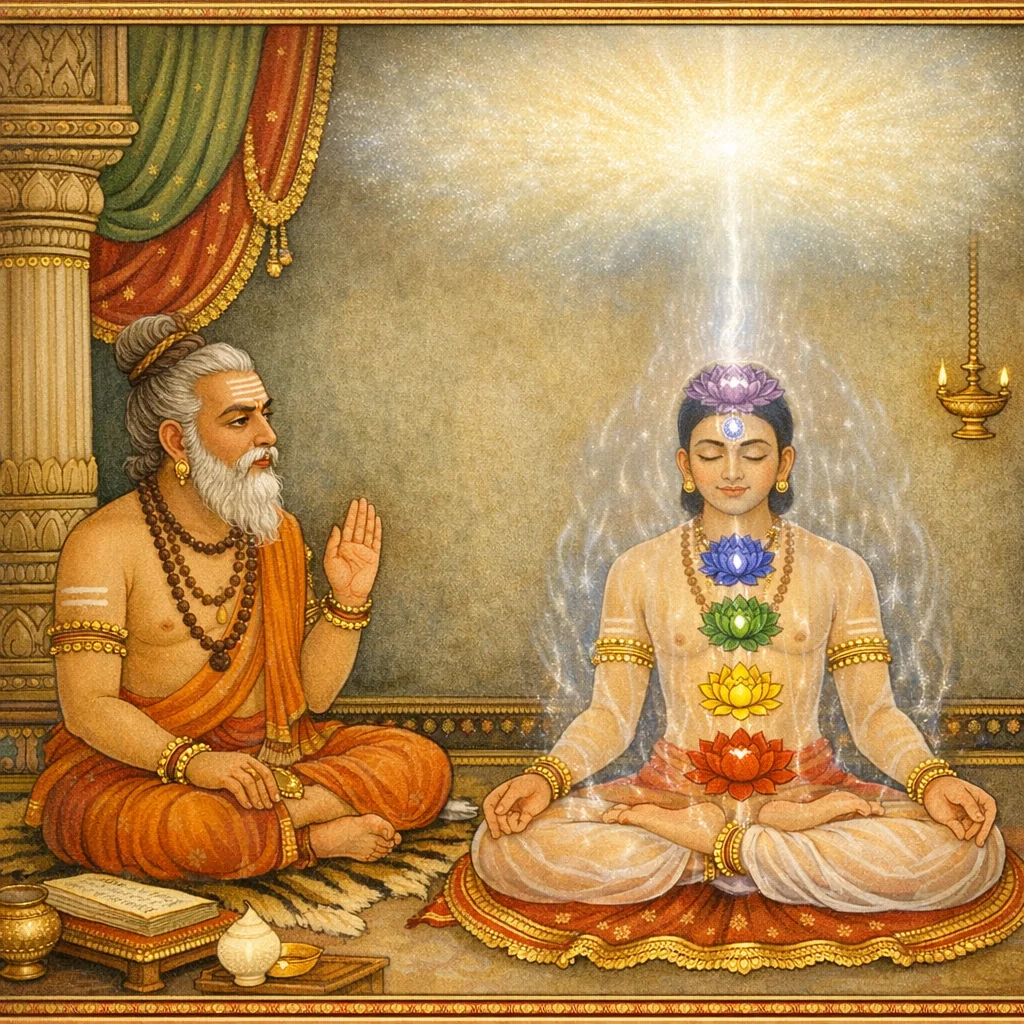
Chapter 262 unfolds as a teaching dialogue: Pārvatī asks Īśvara for a method to attain dhyānayoga, and through it jñānayoga and an “immortal” state. Īśvara replies with a technical exposition centered on a mantrarāja, a twelve-syllabled formula, given with Vedic-style identifiers—ṛṣi, chandas, devatā, and viniyoga—followed by an exact syllable-by-syllable mapping to colors, elemental bījas, associated seers, and practical functions. The chapter then details deha-nyāsa, placing the syllables across the body (feet, navel, heart, throat, hands, tongue/mouth, ears, eyes, and head), and notes triads of mudrā (liṅga, yoni, dhenu) as part of the embodied ritual grammar. From this ritual architecture it turns to contemplative doctrine: dhyāna is declared the decisive means for pāpa-kṣaya and purity, and two yogas are distinguished—image-supported dhyāna leading to Nārāyaṇa-darśana, and a higher, supportless jñānayoga oriented to the formless, immeasurable brahman. Non-dual markers (nirvikalpa, niranjana, sākṣimātra) are emphasized, yet a pedagogical bridge remains through bodily contemplation, especially the head (śiras) as the chief locus for sustaining yogic attention. The cāturmāsya four-month observance is invoked as a period of heightened efficacy. Ethical safeguards are explicit: the teaching is not for the undisciplined or malicious, but may be given to devoted, restrained, and pure practitioners across social categories. The conclusion reaffirms the body as a cosmological microcosm and reiterates liberation through sustained nāda-oriented concentration and Viṣṇu-centered contemplation.
Shlokas
Verse 1
पार्वत्युवाच । ध्यानयोगमहं प्राप्य ज्ञानयोगमवाप्नुयाम् । तथा कुरुष्व देवेश यथाहममरी भव
Pārvatī said: “Having attained the yoga of meditation, may I obtain the yoga of true knowledge as well. O Lord of the gods, arrange it so that I may become deathless.”
Verse 2
प्रत्युक्तोऽयं मंत्रराजो द्वादशाक्षरसंज्ञितः । जप्तव्यः सुकुमारांगि वेदसारः सनातनः
This sovereign mantra has been declared—the ‘twelve-syllabled’ one. O fair-limbed lady, it should be repeated in japa; it is the eternal essence of the Vedas.
Verse 3
प्रणवः सर्ववेदाद्यः सर्वब्रह्मांडयाजकः । प्रथमः सर्वकार्येषु सर्वसिद्धिप्रदायकः
Praṇava (Oṃ) stands at the beginning of all the Vedas and sanctifies all the worlds of the cosmos. It is foremost in every undertaking and bestows every attainment.
Verse 4
सितवर्णो मधुच्छंदा ऋषिर्ब्रह्मा तु देवता । परमात्मा तु गायत्री नियोगः सर्वकर्मसु
Its color is white; its meter is Madhu; its seer is Brahmā, and Brahmā is its presiding deity. The Supreme Self is its Gāyatrī-form, and its application is in all rites and duties.
Verse 5
वेदवेदांग तत्त्वाख्यं सदसदूपमव्ययम्
It is called the truth-principle of the Vedas and Vedāṅgas—imperishable, unchanging, and of the nature of both being and non-being.
Verse 6
नकारः पीतवर्णस्तु जलबीजः सनातनः । बीजं पृथ्वी मनश्छन्दो विषहा विनियोगतः
The syllable “na” is yellow in hue, an eternal seed of the water principle. Its seed-association is with Earth; its meter is “Manas”; and by its prescribed ritual application it becomes “Viṣahā”—the remover of poison and affliction.
Verse 7
मोकारः पृथिवी बीजो विश्वामित्रसमन्वितः । रक्तवर्णो महातेजा धनदो विनियोजितः
The syllable “mo” is declared the earth-seed (pṛthivī-bīja), associated with the sage Viśvāmitra. Red in hue and of great radiance, it is to be employed as the giver of wealth.
Verse 8
भकारः पंचवर्णस्तु जलबीजः सनातनः । मरीचिना समायुक्तः पूजितः सर्वभोगदः
The syllable “bha,” of fivefold coloration, is the eternal seed of the water principle. United with the sage Marīci, when worshipped it bestows every enjoyment and prosperity.
Verse 9
गकारो हेमरक्ताभो भरद्वाजसमन्वितः । वायुबीजो विनिर्योगं कुर्वतामादिभोगदः
The syllable “ga,” golden-red in appearance and connected with Bharadvāja, is the seed of the wind principle. For those who apply it in its proper ritual employment, it grants primordial enjoyments and attainments.
Verse 10
वकारः कुन्दधवलो व्योमबीजो महाबलः । ऋषिमंत्रिपुरस्कृत्य योजितो मोक्षदायकः
The syllable “va,” white as jasmine, is the mighty seed of the ether/sky principle. When employed according to rule, with the ṛṣis and mantras duly placed in the forefront, it becomes a bestower of liberation (mokṣa).
Verse 11
तकारो विद्युद्विकारः सोमबीजं महत्स्मृतम् । अंगिरावर्द्धमूलं च वर्जितं कर्मका मिकम् १
The syllable “ta,” flashing like lightning, is remembered as the great seed of Soma. Rooted in the lineage of Aṅgiras and strengthening its foundation, it is to be avoided by those driven only by worldly, ritualistic desire.
Verse 13
सुकारश्चाक्षरो नित्यं जपाकुसुम भास्वरः । मनो बीजं दुर्विषह्यं पुलहाश्रितमर्थिदम्
The syllable “su” is an eternal, imperishable sound, radiant like the hibiscus flower. It is the seed of the mind—hard to withstand—resting in the lineage of Pulaha, and it grants the sought-for aims.
Verse 14
सिद्धिबीजं महासत्त्वं क्रतौ क्रतुनियोजितम्
This is the seed of accomplishment (siddhi), possessed of great spiritual potency, and is to be employed within sacrifice (yajña), set in its proper place in the rite.
Verse 15
वाकारो निर्मलो नित्यं यजमानस्तु बीजभृत् । प्रचेताश्रियमाश्रेयं मोक्षे मोक्षप्रदायकम्
The syllable “vā” is ever pure; the sacrificer (yajamāna) bears it as a seed. Taking refuge in the prosperity of Pracetas, in the context of liberation it becomes a bestower of mokṣa.
Verse 16
यकारस्य महाबीजं पिंगवर्णश्च खेचरी । भूचरी च महासिद्धिः सर्वदा भूविचिन्तनम्
For the syllable “ya” there is a great seed-mantra: tawny in hue and moving through the sky as khecarī. Moving upon the earth as well, it is a great siddhi—ever joined to contemplation of the world and the earthly plane.
Verse 17
भृगुयन्त्रे समाश्रांतिनियोगे सर्वकर्मकृत् । गायत्रीछंद एतेषां देहन्यासक्रमो भवेत्
In the Bhṛgu-yantra, when these are applied according to the established arrangement and deployment, they accomplish all rites. Their metre is Gāyatrī, and the bodily nyāsa is to be performed in proper sequence.
Verse 18
ओंकारं सर्वदा न्यस्यन्नकारं पादयोर्द्वयोः । मोकारं गुह्यदेशे तु भकारं नाभिपंकजे
One should always place (by nyāsa) the syllable Oṃ upon oneself; the syllable “na” upon both feet; the syllable “mo” upon the secret region; and the syllable “bha” upon the lotus of the navel.
Verse 19
गकारं हृदये न्यस्य वकारः कण्ठ मध्यगः । तेकारं दक्षिणे हस्ते वाकारो वामहस्तगः
Placing the syllable “ga” in the heart, one should set the syllable “va” in the middle of the throat; the syllable “te” in the right hand, and the syllable “vā” in the left hand.
Verse 20
सुकारं मुखजिह्वायां देकारः कर्णयोर्द्वयोः । वाकारश्चक्षुषोर्द्वन्द्वे यकारं मस्तके न्यसेत्
One should place the syllable “su” upon the mouth and tongue; the syllable “de” upon both ears; the syllable “vā” upon the pair of eyes; and the syllable “ya” upon the head.
Verse 21
लिंगमुद्रा योनिमुद्रा धेनुमुद्रा तथा त्रयम् । सकलं कृतमेतद्धि मंत्ररूपे बिजाक्षरम्
The Liṅga-mudrā, the Yoni-mudrā, and likewise the Dhenu-mudrā—these three. By them the entire rite is fulfilled, for the seed-syllable is established in the form of mantra.
Verse 22
योजयेत्प्रत्यहं देवि न स पापैः प्रलिप्यते । एतद्द्वादशलिंगारं कूर्मस्थं द्वादशाक्षरम्
O Goddess, one who applies this daily is not smeared by sins. This is the twelve-liṅga-formed, twelve-syllabled mantra abiding in the Kūrmā, the tortoise-support.
Verse 23
शालग्रामशिलाश्चैव द्वादशैव हि पूजिताः । ताभिः सहाकरैरेभिः प्रत्यक्षैः सह संसदि
And indeed twelve Śālagrāma stones are to be worshipped. Along with them—together with these forms and manifest presences—in the assembly of worship.
Verse 24
यथावर्णमनुध्यानैर्मुनिबीजसमन्वितैः । विनियोगेन सहितैश्छन्दोभिः समलंकृतैः
With contemplations corresponding to each syllable, endowed with the ṛṣi and the bīja, joined with the stated viniyoga, and adorned with the appropriate metres (chandas)—thus the mantra is to be employed.
Verse 26
अयं हि ध्यानकर्माख्यो योगो दुष्प्राप्य एव हि । ध्यानयोगं पुनर्वच्मि शृणुष्वैकाग्रमानसा
This discipline, called the yoga of meditative practice, is indeed difficult to attain. Therefore I shall explain dhyāna-yoga again—listen with a one-pointed mind.
Verse 27
ध्यानयोगेन पापानां क्षयो भवति नान्यथा । जपध्यानमयो योगः कर्मयोगो न संशयः
By dhyāna-yoga alone the destruction of sins occurs—by no other means. A yoga made of japa and meditation is truly karma-yoga, without doubt.
Verse 28
शब्दब्रह्मसमुद्भूतो वेदेन द्वादशाक्षरः । ध्यानेन सर्वमाप्नोति ध्यानेनाप्नोति शुद्धताम्
The twelve-syllabled mantra, born of Śabda-Brahman and grounded in the Veda—through meditation one attains all; through meditation one attains purity.
Verse 29
ध्यानेन परमं ब्रह्म मूर्त्तौ योगस्तु ध्यानजः । सावलम्बो ध्यानयोगो यन्नारायणदर्शनम्
Through meditation one realizes the Supreme Brahman; and, in relation to the mūrti, the yoga that arises from meditation is taught. That supported (object-based) meditation-yoga culminates in the vision of Nārāyaṇa.
Verse 30
द्वितीयो निखिलालम्बो ज्ञानयोगेन कीर्तितः । अरूपमप्रमेयं यत्सर्वकायं महः सदा
The second path is proclaimed as the all-supporting one through the yoga of knowledge (jñāna-yoga). It is the everlasting Great Radiance—formless, immeasurable, and pervading all bodies.
Verse 31
तडित्कोटिसमप्रख्यं सदोदितमखंडितम् । निष्कलं सकलं वापि निरंजनमयं वियत्
It shines like ten million flashes of lightning—ever-risen and unbroken. It may be understood as partless or as possessing parts, yet it is stainless, like the pure expanse of sky.
Verse 32
तत्स्वरूपं भोगरूपं तुर्यातीतमनोपमम् । विभ्रांतकरणं मूर्तं प्रकृतिस्थं च शाश्वतम्
That Reality is its own true nature, and it also appears as the form of experience and enjoyment (bhoga). It is like the mind that transcends even the ‘fourth’ state; yet it is spoken of as embodied, working through the instruments of the senses, abiding in Prakṛti, and everlasting.
Verse 33
दृश्यादृश्यमजं चैव वैराजं सततोज्ज्वलम् । बहुलं सर्वजं धर्म्यं निर्विकल्पमनीश्वरम्
It is both visible and invisible; unborn; cosmic (vairāja) and ever resplendent. Vast and the source of all, it is the ground of dharma—free from mental constructions and beyond lordship as ordinarily conceived.
Verse 34
अगोत्रं वरणं वापि ब्रह्मांडशतकारणम् । निरीहं निर्ममं बुद्धिशून्यरूपं च निर्मलम्
It is without lineage (gotra), beyond all classification and social ‘enclosure’; it is the cause of countless universes. Desireless and free from possessiveness, it is of a form beyond intellect—utterly pure.
Verse 35
तदीशरूपं निर्देहं निर्द्वंद्वं साक्षिमात्रकम् । शुद्धस्फटिकसंकाशं ध्यातृध्येयविवर्जितम् । नोपमेयमगाधं त्वं स्वीकुरुष्व स्वतेजसा
That Lordly Reality is bodiless, beyond all pairs of opposites, and sheer Witness-consciousness (sākṣī). It is like a flawless crystal—free from the division of meditator and object of meditation. O Goddess, accept within yourself, by your own inner radiance, that incomparable and unfathomable Truth.
Verse 36
पार्वत्युवाच । तत्कथं प्राप्यते सम्यग्ज्ञानं योगिस्वरूपिणम् । नारायणममूर्तं च स्थानं तस्य वद प्रभो
Pārvatī said: “How is that perfect knowledge—whose nature is the very form of the yogin—rightly attained? And tell me, O Lord, the ‘abode’ of the formless Nārāyaṇa.”
Verse 37
ईश्वर उवाच । शिरः प्रधानं गात्रेषु शिरसा धार्यते महान्
Īśvara said: “Among the limbs, the head is foremost; upon the head the great burden—the whole person—is borne.”
Verse 38
शिरसा पूजितो देवः पूजितं सकलं जगत् । शिरसा धार्यते योगः शिरसा ध्रियते बलम्
When the Deity is worshipped with a bowed head, it is as though the whole world were worshipped. By the head yoga is sustained; by the head strength is upheld.
Verse 39
शिरसा ध्रियते तेजो जीवितं शिरसि स्थितम् । सूर्यः शिरो ह्यमूर्त्तस्य मूर्तस्यापि तथैव च
Radiance is borne by the head; life itself abides in the head. The Sun is indeed the “head” of the formless being, and likewise of the embodied being as well.
Verse 40
उरस्तु पृथिवीलोकः पादश्चैव रसातलम् । अयं ब्रह्मांडरूपे च मूर्त्तामूर्त्तस्वरूपतः
His chest is the earthly world, Pṛthivī-loka, and his feet are the Rasātala realm. Thus he stands as the very form of the Brahmāṇḍa, in both manifest and unmanifest modes.
Verse 41
विष्णुरेव ब्रह्मरूपो ज्ञानयोगाश्रयः स्वयम् । सृजते सर्वभूतानि पालयत्यपि सर्वशः
Viṣṇu himself is Brahmā in form—the very refuge of the yoga of knowledge. He creates all beings and also protects them in every way.
Verse 42
विनाशयति सर्वं हि सर्वदेवमयो ह्ययम् । सर्वमासेष्वाधिपत्यं यस्य विष्णोः सनातनम्
He indeed dissolves all things, for he is made of all the gods. The eternal sovereignty over all months belongs to that Viṣṇu.
Verse 43
तस्मात्सर्वेषु मासेषु सर्वेषु दिवसेष्वपि । सर्वेषु यामकालेषु संस्मरन्मुच्यते हरिम्
Therefore, in all months, on all days, and in every watch of time, one who remembers Hari is set free from bondage.
Verse 44
चातुर्मास्ये विशेषेण ध्यानमात्रात्प्रमुच्यते । अमूर्त्तसेवनं गंगातीर्थध्यानाद्वरं परम्
In Cāturmāsya, especially, one is released merely by meditation. Service to the Formless (Amūrta) is the supreme excellence—greater even than meditating upon the Gaṅgā-tīrtha.
Verse 45
सर्वदानोत्तरं चैव चातुर्मास्ये न संशयः । सर्वमासकृतं पापं चातुर्मास्ये शुभाशुभम्
In Cāturmāsya, its merit surpasses all gifts—of this there is no doubt. The sins accumulated across all months, whether arising from ‘good’ or ‘bad’ acts, are addressed in Cāturmāsya.
Verse 46
अक्षय्यं तद्भवेद्देवि नात्र कार्या विचारणा । तस्मात्सर्वप्रयत्नेन ज्ञानयोगो बहूत्तमः
O Devī, that becomes imperishable; there is no need for doubt or debate. Therefore, with every effort, the yoga of knowledge (jñāna-yoga) is supremely excellent.
Verse 48
न कथ्येयं यस्य कस्य सुतस्याप्य परस्य च । अदांतायाथ दुष्टाय चलचित्ताय दांभिके
This teaching should not be imparted to just anyone—not even to one’s own son, much less to another. It is not to be told to the undisciplined, the wicked, the fickle-minded, or the hypocritical.
Verse 49
स्ववाक्च्युताय निंद्याय न वाच्या योगजा कथा । नित्यभक्ताय दांताय शमादि गुणिने तथा
The discourse born of yoga should not be spoken to one who has fallen from his own word (truthfulness), nor to one who is blameworthy. It should be spoken, however, to the ever-devoted, the self-controlled, and one endowed with virtues beginning with tranquility.
Verse 50
विष्णुभक्ताय दातव्या शूद्रायापि द्विजन्मने । अभक्तायाप्यशुचये ब्रह्मस्थानं न कथ्यते
This esoteric teaching should be given to a devotee of Viṣṇu—even if he is a Śūdra—who is truly twice-born through spiritual discipline. But to one who is faithless and impure, the supreme “seat of Brahman” is not to be disclosed.
Verse 51
मद्भक्त्या योगसिद्धिं त्वं गृहाणाशु तपोधने । अभूतं ज्ञानगम्यं तं विद्धि नारायणं परम्
O treasure of austerity, by devotion to me receive yogic perfection swiftly. Know the supreme Nārāyaṇa—beyond all becoming, accessible through true knowledge.
Verse 52
नादरूपेण शिरसि तिष्ठंतं सर्वदेहिनाम् । स एव जीवशिरसि वर्त्तते सूर्यबिंबवत्
Abiding in the head of all embodied beings in the form of nāda (inner sound), that very Reality is present in the head of each living being—like the sun’s reflection seen everywhere.
Verse 53
सदोदितः सूक्ष्मरूपो मूर्त्तो मूर्त्या प्रणीयते । अभ्यासेन सदा देवि प्राप्यते परमात्मकः
Ever-risen and subtle in form, He who is with form is approached through form. By constant practice, O Goddess, the Supreme Self is attained.
Verse 54
शरीरे सकला देवा योगिनो निवसंति हि । कर्णे तु दक्षिणे नद्यो निवसंति तथाऽपराः
Indeed, all the gods and the yogins dwell within the body. In the right ear, likewise, the rivers and other sacred currents are said to reside.
Verse 55
हृदये चेश्वरः शंभुर्नाभौ ब्रह्मा सनातनः । पृथ्वी पादतलाग्रे जलं सर्वगतं तथा
In the heart is Lord Śambhu; in the navel, the eternal Brahmā. At the soles of the feet is Earth; and likewise Water pervades everywhere.
Verse 56
तेजो वायुस्तथाऽकाशं विद्यते भालमध्यतः । हस्ते च पंच तीर्थानि दक्षिणे नात्र संशयः
Fire, wind, and ether are found in the middle of the forehead. And in the right hand are the five tīrthas—of this there is no doubt.
Verse 57
सूर्यो यद्दक्षिणं नेत्रं चन्द्रो वाममुदाहृतम् । भौमश्चैव बुधश्चैव नासिके द्वे उदाहृते
The Sun is declared to be the right eye, and the Moon the left. Mars and Mercury are declared to be the two nostrils.
Verse 58
गुरुश्च दक्षिणे कर्णे वामकर्णे तथा भृगुः । मुखे शनैश्चरः प्रोक्तो गुदे राहुः प्रकीर्तितः
Guru (Jupiter) is in the right ear; and in the left ear is Bhṛgu (Venus). Saturn is said to be in the mouth; and Rāhu is proclaimed to be in the anus.
Verse 59
केतुरिंद्रियगः प्रोक्तो ग्रहाः सर्वे शरीरगाः । योगिनो देहमासाद्य भुवनानि चतुर्दश
Ketu is said to move within the senses; indeed all the grahas dwell in the body. The yogins, taking refuge in the body as their field of practice, realize the fourteen worlds.
Verse 60
प्रवर्त्तंते सदा देवि तस्माद्योगं सदाभ्यसेत् । चातुर्मास्ये विशेषेण योगी पापं निकृन्तति
O Goddess, since the currents of worldly impulses keep arising constantly, one should therefore practice yoga at all times. Especially during the Cāturmāsya season, a yogin cuts down sin.
Verse 61
मुहूर्त्तमपि यो योगी मस्तके धारयेन्मनः । कर्णै पिधाय पापेभ्यो मुच्यतेऽसौ न संशयः
Even if a yogin, for just a muhūrta, steadies the mind at the crown of the head, and closes the ears to outward distraction, he is freed from sins—of this there is no doubt.
Verse 62
अंतरं नैव पश्यामि विष्णोर्योगपरस्य वा । एकोऽपि योगी यद्गेहे ग्रासमात्रं भुनक्ति च
I see no difference at all between Viṣṇu and one devoted to yoga. Even a single yogin who eats but a morsel in a house brings sanctity there.
Verse 63
कुलानि त्रीणि सोऽवश्यं तारयेदात्मना सह । यदि विप्रो भवेद्योगी सोऽवश्यं दर्शनादपि
He surely delivers three lineages together with himself. If the yogin is a brāhmaṇa, he assuredly bestows benefit even by mere darśana, by the sacred sight alone.
Verse 64
सर्वेषां प्राणिनां देवि पापराशि निषूदकः । सक्रियो ब्रह्मनिरतः सच्छूद्रो योगभाग्यदि
O Goddess, for all living beings he becomes a destroyer of heaps of sin: even an active (householder) śūdra, if noble in conduct, devoted to Brahman, and blessed with the fortune of yoga.
Verse 65
भवेत्सद्गुरुभक्तो वा सोऽप्यमूर्त्तफलं लभेत् । यो योगी नियताहारः परब्रह्म समाधिमान्
Or if one becomes devoted to a true sadguru, he too attains the subtle, unmanifest fruit. That yogin—measured in food and established in samādhi upon the Supreme Brahman—is supremely blessed.
Verse 66
चातुर्मास्ये विशेषेण हरौ स लयभाग्भवेत् । यथा सिद्धकरस्पर्शाल्लोहं भवति कांचनम्
Especially in Cāturmāsya, he attains laya—absorption into Hari—just as, by the touch of a perfected hand, iron becomes gold.
Verse 67
तथा मूर्त्तं हरिप्रीत्या मनुष्यो लयमाव्रजेत् । यथा मार्गजलं गंगापतितं त्रिदशैरपि
So too, through love for Hari, a human being attains absorption in Him even while embodied. Just as even ordinary roadside water, once it falls into the Gaṅgā, is regarded as sanctified even by the gods.
Verse 68
सेवितं सर्वफलदं तथा योगी विमुक्तिदः । यथा गोमयमात्रेण वह्निर्दीप्यति सर्वदा
When it is reverently served, it grants every fruit; likewise the yogin bestows liberation. Just as fire ever blazes when fed with even a mere bit of cow-dung fuel.
Verse 69
देवतानां मुखं तद्धि कीर्त्यते याज्ञिकैः सदा । एवं योगी सदाऽभ्यासाज्जायते मोक्षभाजनम्
That indeed is ever praised by the performers of sacrifice as “the mouth of the gods.” Thus, through constant practice, the yogin becomes a worthy vessel for liberation.
Verse 70
योगोऽयं सेव्यते देवि ज्ञानासिद्धिप्रदः सदा । सनकादिभिराचार्यैर्मुमुक्षुभिरधीश्वरैः
O Goddess, this Yoga is ever to be practiced, for it unfailingly bestows true knowledge and spiritual accomplishment. It has been cultivated by venerable teachers such as Sanaka and others, by seekers of liberation, and by great lords of self-mastery.
Verse 71
प्रथमं ज्ञानसंपत्तिर्जायते योगिनां सदा । तेषां गृहीतमात्रस्तु योगी भवति पार्वति
First, for yogins, the wealth of true knowledge ever arises. O Pārvatī, one who has but taken hold of that path and discipline becomes a yogin indeed.
Verse 72
ततस्तु सिद्धयस्तस्य त्वणिमाद्याः पुरोगताः । भवन्ति तत्रापि मनो न दद्याद्योगिनां वरः
Thereafter, his siddhis—beginning with aṇimā and the rest—come forth before him. Yet even then, the best of yogins should not give his mind to them, nor become attached.
Verse 73
सर्वदानक्रतुभवं पुण्यं भवति योगतः । योगात्सकलकामाप्तिर्न योगाद्भुवि प्राप्यते
Through yoga arises sacred merit equal to that born of every gift and every sacrifice. From yoga comes the fulfillment of all aims—nothing on earth is unattainable through yoga.
Verse 74
योगान्न हृदयग्रंथिर्न योगान्ममता रिपुः । न योगसिद्धस्य मनो हर्त्तुं केनापि शक्यते
Through yoga, the knot of the heart is cut; through yoga, the enemy called ‘mine-ness’ does not arise. And the mind of one perfected in yoga cannot be stolen away by anything.
Verse 75
स एव विमलो योगी यच्चित्तं शिरसि स्थितम् । स्थिरीभूतव्यथं नित्यं दशमद्वारसंपुटे
That yogin alone is truly pure whose mind abides in the head—ever steady, with agitation stilled—within the enclosure of the ‘tenth gate’.
Verse 76
कणौं पिधाय मर्त्यस्य नादरूपं विचिन्वतः । तदेव प्रणवस्याग्रं तदेव ब्रह्म शाश्वतम्
For the mortal who closes the ears and contemplates the sound-form (nāda), that very inner sound is the foremost essence of Praṇava (Oṃ); that indeed is the eternal Brahman.
Verse 77
तदेवानंतरूपाख्यं तदेवामृतमुत्तमम् । घ्राणवायौ प्रघोषोऽयं जठराग्नेर्महत्पदम्
That alone is called the ‘form of the Infinite’; that alone is the supreme nectar. This resonant sound is heard in the breath at the nose, and it is the great station of the gastric fire.
Verse 78
पंचभूतं निवासं यज्ज्ञानरूपमिदं पदम् । पदं प्राप्य विमुक्तिः स्याज्जन्मसंसारबंधनात्
This station—whose abode is the five elements and whose nature is knowledge—once attained, brings mokṣa, liberation from the bondage of birth and saṃsāric transmigration.
Verse 79
यदाप्तिर्दुलभा लोके योगसिद्धिप्रदायिका
That attainment, rare in the world, bestows yogic perfection (yoga-siddhi).
Verse 80
एवं ब्रह्ममयं विभाति सकलं विश्वं चरं स्थावरं विज्ञानाख्यमिदं पदं स भगवान्विष्णुः स्वयं व्यापकः । ज्ञात्वा तं शिरसि स्थितं बहुवरं योगेश्वराणां परं प्राणी मुंचति सर्पवज्जगतिजां निर्मोकमायाकृतिम्
Thus the entire universe—moving and unmoving—shines as Brahman. This state, called “vijñāna” (realized knowledge), is the all-pervading Lord Bhagavān Viṣṇu Himself. Knowing Him as supremely excellent, established in the crown of the head and beyond even the lords of yoga, a living being casts off the world-born, māyā-fashioned sheath—like a serpent shedding its skin.
Verse 112
वाकारो धूम्रवर्णश्च सूर्यबीजं मनोजवम् । पुलस्त्यर्षिसमायुक्तं नियुक्तं सर्वसौख्यदम्
The syllable “va”, smoky in hue, is the Sun’s bīja-mantra, swift as thought. United with the sage Pulastya and duly employed, it bestows every form of well-being.
Verse 258
ध्यानैजपैः पूजितैश्च भक्तानां मुनिसत्तम । मोक्षो भवति बन्धेभ्यः कर्मजेभ्यो न संशयः
O best of sages, for devotees who worship through meditation, japa (mantra-recitation), and pūjā, mokṣa surely arises—freeing them from the bonds born of karma; of this there is no doubt.
Verse 262
इति श्रीस्कांदे महापुराण एकाशीति साहरस्र्यां संहितायां षष्ठे नागरखण्डे हाटकेश्वरक्षेत्रमाहात्म्ये शेषशाय्युपाख्याने ब्रह्मनारदसंवादे चातुर्मास्यमाहात्म्ये ज्ञानयोगकथनं नाम द्विषष्ट्युत्तरद्विशततमोऽध्यायः
Thus ends Chapter 262, entitled “The Teaching of Jñāna-yoga,” in the Śrī Skanda Mahāpurāṇa, in the Ekāśīti-sāhasrī Saṃhitā, within the sixth Nāgara-khaṇḍa—under the Hāṭakeśvara Sacred-Field Māhātmya, in the Śeṣaśāyī episode, in the Brahmā–Nārada dialogue, in the glorification of Cāturmāsya.
Verse 407
सेवितो विष्णुरूपेण ब्रह्ममोक्षप्रदायकः । शृणुष्वावहिता भूत्वा मूर्त्तामूर्ते स्थितिं शुभे
When worshipped in the form of Viṣṇu, He grants Brahman-realization and liberation. Listen attentively, O auspicious one, to the holy doctrine of His state as both with-form and beyond-form.