Adhyaya 261
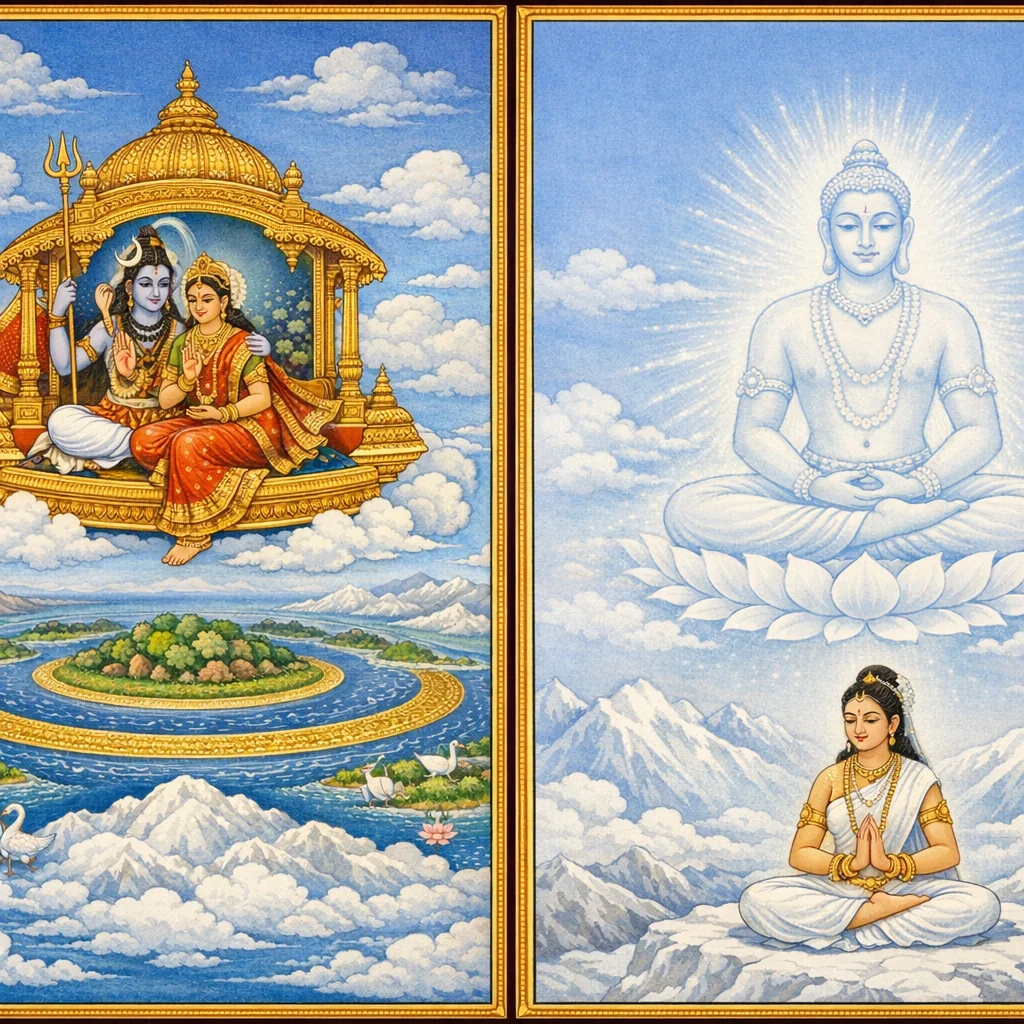
Set within the Nāgara Khaṇḍa’s tīrtha-focused frame, the chapter unfolds as a Brahmā–Nārada discourse. Nārada asks how the ever-auspicious divine consort Pārvatī attained profound yogic accomplishment during the four-month cāturmāsya by means of a twelve-syllabled “mantrarāja.” Brahmā recounts her disciplined vrata during Hari’s cosmic sleep: devotion in mind, deed, and speech; worship of devas, dvijas, sacred fire, the aśvattha tree, and guests; and mantra-japa as taught by Śiva (Pinākin). Viṣṇu then appears in a radiant theophany—four-armed, bearing conch and discus, Garuḍa-mounted, suffusing the worlds with light—and grants darśana. Asked by Pārvatī for stainless knowledge that prevents return, Viṣṇu defers the ultimate exposition to Śiva, affirming the Supreme as inner and outer witness and the ground of dharma. Śiva arrives, Viṣṇu merges back, and Śiva conveys Pārvatī through mythic vistas to a divine river and a Śaravana-like grove, where the Kṛttikās reveal a luminous six-faced child—Kārttikeya—whom Pārvatī embraces. The narrative shifts to a cosmographic flight over dvīpas and oceans, reaching the shining “Śveta” region and a radiant peak. There Śiva imparts a secret teaching beyond śruti: a pranava-integrated mantra and a dhyāna protocol—posture, inner worship, closed eyes, hand-gesture, and visualization of the cosmic puruṣa—said to purify and thin away impurities even through brief contemplation during cāturmāsya.
Shlokas
Verse 1
नारद उवाच । कथं नित्या भगवती हरपत्नी यशस्विनी । योगसिद्धिं सुमहतीं प्राप मासचतुष्टये
Nārada said: How did the ever-auspicious Goddess—the glorious consort of Hara—attain a very great yogic perfection during the four-month observance?
Verse 2
मन्त्रराजमिमं जप्त्वा द्वादशाक्षरसंभवम् । एतन्मे विस्तरेण त्वं कथयस्व यथातथम्
Having chanted this “king of mantras”, born of twelve syllables, please explain it to me in detail—exactly as it truly is.
Verse 3
ब्रह्मोवाच । चातुर्मास्ये हरौ सुप्ते पार्वती नियतव्रता । मनसा कर्मणा वाचा हरिभक्तिपरायणा
Brahmā said: During Cāturmāsya, when Hari is said to be asleep, Pārvatī—steadfast in her vows—was wholly devoted to Hari-bhakti in mind, deed, and speech.
Verse 4
चारुशृंगे पितुर्नित्यं तिष्ठंती तपसि स्थिता । देवद्विजाग्निगोऽश्वत्थातिथिपूजापरायणा
Dwelling ever on her father’s Cāruśṛṅga mountain, established in austerity, she was devoted to honoring the gods, the Brahmins, the sacred fire, cows, the aśvattha tree, and guests.
Verse 5
चातुर्मास्येऽथ संप्राप्ते विमले हरिवासरे । जजाप परमं मंत्रं यथादिष्टं पिनाकिना
Then, when Cāturmāsya arrived—on a pure and auspicious day of Hari—she chanted the supreme mantra, exactly as instructed by the Bearer of the Pināka (Śiva).
Verse 6
शंखचक्रधरो विष्णुश्चतुर्हस्तः किरीटधृक् । मेघश्यामोंऽबुजाक्षश्च सूर्यकोटिसमप्रभः
Viṣṇu appeared bearing the conch and discus, four-armed and crowned—dark as a rain-cloud, lotus-eyed, and radiant like ten million suns.
Verse 7
गरुडाधिष्ठितो हृष्टो वसन्व्याप्य जगत्त्रयम् । श्रीवत्सकौस्तुभयुतः पीतकौशेयवस्त्रकः
Seated upon Garuḍa, joyful and all-pervading through the three worlds, he bore the Śrīvatsa and the Kaustubha gem, and wore yellow silken garments.
Verse 8
सर्वाभरणशोभाभिरभिदीप्तमहावपुः । बभाषे पार्वतीं विष्णुः प्रसन्नवदनः शुभाम् । देवि तुष्टो ऽस्मि भद्रं ते कथयस्व तवेप्सितम्
His great form blazed with the splendor of every ornament; Viṣṇu, serene of face, addressed the auspicious Pārvatī: “Goddess, I am pleased—blessings upon you. Tell me what you desire.”
Verse 9
पार्वत्युवाच । तज्ज्ञानममलं देहि येन नावर्त्तनं भवेत् । इत्युक्तः स महाविष्णुः प्रत्युवाच हरप्रियाम्
Pārvatī said: “Grant me that stainless knowledge by which there will be no return to rebirth.” Thus addressed, Mahāviṣṇu replied to Hara’s beloved.
Verse 10
स एव देवदेवेशस्तव वक्ष्यत्यसंशयम् । स एव भगवान्साक्षी देहांतरबहिःस्थितः
That very Lord—the Lord of the gods—will declare it to you without doubt. That same Blessed One is the Witness, abiding within the body and also beyond it.
Verse 11
विश्वस्रष्टा च गोप्ता च पवित्राणां च पावनः । अनादिनिधनो धर्मो धर्मादीनां प्रभुर्हि सः
He is the creator of the universe and its protector, the purifier even of the pure. He is Dharma itself—without beginning or end—and indeed the Lord over Dharma and all that follows from it.
Verse 12
अक्षरत्रयसेव्यं यत्सकलं ब्रह्म एव सः । मूर्त्तामूर्त्तस्वरूपेण योऽजो जन्मधरो हि सः
He is that complete Brahman who is worshipped through the three syllables (Oṃ). In form and formlessness alike he abides; though unborn, he yet assumes birth for the world’s sake.
Verse 13
ममाधिकारो नैवास्ति वक्तुं तव न संशयः । इत्युक्त्वा भगवानीशो विरराम प्रहृष्टवान्
“I have no authority to speak of it to you—of this there is no doubt.” Having said so, the Blessed Lord ceased, remaining delighted.
Verse 14
एतस्मिन्नंतरे शंभुर्गिरिजाश्रममभ्यगात् । सर्वभूत गणैर्युक्तो विमाने सार्वकामिके
Just then Śambhu (Śiva) arrived at Girijā’s hermitage, accompanied by hosts of beings, upon the all-fulfilling celestial vimāna.
Verse 15
तया वै भगवान्देवः पूजितः परमेश्वरः । सखीनामपि प्रत्यक्षमाश्चर्यं समजायत
By her indeed the Blessed God, the Supreme Lord (Parameśvara), was worshipped—and even to her companions a wonder became manifest before their very eyes.
Verse 16
स्तुत्वाऽथ तं महादेवं विष्णुर्देहे लयं ययौ । अथोवाच महेशानः पार्वतीं परमेश्वरः
Having praised that Great God, Mahādeva, Viṣṇu then merged back into his own body. Thereupon Maheśāna, the Supreme Lord, addressed Pārvatī.
Verse 17
विमानवरमारुह्य तुष्टोऽहं तव सुव्रते । गत्वैकांतप्रदेशं ते कथये परमं महः
“O you of noble vows, mount this excellent vimāna. I am pleased with you; going with you to a secluded place, I shall tell you of the supreme sacred glory.”
Verse 19
एवमुक्त्वा भगवतीं करे गृह्य मुदान्वितः । विमानवरमारोप्य लीलया प्रययौ तदा
Having spoken thus, the Lord—filled with joy—took the Goddess by the hand, seated her upon the excellent vimāna, and then set forth playfully, in divine līlā.
Verse 21
दर्शन्यकर्णिकारांश्च कोविदारान्महाद्रुमान् । तालांस्तमालान्हिंतालान्प्रियंगून्पनसानपि
He showed her the pleasing karṇikāra trees, the great kovidāra trees, and also palms, tamāla trees, hiṃtāla palms, priyaṅgu shrubs, and jackfruit trees.
Verse 22
तिलकान्बकुलांश्चैव बहूनपि च पुष्पितान् । क्षेत्राणि कलनाभानि पिञ्जराणि विदर्शयन्
He showed her tilaka trees and bakula trees—many of them in bloom—and fields that appeared dark-blue and tawny-golden in hue.
Verse 23
ययौ देवनदीतीरे गतं शरवणं महत् । फुल्लकाशं स्वर्णमयं शरस्तंबगणान्वितम्
He went to the bank of the Devanadī, to the great Śaravaṇa grove—bright with blossoming kāśa grass, golden in splendor, and filled with clusters of reed-stalks.
Verse 24
हेम भूमिविभागस्थं वह्निकांतिमृगद्विजम् । तत्र तीरगतानां च मुनीनामूर्ध्वरेतसाम्
There the grove lay upon stretches of golden ground, with deer and birds shining like fire. And on the riverbank were sages—ascetics of restrained vital energy.
Verse 25
आश्रमान्स विमानाग्रे तिष्ठन्पत्न्यै प्रदर्शयत् । षट्कृत्तिकाश्च ददृशे पार्वती वनसन्निधौ
Standing at the front of the vimāna, he pointed out the hermitages to his consort. Near the forest, Pārvatī then beheld the Six Kṛttikās.
Verse 26
स्नाताः स्वलंकृताश्चन्द्रपत्न्यस्ता विरजांबराः । ऊचुस्ता योजितकरा केऽयं पुत्राय गम्यते
Bathed, well-adorned, and clad in spotless garments, the wives of the Moon spoke with hands joined in reverence: “Who is this that is being taken to our son?”
Verse 27
तत्कथ्यतां महाभागे स च ते दर्शनं गतः
“O greatly fortunate one, let that be explained; and he has indeed come into your sight.”
Verse 28
पार्वत्युवाच । मम भाग्यवशात्पुत्रः कथमुत्संगमाहरेत् । न ह्यभाग्यवशात्पुंसां क्वापि सौख्यं निरन्तरम्
Pārvatī said: “By the power of my own good fortune, how could my son ever come into my lap? For those bereft of fortune, lasting happiness is found nowhere.”
Verse 29
सुतनाम्नाप्यहं दृष्ट्वा भवतीनां च दर्शनात् । किमर्थमिह संप्राप्ताः कथ्यतामविलंबितम्
“Even on seeing one called ‘my son’, and upon beholding you all, why have you come here? Tell me without delay.”
Verse 30
कृत्तिका ऊचुः । वयं तव सुतं न्यस्तं प्रदातुमिह सुन्दरि । चातुर्मास्ये रवौ स्नातुमागता देवनिम्नगाम्
The Kṛttikās said: “O fair one, we have come here to return the son entrusted to us. In the Cāturmāsya season, on a Sunday, we came to bathe in the divine river.”
Verse 31
पार्वत्युवाच । न हास्यावसरः सख्यः सत्यमेव हि कथ्यताम् । एकांतावसरे हास्यं जायते चेतरेतरम्
Pārvatī said: “Friends, this is no time for jest—speak only the truth. In a private moment, laughter may arise between companions.”
Verse 32
कृत्तिका ऊचुः । सत्यं वदामहे देवि तव त्रैलोक्यशोभिते । अस्य स्तंबसमूहस्य मध्यस्थं बालकं वृणु
The Kṛttikās said: “Goddess, we speak the truth—O you who adorn the three worlds. Choose the child who stands in the midst of this cluster of reeds.”
Verse 33
कृत्तिकानां वचः श्रुत्वा शंकिता पार्वती तदा । ददर्श बालं दीप्ताभं षण्मुखं दीप्तवर्चसम्
Hearing the words of the Kṛttikās, Pārvatī then—though apprehensive—beheld a radiant child, six-faced, blazing with splendor.
Verse 34
तडित्कोटिप्रतीकाशं रूपदिव्यश्रिया युतम् । वह्निपुत्रं च गांगेयं कार्तिकेयं महाबलम्
He shone like ten million flashes of lightning, endowed with divine beauty and splendor—Agni’s son, Gaṅgā’s child, Kārttikeya of great might.
Verse 35
सा वत्सेति गृहीत्वा तं कुमारं पाणिना मुदा । विमानमध्यमादाय कृत्वोत्संगे ह्युवाच ह
Calling him “My child!”, she joyfully took the prince in her hand, lifted him from the midst of the reeds, placed him upon her lap, and spoke.
Verse 36
चिरंजीव चिरं नन्द चिरं नंदय बाधवान् । इत्युक्त्वा गाढमालिंग्य मूर्ध्नि चाघ्राय तं सुतम्
Saying, “Live long! Rejoice long! Long bring joy to your kin!”, she embraced her son tightly and kissed (smelled) his head.
Verse 37
संहृष्टा परमोदारं भास्वरं हृष्टमानसम् । कार्तिकेयो महाप्रेम्णा प्रणिपत्य महेश्वरम्
Overjoyed, the radiant and supremely noble Kārttikeya—his heart exultant—bowed down with great love before Maheśvara (Śiva).
Verse 38
ततः प्रांजलिरव्यग्रः प्रहृष्टेनांतरात्मना । तद्विमानं ययौ शीघ्रं तीर्त्वा नदनदीपतीन्
Then, with folded hands, free from distraction and inwardly filled with joy, he swiftly set forth in that celestial aerial car, crossing beyond the lords of rivers and streams.
Verse 39
जंबुद्वीपमतिक्रम्य लक्षयोजनमायतम् । ततः समुद्रं द्विगुणं लवणोदं तथैव च
Passing beyond Jambūdvīpa, which extends for a hundred thousand yojanas, he then reached the ocean twice as vast—indeed, the salt-water sea.
Verse 41
दिव्यलोकसमाक्रांतं दिव्यपर्वतसंकुलम् । इक्षूदाद्विगुणं द्वीपं तद्द्वीपाद्द्विगुणः पुनः
It is filled with celestial realms and crowded with divine mountains. From the sugarcane-ocean there is a continent twice in extent, and from that continent again another twice as large.
Verse 42
तमतिक्रम्य तत्सिन्धोर्दविगुणं क्रौंचसंज्ञितम् । ततोऽपि द्विगुणः सिन्धुः सुरोदो यक्षसेवितः
Crossing beyond that ocean, there is a region called Krauñca, measured as twice that sea; and beyond it lies an ocean twice again—the Surā-ocean—frequented and served by the Yakṣas.
Verse 43
ततोऽपि द्विगुणं द्वीपं शाकद्वीपेतिसंज्ञितम् । अर्णवद्विगुणं तस्मादाज्यरूपं सुनिर्मितं
Beyond that lies a continent twice as large, known as Śākadvīpa; and beyond it is an ocean twice in measure, beautifully formed, having the nature of clarified butter (ghee).
Verse 44
परमस्वादसंपूर्णं यत्र सिद्धाः समंततः । तस्माच्च द्विगुणं द्वीपं शाल्मलीवृक्षसंज्ञितम्
That realm is filled with the highest sweetness, and the Siddhas dwell there on every side. Beyond it lies a continent twice as large, famed by the name of the Śālmalī tree.
Verse 45
समुद्रो द्विगुणस्तत्र दधिमंडोदसंभवः । साध्या वसंति नियतं महत्तपसि संस्थिताः
There, the ocean is twice in extent, arising as the sea of curd and its essence. The Sādhyas dwell there constantly, established in great austerity.
Verse 47
ततोऽपि द्विगुणं द्वीपं प्लक्षनामेति विश्रुतम् । क्षीरोदो द्विगुणस्तत्र यत्रयत्रमहर्षयः । षडिमानि सुदिव्यानि भौमः स्वर्ग उदाहृतः । तत्र स्वर्णमयी भूमिस्तथा रजतसंयुता
Beyond that is another continent, twice as large, renowned by the name Plakṣa. There the milk-ocean (Kṣīra) is twice in extent, and in various places great sages dwell. These six are called exceedingly divine—spoken of as a heavenly realm upon earth—where the ground is of gold and also adorned with silver.
Verse 48
दृष्टवा मधूपलस्वादैः सर्वकामप्रदायका । यत्र स्त्रीपुरुषाणां च कल्पवृक्षा गृहे स्थिताः
There are wonders sweet as honey and sugar, bestowing every desired joy; and there, for women and for men alike, wish-fulfilling Kalpavṛkṣa trees stand within their very homes.
Verse 49
वासांसि भूषणानां च समूहान्हर्षयंति च । एतानि दक्षचिह्नानि द्वीपानि मुनिसत्तम
There, garments and gatherings of ornaments also gladden the heart. These, O best of sages, are the continents marked by Dakṣa’s emblems, distinguished by orderly signs.
Verse 51
तन्मध्ये सुमह्द्वीपं श्वेतं नाम सुनिश्चितम् । रम्यकः पर्वतस्तत्र शतशृंगोमितद्रुमः
In its midst lies a vast island, certainly known as Śveta, the White Isle. There stands the delightful mountain Ramyaka, with a hundred peaks and immeasurable trees.
Verse 52
तस्य शृंगे महद्दिव्ये विमानं स्थापितं तदा । तदाऽमृतफलैर्वृक्षैः सेविते हेमवालुके
Upon that great and divine summit, a celestial vimāna was then established. That place, with golden sands, was graced by trees bearing nectar-like fruits.
Verse 53
क्षीरच्छेदेन विहृते शिलातलसुसंवृते । विविक्ते सर्वसुभगे मणिरत्नसमन्विते
It was adorned with streams of milk-like radiance, well-covered with smooth stone ground—secluded, wholly auspicious, and enriched with gems and precious jewels.
Verse 54
उमायै कथयामास देवदेवः पिनाकधृक् । कार्तिकेयोऽपि शुश्राव गुह्याद्गुह्यतरं महत्
The God of gods, bearer of the Pināka, revealed it to Umā; and Kārtikeya too listened—this great teaching, more secret than the secret.
Verse 55
प्रणवेन युतं साग्रं सरहस्यं श्रुतेः परम्
Joined with the Praṇava (Oṃ), complete in every part, it is the supreme secret—beyond even what is heard in the Veda.
Verse 57
ईश्वर उवाच । अक्षरत्रयसंयुक्तो मन्त्रोऽयं सकृदक्षरः । माघमासहितश्चायममाक्षोहेनश्चायममायो विश्वपावनः । विष्णुगम्यो विष्णु मध्यो मन्त्रत्रयसमन्वितः । तुरीयकलयाऽशेषब्रह्मांडगणसेवितः
Īśvara said: This mantra is joined with three syllables, yet it is a single imperishable sound, uttered but once. It is linked with the month of Māgha; immeasurably vast, free from māyā, and a purifier of the whole world. It leads to Viṣṇu, has Viṣṇu at its center, and is endowed with a triad of mantras. By the power of the Fourth state (turīya), it is revered by all the hosts throughout the innumerable cosmic spheres.
Verse 59
ओंकारेति प्रियोक्तिस्ते महादुःखविनाशनः । तं पूर्वं प्रणवं ध्यात्वा ज्ञानरूपं सुखाश्रयम्
The beloved utterance “Oṃkāra” destroys great sorrow. First meditate upon that Praṇava—whose very nature is knowledge, the refuge of bliss.
Verse 60
पद्मासनपरो भूत्वा संपूज्य ज्ञानलोचनः
Seated firmly in Padmāsana, and having duly worshiped, the seeker—whose eyes are guided by knowledge—(should proceed in the practice).
Verse 61
नेत्रे मुकुलिते कृत्वा शुरो करौ कृत्वा तु संहतौ । चेतसि ध्यानरूपेण चिंतयेच्छिवमंगलम्
Closing the eyes and joining the hands in calm composure, the steadfast practitioner should contemplate within the mind—through the form of meditation—Śiva, who is auspiciousness itself.
Verse 62
तडित्कोटिप्रतीकाशं सूर्यकोटिसमच्छविम् । चन्द्रलक्षसमच्छन्नं पुरुषं द्योतिताखिलम् १
He should contemplate that Supreme Person—radiant like ten million flashes of lightning, brilliant as ten million suns, and coolly suffused as though by a hundred thousand moons—illumining the entire cosmos.
Verse 63
मूर्त्तामूर्त्तवैराजं तं सदसद्रूप मव्यम् । चिंतयित्वा विराड्रूपं न भूयःस्तनपो भवेत् । चातुर्मास्ये सकृदपि ध्यानात्कल्मषसंक्षयः
Meditate upon the Imperishable Lord—Virāj—who is both with form and beyond form, whose nature embraces being and non-being. Having contemplated His cosmic (Virāṭ) form, one is not born again into embodied existence. Even a single meditation during the four-month sacred season (Cāturmāsya) destroys the stains of sin.
Verse 64
विलोकयेद्योऽघविनाशनाय क्षणं प्रभुर्जन्मशतोद्भवाय
Whoever beholds the Lord even for a moment—with the intent of destroying sin—gains a merit that would otherwise arise only after hundreds of births.
Verse 261
इति श्रीस्कांदे महापुराण एकाशीसाहस्र्यां संहितायां षष्ठे नागरखण्डे हाटकेश्वरक्षेत्रमाहात्म्ये शेषशाय्युपाख्याने ब्रह्मनारदसंवादे चातुर्मास्यमाहात्म्ये ध्यानयोगोनामैकषष्ट्युत्तरद्विशततमोऽध्यायः
Thus ends, in the Śrī Skanda Mahāpurāṇa—within the Ekāśīti-sāhasrī Saṃhitā—of the sixth book, the Nāgara-khaṇḍa: in the Māhātmya of Hāṭakeśvara-kṣetra, in the episode of Śeṣaśāyī, in the dialogue of Brahmā and Nārada, in the Māhātmya of Cāturmāsya, the chapter entitled “Dhyāna-yoga,” being the two-hundred-sixty-first.
Verse 988
निष्कामैर्मुनिभिः सेव्यो महाविद्यादिसेवितः । नाभितः शिरसि व्याप्त अखण्डसुखदायकः
He is worshipped by desireless sages and attended by the great Vidyās and other divine powers. Pervading from the navel up to the head, He bestows unbroken bliss.