Adhyaya 260
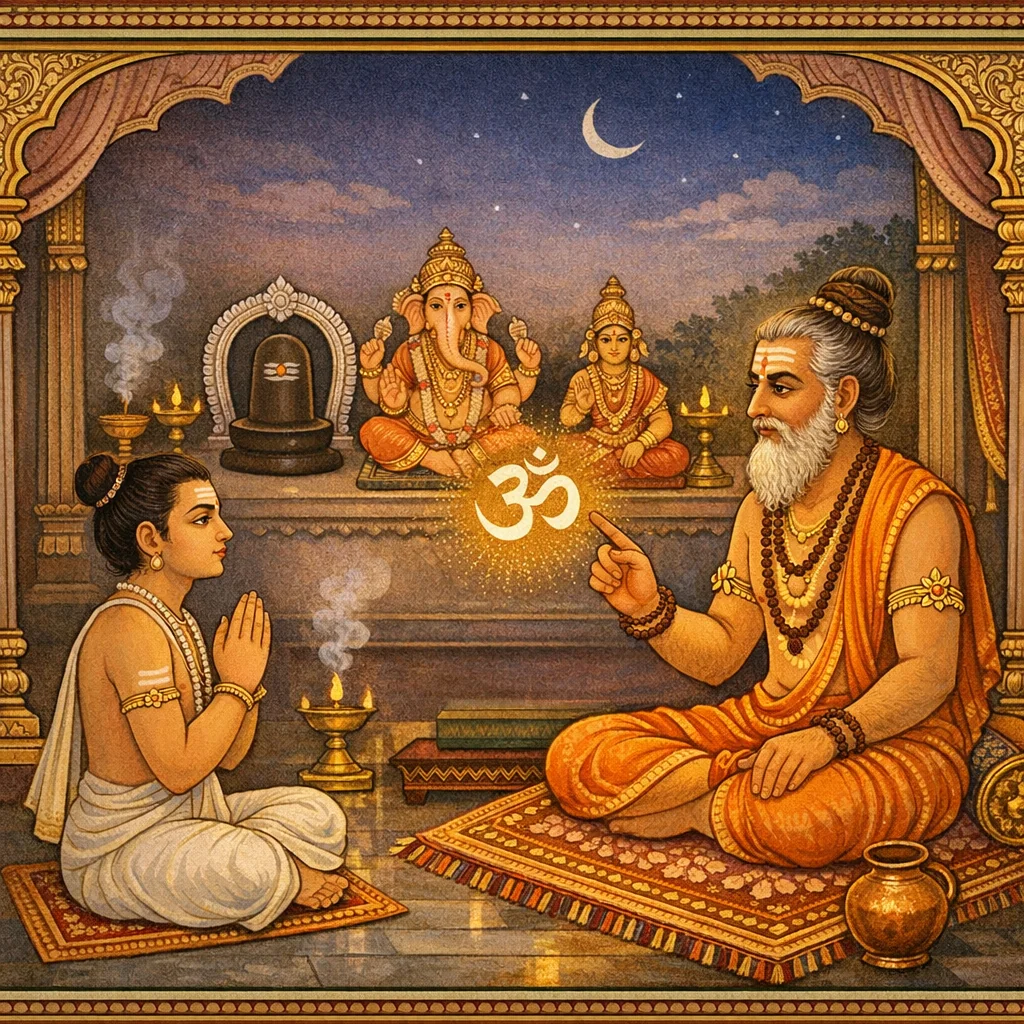
This chapter continues the theological discourse introduced in the Śālagrāma narrative (śālagrāma-kathānaka), recalling Maheśvara’s manifestation and the theme of the liṅga-form. It urges devotional worship of Hari in the Śālagrāma form and reverence for the paired divinities Hari and Hara, with special emphasis during the cāturmāsya season. Worship is praised as soteriologically potent—granting heaven and liberation (mokṣa)—and is supported by ritual-ethical norms: Veda-grounded duties (vedokta karma), pūrta/ iṣṭa meritorious works, pañcāyatana worship, truthfulness, and freedom from greed. The chapter also treats eligibility and moral formation, teaching that disciplined qualities such as viveka, along with brahmacarya and contemplation of the twelve-syllable mantra (dvādaśākṣara), are central. It states that pūjā should be performed with sixteen upacāras even without mantras. The chapter ends with a narrative transition (the night passes and the parties depart) and a phalaśruti affirming that hearing, reciting, or teaching this passage does not diminish one’s merit.
Shlokas
Verse 1
गालव उवाच । इति ते कथितं सर्वं शालग्रामकथानकम् । महेश्वरस्य चोत्पत्तिर्यथा लिंगत्वमाप सः
Gālava said: “Thus I have told you the entire account of Śālagrāma, and also how Maheśvara manifested and how he came to assume the form of a liṅga.”
Verse 2
तस्माद्वरं लिंगरूपं शालग्रामगतं हरिम् । येऽर्चयंति नरा भक्त्या न तेषां दुःखयातनाः
Therefore, it is best to worship with devotion Hari present in Śālagrāma, in liṅga-like form; for those men who worship thus, there are no painful torments.
Verse 3
चातुर्मास्ये समायाते विशेषात्पूजयेच्च तौ । अर्चितौ यावभेदेन स्वर्गमोक्षप्रदायकौ
When Cāturmāsya arrives, one should worship those two with special care. When worshipped—even with so much as a barley-grain’s measure of distinction—they become bestowers of heaven and liberation.
Verse 4
देवौ हरिहरौ भक्त्या विप्रवह्निगवां गतौ । येऽर्चयंति महाशूद्र तेषां मोक्षप्रदोहरिः
The two deities—Hari and Hara—are approached with devotion through service to brāhmaṇas, the sacred fire, and cows. O great Śūdra, for those who worship, Hari becomes the giver of liberation.
Verse 5
वेदोक्तं कारयेत्कर्म पूर्तेष्टं वेदतत्परः । पंचायतनपूजा च सत्यवादो ह्यलोलता
One devoted to the Veda should perform the rites enjoined by the Veda—both iṣṭa and pūrta works—together with pañcāyatana worship, truthfulness, and steadfastness free from fickleness.
Verse 6
विवेकादिगुणैर्युक्तः स शूद्रो याति सद्गतिम् । ब्रह्मचर्यं तपो नान्यद्द्वादशाक्षरचिंतनात् १
Endowed with discernment and other virtues, even a Śūdra attains the good destination. For him, there is no austerity superior to brahmacarya and the contemplation of the twelve-syllabled mantra.
Verse 7
मन्त्रैर्विना षोडश सोपचारैः कार्या सुपूजा नरकादिहंतुः । यथा तथा वै गिरिजापतेश्च कार्या महा शूद्र महाघहंत्री
Even without mantras, one should perform an excellent worship with the sixteen traditional offerings—for it destroys hellish destinies and the like. In the same way, O great Śūdra, the worship of Girijā’s Lord (Śiva) should be performed; it is a great destroyer of grievous sins.
Verse 8
ब्रह्मोवाच । एवं कथयतोरेषा रजनी क्षयमाययौ । सच्छूद्रो गालवश्चैव शिष्यैश्च परिवारितः
Brahmā said: As they were speaking thus, that night came to its end. And the virtuous Śūdra, and Gālava as well, were surrounded by their disciples.
Verse 9
स तेन पूजितो विप्रो ययौ शीघ्रं निजाश्रमम्
That Brahmin, having been honored by him, quickly went to his own hermitage.
Verse 10
य इमं श्रुणुयान्मर्त्यो वाचयेत्पाठयेच्च वा । श्लोकं वा सर्वमपि च तस्य पुण्यक्षयो न हि
Any mortal who hears this, or recites it, or has it recited—whether a single śloka or even the whole of it—never suffers any decline of merit.
Verse 260
इति श्रीस्कांदे महापुराण एकाशीतिसाहस्र्यां संहितायां षष्ठे नागरखण्डे हाटकेश्वरक्षेत्रमाहात्म्ये शेषशाय्युपाख्याने ब्रह्मनारदसंवादे चातुर्मास्य माहात्म्ये पैजवनोपाख्याने षष्ट्युत्तरद्विशततमोऽध्यायः
Thus ends the two-hundred-and-sixtieth chapter of the Śrī Skanda Mahāpurāṇa, in the eighty-one-thousand-śloka Saṁhitā, in the sixth book, the Nāgara Khaṇḍa—within the Māhātmya of the sacred region of Hāṭakeśvara, in the Śeṣaśāyī episode, in the dialogue of Brahmā and Nārada, in the Māhātmya of Cāturmāsya, in the Paijavana episode.