Adhyaya 259
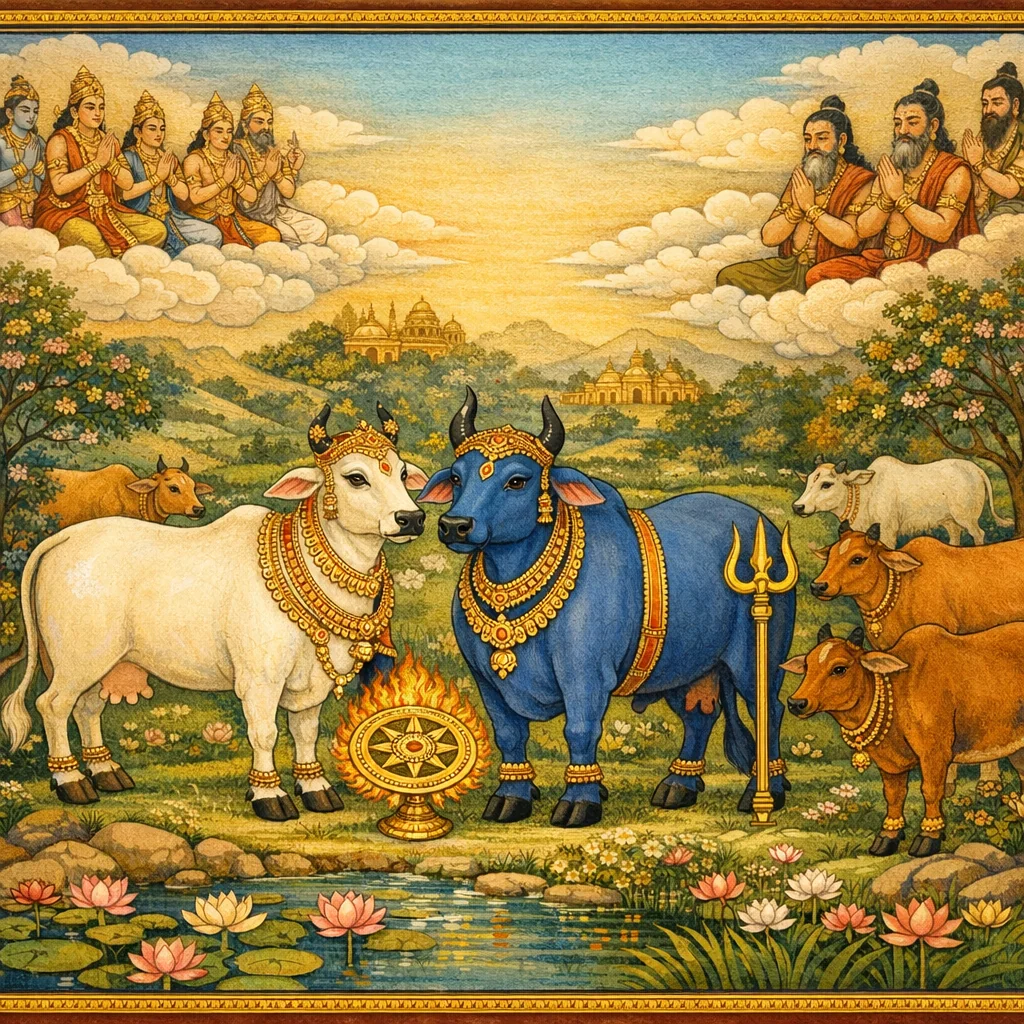
Chapter 259 delivers a multi-part tīrthamāhātmya. The sages discover a colossal fallen liṅga and sense an all-pervading, time-accumulated potency, with the earth portrayed as distressed. They ritually re-establish (pratiṣṭhā) the liṅga and simultaneously define the sacred river’s identity: the waters become Narmadā (Reva), and the liṅga is named in relation to Amarakantaka. The text then lists practice-based merits—bathing in and sipping Narmadā water, performing pitṛ-tarpaṇa, and worshipping Narmadā-linked liṅgas—highlighting Cāturmāsya observances such as liṅga-pūjā, Rudra-japa, Harā-pūjā, pañcāmṛta abhiṣeka, honey offerings, and dīpa-dāna. Brahmā’s voice frames ongoing concern about cosmic disturbance; devas arrive and offer extended praise of brāhmaṇas, stressing the sacred power of speech (vāg) and the duty to avoid provoking brāhmaṇical wrath. The narrative shifts to Goloka, where sages and devas behold Surabhī’s son, the bull “Nīla,” among named cows. A defining passage explains his name and links him with dharma and Śiva. The sages extol Nīla as cosmic support and dharma-form, warn against transgression toward the divine bull/dharma, and describe śrāddha-related consequences when a vṛṣabha is not released for the departed. The chapter closes with a ritual, iconographic arming of Nīla (cakra and śūla motifs), his dispersal among the cows, and a final verse connecting curse, devotion, and transformation into stone within Reva’s waters.
Shlokas
Verse 1
गालव उवाच । तस्मिंस्तु पतिते लिंगे योजनायामविस्तृते । विषादार्त्ता ऋषिगणास्तत्राजग्मुः सहस्रशः
Gālava said: When that liṅga had fallen and lay spread over a full yojana, hosts of sages—stricken with grief—came there in their thousands.
Verse 2
व्यलोकयन्त सर्वत्र दृष्ट्वा तत्र महेश्वरम् । नासौ दृष्टिपथे तेषां बभूव भयविह्वलः
They looked about everywhere, seeking Maheśvara there; yet He did not come within their field of sight, and they became shaken with fear.
Verse 3
वीर्यं वर्षसहस्राणि बहून्यपि सुसंचितम् । पृथिवीं सकलां व्याप्य स्थितं ददृशिरे द्विजाः
The twice-born beheld a mighty potency—accumulated over many thousands of years—standing forth, pervading the entire earth.
Verse 4
तद्दृष्ट्वा सुमहल्लिंगं रुधिराक्तं जलैः प्लुतम् । ब्राह्मणाः संशयगता दह्यमाना वसुन्धरा
Seeing that exceedingly great liṅga—smeared with blood and drenched in waters—the Brāhmaṇas fell into doubt, while the earth itself seemed to be burning.
Verse 5
तल्लिंगं तत्र संस्थाप्य चक्रुस्तां नर्मदां नदीम् । तज्जलं नर्मदारूपं ल्लिंगं चामरकण्टकम्
Establishing that liṅga there, they brought forth the river Narmadā. That water became the form of Narmadā, and that liṅga became known as Amarakantaka.
Verse 6
नरकं वारयत्येतत्सेवितं नरकापहम् । भूतग्रहाश्च सर्वेऽपि यास्यंति विलयं ध्रुवम्
This tīrtha and holy observance, when resorted to, wards off hell and destroys the fate of hell; and all spirits and afflicting seizures (bhūta-grahas) surely go to dissolution.
Verse 7
तत्र स्नात्वा जलं पीत्वा संतर्प्य च पितॄंस्तथा । सर्वान्कामानवाप्नोति मनुष्यो भुवि दुर्लभान्
Bathing there, drinking the water, and likewise satisfying the Pitṛs, a person attains all desires—rare to obtain in this world.
Verse 9
लिंगानि नार्मदेयानि पूजयिष्यंति ये नराः । तेषां रुद्रमयो देहो भविष्यति न संशयः । चातुर्मास्ये विशेषेण लिंगपूजा महाफला । चातुर्मास्ये रुद्रजपं हरपूजा शिवे रतिः
Those who worship the liṅgas of the Narmadā region—their bodies become imbued with Rudra; of this there is no doubt. Especially during Cāturmāsya, worship of the liṅga yields great fruit. In Cāturmāsya, Rudra-japa, worship of Hara, and devotion to Śiva are all praised.
Verse 10
पंचामृतेन स्नपनं न तेषांगर्भवेदना । ये करिष्यंति मधुना सेचनं लिंगमस्तके
For those who bathe the liṅga with pañcāmṛta, there will be no pain of the womb—no suffering connected with pregnancy. And those who pour honey upon the top of the liṅga likewise gain such auspicious relief.
Verse 11
तेषां दुःखसहस्राणि यास्यंति विलयं ध्रुवम् । दीपदानं कृतं येन चातु र्मास्ये शिवाग्रतः
For them, thousands of sorrows surely pass into dissolution—for the one who offers the gift of lamps (dīpa-dāna) before Śiva during Cāturmāsya.
Verse 12
कुलकोटिं समुद्धृत्य स्वेच्छया शिवलोकभाक् । चन्दनागुरुधूपैश्च सुश्वेतकुसुमैरपि
Uplifting and delivering a koṭi of one’s lineage, one attains Śiva’s world by one’s own chosen resolve—especially by worship with sandalwood and agaru incense, and also with pure white flowers.
Verse 13
नर्मदाजललिंगं ये ह्यर्च यिष्यंति ते शिवाः । शिला हरत्वमापन्नाः प्राणिनामपि का कथा
Those who worship the liṅga formed of Narmadā’s water indeed become Śiva-like. When even stones attain the state of Hari (liberation/divinity), what then need be said of living beings?
Verse 14
तत्संभूतं महालिंगं जलधारणसंयुतम् । पूजयित्वा विधानेन चातुर्मास्ये शिवो भवेत्
Worshipping, according to rule, that great liṅga which has thus arisen and is endowed with the power of holding and flowing water—during the Cāturmāsya season—one becomes Śiva-like (attains Śiva’s state).
Verse 15
चातुर्मास्ये ये मनुजा नर्मदाऽमरकण्टके । तीर्थे स्नास्यंति नियतास्तेषां वासस्त्रिविष्टपे
Those who, disciplined and observant, bathe at the Amarakantaka tīrtha of the river Narmadā during Cāturmāsya—shall have their dwelling in Triviṣṭapa (heaven).
Verse 16
ब्रह्मोवाच । इत्युक्त्वा ते द्विजास्तत्र स्थाप्य लिंगं यथाविधि । अमरकण्टकतीर्थे नर्मदां च महानदीम्
Brahmā said: Having spoken thus, those twice-born ones installed the liṅga there according to the proper rite, at the Amarakantaka tīrtha upon the great river Narmadā.
Verse 17
पुनश्चिन्तापरा जाता विश्वस्य क्षोभकारणे । पद्मासनगता भूत्वा प्राणायामपरायणाः
Again they became wholly intent on contemplation concerning the cause of the world’s disturbance; seated in lotus posture, they devoted themselves to prāṇāyāma.
Verse 18
चिन्तयामासुरव्यग्रं हृदयस्थं महे श्वरम् । ततो देवा महेंद्राद्याः संप्राप्यामरकण्टकम्
With undistracted minds they meditated on Maheśvara abiding in the heart. Then the gods—beginning with great Indra—arrived at Amarakantaka.
Verse 19
ब्राह्मणानां स्तुतिं चक्रुर्विनयानतकन्धराः । नमोऽस्तु वो द्विजातिभ्यो ब्रह्मविद्भ्यो महेश्वराः
With necks bowed in humility, they offered praise to the brāhmaṇas: “Salutations to you, O twice-born—knowers of Brahman—O great lords.”
Verse 20
भूसुरेभ्यो गुरुभ्यश्च विमुक्तेभ्यश्च वंधनात् । यूयं गुणत्रयातीता गुणरूपा गुणाकराः
Salutations to the earth-born gods (brāhmaṇas), to the gurus, and to those freed from bondage. You are beyond the three guṇas, yet you embody the guṇas and are the very mine of virtues.
Verse 21
गुणत्रयमयैर्भावैः सततं प्राणबुद्बुदाः । येषां वाक्यजलेनैव पापिष्ठा अपि शुद्धताम् । प्रयांति पापपुंजाश्च भस्मसाद्यांति पापिनाम्
Living beings are ever like bubbles of breath, driven by states born of the three guṇas; yet by the water of your words alone even the most sinful attain purity, and the heaps of sinners’ sins are reduced to ashes.
Verse 22
शस्त्रं लोहमयं येषां वागेव तत्समन्विताः । पापैः पराभिभूतानां तेषां लोकोत्तरं बलम्
For those whose weapon is made of iron and whose speech itself is armed likewise, even when assailed and overwhelmed by sins, there arises within them an otherworldly (lokottara) power.
Verse 23
क्षमया पृथिवीतुल्याः कोपे वैश्वानरप्रभाः । पातनेऽनेकशक्तीनां समर्था यूयमेव हि
In forbearance you are like the Earth itself; in wrath you blaze like the cosmic fire. Indeed, you alone are capable of bringing down powers of many kinds.
Verse 24
स्वर्गादीनां तथा याने भवन्तो गतयो ध्रुवम्
And in the journey to heaven and other higher realms, you are surely the destined pathways.
Verse 25
सत्कर्मकारकाश्चैव सत्कर्मनिरताः सदा । सत्कर्मफलदातारः सत्कर्मेभ्यो मुमुक्षवः
You are doers of noble deeds, ever intent on noble deeds; you bestow the fruits of noble deeds, and through noble deeds you seek liberation (mokṣa).
Verse 26
सावित्रीमंत्रनिरता ये भवंतोऽघनाशनाः । आत्मानं यजमानं च तारयंति न संशयः
Those among you devoted to the Sāvitrī mantra—destroyers of sin—deliver both yourselves and the sacrificer; of this there is no doubt.
Verse 27
वह्नयश्च तथा विप्रास्तर्पिताः कार्यसाधकाः । चातुर्मास्ये विशेषेण तेषां पूजा महाफला
When the sacred fires and the brāhmaṇas are duly satisfied, they accomplish one’s aims. Especially during Cāturmāsya, worship offered to them yields great fruit.
Verse 28
तावन्न वज्रमिंद्रस्य शूलं नैव पिनाकिनः
So long as that power stands, Indra’s thunderbolt is not fearsome, nor even the trident of Pinākin (Śiva).
Verse 29
दण्डो यमस्य तावन्नो यावच्छापो द्विजोद्भवः । अग्निना ज्वाल्यते दृश्यं शापोद्दिष्टानपि स्वयम्
As long as the curse born of a brāhmaṇa is present, Yama’s rod of punishment is not so immediate. One sees that the curse is kindled like fire, burning of its own accord even those merely pointed out by it.
Verse 30
हंति जातानजातांश्च तस्माद्विप्रं न कोपयेत् । विप्रकोपाग्निना दग्धो नरकान्नैव मुच्यते
It destroys both the born and the unborn; therefore one should not provoke a brāhmaṇa to anger. Burned by the fire of a brāhmaṇa’s wrath, one is not released from the hells.
Verse 31
शस्त्रक्षतोऽपि नरकान्मुच्यते नात्र संशयः । देवानां मधुधान्यानां सामर्थ्यं भेदनेन हि
Even one wounded by weapons can be freed from hell—of this there is no doubt. For the efficacy of offerings to the gods, such as honey and grains, lies indeed in their proper distribution as prescribed.
Verse 32
वाङ्मात्रेण हि विप्रस्य भिद्यते सकलं जगत् । ते यूयं गुरवोऽस्माकं विश्वकारणकारकाः । प्रसादपरमा नित्यं भवंतु भुवनेश्वराः
By a brāhmaṇa’s mere utterance, the whole world can be set in motion and made to change. Therefore you—our revered teachers—are truly the makers of causes that shape the universe. May you, lords of the world, ever hold grace as supreme and continually bestow your favor.
Verse 33
ईश्वरेण विना सर्वे वयं लोकाश्च दुःखिताः । तत्कथ्यतां स भगवान्कुत्रास्ते परमेश्वरः
Without the Lord, all of us—and the worlds as well—fall into suffering. Therefore tell us: where is that Blessed One, the Supreme Lord, dwelling now?
Verse 34
गालव उवाच । ज्ञात्वा मुनिभयत्रस्तं देवेशं शूलपाणिनम्
Gālava said: Having understood that the Lord of the gods—Śiva, the trident-bearer—had been disturbed by fear on account of the sages, (they proceeded accordingly).
Verse 35
सुरभीगर्भसंभूतं देवानूचुर्महर्षयः । स्वागतं देवदेवेभ्यो ज्ञातो वै स महेश्वरः
The great seers spoke to the gods of him born from Surabhī’s womb: “Welcome, O gods among gods! Truly, that Maheśvara is known to us.”
Verse 36
तत्र गच्छंतु देवेशा यत्र देवः सनातनः । इत्युक्त्वा ते महात्मानः सह देवैर्ययुस्तदा
“Let the lords of the gods go there—where the Eternal Deity abides.” Having said this, those great souls then set out together with the gods.
Verse 37
गोलोकं देवमार्गेण यत्र पायसकर्दमाः । घृतनद्योमधु ह्रदा नदीनां यत्र संघशः
Along the gods’ celestial path they reached Goloka—where the mire is like sweet rice-pudding, where rivers flow with ghee and lakes are of honey, and where hosts of rivers gather together.
Verse 38
पूर्वजानां गणाः सर्वे दधिपीयूषपाणयः । मरीचिपाः सोमपाश्च सिद्धसंघास्तथा परे
There were all the hosts of the primordial beings, holding curd and the nectar-like pīyūṣa; there were also drinkers of marīci and drinkers of soma, and other assemblies of Siddhas besides.
Verse 39
घृतपाश्चैव साध्याश्च यत्र देवाः सनातनाः । ते तत्र गत्वा मुनयो ददृशुः सुरभीसुतम्
There were drinkers of ghee, and the Sādhyas too—where the eternal gods dwell. Having gone there, the sages beheld Surabhī’s son.
Verse 40
तेजसा भास्करं चैव नीलनामेति विश्रुतम् । इतस्ततोऽभिधावंतं गवां संघातमध्यगम्
Radiant like the sun, famed by the name Nīla, he was seen running here and there amid a dense multitude of cows.
Verse 41
नंदा सुमनसा चैव सुरूपा च सुशीलका । कामिनी नंदिनी चैव मेध्या चैव हिरण्यदा
There were (cows) named Nandā and Sumanasā, Surūpā and Suśīlakā; Kāminī and Nandinī as well, and also Medhyā and Hiraṇyadā.
Verse 42
धनदा धर्मदा चैव नर्मदा सकलप्रिया । वामनालंबिका कृष्णा दीर्घशृंगा सुपिच्छिका
They were known as Dhanadā (giver of wealth), Dharmadā (giver of righteousness), Narmadā (bestower of delight), and Sakalapriyā (beloved of all); also as Vāmanālaṃbikā, Kṛṣṇā (dark-hued), Dīrghaśṛṅgā (long-horned), and Supicchikā (beautifully crested).
Verse 43
तारा तरेयिका शांता दुर्विषह्या मनोरमा । सुनासा दीर्घनासा च गौरा गौरमुखीह या
They were called Tārā and Tareyikā; Śāntā (peaceful), Durviṣahyā (irresistible), and Manoramā (delightful); also Sunāsā (fair-nosed), Dīrghanāsā (long-nosed), Gaurā (bright/fair), and Gauramukhī (fair-faced).
Verse 44
हरिद्रवर्णा नीला च शंखिनी पंचवर्णका । विनताभिनताचैव भिन्नवर्णा सुपत्रिका
One was turmeric-hued, another blue; one was Śaṃkhinī, and another of five colors; also Vinatā and Abhinatā, one of varied colors, and one with splendid markings (Supatrikā).
Verse 45
जयाऽरुणा च कुण्डोध्नी सुदती चारुचंपका । एतासां मध्यगं नीलं दृष्ट्वा ता मुनिदेवताः
There were also Jayā, Aruṇā, Kuṇḍodhnī, Sudatī, and Cārucaṃpakā. Seeing Nīla standing in their midst, those divine beings, like sages, beheld him with reverent awe.
Verse 46
विचरंति सुरूपं तं संजातविस्मयोन्मुखाः । मुनीश्वराः कृपाविष्टा इन्द्राद्या हृष्टमानसाः । स्तुतिमारेभिरे कर्त्तुं तेजसा तस्य तोषिताः
As that fair one moved about, the great sages—faces lifted in wonder—were filled with compassion; Indra and the others, gladdened at heart, began to sing hymns of praise, satisfied by his radiant splendor.
Verse 47
शूद्र उवाच । कथं नीलेति नामासौ जातोयमद्भुताकृतिः । किमस्तुवन्प्रसन्नास्ते ब्राह्मणा विश्वकारणम्
The Śūdra said: “How did this wondrous-formed one come to bear the name ‘Nīla’? And what did those pleased brāhmaṇas hymn, as they praised the Cause of the universe?”
Verse 48
गालव उवाच । लोहितो यस्तु वर्णेन मुखे पुच्छे च पांडुरः
Gālava said: “He who is red in hue, yet pale at the face and at the tail…”
Verse 49
श्वेतः खुरविषाणेषु स नीलो वृषभः स्मृतः । चतुष्पादो धर्मरूपो नील लोहितचिह्नकः
“…and white at the hooves and horns—he is remembered as the bull called Nīla: four-footed, the very form of Dharma, marked with signs of blue and red.”
Verse 50
कपिलः खुरचिह्नेषु स नीलो वृषभः स्मृतः । योऽसौ महेश्वरो देवो वृषश्चापि स एव हि
When the hoof-marks are tawny, he too is remembered as the bull Nīla. Indeed, that very Lord Maheśvara is also the Bull (Vṛṣa) himself.
Verse 51
चतुष्पादो धर्मरूपो नीलः पंचमुखो हरः । यस्य संदर्शनादेव वाजपेयफलं लभेत्
Nīla is four-footed, the embodiment of Dharma—Hara (Śiva) with five faces. By his mere darśana, one attains the fruit of the Vājapeya sacrifice.
Verse 52
नीले च पूजिते यस्मिन्पूजितं सकलं जगत् । स्निग्धग्रासप्रदानेन जगदाप्यायितं भवेत्
When Nīla is worshipped, it is as though the entire world has been worshipped. And by offering nourishing, unctuous morsels of food, one becomes a cause of the world’s refreshment and well-being.
Verse 53
यस्य देहे सदा श्रीमान्विश्वव्यापी जनार्दनः । नित्यमर्चयते योऽसौ वेदमन्त्रैः सनातनैः
In whose very being the glorious, all-pervading Janārdana abides—he is the one who continually worships (the Lord) with the eternal mantras of the Veda.
Verse 54
ऋषय ऊचुः । त्वं देवः सर्वगोप्तॄणां विश्वगोप्ता सनातनः । विघ्नहर्ता ज्ञानदश्च धर्मरूपश्च मोक्षदः
The sages said: You are the God of all protectors—the eternal Guardian of the universe; the remover of obstacles, the giver of knowledge, the very form of dharma, and the bestower of liberation.
Verse 55
त्वमेव धनदः श्रीदः सर्वव्याधिनिषूदनः । जगतां शर्मकरणे प्रवृत्तः कनकप्रदः
You alone are the giver of wealth and auspicious fortune, the destroyer of all diseases; intent on bringing peace to beings, you bestow even gold.
Verse 56
तेजसां धाम सर्वेषां सौरभेय महाबल । शृंगाग्रे धृतकैलासः पार्वतीसहितस्त्वया
O mighty Saurabheya, abode of all splendor: upon the summit of your horn you bear Kailāsa, with Pārvatī together at your side.
Verse 57
३३ स्तुत्यो वेदमयो वेदात्मा वेदवित्तमः । वेदवेद्यो वेदयानो वेदरूपो गुणाकरः
Worthy of praise by the thirty-three gods, made of the Veda, the very soul of the Veda, the supreme knower of the Veda—known through the Veda, borne by the Veda, Veda-formed, and a treasury of virtues.
Verse 58
गुणत्रयेभ्योऽपि परो याथात्म्यं वेद कस्तव । वृषस्त्वं भगवान्देव यस्तुभ्यं कुरुते त्वघम्
You are beyond even the three guṇas—who can truly know your reality? O Blessed Lord, whoever commits sin against you is to be known as a vṛṣa, a transgressor.
Verse 59
वृषलः स तु विज्ञेयो रौरवादिषु पच्यते । यदा स्पृष्टः स तु नरो नरकादिषु यातनाः
Such a person is to be known as a vṛṣala; he is cooked in hells such as Raurava. When the karmic consequence touches him, that man undergoes torments in hell and the like.
Verse 60
सेवते पापनिचयैर्निगाढप्रायबन्धनैः । क्षुत्क्षामं च तृषाक्रांतं महाभारसमन्वितम्
He is bound fast by heaps of accumulated sin—by tight and heavy bonds—wasted by hunger, overwhelmed by thirst, and laden with a great burden.
Verse 61
निर्दया ये प्रशोष्यंति मतिस्तेषां न शाश्वती । चतुर्भिः सहितं मर्त्या विवाहविधिना तु ये
Those who are cruel and make others wither—steady wisdom does not remain with them. And those mortals who, according to the rules of marriage, (enter into union) together with four…
Verse 62
विवाहं नीलरूपस्य ये करिष्यंति मानवाः । पितॄनुद्दिश्य तेषां वै कुले नैवास्ति नारकी
Those people who perform the sacred marriage-rite (vivāha) for Nīlarūpa, dedicating it to their ancestors—within their lineage, indeed, there will be no one who falls into hellish states.
Verse 63
त्वं गतिः सर्वलोकानां त्वपिता परमेश्वरः । त्वया विना जगत्सर्वं तत्क्षणादेव नश्यति
You are the refuge and final course of all worlds; you are their Father, O Supreme Lord. Without you, the entire universe would perish that very instant.
Verse 64
परा चैव तु पश्यंती मध्यमा वैखरी तथा । चतुर्विधानां वचसामीश्वरं त्वां विदुर्बुधाः
Parā, Paśyantī, Madhyamā, and Vaikharī—these are the four modes of speech. The wise know you to be the Lord of them all.
Verse 65
चतुःशृंगं चतुष्पादं द्विशीर्षसप्तहस्तकम् । त्रिधा बद्धं धर्ममयं त्वामेव वृषभं विदुः
They know you alone as the Bull—four-horned, four-footed, two-headed, seven-handed; bound in three ways; made of Dharma itself.
Verse 66
तृप्तिदं सर्वभूतानां विश्वव्यापकमोजसा । ब्रह्म धर्ममयं नित्यं त्वामात्मानं विदुर्जनाः
You grant fulfillment to all beings; by your potency you pervade the universe. People know you as the eternal Self—Brahman itself, made of Dharma.
Verse 67
अच्छेद्यस्त्वमभेद्यस्त्वमप्रमेयोमहा यशाः । अशोच्यस्त्वमदाह्योऽसि विदुः पौराणिका जनाः
You are uncuttable; you are indivisible; you are immeasurable, of great glory. You are beyond grief and cannot be burned—so the Purāṇa-knowers understand.
Verse 68
त्वदाधारमिदं सर्वं त्वदाधारमिदं जगत् । त्वदाधाराश्च देवाश्च त्वदाधारं तथा मृतम्
All this rests upon you; this whole universe rests upon you. The gods rest upon you—and so too does the realm of the dead.
Verse 69
जीवरूपेण लोकांस्त्रीन्व्याप्य तिष्ठसि नित्यदा । एवं स संस्तुतो नीलो विप्रैस्तैः सोमपायिभिः
In the form of the living self, you pervade the three worlds and abide forever. Thus was Nīla (Nīlarūpa) praised by those brāhmaṇas—drinkers of Soma in sacrifice.
Verse 70
प्रसन्नवदनो भूत्वा विप्रा न्प्रणतितत्परः । पुनरेव वचः प्रोचुर्विप्राः कृतशिवागसः
With serene countenance, intent on receiving the brāhmaṇas’ reverent salutations, they spoke again—those brāhmaṇas who had committed an offence against Śiva.
Verse 71
वरं ददुर्महेशस्य नीलरूपस्य धर्मतः । एकादशाहे प्रेतस्य यस्य नोत्सृज्यते वृषः
In accordance with dharma, they asked a boon of Maheśa in his Nīlarūpa form: “For that departed one (preta) for whom, on the eleventh day, the bull is not released…”
Verse 72
प्रेतत्वं सुस्थिरं तस्य दत्तैः श्राद्धशतैरपि । पुनरेव सुसर्पंतं दृष्ट्वा नीलं महावृषम्
Even after hundreds of Śrāddha offerings had been performed for him, his state as a preta remained firmly fixed. Then, seeing again that great blue bull moving about, the account continues.
Verse 73
स्वल्पक्रोधसमाविष्टं द्विजाश्चक्रुस्तमं कितम् । चक्रं च वामभागेषु शूलं पार्श्वे च दक्षिणे
Slightly stirred to anger, the twice-born (brāhmaṇas) marked him with signs: a discus on the left side, and a trident on the right flank.
Verse 74
उत्ससृजुर्गवां मध्ये तं देवैर्गोपितं तदा । ततो देवगणाः सर्वे महर्षीणां गणाः पुनः । स्वानि स्थानानि ते जग्मुर्मुनयो वीतमत्सराः
Then they let him loose among the herd of cows, while the gods protected him. After that, all the hosts of gods and again the companies of great ṛṣis departed to their own abodes—those sages free from jealousy.
Verse 79
एवमृषीणां दयितासु सक्तः कामार्त्तचित्तो मुनिपुंगवानाम् । शापं समासाद्य शिवोऽपि भक्त्या रेवाजलेऽगात्सुशिलामयत्वम्
Thus, attached to the beloved women of the ṛṣis, his mind tormented by desire, he incurred the curse of those foremost sages; and even Śiva, through devotion, entered the waters of the Revā and attained the state of becoming an auspicious stone (śilā).