Adhyaya 255
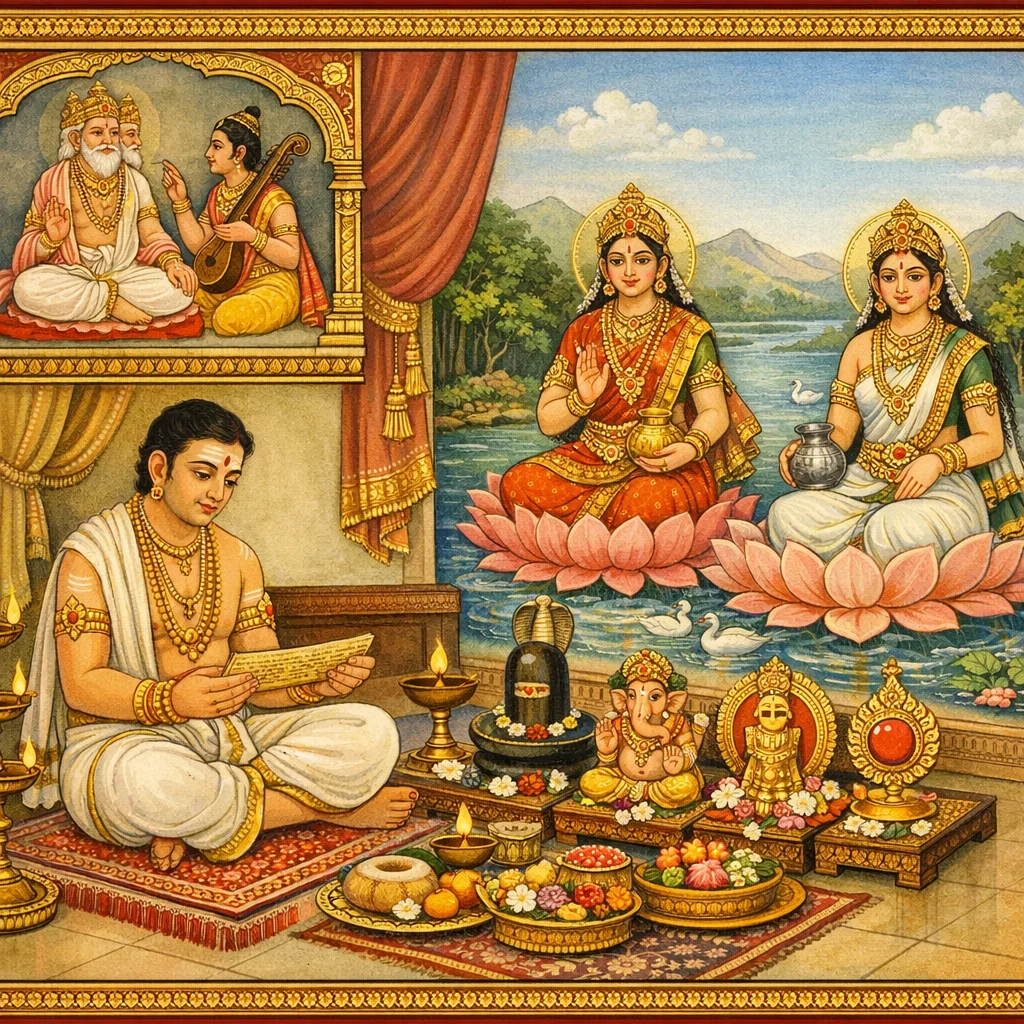
Chapter 255 weaves tīrtha-theology together with guidance for household worship. It proclaims the śāligrāma found in the Gaṇḍakī as svayaṃbhū—naturally self-manifest, not man-made—and links the Narmadā with Mahēśvara, presenting a sacred typology of divine presence revealed through nature. It then lists devotional modes—hearing, partial recitation, full recitation, and sincere, non-deceptive reading—as effective for attaining the “supreme state,” defined as freedom from grief. A Cāturmāsya regimen is outlined: special worship of Gaṇeśa for gains, of Sūrya for health, and pañcāyatana practice for householders, with heightened merit during the four-month observance. The chapter foregrounds Lakṣmī–Nārāyaṇa worship through śāligrāma (along with dvāravatī-śilā, tulasī, and the dakṣiṇāvarta śaṅkha), promising purification, prosperity, the steady abiding of “Śrī” in the home, and liberation-oriented fruits. It closes by affirming that devotion is sufficient for all, since worship of the all-pervading Lord is understood as worship of the entire cosmos.
Shlokas
Verse 1
गालव उवाच । एवं ते लब्धशापाश्च पार्वतीशाप पीडिताः । अनपत्या बभूवुश्च तथा च प्रतिमानवाः
Gālava said: Thus, having incurred the curse and being tormented by Pārvatī’s curse, they became without offspring; moreover, they turned as mere images—human in form, yet as though bereft of living continuity.
Verse 2
शालग्रामस्तु गंडक्यां नर्मदायां महेश्वरः । उत्पद्यते स्वयंभूश्च तावेतौ नैव कृत्रिमौ
The Śālagrāma manifests in the Gaṇḍakī River, and Maheśvara manifests in the Narmadā. Both are svayambhū—self-born—and never fashioned by human hands.
Verse 3
चतुर्विंशतिभेदेन शालग्रामगतो हरिः । परीक्ष्यः पुरुषैर्नित्यमेकरूपः सदाशिवः
Hari, abiding in the Śālagrāma, is spoken of as having twenty-four distinct forms. Yet devotees should ever discern Him as the One—of a single essence—none other than Sadāśiva.
Verse 4
शालग्रामशिला यत्र गंडकीविमले जले । तत्र स्नात्वा च पीत्वा च ब्रह्मणः पदमाप्नुयात्
Where the Śālagrāma stone is found in the pure waters of the Gaṇḍakī—by bathing there and by drinking that water, one attains the exalted state (pada) of Brahmā.
Verse 5
तां पूजयित्वा विधिवद्गंडकीसंभवां शिलाम् । योगीश्वरो विशुद्धात्मा जायते नात्र संशयः
Having worshipped, according to proper rite, that stone born of the Gaṇḍakī—the Śālagrāma—one becomes a lord among yogins, of purified soul; of this there is no doubt.
Verse 6
एतत्ते कथितं सर्वं यत्पृष्टोऽहमिह त्वया । यथा हरो विप्रशापं प्राप्तवांस्तन्निशामय
Thus I have told you all that you asked of me here. Now listen to how Hara (Śiva) came to receive a brāhmaṇa’s curse.
Verse 7
यः शृणोति नरो भक्त्या वाच्यमानामिमां कथाम् । गिरीशनृत्यसंबन्धामुमादेहार्द्धवर्णिताम्
Whoever devoutly listens to this recited account—connected with Girīśa’s (Śiva’s) dance and describing Umā as sharing half his body—
Verse 8
ब्रह्मणः स्तुतिसंयुक्तां स गच्छेत्परमां गतिम् । श्लोकार्द्धं श्लोकपादं वा समस्तं श्लोकमेव वा
—and joined with Brahmā’s praise—he would attain the supreme goal, whether he hears (or recites) half a verse, a quarter-verse, or even a complete verse.
Verse 9
यः पठेदविरोधेन मायामानविवर्जितः । स याति परमं स्थानं यत्र गत्वा न शोचति
Whoever recites this without contentiousness, free from deceit and pride, reaches the highest abode—having gone there, one does not grieve.
Verse 11
यथा ब्रह्मादयो देवा गीतवाद्याभियोगतः । परां सिद्धि मवापुस्ते दुर्गाशिवसमीपतः
Just as Brahmā and the other gods, through devoted engagement in song and instrumental music, attained the supreme accomplishment in the presence of Durgā and Śiva—
Verse 12
वर्षाकाले च संप्राप्ते भक्तियोगे जनार्दने । महेश्वरेऽथ दुर्गायां न भूयः स्तनपो भवेत्
When the rainy season arrives, if one abides in bhakti-yoga toward Janārdana, and likewise toward Maheśvara and Durgā, one will not again become a suckling—indeed, one will not be reborn.
Verse 13
गणेशस्य सदा कुर्याच्चातुर्मास्ये विशेषतः । पूजां मनुष्यो लाभार्थं यत्नो लाभप्रदो हि सः
One should always perform worship of Gaṇeśa—especially during Cāturmāsya. If one strives in that worship seeking prosperity, that very effort indeed becomes a giver of gain.
Verse 14
सूर्यो नीरोगतां दद्याद्भक्त्या यैः पूज्यते हि सः । चातुर्मास्ये समायाते विशेषफलदो नृणाम्
The Sun bestows freedom from disease upon those who worship him with devotion. And when the sacred Cāturmāsya season arrives, such worship yields special fruit for human beings.
Verse 15
इदं हि पंचायतनं सेव्यते गृहमेधिभिः । चातुर्मास्ये विशेषेण सेवितं चिंतितप्रदम्
Indeed, this Pañcāyatana form of worship is practiced by householders. When it is undertaken especially during Cāturmāsya, it grants the cherished aims one has held within the heart.
Verse 16
शालग्रामगतं विष्णुं यः पूजयति नित्यदा । द्वारवतीचक्रशिलासहितं मोक्षदायकम्
Whoever worships daily Viṣṇu present in the Śālagrāma—together with the sacred Cakra-śilā of Dvāravatī—worships that which bestows liberation (mokṣa).
Verse 17
चातुर्मास्ये विशेषेण दर्शनादपि मुक्तिदम् । यस्मिन्स्तुते स्तुतं सर्वं पूजिते पूजितं जगत्
In Cāturmāsya, most especially, even the mere sight of Him grants liberation. For when He is praised, all is praised; when He is worshipped, the whole world is worshipped.
Verse 18
पूजितः पठितो ध्यातः स्मृतो वै कलुषापहः । शालग्रामे किं पुनर्यच्छालग्रामगतो हरिः
When He is worshipped, recited, meditated upon, or remembered, He surely removes impurity. How much more, then, when Hari Himself is present in the Śālagrāma!
Verse 19
पुनर्हि हरिनैवेद्यं फलं चापि धृतं जलम् । चातुर्मास्ये विशेषेण शालग्रामगतं शुभम्
Again, offerings to Hari—fruit and also water held for offering—become especially auspicious in Cāturmāsya when offered to Hari present in the Śālagrāma.
Verse 20
तिलाः पुनंत्यर्पिताश्च शालग्रामस्य शूद्रज । चातुमास्ये विशेषेण नरं भक्त्या समन्वितम्
O son of a Śūdra, sesame seeds offered to the Śālagrāma purify. Especially in Cāturmāsya, they purify a man who is endowed with devotion.
Verse 21
स लक्ष्मीसहितो नित्यं धनधान्यसमन्वितः । महाभाग्यवतां गेहे जायते नात्र संशयः
He, ever accompanied by Lakṣmī and endowed with wealth and grain, is born—indeed, manifests—in the house of the greatly fortunate; of this there is no doubt.
Verse 22
स लक्ष्मीसहितो विष्णुर्विज्ञेयो नात्र संशयः । तं पूजयेन्महाभक्त्या स्थिरा लक्ष्मीर्गृहे भवेत्
Know him to be Viṣṇu together with Lakṣmī—there is no doubt of it. Worship him with great devotion; then Lakṣmī becomes steady within the home.
Verse 23
तावद्दरिद्रता लोके तावद्गर्जति पातकम् । तावत्क्लेशाः शरीरेऽस्मिन्न यावत्पूजयेद्धरिम्
So long as one does not worship Hari, poverty remains in the world, sin roars aloud, and afflictions persist in this very body.
Verse 24
स एव पूज्यते यत्र पंचक्रोशं पवित्रकम् । करोति सकलं क्षेत्रं न तवाऽशुभसंभवः
Where He is worshipped, that sacred circuit of five krośas becomes sanctified; He makes the entire holy region pure—there, no evil can arise for you.
Verse 25
एतदेव महाभाग्यमेतदेवमहातपः । एष एव परो मोक्षो यत्र लक्ष्मीशपूजनम्
This alone is supreme good fortune; this alone is the highest austerity. This itself is the highest liberation—where the worship of Lakṣmī’s Lord is performed.
Verse 26
शंखश्च दक्षिणावर्त्तो लक्ष्मीनारायणात्मकः । तुलसी कृष्णसारोऽत्र यत्र द्वारवती शिला । तत्र श्रीर्विजयो विष्णुर्मुक्तिरेवं चतुष्टयम्
Where there is the right-turning conch embodying Lakṣmī-Nārāyaṇa; where Tulasī and the black antelope-skin are present; and where the Dvāravatī sacred śilā is found—there dwell the fourfold blessings: prosperity, victory, Viṣṇu’s presence, and liberation.
Verse 27
लक्ष्मीनारायणे पूजां विधातुर्मनुजस्य तु । ददाति पुण्यमतुलं मुक्तो भवति तत्क्षणात्
For one who performs worship of Lakṣmī-Nārāyaṇa, incomparable merit is bestowed; and in that very moment he attains liberation.
Verse 28
चातुर्मास्ये विशेषेण पूज्यो लक्ष्मीयुतो हरिः
Especially during Cāturmāsya, Hari united with Lakṣmī should be worshipped.
Verse 29
कुर्वतस्तस्य देवस्य ध्यानं कल्मषनाशनम् । तुलसीमञ्जरीभिश्च पूजितो जन्मनाशनः
Meditation upon that Deity destroys impurity; and when He is worshipped with clusters of Tulasī blossoms, He becomes the destroyer of rebirth.
Verse 30
पूजितो बिल्वपत्रेण चातुर्मास्येऽघहृत्तमः
When worshipped with bilva leaves during Cāturmāsya, He becomes the supreme remover of sin.
Verse 31
सर्वप्रयत्नेन स एव सेव्यो यो व्याप्य विश्वं जगतामधीशः । काले सृजत्यत्ति च हेलया वा तं प्राप्य भक्तो न हि सीदतीति
With every effort, He alone should be served—the Lord of beings who pervades the universe. In time He creates and also withdraws all, even effortlessly; having reached Him, the devotee never falls into ruin.
Verse 255
इति श्रीस्कांदे महापुराण एकाशीतिसाहस्र्यां संहितायां षष्ठे नागरखण्डे हाटकेश्वरक्षेत्रमाहात्म्ये शेषशाय्युपाख्याने ब्रह्मनारदसंवादे चातुर्मास्यमाहात्म्ये लक्ष्मीनारायणमहिमवर्णनंनाम पञ्चपञ्चाशदुत्तरद्विशततमोअध्यायः
Thus ends Chapter 255, entitled “Glorification of Lakṣmī–Nārāyaṇa,” in the Śrī Skanda Mahāpurāṇa—within the Ekāśītisāhasrī Saṃhitā, the sixth book Nāgara Khaṇḍa, the Māhātmya of the Hāṭakeśvara-kṣetra, the Śeṣaśāyī episode, the dialogue of Brahmā and Nārada, and the Cāturmāsya Māhātmya.