Adhyaya 254
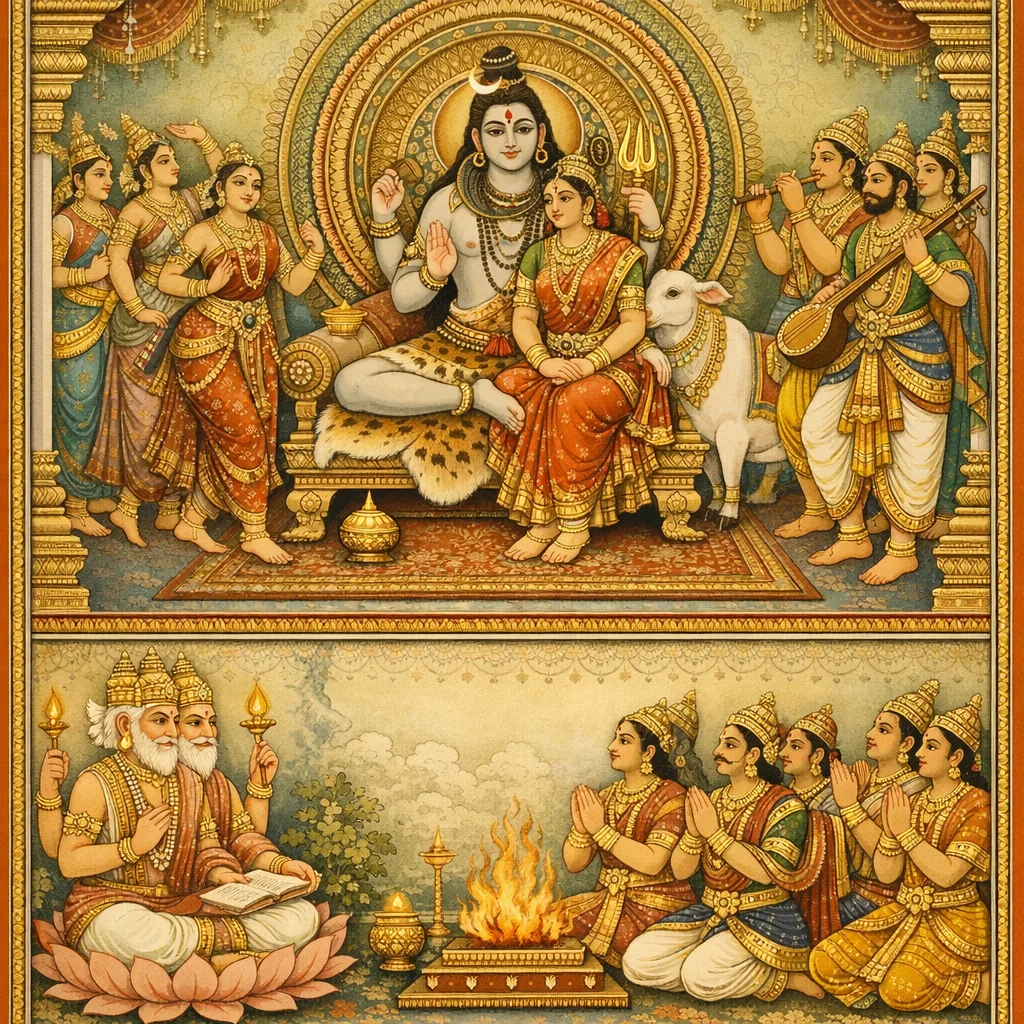
The chapter begins with a questioner (identified as a Śūdra), astonished and eager in devotion, asking for fuller explanation of: (i) how Mahādeva danced while surrounded by the devas, (ii) how the Cāturmāsya observance arose and what vow (vrata) should be undertaken, and (iii) what form of divine grace (anugraha) manifested. The sage Gālava replies by recounting a sacred, merit-bestowing history. As Cāturmāsya arrives, Hara (Śiva) adopts the brahmacarya-vrata and summons devas and ṛṣis to Mount Mandara; Mahādeva begins the Haratāṇḍava dance to delight Bhavānī. A vast cosmic assembly gathers—gods, sages, siddhas, yakṣas, gandharvas, apsarases, and gaṇas—and elaborate musical systems are described, with many classes of instruments, rhythms, and vocal lineages. Personified rāgas then appear as emanations of Śiva with their consorts, weaving cosmology and subtle-body imagery (cakra references) into an aesthetic-theological vision. When the seasonal cycle completes, Pārvatī is pleased and foretells a future event: a liṅga, fallen due to a brāhmaṇa’s curse, will become world-venerated and linked with the waters of the Narmadā. A Śiva-stotra follows, and Śiva grants a phalaśruti: devotees who recite it with bhakti will not suffer separation from what they seek, will gain health and prosperity across births, enjoy worldly goods, and ultimately reach Śiva’s realm. The chapter closes with Brahmā and other deities praising Śiva’s all-pervasive nature and affirming the non-difference of Śiva and Viṣṇu, along with Gālava’s concluding salvific assurance for those who contemplate the divine form.
Shlokas
Verse 1
शूद्र उवाच । इदमाश्चर्यरूपं मे प्रतिभाति वचस्तव । यद्यपि स्यान्महाक्लेशो वदतस्तव सुव्रत
The Śūdra said: “Your words appear wondrous to me. Even if great hardship should arise for you while speaking, O you of excellent vow…”
Verse 2
तथापि मम भाग्येन मत्पुण्यैर्मद्गृहं गतः । न तृप्ये त्वन्मुखांभोजाच्च्युतं वाक्यामृतं पुनः
“Even so, by my good fortune and the merit I have earned, you have come to my home. Yet I am not satisfied, again and again, with the nectar of your words that flows from your lotus-like mouth.”
Verse 3
पिबन्गौरीकथाख्यानं विशेषगुणपूरितम् । कथं महेश्वरो नृत्यं चकार सुरसंवृतः
“As he ‘drank in’ the account of Gaurī—filled with extraordinary virtues—how did Maheśvara come to dance, surrounded by the gods?”
Verse 4
चातुर्मास्ये कथं जातं कि ग्राह्यं व्रतमुच्यते । अनुग्रहं कृतवती सा कथं को ह्यनुग्रहः
“How did this come about in the Cāturmāsya season? What vow is said to be undertaken then? How did she bestow grace—and what, indeed, was that grace?”
Verse 5
एतद्विस्तरतो ब्रूहि पृच्छतो मे द्विजोत्तम । भगवान्पूज्यते लोके ममानुग्रहकारकः
Explain this to me in full detail, O best of the twice-born. For that Blessed Lord—who grants me favor—is worshipped throughout the world.
Verse 6
प्रसन्नवदनो भूत्वा स्वस्थः कथय सुव्रत । गालवश्चापि तच्छ्रुत्वा पुनराह प्रहृष्टवान्
With a serene face and composed mind, speak, O man of excellent vow. And Gālava too, hearing that, spoke again—delighted.
Verse 7
गालव उवाच । इतिहासमिमं पुण्यं कथयामि तवानघ । शृणुष्वावहितो भूत्वा यज्ञायुतफलप्रदम्
Gālava said: O sinless one, I shall recount to you this holy legend. Listen with full attention—for it bestows the fruit of ten thousand sacrifices.
Verse 8
चातुर्मास्येऽथ संप्राप्ते हरो भक्तिसमन्वितः । ब्रह्मचर्यव्रतपरः प्रहृष्टवदनोऽभवत्
When the Cāturmāsya season arrived, Hara—filled with devotion—became radiant with joy, intent upon the vow of brahmacarya.
Verse 9
देवतानां च संकल्पं महर्षीणां चकार ह । समागत्य ततो देवा मन्दराचलमास्थिताः
He then formed the resolve in harmony with the gods and the great seers. Thereupon the gods assembled and took their place upon Mount Mandara.
Verse 10
प्रणम्य ते महेशानं तस्थुः प्रांजलयोऽग्रतः । तानुवाच सुरान्सर्वान्हरो दृष्ट्वा समागतान्
Having bowed to Maheśāna (Śiva), they stood before Him with folded hands. Seeing all the gods assembled, Hara addressed them.
Verse 11
पार्वत्याभिहितं प्राह कस्मिन्कार्यांतरे सति । मया नियुक्तेऽभिनये यत्र साहाय्यकारिणः
He spoke as Pārvatī had conveyed: “For what other purpose have you come? In the rite and undertaking appointed by Me, you are to be My helpers.”
Verse 12
भवंत्विंद्रपुरोगाश्च चातुर्मास्ये समागते । ते तथोचुश्च संहृष्टा नमस्कृत्य च शूलिनम्
“So be it—when the sacred Cāturmāsya season arrives, let Indra be at the fore.” Thus they replied with joy; and, bowing to the Trident-bearing Lord (Śiva), they assented.
Verse 13
स्वंस्वं भवनमाजग्मुर्विमानैः सूर्यसन्निभैः । तथाऽषाढे शुक्लपक्षे चतुर्दश्यां महेश्वरः
They returned, each to their own abodes, in aerial chariots radiant like the sun. Then, on the fourteenth day of the bright fortnight in Āṣāḍha, Maheśvara (Śiva)…
Verse 14
प्रनर्त्तयितुमारेभे भवानीतोषणाय च । मंदरे पर्वतश्रेष्ठे तत्र जग्मुर्महर्षयः
He began to dance, to delight Bhavānī (Pārvatī). And the great sages went to Mandara, the foremost of mountains, to witness that divine play.
Verse 15
नारदो देवलो व्यासः शुकद्वैपायनादयः । अंगिराश्च मरीचिश्च कर्दमश्च प्रजापतिः
Nārada, Devala, Vyāsa, and Śuka of the Dvaipāyana line, together with Aṅgiras, Marīci, and Kardama the Prajāpati—all came to that place.
Verse 16
कश्यपो गौतमश्चात्रिर्वसिष्ठो भृगुरेव च । जमदग्निस्तथोत्तंको रामो भार्गव एव च
Kaśyapa, Gautama, Atri, Vasiṣṭha, and Bhṛgu; Jamadagni and Uttaṅka; and Rāma Bhārgava (Paraśurāma) too arrived.
Verse 17
अगस्त्यश्च पुलोमा च पुलस्त्यः पुलहस्तथा । प्रचेताश्च क्रतुश्चैव तथैवान्ये महर्षयः
Agastya, Pulomā, Pulastya, and Pulaha; Pracetā and Kratu as well—along with many other great sages likewise came.
Verse 18
सिद्धा यक्षाः पिशाचाश्च चारणाश्चारणैः सह । आदित्या गुह्यकाश्चैव सा ध्याश्च वसवोऽश्विनौ
Siddhas, Yakṣas, and Piśācas; Cāraṇas together with their companies; the Ādityas, the Guhyakas, the Sādhyas, the Vasus, and the twin Aśvins also came.
Verse 19
एते सर्वे तथेन्द्राद्या ब्रह्मविष्णुपुरोगमाः । समाजग्मुर्महेशस्य नृत्यदर्शनलालसाः
All of these—Indra and the rest, with Brahmā and Viṣṇu at the forefront—assembled, longing to behold the dance of Maheśa (Śiva).
Verse 20
ततो गणा नंदिमुखा रत्नानि प्रददुस्तथा । भूषणानि च वासांसि मुन्यादिभ्यो यथाक्रमम्
Then the gaṇas, led by Nandimukha, distributed jewels; and likewise ornaments and garments to the sages and others, each in proper order.
Verse 21
ततो वाद्यसहस्रेषु वादित्रेषु समंततः । सर्वैर्जयेति चैवोक्ता भगवा न्व्रतमादिशत्
Then, as thousands of instruments resounded on every side and all cried “Victory!”, the Blessed Lord enjoined a vrata, a sacred observance.
Verse 22
भवानी हृष्टहृदया महादेवं व्यलोकयत् । जया च विजया चैव जयन्ती मंगलारुणा
Bhavānī, her heart brimming with delight, gazed upon Mahādeva. With her were Jayā and Vijayā, and also Jayantī, auspicious and dawn-hued.
Verse 23
चतुष्टयसखीमध्ये विर राज शुभानना । तस्याः सान्निध्ययोगेन जगद्भाति गुणोत्तरम्
Amid her four companions, the fair-faced Lady shone in radiant splendor. By the very power of her presence, the world appeared uplifted in virtue and excellence.
Verse 24
यस्याः शरीरजा शोभा वर्णितुं नैव शक्यते । ईशोऽपि गणकोटीभिर्ना नावक्त्त्राभिरीक्षितः
The splendor born of her very body cannot truly be described. Even the Lord himself—beholding with countless hosts and with manifold faces—could not exhaust her beauty.
Verse 25
पिशाचभूतसंघैश्च वृतः परमशोभनः । स्वर्णवेत्रधरो नन्दी बभौ कपिमुखोऽग्रतः
Surrounded by hosts of piśācas and bhūtas, the supremely splendid Nandin appeared, bearing a golden staff, standing at the fore with a monkey-like face.
Verse 26
विद्याधराश्च गंधर्वाश्चि त्रसेनादयस्तथा । चित्रन्यस्ता इव बभुस्तत्र नागा मुनीश्वराः
Vidyādharas and Gandharvas—Citraseṇa and others as well—were present there. The nāgas and great sages appeared as though set in a painting.
Verse 27
श्रीरागप्रमुखा रागास्तस्य पुत्रा महौजसः । अमूर्त्ताश्चैव ते पुत्रा हरदेव समुद्भवाः
The rāgas headed by Śrīrāga were his mighty, radiant sons. Those sons were indeed formless, having arisen from Hara, the divine Lord.
Verse 28
एकैकस्य च षड्भार्याः सर्वासां च पितामहः । ताभिः सहैव ते रागा लीलावपुर्धरास्तथा
Each of them had six consorts, and for them all there was a single grandsire. Together with those wives, the rāgas too assumed playful forms.
Verse 29
प्रादुर्बभूवुः सहसा चिंतितास्तेन शंभुना । तेषां नामानि ते वच्मि शृणुष्व त्वं महाधन
They appeared forth suddenly, having been merely thought of by Śambhu. I shall tell you their names—listen, O greatly fortunate one.
Verse 30
श्रीरागः प्रथमः पुत्र ईश्वरस्य विमोहनः । आसां चक्रे भ्रुवोर्मध्ये परब्रह्म प्रदायकः
Śrīrāga was the first son of Īśvara, the enchanter of hearts. He set the sacred mark in the space between the eyebrows, bestowing the gift of realizing the Supreme Brahman (Parabrahman).
Verse 31
तन्मध्यश्चैव माहेशात्समुद्भूतो गणोत्तमः । द्वितीयोऽथ वसन्तोऽभूत्कटिदेशान्महायशाः
From that very center, from Maheśa, there arose an excellent chief among the gaṇas. Then the second—Vasanta, of great renown—manifested from the region of the waist.
Verse 32
महदंकश्च भूतानां चक्राच्चैव विशुद्धितः । पंचमस्तु तृतीयोऽभूत्सुतो विश्वविभूषणः
From the purifying cakra arose the great “Aṃka,” connected with all beings; and as the fifth, the third son came forth—he who is the ornament of the universe.
Verse 33
महेश्वरहृदो जातं चक्रं चैवमनाहतम् । नासादेशात्समुद्भूतो भैरवो भैरवः स्वयम्
From Maheśvara’s heart arose the Anāhata-cakra; and from the region of the nose emerged Bhairava—Bhairava himself, self-manifest.
Verse 34
मणिपूरकनामेदं चक्रं तद्धि विमुक्तिदम् । पंचाशच्च तथा वर्णा अंका नाम महेश्वरात्
This cakra is called Maṇipūraka, and indeed it bestows mokṣa, liberation. The fifty letters as well—known as “Aṃkā”—are said to arise from Maheśvara.
Verse 35
राशयो द्वादश तथा नक्षत्राणि तथैव च । स्वाधिष्ठानसमुद्भूता जगद्बीजसमन्विताः
The twelve zodiacal signs and likewise the lunar mansions arose from Svādhiṣṭhāna, endowed with the seed-power of the universe.
Verse 36
क्षणेन वृद्धिमायांति ततो रेतः प्रवर्तते । रेतसस्तु जगत्सृष्टं तदीशजननेंद्रियम्
In a moment they increase; then the generative essence begins to flow. From that essence the world is created—this is the Lord’s organ of generation.
Verse 37
आधाराच्च महान्षष्ठो नटो नारायणोऽभवत् । महेशवल्लभः पुत्रो नीलो विष्णुपराक्रमः
From Ādhāra (the support) arose the great sixth: the dancer Nārāyaṇa. Beloved of Maheśa, his son was Nīla, possessing the valor of Viṣṇu.
Verse 38
एते मूर्तिधरा रागा जाता भार्यासहायिनः । भार्यास्तेषां समुद्भूताः शिरोभागात्पिनाकिनः
These rāgas, taking embodied form, arose together with their wives as companions. Their wives were born from the head-region of the Pinākin (Śiva, bearer of the bow Pināka).
Verse 39
षट्त्रिंशत्परिमाणेन ततस्तास्त्वं निशामय । गौरी कोलाहली धीरा द्राविडी माल कौशिकी
Then, in the measure of thirty-six, listen now to them: Gaurī, Kolāhalī, Dhīrā, Drāviḍī, Māla, and Kauśikī.
Verse 40
षष्ठी स्याद्देवगांधारी श्रीरागत्य प्रिया इमाः । आन्दोला कौशिकी चैव तथा चरममंजरी
The sixth is Devagāndhārī. These are dear to Śrīrāga; and they are also named Āndolā, Kauśikī, and Caramamañjarī.
Verse 41
गंडगिरी देवशाखा राम गिरी वसन्तगा । त्रिगुणा स्तम्भतीर्था च अहिरी कुंकुमा तथा
Gaṇḍagirī, Devaśākhā, Rāmagirī, and Vasantagā; Triguṇā, Stambhatīrthā, Ahirī, and likewise Kuṃkumā—these are the names recounted.
Verse 42
वैराटी सामवेरी च षड्भार्याः पंचमे मताः । भैरवी गुर्जरी चैव भाषा वेलागुली तथा
Vairāṭī and Sāmaverī—these are regarded here as the six consorts belonging to the fifth group; likewise there are Bhairavī, Gurjarī, Bhāṣā, and also Velāgulī.
Verse 43
कर्णाटकी रक्तहंसा षड्भार्या भैरवानुगाः । बंगाली मधुरा चैव कामोदा चाक्षिनारिका
Karṇāṭakī and Raktahaṃsā—these six consorts follow Bhairava; and there are also Baṃgālī, Madhurā, Kāmodā, and Ākṣinārikā.
Verse 44
देवगिरी च देवाली मेघ रागानुगा इमा । त्रोटकी मीडकी चैव नरादुम्बी तथैव च
Devagirī and Devālī—these rāgiṇīs follow the rāga Megha; and also Troṭakī, Mīḍakī, and likewise Narādumbī.
Verse 45
मल्हारी सिन्धुमल्हारी नटनारायणानुगाः । एता हि गिरिशं नत्वा महेशं च महेश्वरीम्
Malhārī and Sindhumalhārī follow Naṭanārāyaṇa. Truly, having bowed to Giriśa, they also venerated Maheśa and Maheśvarī.
Verse 46
स्वमूर्त्तिवाहनोपेताः स्वभर्तृसहिताः स्थिताः । ब्रह्मा मृदंगवाद्येन तोषयामास शंकरम्
Endowed with their own forms and mounts, and standing with their own lords, Brahmā delighted Śaṅkara by playing the mṛdaṅga drum.
Verse 47
चतुरक्षरवाद्येन सुवाद्यं चाकरोत्पुनः । तालक्रियां महेशाय दर्शयामास केशवः
Again, by the instrument called Caturakṣara he produced excellent music; and Keśava displayed the rhythmic performance (tāla-kriyā) for Maheśa.
Verse 48
वायवस्तत्र वाद्यं च चक्रुः सुस्वरमोजसा । महेन्द्रो वंशवाद्यं च सुगिरं सुस्वरं बहुः
There, the Vāyus played instruments with powerful, well-tuned sound; and Mahendra too performed on the bamboo flute, producing many sweet and melodious notes.
Verse 49
वह्निः शूर्परवं चक्रे पणवं च तथाश्विनौ । उपांगवादनं चक्रे सोमः सूर्यः समंततः
Vahni (Fire) made the sound of the śūrpa instrument, and the Aśvins likewise played the paṇava drum; Soma and Sūrya, all around, performed subsidiary instrumental music.
Verse 50
घंटानां वादनं चक्रुर्गणाः शतसहस्रशः । मुनीश्वरास्तथा देव्यः पार्वतीसहितास्तथा
Hundreds of thousands of Gaṇas rang the bells; likewise the lordly sages and the goddesses, together with Pārvatī, were present and took part.
Verse 51
स्वर्णभद्रासनेष्वेते ह्युपविष्टा व्यलोकयन् । शृंगाणां वादनं चक्रुर्वसवः समहोरगाः
Seated upon auspicious golden seats, they looked on; and the Vasus, together with the great serpents, sounded the horns.
Verse 52
भेरीध्वनिं तथा साध्या वाद्यान्यन्ये सुरोत्तमाः । झर्झरीगोमुखादीनि साध्याश्चक्रुर्महोत्सवे
At that great festival, the Sādhyas raised the resounding beat of the bherī drums; and other foremost celestials played many instruments—such as the jharjharī and the gomukha—filling the celebration with auspicious sound.
Verse 53
तन्त्रीलयसमायुक्ता गंधर्वा मधुर स्वराः । सुवर्णशृंगनादं च चक्रुः सिद्धाः समंततः
The Gandharvas, joined to the measured rhythms of stringed instruments and sweet-toned voices, performed; and all around, the Siddhas too sent forth the ringing call of golden horns.
Verse 54
ततस्तु भगवानासीन्महानटवपुर्धरः । मुकुटाः पंचशीर्षे तु पन्नगैरुपशोभिताः
Then the Blessed Lord appeared, assuming the splendid form of the Great Dancer (Naṭarāja); upon His crown were five-headed serpents, adorning Him with awe-inspiring majesty.
Verse 55
जटा विमुच्य सकला भस्मोद्धूलितविग्रहः । बाहुभिर्दशभिर्युक्तो हारकेयूरसंयुतः
Loosening all His matted jata locks, His form dusted with sacred ash, the Lord stood adorned with ten arms, and embellished with necklaces and armlets.
Verse 56
त्रैलोक्यव्यापकं रूपं सूर्यकोटिसमप्रभम् । कृत्वा ननर्त्त भगवान्भासुरं स महानगे
Assuming a form that pervaded the three worlds and shone with the brilliance of ten million suns, the Blessed Lord danced—radiant—within that great city.
Verse 57
ततं वीणादिकं वाद्यं कांस्यतालादिकं घनम् । वंशादिकं तु वादित्रं तोमरादिकनामकम्
There were stringed instruments such as the vīṇā; solid percussion such as bronze cymbals; wind instruments such as the flute; and instruments known by names such as the tomara.
Verse 58
चतुर्विधं ततो वाद्यं तुमुलं समजायत । तालानां पटहादीनां हस्तकानां तथैव च
Then a tumult of music in four divisions arose—of cymbals, of drums such as the paṭaha, and likewise of hand-played instruments as well.
Verse 59
मानानां चैव तानानां प्रत्यक्षं रूपमाबभौ । सुकंठं सुस्वरं मुक्तं सुगम्भीरं महास्वनम्
The very measures and melodic extensions seemed to take visible form—sweet-throated, well-pitched, clear and unbroken, deep, and of mighty resonance.
Verse 60
विश्वावसुर्नारदश्च तुंबुरुश्चैव गायकाः । जगुर्गंधर्वपतयोऽप्सरसो मधुरस्वराः
Viśvāvasu, Nārada, and Tumburu—those singers—sang; and the lords of the Gandharvas and the sweet-voiced Apsarases also joined in song.
Verse 61
ग्रामत्रयसमोपेतं स्वरसप्तकसंयुतम् । दिव्यं शुद्धं च सांकल्पं तत्र गेयमवर्त्तत
There a song arose—divine and pure, shaped by sacred intention—endowed with the three grāmas and furnished with the seven notes of the scale.
Verse 62
पर्वतोऽपि महानादं हरपादतलाहतः । भ्रमिभिर्भ्रमयंस्तत्र महीं सपुरकाननाम्
Struck by the soles of Hara’s feet, even the mountain resounded with a mighty roar; and by its whirling eddies it made the earth there—together with its cities and forests—tremble and reel.
Verse 63
हस्तकांश्चतुराशीतिं स ससर्ज सदाशिवः । ललाटफलकस्वेदात्सूतमागधबंदिनः
From the sweat upon his brow, Sadāśiva brought forth eighty-four Hastakas—Sūtas, Māgadhas, and bards who sing praises.
Verse 64
महेशहृदयाज्जाता गंधर्वा विश्वगायकाः । ते मूर्त्ता देवदेवस्य सुरंगालयसंयुताः
Born from Maheśa’s heart were the Gandharvas, singers of the whole world—embodied attendants of the God of gods, endowed with celestial halls and splendor.
Verse 65
प्रेक्षकाणामृषीणां च चक्रुराश्चर्यमोजसा । किन्नराः पुष्पवर्षाणि ससृजुः स्वैर्गुणैरिह
Before the watching sages they wrought wonders by their power; and the Kinnaras, by their own excellences, caused showers of flowers to fall there.
Verse 66
एवं चतुर्षुमासेषु यदा नृत्यमजायत । अतिक्रांता शरज्जाता निर्मलाकाशशोभिता
Thus, when the dance continued through four months, the rains passed and autumn arrived, adorned by a spotless, radiant sky.
Verse 67
पद्मखंडसमाच्छन्नसरोवरमुखांबुजा । फलवृक्षौषधीभिश्च किंचित्पांडुमुखच्छविः
Its lake-lotuses covered the faces of the ponds in clusters; fruit-bearing trees and healing herbs abounded—while the land wore a slightly pale, gentle radiance.
Verse 68
ऊर्जशुक्लचतुर्दश्यां प्रसन्ना गिरिजा तदा । समाप्तव्रतचर्यः स ईश्वरोऽपि तदा बभौ
On the bright fourteenth of Ūrja (Kārttika), Girijā became gracious; and the Lord too then shone forth, his observance of the vow completed.
Verse 69
सा चोवाच तदा शंभुं विकचस्वरलोचना । विप्रशापपातितं च यदा लिंगं भविष्यति
Then she—her bright eyes opened like blossoming lotuses—spoke to Śambhu: “When a liṅga, brought down by the curse of a brāhmaṇa, shall come to be…”.
Verse 70
नर्मदाजलसंभूतं विश्वपूज्यं भविष्यति । एवमुक्त्वा ततस्तुष्टा हरस्तोत्रं चकार ह
“Born from the waters of the Narmadā, it shall be worshipped by the whole world.” Having spoken thus, she, contented, then composed a hymn in praise of Hara.
Verse 71
नमस्ते देवदेवाय महादेवाय मौलिने । जगद्धात्रे सवित्रे च शंकराय शिवाय च
Homage to You, God of gods—Mahādeva, the crowned Lord; sustainer of the world, Savitṛ the inspirer; to Śaṅkara, to Śiva—salutations!
Verse 73
नमो ब्रह्मण्य देवाय सितभूतिधराय च । पंचवक्त्राय रूपाय नीरूपाय नमोनमः
Homage—again and again—to the Lord who is gracious to the Brāhmaṇas and upholds the sacred order; who bears the white ash; who appears as the form with five faces, and yet is beyond all form—namo namah.
Verse 74
सहस्राक्षाय शुभ्राय नमस्ते कृत्तिवाससे । अन्धकासुरमोक्षाय पशूनां पतये नमः
Salutations to You, the thousand-eyed, the radiant and pure One, the wearer of the hide. Homage to the liberator of Andhakāsura, and to Paśupati—the Lord of all beings.
Verse 76
विप्रवह्निमुखाग्राय हराय च भवाय च । शंकराय महेशाय ईश्वराय नमो नमः
Homage—again and again—to Hara, to Bhava; to Śaṅkara, Maheśa, Īśvara—He who stands foremost at the mouth of the Brāhmaṇa’s sacrificial fire, receiving offerings and prayers.
Verse 77
नमः कृष्णाय शर्वाय त्रिपुरांतक हारिणे । अघोराय नमस्तेऽस्तु नमस्ते पुरुषाय ते
Homage to Kṛṣṇa, to Śarva, the destroyer of Tripura. Salutations to Aghora; salutations to You, the Supreme Puruṣa.
Verse 78
सद्योजाताय तुभ्यं भो वामदेवाय ते नमः । ईशानाय नमस्तुभ्यं पंचास्याय कपालिने
O Lord, salutations to You as Sadyojāta; homage to You as Vāmadeva. Salutations to You as Īśāna—O five-faced One, bearer of the skull (Kapālin).
Verse 79
विरूपाक्षाय भावाय भगनेत्रनिपातिने । पूषदंतनिपाताय महायज्ञनिपातिने
Homage to Virūpākṣa, to Bhava—He who struck down Bhaga’s eye, broke Pūṣan’s tooth, and brought low the great yajña born of ritual pride.
Verse 80
मृगव्याधाय धर्माय कालचक्राय चक्रिणे । महापुरुषपूज्याय गणानां पतये नमः
Homage to the Hunter who pursues the deer of the mind, to Dharma itself; to the Wheel of Time and its wielder; to Him whom the Great Ones worship; to Gaṇapati, Lord of the Gaṇas.
Verse 82
गुणातीताय गुणिने सूक्ष्माय गुरवेऽपि च । नमो महास्वरूपाय भस्मनो जन्मकारिणे
Homage to the One beyond the guṇas, yet Lord of all guṇas; to the subtle One, the Guru as well. Salutations to the One of vast cosmic form, who brings forth sacred bhasma (holy ash).
Verse 83
वैराग्यरूपिणे नित्यं योगाचार्याय वै नमः । मयोक्तमप्रियं देव स्मरसंहारकारक
Ever homage to You, whose very form is dispassion, the true teacher of Yoga. O Lord—destroyer of Smara (Kāma)—forgive the unpleasant words spoken by me.
Verse 84
क्षंतुमर्हसि विश्वेश शिरसा त्वां प्रसादये । शापानुग्रह एवैष कृतस्ते वै न संशयः
O Lord of the universe, You ought to forgive; with bowed head I seek to propitiate You. This has indeed become, for You, both chastisement and grace—of this there is no doubt.
Verse 85
ममापराधजो मन्युर्न कार्यो भवताऽनघ । एवं प्रसादितः शंभुर्हृष्टात्मा त्रिदशैः सह
“O sinless one, do not give place to anger that arises from my offence.” Thus propitiated, Śambhu (Śiva) became joyful at heart, together with the hosts of the gods.
Verse 86
तीर्णव्रतपरानंदनिर्भरः प्राह तामुमाम् । य इमां मत्स्तुतिं भक्त्या पठिष्यति तवोद्गताम् । तस्य चेष्टवियोगश्च न भविष्यति पार्वति
Overflowing with supreme bliss after completing the vow, he spoke to Umā: “O Pārvatī, whoever recites with devotion this hymn of praise to me, uttered by you, shall not suffer separation from what he strives for—his intended aim.”
Verse 87
जन्मत्रयधनैर्युक्तः सर्वव्याधिविवर्जितः । भुक्त्वेह विविधान्भोगानंते यास्यति मत्पुरम्
“Endowed with the wealth of three births and free from all diseases, he will enjoy diverse pleasures here, and at the end he will go to my abode.”
Verse 88
इत्युक्त्वा तां महेशोऽपि स्वमंगं प्रददौ ततः । वैष्णवं वामभागं सा प्रतिजग्राह पार्वती
Thus having spoken, Maheśa bestowed a share of his own body. Pārvatī accepted the Vaiṣṇava form upon the left side (vāmabhāga).
Verse 89
शर्वं कपालहस्तं च ग्रीवार्द्धे गरलान्वितम् । रुण्डमालार्द्धहारं च सितगौरं समंततः
They beheld Śarva with a skull in his hand, his throat partly marked by poison; wearing a garland of severed heads as a half-ornament, and radiant—white and fair on every side.
Verse 90
ब्रह्मांडकोटिजनकं जटाभिर्भूषितं शिरः । सित द्युतिकलाखंडरत्नभासावभासितम्
They saw that head which gives rise to crores of universes, adorned with matted locks (jaṭā), shining with the splendor of gems like fragments of white radiance.
Verse 91
गंगाधराय मृडिने भवानीप्रियकारिणे । जगदानंददात्रे च ब्रह्मरूपाय ते नमः
Salutations to you—bearer of the Gaṅgā, gracious Mṛḍa, beloved-doer of Bhavānī; giver of the world’s bliss, and you whose very form is Brahman.
Verse 92
मत्स्य वाहनसंयुक्तमन्यतो वृषभांकितम् । एकतः पार्षदैः सेव्यमन्यतः सखिसेवितम्
On one side, that form was joined with the one whose vehicle is a fish; on another, it bore the mark of the bull. On one side it was attended by the pārṣadas, and on another it was served by the female companions.
Verse 93
रूपमेवंविधं दृष्ट्वा ब्रह्माद्या देवतागणाः । तुष्टुवुः परया भक्त्या तेजोभूषितलोचनम्
Beholding such a form, Brahmā and the other hosts of deities praised the Lord with supreme devotion—him whose eyes were adorned with radiant splendor.
Verse 94
त्वमेको भगवान्सर्वव्यापकः सर्वदेहिनाम् । पितृवद्रक्षकोऽसि त्वं माता त्वं जीवसंज्ञकः
You alone are Bhagavān, all-pervading within all embodied beings. You are a protector like a father; you are the mother; you are the very life-principle itself.
Verse 95
साक्षी विश्वस्य बीजं त्वं ब्रह्मांडवशकारकः । उत्पद्यंते विलीयंते त्वयि ब्रह्मांडकोटयः
You are the witness of the universe; you are its seed and the sovereign who holds the cosmic eggs (brahmāṇḍas) under control. In you, countless crores of universes arise, and in you they dissolve.
Verse 96
ऊर्मयः सागरे नित्यं सलिले बुद्बुदा यथा । अहं कदा चित्ते नेत्रात्कदाचित्तव भालतः
As waves ever rise in the ocean, and as bubbles arise upon water, so do I—at times from your eye, at times from your brow—come forth.
Verse 97
क्वचित्संगे शिवादेव्या प्राहुर्भूत्वा सृजे जगत् । तवाज्ञाकरिणः सर्वे वयं ब्रह्मादयः सुराः
At times, in union with Śivā Devī, you are said to become the Creator and bring forth the world. All of us—Brahmā and the other gods—are merely doers of your command.
Verse 98
अनंतवैभवोऽनंतोऽनंतधामाऽस्यनंतकः । अनंतः सर्वभंगाय कुरुषे रूपमद्भुतम्
Infinite in majesty, infinite in essence, infinite in abode—O Ananta, the Endless One! Being boundless, for the dissolution of all forms, You assume a wondrous manifestation.
Verse 99
भवानि त्वं भयं नित्यमशिवानां पवित्रकृत् । शिवा नामपि दात्री त्वं तपसामपि त्वं फलम्
O Bhavānī, You are ever a dread to the unholy and the maker of purity. You bestow even the name “Śivā,” and You Yourself are the fruit of austerities.
Verse 100
यः शिवः स स्वयं विष्णुर्यो विष्णुः स सदाशिवः । इत्यभेदमतिर्जाता स्वल्पा नस्त्वत्प्रसादतः
He who is Śiva is indeed Viṣṇu; and he who is Viṣṇu is Sadāśiva. Thus, by Your grace, there has arisen in us—even if only a little—the understanding of non-difference.
Verse 104
गालव उवाच । तद्दिव्यरूपमतुलं भुवि ये मनुष्याः संसारसागरसमुत्तरणैकपोतम् । संचिन्तयंति मनसा हृतकिल्बिषास्ते ब्रह्मस्वरूपमनुयांति विमुक्तसंगाः
Gālava said: Those human beings on earth who, with their mind, contemplate that incomparable divine form—the single boat for crossing the ocean of worldly existence—have their sins removed; freed from attachment, they attain the Brahman-nature.
Verse 254
इति श्रीस्कांदे महापुराण एकाशीतिसाहस्र्यां संहितायां षष्ठे नागरखण्डे हाटकेश्वरक्षेत्रमाहात्म्ये शेषशाय्युपाख्याने ब्रह्मनारदसंवादे चातुर्मास्य माहात्म्ये हरतांडवनर्त्तनवर्णनंनाम चतुःपञ्चाशदुत्तरद्विशततमोऽध्यायः
Thus ends, in the Śrī Skanda Mahāpurāṇa—within the Ekāśītisāhasrī Saṃhitā, in the sixth book Nāgara Khaṇḍa, in the Hāṭakeśvara-kṣetra Māhātmya, in the Śeṣaśāyī episode, in the dialogue of Brahmā and Nārada, in the greatness of Cāturmāsya—the chapter called “The Description of Hara’s Tāṇḍava Dance,” being Chapter 254.