Adhyaya 252
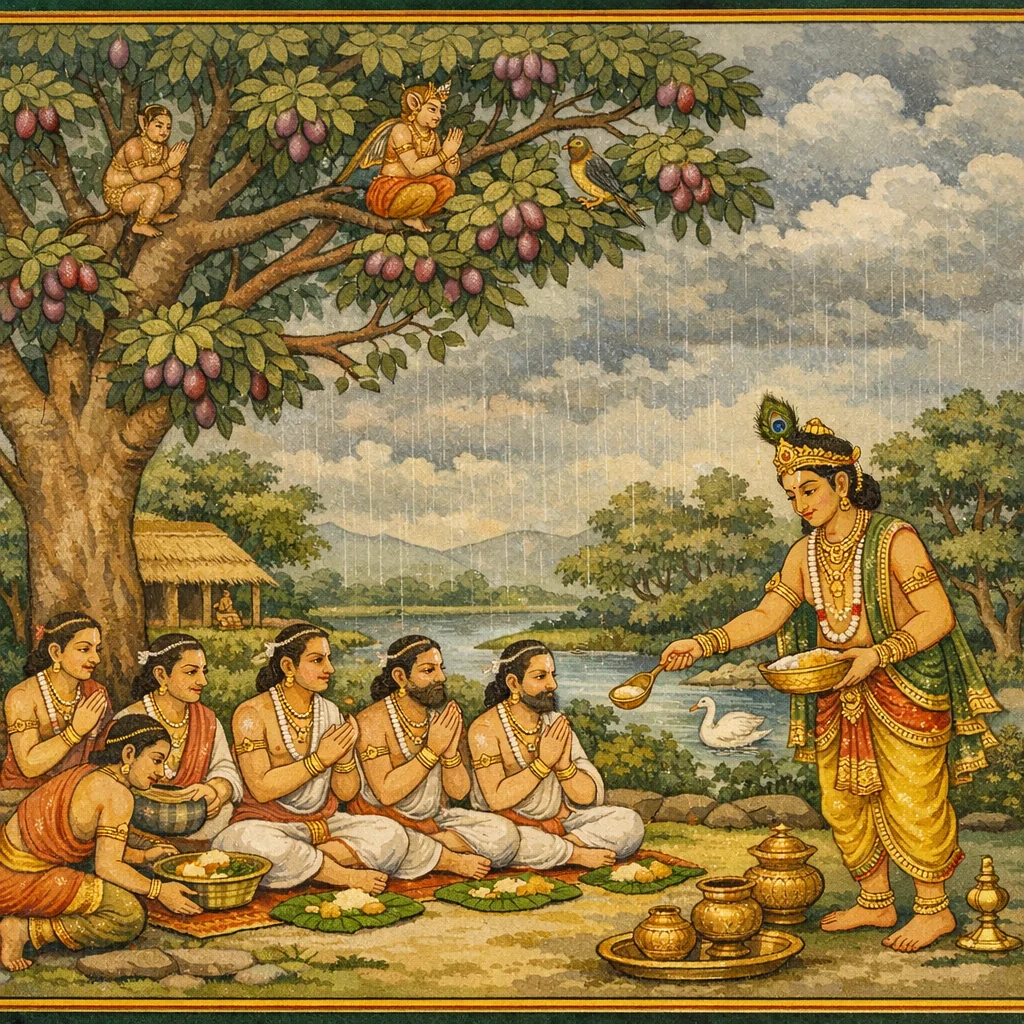
This adhyāya unfolds as a question-and-answer between a Śūdra questioner and the sage Gālava, concerning the “astonishing” teaching that during Cāturmāsya the gods assume tree-forms and dwell within trees. Gālava explains that by divine intention the season’s water is regarded as amṛta, and the tree-deities “drink” it, giving rise to strength, radiance, beauty, and vigor. The teaching then turns to ritual and ethical guidance: service to trees is praised in every month, but is especially meritorious in Cāturmāsya. Watering with tilodaka (sesame-infused water) is said to fulfill wishes, and sesame (tila) is extolled as purifying, supportive of dharma and artha, and foremost among gifts (dāna). A catalog-like section maps deities and classes of beings—Gandharvas, Yakṣas, Nāgas, Siddhas, and others—to particular trees (for example, Brahmā with the banyan). In conclusion, devotion is joined with ecological reverence: serving key trees, notably pippala/aśvattha and tulasī, is treated as comprehensive service to the sacred vegetal world; tree-cutting during Cāturmāsya is discouraged except for sacrificial necessity. A phala passage adds that feeding brāhmaṇas beneath the jambū tree and worshiping such trees brings prosperity and fulfillment of the four aims of life (puruṣārthas).
Shlokas
Verse 1
शूद्र उवाच । महदाश्चर्यमेतद्धि यत्सुरा वृक्षरूपिणः । चातुर्मास्ये समायाते सर्ववृक्षनिवासिनः
The Śūdra said: “This is indeed a great wonder—that the gods take the form of trees. When Cāturmāsya arrives, they dwell within all trees.”
Verse 2
भगवन्के सुरास्ते तु केषुकेषु निवासिनः । एतद्विस्तरतो ब्रूहि ममानुग्रहकाम्यया
“O venerable one, which gods are they, and in which trees do they reside? Tell me this in detail, out of a wish to show me grace.”
Verse 3
गालव उवाच । अमृतं जलमित्याहुश्चातुर्मास्ये तदिच्छया । लीलया विधृतं देवैः पिबंति द्रुमदेवताः
Gālava said: “In Cāturmāsya, by their own will, water is spoken of as ‘amṛta’, nectar. Upheld in divine play by the gods, the deities dwelling in trees drink it.”
Verse 4
तस्य पानान्महातृप्तिर्जायते नाऽत्र संशयः । बलं तेजश्च कांतिश्च सौष्ठवं लघुविक्रमः
“By drinking that (water-as-nectar), great satisfaction arises—of this there is no doubt. Strength, radiance (tejas), beauty, well-being, and lightness of movement are produced.”
Verse 5
गुणा एते प्रजायन्ते पानात्कृष्णांशसंभवात् । नित्यामृतस्यपानेन बलं स्वल्पं प्रजायते
“These qualities arise from that drink, born of a portion of Kṛṣṇa (Viṣṇu). But by drinking ‘ordinary’ amṛta constantly, only a little strength is produced.”
Verse 6
भोजनं तत्प्रशंसंति नित्यमेतन्न संशयः । तस्माच्चतुर्षु मासेषु पिबन्ति जलमेव हि
“They continually praise that as food—of this there is no doubt. Therefore, in those four months they indeed drink only water.”
Verse 7
वृक्षस्थाः पितरो देवाः प्राणिनां हित काम्यया । वृक्षाणां सेवनं श्रेष्ठं सर्वमासेषु सर्वदा
“The Pitṛs and the gods abide in trees, wishing the welfare of living beings. Service to trees is the best practice—at all times, in every month, always.”
Verse 8
चातुर्मास्ये विशेषेण सेविताः सौख्यकारकाः । तिलोदकेन वृक्षाणां सेचनं सर्वकाम दम्
Especially when performed during Cāturmāsya, these acts become givers of happiness. Watering trees with sesame-water (tilodaka) grants the fulfillment of all desires.
Verse 9
क्षीरवृक्षाः क्षीरयुक्तैस्तोयैः सिक्ताः शुभप्रदाः । चतुष्टयं च वृक्षाणां यच्चोक्तं पूर्वतो मया
Milk-yielding trees, when watered with water mixed with milk, bestow auspiciousness. And regarding the set of four trees that I mentioned earlier…
Verse 10
चातुर्मास्ये विशेषेण सर्वकाम फलप्रदम् । ब्रह्मा तु वटमाश्रित्य प्राणिनां स वरप्रदः
Especially during the Cāturmāsya season, this observance grants the fruits of all desired aims. Brahmā, taking refuge at the banyan tree, becomes a bestower of boons to living beings.
Verse 11
सावित्रीं तिलमास्थाय पवित्रं श्वेतभूषणम् । सुप्ते देवे विशेषेण तिलसेवा महाफला
Establishing the rite of Sāvitrī with sesame, and adopting purity with white adornments—especially when the Lord is in yogic sleep—service involving sesame yields great reward.
Verse 12
तिलाः पवित्रमतुलं तिला धर्मार्थसाधकाः । तिला मोक्षप्रदाश्चैव तिलाः पापापहारिणः
Sesame is incomparable in purity. Sesame accomplishes dharma and prosperity (artha); sesame grants liberation (mokṣa) as well, and sesame removes sins.
Verse 13
तिला विशेषफलदास्तिलाः शत्रुविनाशनाः । तिलाः सर्वेषु पुण्येषु प्रथमं समुदाहृताः
Sesame bestows exceptional fruits and destroys enemies. Among all meritorious acts, sesame is declared foremost.
Verse 14
न तिला धान्यमित्याहुर्देवधान्यमिति स्मृतम् । तस्मात्सर्वेषु दानेषु तिल दानं महोत्तमम्
They say sesame is not merely ‘grain’; it is remembered as ‘the grain of the gods.’ Therefore, among all gifts, the gift of sesame is the most excellent.
Verse 15
कनकेन युता येन तिलादत्तास्तु शूद्रज । ब्रह्महत्यादिपापानां विनाशस्तेन वै कृतः
O son of a Śūdra, by one who gives sesame together with gold, the destruction of sins beginning with brahmahatyā is indeed accomplished.
Verse 16
सावित्री च तिलाः प्रोक्ता सर्वकार्यार्थसाधकाः । तिलैस्तु तर्पणं कुर्याच्चातुर्मास्ये विशेषतः
Sāvitrī and sesame are taught as accomplishers of all purposes and aims. One should perform tarpaṇa with sesame, especially during Cāturmāsya.
Verse 17
तिलानां दर्शनं पुण्यं स्पर्शनं सेवनं तथा । हवनं भक्षणं चैव शरीरोद्वर्त्तनं तथा
For sesame, even seeing it is meritorious—so too touching and using it. Offering it into the fire (havana), eating it, and even rubbing it upon the body are likewise holy.
Verse 18
सर्वथा तिलवृक्षोऽयं दर्शनादेव पापहा । चातुर्मास्ये विशेषेण सेवितः सर्वसौख्यदः
In every way, this sesame plant destroys sin merely by being seen. When it is tended and used especially during Cāturmāsya, it bestows every happiness.
Verse 19
महेन्द्रो यवमा स्थाय स्थितो भूतहिते रतः । यवस्य सेवनं पुण्यं दर्शनं स्पर्शनं तथा
Mahendra (Indra), abiding in the barley plant, stands devoted to the welfare of beings. The use of barley is meritorious—so too seeing it and touching it.
Verse 20
यवैस्तु तर्पणं कुर्याद्देवानां दत्तमक्षयम् । प्रजानां पतयः सर्वे चूतवृक्षमुपाश्रिताः
If one performs tarpaṇa to the gods with barley, the offering becomes imperishable. And all the lords and guardians of created beings are said to take refuge in the mango tree.
Verse 21
गन्धर्वा मलयं वृक्षमगुरुं गणनायकः । समुद्रा वेतसं वृक्षं यक्षा पुन्नागमेव च
The Gandharvas abide in the Malaya tree; Gaṇanāyaka (Gaṇeśa) in the aguru tree. The Oceans abide in the vetasa tree, and the Yakṣas in the punnāga tree as well.
Verse 22
नागवृक्षं तथा नागाः सिद्धाः कंकोलकं द्रुमम् । गुह्यकाः पनसं चैव किन्नरा मरिचं श्रिताः
So too the Nāgas abide in the nāga tree; the Siddhas in the kaṃkolaka tree. The Guhyakas dwell in the jackfruit tree, and the Kinnaras take refuge in the marica plant.
Verse 23
यष्टीमधु समाश्रित्य कन्दर्पोऽभूद्व्यवस्थितः । रक्तांजनं महावृक्षं वह्निराश्रित्य तिष्ठति
Kandarpa, the god of love, is established by taking refuge in the yaṣṭīmadhu plant; and Vahni, the Fire, stands having taken refuge in the great raktāṃjana tree.
Verse 24
यमो विभीतकं चैव बकुलं नैरृताधिपः । वरुणः खर्जुरीवृक्षं पूगवृक्षं च मारुतः
Yama abides in the vibhītaka tree; the lord of the Nirṛti-direction in the bakula tree. Varuṇa abides in the date-palm, and Māruta (Vāyu) in the areca tree.
Verse 25
धनदोऽक्षोटकं वृक्षं रुद्राश्च बदरीद्रुमम् । सप्तर्षीणां महाताला बहुलश्चामरैर्वृतः
Dhanada (Kubera) abides in the akṣoṭaka tree, and the Rudras in the badarī tree. For the Seven Ṛṣis there is the great tāla palm, and Bahula is surrounded by cāmaras.
Verse 26
जंबूर्मेघैः परिवृतः कृष्णवर्णोऽघनाशनः । कृष्णस्य सदृशो वर्णस्तेन जंबू नगोत्तमः
The Jambū tree, encircled by clouds, is dark-hued and a destroyer of sin. Its color resembles that of Kṛṣṇa; therefore Jambū is the foremost among trees.
Verse 27
तत्फलैर्वासुदेवस्तु प्रीतो भवति दानतः । जंबूवृक्षं समाश्रित्य कुर्वंति द्विजभोजनम्
By gifting its fruits, Vāsudeva becomes pleased. Taking refuge near the Jambū tree, they arrange the feeding of brāhmaṇas.
Verse 28
तेषां प्रीतो हरिर्दद्यात्पु रुषार्थचतुष्टयम् । चातुर्मास्ये समायाते सुप्ते देवे जनार्दने
Pleased with them, Hari bestows the fourfold aims of human life. When the Cāturmāsya season arrives—when Lord Janārdana abides in yogic sleep—
Verse 29
ब्राह्मणान्भोजयेद्यस्तु सपत्नीकाञ्छुचिः स्थितः । तेन नारायणस्तुष्टो भवे ल्लक्ष्मीसहायवान्
Whoever, remaining pure, feeds brāhmaṇas together with their wives—by that very act Nārāyaṇa is satisfied, attended by Lakṣmī.
Verse 30
लक्ष्मीनारायणप्रीत्यै वस्त्रालंकरणैः शुभैः । परिधाय सपत्नीकः कृतकृत्यो भवेन्नरः
To please Lakṣmī–Nārāyaṇa, a man should don auspicious garments and noble ornaments; doing so together with his wife, he becomes one whose dharmic duty is fulfilled.
Verse 31
यद्रात्रित्रितयेनैव वटा शोकभवेन च । फलं संजायते तच्च जंबुना द्विजभोजनात्
The spiritual fruit that arises from a three-night observance, and from the grief-born rite of the Vaṭa (banyan)—that very same fruit is gained by honoring the Jambū tree through feeding the twice-born (brāhmaṇas).
Verse 32
तस्मिन्दिने एकभुक्तं कारयेत्कृत्यकृत्तदा । बहुना च किमुक्तेन जंबूवृक्ष प्रपूजनात्
On that day one should observe ekabhukta—taking only a single meal—and thus bring the rite to completion. But what need is there to say more? By thorough worship of the Jambū tree, the fruit is assured.
Verse 33
पुत्रपौत्रधनैर्युक्तो जायते नात्र संशयः । जंबूर्मेघैः परिवृता विद्युताऽशोक एव च
He is blessed with sons, grandsons, and wealth—of this there is no doubt. The Jambū tree is encircled by clouds, with lightning, and with the Aśoka as well.
Verse 34
वसुभिः स्वीकृतो नित्यं प्रिया लश्च महानगः । आदित्यैस्तु जपावृक्षो ह्यश्विभ्यां मदनस्तथा
The Priyāla and the great Nāga tree are ever held as sacred by the Vasus; the Japā tree by the Ādityas; and likewise Madana by the Aśvins.
Verse 35
विश्वेभिश्च मधूकश्च गुग्गुलः पिशिताशनैः । सूर्येणार्कः पवित्रेण सोमे नाथ त्रिपत्रकः
The Madhūka is held sacred by the Viśvedevas, and Guggulu by the flesh-eaters; Arka by the Sun as a purifier; and Tripatraka, O Lord, by the Moon.
Verse 36
खदिरो भूमिपुत्रेण अपामार्गो बुधेन च । अश्वत्थो गुरुणा चैव शुक्रेणोदुम्बरस्तथा
Khadira is claimed by the son of the Earth (Mars); Apāmārga by Budha (Mercury); Aśvattha by Guru (Jupiter); and likewise Udumbara by Śukra (Venus).
Verse 37
शमी शनैश्चरेणाथ स्वीकृता शूद्रजातिभिः । राहुणा स्वीकृता दूर्वा पितॄणां तर्पणोचिता
O Lord, the Śamī tree is accepted by Śanaiścara (Saturn) and by the śūdra communities. Dūrvā grass is accepted by Rāhu, and it is fit for tarpaṇa—offerings of satisfaction to the Pitṛs (ancestors).
Verse 38
विष्णोश्च दयिता नित्यं चातुर्मास्ये विशेषतः । केतुना स्वीकृतो दर्भो याज्ञिकेयो महाफलः
It is ever dear to Viṣṇu, especially in the Cāturmāsya season. Darbha grass is accepted by Ketu; it is the ritualist’s own (yājñika) and yields great fruit.
Verse 39
विना येन शुभं कर्म संपूर्णं नैव जायते । पवित्राणां पवित्रं यो मङ्गलानां च मङ्गलम्
Without it, no auspicious act ever becomes complete. It is the purifier of purifiers, the auspiciousness among all auspicious things.
Verse 40
मुमूर्षूणां मोक्षरूपो धरासंस्थो महाद्रुमः । अस्मिन्वसंति सततं ब्रह्मविष्णुशिवाः सदा
For those nearing death, this great tree—rooted upon the earth—stands as the very form of liberation (mokṣa). In it, Brahmā, Viṣṇu, and Śiva ever dwell continuously.
Verse 41
मूले मध्ये तथाऽग्रे च यस्य नामापि तृप्ति दम् । अन्येऽपि देवा वृक्षांस्तानधिश्रित्य महाद्रुमाः
At its root, in its middle, and at its crown—whose very name grants satisfaction and fulfillment—other deities too, taking refuge in those trees, abide in the great trees.
Verse 42
प्रवर्त्तंते हि मासेषु चतुर्षु च न संशयः । चातुर्मास्ये देवपत्न्यः सर्वा वल्लीसमाश्रि ताः
Indeed, during the four months—without any doubt—these observances become especially active. In Cāturmāsya, all the wives of the gods are said to abide in the creepers and vines.
Verse 43
प्रयच्छंति नृणां कामान्वांछितान्सेविता अपि । तस्मात्सर्वात्मभावेन पिप्पलो येन सेवितः
Even by mere service, they grant humans the wishes they long for. Therefore, whoever serves the Pippala (Aśvattha) with one’s whole being, in single-hearted devotion…
Verse 44
सेविताः सकला वृक्षा श्चातुर्मास्ये विशेषतः । तुलसी सेविता येन सर्ववल्यश्च सेविताः
By serving sacred Tulasī, one has in effect served all trees—especially during the season of Cāturmāsya; and thereby all creepers too are served.
Verse 45
आप्यायितं जगत्सर्वमाब्रह्मस्तंबसेवितम् । चातुर्मास्ये गृह स्थेन वानप्रस्थेन वा पुनः
By such service performed in Cāturmāsya, the entire world is nourished and upheld, from Brahmā down to the tiniest blade of grass—whether done by a householder or by a forest-dweller.
Verse 46
ब्रह्मचारियतिभ्यां च सेविता मोक्षदायिनी । एतेषां सर्ववृक्षाणां छेदनं नैव कारयेत्
When it is served also by brahmacārins and renunciants, it becomes a giver of mokṣa, liberation. Therefore one should never cause any of these sacred trees to be cut down.
Verse 47
चातुर्मास्ये विशेषेण विना यज्ञादिकारणम् । एतदुक्तमशेषेण यत्पृष्टोऽहमिह त्वया
Especially during Cāturmāsya—except for purposes such as yajña (sacrifice) and the like—I have now told you in full what you asked me here.
Verse 48
यथा वृक्षत्वमापन्ना देवाः सर्वेऽपि शूद्रज
How was it, O son of a Śūdra, that all the gods came to assume the state of being trees—
Verse 49
अश्वत्थमेकं पिचुमन्दमेकं न्यग्रोधमेकं दश तित्तिडीश्च । कपित्थबिल्वामलकीत्रयं च एतांश्च दृष्ट्वा नरकं न पश्येत्
One Aśvattha, one Picumanda, one Nyagrodha, and ten Tittiḍī trees; and a triad—Kapittha, Bilva, and Āmalakī: having seen these, a man would not behold hell.
Verse 50
सर्वे देवा विश्ववृक्षेशयाश्च कृष्णा धारा कृष्णमध्याग्रकाश्च । यस्मिन्देवे सेविते विश्वपूज्ये सर्वं तृप्तं जायते विश्वमेतत्
All the gods—together with the presiding powers of the cosmic tree—are present there: as dark streams, and as the dark mystic presence pervading its middle and summit. When that universally worshipful Deity is served, this entire universe becomes satisfied and fulfilled.