Adhyaya 250
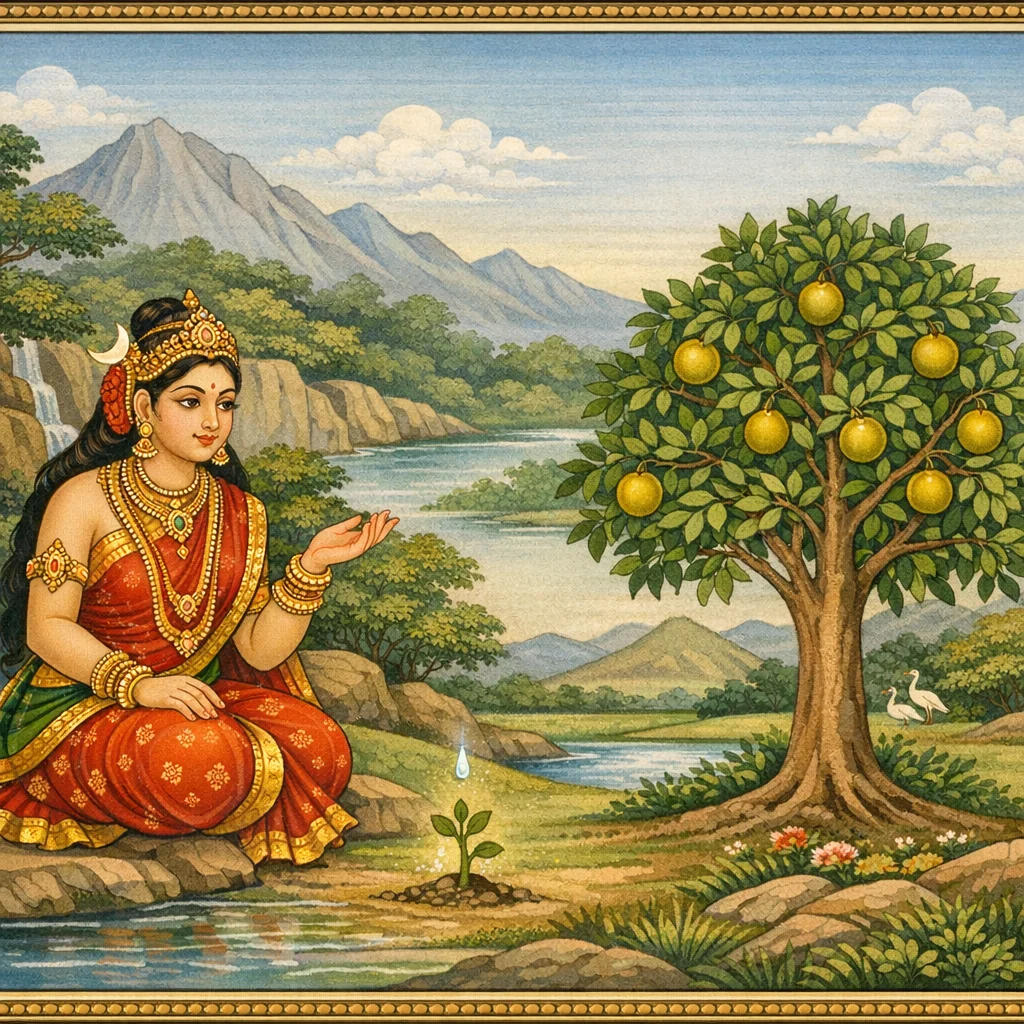
Set within a dialogue attributed to Vāṇī, this chapter explains the divine origin and sacred power of the bilva tree (bilvataru). While wandering on Mount Mandara, Pārvatī grows weary; a single drop of her sweat falls upon the earth and becomes a vast, heavenly tree. Seeing it, she asks her companions Jayā and Vijayā, who declare it born from her own body and urge that it be named as a sin-destroying object of worship. Pārvatī names it “bilva” and proclaims that in ages to come kings will, with faith, gather bilva leaves for her worship. The text then states the ritual fruits (phala): desired aims are fulfilled; even merely beholding bilva leaves with faith supports devotion. Tasting the leaf-tip and placing leaf-tips upon the head are said to dissolve many misdeeds and avert punitive suffering. The chapter culminates in a sacral anatomy of the tree, presenting it as a living shrine of the Goddess within the tīrtha: Girijā in the roots, Dakṣāyaṇī in the trunk, Maheśvarī in the branches, Pārvatī in the leaves, Kātyāyanī in the fruit, Gaurī in the bark, Aparṇā in the inner fibers, Durgā in the flowers, Umā in the branch-limbs, and protective śaktis abiding in the thorns.
Shlokas
Verse 1
वाण्युवाच । बिल्वपत्रस्य माहात्म्यं कथितुं नैव शक्यते । तवोद्देशेन वक्ष्यामि महेन्द्र शृणु तत्त्वतः
Vāṇī said: “The greatness of the Bilva leaf cannot truly be described in full. Yet for your sake, O Mahendra, I shall explain it—listen to the truth in its real import.”
Verse 2
विहारश्रममापन्ना देवी गिरिसुता शुभा । ललाटफलके तस्याः स्वेदबिन्दुरजायत
The auspicious Goddess, the Mountain-Daughter (Pārvatī), grew weary from her sportive wandering. Upon the surface of her forehead, a single drop of perspiration arose.
Verse 3
स भवान्या विनिक्षिप्तो भूतले निपपात च । महातरुरयं जातो मन्दरे पर्वतोत्तमे
That drop, released by Bhavānī, fell upon the earth. From it arose this mighty tree on Mandara, the most excellent of mountains.
Verse 4
ततः शैलसुता तत्र रममाणा ययौ पुनः । दृष्ट्वा वनगतं वृक्षं विस्मयोत्फुल्ललोचना
Then the Mountain-Daughter, Pārvatī, delighting there, came again. Seeing the tree within the forest, her eyes widened in wonder.
Verse 5
जयां च विजयां चैव पप्रच्छ च सखीद्वयम् । कोऽयं महातरुर्दिव्यो विभाति वनमध्यगः । दृश्यते रुचिराकारो महाहर्षकरो ह्ययम्
She asked her two companions, Jayā and Vijayā: “Who is this great, divine tree that shines in the midst of the forest? Its form is most charming, and it truly brings great joy.”
Verse 6
जयोवाच । देवि त्वद्देहसंभूतो वृक्षोऽयं स्वेदबिन्दुजः । नामाऽस्य कुरु वै क्षिप्रं पूजितः पापनाशनः
Jayā said: “Goddess, this tree has arisen from your very body—born from a drop of your perspiration. Please bestow a name upon it quickly; when worshipped, it destroys sins.”
Verse 7
पार्वत्युवाच । यस्मात्क्षोणीतलं भित्त्वा विशिष्टोऽयं महातरुः
Pārvatī said: “Because this great tree has burst forth, splitting the surface of the earth, it is extraordinary.”
Verse 8
उदतिष्ठत्समीपे मे तस्माद्बिल्वो भवत्वयम् । इमं वृक्षं समासाद्य भक्तितः पत्रसंचयम्
Since it rose up near me, therefore let it be called “Bilva.” Approaching this tree with devotion, one should gather a collection of its leaves…
Verse 9
आहरिष्यत्यसौ राजा भविष्यत्येव भूतले । यः करिष्यति मे पूजां पत्रैः श्रद्धासमन्वितः
A king shall indeed arise upon the earth who will bring (these leaves) and worship me with them, endowed with faith.
Verse 10
यंयं काममभिध्यायेत्तस्य सिद्धिः प्रजायते । यो दृष्ट्वा बिल्वपत्राणि श्रद्धामपि करिष्यति
Whatever desire one contemplates, its fulfillment is born. And whoever, upon seeing bilva leaves, even develops faith…
Verse 11
पूजनार्थाय विधये धनदाऽहं न संशयः । पत्राग्रप्राशने यस्तु करिष्यति मनो यदि । तस्य पापसहस्राणि यास्यंति विलयं स्वयम
For the sake of worship and proper observance, I surely become a bestower of wealth—no doubt. And if one even sets the mind upon tasting the tip of a leaf (as a vow), then thousands of that person’s sins will perish of themselves.
Verse 12
शिरः पत्राग्रसंयुक्तं करोति यदि मानवः । न याम्या यातना ह्यस्य दुःखदात्री भविष्यति
If a person places upon the head a leaf-tip (as a sacred token), then the Yama-born torments will not become a giver of suffering to that person.
Verse 13
इत्युक्त्वा पार्वती हृष्टा जगाम भवनं स्वकम् । सखीभिः सहिता देवी गणैरपि समन्विता
Having spoken thus, Pārvatī, delighted at heart, went to her own abode—the Goddess accompanied by her companions and attended also by the gaṇas.
Verse 14
वाण्युवाच । अयं बिल्वतरुः श्रेष्ठः पवित्रः पापनाशनः । तस्य मूले स्थिता देवी गिरिजा नात्र संशयः
Vāṇī said: “This bilva tree is supreme—pure and a destroyer of sins. At its root the Goddess Girijā abides; of this there is no doubt.”
Verse 15
स्कन्धे दाक्षायणी देवी शाखासु च महेश्वरी । पत्रेषु पार्वती देवी फले कात्या यनी स्मृता
In its trunk she is known as Dākṣāyaṇī Devī; in its branches, as Maheśvarī. In its leaves she is revered as Pārvatī Devī, and in its fruit she is remembered as Kātyāyanī.
Verse 16
त्वचि गौरी समाख्याता अपर्णा मध्यवल्कले । पुष्पे दुर्गा समाख्याता उमा शाखांगकेषु च
In the bark she is called Gaurī; in the inner layer of the bark she is Aparṇā. In the flower she is known as Durgā, and in the branch-twigs she is Umā.
Verse 17
कण्टकेषु च सर्वेषु कोटयो नवसंख्यया । शक्तयः प्राणिरक्षार्थं संस्थिता गिरिजाऽज्ञया
Upon all its thorns abide powers—crores in number, counted as ninefold—stationed for the protection of beings, by the command of Girijā.
Verse 18
तां भजंति सुपत्रैश्च पूजयंति सनातनीम् । यंयं कामयते कामं तस्य सिद्धिर्भवेद्ध्रुवम्
With auspicious leaves they revere her and worship the Eternal Goddess. Whatever desire one longs for, its fulfillment for that person becomes certain.
Verse 19
महेश्वरी सा गिरिजा महेश्वरी विशुद्धरूपा जनमोक्षदात्री । हरं च दृष्ट्वाथ पलाशमाश्रितं स्वलीलया बिल्ववपुश्चकार सा
She—Girijā, the great Maheśvarī—of utterly pure form, the giver of liberation to people: seeing Hara resting by the Palāśa tree, she, by her own divine play (līlā), assumed the form of the Bilva tree.
Verse 250
इति श्रीस्कांदेमहापुराण एकाशीतिसाहस्र्यां सहितायां षष्ठे नागरखण्डे हाटकेश्वरक्षेत्रमाहात्म्ये शेषशाय्युपाख्याने ब्रह्मनारदसंवादे चातु र्मास्यमाहात्म्ये पैजवनोपाख्याने बिल्वोत्पत्तिवर्णनंनाम पञ्चाशदुत्तरद्विशततमोऽध्यायः
Thus ends the two-hundred-and-fiftieth chapter, called “Description of the Origin of the Bilva,” in the sixth part of the Śrī Skanda Mahāpurāṇa—within the Nāgarakhaṇḍa, in the Māhātmya of Hāṭakeśvara-kṣetra, in the Śeṣaśāyī episode, in the dialogue of Brahmā and Nārada, within the Māhātmya of the Cāturmāsya observance, in the tale of Paijavana.