Adhyaya 25
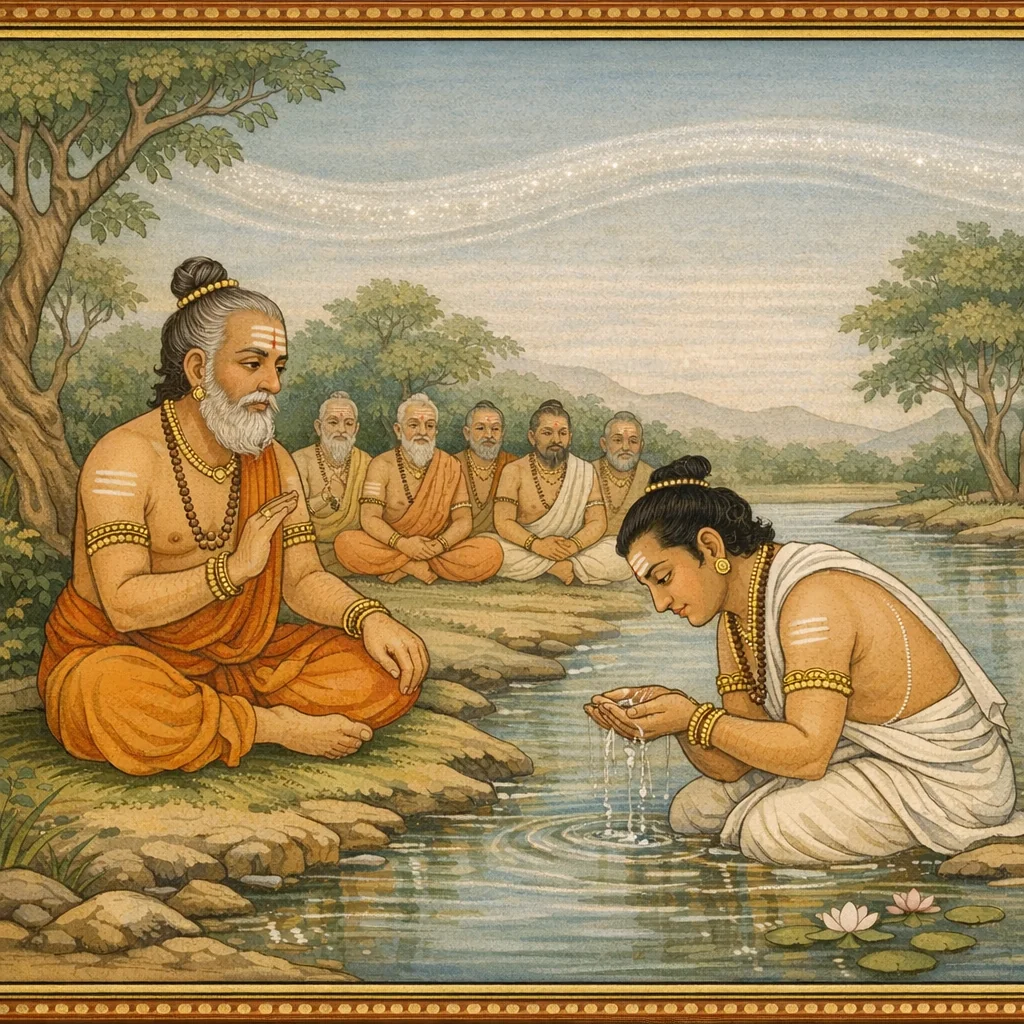
Sūta relates a didactic episode as a Gaṅgā-māhātmya. A disciplined brāhmaṇa, Caṇḍaśarman of Camatkārapura, becomes caught in youthful attachment and, one night when thirsty, is mistakenly given liquor by a courtesan who thinks it is water. Realizing the grave transgression for a brāhmaṇa, he seeks expiation from an assembly of learned brāhmaṇas, who cite dharmaśāstra: he should drink fire-colored ghee in a quantity matching the liquor consumed. As he prepares, his parents arrive; the father consults dharma texts and even considers extreme measures, while also advising gifts and pilgrimage as alternatives. The son insists on the prescribed rite (mauñjī-homa is also discussed), and the parents resolve to enter the fire with him in solidarity. At this crisis the sage Śāṇḍilya arrives on pilgrimage, rebukes the community for needless death when an accessible expiation exists, and states that severe penances are ordained only where the Gaṅgā is absent. He directs them to the Viṣṇupadī Gaṅgā: by ācamana and bathing there, Caṇḍaśarman is purified at once, confirmed by a celestial voice (Bhāratī). The chapter ends by proclaiming Gaṅgā’s sin-destroying power at the western boundary of the sacred region as “pāpanāśinī,” and offers the story as a general teaching on the removal of sin through this tīrtha.
Shlokas
Verse 1
। सूत उवाच । तत्राश्चर्यमभूत्पूर्वं यत्तद्ब्राह्मणसत्तमाः । तद्वोऽहं संप्रवक्ष्यामि गंगामाहात्म्यसंभवम्
Sūta said: “In that place, O best of brāhmaṇas, a marvel occurred long ago. I shall now tell you of that event arising from the greatness of the Gaṅgā.”
Verse 2
चमत्कारपुरे विप्रः पुरासीत्संशितव्रतः । चंडशर्मेति विख्यातो रूपौदार्यगुणान्वितः
In the city of Camatkāra there once lived a brāhmaṇa, steadfast in his vows, renowned by the name Caṇḍaśarman, endowed with beauty, generosity, and virtues.
Verse 3
स यदा यौवनोपेतस्तदा वेश्यानुरागकृत् । श्रोत्रियोऽप्यभवद्विप्रो यौवनोद्भारपीडितः
But when he entered youth, he grew attached to a courtesan; though a learned brāhmaṇa, he was oppressed by the burden of youthful passion.
Verse 4
स कदाचिन्निशीथेऽथ तृषार्तश्च समुत्थितः । प्रार्थयामास तां वेश्यां पानीयं पातुमुत्सहे
Once, in the dead of night, he rose up tormented by thirst and begged that courtesan, “I wish to drink water.”
Verse 5
अथ सा सलिलभ्रांत्या करकं मद्यसंभवम् । समादाय ददौ पानं तस्मै निद्राकुलाय च
Then she, mistaking it for water, took up a pitcher containing wine and gave it to him to drink—while he was still drowsy with sleep.
Verse 6
मुखमध्यगते मद्ये सोऽपि तां कोपसंयुतः । वेश्यां प्रभर्त्सयामास धिग्धिक्शब्दैर्मुहुर्मुहुः
When the wine reached the midst of his mouth, he too—filled with anger—began to rebuke that courtesan again and again with cries of “Shame! Shame!”
Verse 7
किमिदंकिमिदं पापे त्वया कर्म विगर्हितम् । कृतं यन्मुखमध्ये मे प्रक्षिप्ता निंदिता सुरा
“What is this—what is this, sinful woman? What reprehensible deed have you done, that this condemned liquor has been put into the middle of my mouth?”
Verse 8
ब्राह्मण्यमद्य मे नष्टं मद्यपानादसंशयम् । प्रायश्चित्तं करिष्यामि तस्मादात्मविशुद्धये
“My brāhmaṇa purity is today ruined—without doubt—because of drinking wine. Therefore I shall perform expiation, for the cleansing of my own self.”
Verse 9
एवमुक्त्वा विनिष्क्रम्य तद्गृहाद्दुःखसंयुतः । रुरोदाथ तदा गत्वा करुणं निर्जने वने
Having spoken thus, he went out from that house, overwhelmed with sorrow; then, going to a solitary forest, he wept piteously.
Verse 10
ततः प्रभातवेलायां स्नात्वा वस्त्रसमन्वितः । त्यक्त्वा गात्रस्य रोमाणि समस्तानि द्विजोत्तमाः
Then, at the hour of dawn, having bathed and put on garments, that best of twice-born removed all the hair from his body.
Verse 11
संप्राप्तो विप्रमुख्यानां सभा यत्र व्यवस्थिता । पठंति सर्वशास्त्राणि वेदांतानि च कृत्स्नशः
He arrived at the assembly of eminent brāhmaṇas, established there—where all the śāstras and the Vedāntas were recited in full.
Verse 12
अथासौ प्रणिपत्योच्चैः प्रोवाच द्विजसत्तमान् । जलभ्रांत्या सुरा पीता मया कुरुत निग्रहम्
Then he, bowing down respectfully, spoke aloud to those best of brāhmaṇas: “Through a mistake for water, I have drunk liquor—please impose the proper discipline upon me.”
Verse 13
अथ ते धर्मशास्त्राणि प्रविचार्य पुनःपुनः । तमूचुर्ब्राह्मणाः सर्वे प्रायश्चित्तकृते स्थितम्
Then all those brāhmaṇas, having examined the Dharma-śāstras again and again, addressed him and declared the expiation (prāyaścitta) that was to be undertaken.
Verse 14
ब्राह्मणा ऊचुः । अज्ञानाज्ज्ञानतो वापि सुरां चेद्ब्राह्मणः पिबेत् । अग्निवर्णं घृतं पीत्वा तावन्मात्रंविशु ध्यति
The brāhmaṇas said: “Whether through ignorance or knowingly, if a brāhmaṇa drinks liquor, then by drinking ghee (ghṛta) heated to the color of fire—only that much—he becomes purified.”
Verse 15
स त्वं वांछसि चेच्छुद्धिमग्निवर्णं घृतं पिब । यावन्मात्रा सुरा पीता तावन्मात्रं विशुद्धये
If you truly desire purification, then drink ghee the color of fire, in the very measure of the liquor you drank, so that cleansing may be attained.
Verse 16
स तथेति प्रतिज्ञाय घृतमादाय तत्क्षणात् । चक्रे वह्निसमं यावत्पानार्थं द्विजसत्तमाः
Saying, “So be it,” he pledged accordingly; taking the ghee at once, the best of the twice-born heated it until it became like fire, for the purpose of drinking.
Verse 17
तावत्तस्य पिता प्राप्तः श्रुत्वा वार्तां सभार्यकः । किमिदं किमिदं पुत्र ब्रुवाणो दुःख संयुतः । अश्रुपूर्णेक्षणो दीनो वाष्पगद्गदया गिरा
Just then his father arrived with his wife, having heard the news. Overcome with grief, he kept saying, “What is this, what is this, my son?”—wretched, his eyes filled with tears, his voice choked and trembling with sobs.
Verse 20
संचिन्त्य धर्मशास्त्राणि विचार्य च पुनः पुनः । सर्वस्वमपि दास्यामि पुत्रहेतोरसंशयम्
Reflecting on the Dharma-śāstras and deliberating again and again, he resolved: “For my son, without doubt, I shall give even all that I possess.”
Verse 22
नान्यदस्ति सुरापाने प्रायश्चित्तं द्विजन्मनाम् । मौंजीहोमं विना विप्र यद्युक्तं तत्समाचर
For the twice-born who have drunk liquor, there is no other expiation. Without the Mauñjī-homa, O brāhmaṇa, do what is proper—undertake the rite that is prescribed.
Verse 23
ततः स स्वसुतं प्राह नैव त्वं कर्तुमर्हसि । यच्छ दानानि विप्रेभ्यस्तीर्थयात्रां समाचर
Then he said to his own son: “You should not do that at all. Give gifts to the brāhmaṇas, and undertake a pilgrimage to the sacred tīrthas.”
Verse 24
ततः शुद्धिं समाप्नोषि क्रमान्नियमसंयुतः । व्रतैश्च विविधैश्चीर्णैः सत्यमेतद्ब्रवीम्यहम्
Then, in due course—endowed with restraint and discipline—you attain purification by observing various vows. This I declare to you as truth.
Verse 25
न ब्राह्मणसमादिष्टं प्रायश्चित्त विशुद्धये
Purification is not attained by an expiation that has not been enjoined by brāhmaṇas, the learned authorities.
Verse 26
पुत्र उवाच । एतन्मम महाभागा यद्ब्रुवंति व्रतादिकम् । तस्मात्कार्यो मया तात मौंजीहोमो न संशयः
The son said: “What the venerable ones have spoken to me concerning vows and such observances is truly meant for me. Therefore, Father, I must perform the Mauñjī-homa—without doubt.”
Verse 27
यन्मया तु कृतं बाल्ये तत्सर्वं क्षंतुमर्हसि
Whatever I did in my childhood—please forgive all of it.
Verse 28
सूत उवाच । तस्य तं निश्चयं ज्ञात्वा स पिता सुतवत्सलः । सर्वस्वं प्रददौ रुष्टो मरणे कृतनिश्चयः
Sūta said: Knowing his resolve, the father—though affectionate toward his son—angrily gave away all his possessions, having firmly decided upon death.
Verse 29
साऽपि तस्य सती भार्या कृत्वा मृत्युविनिश्चयम् । तमुवाच सुतं दृष्ट्वा सर्वं दत्त्वा गृहादिकम्
His virtuous wife too, having resolved upon death, spoke to him—after seeing her son—having given away everything, including the house and the rest.
Verse 30
आवाभ्यां संप्रविष्टाभ्यां वह्नौ पुत्र ततस्तदा । मौंजीहोमस्त्वया कार्यो मां तातं यदि मन्यसे
“When we two have entered the fire, O son, then at that time you should perform the Mauñjī-homa, if you regard me and your father as worthy of your duty.”
Verse 31
ततस्तौ दम्पती हृष्टौ यावद्वह्निसमीपगौ । संजातौ मरणार्थाय स च ताभ्यां समुद्भवः
Then the husband and wife, filled with joy, went up to the fire’s side, intent on dying; and their son, born of them, was there with them.
Verse 32
तावत्प्राप्तो मुनिर्नाम शांडिल्यो वेदपारगः । तीर्थयात्राप्रसंगेन तत्र देशे द्विजोत्तमाः
Just then the sage named Śāṇḍilya, a master of the Vedas, arrived in that region in the course of a pilgrimage to the sacred tīrthas, O best of the twice-born.
Verse 33
स वृत्तांतं समाकर्ण्य कोपसंरक्तलोचनः । अब्रवीद्ब्राह्मणान्सर्वान्भर्त्समानो मुहुर्मुहुः
Hearing the account, his eyes reddened with anger; he spoke to all the brāhmaṇas, repeatedly scolding them.
Verse 34
अहो मूढतमा यूयं यदेतद्ब्राह्मणत्रयम् । वृथा मृत्युमवाप्नोति निग्रहे सुगमे सति
‘Alas, you are most deluded—this trio of brāhmaṇas is needlessly heading to death, even though restraint and correction are easily possible.’
Verse 35
अत्र कात्यायनेनोक्तं यद्वचः सुमहात्मना । तच्छृण्वन्तु द्विजाः सर्वे प्रायश्चित्ती तथाप्ययम्
‘Here are the words spoken by the great-souled Kātyāyana—let all the twice-born hear them. Yet even in this case there is prāyaścitta, an expiation.’
Verse 36
चांद्रायणानि कृच्छ्राणि तथा सांतपनानि च । प्रायश्चित्तानि दीयंते यत्र गंगा न विद्यते
In places where the Gaṅgā is not present, Cāndrāyaṇa vows, Kṛcchra penances, and Sāṃtapana austerities are prescribed as expiations.
Verse 37
अत्र विष्णुपदी गंगा तत्क्षेत्रे तु द्विजोत्तमाः । तस्यां स्नानं करोत्वेष ततः शुद्धिमवाप्स्यति
But here, in this sacred region, the Gaṅgā known as Viṣṇupadī is present, O best of the twice-born. Let him bathe in her; then he will attain purification.
Verse 38
मौंजीहोमः प्रमाणं स्यान्मुनिवाक्येन चेद्भवेत् । तदेतदपि वाक्यं हि कात्यायनमुनेः स्फुटम्
If one relies on the testimony of sages, then the rite known as the Mauñjī-homa should be accepted as valid proof; for this very point is also clearly stated in the explicit words of the sage Kātyāyana.
Verse 39
ततस्ते ब्राह्मणाः सर्वे हर्षेण महतान्विताः । साधुसाध्विति तं प्रोच्य प्रोचुः सत्यमिदं मुने
Then all those brāhmaṇas, filled with great joy, exclaimed to him, “Well said, well said!” and declared, “O sage, this is indeed the truth.”
Verse 40
ततः प्रबोध्य तं विप्रं निन्युस्तत्र द्विजोत्तमाः । यत्र विष्णुपदी गंगा स्वयमेव व्यवस्थिता
Then the best of the twice-born roused that brāhmaṇa and led him to the place where the Gaṅgā—known as Viṣṇupadī—stands established of her own accord.
Verse 41
तत्र स ब्राह्मणो यावद्गंगातोयसमुद्भवम् । गंडूषं कुरुते वक्त्रे तावच्छुद्धो बभूव सः । उदरादखिलं तोयं निष्क्रांतं द्विजसत्तमाः
There, the moment that brāhmaṇa took into his mouth a handful of water born of the Gaṅgā and performed gaṇḍūṣa (ritual rinsing), he became pure at once; and, O best of the twice-born, all the water that had been in his belly flowed out.
Verse 42
ततोऽवगाहते यावत्तस्यास्तोयं सुशोभनम् । तावदाकाशसंभूता गम्भीरोवाच भारती
Then, as he moved to immerse himself in her splendid waters, at that very moment a deep voice—Bhāratī, arisen from the sky—spoke.
Verse 43
शुद्धोऽयं ब्राह्मणः साक्षाद्विष्णुपद्याः समागमात् । स्नानादाचमनादेव तस्माद्यातु गृहं निजम्
“This brāhmaṇa is directly purified by contact with the Viṣṇupadī; by bathing and by ācamana alone—therefore let him now return to his own home.”
Verse 44
ततस्ते ब्राह्मणाः सर्वे चंडशर्मादयश्च ये । दिष्ट्यादिष्ट्येति जल्पन्तः स्वानि हर्म्याणि भेजिरे
Then all those brāhmaṇas—Caṇḍaśarmā and the others—uttering “Blessed, blessed!”, returned to their own dwellings.
Verse 45
सूत उवाच । एवं प्रभावा सा विप्रा गंगा विष्णुपदी स्थिता । तस्य क्षेत्रस्य सीमांते पश्चिमे पापनाशिनी
Sūta said: “Such is the power of the sacred Gaṅgā, the Viṣṇupadī, established there. At the western boundary of that holy region is a tīrtha known as Pāpanāśinī, the destroyer of sins.”
Verse 46
एतद्वः सर्वमाख्यातं विष्णुपद्याः समुद्भवम् । माहात्म्यं ब्राह्मणश्रेष्ठाः सर्वपातकनाशनम्
All this has been fully related to you—the origin and manifestation of the Viṣṇupadī. O best of brāhmaṇas, this māhātmya destroys every sin.