Adhyaya 248
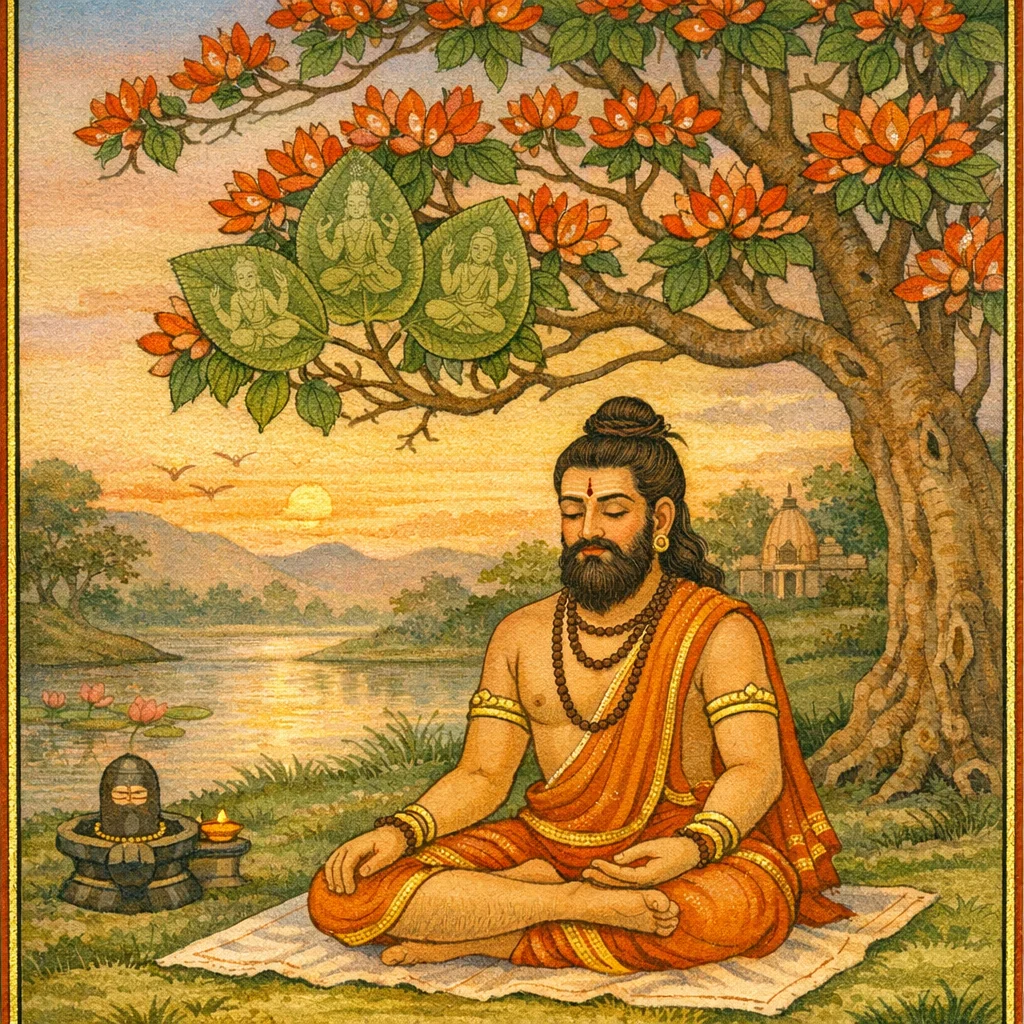
This adhyāya offers a theological discourse on the palāśa tree, revered as the “brahmavṛkṣa,” portraying it as sacred nature endowed with ritual power. Vāṇī declares that palāśa should be served with many upacāras (modes of worship), granting wish-fulfillment and destroying grave sins. The text sets a triadic symbolism upon the leaves—divinity associated with left, right, and center—and then sacralizes the tree in full: deities are said to abide in the root, trunk, branches, flowers, leaves, fruit, bark, and pith, forming an “anatomical theology” of the tree. Practical merits are also taught: eating from vessels made of palāśa leaves yields exalted sacrificial fruit, likened to many aśvamedhas, with special emphasis during Cāturmāsya. Worship with milk on Sundays and devotional observances on Thursdays are praised; even seeing the palāśa at dawn is described as purifying. The chapter concludes by reaffirming the tree as “devabīja” and a manifest form of brahman, to be served with faith—especially in Cāturmāsya—as a guideline for purification and relief from suffering.
Shlokas
Verse 1
वाण्युवाच । पलाशो हरिरूपेण सेव्यते हि पुराविदैः । बहुभिर्ह्युपचारैस्तु ब्रह्मवृक्षस्य सेवनम्
Vāṇī said: The palāśa tree is to be worshipfully served by those who know the ancient tradition, as the very form of Hari. Indeed, service to this Brahma-tree should be performed with many ritual honors and offerings.
Verse 2
सर्वकामप्रदं प्रोक्तं महापातकनाशनम् । त्रीणि पत्राणि पालाशे मध्यमं विष्णुशापितम्
It is declared to grant all desired aims and to destroy great sins. On the palāśa there are three leaves; the middle one is said to bear the mark of Viṣṇu’s curse.
Verse 3
वामे ब्रह्मा दक्षिणे च हर एकः प्रकीर्तितः । पलाशपात्रे यो भुंक्ते नित्यमेव नरोत्तमः
On the left is Brahmā, and on the right Hara alone is proclaimed to abide. The best of men who regularly eats from a vessel made of palāśa leaves ever remains endowed with sacred merit.
Verse 4
अश्वमेधसहस्रस्य फलं प्राप्नोत्यसंशयम् । चातुर्मास्ये विशेषेण भोक्तुर्मोक्षप्रदं भवेत्
Without doubt, he attains the fruit of a thousand Aśvamedha sacrifices. Especially during Cāturmāsya, it becomes a bestower of liberation (mokṣa) for the one who partakes according to the prescribed rite.
Verse 5
पयसा वाथ दुग्धेन रविवारेऽनिशं यदि । चातुर्मास्येऽर्चितो यैस्तु ते यांति परमंपदम्
If, on a Sunday, it is worshiped unceasingly with water or with milk, then those who thus honor it during Cāturmāsya go to the supreme abode, Parama-pada.
Verse 6
दृश्यते यदि पालाशः प्रातरुत्थाय मानवैः । नरकानाशु निर्धूय गम्यते परमं पदम्
If, upon rising in the morning, people behold the palāśa, they quickly cast off hellish states and attain the supreme abode.
Verse 7
पालाशः सर्वदेवानामाधारो धर्मसाधनम् । यत्र लोभस्तु तस्य स्यात्तत्र पूज्यो महातरुः
The palāśa is the support of all the gods and a means for accomplishing dharma. Wherever greed arises concerning it, there that great tree should instead be worshiped.
Verse 8
यथा सर्वेषु वर्णेषु विप्रो मुख्यतमो भवेत् । मध्ये सर्वतरूणां च ब्रह्मवृक्षो महोत्तमः
Just as among all varṇas the brāhmaṇa is regarded as foremost, so among all trees the Brahma-tree (Brahma-vṛkṣa) is supremely excellent.
Verse 9
यस्य मूले हरो नित्यं स्कंधे शूलधरःस्वयम् । शाखासु भगवान्रुद्रः पुष्पेषु त्रिपुरांतकः
At its root Hara ever abides; in its trunk stands the Trident-bearer himself. In its branches is Bhagavān Rudra, and in its blossoms is Tripurāntaka.
Verse 10
शिवः पत्रेषु वसति फले गणपतिस्तथा । गंगापतिस्त्वचायां तु मज्जायां भगवा न्भवः
Śiva dwells in its leaves, and likewise Gaṇapati in its fruit. The Lord of Gaṅgā abides in its bark, and within its pith is Bhagavān Bhava.
Verse 11
ईश्वरस्तु प्रशाखासु सर्वोऽयं हरवल्लभः । हरः कर्पूरधवलो यथावद्वर्णितः सदा
In its many branchlets this Lord is present everywhere—beloved of Hara. Hara, white as camphor, is thus ever described here in the proper manner.
Verse 12
तथा ह्ययं ब्रह्मरूपः सितवर्णो महाभगः । चिंतितो रिपुनाशाय पापसंशोषणाय च
Indeed, this one is of the form of Brahman—radiant and white, supremely auspicious. When contemplated, he brings about the destruction of enemies and the drying up of sins as well.
Verse 13
मनोरथप्रदानाय जायते नात्र संशयः । गुरुवारे समायाते चातुर्मास्ये तथैव च
It surely comes to grant one’s cherished aims—there is no doubt. This is especially so when Thursday arrives, and likewise during the sacred Cāturmāsya season.
Verse 14
पूजितश्च स्तुतो ध्यातः सर्वदुःखविनाशकः
When worshipped, praised, and meditated upon, he becomes the destroyer of every sorrow.
Verse 15
देवस्तुत्यो देवबीजं परं यन्मूर्तं ब्रह्म ब्रह्मवृक्षत्वमाप्तम् । नित्यं सेव्यः श्रद्धया स्थाणुरूपश्चातुर्मास्ये सेवितः पापहा स्यात्
Worthy of the gods’ praise, the supreme “seed of the gods”—that Brahman made manifest in form—has attained the state of the sacred Brahmā-tree. In the form of Sthāṇu (the Steadfast Lord), it should be served daily with faith; when served during Cāturmāsya, it becomes a destroyer of sin.
Verse 248
इति श्रीस्कांदे महापुराण एकाशीतिसाहस्र्यां संहितायां षष्ठे नागरखण्डे हाटकेश्वरक्षेत्रमाहात्म्ये शेषशाय्युपाख्याने ब्रह्मनारदसंवादे चातुर्मास्यमाहात्म्ये पैजवनोपाख्याने पालाशमहिमवर्णनंनामाष्टचत्वारिंशदुत्तरद्विशततमोऽध्यायः
Thus ends, in the holy Skanda Mahāpurāṇa—within the eighty-one-thousand-verse compilation—this two-hundred-and-forty-eighth chapter, called “The Description of the Greatness of the Pālāśa,” situated in the Sixth (Nāgara) Khaṇḍa, in the Tīrtha-glorification of Hāṭakeśvara-kṣetra, within the Śeṣaśāyy episode, in the dialogue of Brahmā and Nārada, in the Cāturmāsya-māhātmya, within the tale of Paijavana.