Adhyaya 247
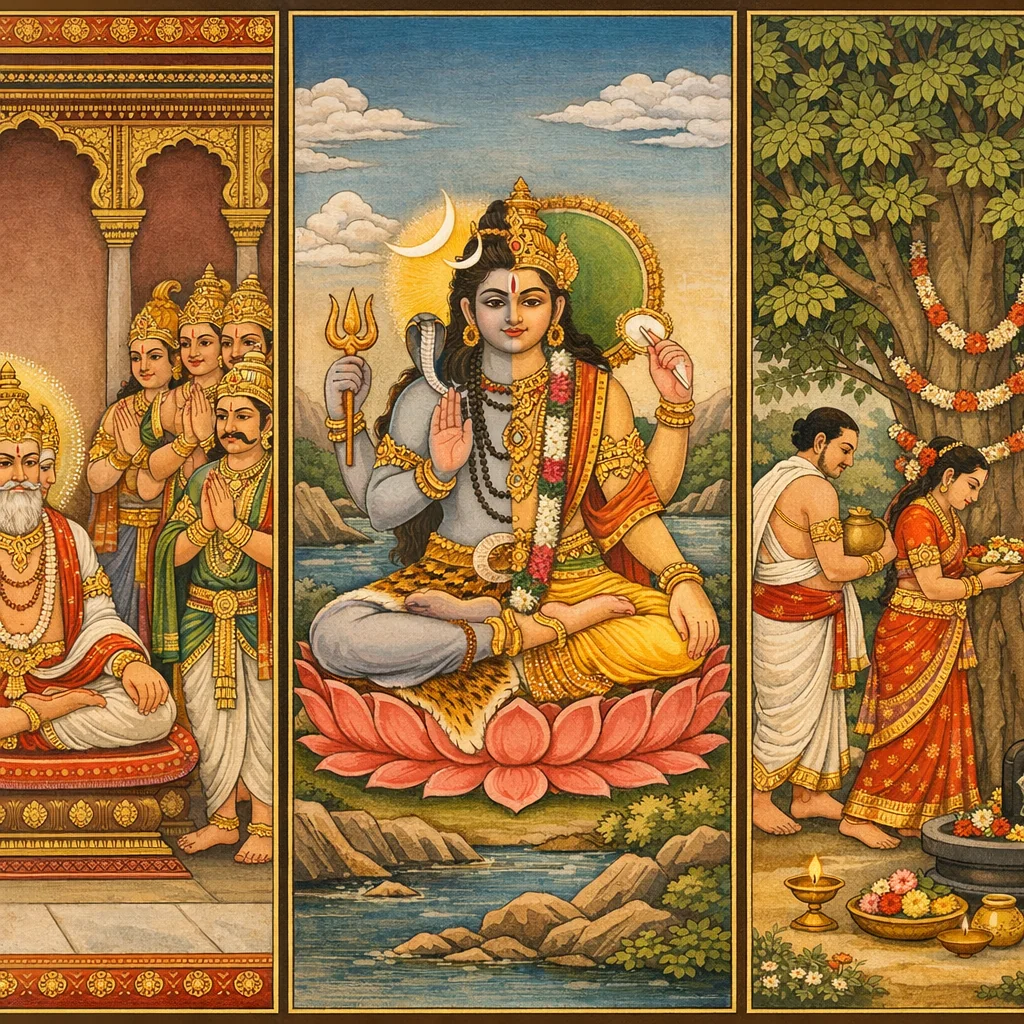
The chapter begins with Paijavana asking the theological reason why Śrī (Lakṣmī) is said to dwell in tulasī and Pārvatī in the bilva tree. Sage Gālava answers by recalling an earlier crisis: in a devas–asuras war the gods are defeated and, in fear, seek refuge with Brahmā. Brahmā refuses partisan intervention and points to a higher resolution, revealing the unified form of Harihara—half Śiva, half Viṣṇu—as a doctrinal sign of non-division that turns heterodox disputants toward a nirvāṇa-oriented path. The narrative then shifts to a sacred geography of trees: the gods perceive divine presences established in arboreal forms—Pārvatī in bilva, Lakṣmī in tulasī—and hear a celestial instruction that during Chāturmāsya, Īśvara, out of compassion, abides as a tree. The aśvattha (pippala) is praised as especially efficacious, particularly on Thursdays; touch, sight, worship, watering, and offerings (milk and sesame-mixtures) are all said to purify. A strong phalaśruti declares that remembering and ritually caring for the aśvattha lessens sins and fears connected with Yama’s realm, while warning against harming the tree. Viṣṇu’s immanence is mapped onto it—Viṣṇu at the root, Keśava in the trunk, Nārāyaṇa in the branches, Hari in the leaves, and Acyuta in the fruits—concluding that devoted service to the tree yields liberation-oriented merit.
Shlokas
Verse 1
पैजवन उवाच । श्रीः कथं तुलसीरूपा बिल्ववृक्षे च पार्वती । एतच्च विस्तरेण त्वं मुने तत्त्वं वद प्रभो
Paijavana said: “How is Śrī present in the form of tulasī, and how is Pārvatī present in the bilva tree? O sage, O lord, tell me this truth in detail.”
Verse 2
गालव उवाच । पुरा दैवासुरे युद्धे दानवा बलदर्पिताः । देवान्निजघ्नुः संग्रामे घोररूपाः सुदारुणाः
Gālava said: Long ago, in the war between the gods and the Asuras, the Dānavas—drunk with strength and pride—struck down the gods in battle, terrible in form and exceedingly fierce.
Verse 3
देवाश्च भय संविग्ना ब्रह्माणं शरणं ययुः । ते स्तुत्वा पितरं नत्वा वृहस्पतिपुरःसराः
And the gods, shaken with fear, went to Brahmā for refuge. Led by Bṛhaspati, they praised their Father and bowed down before him.
Verse 4
तस्थुः प्रांजलयः सर्वे तानुवाच पितामहः । किमर्थं म्लानवदना अस्मद्गेहमुपागताः
All of them stood with folded hands. Then the Grandfather, Brahmā, spoke to them: “For what reason have you come to my abode with faces fallen and dispirited?”
Verse 6
वयं सर्वे पराक्रांता अतस्त्वां शरणं गताः । त्राह्यस्मान्देवदेवेश शरणं समुपागतान्
“We have all been overpowered; therefore we have come to you for refuge. O Lord of the gods, protect us who have approached you seeking shelter.”
Verse 7
तच्छ्रुत्वा भगवान्प्राह ब्रह्मा लोकपितामहः । मया न शक्यते कर्त्तुं पक्षः कस्य जनस्य च
Hearing that, the Blessed Brahmā, the Grandfather of the worlds, replied: “It is not possible for me to take sides on behalf of any party.”
Verse 9
कारणं कथ्यतामाशु वह्नीन्द्रवसुभिर्युताः । देवा ऊचुः । दैत्यैः पराजितास्तात संगरेऽद्भुतकारिभिः
“Tell the cause at once,” (said Brahmā), as the gods—attended by Agni, Indra, and the Vasus—stood before him. The gods replied: “O venerable Father, in battle we have been defeated by the Dānavas, who accomplish wondrous deeds.”
Verse 10
ऐक्यं विष्णुगणैः कुर्वन्दध्रे रूपं महाद्भुतम् । तदा हरिहराख्यं च देहार्द्धाभ्यां दधार सः
Uniting with the hosts of Viṣṇu, he assumed a supremely marvelous form; then, with the two halves of his body, he bore the form renowned as Harihara.
Verse 11
हरश्चैवार्द्धदेहेन विष्णुरर्द्धेन चाभवत् । एकतो विष्णुचिह्नानि हरचिह्नानि चैकतः
With one half of his body he became Hara (Śiva), and with the other half he became Viṣṇu. On one side were the emblems of Viṣṇu, and on the other side the emblems of Hara.
Verse 12
एकतो वैनतेयश्च वृषभश्चान्यतोऽभवत् । वामतो मेघवर्णाभो देहोऽश्मनिचयोपमः
On one side was Vainateya (Garuḍa), and on the other appeared the Bull (Nandin). On the left, the body shone cloud-hued, like a great mass of rock.
Verse 13
कर्पूरगौरः सव्ये तु समजायत वै तदा । द्वयोरैक्यसमं विश्वं विश्वमैक्यमवर्त्तत
On the right side he then appeared camphor-white. The universe became as though equal to the unity of the two; indeed, the world itself moved toward oneness.
Verse 14
विभेदमतयो नष्टाः श्रुतिस्मृत्यर्थबाधकाः । पाखंडिनो हैतुकाश्च सर्वे विस्मयमागमन्
Those whose minds clung to division—who obstructed the meaning of Śruti and Smṛti—together with the heretics and mere disputants, all fell into astonishment as their contentions collapsed.
Verse 15
स्वंस्वं मार्गं परित्यज्य ययुर्निर्वाणपद्धतिम् । मंदरे पवतश्रेष्ठे सा मूर्तिर्नित्यसंस्तुता
Abandoning their own narrow paths, they proceeded upon the way to Nirvāṇa, the path of liberation. Upon Mandara, the best of mountains, that sacred form is praised eternally.
Verse 16
प्रमथाद्यैर्गणैश्चैव वर्त्ततेऽद्यापि निश्चला । सृष्टिस्थित्यंतकर्त्री सा विश्वबीजमनंतका
Even today she remains unwavering, attended by the Pramathas and other divine hosts. She is the power that brings about creation, sustenance, and dissolution—endless, and the very seed of the universe.
Verse 17
महेशविष्णसंयुक्ता सा स्मृता पापनाशिनी । योगिध्येया सदापूज्य सत्त्वाधारगुणातिगा
United with Maheśa and Viṣṇu, she is remembered as the destroyer of sin. She is to be meditated upon by yogins, ever worthy of worship—the support of all being, and beyond the guṇas.
Verse 18
मुमुक्षवोऽपि तां ध्यात्वा प्रयांति परमं पदम् । चातुर्मास्ये विशेषेण ध्यात्वा मर्त्यो ह्यमानुषः
Even seekers of liberation, meditating upon her, attain the supreme state. And especially in the Cāturmāsya season, by meditating thus, a mortal becomes as one beyond mere human limitation.
Verse 19
तत्र गच्छंति ये तेषां स देवः संविधास्यति । इत्युक्त्वा भगवांस्तेषां तत्रैवांतरधीयत
“Whoever goes there—for them that very Lord will make all due provision.” Having said this to them, the Blessed One vanished then and there.
Verse 20
तेऽपि वह्निमुखा देवाः प्रजग्मुर्मंदराचलम् । बभ्रमुस्तत्र तत्रैव विचिन्वाना महेश्वरम्
Those gods too—led by Agni—set out for Mount Mandara. There they wandered about, searching again and again for Maheśvara.
Verse 21
पार्वतीं बिल्ववृक्षस्थां लक्ष्मीं च तुलसीगताम् । आदौ सर्वं वृक्षमयं पूर्वं विश्वमजायत
They beheld Pārvatī abiding in the Bilva tree, and Lakṣmī dwelling in the Tulasī. In the beginning, indeed, the ancient universe first arose as wholly made of trees.
Verse 22
एते वृक्षा महाश्रेष्ठाः सर्वे देवांशसंभवाः । एतेषां स्पर्शनादेव सर्वपापैः प्रमुच्यते
These trees are most excellent—each born from a portion of the gods. Merely by touching them one is released from all sins.
Verse 23
चातुर्मास्ये विशेषेण महापापौघहारिणः । यदा तेनैव ददृशुर्देवास्त्रिभुवनेश्वरम्
Especially during Cāturmāsya, they become removers of great torrents of sin. And then, by that very means, the gods beheld the Lord of the three worlds.
Verse 24
तदाकाशभवा वाणीं प्राह देवान्यथार्थतः । ईश्वरः सर्वभूतानां कृपया वृक्षमाश्रितः
Then a voice arising from the sky spoke truthfully to the gods: “Īśvara, out of compassion for all beings, has taken refuge in a tree.”
Verse 25
चातुर्मास्येऽथ संप्राप्ते सर्वभूतदयाकरः । अश्वत्थोऽतः सदा सेव्यो मंदवारे विशेषतः
When Cāturmāsya arrives, the Lord compassionate to all beings is present there; therefore the Aśvattha should always be honored—especially on Monday.
Verse 26
नित्यमश्वत्थसंस्पर्शात्पापं याति सहस्रधा । दुग्धेन तर्पणं ये वै तिलमिश्रेण भक्तितः
By the daily touch of the sacred Aśvattha (pippala) tree, sin is shattered a thousandfold. And those who, with devotion, offer tarpaṇa with milk mixed with sesame gain purifying merit.
Verse 27
सेचनं वा करिष्यंति तृप्तिस्तत्पूर्वजेषु च । दर्शनादेव वृक्षस्य पातकं तु विनश्यति
Or, if they water it, their forefathers are satisfied thereby. Indeed, merely by the sight of that tree, sin is destroyed.
Verse 28
पिप्पलः पूजितो ध्यातो दृष्टः सेवित एव वा । पापरोगविनाशाय चातुर्मास्ये विशेषतः । अश्वत्थं पूजितं सिक्तं सर्वभूतसुखावहम्
Whether the pippala is worshipped, meditated upon, seen, or served—especially during Cāturmāsya—it brings about the destruction of sins and diseases. The Aśvattha, when worshipped and watered, becomes a bestower of happiness for all beings.
Verse 29
सर्वामयहरं चैव सर्वपापौघहारिणम् । ये नराः कीर्तयिष्यंति नामाप्यश्वत्थवृक्षजम्
It removes every ailment and carries away torrents of sins. Those men who even sing or recite the very name born of the Aśvattha tree (that is, the Aśvattha’s name) gain that purifying merit.
Verse 30
न तेषां यमलोकस्य भयं मार्गे प्रजायते । कुंकुमैश्चंदनैश्चैव सुलिप्तं यश्च कारयेत
For them, no fear of Yama’s realm arises on the journey beyond. And whoever causes (the sacred tree) to be well-anointed with kuṅkuma and sandalpaste—
Verse 31
तस्य तापत्रयाभावो वैकुंठे गणता भवेत् । दुःस्वप्नं दुष्टचिंताञ्च दुष्टज्वरपराभवान्
For him, the threefold afflictions cease, and he attains the status of a divine attendant in Vaikuṇṭha. Evil dreams, wicked thoughts, and the overpowering of malignant fevers are also brought to an end.
Verse 32
विलयं नय पापानि पिप्पल त्वं हरिप्रिय । मंत्रेणानेन ये देवाः पूजयिष्यंति पिप्पलम्
“Lead my sins to dissolution, O Pippala—beloved of Hari.” Those devotees who will worship the pippala with this mantra—
Verse 34
श्रुतो हरति पापं च जन्मादि मरणावधि । अश्वत्थसेवनं पुण्यं चातुर्मास्ये विशेषतः
Even when merely heard of, it removes sin—from birth onward up to death. Service to the Aśvattha is meritorious, especially during Cāturmāsya.
Verse 35
सुप्ते देवे वृक्षमध्यमास्थाय भगवान्प्रभुः । जलं पृथ्वीगतं सर्वं प्रपिबन्निव सेवते
When the Deva (Viṣṇu) lies in His cosmic sleep, the Blessed Lord abides in the heart of the tree, as though drinking up all the waters that have entered the earth, and thus sustains the world.
Verse 36
जलं विष्णुर्जलत्वेन विष्णुरेव रसो महान् । तस्माद्वृक्षगतो विष्णुश्चातुर्मास्येऽघनाशनः
Water is Viṣṇu in the form of water; and Viṣṇu Himself is the great essence (rasa). Therefore, when Viṣṇu is present in the tree, He becomes a destroyer of sin—especially during Cāturmāsya.
Verse 37
सर्वभूतगतो विष्णुराप्याययति वै जगत् । तथाश्वत्थगतं विष्णुं यो नमस्येन्न नारकी
Viṣṇu, pervading all beings, truly nourishes the world. Likewise, one who bows to Viṣṇu present within the Aśvattha tree does not become fit for hell.
Verse 38
अश्वत्थं रोपयेद्यस्तु पृथिव्यां प्रयतो नरः । तस्य पापसहस्राणि विलयं यांति तत्क्षणात्
But that disciplined person who plants an Aśvattha upon the earth—thousands of his sins perish at that very moment.
Verse 39
अश्वत्थः सर्ववृक्षाणां पवित्रो मंगलान्वितः । मुक्तिदो रोपितो ध्यातश्चातुर्मास्येऽघनाशनः
Among all trees, the Aśvattha is pure and filled with auspiciousness. When planted and meditated upon—especially in Cāturmāsya—it grants liberation and destroys sin.
Verse 40
अश्वत्थे चरणं दत्त्वा ब्रह्महत्या प्रजायते । निष्कारणं संकुथित्वा नरके पच्यते ध्रुवम्
By placing one’s foot upon the Aśvattha, one incurs a sin comparable to brahma-hatyā. And one who needlessly injures it is surely tormented in hell.
Verse 41
मूले विष्णुः स्थितो नित्यं स्कंधे केशव एव च । नारायणस्तु शाखासु पत्रेषु भगवान्हरिः
At its root, Viṣṇu ever abides; in its trunk stands Keśava. In its branches is Nārāyaṇa, and in its leaves is Bhagavān Hari.
Verse 42
फलेऽच्युतो न संदेहः सर्वदेवैः समन्वितः । चातुर्मास्ये विशेषेण द्रुमपूजी स मुक्तिभाक्
In its fruit is Acyuta—of this there is no doubt—together with all the gods. Especially in Cāturmāsya, the worshipper of the tree attains liberation.
Verse 43
तस्मात्सर्वप्रयत्नेन सदैवाश्वत्थसेवनम् । यः करोति नरो भक्त्या पापं याति दिनोद्भवम्
Therefore, with every effort one should always serve the Aśvattha. The person who does so with devotion—his sin departs day by day.
Verse 44
स एव विष्णुर्द्रुम एव मूर्तो महात्मभिः सेवितपुण्यमूलः । यस्याश्रयः पापसहस्रहंता भवेन्नृणां कामदुघो गुणाढ्यः
That very tree is Viṣṇu embodied—its root a source of merit, served by great souls. Taking refuge in it destroys thousands of sins for people; it becomes a wish-fulfilling giver, rich in virtues.
Verse 133
ततस्तेषां धर्मराजो जायते वाक्यकारकः । अश्वत्थो वचनेनापि प्रोक्तो ज्ञानप्रदो नृणाम्
Then, for them, Dharma-rāja arises as the one who pronounces the verdict. The Aśvattha is declared a bestower of knowledge for people—even by the mere utterance or praise of its name.
Verse 247
इति श्रीस्कांदे महापुराण एकाशीतिसाहस्र्यां संहितायां षष्ठे नागरखण्डे हाटकेश्वरक्षेत्रमाहात्म्ये शेषशाय्युपाख्याने ब्रह्मनारदसंवादे चातुर्मास्यमाहात्म्ये पैजवनोपाख्यान अश्वत्थमहिमवर्णनंनाम सप्तचत्वारिंशदुत्तरद्विशततमोऽध्यायः
Thus ends the two-hundred-and-forty-seventh chapter, entitled “Description of the Glory of the Aśvattha,” within the Cāturmāsya Māhātmya—set in the Paijavana episode, in the Brahmā–Nārada dialogue, in the Śeṣaśāyī narrative, in the Hāṭakeśvara-kṣetra Māhātmya—of the sixth Nāgara-khaṇḍa of the Śrī Skanda Mahāpurāṇa, in the Ekāśīti-sāhasrī Saṃhitā.