Adhyaya 246
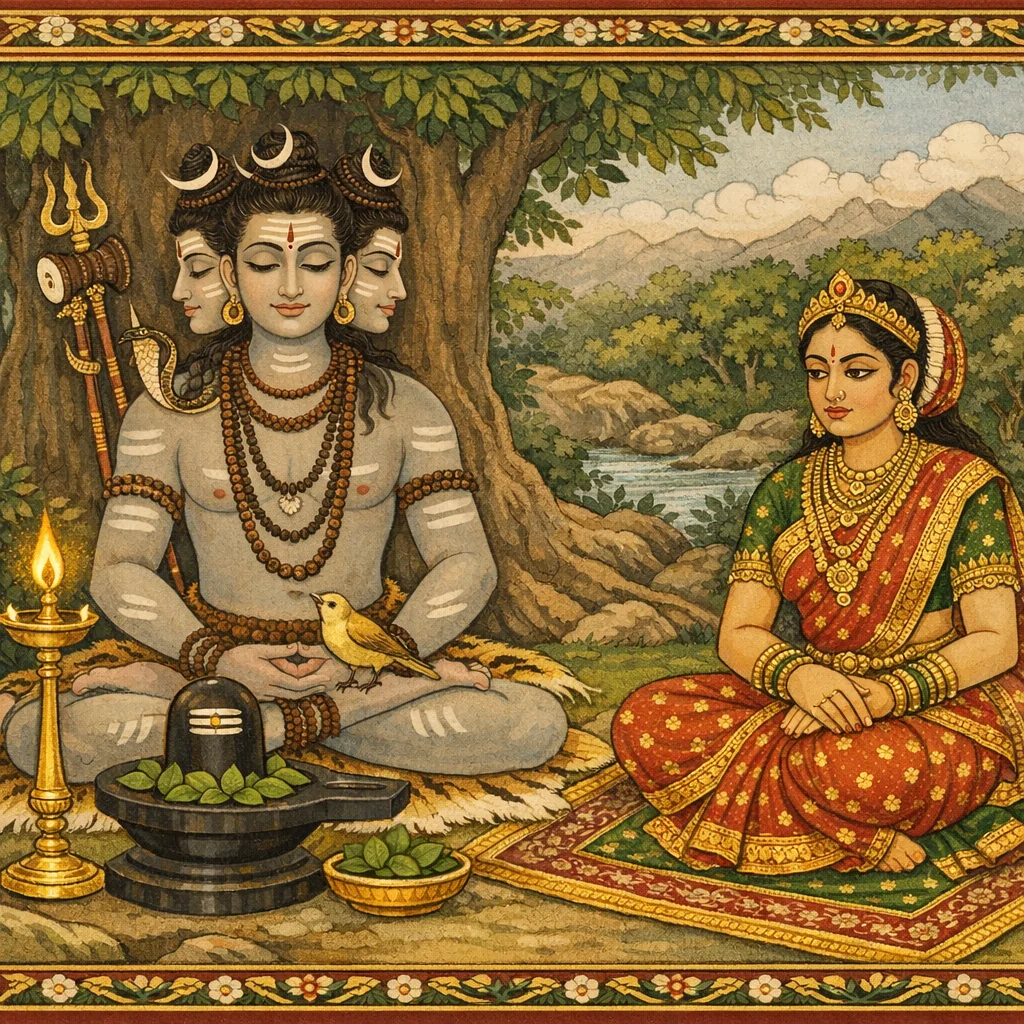
This chapter is framed as a dialogue in which Galava answers a question on vrata-caryā, disciplined observance. The devas, distressed and unable to gain direct audience, fashion an iconographic form of Śiva and undertake Śaiva austerities—japa of the ṣaḍakṣara mantra and sustained cāturmāsya practice. The observance is marked by recognizable ritual identifiers: bhasma, skull-and-staff motifs, the crescent moon, pañcavaktra imagery, and other ascetic emblems. Pleased by their purity and devotion, Śiva grants śubhā mati (auspicious resolve) and declares that he is satisfied through ordered means: procedurally correct Śatarudrīya-japa, meditation, lamp-offering (dīpa-dāna), and a complete sixteenfold pūjā comparable in formal fullness to Vaiṣṇava worship. A decisive turn follows when a divine agent assumes bird-form to approach Śiva; the ensuing episode provokes Pārvatī’s displeasure, and she curses the devas to become stone-like and without progeny. The devas respond with an extended stuti, praising Pārvatī as cosmic ground (prakṛti), mantra-seed, and the enduring source of creation–maintenance–dissolution, and prescribing bilva-leaf worship—especially during cāturmāsya—as exceptionally fruitful. Thus the chapter blends Śiva–Śakti theology with ethical counsel (discipline, humility, reconciliation) and practical ritual indexing as the takeaway of the tīrtha narrative.
Shlokas
Verse 1
गालव उवाच । शक्रादयस्तु देवेशा दुःखसंतप्तमानसाः । ईश्वरादर्शनभ्रांतमनः कर्मेंद्रिया रतिम्
Gālava said: “But Śakra and the other lords of the gods, their minds scorched by grief, their thoughts unsettled for want of the Lord’s darśana, found no delight in the activities of the senses.”
Verse 2
न प्रापुर्लोकनाथं ते कृत्वा यः प्रतिमाकृतिम् । तपसाराधयामासुः सर्वभूतहृदिस्थितम्
They did not attain the Lord of the worlds by fashioning merely an image-form; rather, through austerity they worshipped Him who abides in the hearts of all beings.
Verse 3
कपर्दशिरसं देवं शूलहस्तं पिनाकिनम् । कपालखट्वांगधरं दशहस्तं किरीटिनम्
That god should be envisioned as having matted locks upon His head, holding a trident, bearing the bow Pināka, carrying a skull and a khaṭvāṅga staff—ten-armed and crowned.
Verse 4
उमासहितमीशानं पंचवक्त्रं महाभुजम् । कर्पूरगौरदेहाभं सितभूतिविभूषितम्
He is Īśāna, accompanied by Umā—five-faced, mighty-armed, with a body radiant like camphor, adorned with white sacred ash.
Verse 5
नागयज्ञोपवीतेन गजचर्मसमन्वितम् । कृष्णसारत्वचा चापि कृतप्रावरणं विभुम्
The all-pervading Lord is to be envisioned with a serpent as His sacred thread, clad in elephant-hide, and also wrapped in the skin of the black antelope.
Verse 6
कृतध्यानाः सुरास्तत्र वृक्षाधारे समाश्रिताः । व्रतचर्यां समाश्रित्य प्रचक्रुस्तप उत्तमम्
There, the gods—having established meditation—took refuge at the base of a tree; adhering to the discipline of a vow, they undertook the highest austerity.
Verse 7
षडक्षरेण मंत्रेण शैवेन विहिताः सुराः । शूद्र उवाच । व्रतचर्या त्वया या सा प्रोक्ता संजा यते कथम्
The gods were duly instructed in the Śaiva six-syllabled mantra. The Śūdra said: “How does that vow-discipline, which you have described, come to be properly undertaken?”
Verse 8
ब्रह्मन्विस्तरतो ब्रूहि न तृप्येते वचोऽमृतैः
O revered one, speak in detail—one is not satisfied by these nectar-like words.
Verse 9
गालव उवाच । जपन्भस्म च खट्वांगं कपालं स्फाटिकं तथा । रुंडमालां पंचवक्त्रमर्द्धचंद्रं च मूर्द्धनि
Gālava said: “(He should bear) japa and sacred ash, the khaṭvāṅga staff, a crystal-clear skull-vessel; a garland of severed heads; the five-faced form; and the crescent moon upon the head.”
Verse 10
चित्रकृत्तिपरीधानं कौपीनकुण्डलद्वयम् । घंटायुग्मं त्रिशूलं च सूत्रं चर्यास्वरूपकम्
Wearing a variegated skin-garment, with a loincloth (kaupīna) and a pair of earrings; bearing two bells and a trident—this is the outward form of the observance, and the guiding rule of conduct.
Verse 11
अमीभिर्लक्षणैर्लक्ष्यं मयोक्तं तव शूद्रज । अनेन विधिना सर्वे देवा वह्निपुरोगमाः
By these characteristics I have declared to you the proper mark of the observance, O Śūdra-born. By this very procedure, all the gods—led by Agni—performed the practice.
Verse 12
सर्व आराधयामासुः सर्वोपायैर्वरप्रदम् । चातुर्मास्ये च संपूर्णे सपूर्णे कार्तिकेऽमले
Using every proper means of worship, they all propitiated the Bestower of boons; and when the Cāturmāsya observance was fully completed—indeed, when the pure month of Kārtika had reached its fullness—their rite came to perfection.
Verse 13
चीर्णव्रतान्सुरान्दृष्ट्वा विशुद्धांश्च महेश्वरः । मतिं तेषां ददौ तुष्टो जीवात्मा सर्वभूतदृक्
Seeing the gods who had duly performed their vows and become purified, Maheśvara—pleased, the indwelling Self who beholds all beings—bestowed upon them the right understanding.
Verse 14
शतरुद्रीयजाप्येन विधानसहितेन च । ध्यानेन दीपदानेन चातुर्मास्ये तुतोष सः
By the prescribed repetition of the Śatarudrīya, together with its proper rite, and by meditation and the gifting of lamps, he (Śiva) was satisfied during the Cāturmāsya season.
Verse 15
पूजनैः षोडशविधैर्यथा विष्णोस्तथा हरे । कुर्वाणान्भक्तिभावेन ज्ञात्वा देवान्समागतान्
Recognizing that the gods had assembled, they performed worship in the sixteen prescribed modes—just as for Viṣṇu, so also for Hara—doing it with the feeling of devotion.
Verse 16
प्रहृष्टो भगवान्रुद्रो ददौ तेषां शुभा मतिम् । ततः संमंत्र्य ते देवा वह्निं स्तुत्वा यथार्थतः
Delighted, Lord Rudra granted them an auspicious resolve. Then those gods, after consulting together, praised Agni truthfully and in due form.
Verse 17
प्रसन्नवदनं चक्रुः कार्यसाधनतत्परम् । कर्मसाक्षी महातेजाः कृत्वा पारावतं वपु
They caused him to become serene-faced and intent on accomplishing the task. That mighty, radiant one—Agni, the Witness of deeds—assumed the body of a dove.
Verse 18
प्रविवेश ततो मध्ये द्रष्टुं देवं महेश्वरम् । चकार गतिविक्षेपं गुंठनैरवगुंठनैः
Then he entered into the midst, seeking to see the god Maheśvara; and he produced deceptive shifts of movement, with concealments and counter-concealments.
Verse 19
लुंठनैः सर्पणैश्चैव चारुरूपोऽद्भुतां गतिम् । तं दृष्ट्वा भगवांस्तत्र कारणं समबुद्ध्यत
With rolling and creeping movements, that graceful-formed one displayed a wondrous gait. Seeing him there, the Lord understood the underlying cause.
Verse 20
ऊर्ध्वरेतास्ततस्तस्मिन्ससर्जादौ दधार तत् । वीर्यं वह्निमुखे चैव सोत्पपात गृहाद्बहिः
Then the Lord of upward seed emitted it; at first He held it, and that potency was placed into the mouth of Agni. Thereupon He sprang from the house to the outside.
Verse 21
गते तस्मिन्पतंगेऽथ पार्वती विफलश्रमा । संक्रुद्धा सर्वदेवानां सा शशाप महेश्वरी
When that winged one had gone, Pārvatī—her effort rendered fruitless—became enraged; and the Great Goddess cursed all the gods.
Verse 22
यस्मान्ममेच्छा विहता भवद्भिर्दुष्टबुद्धिभिः । तस्मात्पाषाणतामाशु व्रजंतु त्रिदिवौकसः
Since my will has been thwarted by you of wicked understanding, therefore, O dwellers of heaven, quickly go into the state of stone.
Verse 23
निरपत्या निर्दयाश्च सर्वे देवा भविष्यथ । ततः प्रसादयामासुः प्रणताः शापयंत्रिताः
You shall all become childless and devoid of compassion, O gods. Then, constrained by the curse, they bowed down and began to seek her grace.
Verse 24
महद्दुःखं संप्रविष्टाः पुनः पुनरथाब्रुवन्
Overwhelmed by great sorrow, they spoke again and again as follows.
Verse 25
। । देवा ऊचुः । त्वं माता सर्वदेवानां सर्वसाक्षी सनातनी । उत्पत्तिस्थितिसंहारकारणं जगतां सदा
The Devas said: You are the Mother of all the gods, the eternal Witness of all; you are forever the cause of the world’s creation, preservation, and dissolution.
Verse 26
भूतप्रकृतिरूपा त्वं महाभूतसमाश्रिता । अपर्णा तपसां धात्री भूतधात्री वसुन्धरा
You are the very form of the nature of beings, established in the great elements. You are Aparṇā, the sustainer of austerities; the nurse of creatures; the Earth herself.
Verse 27
मंत्राराध्या मन्त्रबीजं विश्वबीजलयस्थितिः । यज्ञादिफलदात्री च स्वाहारूपेण सर्वदा
You are to be worshipped through mantras; you are the very seed of mantra. You are the world’s seed—its continuance and its dissolution. You bestow the fruits of sacrifices and other rites, ever abiding in the form of Svāhā.
Verse 29
दोषत्रयसमाक्रान्त जननैः श्रेयसप्रदा । महालक्ष्मीर्महाकालीमहादेवी महेश्वरी
To embodied beings born under the grip of the three faults, you grant true welfare. You are Mahālakṣmī, Mahākālī, Mahādevī, the great Sovereign Lady (Maheśvarī).
Verse 30
विश्वेश्वरी महामाया मायाबीजवरप्रदा । वररूपा वरेण्या त्वं वरदात्री वरासुता
You are the Mistress of the universe, the Great Power of Māyā, the giver of boons through the seed of māyā. You are the very form of blessing, worthy to be chosen and adored—bestower of boons, the noble daughter.
Verse 31
बिल्वपत्रैः शुभैर्ये त्वां पूजयन्ति नराः सदा । तेषां राज्यप्रदात्री च कामदा सिद्धिदा सदा
Those who ever worship you with auspicious bilva leaves—to them you grant sovereignty; you fulfill desires and bestow success and siddhi, always.
Verse 32
चातुर्मास्येऽर्चिता यैस्त्वं बिल्वपत्रैर्विशेषतः । तेषां वांछितसिद्ध्यर्थं जाता कामदुघा स्वयम्
For those who worship you during Cāturmāsya, especially with bilva leaves—you yourself become the wish-fulfilling cow, Kāmadhenū, arising to grant their desired attainments.
Verse 33
येऽर्चयंति सदा लोके महेश्वरसमन्विताम् । बिल्वपत्रैर्महाभक्त्या न तेषां दुःखदुष्कृती
Those in this world who continually worship the Goddess united with Maheśvara, offering bilva leaves with great devotion—sorrow and sinful deeds do not remain for them.
Verse 34
चातुर्मास्ये विशेषेण तव पूजा महाफला । अद्यप्रभृति यैर्लोकैर्बिल्वपत्रैस्तु पूजिता
Especially in the Cāturmāsya season, worship of you yields great fruit; from this very day onward, for those people who worship you with bilva leaves…
Verse 35
विधास्यसि महेशानि तेषां ज्ञानमनुत्तमम् । चातुर्मास्येऽधिकफलं बिल्वपत्रं वरानने
O Maheśānī, you will grant them unsurpassed knowledge. O fair-faced one, in Cāturmāsya the offering of the bilva leaf bears increased reward.
Verse 36
उमामहेश्वरप्रीत्यै दत्तं विधिवदक्षयम् । यथा श्रीस्तुलसीवृक्षे तथा बिल्वे च पार्वती
Whatever is duly offered for the delight of Umā and Maheśvara becomes imperishable and inexhaustible. As Śrī abides in the tulasī plant, so too Pārvatī abides in the bilva tree.
Verse 37
त्वं मूर्त्या दृश्यसे विश्वं सकलाभीष्टदायिनी । चातुर्मास्ये विशेषेण सेवितौ द्वौ महाफलौ
You are beheld as the very universe in embodied form, the bestower of every desired boon. Especially in Cāturmāsya, when these two are reverently served, they grant great fruit.
Verse 246
इति श्रीस्कांदे महापुराण एकाशीतिसाहस्र्यां संहितायां षष्ठे नागरखण्डे हाटकेश्वरक्षेत्रमाहात्म्ये शेषशाय्युपाख्याने ब्रह्मनारदसंवादे चातुर्मास्य माहात्म्ये पैजवनोपाख्याने पार्वत्येन्द्रादीनां शापप्रदानवृत्तान्तवर्णनंनाम षट्चत्वारिंशदुत्तरशततमोऽध्यायः
Thus ends the 146th chapter, entitled “The Account of How Curses Were Bestowed upon Pārvatī, Indra, and Others,” in the Śrī Skanda Mahāpurāṇa—within the 81,000-verse compilation—situated in the sixth Nāgara-khaṇḍa, in the Hāṭakeśvara-kṣetra-māhātmya, within the Śeṣaśāyī episode, in the Brahmā–Nārada dialogue, in the Cāturmāsya-māhātmya, in the Paijavana narrative.
Verse 298
मन्त्रयन्त्रसमोपेता ब्रह्मविष्णुशिवादिषु । नित्यरूपा महारूपा सर्वरूपा निरञ्जना
Endowed with mantras and yantras, present among Brahmā, Viṣṇu, Śiva and the rest—she is of eternal form, of vast form, of every form, and stainless, beyond all taint.