Adhyaya 244
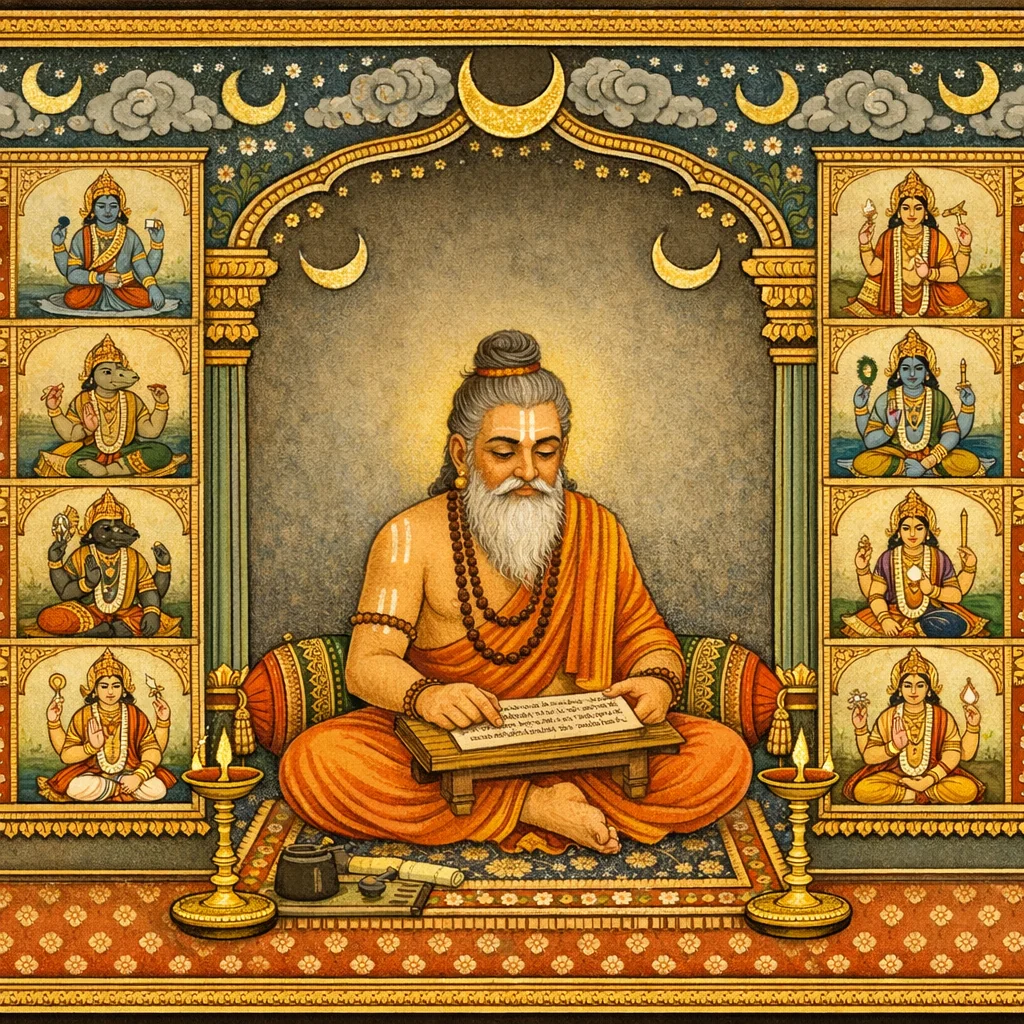
The chapter unfolds as a didactic dialogue. Paijavana asks Gālava for a fuller explanation of doctrinal “bhedas” (classifications and distinctions), saying that his thirst is still not quenched even by the “nectar” of the teacher’s words. Gālava replies by promising a purāṇic enumeration whose very hearing brings release from sins. At the center is an ordered list of twenty-four devotional forms and names of Hari/Viṣṇu—such as Keśava, Madhusūdana, Saṅkarṣaṇa, Dāmodara, Vāsudeva, Pradyumna, and others culminating in Kṛṣṇa—presented as a canonical set to be worshipped throughout the year. The chapter links these mūrti-names to calendrical order—tithis and the annual cycle—implying a regulated program of devotion, and aligns the twenty-fourfold scheme with other sets of twenty-four (such as avatāras), with hints of month and fortnight divisions. It concludes that devoted worship of the presiding Lord grants the four human aims (dharma, kāma, artha, mokṣa), and the phalaśruti declares that hearing or reciting with devotion and concentration pleases Hari, the guardian of created beings.
Shlokas
Verse 1
पैजवन उवाच । एतान्भेदान्मम ब्रूहि विस्तरेण तपोधन । त्वद्वाक्यामृतपानेन तृषा नैव प्रशाम्यति
Paijavana said: “O treasure of austerity, tell me these varieties in detail. Though I drink the nectar of your words, my thirst is not yet quenched.”
Verse 2
गालव उवाच । शृणु विस्तरतो भेदान्पुराणोक्तान्वदामि ते । याञ्छ्रुत्वा मुच्यतेऽवश्यं मनुजः सर्वकिल्बिषात्
Gālava said: “Listen—I shall tell you in detail the varieties spoken of in the Purāṇas; hearing them, a person is surely freed from all sin.”
Verse 3
पूर्वं तु केशवः पूज्यो द्वितीयो मधुसूदनः । संकर्षणस्तृतीयस्तु ततो दामोदरः स्मृतः
First, Keśava is to be worshipped; second is Madhusūdana; third is Saṃkarṣaṇa; thereafter, Dāmodara is remembered as the next.
Verse 4
पंचमो वासुदेवाख्यः षष्ठः प्रद्युम्नसंज्ञकः । सप्तमो विष्णुरुक्तश्चाष्टमो माधव एव च
The fifth is called Vāsudeva; the sixth is named Pradyumna; the seventh is spoken of as Viṣṇu; and the eighth is indeed Mādhava.
Verse 5
नवमोऽनंतमूर्त्तिश्च दशमः पुरुषोत्तमः । अधोक्षजस्ततः पश्चाद्द्वादशस्तु जनार्दनः
The ninth is Anantamūrti; the tenth is Puruṣottama. Then comes Adhokṣaja; and the twelfth is Janārdana.
Verse 6
त्रयोदशस्तु गोविंदश्चतुर्दशस्त्रिविक्रमः । श्रीधरश्च पंचदशो हृषीकेशस्तु षोडशः
The thirteenth is Govinda; the fourteenth is Trivikrama. The fifteenth is Śrīdhara, and the sixteenth is Hṛṣīkeśa.
Verse 7
नृसिंहस्तु सप्तदशो विश्वयोनिस्ततः परम् । वामनश्च ततः प्रोक्त स्ततो नारायणः स्मृतः
The seventeenth is Nṛsiṃha. After that is Viśvayoni. Then Vāmana is declared, and thereafter Nārāyaṇa is remembered.
Verse 9
पुंडरीकाक्ष उक्तस्तु ह्युपेंद्रश्च ततः परम् । हरिस्त्रयोविंशतिमः कृष्णश्चांत्य उदाहृतः
Puṇḍarīkākṣa is spoken of, and thereafter Upendra. Hari is the twenty-third, and Kṛṣṇa is declared as the last.
Verse 10
मूर्त्तयस्तिथिनान्म्यः स्युरेकादश्यः सदैव हि । संवत्सरेण पूज्यंते चतुर्विंश तिमूर्तयः
These forms correspond to the lunar days (tithis); indeed, the Ekādaśīs are ever their special times. Thus, in the course of a year, the twenty-four forms are worshipped.
Verse 11
देवावताराश्च तथा चतुर्विंशतिसंख्यकाः । मासा मार्गशिराद्याश्च मासार्द्धाः पक्षसंज्ञकाः
Likewise, the divine manifestations are counted as twenty-four. The months beginning with Mārgaśīrṣa, and the half-months known as pakṣas, are also reckoned in this sacred order.
Verse 12
अधीशसहितान्नित्यं पूजयन्भक्तिमान्भवेत् । चतुर्विंशतिसंज्ञं च चतुष्टयमुदाहृतम्
By worshipping them daily together with the presiding Lord, one becomes devoted. This fourfold set, known by the designation “twenty-four”, has been declared.
Verse 13
एतच्चतुष्टयं नृणां धर्मकामार्थमोक्षदम् । यः शृणोति नरो भक्त्तया पठेद्वापि समाहितः
This fourfold set grants people dharma, kāma, artha, and mokṣa. The man who hears it with devotion, or who recites it with concentration, receives its fruit.
Verse 14
भूतसर्गस्य गोप्ताऽसौ हरिस्तस्य प्रसीदति
Hari—protector of the creation of beings—becomes gracious toward such a person.
Verse 244
इति श्रीस्कांदे महापुराण एकाशीतिसाहस्र्यां संहितायां षष्ठे नागरखण्डे हाटकेश्वरक्षेत्रमाहात्म्य शेषशाय्युपाख्याने ब्रह्मनारदसंवादे चातुर्मास्यमाहात्म्ये शालिग्रामशिलासुमूर्त्त्युत्पत्तिवर्णनंनाम चतुश्चत्वारिंशदुत्तरद्वि शततमोध्यायः
Thus ends, in the Śrī Skanda Mahāpurāṇa—within the compendium of eighty-one thousand verses—within the sixth book, the Nāgarakhaṇḍa: in the Māhātmya of the sacred field of Hāṭakeśvara, in the narrative of Śeṣaśāyī, in the dialogue of Brahmā and Nārada, in the Māhātmya of Cāturmāsya—the chapter entitled “Description of the origin of the auspicious forms of the Śāligrāma stone,” being Chapter 244.