Adhyaya 243
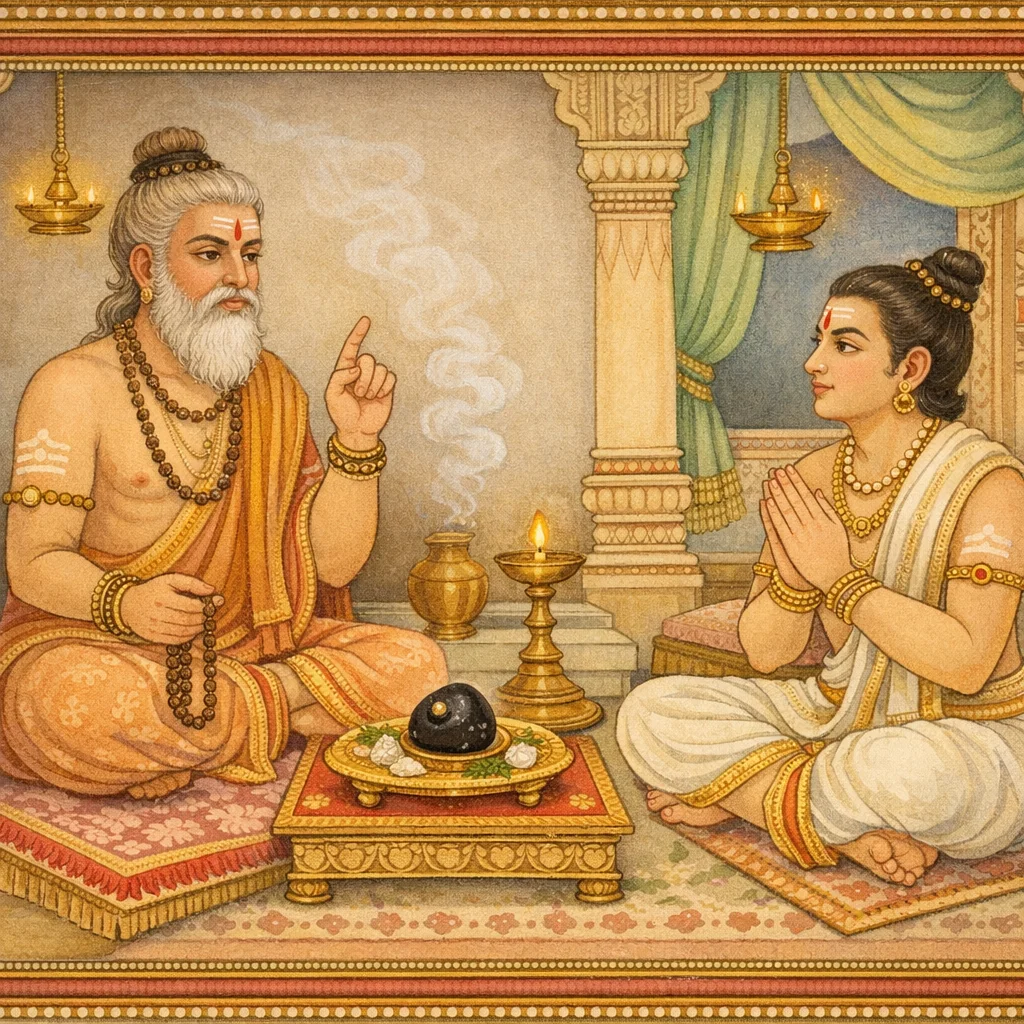
Brahmā presents an instructive example: Paijavana, a śūdra householder, exemplary in lawful livelihood, truthfulness, hospitality, and devotion to Viṣṇu and to brāhmaṇas. His home is shown as ethically ordered—seasonal charity, public-benefit works (wells, tanks, rest-houses), and disciplined vrata observance—establishing that dharma in gṛhastha life can yield spiritual power. The sage Gālava arrives with disciples and is honored. Paijavana regards the visit as purifying and asks for a liberative practice suited to one without entitlement to Vedic recitation. Gālava prescribes Śālagrāma-centered bhakti, stressing its akṣaya (imperishable) merit, its heightened efficacy during Cāturmāsya, and its ability to sanctify the surrounding space. Eligibility is clarified by distinguishing ‘asat-śūdra’ from ‘sat-śūdra’, affirming access for worthy householders and virtuous women, while warning that doubt destroys results. The chapter details acts of worship—offering tulasī (preferred to flowers), garlands, lamps, incense, pañcāmṛta bathing, and contemplative remembrance of Hari in Śālagrāma form—promising fruits from purification to an unfailing heavenly abode and mokṣa. It closes by noting a taxonomy of twenty-four Śālagrāma forms within the nested māhātmya frame.
Shlokas
Verse 1
। ब्रह्मोवाच । शूद्रः पैजवनोनाम गार्हस्थ्याच्छुद्धिमाप्तवान् । धर्ममार्गाविरोधेन तन्निबोध महामते
Brahmā said: A Śūdra named Paijavana attained purity through the householder’s life, without opposing the path of dharma. Know this, O great-minded one.
Verse 2
आसीत्पैजवनः शूद्रः पुरा त्रेतायुगे किल । स्वधर्मनिरतः ख्यातो विष्णुब्राह्मणपूजकः
In former times, in the Tretā Yuga, there indeed lived a Śūdra named Paijavana—renowned for devotion to his own duty, and for worshipping Viṣṇu and honoring brāhmaṇas.
Verse 3
न्यायागतधनो नित्यं शांतः सर्वजनप्रियः । सत्यवादी विवेकज्ञस्तस्य भार्या च सुन्दरी
His wealth was gained by righteous means; ever peaceful, he was beloved by all. He spoke truth and was endowed with discernment, and his wife too was beautiful.
Verse 4
धर्मोढा वेदविधिना समानकुलजा शुभा । पतिव्रता महाभागा देवद्विजहिते रता
Married in accordance with dharma and Vedic ordinance, born of a noble and fitting lineage, she was auspicious—devoted to her husband, greatly fortunate, and intent on the welfare of gods and brāhmaṇas.
Verse 5
काश्यां संबंधिता बाला वैजयंत्यां विवाहिता । सा धर्माचरणे दक्षा वैष्णवव्रतचारिणी
The maiden was betrothed in Kāśī and married in Vaijayantī. She was skilled in the practice of dharma and observed Vaiṣṇava vows.
Verse 6
भर्त्रा सह तथा सम्यक्चिक्रीडे सुविनीतवत् । सोऽपि रेमे तया काले हस्तिन्येव महागजः
With her husband she dwelt in harmony, sporting in due measure with gentle modesty. And he too delighted in her then, like a great elephant with his mate.
Verse 7
अर्थाप्तिः पूर्वपुण्येन जाता तस्य महात्मनः । वाणिज्यं स्वजनैर्नित्यं स्वदेशपरदेशजम्
Through the merit of former deeds, prosperity arose for that noble man. His people continually carried on trade, both within their own land and in foreign regions.
Verse 8
कारयत्यर्थजातैश्च परकीयस्वकीयजैः । एवमर्थश्च बहुधा संजातो धर्मदर्शिनः
With wealth gained from both others and his own sources, he caused works to be carried out. Thus, in many ways, riches accrued to that seer of dharma.
Verse 9
पुत्रत्रयं च संजातं पितुः शुश्रूषणे रतम् । तस्य पुत्राः पितुर्भक्ता द्रव्यादिमदवर्जिताः
Three sons were born, devoted to serving their father. Those sons were faithful to their father and free from the pride that comes from wealth and the like.
Verse 10
पितृवाक्यरताः श्रेष्ठाः स्वधर्माचारशोभनाः । पित्रोः शुश्रूषणादन्यन्नाभिनंदंति किंचन
They were excellent—delighting in their father’s words and adorned by the conduct of their own dharma. Beyond service to their parents, they took delight in nothing else at all.
Verse 11
ते सम्बन्धैः सुसंबद्धाः पित्रा धर्मार्थदर्शिना । तत्पत्न्यो मातृपित्रर्चां कारयंत्यनिवारितम्
Well bound by fitting alliances arranged by their father, who discerned dharma and artha, their wives continually arranged worship and honor for mother and father without interruption.
Verse 12
ऋद्धिमद्भवनं तस्य धनधान्यसमन्वितम् । सोऽपि धर्मरतो नित्यं देवतातिथिपूजकः
His mansion was prosperous, filled with wealth and grain; yet he remained ever devoted to dharma, worshipping the deities and honoring guests.
Verse 13
गृहागतो न विमुखो यस्य जातु कदाचन । शीतकाले धनं प्रादादुष्णकाले जलान्नदः
Whoever came to his house was never turned away at any time. In the cold season he gave wealth, and in the hot season he gave water and food.
Verse 14
वर्षा काले वस्त्रदश्च बभूवान्नप्रदः सदा । वापीकूपतडागादिप्रपादेवगृहाणि च
In the rainy season he gave clothes, and he was always a giver of food. He also had wells, stepwells, ponds, water-sheds, and temples and rest-houses made.
Verse 15
कारयत्युचिते काले शिवविष्णुव्रतस्थितः । इष्टधर्मस्तु वर्णानां समाचीर्णो महाफलः
At the proper times he had rites performed, established in vows dedicated to Śiva and Viṣṇu. Indeed, the cherished dharma of the social orders, when duly practiced, yields great fruit.
Verse 16
अन्येषां पूर्तधर्माणां तेषां पूर्तकरः सदा । स बभूव धनाढ्योपि व्यसनैर्न समाश्रितः
For others’ works of public merit, he was ever the one who brought them to completion. Though wealthy, he was not overcome by vices or calamities.
Verse 17
एकदा गालवमुनिः शिष्यैर्बहुभिरावृतः
Once, the sage Gālava came, surrounded by many disciples.
Verse 18
विष्णुभक्तिरतो नित्यं चातुर्मास्ये विशेषतः
He was ever devoted in bhakti to Viṣṇu—especially during the sacred Cāturmāsya season.
Verse 19
स वाग्भिर्मधुभिस्तस्य अभ्युत्थानासनादिभिः । उपचारैः पुनर्युक्तः कृतार्थ इव मानयन्
He honored him as though his own purpose had been fulfilled—offering sweet words, rising to welcome him, providing a seat, and rendering the customary services again and again.
Verse 20
अद्य मे सफलं जन्म जातं जीवितमुत्तमम् । अद्य मे सफलो धर्मः कुशलश्चोद्धृतस्त्वया
Today my birth has borne fruit; my life has become excellent. Today my dharma has become fruitful, and my welfare has been uplifted by you.
Verse 21
मम पापसहस्राणि दृष्ट्या दग्धानि ते मुने । गृहं मम गृहस्थस्य सकलं पावितं त्वया
O sage, by your very glance thousands of my sins have been burned away. My whole house—of me, a householder—has been purified by you.
Verse 22
तस्य भक्त्या प्रसन्नोऽभूद्गतमार्गपरिश्रमः । उवाच मुनिशार्दूलः सच्छूद्रं तं कृतांजलिम्
Pleased by his devotion, and with the weariness of the journey dispelled, the tiger among sages spoke to that virtuous Śūdra, who stood with hands folded in reverence.
Verse 23
कच्चित्ते कुशलं सौम्य मनो धर्मे प्रवर्तते । अर्थानुबंधाः सततं बन्धुदारसुतादयः
O gentle one, is all well with you? Does your mind remain engaged in dharma? And do worldly ties—relations, wife, children, and the rest—still continually bind you through attachment?
Verse 24
गोविन्दे सततं भक्तिस्तथा दाने प्रवर्तते । धर्मार्थकाम कार्येषु सप्रभावं मनस्तव
Is there steady devotion in you toward Govinda, and likewise a continuing impulse toward charity? In undertakings of dharma, artha, and kāma, may your mind be endowed with good power and right efficacy.
Verse 25
विष्णुपादोदकं नित्यं शिरसा धार्यते न वा । पादोद्भवं च गंगोदं द्वादशाब्दफलप्रदम्
Do you daily bear upon your head the water that has washed Viṣṇu’s feet—or not? That Gaṅgā-water, sprung from the Lord’s feet, bestows the fruit of twelve years of merit.
Verse 26
चातुर्मास्ये विशेषेण तत्फलं द्विगुणं भवेत् । हरिभक्तिर्हरिकथा हरिस्तोत्रं हरेर्नतिः
Especially in the Cāturmāsya season, that merit becomes twofold. Devotion to Hari, sacred discourse on Hari, hymns to Hari, and bowing to Hari—these are the cherished acts.
Verse 27
हरिध्यानं हरेः पूजा सुप्ते देवे च मोक्षकृत् । एवं ब्रुवाणं स मुनिं पुनराह नतिं गतः
Meditation on Hari and worship of Hari—even when the Lord abides in His sacred sleep—bring about liberation. As the sage spoke thus, the other, having bowed, addressed him again.
Verse 28
भवद्दृष्ट्याश्रमफलमेतज्जातं न संशयः । तथापि श्रोतुमिच्छामि तव वाणीमनामयीम्
By merely seeing you, the fruit of an āśrama-life has arisen—of this there is no doubt. Even so, I wish to hear your speech, free from affliction and error.
Verse 29
भवादृशानां गमनं सर्वार्थेषु प्रकल्पते । ततस्तौ सुमुदा युक्तौ संजातौ हृष्टचेतसौ
The coming of one like you becomes an accomplisher of every purpose. Therefore, the two of them, filled with great joy, became glad at heart.
Verse 30
मुनिं पैजवनोनाम सच्छूद्रः प्राह संमतः । किमागमनकृत्यं ते कथयस्व प्रसादतः
A worthy and respected good Śūdra named Paijavana spoke to the sage: “What is the purpose of your coming? Tell me, out of your gracious favor.”
Verse 31
को वा तीर्थप्रसंगश्च चातुर्मास्ये समीपगे । गालवः प्राह सच्छूद्रं धार्मिकं सत्यवादिनम्
“Or what sacred occasion of a tīrtha is drawing near, now that Cāturmāsya is close?” Thus Gālava spoke to that good Śūdra—righteous in dharma and truthful in speech.
Verse 32
मम तीर्थावसिक्तस्य मासा बहुतरा गताः । इदानीमाश्रमं यास्ये चातुर्मास्ये समागते
“Many months have passed for me while I have been bathing in sacred places. Now, with Cāturmāsya having arrived, I shall go to my hermitage.”
Verse 33
आषाढशुक्लैकादश्यां करिष्ये नियमं गृहे । नारायणस्य प्रीत्यर्थं श्रेयोऽर्थं चात्मनस्तथा । प्रत्युवाच मुनिर्धर्मान्विनयानतकन्धरम्
“On the bright fortnight’s Ekādaśī in Āṣāḍha I shall undertake a disciplined observance at home, for the pleasure of Nārāyaṇa and for my own highest good.” Thus spoke the sage, replying with teachings on dharma to the humble one whose neck was bowed in reverence.
Verse 34
पैजवन उवाच । मामनुग्रहजां बुद्धिं ब्रूहि त्वं द्विजपुंगव । वेदेऽधिकारो नैवास्ति वेदसारजपस्य वा
Paijavana said: “O best among the twice-born, instruct me with understanding born of your compassion. I have no eligibility for Vedic study, nor for the recitation (japa) of the essence of the Veda.”
Verse 35
पुराणस्मृतिपाठस्य तस्मात्किंचिद्वदस्व मे । तत्त्वात्मसदृशं किंचिद्भाति रूपं महाफलम्
“Therefore, tell me something from the recitation of Purāṇas and Smṛtis—some practice in accord with truth (tattva) and the Self (ātman), something that shines forth as a form of great fruit.”
Verse 36
चातुर्मास्ये विशेषेण मुक्तिसंसाधकं वद
Especially in the Cāturmāsya season, tell me a practice that brings liberation to its fulfillment.
Verse 37
गालव उवाच । शालिग्रामगतं विष्णुं चक्रांकित पुटं सदा । येऽर्चयन्ति नरा नित्यं तेषां भुक्तिस्त्वदूरतः
Gālava said: “Those who daily worship Viṣṇu present in the Śālagrāma—ever marked with the discus sign—find that worldly enjoyment is far from them.”
Verse 38
शालिग्रामे मनो यस्य यत्किंचित्क्रियते शुभम् । अक्षय्यं तद्भवेन्नित्यं चातुर्मास्ये विशेषतः
For one whose mind is set on Śālagrāma, whatever auspicious act is performed becomes imperishable—especially during Cāturmāsya.
Verse 39
शालिग्रामशिला यत्र यत्र द्वारावती शिला । उभयोः संगमः प्राप्तो मुक्तिस्तस्य न दुर्लभा
Wherever there is a Śālagrāma stone and wherever there is a Dvārāvatī stone—when the conjunction of both is obtained, liberation is not difficult to attain for that person.
Verse 40
शालिग्रामशिला यस्यां भूमौ संपूज्यते नृभिः । पञ्चक्रोशं पुनात्येषा अपि पापशतान्वितैः
That land on which the Śālagrāma stone is duly worshipped by people—this sacred stone purifies an area of five krośas, even when the residents are burdened with hundreds of sins.
Verse 41
तैजसं पिंडमेतद्धि ब्रह्मरूपमिदं शुभम् । यस्याः संदर्शनादेव सद्यः कल्मषनाशनम्
Indeed, this is a radiant sacred mass—an auspicious form of Brahman; merely by its sight, impurities are destroyed at once.
Verse 42
सर्वतीर्थानि पुण्यानि देवतायतनानि च । नद्यः सर्वा महाशूद्र तीर्थत्वं प्राप्नुवंति हि
All holy tīrthas, all sacred shrines of the deities, and all rivers—O great Śūdra—indeed attain the status of tīrtha (in relation to this sanctity).
Verse 43
सन्निधानेन वै तस्याः क्रिया सर्वत्रशोभनाः । व्रजंति हि क्रियात्वं च चातुर्मास्ये विशेषतः
By her very presence, all rites become auspicious and beautiful everywhere; indeed, they attain their full efficacy—especially during the sacred Cāturmāsya season.
Verse 44
पूज्यते भवने यस्य शालिग्राम शिला शुभा । कोमलैस्तुलसीपत्रैर्विमुखस्तत्र वै यमः
In the home where the auspicious Śāligrāma-śilā is worshipped with tender tulasī leaves, Yama indeed turns away from that place.
Verse 45
ब्राह्मणक्षत्रियविशां सच्छूद्राणामथापि वा । शालिग्रामाधिकारोऽस्ति न चान्येषां कदाचन
Brāhmaṇas, Kṣatriyas, Vaiśyas—and also the virtuous Śūdras—have the eligibility for Śāligrāma worship; but not others, at any time.
Verse 46
सच्छूद्र उवाच । ब्रह्मन्वेदविदां श्रेष्ठ सर्वशास्त्रविशारद । स्त्रीशूद्रादिनिषेधोऽयं शालिग्रामे हि श्रूयते
The virtuous Śūdra said: “O Brāhmaṇa, best among the knowers of the Veda and skilled in all śāstras—this prohibition concerning women, śūdras, and others is indeed heard of in relation to Śāligrāma.”
Verse 47
मादृशस्त्वं कथं शालिग्रामपूजाविधिं वद
“How can one like me be fit, then? Please tell the proper procedure for worshipping Śāligrāma.”
Verse 48
गालव उवाच । असच्छूद्रगतं दास निषेधं विद्धि मानद । स्त्रीणामपि च साध्वीनां नैवाभावः प्रकीर्तितः
Gālava said: “O good man, know that the prohibition applies to the unvirtuous śūdra, O servant; and for women too—especially the chaste and pious—no disqualification is proclaimed.”},{
Verse 49
मा भूत्संशयस्तेनात्र नाऽप्नुषे संशयात्फलम् । शालिग्रामार्चनपराः शुद्धदेहा विवेकिनः
Let there be no doubt here on that account, for from doubt you do not obtain the fruit. Those devoted to the worship of Śāligrāma are purified in body and discerning in mind.
Verse 50
न ते यमपुरं यांति चातुर्मास्ये च पूजकाः । शालिग्रामार्पितं माल्यं शिरसा धारयंति ये
Those worshippers in Cāturmāsya do not go to Yama’s city—whoever bears upon the head a garland that has been offered to Śāligrāma.
Verse 51
तेषां पापसहस्राणि विलयं यांति तत्क्षणात् । शालिग्राम शिलाग्रे तु ये प्रयच्छंति दीपकम्
For them, thousands of sins perish that very instant—those who offer a lamp before the Śāligrāma-śilā.
Verse 52
तेषां सौरपुरे वासः कदाचिन्नैव हीयते । शालिग्रामगतं विष्णुं सुमनोभिर्मनोहरैः । येऽर्चयंति महाशूद्र सुप्ते देवे हरौ तथा
For them, residence in Saurapura is never diminished at any time. O great Śūdra, those who worship Viṣṇu abiding in the Śāligrāma with delightful, lovely flowers—even when Lord Hari is in His sacred sleep—attain that unfailing state.
Verse 53
पंचामृतेन स्नपनं ये कुर्वंति सदा नराः । शालिग्रामशिलायां च न ते संसारिणो नराः
Those who always perform the sacred bathing (abhiṣeka) with the five nectars (pañcāmṛta) for the Śāligrāma stone are not bound to transmigration; they do not remain wanderers in saṃsāra.
Verse 54
मुक्तेर्निदानममलं शालिग्रामगतं हरिम् । हृदि न्यस्य सदा भक्त्या यो ध्यायति स मुक्तिभाक्
He who, with constant devotion, places within his heart Hari who abides in Śāligrāma—pure and the very cause of liberation—and meditates upon Him, becomes a partaker of mokṣa.
Verse 55
तुलसीदलजां मालां शालिग्रामोपरि न्यसेत् । चातुर्मास्ये विशेषेण सर्वकामानवाप्नुयात्
One should place a garland made of Tulasī leaves upon the Śāligrāma; especially during Cāturmāsya, one thereby attains all desired aims.
Verse 56
न तावत्पुष्पजा माला शालिग्रामस्य वल्लभा । सर्वदा तुलसी देवी विष्णोर्नित्यं शुभा प्रिया
A garland of flowers is not so dear to Śāligrāma; Tulasī Devī is ever auspicious and eternally beloved of Viṣṇu.
Verse 57
तुलसी वल्लभा नित्यं चातुर्मास्ये विशेषतः । शालिग्रामो महाविष्णुस्तुलसी श्रीर्न संशयः
Tulasī is ever dear—most especially during Cāturmāsya. Śāligrāma is Mahāviṣṇu, and Tulasī is Śrī (Lakṣmī) indeed—of this there is no doubt.
Verse 58
अतो वासितपानीयैः स्नाप्यं चंदनचर्चितैः । मंजरीभिर्युतं देवं शालग्रामशिलाहरिम्
Therefore one should bathe Hari, present as the Śāligrāma stone, with fragrant waters and anoint Him with sandal; and one should worship that Lord adorned with Tulasī blossoms.
Verse 59
तुलसीसंभवाभिश्च कृत्वा कामानवाप्नुयात् । पत्रे तु प्रथमे ब्रह्मा द्वितीये भगवाञ्छिवः
By performing worship with things born of Tulasī, one attains desired aims. In the first leaf is Brahmā; in the second leaf is Lord Śiva.
Verse 60
मंजर्यां भगवान्विष्णुस्तदेकस्थत्रया सदा । मंजरी दलसंयुक्ता ग्राह्या बुधजनैः शुभा
In the blossom-cluster (mañjarī) is Lord Viṣṇu; thus the triad is ever situated together in that single Tulasī. Therefore the auspicious mañjarī, together with its leaves, should be taken up for worship by the wise.
Verse 61
तां निवेद्य गुरौ भक्त्या जन्मादिक्षयकारणम् । शालिग्रामे धूपराशिं निवेद्य हरितत्परः
Having offered that (Tulasī offering) to one’s guru with devotion—an observance that destroys birth and all that follows—one who is intent on Hari should offer a great heap of incense to Śāligrāma.
Verse 62
चातुर्मास्ये विशेषेण मनुष्यो नैव नारकी । शालिग्रामं नरो दृष्ट्वा पूजितं कुसुमैः शुभैः
Especially during Cāturmāsya, a person does not become bound for hell; for by seeing Śāligrāma worshipped with auspicious flowers, one is freed from such a fate.
Verse 63
सर्वपापविशुद्धात्मा याति तन्मयतां हरौ । य स्तौत्यश्मगतं विष्णुं गंडकीजलसंभवम्
Whoever praises Viṣṇu manifest in stone—born from the waters of the Gaṇḍakī—becomes purified of all sins and attains oneness with Hari.
Verse 64
श्रुतिस्मृतिपुराणैश्च सोऽपि विष्णुपदं व्रजेत् । शालिग्रामशिलायाश्च चतुर्विंशतिसंख्यकाः । भेदाः संति महाशूद्र ताञ्छृणुष्व महामते
Supported by the testimony of Śruti, Smṛti, and the Purāṇas, he too attains the abode of Viṣṇu. And, O great Śūdra, there are twenty-four recognized types of the Śāligrāma stone—listen to them, O wise one.
Verse 65
इमाः पूज्याश्च लोकेऽत्र चतुर्विंशतिसंख्यकाः । तासां च दैवतं विष्णुं नामानि च वदाम्यहम्
These twenty-four are revered for worship in this world; their presiding deity is Viṣṇu. I shall now declare their names as well.
Verse 66
स एव मूर्त्तश्चतुरुत्तरासिर्विंशद्भिरेको भगवान्यथाऽद्यः । स एव संवत्सरनामसंज्ञः स एव ग्रावागत आदिदेवः
That very Primeval Lord is one, yet He appears in twenty-four manifested forms; He is also known by the names of the twenty-four years, and He is the primordial God who has come as the sacred stone.
Verse 243
इति श्रीस्कांदे महापुराण एकाशीतिसाहस्र्यां संहितायां षष्ठे नागरखण्डे हाटकेश्वरक्षेत्र माहात्म्ये शेषशाय्युपाख्याने ब्रह्मनारदसंवादे चातुर्मास्यमाहात्म्ये पैजवनोपाख्याने शालिग्रामपूजनमाहात्म्यवर्णनंनाम त्रिचत्वारिंशत्युत्तरद्विशततमोऽध्यायः
Thus ends the two-hundred and forty-third chapter, entitled “The Description of the Greatness of Śāligrāma Worship,” in the Śrī Skanda Mahāpurāṇa, in the Ekāśītisāhasrī Saṃhitā, within the Sixth Nāgara-khaṇḍa—within the Māhātmya of the Hāṭakeśvara sacred region, in the Śeṣaśāyī narrative, in the dialogue of Brahmā and Nārada, within the Māhātmya of Cāturmāsya, in the Paijavana episode.