Adhyaya 241
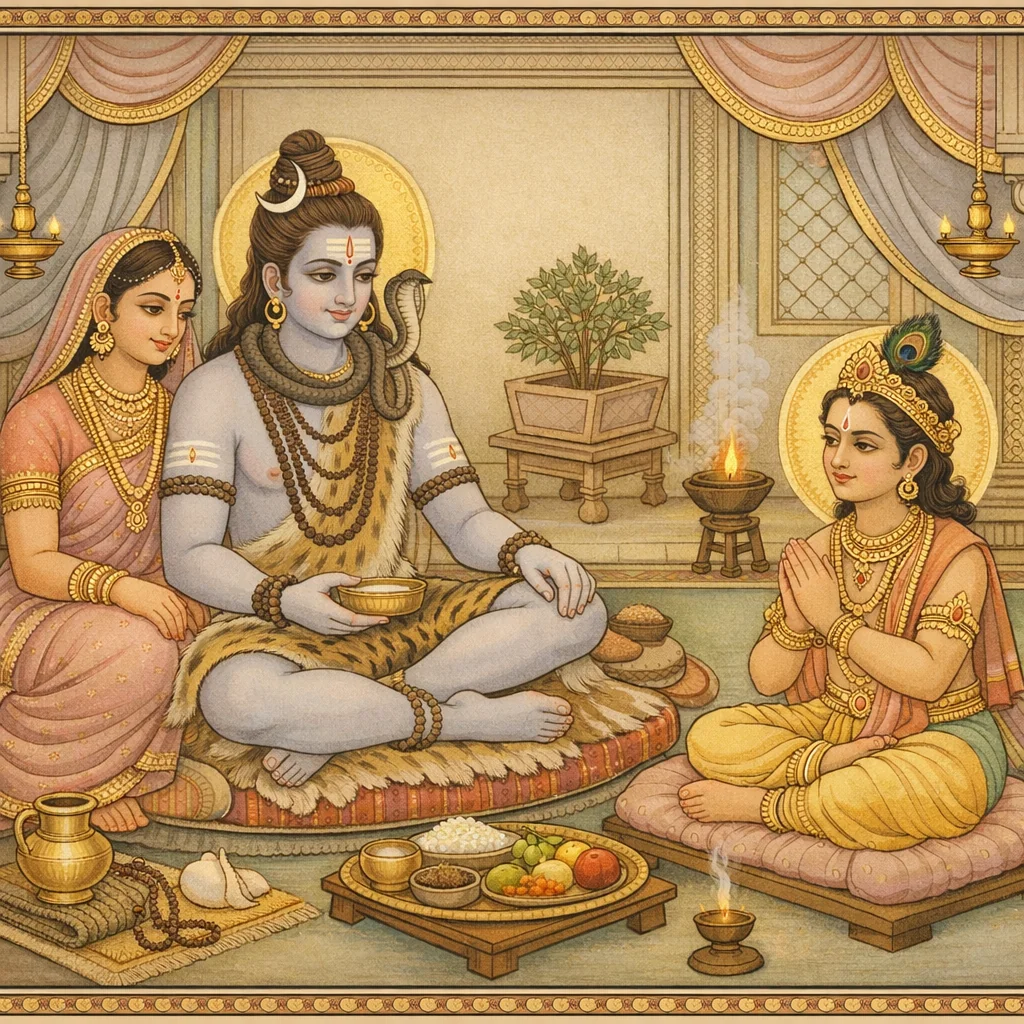
This chapter is a theological and ethical discourse cast as dialogue. It begins with Īśvara describing a sixteenfold mode of worship of Viṣṇu as a means to the highest state for qualified practitioners, and then turns to questions of ritual eligibility and alternative paths of merit. Kārttikeya asks about the dharma of Śūdras and women, and how liberation-oriented merit is pursued without direct dependence on specialized forms of Kṛṣṇa worship. Īśvara replies with restrictive statements regarding Vedic recitation, and then defines the “sat-śūdra” chiefly through household order: a properly married wife of fitting qualities, and a disciplined gṛhastha life shaped by the pañca-yajñas (performed without mantras), hospitality, charity, and service to twice-born guests. The chapter elaborates pativratā ideals, the religious efficacy of conjugal harmony, and rules on marriage across social categories, including smṛti-style classifications of marriage types and offspring types. It concludes with a practical ethics register—nonviolence, faith-based giving, regulated livelihood, daily routine, and intensified devotional merit during Chāturmāsya—offering a graded map of dharma anchored in household conduct and seasonal observance.
Shlokas
Verse 1
ईश्वर उवाच । एतत्ते पूजनं विष्णोः षोडशोपायसंभवम् । कथितं यद्द्विजः कृत्वा प्राप्नोति परमं पदम्
Īśvara said: I have explained to you this worship of Viṣṇu, accomplished through sixteen means; performing it, a twice-born attains the supreme state.
Verse 2
तथा च क्षत्रियविशां करणान्मुक्तिरुत्तमा । शूद्राणां नाधिकारोऽस्मिन्स्त्रीणां नैव कदाचन
Likewise, for kṣatriyas and vaiśyas, by performing it there is excellent liberation. But for śūdras there is no entitlement in this matter—nor for women at any time.
Verse 3
कार्तिकेय उवाच । शूद्राणां च तथा स्त्रीणां धर्मं विस्तरतो वद । केन मुक्तिर्भवेत्तेषां कृष्णस्याराधनं विना
Kārtikeya said: “Explain in full the dharma for the śūdras, and likewise for women. By what means can liberation arise for them—apart from the worship of Kṛṣṇa?”
Verse 4
ईश्वर उवाच । सच्छूद्रैरपि नो कार्या वेदाक्षरविचारणा । न श्रोतव्या न पठ्या च पठन्नरकभाग्भवेत्
Īśvara said: “Even ‘good śūdras’ should not deliberate upon the letters of the Veda. It should neither be listened to nor recited; one who recites becomes a sharer in hell.”
Verse 5
पुराणानां नैव पाठः श्रवणं कारयेत्सदा । स्मृत्युक्तं सुगुरोर्ग्राह्यं न पाठः श्रवणादिकम्
One should not continually arrange recitation or listening of the Purāṇas. Rather, what is taught in the Smṛtis should be received from a worthy guru—not merely recitation, listening, and the like.
Verse 6
स्कंद उवाच । सच्छूद्राः के समाख्यातास्तांश्च विस्तरतो वद । के संतः के च शूद्राश्च सच्छूद्रा नामतश्च के
Skanda said: “Who are called ‘sacchūdras’? Explain them in detail. Who are the virtuous, who are the śūdras, and who specifically bear the name ‘sacchūdra’?”
Verse 7
ईश्वर उवाच । धर्मोढा यस्य पत्नी स्यात्स सच्छूद्र उदाहृतः । समानकुलरूपा च दशदोषविवर्जिता
Īśvara said: “He whose wife is wedded according to dharma is called a ‘sacchūdra’. She should be of comparable family and appearance, and free from the ten faults.”
Verse 8
उद्वोढा वेदविधिना स सच्छूद्रः प्रकीर्तितः । अक्लीवाऽव्यंगिनी शस्ता महारोगाद्यदूषिता
He is proclaimed a “sacchūdra” when (his wife) is duly wedded according to Vedic ordinance—praiseworthy, not impotent, not deformed, and untainted by grievous diseases and the like.
Verse 9
अनिंदिता शुभकला चक्षुरोगविवर्जिता । बाधिर्यहीना चपला कन्या मधुरभाषिणी
She should be blameless, endowed with auspicious accomplishments, free from ailments of the eyes; free from deafness, lively, a maiden, and sweet of speech.
Verse 10
दूषणैर्दशभिर्हीना वेदोक्तविधिना नरैः । विवाहिता च सा पत्नी गृहिणी यस्य सर्वदा
A wife who is free from the ten blemishes and who has been married, by men (elders/guardians), according to the Vedic rule is ever regarded as the true mistress of the household for the man to whom she is wedded.
Verse 11
सच्छूद्रः स तु विज्ञेयो देवादीनां विभागकृत् । पुण्यकार्येषु सर्वेषु प्रथमं सा प्रकीर्तिता
He should be known as a “true Śūdra” who duly apportions the shares for the gods and others; and in all meritorious acts she (the housewife/the household order) is declared to be foremost.
Verse 12
तया सुविहितो धर्मः संपूर्णफलदायकः । चातुर्मास्ये विशेषेण तया सह गुणाधिकः
Dharma, when well performed together with her (the wife), bestows complete results; and especially in the Cāturmāsya season, when done with her, it becomes even more meritorious.
Verse 13
भार्यारतिः शुचिर्भृत्यादीनां पोषणतत्परः । श्राद्धादिकारको नित्यमिष्टापूर्त्तप्रसाधकः
Such is the ideal householder: delighting in his wife, pure in conduct, intent on supporting servants and dependents, ever performing śrāddha and related rites, and bringing to completion the works of iṣṭa and pūrta—worship and public merit.
Verse 14
नमस्कारान्तमन्त्रेण नामसंकीर्तनेन च । देवा स्तस्य च तुष्यन्ति पंचयज्ञादिकैः शुभैः
By mantras that end in reverent salutations, and by the chanting of the divine Names, the gods are pleased; they are likewise gladdened by auspicious observances such as the pañcayajñas.
Verse 15
स्नानं च तर्पणं चैव वह्निहोमोऽप्यमंत्रकः । ब्रह्मयज्ञोऽतिथेः पूजा पंचयज्ञान्न संत्यजेत्
Bathing and tarpaṇa (libations), the fire-offering (homa) even without mantras, Brahma-yajña (study/recitation), and the honoring of guests—these pañcayajña duties should not be abandoned.
Verse 16
कार्यं स्त्रीभिश्च शूद्रैश्च ह्यमंत्रं पंचयज्ञकम् । पंचयज्ञैश्च संतुष्टा यथैषां पितृदेवताः
Women and Śūdras too should perform the pañcayajña, without mantras; and by these pañcayajñas their pitṛ-devatās, the ancestral deities, are satisfied accordingly.
Verse 17
तथा पतिव्रतायाश्च पतिशुश्रूषया सदा । पतिव्रताया देहे तु सर्वे देवा वसंति हि
Likewise, through the constant devoted service of a pativratā—a wife faithful to her vow—to her husband, all the gods indeed dwell within the very body of that pativratā.
Verse 18
अतस्ताभ्यां समेताभ्यां धर्मादीनां समागमः । यदोभयोर्मते पृष्टे संतुष्टाः पितृदेवताः
Therefore, when the two are united, dharma and its allied virtues fully converge; and when affairs are undertaken with the consent of both, the ancestral deities are satisfied.
Verse 19
कार्यादीनां च सर्वेषां संगमस्तत्र नित्यदा । चातुर्मास्ये समायाते विष्णुभक्त्या तयोः शिवम्
There, always, all duties and allied acts come together in harmony; and when Cāturmāsya arrives, by devotion to Viṣṇu, śivam—auspicious welfare—comes to the two (husband and wife).
Verse 20
समानजातिसंभूता पत्नी यस्य धृता भवेत् । पूर्वो भर्त्ताऽर्द्धभागी स्याद्द्वितीयस्य न किंचन
If a man takes as wife a woman born in the same social class, then the former husband becomes entitled to half (the share of merit/rights), while the latter husband receives nothing at all.
Verse 21
अर्थकार्याधिकारोऽस्यास्तेन धर्मार्धधारिणी । स्वंस्वं कृतं सदैव स्यात्तयोः कर्म शुभाशुभम्
She has authority in matters of wealth and practical affairs; therefore she bears half of dharma. Yet whatever each does remains always one’s own—each person’s actions, auspicious or inauspicious, belong to oneself.
Verse 22
याऽनुगच्छति भर्तारं मृतं सुतपसा द्विज । साध्वी सा हि परिज्ञेया तया चोद्ध्रियते कुलम्
O twice-born, the woman who, through austere fidelity, follows her husband even after his death is to be known as truly virtuous (sādhvī); and by her the family line is uplifted.
Verse 23
अन्यजातेर्मृतस्याथ धृता वापि विवाहिता । वैश्वानरस्य मार्गेण सा तमुद्धरते पतिम्
Even if, after the death of a man of another jāti, she is taken or married into a different station, by the path of Vaiśvānara she can still uplift and deliver that husband.
Verse 24
यथा जलाच्च जंबालः कृष्यते धार्मिकैर्नृभिः । एवमुद्धरते साध्वी भर्त्तारं याऽनुग च्छति
Just as righteous men draw mud up from the water, so does a virtuous wife uplift her husband—she who follows him in unwavering fidelity.
Verse 25
अन्यजातिसमुद्भूता अन्येन विधृता यदि । तावुभौ धर्मकार्येषु संत्याज्यौ नित्यदा मतौ
If a woman born in another social class is taken by another man, then both of them are regarded as always to be excluded from dharmic acts.
Verse 26
स्वंस्वं कर्म प्रकुरुतः सत्कर्म जं स्वकं फलम् । तस्माद्वरिष्ठा हीना वा सत्कुल्या शूद्रसंभवैः
Each person performs one’s own actions, and the fruit of one’s good deeds is one’s own. Therefore, whether higher or lower, a woman of good family is preferable to those born of Śūdra origin.
Verse 27
धृता न कार्या सा पत्नी यत्करोति न वर्द्धते । तया सह कृतं पुण्यं वर्द्धते दशधोत्तरम्
Such a wife should not be taken, for whatever she does does not increase in merit. But merit performed together with her increases tenfold and more.
Verse 28
अनन्ततृप्तिदं नैव तत्सुतैरपि वा तथा । क्रयक्रीता च या कन्या दासी सा परिकीर्तिता
That arrangement grants no endless fulfillment, nor does it become so even through her sons. And the maiden purchased for a price is declared to be a servant (dāsī).
Verse 29
सच्छूद्रस्याधिकारे सा कदाचिन्नैव जायते । या कन्या स्वयमुद्यम्य पित्रा दत्ता वराय च
She never at any time falls within the rightful sphere of a worthy Śūdra—namely, that maiden whom the father, of his own accord, gives to a bridegroom.
Verse 30
विवाहविधिनोदूढा पितृदेवार्थसाधिनी । सुलक्षणा विनीता सा विवेकादिगुणा शुभा
Married according to the proper rite, she fulfills the aims owed to the ancestors and the gods. Endowed with auspicious marks, modest and well-disciplined, she is blessed with discernment (viveka) and other virtues.
Verse 31
सच्चरित्रा पतिपरा सा तेभ्यो दातुमर्हति । विशुद्धकुलजा कन्या धर्मोढा धर्मचारिणी
Of good conduct and devoted to her husband, she is worthy to be given to them in marriage. A maiden born in a pure lineage, married in accordance with dharma, she lives as a practitioner of dharma.
Verse 32
सा पुनाति कुलं सर्वं मातृतः पितृतस्तथा । एष एव मया प्रोक्तः सच्छूद्राणां परो विधिः
She purifies the entire family—on the mother’s side and on the father’s side as well. This alone, as I have declared, is the highest rule prescribed for the virtuous Śūdras.
Verse 33
अधोजातिसमुद्भूता सच्छूद्रात्क्रमहीनजा । विवाहो दशधा तेषां दशधा पुत्रता भवेत्
For those born of lower castes, and for those born from a virtuous Śūdra in an irregular order, marriage is spoken of as tenfold; likewise, sonship too is classified in ten ways.
Verse 34
चत्वार उत्तमाः प्रोक्ता विवाहा मुनिसत्तम । शेषाः सर्वप्रकृतिषु कथिताश्च पुराविदैः
O best of sages, four marriages are declared to be excellent. The remaining forms too are described by those who know the ancient tradition, as suited to diverse temperaments and conditions.
Verse 35
प्राजापत्यस्तथा ब्राह्मो दैवार्षो चातिशोभना । गांधर्वश्चासुरश्चैव राक्षसश्च पिशाचकः
The Prājāpatya and the Brāhma marriages, and the Daiva and Ārṣa—these are held in high esteem. Also counted are the Gāndharva, the Āsura, the Rākṣasa, and the Piśāca.
Verse 36
प्रातिभो घातनश्चेति विवाहाः कथिता दश । एते हि हीनजातीनां विवाहाः परिकीर्तिताः
‘Prātibha’ and ‘Ghātana’—thus the marriages are said to be ten in all. These indeed are proclaimed as the marriage-forms among the lower-born groups.
Verse 37
औरसः क्षेत्रजश्चैव दत्तः कृत्रिम एव च । गूढोत्पन्नोऽपविद्धश्च कानीनश्च सहोढजः
The sons are classified as Aurasa, Kṣetraja, Datta, and Kṛtrima; also as Gūḍhotpanna, Apaviddha, Kānīna, and Sahoḍhaja.
Verse 38
क्रीतः पौनर्भवश्चापि पुत्रा दशविधाः स्मृताः । औरसादपि हीनाश्च तेऽपि तेषां शुभावहाः
The sons called Krīta and Paunarbhava are also remembered; thus sons are spoken of as tenfold. Though deemed inferior to the Aurasa, even these, in their own station, are auspicious.
Verse 39
अष्टादशमिता नीचाः प्रकृतानां यथातथा । विधिनैव क्रिया नैव स्मृति मार्गोऽपि नैव च
The low-born are said to be eighteen in number, in whatever forms they are found in society. For them there is neither ritual action according to prescribed rule, nor even the path laid down by Smṛti.
Verse 41
न दानस्य क्षयो लोके श्रद्धया यत्प्रदीयते । अश्रद्धयाऽशुचितया दानं वैरस्यकारणम्
In this world, charity offered with faith never diminishes. But a gift given without faith and with inner impurity becomes a cause of enmity.
Verse 42
अहिंसादि समादिष्टो धर्मस्तासां महाफलः । चातुर्मास्ये विशेषेण त्रिदिवेशादिसेवया
For them, dharma beginning with non-violence (ahiṃsā) is enjoined and bears great fruit—especially in the Cāturmāsya season—through devoted service to the Lords of heaven and the divine ones.
Verse 43
सुदर्शनैस्तथा धर्मः सेव्यते ह्यविरोधिभिः । सच्छूद्रैर्दानपुण्यैश्च द्विजशुश्रूषणादिभिः
Thus dharma is to be practiced by those of clear vision and without contentiousness—also by virtuous Śūdras through meritorious giving and through service to the twice-born (dvija) and other such duties.
Verse 44
वृत्तिश्च सत्यानृतजा वाणिज्यव्यव हारजा । अशीतिभागमारद्याद्व्याजाद्वार्धुषिकः शते
Livelihood may arise from dealings that are truthful or mixed with truth and untruth, and also from trade and commerce. In lending at interest, the moneylender should take no more than one-eightieth per hundred as interest.
Verse 45
सपादभागवृद्धिस्तु क्षत्त्रियादिषु गृह्यते । एवं न बन्धो भवति पातकस्य कदाचन
But an increase by a quarter-share is accepted in the case of Kṣatriyas and others. When this rule is observed, it never becomes a binding cause of sin.
Verse 46
प्रातःकर्म सुरेशानां मध्याह्ने द्विजसेवनम् । अपराह्णेऽथ कार्याणि कुर्वन्मर्त्यः सुखी भवेत्
Perform worship of the Lords of the gods in the morning; at midday, attend upon the twice-born (dvijas). Then, in the afternoon, do one’s worldly duties—thus a mortal becomes happy.
Verse 47
गृहस्थैश्च सदा भाव्यं यावज्जीवं क्रियापरैः । पंचयज्ञरतैश्चैवातिथिद्विजसुपूजकैः
Householders should always live—throughout life—devoted to right conduct, engaged in the five great sacrifices, and honoring guests and the twice-born with due reverence.
Verse 48
विष्णुभक्तिरतैश्चैव वेदमन्त्रविपाठकैः । सततं दानशीलैश्च दीनार्तजनवत्सलैः
They should be devoted to bhakti toward Viṣṇu, engaged in recitation of Vedic mantras, ever inclined to charity, and compassionate toward the poor and the afflicted.
Verse 49
क्षमादिगुणसंयुक्तैर्द्वादशाक्षरपूजकैः । षडक्षरमहोद्गारपरमानन्दपूरितैः
Endowed with virtues beginning with forbearance, they should worship by the twelve-syllabled mantra; and, filled with supreme bliss, proclaim the great six-syllabled formula.
Verse 50
सदपत्यैः सदाचारैः सतां शुश्रूषणैरपि । विमत्सरैः सदा स्थेयं तापक्लेशविवर्जितैः
One should always abide with good offspring, good conduct, and service to the virtuous; free from envy, and untouched by the burning pains of affliction.
Verse 51
प्रव्रज्यावर्जनैरेवं सच्छूद्रैर्धर्मतत्परैः । तोषणं सर्वभूतानां कार्यं वित्तानुसारतः
Thus, refraining from unlawful wandering and remaining intent on dharma, the righteous Śūdras should strive—according to their means—to bring contentment to all beings.
Verse 52
सदा विष्णुशिवादीनां ये भक्तास्ते नराः सदा । देववद्दिवि दीव्यंति चातुर्मास्ये विशेषतः
Those who are ever devoted to Viṣṇu, Śiva, and the other deities—such devotees—shine in heaven like the gods, especially through the sacred observances of Cāturmāsya.
Verse 241
इति श्रीस्कांदे महापुराण एकाशीतिसाहस्र्यां संहितायां षष्ठे नागरखण्डे हाटकेश्वर क्षेत्रमाहात्म्ये शेषशाय्युपाख्यान ब्रह्मनारदसंवादे चातुर्मास्यमाहात्म्ये तपोऽधिकारे सच्छूद्रकथनंनामैकचत्वारिंशदुत्तरद्विशततमोऽध्यायः
Thus ends, in the Śrī Skanda Mahāpurāṇa—within the Ekāśītisāhasrī Saṃhitā, in the sixth Nāgara-khaṇḍa—within the Hāṭakeśvara Sacred-Region Māhātmya, in the Śeṣaśāyī episode, in the Brahmā–Nārada dialogue, in the Cāturmāsya Māhātmya, in the section on austerity—the two-hundred-and-forty-first chapter called “The Account of the Righteous Śūdra.”