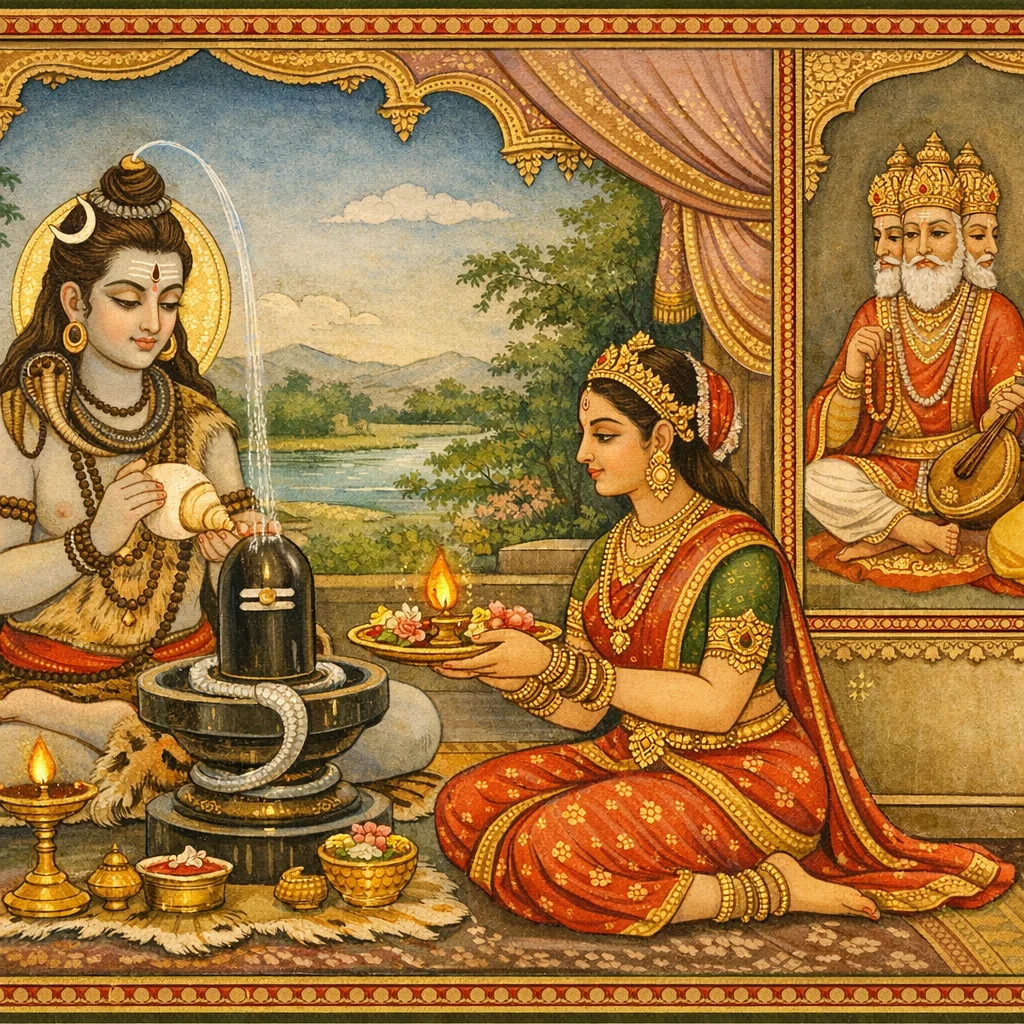
Adhyaya 240
Chapter 240 unfolds as a dialogue between Brahmā and Nārada on the relative power of offering a lamp (dīpa) to Hari/Vishnu. Brahmā declares Hari’s lamp superior to other gifts: it steadily removes the stain of sin (pāpa) and is especially efficacious in cāturmāsya for the fulfillment of rightly formed intentions. The chapter then prescribes a sequential devotional discipline: lamp-offering with formal worship, followed by a food offering (naivedya) on the thirteenth lunar day. During the cāturmāsya motif of “Hari’s sleep,” daily arghya is to be offered using betel leaves, areca nut, fruits, conch-water, and a mantra addressed to Keśava; afterward come ācamana purification and ārati. Prostration is enjoined on the fourteenth day, and on the fifteenth a circumambulatory practice (pradakṣiṇā) is praised as symbolically equal to extensive tīrtha-pilgrimage and the gifting of water. The closing verses turn to contemplation: a yoga-informed practitioner is urged to meditate on divine presence beyond fixed imagery, reflect on the self’s relation to Vishnu, and thus approach a Vaiṣṇava ideal of embodied liberation (jīvanmukti). Cāturmāsya is singled out as a particularly conducive season for such disciplined devotion.
Shlokas
Verse 1
ब्रह्मोवाच । हरेर्दीपस्तु मद्दीपादधिकोऽयं प्रकुर्वतः । वैकुण्ठवास एव स्यान्ममैश्वर्यमवांछितम्
Brahmā said: “This lamp offered to Hari (Viṣṇu) is superior to the lamp offered to me. For the one who performs it, dwelling in Vaikuṇṭha is assured—an unsurpassed divine prosperity.”
Verse 2
नारद उवाच । दीपोऽयं विष्णुभवने मन्त्रवद्विहितो नरैः । सदा विशेषफलदश्चातुर्मास्येऽधिकः कथम्
Nārada said: “This lamp-offering in the abode of Viṣṇu, performed by people with mantra and due rite—though it always yields special merit—why does it become even more fruitful during the Cāturmāsya season?”
Verse 3
ब्रह्मोवाच । विष्णुर्नित्याधिदैवं मे विष्णुः पूज्यः सदा मम । विष्णुमेनं सदा ध्याये विष्णुर्मत्तः परो हि सः
Brahmā said: “Viṣṇu is my eternal supreme Deity; Viṣṇu is ever worthy of my worship. I always meditate on this Viṣṇu—indeed, Viṣṇu is higher than I.”
Verse 4
स विष्णु वल्लभो दीपः सर्वदा पापहारकः । चातुर्मास्ये विशेषेण कामनासिद्धिकारकः
That lamp, beloved of Viṣṇu, always removes sins; and during Cāturmāsya in particular, it becomes a cause for the fulfillment of cherished aims.
Verse 5
विष्णुर्दीपेन संतुष्टो यथा भवति पुत्रक । तथा यज्ञसहस्रैश्च वरं नैव प्रयच्छति
Dear child, Viṣṇu is pleased by the offering of a lamp in such a way that even thousands of sacrifices do not so readily move Him to grant a boon.
Verse 6
स्वल्प व्ययेन दीपस्य फलमानंतकं नृणाम् । अनंतशयने प्राप्ते पुण्यसंख्या न विद्यते
With only a small expense, the fruit of offering a lamp becomes endless for people; when it is offered to Anantaśayana—Viṣṇu reclining upon Ananta—the merit cannot be counted.
Verse 7
तस्मात्सर्वात्मभावेन श्रद्धया संयुतेन च । दीपप्रदानं कुरुते हरेः पापैर्न लिप्यते
Therefore, one who gives a lamp with whole-hearted devotion and faith is not tainted by sins, for it is an offering to Hari (Viṣṇu).
Verse 8
उपचारैः षोडशकैर्यतिरूपे हरौ पुनः । दीपप्रदाने विहिते सर्वमुद्द्योतितं जगत्
Again, when the lamp is duly offered to Hari in the form of a Yati (ascetic), together with the sixteen modes of worship, the entire world is said to become illumined.
Verse 9
दीपादनंतरं ब्रह्मन्नन्नस्य च निवेदनम् । त्रयोदश्या भक्तियुक्तैः कार्यं मोक्षपदस्थितैः
O Brahmin, after offering the lamp, one should also present food as naivedya; on Trayodaśī, the thirteenth lunar day, this should be done with devotion by those intent upon the state of liberation.
Verse 10
अमृतं संपरित्यज्य यदन्नं देवता अपि । स्पृहयंति गृहस्थस्य गृहद्वारगताः सदा
Even the gods, setting aside nectar, yearn for the householder’s food, as though ever standing at the threshold of his home.
Verse 11
हरौ सुप्ते विशेषेण प्रदेयः प्रत्यहं नरैः । फलैरर्घ्यो विष्णुतुष्ट्यै तत्कालसमुदा हृतैः
Especially when Hari is said to be ‘asleep’ during Cāturmāsya, people should each day offer an arghya of fruits freshly obtained at that time, for the satisfaction of Viṣṇu.
Verse 12
तांबूलवल्लीपत्रैश्च तथा पूगफलैः शुभैः । द्राक्षाजंब्वाम्रजफलैरक्रोडैर्दाडिमैरपि
With betel leaves from the tāmbūla creeper and auspicious areca nuts, and also with fruits such as grapes, jambu, mangoes, walnuts, and pomegranates, one should make the offering.
Verse 13
बीजपूरफलैश्चैव दद्यादर्घ्यं सुभक्तितः । शंखतोयं समादाय तस्योपरि फलं शुभम्
And with bījapūra fruits as well, one should offer arghya with sincere devotion. Taking water in a conch, one should place an auspicious fruit upon it.
Verse 14
मंत्रेणानेन विप्रेन्द्र केशवाय निवेदयेत् । पुनराचमनं देयमन्नदानादनंतरम्
“O best of brāhmaṇas,” with this very mantra one should present the offering to Keśava. After the gift of food, one should immediately again give (or perform) ācamana.
Verse 15
आर्तिक्यं च ततः कुर्यात्सर्वपापविनाशनम् । चतुर्दश्या नमस्कुर्याद्विष्णवे यतिरूपिणे
Then one should perform ārati, the rite that destroys all sins. On the fourteenth tithi (caturdaśī), one should bow to Viṣṇu in the form of a yati, the ascetic.
Verse 16
पंचदश्या भ्रमः कार्यः सर्वदिक्षु द्विजैः सह । सप्तसागरजै स्तोयैर्दत्तैर्यत्फलमाप्यते
On the fifteenth tithi (pañcadaśī), one should perform circumambulation in all directions together with brāhmaṇas. By offering water brought from the seven oceans, one attains a fruit of merit of that very measure.
Verse 17
तत्तोयदानाच्च हरेः प्राप्यते विष्णुवल्लभैः । चतुर्वारभ्रमीभिश्च जगत्सर्वं चराचरम्
And by that gift of water, the beloved devotees of Viṣṇu attain Hari. And those who circumambulate four times encompass, as it were, the entire world—moving and unmoving.
Verse 18
क्रांतं भवति विप्राग्र्य तत्तीर्थगमनादिकम् । षोडश्या देवसायुज्यं चिन्तयेद्योगवित्तमः
O foremost of brāhmaṇas, by this the journey to that tīrtha and the related observances are brought to fulfillment. On the sixteenth tithi (ṣoḍaśī), the knower of yoga should meditate on union with the Divine (deva-sāyujya).
Verse 19
आत्मनश्च हरेर्नित्यं न मूर्तिं भावयेत्तदा । मूर्तामूर्तस्वरूप त्वाद्दृश्यो भवति योगवित्
Then one should not fashion any limited image of oneself or of Hari. For the Reality is of the nature of both form and formlessness; thus the yogin becomes one who truly “sees”.
Verse 20
तस्मिन्दृष्टे निवर्तेत सदसद्रूपजा क्रिया । आत्मानं तेजसां मध्ये चिन्तयेत्सूर्यवर्चसम्
When That is beheld, action born of the notions of “being and non-being” falls away. One should contemplate the Self amid the lights (tejas), radiant with the splendor of the sun.
Verse 21
अहमेव सदा विष्णुरित्यात्मनि विचारयन् । लभते वैष्णवं देहं जीवन्मुक्तो द्विजो भवेत्
Reflecting within oneself, “I am indeed always Viṣṇu,” one attains a Vaiṣṇava body; that brāhmaṇa becomes liberated while living (jīvanmukta).
Verse 22
चातुर्मास्ये विशेषेण योगयुक्तो द्विजो भवेत् । इयं भक्तिः समादिष्टा मोक्षमार्गप्रदे हरौ
Especially during the sacred Cāturmāsya season, a twice-born person should become disciplined and joined to yoga. This devotion to Hari is enjoined, for it grants the path that leads to liberation.