Adhyaya 238
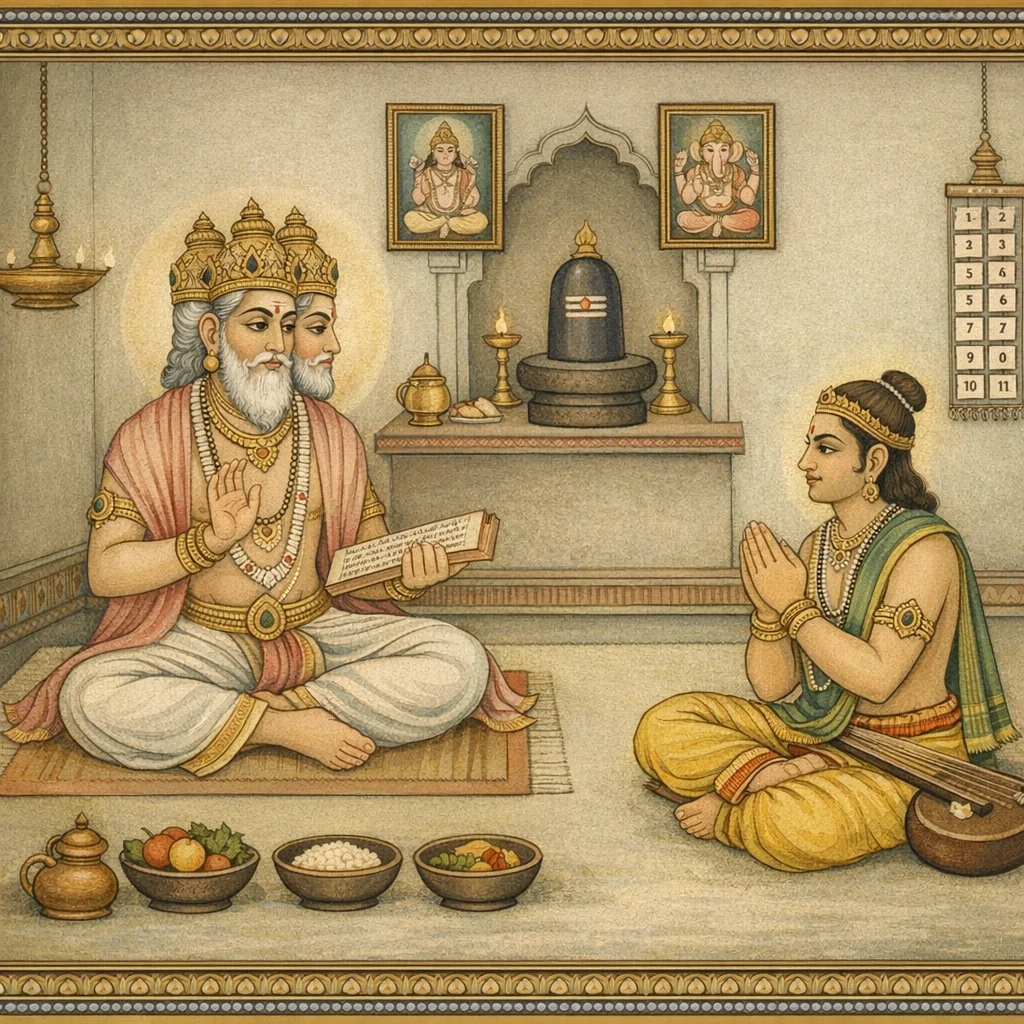
Framed as a theological dialogue between Brahmā and Nārada in the setting of Viṣṇu as Śeṣaśāyī, the chapter defines Cāturmāsya tapas as more than fasting: it is a composite discipline of worshipping Viṣṇu with sixteen offerings, continual observance of the pañca-yajñas, truthfulness, non-violence, and steady restraint of the senses. It then lays out a householder-oriented, pañcāyatana-like scheme of directional worship: sun and moon as temporal centers; Gaṇeśa in the fire-corner; Viṣṇu in the nairṛta corner; a family/lineage-associated devatā in the vāyu corner; and Rudra in the īśāna corner, with prescribed flowers and intentions such as removing obstacles, protection, progeny, and avoidance of apamṛtyu. The latter half presents a graded catalogue of Cāturmāsya austerities—regulated diets, one-meal and alternate-day patterns, kṛcchra and parāka observances, and the named “Mahāpārāka” sequences aligned to key dvādaśī markers—each with phalaśruti promising purification of sin, attainment of Vaikuṇṭha, and deepened devotional knowledge. The chapter closes by affirming the merit of recitation and hearing, offering a high-value ethical and ritual manual for householders during Viṣṇu’s ‘sleep’ season.
Shlokas
Verse 1
ब्रह्मोवाच । तपः शृणुष्व विप्रेंद्र विस्तरेण महामते । यस्य श्रवणमात्रेण चातुर्मास्येऽ घनाशनम्
Brahmā said: O best of brāhmaṇas, O wise one, listen in detail to this tapas; by the mere hearing of it, the sins accumulated during Cāturmāsya are destroyed.
Verse 2
षोडशैरुपचारैश्च विष्णोः पूजा सदा तपः । ततः सुप्ते जगन्नाथे महत्तप उदाहृतम्
Worship of Viṣṇu with the sixteen offerings is always a form of tapas. Therefore, when Jagannātha, the Lord of the universe, abides in His sacred sleep during Cāturmāsya, such worship is declared to be great austerity.
Verse 3
करणं पंचयज्ञानां सततं तप एव हि । तन्निवेद्य हरौ चैव चातुर्मास्ये महत्तपः
The unceasing performance of the five daily sacrifices is truly tapas; and offering their fruits to Hari—especially during Cāturmāsya—is called great austerity.
Verse 4
ऋतुयानं गृहस्थस्य तप एव सदैव हि । चातुर्मास्ये हरिप्रीत्यै तन्निषेव्यं महत्तपः
The seasonally appropriate conduct of a householder is always tapas indeed. Practising it for the pleasure of Hari during Cāturmāsya is proclaimed to be great austerity.
Verse 5
सत्यवादस्तपो नित्यं प्राणिनां भुवि दुर्लभम् । सुप्ते देवपतौ कुर्वन्ननंतफलभाग्भवेत्
Truthfulness is a constant tapas—rare among beings on earth. One who practises it while the Lord of the gods is in sacred sleep (during Cāturmāsya) becomes a sharer in endless fruits.
Verse 6
अहिंसादिगुणानां च पालनं सततं तपः । चातुर्मास्ये त्यक्तवैरं महत्तप उदारधीः
The constant observance of virtues beginning with non-violence is tapas. In Cāturmāsya, abandoning enmity is great austerity for the noble-minded.
Verse 7
तप एव महन्मर्त्यः पंचायतनपूजनम् । चातुर्मास्ये विशेषेण हरिप्रीत्या समाचरेत्
For a mortal, the worship of the fivefold sacred altar (pañcāyatana) is itself great tapas. During Cāturmāsya, one should practise it especially, for the pleasure of Hari.
Verse 8
नारद उवाच । पंचायतनसंज्ञेयं कस्योक्ता सा कथं भवेत् । कथं पूजा च कर्तव्या विस्तरेणाशु तद्वद
Nārada said: “What is meant by ‘pañcāyatana’? Who taught it, and how is it to be understood? And how should the worship be performed? Tell me that quickly, in detail.”
Verse 9
ब्रह्मोवाच । प्रातर्मध्याह्नपूजायां मध्ये पूज्यो रविः सदा । रात्रौ मध्ये भवेच्चंद्रस्तद्वर्णकुसुमैः शुभैः
Brahmā said: In the morning and midday worship, the Sun should always be worshipped in the centre; and at night, the Moon should be in the centre—honoured with auspicious flowers of their respective colours.
Verse 10
वह्निकोणे तु हेरंबं सर्वविघ्नोपशांतये । रक्तचंदन पुष्पैश्च चातुर्मास्ये विशेषतः
In the fire-corner (Agni direction), one should worship Heramba for the pacification of all obstacles—especially during Cāturmāsya—using red sandalwood and flowers.
Verse 11
नैरृतं दलमास्थाय भगवान्दुष्टदर्पहा । गृहस्थस्य सदा शत्रुविनाशं विदधाति सः
Taking His place in the Nairṛta quarter, the Blessed Lord—crusher of the arrogance of the wicked—ever brings about the destruction of a householder’s enemies.
Verse 12
नैरृत्यकोणगं विष्णुं पूजयेत्सर्वदा बुधः । सुगन्धचंदनैः पुष्पैर्नैवेद्यैश्चातिशोभनैः
A wise person should always worship Viṣṇu stationed in the Nairṛtya corner, offering fragrant sandalwood, flowers, and splendid food-offerings (naivedya).
Verse 13
गोत्रजा वायुकोणे तु पूजनीया सदा बुधैः । पुत्रपौत्रप्रवृद्ध्यर्थं सुमनोभिर्मनोहरैः
In the Vāyu corner, Gotrajā should ever be worshipped by the wise with charming, delightful flowers, for the increase of sons and grandsons and the prosperity of the lineage.
Verse 14
ऐशाने भगवान्रुद्रः श्वेतपुष्पैः सदाऽर्चितः । अपमृत्युविनाशाय सर्वदोषापनुत्तये
In the Īśāna quarter, Lord Rudra should always be worshipped with white flowers, for the destruction of untimely death and for the removal of all faults.
Verse 15
जागर्ति महिमा यस्य ब्रह्माद्यैर्नैव लिख्यते । पंचायतनमेतद्धि पूज्यते गृहमेधिभिः
The greatness of this sacred arrangement stands manifest, yet even Brahmā and the others cannot fully describe it. Indeed, this is the Pañcāyatana—the fivefold household worship—to be revered by householders.
Verse 16
तप एतत्सदा कार्यं चातुर्मास्ये महाफलम् । पर्वकालेषु सर्वेषु दानं देयं तपः सदा । चातुर्मास्ये विशेषेण तदनंतं प्रजायते
This austerity should always be undertaken; in Cāturmāsya it yields great fruit. At all sacred festival-times, charity should be given and austerity maintained; but in Cāturmāsya especially, its merit becomes endless.
Verse 17
शौचं तु द्विविधं ग्राह्यं बाह्यमाभ्यंतरं सदा । जलशौचं तथा बाह्यं श्रद्धया चांतरं भवेत्
Purity should always be understood as twofold: external and internal. Water-purification is external; internal purity arises through faith (śraddhā).
Verse 18
इद्रियाणां ग्रहः कार्यस्तपसो लक्षणं परम् । निवृत्त्येंद्रियलौल्यं च चातुर्मास्ये महत्तपः
Restraint of the senses should be practiced; it is the supreme mark of tapas. Turning back from sensual restlessness—this is great tapas during Cāturmāsya.
Verse 19
इन्द्रियाश्वान्सन्नियम्य सततं सुखमेधते । नरके पात्यते प्राणैस्तैरेवोत्पथगामिभिः
By continually reining in the horse-like senses, one steadily increases happiness. But by those very life-forces—when they run onto wrong paths—one is cast into hell.
Verse 20
ममतारूपिणीं ग्राहीं दुष्टां निर्भर्त्स्य निग्रहेत् । तप एव सदा पुंसां चातुर्मास्येऽधिगौरवम्
One should rebuke and restrain that wicked “seizer” which takes the form of possessiveness—mine-ness. Austerity alone is ever the true support for people, and in the Cāturmāsya season it gains special weight and excellence.
Verse 21
काम एष महाशत्रुस्तमेकं निर्जयेद्दृढम् । जितकामा महात्मानस्तैर्जितं निखिलं जगत्
Desire is the great enemy; one should firmly conquer this single foe. For great-souled ones who have conquered desire, by that victory the entire world is as though conquered.
Verse 22
एतच्च तपसो मूलं तपसो मूलमेव तत् । सर्वदा कामविजयः संकल्पविजयस्तथा
This is the very root of tapas—indeed, the root of tapas: at all times, the conquest of desire, and likewise the conquest of wavering resolves and intentions.
Verse 23
तदेव हि परं ज्ञानं कामो येन प्रजायते । महत्तपस्तदेवाहुश्चातुमास्ये फलोत्तमम्
That indeed is supreme knowledge, by which desire is brought to birth and understood at its very root. That alone, they say, is great austerity, bearing the finest fruit in the Cāturmāsya season.
Verse 24
लोभः सदा परित्याज्यः पापं लोभे समास्थितम् । तपस्तस्यैव विजयश्चातुर्मास्ये विशेषतः
Greed should always be abandoned, for sin takes its seat within greed. Victory over it is achieved through austerity—most especially during Cāturmāsya.
Verse 25
मोहः सदाऽविवेकश्च वर्जनीयः प्रयत्नतः । तेन त्यक्तो नरो ज्ञानी न ज्ञानी मोहसंश्रयात
Delusion—and the lack of discernment—should always be avoided with effort. One who abandons it becomes truly wise; one who takes refuge in delusion is not wise.
Verse 26
मद एव मनुष्याणां शरीरस्थो महारिपुः । सदा स एव निग्राह्यः सुप्ते देवे विशेषतः
Pride alone is the great enemy of human beings, dwelling within the body. It must always be restrained—most especially when the Deva is ‘asleep’ during Cāturmāsya.
Verse 27
मानः सर्वेषु भूतेषु वसत्येव भयावहः । क्षमया तं विनिर्जित्य चातुर्मास्ये गुणाधिकः
Honor-pride (māna) dwells among all beings and is fearsome. Conquering it through forgiveness (kṣamā), one becomes richer in virtue—especially during Cāturmāsya.
Verse 28
मात्सर्यं निर्जयेत्प्राज्ञो महापातककारणम् । चातुर्मास्ये जितं तेन त्रैलोक्यममरैः सह
The wise should conquer envy, the cause of great sins. If it is conquered during Cāturmāsya, then by that victory the three worlds—together with the immortals—are as though conquered.
Verse 29
अहंकारसमाक्रांता मुनयो विजितेंद्रियाः । धर्ममार्गं परित्यज्य कुर्वत्युन्मार्गजां क्रियाम्
Overpowered by ego, even sages who have conquered the senses may abandon the path of dharma and perform actions that arise from the wrong road.
Verse 31
एतद्धि तपसो मूलं यदेतन्मनसस्त्यजेत् । त्यक्तेष्वेतेषु सर्वेषु पर ब्रह्ममयो भवेत्
This indeed is the very root of austerity: that one should renounce these movements of the mind. When all these are relinquished, one becomes suffused with the Supreme Brahman.
Verse 32
प्रथमं कायशुद्ध्यर्थं प्राजापत्यं समाचरेत् । शयने देवदेवस्य विशेषेण महत्तपः
First, for the purification of the body, one should undertake the Prājāpatya observance. Especially during the Lord of gods’ sacred lying-down (Hariśayana), it becomes a great austerity.
Verse 33
हरेस्तु शयने नित्यमेकांतरमु पोषणम् । यः करोति नरो भक्त्या न स गच्छेद्यमालयम्
During Hari’s sacred śayana, the person who, with devotion, regularly observes alternate-day eating does not go to the abode of Yama.
Verse 34
हरिस्वापे नरो नित्यमेकभक्तं समाचरेत् । दिवसेदिवसे तस्य द्वादशाहफलं लभेत्
During Hari’s sacred sleep, one should regularly observe ekabhakta—taking food only once a day. Day after day, one gains merit equal to that of a twelve-day observance.
Verse 35
चातुर्मास्ये नरो यस्तु शाकाहारपरो यदि । पुण्यं क्रतुसहस्राणां जायते नात्र संशयः
In the Cāturmāsya season, if one lives chiefly on vegetables, the merit of thousands of Vedic sacrifices arises—of this there is no doubt.
Verse 36
चातुर्मास्ये नरो नित्यं चांद्राय णव्रतं चरेत् । एकैकमासे तत्पुण्यं वर्णितुं नैव शक्यते
During Cāturmāsya, one should regularly undertake the Cāndrāyaṇa vow. The merit gained in each month is truly impossible to describe.
Verse 37
सुप्ते देवे च पाराकं यः करोति विशुद्धधीः । नारी वा श्रद्धया युक्ता शतजन्माघ नाशनम्
When the Lord is in sacred sleep, whoever—of purified understanding—performs the Pārāka observance, whether man or woman endowed with faith, destroys the sins accumulated over a hundred births.
Verse 38
कृच्छ्रसेवी भवेद्यस्तु सुप्ते देवे जनार्दने । पापराशिं विनिर्धूय वैकुण्ठे गणतां व्रजेत्
When Janārdana is in sacred sleep, whoever undertakes the Kṛcchra discipline shakes off heaps of sin and attains Vaikuṇṭha, gaining a place among the Lord’s attendants.
Verse 39
तप्तकृच्छ्रपरो यस्तु सुप्ते देवे जनार्दने । कीर्तिं संप्राप्य वा पुत्रं विष्णुसायुज्यतां व्रजेत्
When Janārdana abides in sacred sleep, whoever is devoted to the Tapta-Kṛcchra discipline gains renown—or a worthy son—and in the end attains sāyujya, union with Viṣṇu.
Verse 40
दुग्धाहारपरो यस्तु चातुर्मास्येऽभिजायते । तस्य पापसहस्राणि विलयं यांति देहिनः
In Cāturmāsya, whoever maintains a milk-based diet—of that embodied person thousands of sins dissolve and come to an end.
Verse 41
मितान्नाशनकृद्धीरश्चातुर्मास्ये नरो यदि । निर्धूय सकलं पापं वैकुण्ठपदमाप्नुयात्
If, during the Cāturmāsya season, a steadfast man eats only in measured quantity, he shakes off all sin entirely and attains the abode of Vaikuṇṭha.
Verse 42
एकान्नाशनकृन्मर्त्यो न रोगैरभि भूयते । अक्षारलवणाशी च चातुर्मास्ये न पापभाक्
A mortal who eats only once a day is not overpowered by diseases; and one who avoids alkaline and salty foods during Cāturmāsya does not become a partaker of sin.
Verse 43
कृताहारो महापापैर्निर्मुक्तो जायते ध्रुवम् । हरिमुद्दिश्य मासेषु चतुर्षु च न संशयः
One who undertakes a regulated diet is surely freed from great sins—there is no doubt—when, through the four months, the observance is performed with Hari as the intended Lord.
Verse 44
कन्दमूलाशनकरः पूर्वजान्सह चात्मना । उद्धृत्य नरकाद्घोराद्याति विष्णुसलोकताम्
One who lives on roots and fruits uplifts even his forefathers along with himself; rescuing them from dreadful hell, he attains the world of Viṣṇu.
Verse 45
नित्यांबुप्राशनकरश्चातुर्मास्ये यदा भवेत् । दिनेदिनेऽश्वमेधस्य फलमाप्नोत्यसंशयम्
If, during Cāturmāsya, one practices drinking only water each day, then day after day he gains the fruit of an Aśvamedha sacrifice—without doubt.
Verse 46
शीतवृष्टिसहो यस्तु चातुर्मास्ये नरो भवेत् । हरिप्रीत्यै जगन्नाथस्तस्यात्मानं प्रयच्छति
Whoever, during Cāturmāsya, endures cold and rain for the pleasure of Hari—Jagannātha grants him His very Self.
Verse 47
महापाराकसंज्ञं तु महत्तप उदाहृतम् । मासैकमुपवासेन सर्वं पूर्णं प्रजायते
A great austerity is taught, known as the Mahāpārāka: by fasting for a full month, all spiritual aims become fulfilled.
Verse 48
देवस्वापदिनादौ तु यावत्पवित्रद्वादशी । पवित्रद्वादशीपूर्वं यावच्छ्रवणद्वादशी
The stated observance period is: from the day of Devasvāpa up to Pavitrā Dvādaśī; and (again) from before Pavitrā Dvādaśī up to Śravaṇa Dvādaśī.
Verse 49
महापाराकमेतद्धि द्वितीयं परिकीर्तितम् । श्रवणद्वादशीपूर्वं प्राप्ता चाश्विनद्वादशी
This indeed is proclaimed as the second Mahāpārāka: it extends from before Śravaṇa Dvādaśī until the arrival of Āśvina Dvādaśī.
Verse 50
महापाराक तृतीयं प्राज्ञैश्च समुदाहृतम् । आश्विनद्वादशी चादौ प्राप्ता देवसुबोधिनी
The wise also declare a third Mahāpārāka: beginning with Āśvina Dvādaśī and continuing until Deva-subodhinī, the day of the Lord’s awakening.
Verse 51
महापाराकमेतद्धि चतुर्थं परिकथ्यते । एतेषामेकमपि च नारी वा पुरुषोऽपि वा
This is called the Mahāpārāka, spoken of as the fourth observance. Whether woman or man, if one undertakes even a single one among these disciplines…
Verse 52
यः करोति नरो भक्त्या स च विष्णुः सनातनः । इदं च सर्वतपसां महत्तप उदाहृतम्
Whoever performs it with devotion is deemed to be that eternal Viṣṇu Himself. This has been proclaimed a great austerity, surpassing all austerities.
Verse 53
दुष्करं दुर्लभं लोके चातुर्मास्ये मखाधिकम् । दिवसेदिवसे तस्य यज्ञायुतफलं स्मृतम्
In the world it is difficult and rare; during the Cāturmāsya season it is superior even to sacrifices. Day after day, its fruit is remembered to equal ten thousand yajñas.
Verse 54
महत्तप इदं येन कृतं जगति दुर्लभम् । इदमेव महापुण्यमिदमेव महत्सुखम् । इदमेव परं श्रेयो महापाराकसेवनम्
This is a great austerity, rarely accomplished in the world. This alone is great merit; this alone is great joy. This alone is the highest good: the practice of Mahāpārāka.
Verse 55
नारायणो वसेद्देहे ज्ञानं तस्य प्रजायते । जीवन्मुक्तः स भवति महापातककारकः
Nārāyaṇa comes to dwell within one’s body, and knowledge arises in that person. He becomes liberated while living—even if he had been a perpetrator of great sins.
Verse 56
तावद्गर्जंति पापानि नरकास्तावदेव हि । तावन्मायासहस्राणि यावन्मासो पवासकः
Sins roar only for that long—and hells too, indeed—only for that long. Likewise, thousands of delusions persist only as long as the month of fasting has not yet been completed.
Verse 57
चातुर्मास्युपवासी यो यस्य प्रांगणिको भवेत् । सोऽपि हत्यासहस्राणि त्यक्त्वा निष्कल्मषो भवेत्
If someone keeps the Cāturmāsya fast and becomes a resident or attendant within another’s household courtyard, even that person, casting off thousands of acts of killing, becomes stainless and pure.
Verse 58
य इदं श्रावयेन्मर्त्यो यः पठेत्सततं स्वयम्
Any mortal who causes this teaching to be recited, or who himself reads it constantly—
Verse 59
सोऽपि वाचस्पतिसमः फलं प्राप्नोत्यसंशयम्
He too, without doubt, attains the fruit, equal to Bṛhaspati, lord of sacred speech.
Verse 60
इदं पुराणं परमं पवित्रं शृण्वन्गृणन्पापविशुद्धिहेतु । नारायणं तं मनसा विचिन्त्य मृतोऽभिगच्छत्यमृतं सुराधिकम्
This Purāṇa is supremely holy; hearing it and reciting it becomes a cause for purification from sin. Meditating in the mind on that Nārāyaṇa, one who dies attains the deathless state, higher even than the gods.
Verse 238
इति श्रीस्कान्दे महापुराण एकाशीतिसाहस्र्यां संहितायां षष्ठे नागरखण्डे हाटकेश्वरक्षेत्रमाहात्म्ये शेषशाय्युपाख्याने ब्रह्मनारदसंवादे चातुर्मास्यमाहात्म्ये तपोमहिमावर्णनं नामाष्टत्रिंशदुत्तरद्विशततमोऽध्यायः
Thus ends, in the Śrī Skanda Mahāpurāṇa—within the eighty-one-thousand-verse compendium—within the Sixth, the Nāgara-khaṇḍa, in the glorification of the Hāṭakeśvara sacred field, in the episode of Śeṣaśāyī, in the dialogue of Brahmā and Nārada, in the greatness of Cāturmāsya—the chapter entitled “Description of the Majesty of Austerity,” being Chapter 238.