Adhyaya 237
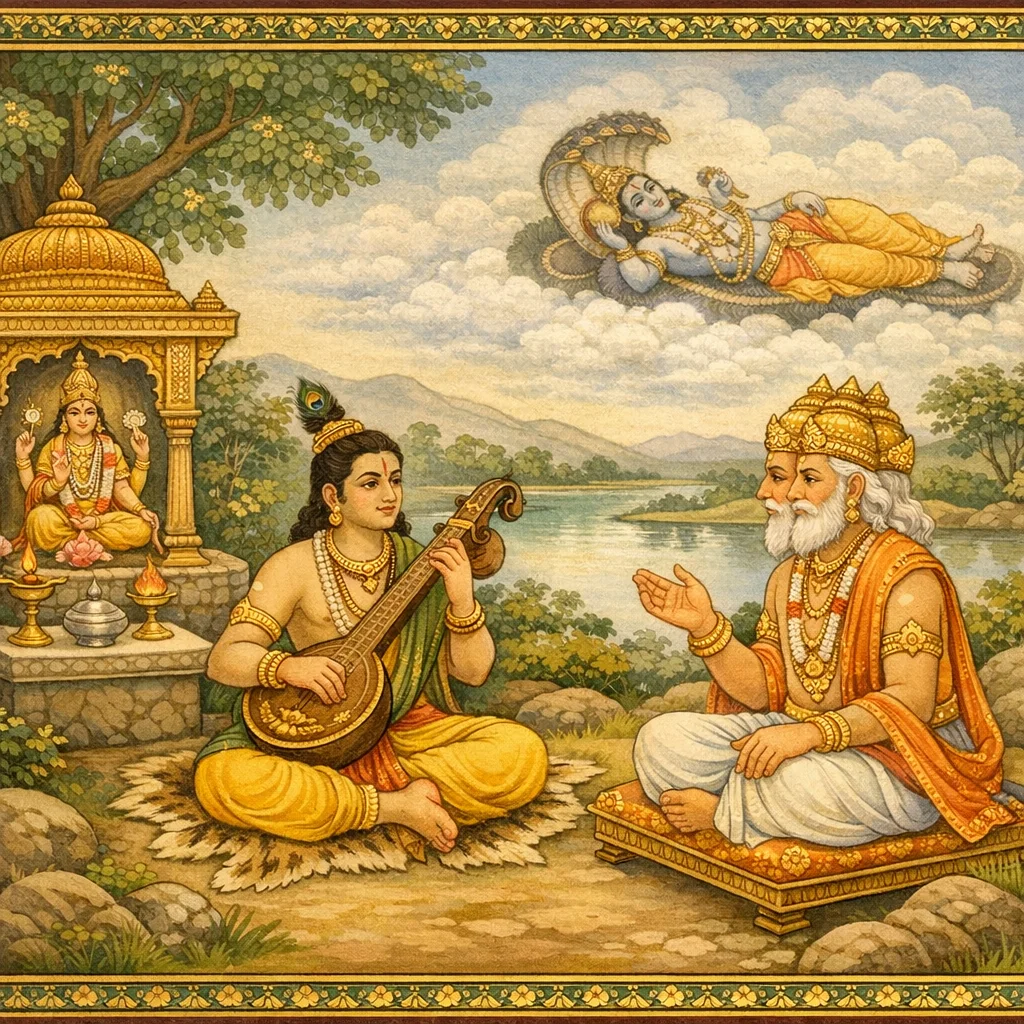
This chapter unfolds as a theological dialogue between Brahmā and Nārada, setting rules of ritual timing, ethical discipline, and devotional intention for the worship of Viṣṇu. Asked when one should adopt injunctions and prohibitions near Viṣṇu, Brahmā points to Karka-saṅkrānti as the calendrical marker and prescribes worship with arghya offered using auspicious jambū fruits, together with a mantra-shaped resolve of self-surrender to Vāsudeva. Brahmā then establishes vidhi (Vedic injunction) and niṣedha (regulated restraint) as complementary norms, both rooted in Viṣṇu and to be practiced with bhakti—especially during cāturmāsya, praised as a season of universal auspiciousness. When Nārada asks what observance is most fruitful while the Lord is said to be “asleep,” Brahmā names the Viṣṇu-vrata and exalts brahmacarya as the essential and highest vow, the core power that enables tapas and dharma. An ethical catalogue follows—homa, reverence to brāhmaṇas, truthfulness, compassion, non-violence, non-stealing, self-control, freedom from anger and attachment, Veda study, knowledge, and a mind dedicated to Kṛṣṇa—describing such a practitioner as living-liberated and untouched by sin. The chapter concludes that even partial cāturmāsya observance yields benefit, that tapas purifies the body, and that devotion to Hari is the central principle integrating the entire system of vows.
Shlokas
Verse 1
नारद उवाच । कदा विधिनिषेधौ च कर्तव्यौ विष्णुसन्निधौ । युष्मद्वाक्यामृतं पीत्वा तृप्तिर्मम न विद्यते
Nārada said: “When, in the presence of Viṣṇu, should the injunctions and restraints be undertaken? Though I have drunk the nectar of your words, contentment still does not arise in me.”
Verse 2
ब्रह्मोवाच । कर्कसंक्रांतिदिवसे विष्णुं संपूज्य भक्तितः । फलैरर्घ्यः प्रदातव्यः शस्तजंबूफलैः शुभैः
Brahmā said: “On the day of Karka-saṃkrānti, when the Sun enters Cancer, worship Viṣṇu with devotion. Then offer arghya with fruits—especially with fine, auspicious jambū (rose-apple) fruits.”
Verse 3
जंबूद्वीपस्य संज्ञेयं फलेन च विजायते । मन्त्रेणानेन विप्रेंद्र श्रद्धाधर्मसुसंयतैः
“By this fruit one should understand the very name ‘Jambūdvīpa’, for from the jambū-fruit it is, as it were, ‘born’. O best of brāhmaṇas, those well-disciplined in faith (śraddhā) and dharma should do this with this mantra.”
Verse 4
षण्मासाभ्यंतरे मृत्युर्यत्र क्वापि भवेन्मम । तन्मया वासुदेवाय स्वयमात्मा निवेदितः
“If death should come to me anywhere within the next six months, then of my own will I have offered my very self to Vāsudeva.”
Verse 5
इति मंत्रेणार्घ्यम् । ततो विधिनिषेधौ च ग्राह्यौ भक्त्या हरेः पुरः । चातुर्मास्ये समायाते सर्वलोकमहासुखे
“Such is the arghya with the mantra. Thereafter, with devotion, in the presence of Hari, one should adopt the injunctions and restraints when Cāturmāsya arrives—bringing great auspicious well-being to all worlds.”
Verse 6
विधिर्वेदविधिः कार्यो निषेधो नियमो मतः । विधिश्चैव निषेधश्च द्वावेतौ विष्णुरेव हि
The injunction is to be carried out as a Vedic ordinance; the prohibition is understood as niyama, disciplined restraint. Truly, injunction and prohibition—these two—are none other than Viṣṇu Himself.
Verse 7
तस्मात्सर्वप्रयत्नेन सेव्य एव जनार्दनः । विष्णोः कथा विष्णुपूजा ध्यानं विष्णोर्नतिस्तथा
Therefore, with every effort, Janārdana alone is to be served—through discourse on Viṣṇu, worship of Viṣṇu, meditation upon Viṣṇu, and likewise by bowing to Viṣṇu.
Verse 8
सर्वमेव हरिप्रीत्या यः करोति स मुक्तिभाक् । वर्णाश्रमविधेर्मूर्तिः सत्यो विष्णुः सनातनः
Whoever performs every act with the intent to please Hari becomes a recipient of liberation. Viṣṇu, eternal and ever true, is the embodied form of the ordinances of varṇa and āśrama—the sacred duties of social order and life-stage.
Verse 10
नारद उवाच । किं व्रतं किं तपः प्रोक्तं ब्रह्मन्ब्रूहि सविस्तरम् । सुप्ते देवे मया कार्यं कृतं यच्च महाफलम्
Nārada said: “What vow and what austerity have been enjoined? O Brahman, tell me in full detail. When the Lord abides in yogic sleep, what practice should I undertake—one that yields great fruit?”
Verse 11
ब्रह्मोवाच । व्रतं विष्णुव्रतं विद्धि विष्णुभक्तिसमन्वितम् । तपश्च धर्मवर्तित्वं कृच्छ्रादिकमथापि वा
Brahmā said: “Know the vow to be a Viṣṇu-vow, accompanied by devotion to Viṣṇu. And know austerity to be steadfast conduct in dharma—or else formal penances such as the Kṛcchra and related disciplines.”
Verse 12
शृणु व्रतस्य माहात्म्यं वक्ष्यामि प्रथमं तव । ब्रह्मचर्यव्रतं सारं व्रतानामुत्तमं व्रतम्
Listen to the greatness of this vow; first I shall declare it to you. The vow of brahmacarya (sacred continence) is the very essence of vows—the highest among observances.
Verse 13
ब्रह्मचर्यं तपः सारं ब्रह्मचर्यं महत्फलम् । क्रियासु सकलास्वेव ब्रह्मचर्यं विवर्द्धयेत्
Brahmacarya is the very essence of austerity; brahmacarya yields great fruit. In every sacred act and rite, one should increase and uphold brahmacarya.
Verse 14
ब्रह्मचर्यप्रभावेण तप उग्रं प्रवर्त्तते । ब्रह्मचर्यात्परं नास्ति धर्मसाधन मुत्तमम्
By the power of brahmacarya, intense austerity becomes effective and advances. There is no higher means for accomplishing dharma than brahmacarya.
Verse 15
चातुर्मास्ये विशेषेण सुप्ते देवे गुणोत्तरम् । महाव्रतमिदं लोके तन्निबोध सदा द्विज
Especially during Cāturmāsya—when the Lord abides in sacred sleep—this observance becomes supremely meritorious. Know this always: in the world it is called a great vow, O twice-born.
Verse 16
नारायणमिदं कर्म यः करोति न लिप्यते । शतत्रयं षष्टियुतं दिनमाहुश्च वत्सरे
This practice is dedicated to Nārāyaṇa; whoever performs it is not tainted by sin. And they say that a year consists of three hundred and sixty days.
Verse 17
तत्र नारायणो देवः पूज्यते व्रतकारिभिः । सत्क्रियाममुकीं देव कारयिष्यामि निश्चयः
There Nārāyaṇa, the Lord, is worshipped by those who undertake the vow. (One resolves:) “O Lord, I shall certainly have this very sacred rite performed.”
Verse 18
कुरुते तद्व्रतं प्राहुः सुप्ते देवे गुणोत्तरम् । वह्निहोमो विप्रभक्तिः श्रद्धा धर्मे मतिः शुभा
They say one should perform that vow; when the Lord is in sacred sleep it becomes superior in merit. Fire-offerings, devotion to brāhmaṇas, faith in dharma, and an auspicious inclination of mind—these are its supporting virtues.
Verse 19
सत्संगो विष्णुपूजा च सत्यवादो दया हृदि । आर्जवं मधुरा वाणी सच्चरित्रे सदा रतिः
Holy fellowship, worship of Viṣṇu, truthfulness, and compassion in the heart; straightforwardness, sweet speech, and constant delight in virtuous conduct—these are the marks of sacred discipline praised in this tīrtha-glorifying teaching.
Verse 20
वेदपाठस्तथाऽस्तेयमहिंसा ह्रीः क्षमा दमः । निर्लोभताऽक्रोधता च निर्मोहोऽममताऽर तिः
Vedic recitation, non-stealing, non-violence, modesty, forgiveness, and self-restraint; freedom from greed and anger, absence of delusion, non-possessiveness, and dispassion—these are declared as the virtues that uphold sacred observance.
Verse 21
श्रुतिक्रियापरं ज्ञानं कृष्णार्पितमनोगतिः । एतानि यस्य तिष्ठंति व्रतानि ब्रह्मवित्तम
Knowledge grounded in the rites taught by the Śruti, and a mind whose every movement is offered to Kṛṣṇa—one in whom these observances stand firm is proclaimed a knower of Brahman, O best of Brahman-knowers.
Verse 22
जीवन्मुक्तो नरः प्रोक्तो नैव लिप्य ति पातकैः । व्रतं कृतं सकृदपि सदैव हि महाफलम्
Such a person is called a jīvanmukta, liberated while yet alive, and is not stained by sins. Even a vow observed but once indeed ever yields great fruit.
Verse 23
चातुर्मास्ये विशेषेण ब्रह्मचर्यादिसेवनम् । अव्रतेन गतं येषां चातुर्मास्यं सदा नृणाम्
In the Cāturmāsya season in particular, one should practice brahmacarya and allied disciplines. But those men for whom Cāturmāsya passes by without any vow—
Verse 24
धर्मस्तेषां वृथा सद्भिस्तत्त्वज्ञैः परिकीर्तितः । सर्वेषामेव वर्णानां व्रतचर्या महाफलम्
For them, dharma is declared “in vain” by the good and by the knowers of truth. For all varṇas indeed, the practice of vows bears great fruit.
Verse 25
स्वल्पापि विहिता वत्स चातुर्मा स्ये सुखप्रदा । सर्वत्र दृश्यते विष्णुर्व्रतसेवापरैर्नृभिः
Even a small observance, O dear one, when undertaken in Cāturmāsya, bestows happiness. By people devoted to the service of vows, Viṣṇu is beheld everywhere.
Verse 26
चातुर्मास्ये समायाते पालयेत्तत्प्रयत्नतः
When Cāturmāsya has arrived, one should observe it with careful effort.
Verse 27
भजस्व विष्णुं द्विजवह्नितीर्थवेदप्रभेदमयमूर्तिमजं विराजम् । यत्प्रसादाद्भवति मोक्षमहातरुस्थस्तापं न यास्यति भवार्कसमुद्भवं तम्
Worship Viṣṇu—the unborn, resplendent Lord—whose very form is made of the twice-born (brāhmaṇas), the sacred fires, the tīrthas, and the many divisions of the Vedas. By His grace one rests upon the great tree of liberation (mokṣa) and is not scorched by the heat that rises from the sun of worldly becoming (saṃsāra).
Verse 29
चातुर्मास्ये विशेषेण जन्मकष्टादिनाशनम् । हरिरेव व्रताद्ग्राह्यो व्रतं देहेन कारयेत् । देहोऽयं तपसा शोध्यः सुप्ते देवे तपोनिधौ
In Cāturmāsya especially, this observance destroys the hardships of birth and the like. Hari (Viṣṇu) alone is to be taken as the goal of the vow; the vow should be performed with the body. This body must be purified by tapas, while the Lord—treasury of austerity—reposes in yogic sleep.
Verse 237
इति श्रीस्कांदे महापुराण एकाशीतिसाहस्र्यां संहितायां षष्ठे नागरखण्डे हाटकेश्वरक्षेत्रमाहात्म्ये शेषशाय्युपाख्याने ब्रह्मनारदसंवादे चातुर्मास्यमाहात्म्ये व्रतमहिमवर्णनंनाम सप्तत्रिं शदुत्तरद्विशततमोऽध्यायः
Thus ends the 237th chapter, entitled “The Description of the Glory of the Vow,” in the Skanda Mahāpurāṇa—within the eighty-one-thousand-verse Saṃhitā—located in the Sixth (Nāgara) Khaṇḍa, in the tīrtha-glorification of the Hāṭakeśvara sacred region, in the episode of Śeṣaśāyī, in the dialogue of Brahmā and Nārada, concerning the greatness of the Cāturmāsya observance.