Adhyaya 236
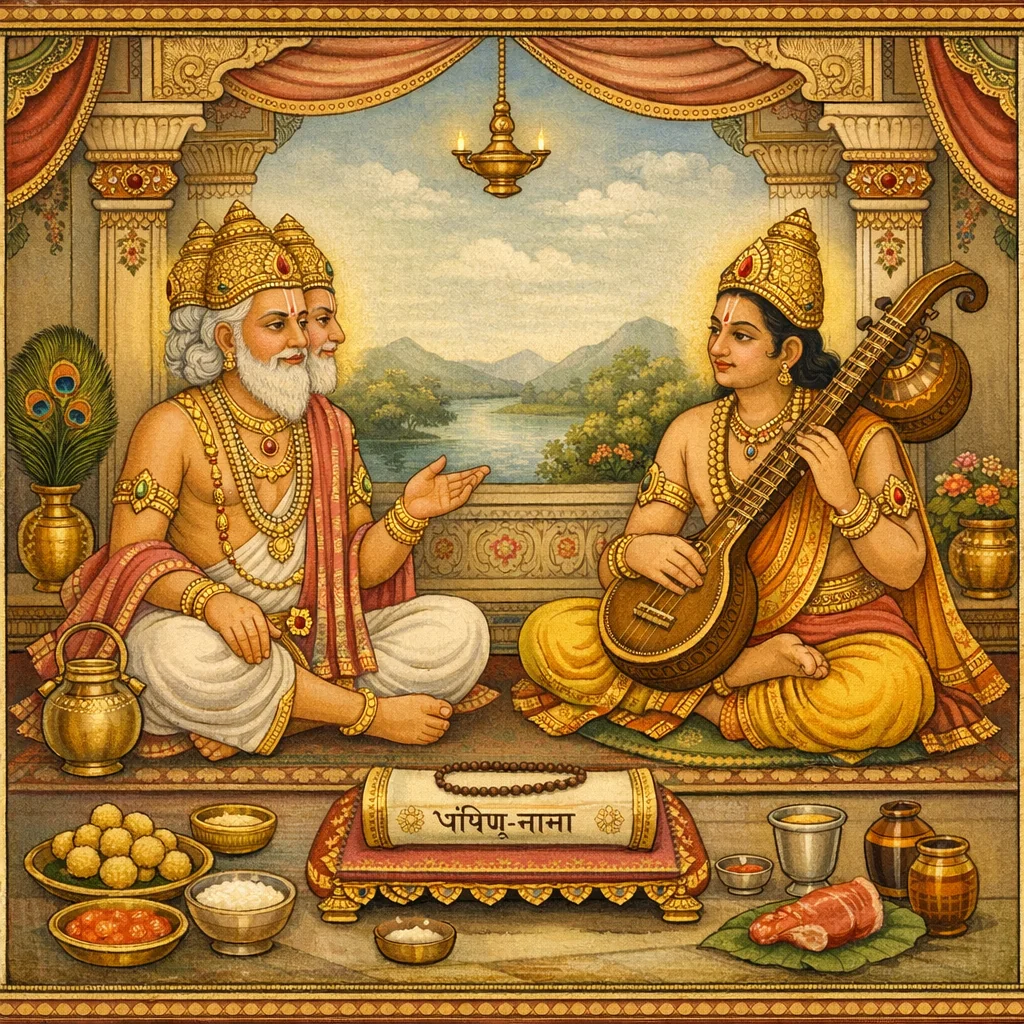
This adhyāya is framed as a didactic theological discourse spoken by Brahmā in a Brahmā–Nārada dialogue. It presents Cāturmāsya as a season of intensified devotional discipline directed to Nārāyaṇa/Viṣṇu, teaching that renunciation (tyāga) and restraint yield enduring, “inexhaustible” merit (akṣayya-phala). It catalogs many forms of abstention: avoiding certain vessels (especially copper), using leaf-plates (palāśa, arka, vaṭa, aśvattha), and restricting foods and substances such as salt, grains/legumes, rasas (juices/flavor-essences), oils, sweets, dairy, alcohol, and meats. Restraint is extended to lifestyle and ethics—avoiding particular garments and colors, luxury items (sandalwood, camphor, saffron-like substances), and personal grooming during the period when Hari is said to rest in yogic sleep—while strongly condemning para-nindā (slander) as a grave fault. The chapter culminates by affirming that pleasing Viṣṇu by every means is supreme, and that remembering and reciting Viṣṇu’s Name during Cāturmāsya has liberating power, uniting ritual discipline, speech-ethics, and bhakti into one path of practice.
Shlokas
Verse 1
ब्रह्मोवाच । इष्टवस्तुप्रदो विष्णुर्लोकश्चेष्टरुचिः सदा । तस्मात्सर्वप्रयत्नेन चातुमास्ये त्यजेच्च तत्
Brahmā said: Viṣṇu bestows the wished-for things, and the world is ever drawn to what it delights in. Therefore, during Cāturmāsya, one should with all effort renounce that cherished indulgence.
Verse 2
नारायणस्य प्रीत्यर्थं तदेवाक्षय्यमाप्यते । मर्त्यस्त्यजति श्रद्धावान्सोऽनंतफलभाग्भवेत्
For the pleasure of Nārāyaṇa, that renunciation and observance becomes imperishable in its reward. The mortal who gives it up with faith becomes a sharer in endless fruits.
Verse 3
कांस्यभाजनसंत्यागाज्जायते भूपतिर्भुवि । पालाशपत्रे भुञ्जानो ब्रह्मभूयस्त्वमश्नुते
By giving up eating from a kāṃsya (bell-metal) vessel, one is born a ruler upon the earth. Eating upon a palāśa leaf, one attains the state of Brahmā—exalted spiritual eminence.
Verse 4
ताम्रपात्रे न भुञ्जीत कदाचिद्वा गृही नरः । चातुर्मास्ये विशेषेण ताम्रपात्रं विवर्जयेत्
A householder should not eat from a copper vessel at any time; and especially during Cāturmāsya, he should avoid copper utensils.
Verse 5
अर्कपत्रेषु भुञ्जानोऽनुपमं लभते फलम् । वटपत्रेषु भोक्तव्यं चातुर्मास्ये विशेषतः
Eating upon arka leaves yields incomparable merit. During Cāturmāsya, one should especially eat upon vaṭa (banyan) leaves.
Verse 6
अश्वत्थपत्रसंभोगः कार्यो बुधजनैः सदा । एकान्नभोजी राजा स्यात्सकलं भूमिमण्डले
Wise people should always take their meal upon aśvattha (pīpal) leaves. One who eats only a single meal becomes a king over the whole circle of the earth.
Verse 7
तथा च लवणत्यागात्सुभगो जायते नरः । गोधूमान्नपरित्यागाज्जायते जनवलभः
Likewise, by giving up salt, a person becomes fortunate and attractive. By giving up wheat-based food, one becomes beloved among people.
Verse 8
अशाकभोजी दीर्घायुश्चातुर्मास्येऽभिजायते । रसत्यागान्महाप्राणी मधुत्यागात्सुलोचनः
During the Cāturmāsya observance, one who refrains from eating vegetables becomes long-lived. By renouncing attachment to tastes one gains great vitality, and by giving up honey one is blessed with beautiful eyes.
Verse 9
मुद्गत्यागाद्रिपुमृती राजमाषाद्धनाढ्यता । अश्वाप्तिस्तंडुलत्यागाच्चातुर्मास्येऽभिजायते
By giving up mudga (green gram) one brings about the destruction of enemies; by renouncing rājamāṣa one attains prosperity and wealth. By giving up rice, one gains horses—such results arise from the Cāturmāsya observance.
Verse 10
फलत्यागाद्बहुसुतस्तैलत्यागात्सुरूपिता । ज्ञानी तुवरिसंत्यागाद्बलं वीर्यं सदैव हि
By giving up fruit, one is blessed with many children; by giving up oil, one gains comeliness. By renouncing tuvarī, one becomes wise; and strength and vigor indeed remain ever present.
Verse 11
मार्गमांसपरित्यागान्नरकं न च पश्यति । शौकरस्य पीरत्यागाद्ब्रह्मवासमवाप्नुयात्
By abstaining from the meat of wild animals, one does not behold hell. By giving up the flesh of the boar, one attains dwelling in the Brahma-world (Brahma-loka).
Verse 12
ज्ञानं लावकसन्त्यागादाज्यत्यागे महत्सुखम् । आसवं सम्परित्यज्य मुक्तिस्तस्य न दुर्लभा
By giving up lāvaka, one gains true knowledge; by giving up ghee, one attains great happiness. And by renouncing fermented liquor, liberation (mokṣa) is not difficult for such a person.
Verse 13
दधिदुग्धपरित्यागी गोलोके सुख भाग्भवेत्
One who renounces curd and milk becomes a sharer of happiness in Goloka.
Verse 14
ब्रह्मा पायससंत्यागात्क्षिप्रात्यागान्महेश्वरः । कन्दर्पोऽपूपसंत्यागान्मोदकत्याजकः सुखी
By renouncing sweet milk-rice (pāyasa), one attains the state of Brahmā; by quickly renouncing such indulgences, one attains the state of Maheśvara. By giving up cakes (apūpa), one attains the splendor of Kandarpa; and the renouncer of modaka becomes happy.
Verse 15
गृहाश्रमपरित्यागी बाह्या श्रमनिषेवकः । चातुर्मास्यं हरिप्रीत्यै न मातुर्जठरे शिशुः
One who abandons household life and takes up external hardships—observing Cāturmāsya for the pleasure of Hari—does not become an infant again in a mother’s womb.
Verse 16
नृपो मरीचसंत्यागाच्छुण्ठीत्यागेन सत्कविः । शर्करायाः परित्यागाज्जायते राजपूजितः
By renouncing black pepper (marīca), one becomes a king; by giving up dry ginger (śuṇṭhī), one becomes a noble poet. By renouncing sugar, one is born honored by kings.
Verse 17
गुडत्यागान्महाभूतिस्तथा दाडिमवर्जनात् । रक्तवस्त्रपरित्यागाज्जायते जनवल्लभः
By giving up jaggery, one gains great prosperity; likewise, by abstaining from pomegranate. By renouncing red garments, one becomes beloved of the people.
Verse 18
पट्टकूलपरित्यागादक्षय्यं स्वर्ग माप्नुयात् । माषान्नचणकान्नस्य त्यागान्नैव पुनर्भवः
By giving up fine cloth, one attains an imperishable heaven. By renouncing food made of black gram and chickpeas, there is no return to rebirth.
Verse 19
कृष्णवस्त्रं सदा त्याज्यं चातुर्मास्ये विशेषतः । सूर्यसंदर्शनाच्छुद्धिर्नीलवस्त्रस्य दर्शनात्
Black garments should always be avoided—especially during Cāturmāsya. Purity comes from beholding the Sun; likewise, (purity is prescribed) in relation to seeing blue garments.
Verse 20
चंदनस्य परित्यागाद्गांधर्वं लोकमश्नुते । कर्पूरस्य परित्यागाद्यावज्जीवं महाधनी
By giving up sandalwood, one reaches the Gandharva world. By giving up camphor, one becomes greatly wealthy throughout life.
Verse 21
कुसुम्भस्य परित्यागान्नैव पश्येद्यमाल यम् । केशरस्य परित्यागान्मनुष्यो राजवल्लभः
By renouncing kusumbha (safflower/dye), one does not behold Yama’s abode. By renouncing saffron, a person becomes dear to kings.
Verse 22
यक्षकर्दमसंत्यागाद्ब्रह्मलोके महीयते । ज्ञानी पुष्पपरित्यागाच्छय्यात्यागे महत्सु खम्
By not giving up yakṣa-kardama (a luxury paste/unguent), one is honored in Brahmā’s world. A wise person, by renouncing flowers—and by renouncing the bed—attains great happiness.
Verse 23
भार्यावियोगं नाप्नोति चातुर्मास्ये न संशयः । अलीकवादसंत्यागान्मोक्षद्वारमपावृतम्
During Cāturmāsya, one does not suffer separation from one’s wife—of this there is no doubt. By not giving up false speech, the gate of liberation is shut.
Verse 24
परमर्मप्रकाशश्च सद्यःपापसमा गमः । चातुर्मास्ये हरौ सुप्ते परनिन्दां विवर्जयेत्
Revealing another’s deepest secrets leads to the immediate accumulation of sin. Therefore, during Cāturmāsya—when Hari is said to be asleep—one should avoid slandering others.
Verse 25
परनिन्दा महापापं परनिन्दा महाभयम् । परनिन्दा महद्दुःखं न तस्यां पातकं परम्
Slandering others is a great sin; slandering others is a great fear. Slandering others is great sorrow—there is no transgression beyond it.
Verse 26
केवलं निन्दने चैव तत्पापं लभते गुरु । यथा शृण्वान एव स्यात्पातकी न ततः परः
Even by merely engaging in slander, one incurs a heavy sin. Likewise, even one who only listens becomes a sinner—none is worse than that.
Verse 27
केशसंस्कारसंत्यागात्तापत्रयविवर्जितः । नखरोमधरो यस्तु हरौ सुप्ते विशेषतः
By refraining from grooming the hair, one becomes free from the threefold afflictions. And one who keeps nails and body-hair uncut—especially while Hari is asleep during Cāturmāsya—receives this merit.
Verse 29
सर्वोपायैर्विष्णुरेव प्रसाद्यो योगिध्येयः प्रवरैः सर्ववर्णेः । विष्णोर्नाम्ना मुच्यते घोरबन्धाच्चातुर्मास्ये स्मर्यतेऽसौ विशेषात्
By every means, Viṣṇu alone should be propitiated and His grace sought. He is the supreme object of meditation for the foremost yogins and for people of all social orders. By the very Name of Viṣṇu one is released from dreadful bondage; and in the sacred Cāturmāsya season He is to be remembered with special devotion.
Verse 69
सबलः कनकत्यागाद्रूप्यत्यागेन मानुषः
By renouncing gold a person becomes strong; by renouncing silver, a human being likewise gains vigor and steadiness.
Verse 236
इति श्रीस्कांदे महापुराण एकाशीतिसाहस्र्यां संहिता यां षष्ठे नागरखण्डे हाटकेश्वरक्षेत्रमाहात्म्ये शेषशाय्युपाख्याने चातुर्मास्यमाहात्म्ये ब्रह्मनारदसंवाद इष्टवस्तुपरित्यागमहिमवर्णनंनाम षट्त्रिंशदुत्तरद्वि शततमोऽध्यायः
Thus ends, in the Śrī Skanda Mahāpurāṇa—within the Ekāśītisāhasrī Saṃhitā—of the sixth, the Nāgara Khaṇḍa, in the Māhātmya of the Hāṭakeśvara sacred region, in the Śeṣaśāyī episode, in the Cāturmāsya Māhātmya, in the dialogue of Brahmā and Nārada, the chapter entitled “Description of the Glory of Renouncing Cherished Possessions,” being Chapter 236.