Adhyaya 235
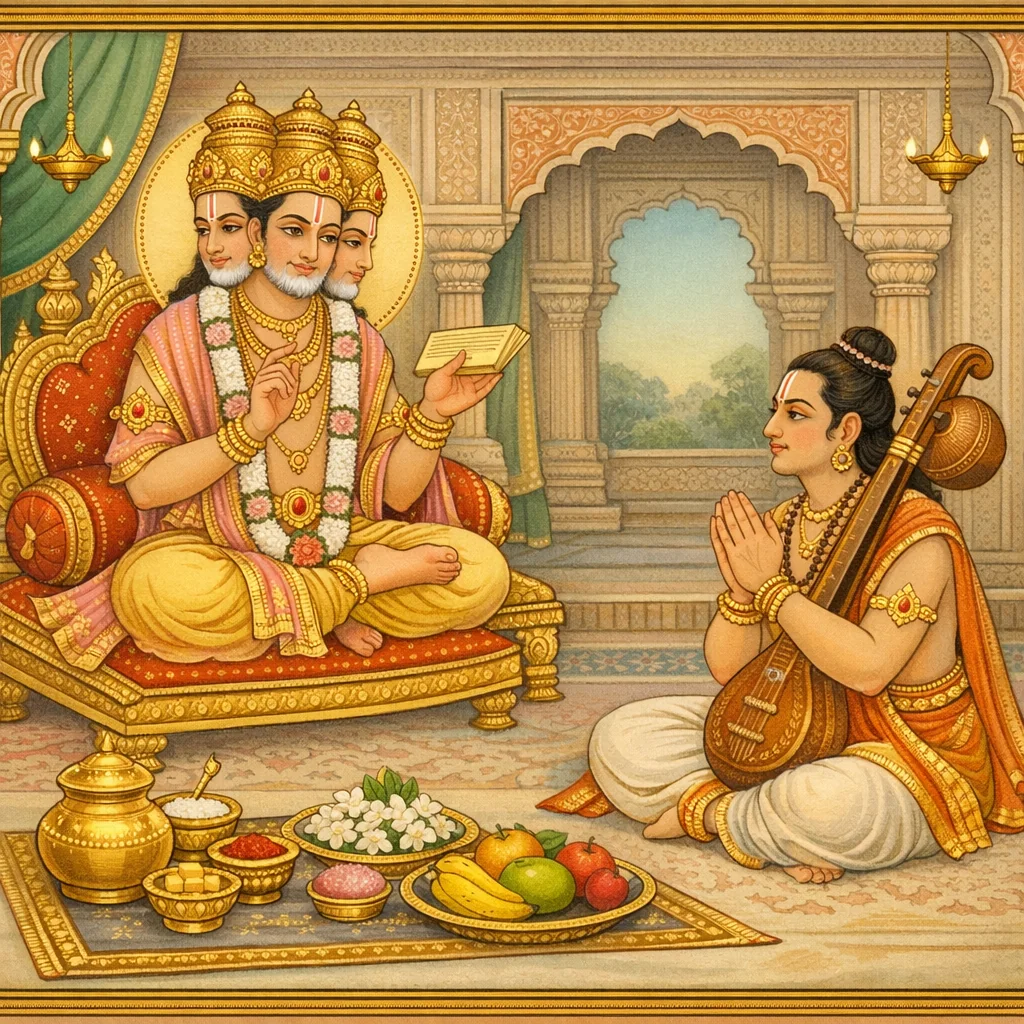
Chapter 235 records a theological dialogue between Brahmā and Nārada that ranks gifts (dāna) and ritual observances, giving special prominence to the Cāturmāsya season—called “Harau supte,” when Viṣṇu is ritually conceived as sleeping. It first praises dāna as a supreme dharma, then declares anna-dāna (the gift of food) and udaka-dāna (the gift of water) to be unsurpassed, grounding this in the teaching that “food is Brahman” and that the life-breath depends upon food. The chapter lists meritorious Cāturmāsya acts: gifts of food and water, cow-gifts, Vedic recitation, fire-offerings, feeding teachers and Brahmins, ghee-gifts, worship, and service to the virtuous, along with ancillary gifts such as milk products, flowers, sandal/agaru/incense, fruit, knowledge, and land. It also issues ethical cautions regarding pledged donations: delaying a promised gift is portrayed as spiritually perilous, timely giving increases merit, and misappropriating or diverting vowed gifts is discouraged. Phala statements speak of avoiding Yama’s realm through certain gifts, attaining specific lokas, being freed from the “three debts” (ṛṇa-traya), and benefiting one’s ancestors. The colophon places the chapter in the Nāgara Khaṇḍa, within the Hāṭakeśvara-kṣetra māhātmya, as part of the Śeṣaśayyā-upākhyāna and Cāturmāsya-māhātmya sequence.
Shlokas
Verse 1
ब्रह्मोवाच । दानधर्मं प्रशंसंति सर्वधर्मेषु सर्वदा । हरौ सुप्ते विशेषेण दानं ब्रह्मत्वकारणम्
Brahmā said: In every tradition of dharma, charity is always praised. And especially when Hari is in divine sleep (during Cāturmāsya), giving becomes a cause of attaining brahma-status—exalted spiritual attainment.
Verse 2
अन्नं ब्रह्म इति प्रोक्तमन्ने प्राणाः प्रतिष्ठिताः । तस्मादन्नप्रदो नित्यं वारिदश्च भवेन्नरः
“Food is declared to be Brahman; in food the life-breaths are established. Therefore, a person should always become a giver of food—and also a giver of water.”
Verse 3
वारिदस्तृप्तिमायाति सुखमक्षय्यमन्नदः । वार्यन्नयोः समं दानं न भूतं न भविष्यति
The giver of water attains satisfaction; the giver of food attains imperishable happiness. No gift has ever been, nor will ever be, equal to the gift of water and food.
Verse 4
मणिरत्नप्रवालानां रूप्यं हाटकवाससाम् । अन्येषामपि दानानामन्नदानं विशिष्यते
Even compared with gifts of gems, jewels, corals, silver, gold, and garments—among all other charities, the gift of food stands pre-eminent.
Verse 6
वैकुण्ठपदवाञ्छा चेद्विष्णुना सह संगमे । सर्वपापक्षयार्थाय चातुर्मास्येऽन्नदो भवेत्
If one longs for the station of Vaikuṇṭha and communion with Viṣṇu, then—so that all sins may be destroyed—one should become a giver of food during the Cāturmāsya season.
Verse 7
सत्यंसत्यं हि देवर्षे मयोक्तं तव नारद । जन्मांतरसहस्रेषु नादत्तमुपतिष्ठते
Truth—truth indeed, O divine seer! Nārada, what I have told you stands firm: across thousands of lifetimes, what is not given in charity does not come to one as support.
Verse 8
तस्मादन्नप्रदानेन सर्वे हृष्यंति जन्तवः । देवाश्च स्पृहयंत्येनमन्नदानप्रदायिनम्
Therefore, by the giving of food all creatures rejoice; and even the gods long for that giver who bestows the gift of food.
Verse 9
अन्नोदकप्रदानं च गोप्रदानं च नित्यदा । वेदपाठो वह्निहोमश्चातुर्मास्ये महाफलम्
The daily giving of food and water, and the gifting of a cow; likewise Vedic recitation and offerings into the sacred fire—these yield great fruit during Cāturmāsya.
Verse 10
भोजनं गुरुविप्राणां घृतदानं च सत्क्रिया । एतानि यस्य तिष्ठन्ति चातुर्मास्ये न मानवः
Feeding one’s guru and the brāhmaṇas, gifting ghee, and performing proper acts of reverence—rare indeed is the person in whom these disciplines remain steady during Cāturmāsya.
Verse 11
सद्धर्मः सत्कथा चैव सत्सेवा दर्शनं सताम् । विष्षुपूजा रतिर्दाने चातुर्मास्येषु दुर्लभाः
True dharma, noble sacred discourse, service to the good, and the sight of holy persons; worship of Viṣṇu and delight in giving—these are rare to find as steady practices during the Cāturmāsya months.
Verse 12
पितॄनुद्दिश्य यो मर्त्यश्चातुर्मास्येऽन्नदो भवेत् । सर्वपापविशुद्धात्मा पितृलोकमवामुयात्
That mortal who, intending the Pitṛs (ancestors), becomes a giver of food during Cāturmāsya—purified of all sins—attains the world of the ancestors.
Verse 13
देवाः सर्वेऽन्नदानेन तृप्ता यच्छन्ति वांछितम् । पिपीलिकाऽपि यद्गेहाद्भक्ष्यमादाय गच्छति
All the gods, satisfied by the gift of food, grant one’s desired boons. Even if an ant carries away a morsel of food from one’s house, that too becomes a cause of merit.
Verse 14
रात्रौ दिवाऽनिषिद्धान्नो ह्यन्नदानमनुत्तमम् । हरौ सुप्ते हि पापघ्नं वार्य मपि शत्रुषु
By night or by day, giving food that is not forbidden is an unsurpassed charity. Indeed, when Hari abides in His sacred sleep (during Cāturmāsya), even offering water becomes a destroyer of sins—even in relation to one’s enemies.
Verse 15
चातुर्मास्ये दुग्धदानं दधि तक्रं महाफलम् । जन्मकाले येन बद्धः पिंडस्तद्दानमुत्तमम्
During Cāturmāsya, the gift of milk—and likewise curd and buttermilk—yields great fruit. And whatever sustenance one was nourished with at the time of birth, the giving of that is considered the highest charity.
Verse 16
शाकप्रदाता नरकं यमलोकं न पश्यति । वस्त्रदः सोमलोकं च वसेदाभूतसंप्लवम्
One who gives vegetables does not behold hell or Yama’s realm. The giver of garments dwells in Soma’s world until the cosmic dissolution.
Verse 17
सुप्ते देवे यथाशक्ति ह्यन्यासु प्रतिमासु च । पुष्पवस्त्रप्रदानेन सन्तानं नैव हीयते
When the Lord is in sacred sleep (during Cāturmāsya), and also in other months according to one’s capacity, by offering flowers and garments one’s lineage is never diminished.
Verse 18
चन्दनागुरुधूपं च चातुर्मास्ये प्रयच्छति । पुत्रपौत्रसमायुक्तो विष्णुरूपी भवेन्नरः
One who, during Cāturmāsya, gives sandalwood, aguru, and incense becomes endowed with sons and grandsons; that person attains a Viṣṇu-like state (radiance and divine favor).
Verse 19
सुप्ते देवे जगन्नाथे फलदानं प्रय च्छति । विप्राय वेदविदुषे यमलोकं न पश्यति
When Jagannātha (the Lord of the universe) is in sacred sleep, one who offers fruits—giving them to a brāhmaṇa learned in the Vedas—does not behold Yama’s realm.
Verse 20
विद्यादानं च गोदानं भूमिदानं प्रयच्छति । विष्णुप्रीत्यर्थमेवेह स तारयति पूर्वजान्
One who gives the gift of knowledge, the gift of cows, and the gift of land—doing so solely to please Viṣṇu—indeed delivers even one’s ancestors hereafter.
Verse 21
गुडसैंधवतैलादिमधुतिक्ततिलान्नदः । देवतायास्समुद्दिश्य तासां लोकं प्रयाति हि
Whoever donates jaggery, rock-salt, oils, honey, bitter medicinal substances, sesame, and food—dedicating the gift to a chosen deity—indeed attains the world of that deity.
Verse 22
चातुर्मास्ये तिलान्दत्त्वा न भूयः स्तनपो भवेत् । यवप्रदाता वसते वासवं लोकमक्षयम्
Having given sesame during Cāturmāsya, one is not born again as a suckling infant. The giver of barley dwells in the imperishable world of Vāsava (Indra).
Verse 23
हूयेत हव्यं वह्नौ च दानं दद्याद्द्विजातये । गावः सुपूजिताः कार्याश्चातुर्मास्ये विशेषतः
One should offer oblations into the sacred fire and give gifts to the twice-born. Cows, in particular, should be duly honored and worshiped during the Cāturmāsya observance.
Verse 24
यत्किंचित्सुकृतं कर्म जन्मावधि सुसंचितम् । चातुर्मास्ये गते पात्रे विमुखे यन्न दीयते
Whatever meritorious deeds one has carefully accumulated throughout life—if, during Cāturmāsya, one does not give when a worthy recipient has come and is turned away—
Verse 25
प्रणश्यति क्षणादेव वचना द्यस्तु प्रच्युतः । दिवसेदिवसे तस्य वर्द्धते च प्रतिश्रुतम्
The one who falls away from his word perishes in an instant; and, day by day, the burden of what he promised continues to grow.
Verse 26
तस्मान्नैव प्रतिश्राव्यं स्वल्पमप्याशु दीयते । तावद्विवर्द्धते दानं यावत्तन्न प्रयच्छति
Therefore one should not merely make a promise; even a small gift should be given promptly. For the merit of charity increases only so long as it has not yet been handed over.
Verse 27
यो मोहान्मनुजो लोके यावत्कोटिगुणं भवेत् । ततो दशगुणा वृद्धिश्चातुर्मास्ये प्रदातरि
If, through delusion, a person in this world causes his obligation or merit to become a crore-fold, then in Cāturmāsya, for the giver, it increases yet another tenfold beyond that.
Verse 28
नरके पतनं तस्य याव दिंद्राश्चतुर्दश । अतस्तु सर्वदा देयं नरैर्यत्तु प्रतिश्रुतम्
For him there is a fall into hell for as long as the fourteen Indras endure. Therefore, whatever has been promised should always be given by people.
Verse 29
अन्यस्मै न प्रदातव्यं प्रदत्तं नैव हारयेत् । चातुर्मास्येषु यः शय्यां द्विजाग्र्याय प्रयच्छति
It should not be given to someone else, nor should what has been given be taken back. Whoever, during Cāturmāsya, offers a bed to an excellent Brāhmaṇa—
Verse 30
वेदोक्तेन विधानेन न स याति यमालयम् । आसनं वारिपात्रं च भाजनं ताम्रभाजनम्
Performed according to the Vedic injunctions, he does not go to Yama’s abode. (One should give) a seat, a water-vessel, utensils, and a copper vessel.
Verse 31
चातुर्मास्ये प्रयत्नेन देयं वित्तानुसारतः । सर्वदानानि विप्रेभ्यो ददत्सुप्ते जगद्गुरौ
During Cāturmāsya one should strive to give, according to one’s means. Offering every kind of gift to Brāhmaṇas while the Jagadguru (Viṣṇu) lies in yogic sleep—
Verse 32
आत्मानं पूर्वजैः सार्द्धं स मोचयति पातकात् । गौर्भूश्च तिलपात्रं च दीपदानमनुत्तमम्
He frees himself—together with his ancestors—from sin. The gifts of a cow, of land, of a vessel of sesame, and above all the unsurpassed gift of a lamp are praised.
Verse 33
ददद्विजातये मुक्तो जायते स ऋणत्रयात्
One who gives in charity to a twice-born (dvija) becomes freed from the threefold debt and is born released from it.
Verse 34
स विश्वकर्ता भुवनेषु गोप्ता स यज्ञभुक्सर्वफलप्रदश्च । दानानि वस्तुष्वधिदैवतं च यस्मिन्समुद्दिश्य ददाति मुक्तः
He is the Maker of the universe, the Protector in all worlds; He is the Enjoyer of sacrifices and the Giver of every fruit. When one, detached, offers gifts with Him in mind—and knows Him as the presiding divinity within all things—those gifts are rightly directed.
Verse 235
इति श्रीस्कांदे महापुराण एकाशीतिसाहस्र्यां संहितायां षष्ठे नागरखण्डे हाटकेश्वर क्षेत्रमाहात्म्ये शेषशाय्युपाख्याने चातुर्मास्यमाहात्म्ये ब्रह्मनारदसंवादे चातुर्मास्यदानमहिमवर्णनंनाम पञ्चत्रिंशदुत्तरद्विशततमोऽध्यायः
Thus ends the 235th chapter, called “The Description of the Greatness of Cāturmāsya Charity,” in the Hāṭakeśvara-kṣetra Māhātmya, within the Śeṣaśāyī episode and the Cāturmāsya Māhātmya, in the Brahmā–Nārada dialogue, in the sixth Nāgara Khaṇḍa of the Śrī Skanda Mahāpurāṇa (of the eighty-one-thousand-verse recension).