Adhyaya 229
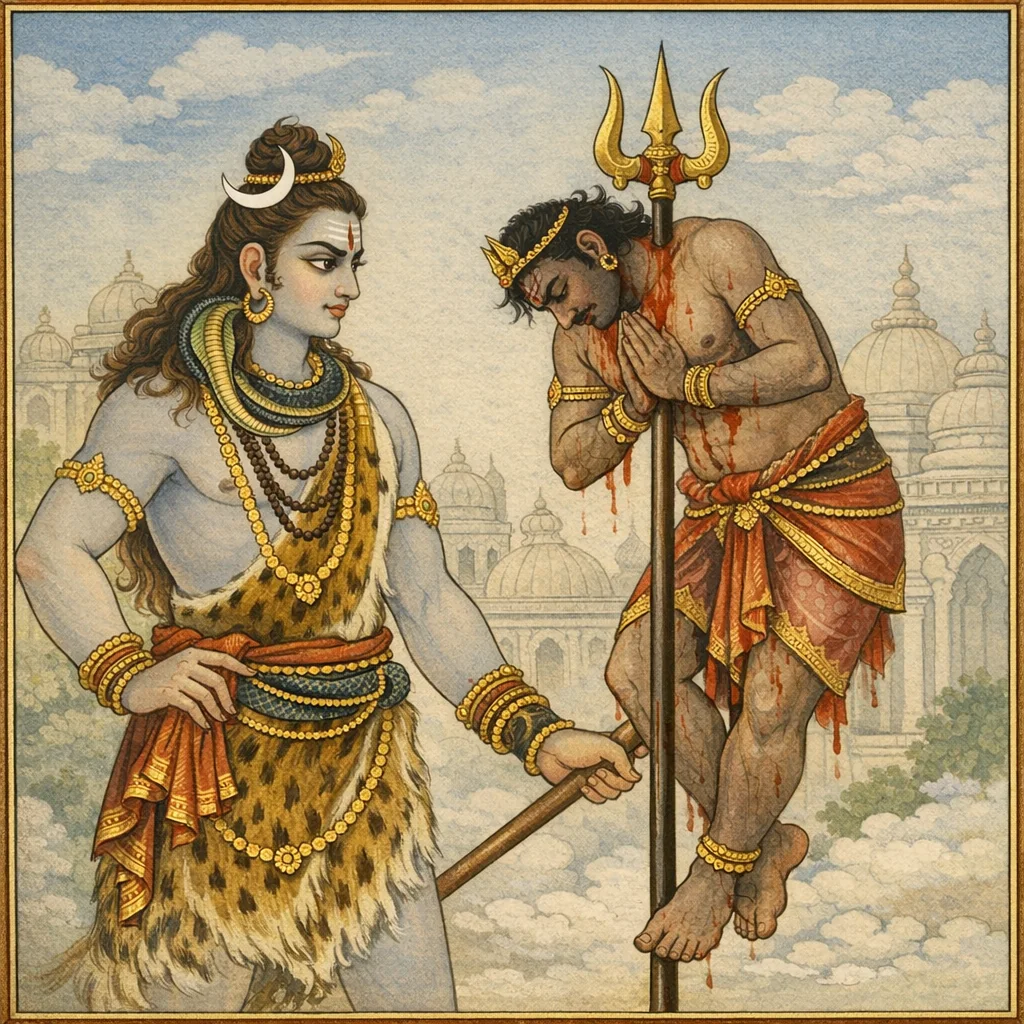
Sūta recounts a prolonged sequence of conflict: Śiva, accompanied by the gaṇas and supported by the devas led by Indra, advances toward Amarāvatī in heightened wrath. Andhaka, seeing the divine host, comes forth with a fourfold army and engages in an extended battle spanning vast stretches of time. Though pierced by Śiva’s trident, Andhaka does not die because of a boon from Brahmā, and the struggle continues. Śiva then impales Andhaka and holds him suspended upon the trident; as his body is gradually depleted, a turning point arises. Sensing his waning strength and recognizing his moral error, Andhaka abandons aggression and turns to stuti—praise—and surrender. He speaks a theology of repentance and devotion, declaring that even uttering Śiva’s name can lead toward liberation, and that life without Śiva-centered worship is spiritually barren. Perceiving Andhaka’s purification and humility, Śiva releases him and restores him within the Śaiva order, granting him the new name Bhṛṅgīriṭi and affectionate closeness among the gaṇas. The chapter thus traces an ethical arc: violence and pride culminate in self-recognition, confession, and reintegration through divine grace.
Shlokas
Verse 1
सूत उवाच । एतस्मिन्नंतरे शम्भुर्गणैः सर्वैः समावृतः । इन्द्राद्यैश्च सुरैः सर्वेः क्रोधसंरक्तलोचनः । जगाम वृषमारुह्य पुरीं चैवामरावतीम्
Sūta said: Meanwhile, Śambhu (Śiva), surrounded by all his gaṇas and accompanied by Indra and the other gods, his eyes reddened with wrath, mounted the Bull and went to the city of Amarāvatī.
Verse 2
अंधकोऽपि समालोक्य संप्राप्तां देववाहिनीम् । सगणां च महादेवं परितोषं परं गतः
Andhaka too, seeing the host of gods arrive and beholding Mahādeva together with his gaṇas, was filled with an intense surge of satisfaction.
Verse 3
निश्चक्रामाथ युद्धाय बलेन चतुरंगिणा । वरं स्यंदनमारुह्य सुश्वेताश्ववहं शुभम्
Then he marched forth to battle with a fourfold host, mounting a splendid chariot drawn by auspicious, gleaming white horses.
Verse 4
ततः समभवद्युद्धं देवानां दानवैः सह । गणैश्च विकृताकारैर्मृत्युं कृत्वा निवर्तनम्
Thereupon a battle arose between the gods and the demons, and also with gaṇas of fearsome, distorted forms—where turning back meant courting death itself.
Verse 6
एकवर्षसहस्रांतं यावद्युद्धमवर्तत । दिनेदिने क्षयं यांति तत्र देवा न दानवाः । ततो वर्षसहस्रांते संक्रुद्धः शशिशेखरः । त्रिशूलेन समुद्यम्य स्वहस्तेन व्यभेदयत्
For a full thousand years the battle continued. Day after day it was the gods who were worn down there—not the demons. Then, at the end of that thousand years, the Moon-crested Lord (Śaśiśekhara), enraged, raised his trident and with his own hand pierced him through.
Verse 7
स विद्धोऽपि स्वयं तेन त्रिशूलेन महासुरः । ब्रह्मणो वरमाहात्म्यान्नैव प्राणैविर्युज्यते
Though struck by that very trident, the great demon did not lose his life-breath, because of the power of the boon granted by Brahmā.
Verse 8
ततो भूयोऽपि चोत्थाय चक्रे युद्धं महात्मना । जघान च स संक्रुद्धो विशेषेण बहून्गणान्
Then, rising up once again, he resumed battle with that great Lord; and, in fury, he struck down many gaṇas in particular.
Verse 9
शंकरं ताडयामास गदाघातैर्मुहुर्मुहुः
Again and again he battered Śaṅkara with blows of his mace.
Verse 10
एवं वर्षसहस्रांतमभूत्सार्द्धं पिनाकिना । रौद्रं युद्धमन्धकस्य सर्वलोकभयावहम्
Thus, for a thousand years and more, Andhaka’s fierce battle with the Bow-bearing Lord (Śiva) went on—terrifying to all the worlds.
Verse 11
त्रिशूलभिन्नो दैत्यः स यदा मृत्युं न गच्छति । उत्थायोत्थाय कुरुते प्रहारान्गदया बली
Though split by the trident, that mighty demon did not meet death; rising again and again, he kept striking blows with his mace.
Verse 12
तथा तं शंकरो ज्ञात्वा मृत्युना परिवर्जितम् । ब्रह्मणो वरदानेन सर्वेषां च दिवौकसाम्
Knowing him to be one whom death did not touch—by Brahmā’s boon, and (to the distress) of all the gods—Śaṅkara recognized his deathlessness.
Verse 13
ततो निर्भिद्य शूलाग्रैः प्रोत्क्षिप्य गगनांगणे । छत्रवद्धारयामास लंबमानमधोमुखम् । अक्षरद्रुधिरं भूमौ गात्रेभ्यो वर्ष्मसंभवम्
Then, piercing him with the points of the trident, Śiva hurled him up into the open sky and held him aloft like a parasol—hanging upside down—while blood, born from his limbs, kept dripping onto the earth.
Verse 14
यावद्वर्षसहस्रांते चर्मास्थि स्नायुरेव च । धातुत्रयं स्थितं तस्य नष्टमन्यच्चतुष्टयम्
By the end of a thousand years, only skin, bone, and sinew remained; three bodily constituents still endured in him, while the other four had perished.
Verse 15
स ज्ञात्वा बल संहीनमात्मानं धातुसंक्षयात् । सामोपायं ततश्चके स्तुत्वा सार्धं पिनाकिना
Realizing himself bereft of strength due to the wasting of his bodily constituents, he then adopted the path of conciliation—offering praise in the presence of Pinākin (Śiva).
Verse 16
अन्धक उवाच । न त्वं देवो मया ज्ञातो वाग्दुष्टेन दुरात्मना । ईदृग्वीर्यसमोपेतस्तद्युक्तं भवता कृतम्
Andhaka said: “I—evil-minded and foul of speech—did not recognize you as God. Endowed with such might, what you have done is indeed fitting for you.”
Verse 17
अनुरूपं मदांधस्याविवेकस्य सुरोत्तम । स्ववीर्यमदयुक्तस्य विवेक रहितस्य च
“O best of the gods, this is only fitting for one blinded by intoxication and devoid of discernment—one drunk on his own strength and lacking wisdom.”
Verse 18
दुर्विनीतः श्रियं प्राप्य विद्यामैश्वर्यमेवच । न तिष्ठति चिरं कालं यथाऽहं मदगर्वितः
“One who is ill-disciplined, even after gaining prosperity, learning, and lordship, does not endure for long—just as I, swollen with pride, have not endured.”
Verse 19
पापोऽहं पापकर्माऽहं पापात्मा पापसंभवः । त्राहि मां देव ईशान सर्वपापहरो भव
I am sinful; I am a doer of sinful deeds; my very self is steeped in sin, born of sin. Save me, O Lord Īśāna—be the remover of all my sins.
Verse 20
दुःखितोऽहं वराकोऽहं दीनोऽहं शक्तिवर्जितः । त्रातुमर्हसि मां देव प्रपन्नं शरणं विभो
I am afflicted; I am wretched; I am helpless and devoid of strength. O God, you ought to save me—one who has come to you in surrender, seeking refuge, O all-pervading Lord.
Verse 21
दुष्टोऽहं पापयुक्तोऽहं सांप्रतं परमेश्वर । तेन बुद्धिरियं जाता तवोपरि ममानघ
I am wicked; I am tainted with sin even now, O Parameśvara. Therefore this resolve has arisen in me—towards You, O faultless Lord.
Verse 22
सर्वपापक्षये जाते शिवे भवति भावना
When the destruction of all sins has taken place, devotion and steady contemplation arise toward Śiva.
Verse 23
नाममात्रमपि त्र्यक्ष यस्ते कीर्तयति प्रभो । सोऽपि मुक्तिमवाप्नोति किं पुनः पूजने रतः
O Three-eyed Lord, whoever merely proclaims Your Name, O Master, attains liberation—even he. How much more, then, one who is devoted to Your worship!
Verse 24
तव पूजा विहीनानां दिनान्यायांति यांति च । यानि देव मृतानां च तानि यांति न जीवताम्
For those who are without Your worship, their days merely come and go—O Deva, like the days of the dead; such “days” do not truly belong to the living.
Verse 25
कुष्ठी वा रोगयुक्तो वा पंगुर्वा बधिरोऽपि वा । मा भूत्तस्य कुले जन्म शंभुर्यत्र न देवता
Whether leprous, or afflicted by illness, or lame, or even deaf—may I not be born in that lineage where Śambhu is not revered as the deity.
Verse 26
तस्मान्मोचय मां देव स्वागतं कुरु सांप्रतम् । गतो मे दानवो भावस्त्यक्तं राज्यं तथा विभो
Therefore, O Deva, set me free and receive me with welcome now. The demonic disposition in me has departed, and I have renounced the kingdom as well, O Lord.
Verse 27
त्यक्ताः पुत्राश्च पौत्राश्च पत्न्यश्च विभवैः सह । त्रिः सत्येन सुरश्रेष्ठ तव पादौ स्पृशाम्यहम्
Sons and grandsons have been abandoned—wives too, along with riches. In truth, O best among the gods, I touch Your feet three times.
Verse 28
तस्य तद्वचनं श्रुत्वा ज्ञात्वा तं गतकल्मषम् । उत्तार्य शनकैः शूलाद्विनयावनतं स्थितम्
Hearing his words and knowing him to be freed from sin, (the Lord) gently lifted him down from the trident, and he stood there, bowed with humility.
Verse 29
ततो नाम स्वयं चक्रे भृंगिरीटिरिति प्रभुः । अब्रवीच्च सदा मे त्वं वल्लभः संभविष्यसि
Then the Lord Himself bestowed the name “Bhṛṅgirīṭi” and said, “You shall ever be dear to Me.”
Verse 30
नन्दिनोऽपि गजास्यस्य महाकालस्य पुत्रक । तिष्ठ सौम्य मया सौख्यं न स्मरिष्यसि बांधवान्
O dear child of Mahākāla—child also of Nandin and of the elephant-faced Gaṇeśa—remain here, gentle one. Dwelling in happiness with Me, you will no longer remember worldly relatives.
Verse 31
स तथेति प्रतिज्ञाय प्रणम्य शशिशेखरम् । तस्थौ सर्वगणैर्युक्तः प्रभुसंश्रयसंयुतः
Saying, “So be it,” he made his pledge; then, bowing to the Moon-crested Lord (Śiva), he remained there—accompanied by all the gaṇas and established under the protection and refuge of the Supreme Master.
Verse 229
इति श्रीस्कांदे महापुराण एकाशीतिसाहस्र्यां संहितायां षष्ठे नागरखण्डे हाटकेश्वर क्षेत्रमाहात्म्ये भृंगीरिट्युत्पत्तिवर्णनंनामैकोनत्रिंशदुत्तरद्विशततमोऽध्यायः
Thus ends the two-hundred-and-twenty-ninth chapter—called “The Description of the Origin of Bhṛṅgīriṭi”—in the Hāṭakeśvara-kṣetra Māhātmya, within the Nāgara Khaṇḍa (the sixth division) of the Śrī Skanda Mahāpurāṇa, in the Saṃhitā of eighty-one thousand verses.