Adhyaya 228
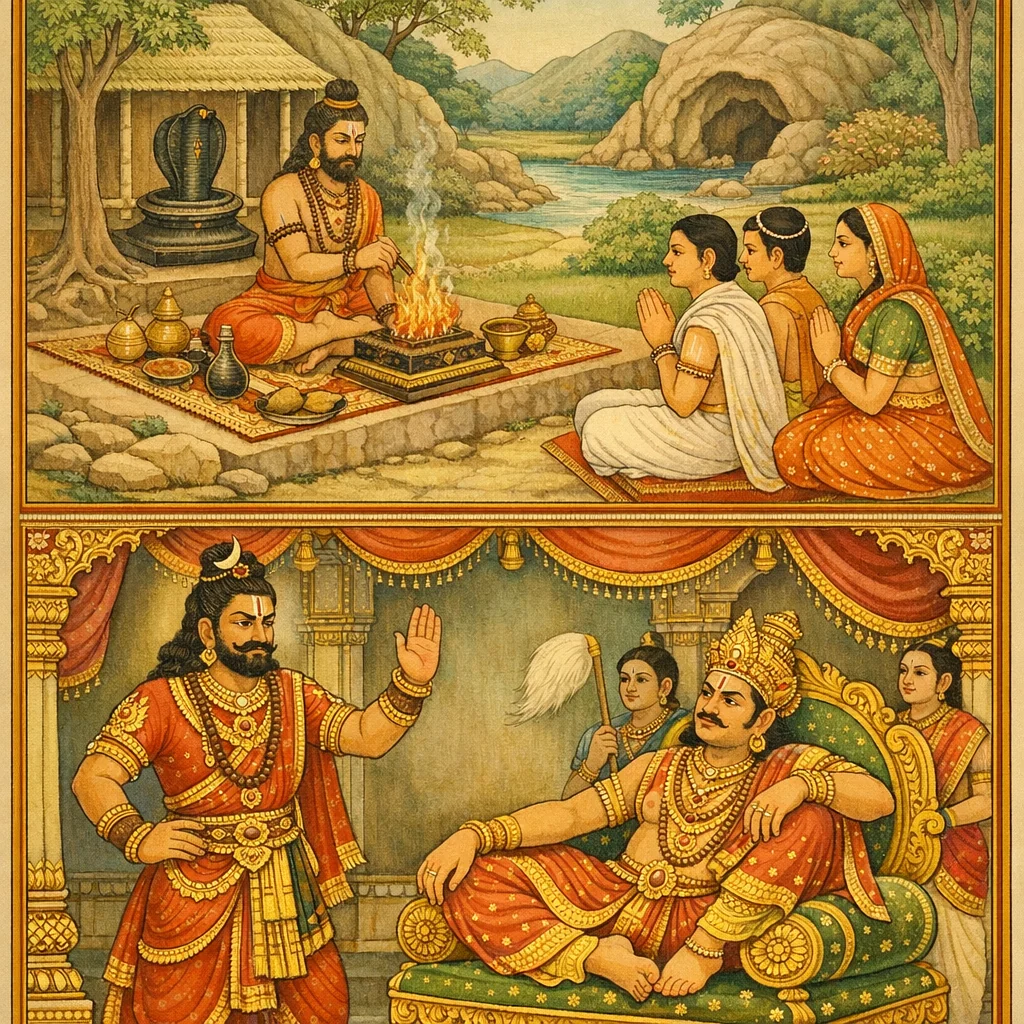
This chapter extols Biladvāra as a purifying tīrtha: beholding and worshiping Viṣṇu as Jalāśāyī, reclining upon Śeṣa, destroys wrongdoing. Steady devotion through the four months of cāturmāsya is praised as yielding merit equal to wide tīrtha pilgrimages and great sacrifices, granting liberation even to those portrayed as deeply unethical. When the sages wonder how the Lord who rests on the Milk Ocean can be present at Biladvāra, Sūta affirms the doctrine that the transcendent Deity may graciously manifest locally in an accessible form. The narrative then turns to mythic causation: after Hiraṇyakaśipu’s fall, Prahlāda and Andhaka appear; Andhaka gains a boon from Brahmā, clashes with Indra, and seizes the prerogatives of Svarga. Indra seeks Śaṅkara’s help; Śaṅkara sends Vīrabhadra as an envoy commanding Andhaka to relinquish Svarga and return to the ancestral realm, but Andhaka mocks and rejects the order, setting the course toward divine retribution and the reassertion of dharma.
Shlokas
Verse 1
सूत उवाच । तथान्यच्च बिलद्वारि शयनार्थे व्यवस्थितम् । दृष्ट्वा प्रमुच्यते पापी देवं च जलशायिनम्
Sūta said: Moreover, at Biladvāra another deity is established for repose; by beholding that Lord who reclines upon the waters, even a sinner is released from sin.
Verse 2
स्नात्वा तस्मिन्बिलद्वारे पवित्रे लोकसंश्रये । यस्तं पूजयते भक्त्या शेषपर्यंकशायिनम् । आजन्ममरणात्पापात्स च मुक्तिमवाप्नुयात्
After bathing at that Biladvāra—pure and a refuge for the worlds—whoever worships with devotion the Lord who reclines upon the couch of Śeṣa is freed from sins gathered from birth to death, and attains liberation.
Verse 3
चतुरो वार्षिकान्मासान्सुप्रसुप्तं सुरेश्वरम् । संपूजयति यो भक्त्या न स भूयोऽत्र जायते
Whoever, with devotion, worships the Lord of the gods while He abides in deep yogic sleep for the four months of the rainy season—such a person is not born again in this world.
Verse 4
तत्र पूर्वं महाभागा मुनयः सेव्य तं प्रभुम् । मृत्तिकाग्रहणं कृत्वा तस्य चायतने शुभे
There, in former times, the greatly fortunate sages served that Lord; and, taking up sacred clay within His auspicious sanctuary, they performed the prescribed rite.
Verse 5
संप्राप्ताः परमं स्थानं तद्रिष्णोः परमं पदम् । यत्फलं सर्वतीर्थेषु सर्वयज्ञेषु यत्फलम् । तत्फलं तस्य पूजायां चातुर्मास्यां प्रजायते
They attained the supreme abode—the highest station of Viṣṇu. Whatever fruit is gained at all sacred fords and whatever fruit is gained in all sacrifices, that very fruit arises from worship of Him during Cāturmāsya.
Verse 6
यत्फलं गोग्रहे मृत्युं संप्राप्ता यांति मानवाः । तत्फलं चतुरो मासान्पूजया जलशायिनः
Whatever spiritual fruit people obtain by meeting death at Gograha, that very fruit is gained by worshipping the Lord Jalaśāyī, He who lies upon the waters, for four months.
Verse 7
अपि पापसमाचारः परदाररतोऽपिच । ब्रह्मघ्नोऽपि सुरापोऽपि स्त्रीहन्ताऽपि विगर्हितः । पूजया चतुरो मासांस्तस्य देवस्य मुच्यते
Even one who lives by sinful conduct—even one addicted to another’s spouse; even a slayer of a brāhmaṇa, even a drinker of intoxicants, even a condemned killer of a woman—by worshipping that Deity for four months is released from the bondage of sin.
Verse 8
ऋषय ऊचुः । यदेतद्भवता प्रोक्तं तत्रस्थं जलशायिनम् । बिलद्वारे कथं सूत तत्र नः संशयो महान्
The sages said: “What you have declared—that Jalaśāyī dwells there at the mouth of a cave—how can that be, O Sūta? On this point we have great doubt.”
Verse 9
स किल श्रूयते देवः क्षीराब्धौ मधुसूदनः । सदैव भगवाञ्छेते योगनिद्रां समाश्रितः
For it is heard that the divine Madhusūdana lies upon the Ocean of Milk, and that the Blessed Lord ever rests, having entered yogic sleep.
Verse 10
कथं स भगवाञ्छेते बिलद्वारे व्यवस्थितः । एतत्कीर्तय कार्त्स्न्येन परं कौतूहलं हि नः
How, then, does that Lord lie there, stationed at the cave-entrance? Tell this to us in full detail, for our curiosity is great.
Verse 11
सूत उवाच । सत्यमेतन्महाभागाः क्षीराब्धौ मधुसूदनः । योगनिद्रां गतः शेते शेषपर्यंकशा यकः
Sūta said: “This is true, O noble ones: Madhusūdana lies upon the Ocean of Milk, having entered yogic sleep, reclining on the couch that is Śeṣa.”
Verse 12
स यथा तत्र क्षेत्रे तु संश्रितो भगवान्स्वयम् । जलशायिस्वरूपेण तच्छृशुध्वं समाहिताः
Now hear, with concentrated minds, how the Lord Himself has taken refuge in that sacred field, manifesting in the form of Jalaśāyī.
Verse 13
यथा च चतुरो मासान्पूजितस्तत्र संस्थितः । मुक्तिं ददाति पुंसां स तथा संकीर्तयाम्यहम्
Just as that Lord—when worshipped and abiding there for four months—bestows liberation upon people, so too I now proclaim his greatness.
Verse 14
चत्वारोऽपि यथा मासा गर्हणीया धरातले । सर्वकर्मसु मुख्येषु यज्ञोद्वा हादिषु द्विजाः
O twice-born ones, just as these four months are regarded on earth as especially significant in all principal rites—such as sacrifices and marriages—so their observance is to be understood as weighty.
Verse 15
तद्वोऽहं कीर्तयिष्यामि नमस्कृत्य द्विजोतमाः । तस्मै देवाधिदेवाय निर्गुणाय गुणात्मने
O best of the twice-born, having bowed in reverence, I shall now recount that to you—offering praise to that God over gods, who is beyond qualities and yet the very essence of all qualities.
Verse 16
अव्यक्तायाऽप्रमेयाय सर्वदेवमयाय च । सर्वज्ञाय कवीशाय सर्वभूतात्मने तथा
Reverence to the Unmanifest, the Immeasurable, the very embodiment of all the gods; to the All-knowing, the Lord of seers and poets, and likewise to the Self abiding within all beings—unto Him be homage.
Verse 17
पुरासीद्दानवो रौद्रो हिरण्यकशिपुर्महान् । नारसिंहं वपुः कृत्वा विष्णुना यो निपातितः
In former times there was the great and fierce Dānava, Hiraṇyakaśipu—he whom Viṣṇu struck down after assuming the bodily form of Narasiṃha.
Verse 19
तस्य पुत्रद्वयं जज्ञे सर्वलक्षणलक्षितम् । प्रह्लादश्चांधकश्चैव वीर्येणाप्रतिमौ युधि
To him were born two sons, marked with every sign of distinction: Prahlāda and Andhaka—both unequalled in valor upon the field of battle.
Verse 20
स नैच्छत तदा राज्यं पितृपैतामहं महत् । समागतमपि प्राज्ञो यस्मात्तद्वो वदाम्यहम्
Though the great ancestral kingdom of his father and forefathers had come to him, that wise one did not desire it; for this reason I relate this account to you.
Verse 21
दानवानां सदा द्वेषो देवेन सह चक्रिणा । न करोति पुनर्द्वेषं तं समुद्दिश्य सर्वदा
The Dānavas are ever filled with hatred toward the divine Lord who bears the discus; yet he, keeping that Lord ever in his heart, does not return hatred with hatred.
Verse 22
एतस्मात्कारणात्सर्वे तेन त्यक्ता दितेः सुताः । स्वराज्यमपि संत्यज्य विष्णुस्तेन समाश्रितः
For this reason, all the sons of Diti were forsaken by them; and even abandoning his own realm, he took refuge in Viṣṇu.
Verse 23
ततस्तैर्दानवैः क्षुद्रैर्विष्णुद्वेषपरायणैः । अन्धकः स्थापितो राज्ये पितृपैतामहे तदा
Then, by those petty Dānavas devoted to hatred of Viṣṇu, Andhaka was installed upon the ancestral throne and kingdom at that time.
Verse 24
अन्धकोऽपि समाराध्य देवदेवं चतुर्मुखम् । अमरत्वं ततो लेभे यावच्चन्द्रार्कतारकम्
Even Andhaka, having duly worshipped the god of gods, the four-faced Lord (Brahmā), obtained immortality—enduring as long as the moon, sun, and stars remain.
Verse 25
वरपुष्टस्ततः सोऽपि चक्रे शक्रेण विग्रहम्
Then, strengthened by that boon, he too entered into conflict with Śakra (Indra).
Verse 26
जित्वा शक्रं महासंख्ये यज्ञांशाञ्जगृहे स्वयम् । गत्वाऽमरावतीं दैत्यो निःसार्य च शतक्रतुम् । स्ववर्गेण समोपेतः स्वर्गं समहरत्तदा
Having defeated Śakra in a great battle, he himself seized the sacrificial portions. Then the Dānava went to Amarāvatī, drove out Śatakratu (Indra), and—surrounded by his own followers—took possession of heaven at that time.
Verse 27
शक्रोऽपि च समाराध्य शंकरं लोकशंकरम् । सर्वदेवसमोपेतो भृत्यवत्परिवर्तते
Śakra too, having propitiated Śaṅkara—the benefactor of the worlds—remained in attendance, accompanied by all the gods, like a servant.
Verse 28
ततः कालेन महता तस्य तुष्टः पिनाकधृक् । तं प्राह वरदोऽस्मीति वद शक्र करोमि किम्
Then, after a long time, Pinākadhṛk (Śiva), pleased with him, said: “I am the giver of boons. Tell me, O Śakra—what shall I do for you?”
Verse 29
इन्द्र उवाच । अंधकेन हृतं राज्यं मम वीर्यात्सुरेश्वर । यज्ञभागैः समोपेतं हत्वाऽशु तत्प्रयच्छ मे
Indra said: “O Lord of the gods! Andhaka has taken my kingdom by force. Having swiftly slain him—he who has seized the shares of sacrifice—restore that realm to me.”
Verse 30
तच्छ्रुत्वा तस्य दीनस्य भगवाञ्छशिशेखरः । प्रोवाच तव दास्यामि राज्यं त्रैलोक्यसंभवम्
Hearing the plea of that distressed one, the Blessed Lord—Śiva, crowned with the moon—said: “I shall grant you the sovereignty that pertains to the three worlds.”
Verse 31
ततः संप्रेषयामास दूतं तस्य विचक्षणम् । गणेशं वीरभद्राख्यं गत्वा तं ब्रूहि चांधकम्
Then he dispatched a discerning messenger of his—Gaṇeśa, named Vīrabhadra—saying: “Go and speak to that Andhaka.”
Verse 32
ममादेशात्परित्यज्य स्वर्गं गच्छ धरातलम् । पितृपैतामहं स्थानं राज्यं तत्र समाचर
“By my command, abandon heaven and go to the earth. There, in the ancestral realm of your forefathers, exercise your kingship.”
Verse 33
परित्यजस्व यज्ञांशान्नो चेद्धंतास्मि सत्वरम् । स गत्वा चांधकं प्राह यथोक्तं शंभुना स्फुटम्
“Abandon the shares of sacrifice; otherwise I shall strike you down at once.” Having gone, he told Andhaka clearly, exactly as Śambhu (Śiva) had spoken.
Verse 34
सविशेषमहाबुद्धिः स्वामिकार्यप्रसिद्धये । अथ तं चाधकः प्राह प्रविहस्य महाबलः
Endowed with exceptional great intelligence, the messenger acted to accomplish his lord’s purpose. Then the mighty Adhaka, laughing aloud, spoke to him.
Verse 35
अवध्यो हि यथा दूतस्तेन त्वां न निहन्म्यहम् । क स्याद्वै शंकरोनाम यो मामेवं प्रभाषते
“A messenger is indeed not to be slain; therefore I do not kill you. But who is this one called ‘Śaṅkara’ who speaks to me in such a manner?”
Verse 36
न मां वेत्ति स किं मूढः किं वा मृत्यु मभीप्सते
“Does that fool not know who I am, or does he actually desire death?”
Verse 37
अथवा सत्यमेवैतान्निर्विण्णो जीविताच्च सः । दरिद्रोपहतो नित्यं सर्वभोगविवर्जितः
Or perhaps this is truly so: he has grown weary of life. Ever struck by poverty and bereft of every enjoyment, he speaks to me in this manner.
Verse 38
स्मशाने क्रीडनं यस्य भस्म गात्रविलेपनम् । भूषणं चाहयो वस्त्रं दिशो यस्य जटालका
He whose sport is in the cremation-ground, whose body is smeared with ash; for whom serpents are ornaments, whose garment is the very directions, and whose hair is matted in jata—
Verse 39
कस्तस्य जीवितेनार्थस्तेनेदं मां ब्रवीति सः । तस्माद्गत्वा द्रुतं ब्रूहि मद्वाक्यं दूत सस्फुटम्
What use has he for life, that he speaks to me like this? Therefore go swiftly and report my words, O messenger—clearly and exactly.
Verse 40
त्यक्त्वा कैलासमेनं त्वं वाराणस्यां तपः कुरु । मया स्थानमिदं दत्तं कैलासं स्वसुतस्य च
Abandon this Kailāsa and perform austerities (tapas) in Vārāṇasī. This abode—Kailāsa—has been granted by me to my own son as well.
Verse 41
वृकस्यापि न सन्देहो विभवेन समन्वितम् । नो चेत्प्राणान्हरिष्यामि सेंद्रस्य तव शंकर
Even for Vṛka there is no doubt—(I shall seize) the splendor and power you claim. Otherwise, O Śaṅkara, I will take away your life, even along with Indra’s.
Verse 42
तच्छ्रुत्वा वीरभद्रस्तु निर्भर्त्स्य च मुहुर्मुहुः । क्रोधेन महताविष्टः कैलासं समुपाविशत्
Hearing this, Vīrabhadra rebuked him again and again. Overcome by immense wrath, he entered and approached Kailāsa.
Verse 43
ततः स कथयामास तद्वाक्यं च पिनाकिनः । अतिक्रूरं विशेषेण तत क्रुद्धः पिनाकधृक्
Then he reported those words to the Bearer of the Pināka (Śiva). Hearing them—exceedingly harsh, especially so—the wielder of the Pināka became enraged.
Verse 228
इति श्रीस्कान्दे महा पुराण एकाशीतिसाहस्र्यां संहितायां षष्ठे नागरखण्डे हाटकेश्वरक्षेत्रमाहात्म्ये जलशाय्युपाख्याने ब्रह्मदत्तवरप्रदानोद्धतान्धकासुरकृतशंकराज्ञाव माननवर्णनंनामाष्टाविंशत्युत्तरद्विशततमोऽध्यायः
Thus ends, in the revered Skanda Mahāpurāṇa—within the eighty-one-thousand-verse Saṃhitā—within the sixth division, the Nāgara Khaṇḍa, in the tīrtha-glorification of the sacred region of Hāṭakeśvara, in the episode called “Jalaśāyī”: the two-hundred-and-twenty-eighth chapter, titled “The granting of a boon to Brahmadatta, and the account of how the arrogant demon Andhaka honored Śaṅkara’s command.”