Adhyaya 227
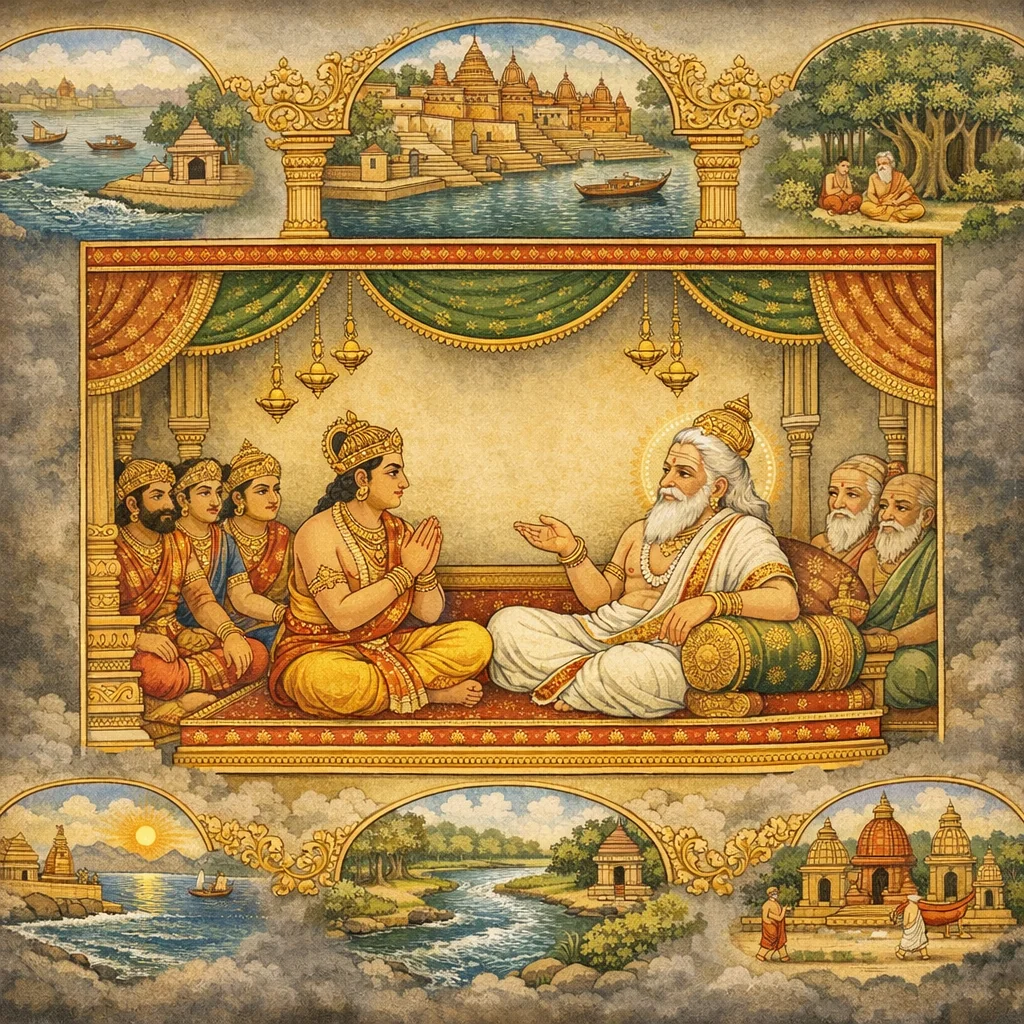
Having heard the descriptions of the narakas, Yudhiṣṭhira is struck with fear and asks how even sinful people may gain release—through vows and restraints (vrata), self-control, fire-offerings (homa), or by resorting to sacred tīrthas. Bhīṣma replies with a prescriptive catalogue of acts that mitigate infernal suffering. He declares that those whose bones are consigned to the Gaṅgā are not overcome by the fires of hell, and that śrāddha performed in the Gaṅgā in the deceased’s name supports the soul’s ascent beyond the imagery of naraka. He adds that properly performed prāyaścitta (expiation) and charitable giving—especially the gift of gold—serve as purifying remedies. The chapter then lists place- and time-specific pathways: dying at certain tīrthas (including Dhārā-tīrtha), or at major pilgrimage centers such as Vārāṇasī, Kurukṣetra, Naimiṣa, Nāgara-pura, Prayāga, and Prabhāsa, even after great transgressions; and disciplined fasting unto death (prayopaveśana) with devotion to Janārdana, including at Citreśvara. Ethical charity is emphasized: feeding the poor, the blind, the destitute, and weary pilgrims—even out of the usual time—is presented as protection from naraka. Further prescriptions include specific dānas (jala-dhenu, tila-dhenu) at indicated solar positions, darśana of Somanātha, bathing in the sea and in the Sarasvatī, eclipse observances at Kurukṣetra, and pradakṣiṇā under Kārttikā/Kṛttikā yoga and at Tripuṣkara. The chapter concludes by affirming that one avoids naraka through one’s own actions, while even minor faults can lead there—reinforcing karmic causality alongside remedial practice.
Shlokas
Verse 1
युधिष्ठिर उवाच । नरकाणां स्वरूपं च श्रुत्वा मे भयमागतम् । कथं मुक्तिर्भवेत्तेषां पापानामपि पार्थिव । व्रतैर्वा नियमैर्वापि होमैर्वा तीर्थसंश्रयैः
Yudhiṣṭhira said: Having heard the nature of the hells, fear has come upon me. O king, how may liberation be attained even by those sinners—by vows (vrata), by disciplines (niyama), by fire-offerings (homa), or by taking refuge in sacred tīrthas?
Verse 2
भीष्म उवाच । गंगायामस्थिपातोऽत्र येषां संजायते नृणाम् । न तेषां नारको वह्निः प्रभवेन्मध्यवर्तिनाम्
Bhīṣma said: For those whose bones are consigned here into the Gaṅgā, the infernal fire does not prevail over them—even if they were otherwise destined for the middle regions of suffering.
Verse 3
गंगायां क्रियते श्राद्धं येषां नाम्ना स्वकैः सुतैः । ते विमानं समाश्रित्य प्रयांति नरकोपरि
Those for whom their own sons perform Śrāddha in the Gaṅgā in their name—such souls, taking refuge in a celestial chariot (vimāna), proceed beyond and above hell.
Verse 4
पापं कृत्वा प्रकुर्वंति प्रायश्चित्तं यथोदितम् । हेम यच्छंति वा भूप न तेषां नरको भवेत्
Having committed sin, those who duly perform the prescribed expiation (prāyaścitta)—or who, O king, give gold in charity—do not become fit for hell.
Verse 5
शेषाः स्वकर्मणः प्राप्त्या सेवंते च यथोचितम् । स्वर्ग वा नरकं वापि सेवन्ते ते नराधिप
But the rest, according to the fruit of their own deeds, experience what is fitting—either heaven or hell, O lord of men.
Verse 6
धारातीर्थे म्रियंते ये स्वामिनः पुरतः स्थिताः । ते गच्छंति परं स्थानं नरकाणां सुदूरतः
Those who die at Dhārā-tīrtha, standing in the presence of their lord, go to the supreme abode—far, far away from the hells.
Verse 7
वाराणस्यां कुरुक्षेत्रे नैमिषे नागरे पुरे । प्रयागे वा प्रभासे वा यस्त्यजेत्तनुमा त्मनः । महापातकयुक्तोऽपि नरकं न स पश्यति
Whoever gives up the body at Vārāṇasī, at Kurukṣetra, at Naimiṣa, in Nāgara-pura, or at Prayāga or Prabhāsa—even if burdened with great sins—does not behold hell.
Verse 8
नीलो वा वृषभो यस्य विवाहे संनियुज्यते । स्वपुत्रेण न संपश्येन्नरकं ब्रह्महाऽपि सः
Even a slayer of a brāhmaṇa does not behold hell if, at his marriage, his own son duly employs a blue (dark-colored) bull according to the rite.
Verse 9
प्रायोपवेशनं कृत्वा हृदयस्थे जनार्दने । यस्त्यजेत्पुरुषः प्राणान्नरकं न स पश्यति
Having undertaken prāyopaveśana (vowed fasting unto death), with Janārdana abiding in the heart, the man who relinquishes his life-breath does not behold hell.
Verse 10
प्रायोपवेशनं यो च चित्रेश्वरनिवेशने । कुर्वन्ति नरकं नैव ते गच्छंति कदाचन
Whoever performs prāyopaveśana at the sacred abode of Citreśvara never goes to hell, at any time.
Verse 11
दीनांधकृपणानां च पथिश्रममुपेयुषाम् । तीर्थयात्रापराणां च यो यच्छति सदाऽशनम् । काले वा यदि वाऽकाले नरकं न स पश्यति
He who continually gives food to the poor, the blind, and the destitute, to those wearied on the road, and to pilgrims devoted to tīrtha-journeys—whether at the proper time or even at an untimely hour—does not behold hell.
Verse 12
जलधेनुं च यो दद्याद्धृषसंस्थे दिवाकरे । तिलधेनुं मृगस्थे च नरकं न स पश्यति
Whoever donates a ‘water-cow’ (jaladhenu) when the Sun is in Dhṛṣa, and a ‘sesame-cow’ (tiladhenu) when the Sun is in Mṛga, does not behold hell.
Verse 13
सोमे सोमग्रहे चैव सोमनाथस्य दर्शनात् । समुद्रे च सरस्वत्यां स्नात्वा न नरकं व्रजेत्
At the time of the Moon, and during a lunar eclipse as well—by beholding Somanātha—and by bathing in the ocean and in the Sarasvatī, one does not go to hell.
Verse 14
सन्निहित्यां कुरुक्षेत्रे राहुग्रस्ते दिवाकरे । सूर्यवारेण यः याति नरकं न स पश्यति
When the Sun is seized by Rāhu (during an eclipse), whoever goes on a Sunday to Sannihitī in Kurukṣetra does not behold hell.
Verse 15
कार्तिक्यां कृत्तिकायोगे यः करोति प्रदक्षिणाम् । त्रिपुष्करस्य मौनेन नरकं न स पश्यति
In the month of Kārtika, when the Kṛttikā conjunction arises, whoever performs pradakṣiṇā and keeps sacred silence at Tripuṣkara does not behold hell.
Verse 16
मृगसंक्रमणे ये तु सूर्यवारेण संस्थिते । चण्डीशं वीक्षयंति स्म न ते नरकगामिनः
At the Mṛga-saṅkramaṇa, those who are present on a Sunday and behold Caṇḍīśa are not bound for hell.
Verse 17
गां पंकाद्ब्राह्मणीं दास्यात्साधून्स्तेनाद्द्विजं वधात् । मोचयन्ति च ये राजन्न ते नरकगामिनः
O King, those who rescue a cow from mire, a brāhmaṇa woman from servitude, holy ones from a thief, and a twice-born man from slaughter—such people are not destined for hell.
Verse 18
एतत्ते सर्वमाख्यातं यत्पृष्टोऽस्मि नराधिप । यथा न नरकं याति पुरुषस्तु स्वकर्मणा । यथा च नरकं याति स्वल्पपापोऽपि मानवः
O lord of men, I have told you all that you asked: how a person, by his own deeds, does not go to hell—and also how even one of slight sin may go to hell.
Verse 227
इति श्रीस्कांदे महापुराण एकाशीतिसाहस्र्यां संहितायां षष्ठे नागर खण्डे हाटकेश्वरक्षेत्रमाहात्म्ये श्राद्धकल्पे भीष्मयुधिष्ठिरसंवादे नरकयातनानिरसनोपायवर्णनंनाम सप्तविंशत्युत्तरद्विशततमोऽध्यायः
Thus ends, in the Śrī Skanda Mahāpurāṇa—within the eighty-one-thousand-verse Saṃhitā—within the sixth, the Nāgara-khaṇḍa, in the Hāṭakeśvara-kṣetra Māhātmya, in the Śrāddha-kalpa, in the dialogue of Bhīṣma and Yudhiṣṭhira, the chapter entitled “Description of the Means for Removing the Torments of Hell,” being Chapter 227.