Adhyaya 225
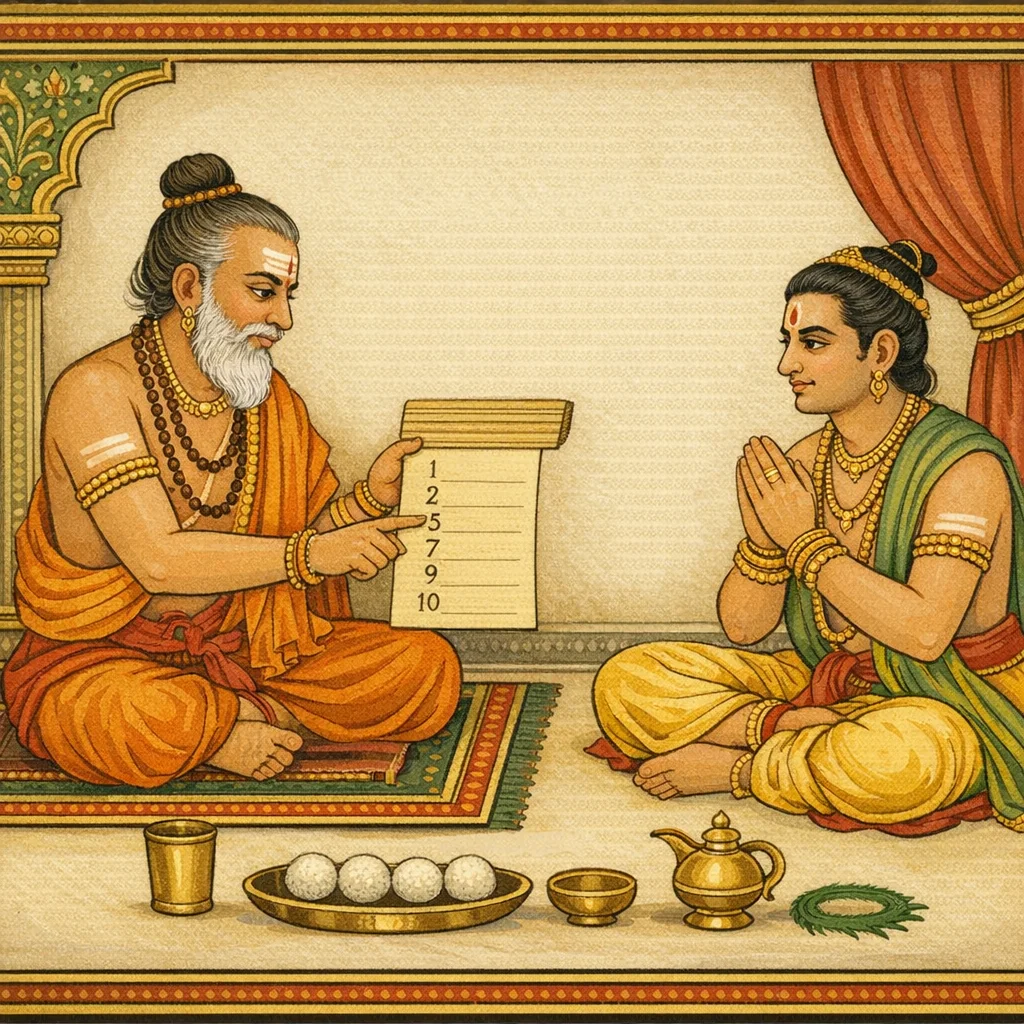
This chapter, cast as a dialogue, gives a technical exposition of the ekoddiṣṭa-vidhi—śrāddha performed for a specific deceased—set in relation to the familiar pārvaṇa model. Asked by Anarta, Bhartṛyajña lays out the timing and sequence of death-connected śrāddhas: rites before bone-collection (sañcayana), performance at the place of death, an ekoddiṣṭa on the route at the resting spot, and a third at the sañcayana site, along with a list of nine śrāddhas assigned to particular days (including the 1st, 2nd, 5th, 7th, 9th, and 10th). The chapter then prescribes procedural simplicity for ekoddiṣṭa: deva-hīna (without offerings to devas), a single argha and a single pavitra, and the omission of āvāhana. It warns that mantra-usage must be grammatically correct—proper case-endings (vibhaktis) for “pitṛ/pitā,” gotra, and name-forms (śarman)—since mistakes make the śrāddha ineffective for the pitṛs. Turning to sapīṇḍīkaraṇa, it states that it is normally done after a year, though it may be earlier under certain conditions. Offerings meant for the preta are redistributed, with specific mantras, into three pitṛ vessels and three pitṛ piṇḍas, and a fourth recipient is rejected in this account. After sapīṇḍīkaraṇa, ekoddiṣṭa is prohibited (with noted exceptions/avoidances), and separating a sapīṇḍīkṛta preta into a distinct piṇḍa is treated as a grave ritual fault. Finally, it clarifies cases where the father is deceased but the grandfather lives, stressing correct naming order and prescribing a pārvaṇa śrāddha on the grandfather’s death-day, while reiterating that until sapīṇḍatā is established certain śrāddha acts are not to be performed in the same manner.
Shlokas
Verse 1
आनर्त उवाच । एकोद्दिष्टविधिं ब्रूहि मम त्वं वदतां वर । पार्वणं तु यथा प्रोक्तं विस्तरेण महामते
Ānarta said: O best among speakers, tell me the procedure for the Ekoddiṣṭa Śrāddha (intended for a single departed one), just as you have explained the Pārvaṇa rite in detail, O great-minded one.
Verse 2
भर्तृयज्ञ उवाच । त्रीणि संचयनादर्वाक्तानि त्वं शृणु सांप्रतम् । यस्मिन्स्थाने भवेन्मृत्युस्तत्र श्राद्धं तु कारयेत्
Bhartṛyajña said: Now hear from me of three Śrāddhas to be performed before saṃcayana (the gathering of the bones). In the very place where death occurs, there one should have the Śrāddha performed.
Verse 3
एकोद्दिष्टं ततो मार्गे विश्रामो यत्र कारितः । ततः संचयनस्थाने तृतीयं श्राद्धमिष्यते
Next, the Ekoddiṣṭa Śrāddha is to be done along the route, at the place where a resting halt is made. Then, at the place of saṃcayana (collecting the remains), a third Śrāddha is prescribed.
Verse 4
प्रथमेऽह्नि द्वितीयेह्नि पञ्चमे सप्तमे तथा । नवमे दशमे चैव नव श्राद्धानि तानि च
On the first day, the second day, the fifth, the seventh, the ninth, and also the tenth—these are counted among the nine Śrāddhas (to be observed).
Verse 5
वैतरिण्याश्च संप्राप्तौ प्रेतस्तृप्तिमवाप्नुयात् । एकोद्दिष्टं दैवहीनमेकार्घैकपवित्रकम्
Upon reaching the Vaitaraṇī, the departed spirit attains satisfaction. The Ekoddiṣṭa (Śrāddha) is performed without offerings to the gods, with a single arghya and a single pavitra (kuśa ring).
Verse 6
आवाहनपरित्यक्तं कार्यं पार्थिवसत्तम । तृप्तिप्रश्नस्तथा कार्यः स्वदितं च सकृत्ततः
O best of kings, it should be performed without the formal invocation (āvāhana). One should also ask about satisfaction (tṛpti); and then, after that, tasting the offering/food should be done only once.
Verse 7
अभिरम्यतामिति मन्त्रेण ब्राह्मणस्य विसर्जनम् । अच्छिन्नाग्रमभिन्नाग्रं कुर्याद्दर्भतृणद्वयम् । पवित्रं तद्विजानीयादेकोद्दिष्टे विधीयते
With the mantra “abhiramyatām” one should respectfully dismiss the Brāhmaṇa. One should prepare a pair of darbha (kuśa) blades whose tips are neither cut nor split; know that as the ‘pavitra’ (purificatory grass-ring). This is prescribed for the ekoddiṣṭa rite.
Verse 8
सर्वत्रैव पितः प्रोक्तं पिता तर्पणकर्मणि । पित्र्ये संकल्पकाले च पितुरक्षय्यदापने
Everywhere the form ‘pitaḥ’ is stated; in the act of tarpaṇa one should use ‘pitā’. Likewise, at the time of the ancestral saṅkalpa and in the offering of an akṣayya-dāna, the correct form is ‘pituḥ’.
Verse 9
गोत्रं स्वरांतं सर्वत्र गोत्रे तर्पणकर्मणि । गोत्राय कल्पनविधौ गोत्रस्याक्षय्यदापने
The gotra-name, ending with its proper sound and accent, should be stated everywhere. In the tarpaṇa rite one should use ‘gotre’; in the procedure of arrangement/assignment one should use ‘gotrāya’; and in the act of akṣayya-dāna one should use ‘gotrasya’.
Verse 10
शर्मन्नर्घ्यादिकर्तव्ये शर्मा तर्पणकर्मणि । शर्मणे सस्यदाने च शर्मणोऽक्षय्यके विधौ
When offering arghya and the rites connected with it, one should employ the name-form “śarman”. In the tarpaṇa rite, use “śarmā”. In the gift of grain (sasya-dāna), use “śarmaṇe”; and in the procedure for the akṣayya (imperishable) gift, use “śarmaṇaḥ/śarmaṇo”.
Verse 11
मातर्मात्रे तथा मातुरासने कल्पनेऽक्षये । गोत्रे गोत्रायै गोत्रायाः प्रथमाद्या विभक्तयः
Likewise, for the mother one should utter “mātar”, “mātre”, and “mātuḥ” in the contexts of seating, arrangement, and the akṣayya offering. For the gotra, the forms “gotre”, “gotrāyai”, and “gotrāyāḥ” are used—these are the case-endings beginning with the first case (nominative) and onward, as required.
Verse 12
देवि देव्यै तथा देव्या एवं मातुश्च कीर्तयेत् । प्रथमा च चतुर्थी च षष्ठी स्याच्छ्राद्धसिद्धये
In the same way one should utter “devi”, “devyai”, and “devyā”—and likewise for the mother. For the śrāddha to be successfully accomplished, the first, fourth, and sixth case-forms are to be used.
Verse 13
विभक्तिरहितं श्राद्धं क्रियते वा विपर्ययात् । अकृतं तद्विजानीयात्पितृणां नोपतिष्ठति
If a śrāddha is performed without the proper case-endings—or if, through mistake, they are used in reverse—know that rite to be as though not done; it does not duly reach or satisfy the Pitṛs.
Verse 14
तस्मात्सर्वप्रयत्नेन ब्राह्मणेन विजानता । विभक्तिभिर्यथोक्ताभिः श्राद्धे कार्यो विधिः सदा
Therefore, a knowledgeable Brāhmaṇa should, with every effort, always perform the śrāddha procedure using the case-forms exactly as prescribed.
Verse 15
ततः सपिंडीकरणं वत्सरा दूर्ध्वतः स्थितम् । वृद्धिर्वाऽगामिनी चेत्स्यात्तदार्वागपि कारयेत्
Thereafter, the sapiṇḍīkaraṇa (the rite that joins the departed to the ancestral piṇḍa-line) is prescribed to be performed after one year. Yet if another death is impending in the family line, it may be performed even earlier.
Verse 16
पार्वणोक्तविधानेन त्रिदैवत्यमदैविकम् । प्रेतमुद्दिश्य कर्तव्यमेको द्दिष्टं च पार्थिव
According to the procedure taught for the pārvana śrāddha, the offering to the three deities should be made without invoking any other deities. Addressing the departed as a preta, one should perform the ekoddiṣṭa rite, O king.
Verse 17
एकेनैव तु पाकेन मम चैतन्मतं स्मृतम् । अर्घपात्रं समादाय यत्प्रेतार्थं प्रकल्पितम्
In the tradition I uphold, only a single cooking is to be used. Taking up the arghya-vessel arranged for the preta, one should proceed accordingly for that funerary purpose.
Verse 18
पितृपात्रेषु त्रिष्वेव त्रिधा तच्च परिक्षिपेत् । एवं पिंडं त्रिधा कृत्वा पितृपिंडेषु च त्रिषु
Into the three vessels meant for the Pitṛs (ancestral Fathers), one should distribute that offering in three portions. Likewise, dividing the piṇḍa into three parts, one should place them among the three ancestral piṇḍas.
Verse 19
ये समानेति मन्त्राभ्यां न स्यात्प्रेतस्ततः परम् । अवनेजनं ततः कृत्वा पितृपूर्वं यथाक्रमम्
By the two mantras beginning with “ye samāne…”, thereafter he is no longer regarded as a preta. Then, having performed the washing and cleansing rite, one should proceed in due order, beginning first with the Pitṛs (ancestral Fathers).
Verse 20
गन्धधूपादिकं सर्वं पुनरेव प्रदापयेत् । पितृपूर्वं समुच्चार्य वर्जयेच्च चतुर्थकम्
All offerings—such as fragrance and incense—should be presented once again. Reciting in due order beginning with the Pitṛs (ancestral Fathers), one should omit the fourth portion.
Verse 21
केचिच्चतुर्थं कुर्वंति प्रेतं च स्वपितुस्ततः । पितुः पूर्वं भवेच्छ्राद्धं परं नैतन्मतं मम
Some make a fourth share and then regard their own father as a preta (restless departed spirit). In that arrangement the śrāddha for the father would come first, but that is not my view.
Verse 22
सपिण्डीकरणादूर्ध्वमेकोद्दिष्टं न कारयेत् । क्षयाहं च परित्यज्य शस्त्राहत चतुर्दशीम्
After the rite of sapiṇḍīkaraṇa, one should not have an ekoddiṣṭa performed. Moreover, setting aside the kṣayāha (inauspicious day of loss) and the fourteenth day connected with death by weapons, one should choose proper times for the ancestral rite.
Verse 23
यः सपिण्डीकृतं प्रेतं पृथक्पिण्डे नियोजयेत् । अकृतं तद्विजानीयात्पितृहा चोपजायते
Whoever assigns a departed one—already made a sapiṇḍa—to a separate piṇḍa should know that the rite is as though not done at all; and he incurs the grave fault of betraying the Pitṛs (ancestral Fathers).
Verse 24
पिता यस्य तु निर्वृत्तो जीवते च पितामहः । पितुः स नाम संकीर्त्य कीर्तयेत्प्रपितामहम्
If a man’s father has passed away while the grandfather is still living, then—after uttering the father’s name—he should pronounce the name of the great-grandfather.
Verse 25
पितामहस्तु प्रत्यक्षं भुक्त्वा गृह्णाति पिण्डकम् । पितामहक्षयाहे च पार्वणं श्राद्धमिष्यते
When the grandfather is present, he partakes directly and receives the piṇḍa. And on the kṣayāha day pertaining to the grandfather, the pārvana śrāddha is enjoined.
Verse 26
जनकं स्वं परित्यज्य कथंचिन्नास्य दीयते । तस्याकृतेन श्राद्धेन न स्वल्पं पितृतो भयम्
If, neglecting one’s own father, one somehow offers him nothing, then by that śrāddha left undone, the fear—of reproach and its consequence—from the Pitṛs, the ancestral Fathers, is not small.
Verse 27
अमावास्यासु सर्वासु मृते पितरि पार्वणम् । नभस्यापरपक्षस्य मध्ये चैतदुदाहृतम्
On every amāvāsyā, the new-moon day, when one’s father has died, the Pārvaṇa śrāddha should be performed. This is also enjoined for the middle of the dark fortnight of the month Nabhas (Bhādrapada).
Verse 28
यावत्सपिंडता नैव न तावच्छ्राद्धमाचरेत्
So long as sapiṇḍatā—the ritual incorporation into the ancestral piṇḍa line—has not yet taken place, one should not perform the śrāddha.
Verse 29
जनके मृत्युमापन्ने श्राद्धपक्षे समागते । पितामहादेः कर्तव्यं श्राद्धं यन्नैकपिंडता
When the father has met with death and the śrāddha season (śrāddha-pakṣa) arrives, śrāddha should be performed for the grandfather and other ancestors, because the single shared piṇḍa-status (naika-piṇḍatā) has not yet been established.
Verse 225
इति श्रीस्कांदे महापुराण एकाशीतिसाहस्र्यां संहितायां षष्ठे नागरखण्डे हाटकेश्वरक्षेत्रमाहात्म्ये सपिंडीकरणविधिवर्णनंनाम पञ्चविंशत्युत्तरद्विशततमोऽध्यायः
Thus ends Chapter 225, “The Description of the Procedure of Sapiṇḍīkaraṇa,” in the Hāṭakeśvara-kṣetra-māhātmya, within the sixth division, the Nāgara Khaṇḍa, of the Śrī Skanda Mahāpurāṇa, in the collection of eighty-one thousand verses.