Adhyaya 222
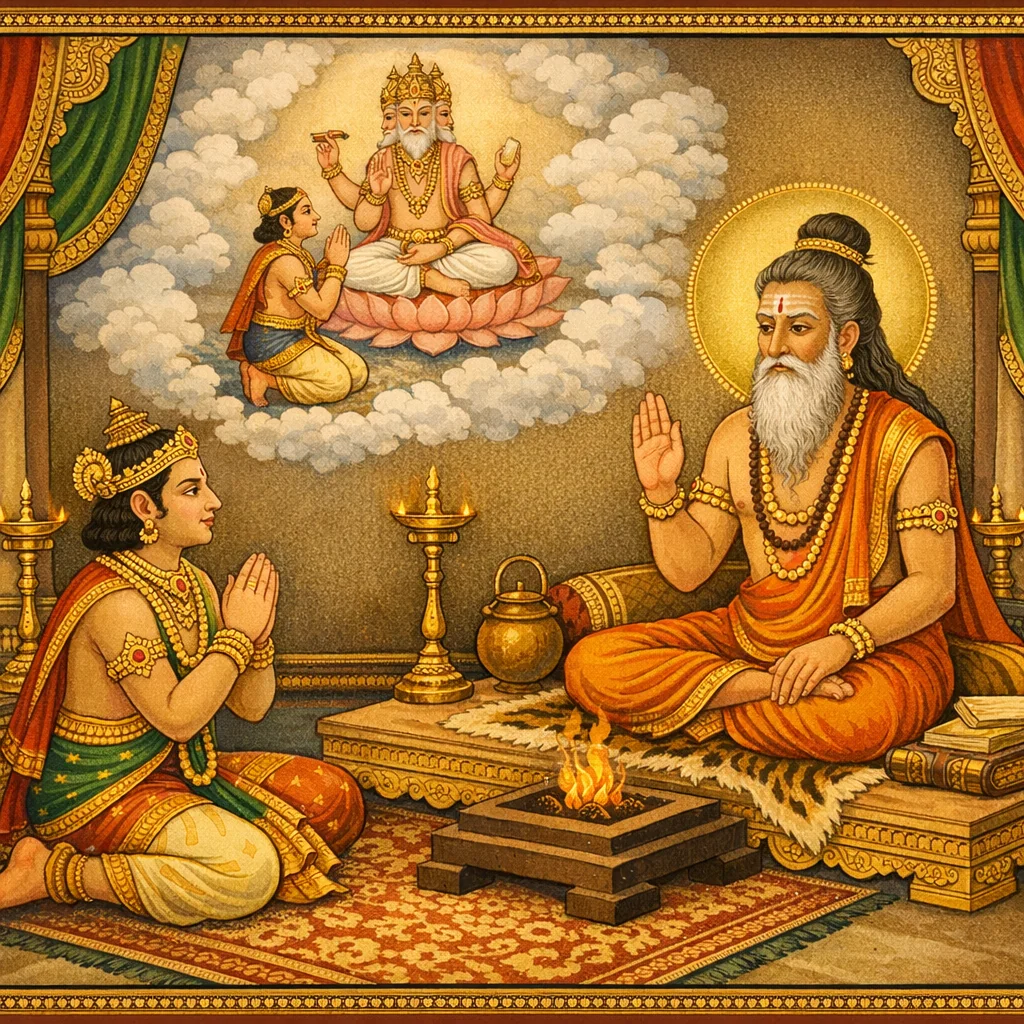
This chapter offers a technical-theological explanation for why śrāddha for those who died by weapons, accidents, calamities, poison, fire, water, animal attack, hanging, and other forms of apamṛtyu (violent/untimely death) is prescribed specifically on the fourteenth lunar day, caturdaśī, during the preta-focused period. King Ānarta asks why caturdaśī is singled out, why ekoddiṣṭa-śrāddha is advised, and why pārvana rites are restricted here. Bhartṛyajña replies with a precedent from the Bṛhatkalpa: Hiraṇyākṣa seeks a boon from Brahmā so that pretas, bhūtas, rākṣasas, and related beings gain a year’s satisfaction from offerings made on a single day in the preta period, in the month when the sun is in Kanyā (Virgo). Brahmā grants that offerings on caturdaśī of that month bring assured satisfaction to such beings, including those slain violently or fallen in battle. The chapter then gives its doctrinal rationale: sudden death and battlefield death can generate preta-status through mental disturbance (fear, remorse, confusion) even in the brave, hence a special day is assigned for their appeasement. On that day the rite should be ekoddiṣṭa (for one departed), not pārvana, since higher ancestors do not “accept” then; misdirected offerings are said to be taken by non-human beings in accordance with the boon. Finally, it states a community norm: śrāddha should be performed by appropriate local ritual agents (Nāgara by Nāgara), otherwise it is deemed ineffective.
Shlokas
Verse 1
भर्तृयज्ञ उवाच । येषां च शस्त्रमृत्युः स्यादपमृत्युरथापि वा । उपसर्गान्मृतानां च विषमृत्युमुपेयुषाम्
Bhartṛyajña said: “For those who die by weapons, or by untimely death; for those who perish through calamities; and for those who meet death by poison—”
Verse 2
वह्निना च प्रदग्धानां जलमृत्युमुपेयुषाम् । सर्पव्याघ्रहतानां च शृंगैरुद्बन्धनैरपि
“And for those burned by fire; for those who die in water; for those killed by serpents or tigers; and even for those who die by goring or by hanging—”
Verse 3
श्राद्धं तेषां प्रकर्तव्यं चतुर्दश्यां नराधिप । तेषां तस्मिन्कृते तृप्तिस्ततस्तत्पक्षजा भवेत्
“O king, for those departed ones, the śrāddha should be performed on the fourteenth lunar day, caturdaśī. When it is done on that day, their tṛpti—satisfaction and repose—arises accordingly, in harmony with that very fortnight’s rite.”
Verse 4
आनर्त उवाच । कस्माच्छस्त्रहतानां च प्रोक्ता श्राद्धे चतुर्दशी । नान्येषां दिवसे तत्र संशयोऽयं वदस्व मे
Ānarta said: “Why is the fourteenth lunar day prescribed for the śrāddha of those slain by weapons? And why not for others on that day? Tell me—this doubt has arisen.”
Verse 5
एकोद्दिष्टं न शंसंति सपिण्डीकरणं परम् । कस्मात्तत्र प्रकर्तव्यं वदैतन्मम विस्त रात्
“(Some) do not commend the ekoddiṣṭa offering, and (others speak of) the higher rite of sapiṇḍīkaraṇa. Why, then, should it be performed there? Explain this to me in detail.”
Verse 6
कस्मान्न पार्वणं तत्र क्रियते दिवसे स्थिते । प्रेतपक्षे विशेषेण कृते श्राद्धेऽखिलेऽपि च
Why is the pārvana śrāddha not performed there, even though that day has arrived? Especially when, throughout the whole Pretapakṣa, śrāddha rites are being performed everywhere.
Verse 7
भर्तृयज्ञौवाच । बृहत्कल्पे पुरा राजन्हिरण्याक्षो महासुरः । बभूव बलवाञ्छूरः सर्वदेवभयंकरः
Bhartṛyajña said: In ancient times, O king, in the great aeon called Bṛhatkalpa, there was the mighty asura Hiraṇyākṣa—powerful, heroic, and a terror to all the gods.
Verse 8
ब्रह्मा प्रतोषितस्तेन विधाय विविधं तपः । कृष्णपक्षे विशेषेण नभस्ये मासि संस्थिते
By performing various austerities (tapas), he pleased Brahmā—especially during the dark fortnight (kṛṣṇapakṣa), in the month of Nabhasya.
Verse 9
ब्रह्मोवाच । परितुष्टोस्मि ते वत्स प्रार्थयस्व यथेप्सितम् । अदेयमपि दास्यामि तस्मात्प्रार्थय मा चिरम्
Brahmā said: I am pleased with you, dear child. Ask for whatever you desire. Even what should not be granted, I shall give; therefore ask without delay.
Verse 10
हिरण्याक्ष उवाच । भूताः प्रेताः पिशाचाश्च राक्षसा दैत्यदानवाः । बुभुक्षिताः प्रयाचंते मां नित्यं पद्मसंभव
Hiraṇyākṣa said: O Lotus-born (Padma-saṃbhava, Brahmā), beings—bhūtas, pretas, piśācas, rākṣasas, daityas, and dānavas—ever hungry, continually beg from me each day.
Verse 11
प्रेतपक्षे कृते श्राद्धे कन्यासंस्थे दिवाकरे । एकस्मिन्नहनि प्रायस्तृप्तिः स्याद्वर्षसंभवा
When Śrāddha is performed in Pretapakṣa, with the Sun abiding in Kanyā (Virgo), then in a single day there arises, as it were, a satisfaction that endures for a year.
Verse 12
तत्त्वमद्य दिनं देहि तेभ्यः कमलसम्भव । तेन तृप्तिं गताः सर्वे स्थास्यंत्यब्दं पितामह
Therefore, O Lotus-born Brahmā, grant that today be a special day for them. By that, all shall attain satisfaction and remain so for a year, O Grandfather.
Verse 13
श्रीब्रह्मोवाच । यः कश्चिन्मानवः श्राद्धं स्वपितृभ्यः प्रदास्यति । प्रेतपक्षे चतुर्दश्यां नभस्ये मा सि संस्थिते
Śrī Brahmā said: Any human being who offers Śrāddha to his own ancestors on the fourteenth lunar day, Caturdaśī, of the dark fortnight called Pretapakṣa, occurring in the month of Nabhas (Bhādrapada), —
Verse 14
प्रेतानां राक्षसानां च भूतादीनां भविष्यति । मम वाक्यादसंदिग्धं ये चान्ये कीर्तितास्त्वया
—it will indeed take effect for pretas, for rākṣasas, and for bhūtas and the like. By my word there is no doubt; and so too for any others that you have mentioned.
Verse 15
दुर्मृत्युना मृता ये च संग्रामेषु हताश्च ये । एकोद्दिष्टे सुतैर्दत्ते तेषां तृप्तिर्भविष्यति
Those who died by a grievous or untimely death, and those who were slain in battles—when an Ekoddiṣṭa Śrāddha is offered by their sons, satisfaction and appeasement will arise for them.
Verse 16
एवमुक्त्वा ततो ब्रह्मा ततश्चादर्शनं गतः । हिरण्याक्षोऽपि संहृष्टः स्वमेव भवनं ययौ
Having spoken thus, Brahmā then vanished from sight. Hiraṇyākṣa too, filled with joy, returned to his own abode.
Verse 17
यच्च शस्त्रहतानां च तस्मिन्नहनि दीयते । एकोद्दिष्टं नरैः श्राद्धं तत्ते वक्ष्यामि कारणम्
And as for the Ekoddiṣṭa Śrāddha that people offer on that very day for those slain by weapons—its reason I shall explain to you.
Verse 18
संख्ये शस्त्रहता ये च निर्विकल्पेन चेतसा । युध्यमाना न ते मर्त्ये जायते मनुजाः पुनः
Those who, while fighting, are slain in battle with an unwavering mind—such persons are not born again among mortals in this world.
Verse 19
पराङ्मुखाश्च हन्यंते पलायनपरायणाः । ते भवंति नराः प्रेता एतदाह पितामहः
Those who turn their backs and are slain—intent only on flight—those men become pretas. This is what Pitāmaha (Brahmā) has declared.
Verse 20
सम्मुखा अपि ये दैन्यं हन्यमाना वदंति च । पश्चात्तापं च वा कुर्युः प्रहारैर्जर्जरीकृताः
Even those who face the enemy—if, while being struck down, they utter words of despair, or if they later fall into remorse, their bodies shattered by blows—
Verse 21
तेऽपि प्रेता भवन्तीह मनुः स्वायंभुवोऽब्रवीत् । कदाचिच्चित्तचलनं शूराणामपि जायते
They too become pretas here—so declared Svāyambhuva Manu. For sometimes even the brave experience a wavering of the mind.
Verse 22
तेषां भ्रांत्या दिने तत्र श्राद्धं देयं निजैः सुतैः । अपमृत्युमृतानां च सर्वेषामपि देहिनाम्
Therefore, because of that mental bewilderment, on that day and at that observance, Śrāddha should be offered by their own sons—indeed, for those who died an unnatural death, and for all embodied beings who have departed.
Verse 23
प्रेतत्वं जायते यस्मात्तस्माच्छ्राद्धस्य तद्दिनम् । श्राद्धार्हं पार्थिवश्रेष्ठ विशेषेण प्रकीर्तितम्
Because on that day the departed attains the state of a preta, that very day is declared—O best of kings—to be especially fit for the śrāddha rites.
Verse 24
एकोद्दिष्टं प्रकर्तव्यं यस्मात्तत्र दिने नरैः । सपिंडीकरणादूर्ध्वं तत्ते वक्ष्याभि कारणम्
Therefore, on that day men should perform the ekoddiṣṭa śrāddha. As for what is to be done after the sapiṇḍīkaraṇa, I shall explain the reason to you.
Verse 25
यदि प्रेतत्वमापन्नः कदाचित्स्वपिता भवेत् । तृप्त्यर्थं तस्य कर्तव्यं श्राद्धं तत्र दिने नृप
If at any time one’s own father should have entered the preta-state, then—O king—on that day śrāddha must be performed for him, for the sake of his satisfaction.
Verse 26
पितामहाद्यास्तत्राह्नि श्राद्धं नार्हंति कुत्रचित् । अथ चेद्भ्रांतितो दद्याद्धियते राक्षसैस्तु तत्
On that day, the grandfather and the other ancestors are nowhere entitled to receive the śrāddha. And if, through delusion, one offers it, that offering is seized by the rākṣasas.
Verse 27
ब्रह्मणो वचनाद्राजन्भूतप्रेतैश्च दानवैः । तेनैकोद्दिष्टमेवात्र कर्तव्यं न तु पार्वणम्
By Brahmā’s ordinance, O king—and in view of the bhūtas, pretas, and dānavas—here one must perform only the ekoddiṣṭa rite, and not the pārvaṇa śrāddha.
Verse 28
पितृपक्षे चतुर्दश्यां कन्यासंस्थे दिवाकरे । पितामहो न गृह्णाति पित्रा तेन समं तदा
In Pitṛpakṣa, on the fourteenth lunar day, when the Sun is placed in Virgo, the grandfather does not accept the offering, for then he stands on a par with that father.
Verse 29
न च तस्य पिता राजंस्तथैव प्रपितामहः
And likewise, O king, neither his father nor his great-grandfather accepts it then.
Verse 30
एतस्मात्कारणाद्राजन्पार्वणं न विधीयते । तस्मिन्नहनि संप्राप्ते व्यर्थं श्राद्धं भवेद्यतः
For this reason, O king, the pārvaṇa śrāddha is not enjoined; for when that day arrives, the śrāddha becomes fruitless.
Verse 31
नान्यस्थानोद्भवैर्विप्रैः श्राद्धकर्मव्रतानि च । नागरो नागरैः कुर्यादन्यथा तद्वृथा भवेत्
Śrāddha rites and vowed observances should not be performed by brāhmaṇas born in other places. A Nāgara should have them done by Nāgara brāhmaṇas; otherwise it becomes in vain.
Verse 32
अन्यस्थानोद्भवैर्विप्रैर्यच्छ्राद्धं क्रियते ध्रुवम् । संपूर्णं व्यर्थतां याति नागराणां क्रियापरैः
Indeed, whatever śrāddha is performed by brāhmaṇas born elsewhere—even if completed in full—surely becomes fruitless for Nāgaras who are devoted to correct performance.
Verse 33
अथाचारपरिभ्रष्टाः श्राद्धार्हा एव नागराः । वलीवर्दसमानोऽपि ज्ञातीयो यदि लभ्यते । किमन्यैर्बहुभिर्विप्रैर्वेदवेदांगपारगैः
Even if the Nāgaras have fallen away from proper conduct, they are still to be regarded as fit recipients in the śrāddha. If a kinsman can be found—even one deemed as lowly as a draught-ox—then what need is there of many other brāhmaṇas, even those who have mastered the Vedas and the Vedāṅgas?
Verse 222
इति श्रीस्कांदे महापुराण एकाशीतिसाहस्र्यां संहितायां षष्ठे नागरखण्डे हाटकेश्वरक्षेत्रमाहात्म्ये श्राद्ध कल्पे चतुर्दशीशस्त्रहतश्राद्धनिर्णयवर्णनंनाम द्वाविंशत्युत्तरद्विशततमोऽध्यायः
Thus, in the holy Skanda Mahāpurāṇa—within the eighty-one-thousand-verse compilation—ends the two-hundred-and-twenty-second chapter in the Sixth Book, the Nāgara Khaṇḍa, in the Māhātmya of the Hāṭakeśvara sacred region, in the Śrāddha-kalpa section, entitled “The Account of the Determination of the Śrāddha for Those Slain by Weapons on the Fourteenth Lunar Day.”