Adhyaya 221
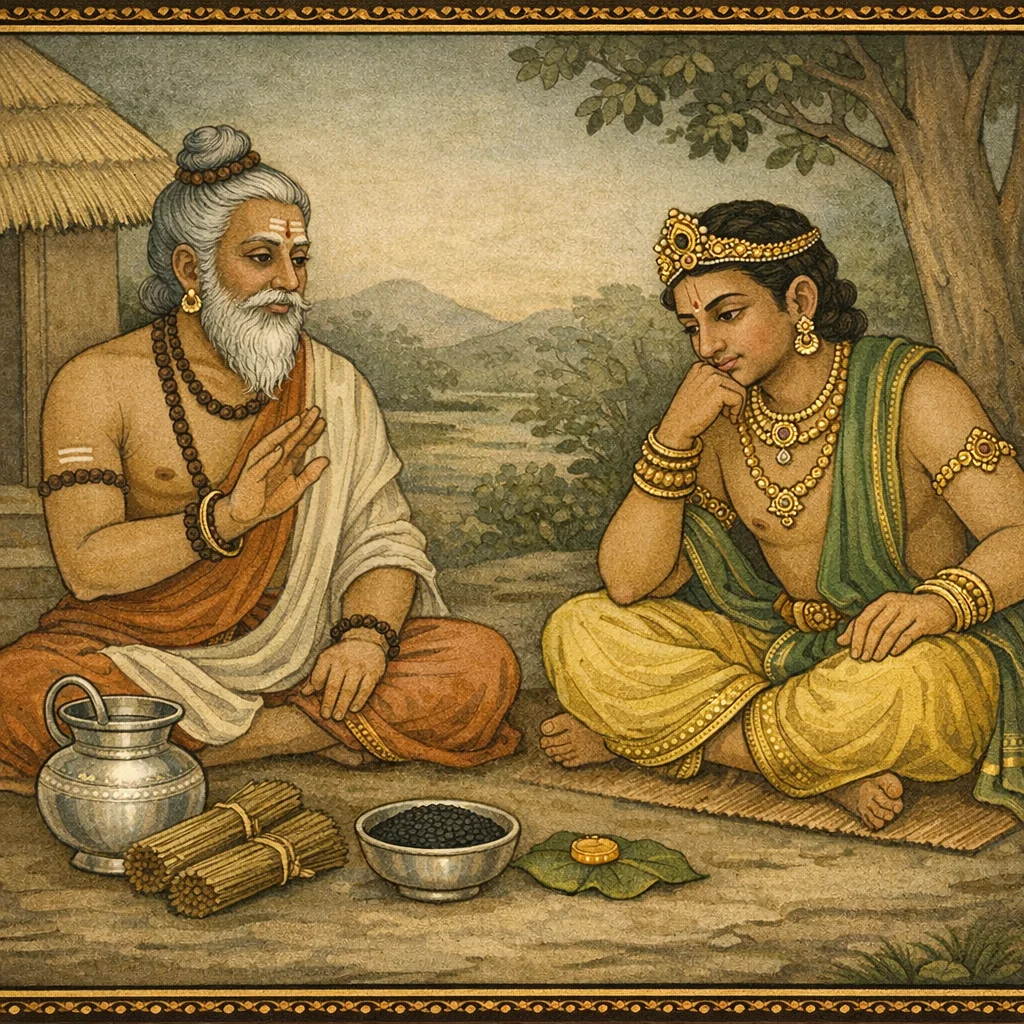
Adhyāya 221 offers a technical theological discussion on performing śrāddha and on substitute offerings, framed as dialogue with objections and replies. Bhartṛyajña teaches that on a certain calendrical occasion one should still make offerings even if a full śrāddha cannot be done, for the satisfaction of the Pitṛs and to avert the fear of a broken lineage (vaṃśa-ccheda-bhaya). He lists recommended items—payasa with ghee and honey, specified meats (notably khaḍga and vādhṛṇasa)—and then gives graded substitutes, ending with water mixed with sesame, darbha, and a small piece of gold. Ānarta raises a moral concern: why does meat, often censured in śāstric discourse, appear in śrāddha? Bhartṛyajña answers by cosmogonic precedent: at creation Brahmā appointed certain beings and items as bali-like offerings for the Pitṛs, authorizing their restricted ritual use and declaring that one who gives for ancestral ends incurs no sin. Asked about non-availability, Mārkaṇḍeya and Bhartṛyajña set out a hierarchy of permissible meats and the duration of pitṛ-tṛpti they yield, along with a wider catalog of śrāddhārha substances (sesame, honey, kālaśāka, darbha, silver vessels, ghee) and worthy recipients (including the dauhitra). The chapter concludes by praising the “akṣaya” merit of reciting or teaching these rules during śrāddha, presenting them as a guarded ancestral secret (guhya) of enduring fruit.
Shlokas
Verse 1
भर्तृयज्ञ उवाच । एतस्मात्कारणात्कश्चित्तस्मिन्नहनि पार्थिव । ददाति नैव च श्राद्धं पितॄनुद्दिश्य कर्हिचित् । वंशच्छेदभयाद्राजन्सत्यमेतन्मयोदितम्
Bhartṛyajña said: For this reason, O king, on that day no one gives offerings or performs Śrāddha with the Pitṛs in mind, fearing the severing of one’s lineage. O king, what I have spoken is true.
Verse 2
श्राद्धं विनापि दातव्यं तद्दिने मधुना सह । पायसं ब्राह्मणाग्र्येभ्यः सघृतं तृप्तिकारणात्
Even without performing a formal śrāddha, on that day one should still make an offering together with honey. One should give pāyasa (rice-milk pudding) with ghee to excellent brāhmaṇas, for it becomes a cause of satisfaction for the Pitṛs.
Verse 3
खड्गमांसं कालशाकं मांसं वाध्रीणसोद्भवम् । प्रदेयं ब्राह्मणेभ्यश्च तत्समंतादुदाहृतम्
Rhinoceros meat, the herb called kālaśāka, and meat obtained from the animal called vādhrīṇasa—these too are to be given to brāhmaṇas; thus it is declared here in full.
Verse 4
त्रिःपिबश्चेंद्रियक्षीणः सर्वयूथानुगस्तथा । एष वाध्रीणसः प्रोक्तः पितॄणां तृप्तिदः सदा
“Triḥpiba,” “one whose senses are weakened,” and “follower of every herd”—thus is the vādhrīṇasa described; it is said to ever bestow satisfaction upon the Pitṛs.
Verse 5
तस्याभावेऽपि दातव्यं क्षीरौदनमनुत्तमम् । तस्मिन्नहनि विप्रेभ्यः पितॄणां तुष्टये नृप
Even if that is unavailable, one should offer the excellent milk-rice (kṣīraudana). On that day, O king, it should be given to brāhmaṇas for the satisfaction of the Pitṛs.
Verse 6
तस्याभावेऽपि दातव्यं जलं तिलविमिश्रितम् । सदर्भं सहिरण्यं च हिरण्यशकलान्वितम्
Even if that too is unavailable, one should give water mixed with sesame—together with darbha grass and with gold, furnished with small pieces of gold.
Verse 7
यच्छ्रेयो जायते पुंसः पक्षश्राद्धेन पार्थिव । कृतेन तत्फलं कृत्स्नं तस्मिन्नहनि पार्थिव
Whatever welfare arises for a man from performing the fortnightly śrāddha, O king—by doing this observance on that day, the entire fruit of it is obtained, O king.
Verse 8
पितॄनुद्दिश्य चाऽज्येन मधुना पायसेन च । कालशाकेन मधुना खड्गमांसेन वा नृप
Directing the offering to the Pitṛs, O king, one may perform it with ghee, with honey, and with pāyasa; or with kālaśāka and honey, or with rhinoceros-meat.
Verse 9
श्राद्धं विनापि दत्तेन श्रुतिरेषा पुरातनी । तस्मात्सर्वप्रयत्नेन पित्र्यर्क्ष्ये समुपस्थिते । त्रयोदश्यां नभस्यस्य हस्तगे दिननायके
This is an ancient śruti-tradition: even when a formal śrāddha is absent, a gift that is given still bears religious force. Therefore, with every effort, when the Pitṛ-asterism has arrived—on the thirteenth day of the month Nabhasya, when the Sun is in Hasta—one should perform the prescribed giving.
Verse 10
दरिद्रेणापि दातव्यं हिरण्यशकलान्वितम् । तोयं तिलैर्युतं राजन्पितॄणां तुष्टिमिच्छता
Even a poor man should offer water mixed with sesame, furnished with small pieces of gold, if he seeks the satisfaction of the Pitṛs, O king.
Verse 11
आनर्त उवाच । मांसं विगर्हितं विप्र यतः शास्त्रे निगद्यते । तस्मात्तत्क्रियते केन श्राद्धं कीर्तय मेऽखिलम्
Ānarta said: “O brāhmaṇa, since meat is censured in the śāstras, by whom—and in what manner—is that meat-offering performed? Explain to me fully the rite of Śrāddha.”
Verse 12
स्वमांसं परमांसेन यो वर्धयति निर्दयः । स नूनं नरकं याति प्रोक्तमेतन्महर्षिभिः
He who, being merciless, fattens his own flesh by means of another’s flesh surely goes to hell; thus have the great sages declared.
Verse 13
त्वं च तस्य प्रभावं मे प्रजल्पसि द्विजो त्तम । विशेषाच्छ्राद्धकृत्ये च तदेवं मम संशयः
And you, O best of the twice-born, speak to me of its power—especially in the rite of Śrāddha. This, therefore, is my doubt.
Verse 14
भर्तृयज्ञ उवाच । सत्यमेतन्महाभाग मांसं सद्भिर्विगर्हितम् । श्राद्धे प्रयुज्यते यस्मात्तत्तेऽहं वच्मि कारणम्
Bhartṛyajña said: “It is true, O noble one—meat is censured by the righteous. Yet since it is employed in Śrāddha, I shall tell you the reason for that.”
Verse 15
यदा चारंभिता सृष्टिर्ब्रह्मणा लोककारिणा । संपूज्य च पितॄन्देवान्नांदीमुखपुरःसरान् । तदा खड्गः समुत्पन्नः पूर्वं वाध्रीणसश्च यः
When Brahmā, the maker of the worlds, first set creation in motion, and after duly worshipping the Pitṛs and the gods—led by the Nāndīmukhas—then there first arose the khaḍga (the rhinoceros) and also the vādhrīṇasa.
Verse 16
ततो ये पितरो दिव्या ये च मानुषसम्भवाः । जगृहुस्ते ततः सर्वे बलिभूतमिवात्मनः
Then the Pitṛs—both the divine and those born among humankind—each and all accepted them, as though they were offerings (bali) meant for themselves.
Verse 17
तानुवाच ततो ब्रह्मा एतौ तु पितरो मया । युष्मभ्यं कल्पितौ सम्यग्बलिभूतौ प्रगृह्यताम्
Then Brahmā said to them: “These two, O Pitṛs, have been properly appointed by me for you; having become offerings (bali), let them be accepted.”
Verse 18
एताभ्यां परमा प्रीतिर्युष्मभ्यं संभविष्यति । मम वाक्यादसंदिग्धं परमेतौ नरो भुवि
“From these two, supreme delight shall arise for you. By my word—without doubt—these two shall be foremost among creatures upon the earth.”
Verse 19
नैव संप्राप्स्यते पापं युष्मदर्थंहनन्नपि । तस्मात्सर्वप्रयत्नेन दातव्यं भूतिमिच्छता
“No sin will be incurred—even if one kills—for your sake. Therefore, one who seeks prosperity should, with every effort, give it as dāna (a sacred gift).”}]}
Verse 20
खड्गवाध्रीणसोद्भूतं मांसं श्राद्धे सुतृप्तिदम् । तौ चापि परमौ दिव्यौ स्वर्गं लोकं गमिष्यतः
Meat arising from the khaḍga (rhinoceros) and from the vādhrīṇasa, when employed in Śrāddha, bestows excellent satisfaction; and those two, being supremely divine, shall go to the heavenly world.
Verse 21
श्राद्धदस्य परं श्रेयो भविष्यति सुदुर्लभम् । पितॄणां चाक्षया तृप्तिर्भवेद्द्वादशवार्षिकी
For the one who gives in Śrāddha, there arises the highest, hard-to-attain blessedness; and the Pitṛs gain an imperishable satisfaction lasting for twelve years.
Verse 22
एतस्मात्कारणाच्छस्तं मांसमाभ्यां नराधिप । तस्मिन्नहनि नान्यत्र विनियोगोऽस्य कीर्तितः
For this very reason, O king, the use of meat from these two has been enjoined. And on that particular day, no other employment of it is prescribed—its application is declared only for that rite.
Verse 23
रोहिताश्व उवाच । अप्राप्तखड्गमांसस्य तथा वाध्रीणसस्य च । कथं श्राद्धं भवेद्विप्र पितॄणां तृप्तिका रकम्
Rohitāśva said: If one cannot obtain the meat of the khaḍga (rhinoceros) and likewise of the vādhrīṇasa, then how, O brāhmaṇa, can a Śrāddha be performed so as to bring satisfaction to the ancestors?
Verse 24
मार्कण्डेय उवाच । मधुना सह दातव्यं पायसं पितृतुष्टये । तेन वै वार्षिकी तृप्तिः पितॄणां चोपजायते
Mārkaṇḍeya said: Pāyasa (rice-milk) should be offered together with honey for the satisfaction of the ancestors. By that offering, indeed, the ancestors gain contentment for a full year.
Verse 25
आजं च पिशितं राजञ्छिशुमारसमुद्भवम् । मांसं प्रतुष्टये प्रोक्तं वत्सरं मासवर्जितम्
O king, goat-flesh too—and likewise meat arising from the śiśumāra—is declared to bestow special satisfaction for a year (with one month excluded).
Verse 26
तदभावे वराहस्य दशमासप्रतुष्टिदम् । मांसं प्रोक्तं महाराज पितॄणां नात्र संशयः
When that is unavailable, O great king, boar-meat is said to bestow satisfaction for ten months upon the Pitṛs; of this there is no doubt.
Verse 27
आरण्यमहिषोत्थेन तृप्तिः स्यान्नवमासिकी । रुरोश्चैवाष्टमासोत्था एणस्य सप्तमासिका
From the meat of the wild buffalo arises satisfaction for nine months; from ruru-deer, for eight months; and from eṇa-deer, for seven months.
Verse 28
शम्बरोर्मासषट्कं च शशकस्य तु पञ्चकम् । चत्वारः शल्लकस्योक्तास्त्रयो वा तैत्तिरस्य च
From śambara comes satisfaction for six months; from hare, for five. Four months are stated for śallaka, and three months for taittira as well.
Verse 29
मासद्वयं च मत्स्यस्य मासमेकं कपिञ्जले । नान्येषां योजयेन्मांसं पितृकार्ये कथंचन
Fish yields satisfaction for two months, and kapiñjala for one month. One should never employ the meat of other creatures in the ancestral rite in any manner.
Verse 30
एतेषामेव मांसानि पावनानि नृपोत्तम
O best of kings, only the meats of those just enumerated are held to be purifying.
Verse 31
आनर्त उवाच । कस्मादेते पवित्राः स्युर्येषां मांसं प्रचोदितम् । श्राद्धे च तन्ममाचक्ष्व यथावद्द्विजसत्तम
Ānarta said: Why are these—whose meat is enjoined—regarded as pure? Explain it to me properly in the rite of śrāddha, O best among the twice-born.
Verse 32
भर्तृयज्ञ उवाच । सृष्टिं प्रकुर्वता तेन पशवो लोककारिणा । खड्गवाध्रीणसादीनां पश्चात्सृष्टाः स्वयंभुवा
Bhartṛyajña said: When the Self-born Lord, benefactor of the worlds, set about creation, the animals meant for yajña were brought forth—after creatures such as the rhinoceros, the tiger, and the like had been created.
Verse 33
एकादशप्रमाणेन ततश्चान्ये नृपोत्तम । अजश्च प्रथमं सृष्टः स तथा मेध्यतां गतः
Then, O best of kings, others were created according to the measure of eleven; and the goat was created first and likewise came to be regarded as medhya, fit for sacrificial purity.
Verse 34
तथैते प्रथमं सृष्टाः पशवोऽत्र नराधिप । सस्यानि सृजता तेन तिलाः पूर्वं च निर्मिताः
So too, O king, these animals were created here in the beginning. And when he created the grains, sesame seeds (tila) were fashioned first of all.
Verse 35
श्राद्धार्थं व्रीहयः सृष्टा वन्येषु च प्रियंगवः । गोधूमाश्च यवाश्चैव माषा मुद्राश्च वै नृप
For the sake of the Śrāddha rite, rice was brought forth; and among the grains of the wild, priyaṅgu as well. Also wheat and barley, black gram (māṣa) and mudga-beans, O king.
Verse 36
नीवाराश्चापि श्यामाकाः प्रवक्ष्यामि यथाक्रमम् । तृप्तिं मांसेन वाञ्छंति मांसं मांसेन वर्जितम्
Nīvāra and śyāmāka grains too—I shall set them forth in due order. They seek satisfaction through “māṃsa”; yet “māṃsa” is that which is free from “māṃsa” (harm and killing).
Verse 37
पुष्पजात्यो यदा सृष्टास्तदा प्राक्छतपत्रिका । सृष्टा तेन च मुख्या सा श्राद्धकर्मणि सर्वदा
When the many kinds of flowers were created, first the śatapatrikā was brought forth. By Him it was ever appointed as the foremost for the rites of Śrāddha.
Verse 38
धातूनि सृजता तेन रूप्यं सृष्टं स्वयंभुवा । तेन तद्विहितं श्राद्धे दक्षिणायां प्रतृप्तये
When He created the metals, silver was brought forth by the Self-born (Svayambhū). Therefore, in Śrāddha it was ordained as dakṣiṇā, for complete satisfaction.
Verse 39
राजतेषु च पात्रेषु यद्द्विजेभ्यः प्रदीयते । पितृभ्यस्तस्य नैवाऽन्तो युगान्तेऽपि प्रजायते
Whatever is given to the twice-born (dvija) in vessels of silver—of that offering made unto the Pitṛs there is no end, not even at the close of an age (yuga).
Verse 40
अभावे रूप्यपात्राणां नामापि परिकीर्तयेत् । तुष्यंति पितरो राजन्कीर्तनादपि वै यतः
If silver vessels are unavailable, one should at least utter their name. For, O king, the Pitṛs (ancestors) are pleased even by such remembrance and recitation.
Verse 41
रसांश्च सृजता तेन मधु सृष्टं स्वयंभुवा । तेन तच्छस्यते श्राद्धे पितॄणां तुष्टिदायकम्
When the Self-born (Svayambhū) created the essences (rasas), honey was created as well. Therefore honey is praised in śrāddha, for it bestows satisfaction upon the Pitṛs (ancestors).
Verse 42
यच्छ्राद्धं मधुना हीनं तद्रसैः सकलैरपि । मिष्टान्नैरपि संयुक्तं तत्पितॄणां न तृप्तये
A śrāddha offered without honey—even if furnished with every kind of flavor and accompanied by sweet foods—does not become a means of satisfaction for the Pitṛs (ancestral spirits).
Verse 43
अणुमात्रमपि श्राद्धे यदि न स्याद्धि माक्षिकम् । नामापि कीर्तयेत्तस्य पितॄणां तुष्टये यतः
If, in a śrāddha, there is not even an atom’s measure of bee-honey, one should at least utter its very name—because it is held to be a cause of the Pitṛs’ satisfaction.
Verse 44
शाकानि सृजता तेन ब्रह्मणा परमेष्ठिनौ । कालशाकं पुरः सृष्टं तेन तत्तृप्तिदायकम्
When Brahmā, the Supreme Lord (Parameṣṭhin), created vegetables, he first created kālaśāka; therefore it is regarded as a giver of satisfaction (in the śrāddha context).
Verse 45
कालं हि सृजता तेन कुतपः प्राग्विनिर्मितः । तस्मात्कुतप काले च श्राद्धं कार्यं विजानता । य इच्छेच्छाश्वतीं तृप्तिं पितॄणामात्मनः सुखम्
Indeed, when he created Time, the kutapa—the auspicious period—was fashioned beforehand. Therefore, one who understands should perform śrāddha during the kutapa time, if he desires enduring satisfaction for the Pitṛs and happiness for himself.
Verse 46
वीरुधः सृजता तेन विधिना नृपसत्तम । दर्भास्तु प्रथमं सृष्टाः श्राद्धार्हास्तेन ते स्मृताः
O best of kings, when that Ordainer created plants according to rule, darbha grass was created first; therefore it is remembered as especially fit for śrāddha.
Verse 47
श्राद्धार्हान्ब्राह्मणांस्तेन सृजता पद्मयोनिना । दौहित्राः प्रथमं सृष्टाः श्राद्धार्हास्तेन ते स्मृताः
When the Lotus-born (Brahmā) created brāhmaṇas fit for śrāddha, he created dauhitras (daughter’s sons) first; therefore they are remembered as particularly eligible for śrāddha.
Verse 48
अपि शौचपरित्यक्तं हीनांगाधिकमेव वा । दौहित्रं योजयेच्छ्राद्धे पितॄणां परितुष्टये
Even if a dauhitra lacks ritual cleanliness, or is deficient or excessive in limbs, one should still include the daughter’s son in the śrāddha—for the full satisfaction of the Pitṛs.
Verse 49
पशून्विसृजता तेन पूर्वं गावो विनिर्मिताः । तेन तासां पयः शस्तं श्राद्धे सर्पिर्विशेषतः
When he created animals, cows were fashioned first. Therefore, their milk is praised for use in śrāddha—especially ghee.
Verse 50
तस्माच्छ्राद्धे घृतं शस्तं प्रदत्तं पितृतुष्टये
Therefore, in the Śrāddha rite, the offering of ghee (ghṛta) is especially commendable, for it brings satisfaction to the Pitṛs (ancestral spirits).
Verse 51
प्रजाश्च सृजता तेन पूर्वं दृष्टा द्विजोत्तमाः । तस्मात्प्रशस्तास्ते श्राद्धे पितृतृप्तिकराः सदा
When he brought forth living beings, the dvijottamas—the foremost among the twice-born—were beheld first. Therefore, in Śrāddha they are praised, for they ever bring satisfaction to the Pitṛs.
Verse 52
देवांश्च सृजता तेन विश्वेदेवाः कृताः पुरः । तेन ते प्रथमं पूज्याः प्रवृत्ते श्राद्धकर्मणि
When he set about creating the gods, the Viśvedevās were fashioned first. Therefore, when the Śrāddha rite is undertaken, they are to be worshipped before all others.
Verse 53
ते रक्षंति ततः श्राद्धं यथावत्परितर्पिताः । छिद्राणि नाशयंति स्म श्राद्धे पूर्वं प्रपूजिताः
When duly satisfied with offerings, they then protect the Śrāddha. Worshipped first, they destroy the flaws and omissions that might arise in the rite.
Verse 54
एतैर्मुख्यतमैः सृप्तैः फूरा श्राद्धं विनिर्मितम् । स्वयं पितामहेनैव ततो देवा विनिर्मिताः
With these foremost ones duly gratified, the complete form of Śrāddha was established. Then, by Pitāmaha (Brahmā) himself, the other gods were brought forth.
Verse 55
तेन ते सर्वलोकेषु गताः ख्यातिं पुरा नृप
Therefore, O King, long ago they attained renown throughout all the worlds.
Verse 56
एतच्छ्राद्स्य सत्रत्वं मया ते परिकीर्तितम् । पितॄणां परमं गुह्यं दत्तस्याक्षयकारकम्
Thus I have declared to you the “satra-like” nature of this Śrāddha. It is the supreme secret for the Pitṛs, making whatever is given in it imperishable in merit.
Verse 57
यश्चैतत्कीर्तयेच्छ्राद्धे क्रियमाणे नृपोत्तम । विप्राणां भोक्त्तुकामानां तच्छ्राद्धं त्वक्षयं भवेत्
O best of kings, whoever recites this while the Śrāddha is being performed—when the Brāhmaṇas are about to partake—makes that Śrāddha imperishable in its reward.
Verse 58
यश्चैतच्कृणुयाद्राजन्सम्यक्छ्रद्धासमन्वितः । विहितस्य भवेत्पुण्यं यच्छ्राद्धस्य तदाप्नुयात्
O King, whoever performs this with proper faith obtains the merit of a correctly enjoined Śrāddha—indeed, he gains the full fruit that such a Śrāddha is meant to bestow.
Verse 221
इति श्रीस्कांदे महापुराण एकाशीतिसाहस्र्यां संहितायां षष्ठे नागरखण्डे हाटकेरक्षेत्रमाहात्म्ये श्राद्धकल्पे सृष्ट्युत्पत्तिकालिकब्रह्मोत्सृष्टश्राद्धार्हवस्तुपरिगणनवर्णनं नामैकविंशत्युत्तरद्विशततमोऽध्यायः
Thus ends, in the Śrī Skanda Mahāpurāṇa—within the eighty-one-thousand-verse compilation—the two-hundred-and-twenty-first chapter, in the sixth Nāgara Khaṇḍa, in the Māhātmya of the Hāṭakeśvara sacred region, in the Śrāddha-kalpa section, entitled: “Description of the enumeration of articles fit for Śrāddha, as taught by Brahmā at the time of creation.”