Adhyaya 220
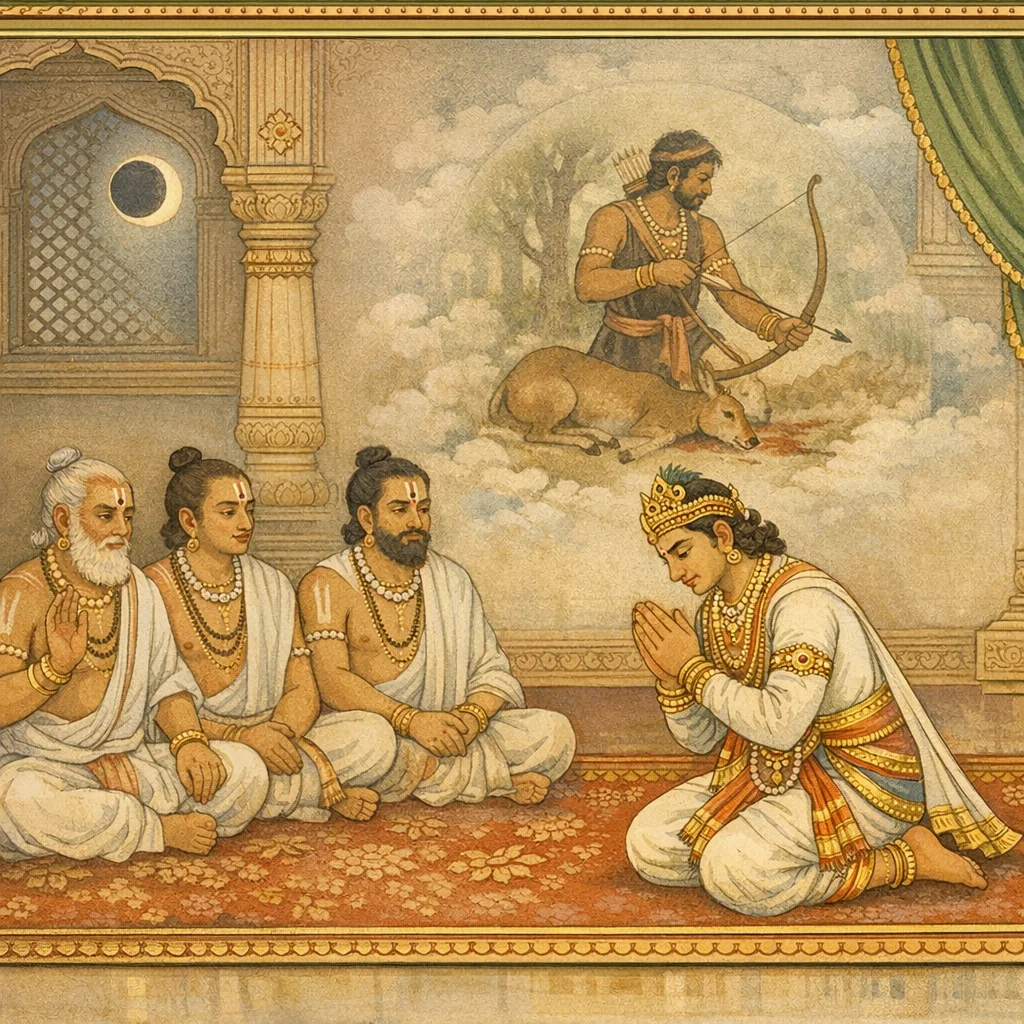
This chapter presents a technical-theological teaching on the proper timing of śrāddha and the consequences of error, conveyed through dialogue and exemplum. Anarta asks Bhartṛyajña why performing śrāddha on the thirteenth lunar day (trayodaśī) can bring about lineage-decline (vaṁśa-kṣaya). Bhartṛyajña explains an exceptional calendrical condition called gajacchāyā (“elephant-shadow”), tied to specific lunar/astral placements and eclipse-adjacent states; when this marker is present, the śrāddha becomes akṣaya (imperishable in fruit) and grants ancestral satisfaction for twelve years. The text then weaves ritual details into an origin story, mentioning offerings such as honey mixed with milk and particular meats like khaḍga and vādhrīṇasa. A king—identified as Sitāśva of Pāñcāla in a former age—is questioned by brāhmaṇas about his unusual śrāddha menu of honey, kālaśāka, and khaḍga-māṁsa. He confesses that in a previous life he was a hunter who overheard sage Agniveśa teaching the gajacchāyā śrāddha rule; though his offering was rudimentary, it still yielded rebirth as a king and the appeasement of his ancestors. In the culmination, the deities, alarmed by the extraordinary potency of trayodaśī śrāddha, impose a curse that henceforth makes śrāddha on that day spiritually risky—capable of causing vaṁśa-kṣaya if performed. Thus the chapter establishes a cautionary ritual boundary while preserving the special-status narrative of gajacchāyā.
Shlokas
Verse 1
ये वांछंति ममाभीष्टं श्राद्धे भुक्त्वाऽथ पैतृके
Those who seek what is dear to me—after feeding the invited ones in the ancestral Śrāddha…
Verse 2
आनर्त उवाच । त्रयोदश्यां कृते श्राद्धे कस्माद्वंशक्षयो भवेत् । एतन्मे सर्वमाचक्ष्व विस्तरात्त्वं महा मुने । भर्तृयज्ञ उवाच । एषा मेध्यतमा राजन्युगादिः कलिसंभवा । स्नाने दाने जपे होमे श्राद्धे ज्ञेया तथाऽक्षया
King Ānarta said: “When Śrāddha is performed on Trayodaśī, why would decline of one’s lineage occur? Tell me all this in detail, O great sage.” Bhartṛyajña said: “O King, this day is most purifying, an epoch-opening day arising in the Kali age. In bathing, charity, japa, homa, and Śrāddha, it is to be known as ‘Akṣayā’—the imperishable, unfailing tithi.”},{
Verse 3
अस्यां चेत्तु गजच्छाया तिथौ राजन्प्रजायते । तदाऽक्षयं मघायोगे श्राद्धं संजायते ध्रुवम्
O King, if on this very tithi the ‘Gajacchāyā’ (auspicious configuration) occurs, then in conjunction with Maghā the Śrāddha surely becomes akṣaya—of imperishable fruit.
Verse 4
यः क्षीरं मधुना युक्तं तस्मिन्नहनि यच्छति । पितॄनुद्दिश्य यो मांसं दद्याद्वाध्रीणसं च यः
Whoever on that day offers milk mixed with honey—and whoever, intending the Pitṛs, gives meat, including the meat of the vādhrīṇasa—
Verse 5
वाध्रीणसस्य मांसेन तृप्तिर्द्वादशवार्षिकी । त्रिःपिबंत्विंद्रियक्षीणं श्वेतं वृद्धमजापतिम्
By the meat of the vādhrīṇasa the Pitṛs attain satisfaction for twelve years. (The received reading further says:) “Let them drink thrice—(one that is) sense-weakened, white, aged, and ‘ajā-pati’,” an obscure phrase preserved as transmitted.
Verse 6
तं तु वाध्रीणसं विद्यात्सर्वयूथाधिपं तथा । खड्गमांसं च वा दद्यात्तृप्तिर्द्वादशवार्षिकी । संजायते न संदेहस्तेषां वाक्यं न मे मृषा
Know vādhrīṇasa to be the lord of all herds; or one may offer khaḍga-meat—then, without doubt, satisfaction for the Pitṛs arises for twelve years. Their statement is not false, nor is mine.
Verse 7
आसीद्रथंतरे कल्पे पूर्वं पार्थिवसत्तमः । सिताश्वो नाम पांचालदेशीयःपितृभक्तिमान्
In an earlier age, in the Rathantara Kalpa, there was an excellent king named Sitāśva, a man of the Pañcāla country, devoted to the Pitṛs.
Verse 8
मधुना कालशाकेन खड्गमांसेन केवलम् । स हि श्राद्धं त्रयोदश्यां कुरु ते पायसेन च
“Perform the śrāddha on the thirteenth lunar day: offer it with honey, with kālaśāka (dark leafy greens), and only with khaḍga-meat; and also prepare pāyasa, sweet rice, for the rite.”
Verse 9
सोमवंशं समुद्दिश्य श्राद्धं यच्छति भक्तितः
“With devotion, he offers the śrāddha, dedicating it to the Somavaṃśa, the Lunar Dynasty.”
Verse 10
अथ तैर्बाह्मणैः सर्वैः स भूयः कौतुकान्वितैः । कस्यचित्त्वथ कालस्य पृष्टो भुक्त्वा यथेच्छया
“Then, after all those brāhmaṇas had eaten to their satisfaction, when some time had passed, they—filled with curiosity—questioned him again.”
Verse 11
श्राद्धादनंतरं राजन्दृष्ट्वा तं श्रद्धयाऽन्वितम् । पादावमर्द्दनपरं प्रणिपातपुरः सरम्
“O King, immediately after the śrāddha, seeing him filled with faith—intent on massaging their feet and foremost in prostration—(they addressed him…).”
Verse 12
ब्राह्मणा ऊचुः । कृत्वा श्राद्धं महाराज प्रदातव्याऽथ दक्षिणा । ब्राह्मणेभ्यस्ततः श्राद्धं पितॄणां चोपतिष्ठति
The brāhmaṇas said: “O great King, having performed the śrāddha, dakṣiṇā (the priestly offering) should then be given. For when it is given to the brāhmaṇas, the śrāddha duly reaches and benefits the ancestors as well.”
Verse 13
सा त्वया कल्पिताऽस्माकं वितीर्णाद्यापि नो नृप । कुप्याकुप्यं परित्यज्य तां देहि नृप मा चिरम्
“O King, the dakṣiṇā you had promised us has still not been bestowed. Setting aside thoughts of ‘valuable or not’, give it, O King—without delay.”
Verse 14
भर्तृयज्ञ उवाच । तच्छ्रुत्वा च नृपः प्राह संप्रहृष्टेन चेतसा । धन्योऽस्म्यनुगृहीतोऽस्मि विप्रैरद्य न संशयः
Bhartṛyajña said: “Hearing that, the king spoke with a delighted heart: ‘Blessed am I; today I have truly been favored by the brāhmaṇas—of this there is no doubt.’”
Verse 15
तस्माद्ब्रूत महाभागा युष्मभ्यं किं ददाम्यहम्
“Therefore, O noble ones, speak: what shall I give to you?”
Verse 16
वर न्नागान्मदोन्मत्तान्भद्रजातिसमुद्भवान् । किं वा सप्तिप्रधानांश्च मनोमारुतरंहसः
“(Shall I bestow) excellent elephants, maddened and intoxicated with rut, born of the noble Bhadrā stock? Or foremost horses, swift as the wind in their speed?”
Verse 17
किं वा स्थानानि चित्राणि ग्रामाणि नगराणि च । पितॄनुद्दिश्य यत्किंचिन्नादेयं विद्यते यतः
“Or (shall I give) delightful estates—villages and even towns? For, when it is dedicated to the ancestors, there is nothing whatsoever that is ‘not to be given’.”
Verse 18
ब्राह्मणा ऊचुः । नास्माकं वाजिभिः कार्यं न रत्नैर्न च हस्तिभिः । न देशैर्ग्राममुख्यैर्वा नान्येनापि च केनचित्
The Brāhmaṇas said: “We have no need of horses, nor of jewels, nor of elephants—nor of lands, chief villages, or anything else whatsoever.”
Verse 19
यदर्थेन महाराज पृष्टोस्माभिर्यतो भवान् । तस्मान्नो दक्षिणां देहि संदेहघ्नां तपोत्तम
“O great King, since it is for this very purpose that we have questioned you, therefore grant us a dakṣiṇā that destroys doubt, O best of ascetics.”
Verse 20
यां पृच्छामो वयं सर्वे कौतूहलसमाहिताः
“That (matter) which we all ask, with minds intent through keen curiosity…”
Verse 21
राजोवाच । उपदेशाधिकारोऽस्ति ब्राह्मणानां महात्मनाम् । दातुं नैव ग्रहीतुं च नी चजात्यस्य वैदिकाः
The King said: “The authority to give instruction belongs to the great-souled Brāhmaṇas. Vedic men should neither give to, nor accept from, those of base conduct and low birth.”
Verse 22
सोऽहं राजा न सर्वज्ञो यो यच्छामि द्विजोत्तमाः । उपदेशं हि युष्मभ्यं सर्वज्ञेभ्यो विचक्षणाः
“I, the king, am not all-knowing, O best of the twice-born; yet I offer instruction to you—(though) you are discerning and as if all-knowing.”
Verse 23
ब्राह्मणा ऊचुः । गुरुशिष्यसमुत्थोऽयमुपदेशो महीपते । प्रार्थयामो वयं किंचिन्मा भयं त्वं समाविश
The Brāhmaṇas said: “O King, this instruction arises in the proper relation of teacher and student. We request something of you—do not let fear enter you.”
Verse 24
वयं च प्रश्नमेकं हि पृच्छामो यदि भूपते । ब्रूषे कौतुकयुक्तानां सर्वेषां च द्विजन्मनाम्
“O King, we ask indeed a single question. If you will answer, (answer) for all the twice-born who are filled with earnest curiosity.”
Verse 25
तस्माद्वद महाभाग यदि जानासि तत्त्वतः । न चेद्गुह्यतमं किंचित्पृच्छामस्त्वां कुतूहलात्
“Therefore speak, O fortunate one, if you truly know the reality. If not, we ask you some most secret matter—out of sacred curiosity.”
Verse 26
राजोवाच । यदि वः संशयो विप्रा युष्मत्प्रश्नमसंशयम् । कथयिष्याभि चेद्गुह्यं तद्वद्ध्वं गप्ल ज्वराः
The King said: “O Brāhmaṇas, if you harbor doubt, then state your question without wavering. If I am to speak a secret teaching, then speak it forth plainly….”
Verse 27
ब्राह्मणा ऊचुः । अन्नेषु च विचित्रेषु लेह्येषु विविधेषु च । अमृतेष्वेषु सर्वेषु तथा पेयेषु पार्थिव
The Brāhmaṇas said: “O King, among the many kinds of foods, among the various lickable delicacies, among all these nectar-like dishes, and likewise among drinks…”
Verse 28
तस्मादद्य दिने ब्रूहि मधु यच्छसि गर्हितम् । वर्तते च यथाऽभक्ष्यं ब्राह्मणानां विशेषतः
Therefore, tell us today why you are offering honey, which is censured—regarded as improper to be eaten, especially by Brāhmaṇas.
Verse 29
तथा विचित्र मासेषु संस्थितेषु नराधिप । खङ्गमांसं निरास्वादं कस्माद्यच्छसि केवलम्
And moreover, O ruler of men—when so many excellent months are at hand—why do you offer only tasteless khaṅga-meat?
Verse 30
संति शाकानि राजेन्द्र पावनीयानि सर्वशः । सुष्ठु स्वादु कराण्यत्र व्यञ्जनार्थं महीपते
O best of kings, there are vegetables here—purifying in every way—excellent in taste and fit for preparing flavorful dishes, O lord of the earth.
Verse 31
कालशाकं सकटुकं मुखाऽधिजनकं महत् । कस्माद्यच्छसि चास्माकं भक्त्या परमया युतः । न श्राद्धे प्रतिषेधश्च प्रकर्तव्यः कथंचन
Why do you offer us kālaśāka, pungent and greatly irritating to the mouth, though you are endowed with supreme devotion? In a śrāddha, no impropriety should be introduced in any way.
Verse 32
न च त्याज्यं समुच्छिष्टं तेन भुंजामहे ततः । तदत्र कारणेनैव गुरुणा भाव्यमेव हि । येन त्वं यच्छसि प्राय एतत्सिद्धिर्भवेत्स्थिता
Nor should it be cast aside as “leftover”; therefore we eat it. Yet surely there is some weighty reason here—by which you habitually offer this—so that this intended rite may indeed attain its fulfillment.
Verse 33
तस्मात्कथय नः सर्वं परं कौतूहलं हि नः । निःस्वादितं यथा दद्यादीदृक्छ्राद्धे विगर्हितम्
Therefore tell us everything—for our curiosity is great—how one would give such insipid, censured fare in a śrāddha.
Verse 34
यथा त्वं नृपशार्दूल श्रद्धया संप्रयच्छसि
How is it that you, O tiger among kings, give (this) with faith?
Verse 35
तच्छ्रुत्वा वचनं तेषां ब्राह्मणानां महात्मनाम् । स वैलक्ष्यस्मितं प्राह सलज्जं पृथिवीपतिः
Hearing the words of those great-souled brāhmaṇas, the lord of the earth replied with an embarrassed smile, overcome with shame.
Verse 36
गुह्यमेतन्महाभागा अस्माकं यदि संस्थितम् । अवाच्यमपि वक्ष्यामि शृणुध्वं सुसमाहिताः
O fortunate ones, this is a secret bound up with my very life. Yet, though it is not fit to be spoken, I shall speak it. Listen with full attention.
Verse 37
अहमासं पुरा पापो लुब्धकश्चान्य जन्मनि । निहंता सर्वजंतूनां तथा भक्षयिता पुनः
In the past, in another birth, I was a sinful hunter—one who killed all kinds of creatures, and again, one who ate them as well.
Verse 38
पर्यटामि तदारण्ये धनुषा मृगयारतः । सिंहो व्याघ्रो गजेन्द्रो वा शरभो वा द्विजो त्तमाः
O best of the twice-born, I used to roam that forest, bow in hand, delighting in the hunt—whether it was a lion, a tiger, a lordly elephant, or even a fierce śarabha-beast.
Verse 39
मद्बाणगोचरं प्राप्तो न जीवत्यपि कर्हिचित् । कस्यचित्त्वथ कालस्य भ्रममाणो महीतले
Whatever came within the range of my arrows would never survive; and then, after some passage of time, as I wandered upon the earth,
Verse 40
संप्राप्तोऽहं महाभागा अग्नि वेशस्य सन्मुनेः । आश्रमे समनुप्राप्तो निशीथे क्षुत्पिपासितः
O noble ones, I arrived at the hermitage of the good sage Agniveśa; I reached it at midnight, tormented by hunger and thirst.
Verse 41
तावत्तत्र सशिष्याणां श्राद्धकर्मविधिं वदन् । संस्थितो वेष्टितः शिष्यैः समन्ताद्द्विजसत्तमाः
At that time, O best of Brāhmaṇas, he stood there teaching his disciples the proper procedure of the śrāddha rite, surrounded on all sides by those students.
Verse 42
अग्निवेश उवाच । ऋक्षे पित्र्ये यदा चन्द्रो हंसश्चापि करे व्रजेत् । त्रयोदशी तु सा च्छाया विज्ञेया कुञ्जरोद्भवा
Agniveśa said: When the Moon is in the Pitṛ-related lunar mansion, and Haṃsa also moves into Kara, that shadow is to be understood as the ‘elephant-born’ omen; it is the thirteenth lunar day, trayodaśī.
Verse 43
पित्र्ये यदास्थितश्चेन्दुर्हंसश्चापि करे स्थितः । तिथिर्वैश्रवणी या च सा च्छाया कुञ्जरस्य च
When the Moon stands in the Pitṛ-related mansion and Haṃsa is also stationed in Kara, that tithi known as Vaiśravaṇī is likewise to be recognized as the elephant’s ‘shadow’ omen.
Verse 44
सैंहिकेयो यदा चंद्रं ग्रसते पर्वसंधिषु । हस्तिच्छाया तु सा ज्ञेया तस्यां श्राद्धं समाचरेत्
When Saiṃhikeyā (Rāhu) seizes the Moon at the junctions of the lunar fortnight (eclipse times), that is to be known as the ‘elephant-shadow’ (hasti-chāyā); on that occasion one should duly perform śrāddha.
Verse 45
तस्यां यः कुरुते श्राद्धं जलैरपि प्रभक्तितः । यावद्द्वादश वर्षाणि पितरस्तस्य तर्पिताः
Whoever performs śrāddha on that occasion, even with water alone, but with sincere devotion—his ancestors remain satisfied for as long as twelve years.
Verse 46
वनस्पतिगते सोमे या च्छाया पूर्वतोमुखी । गजच्छाया तु सा ज्ञेया पितॄणां दत्तमक्षयम्
When the Moon is in Vanaspati and the “shadow” faces east, know it as the “elephant-shadow” (gaja-chāyā); whatever is then offered to the Fathers (pitṛs) becomes imperishable.
Verse 47
सा भवेच्च न सन्देहः पुण्यदा पैतृकी तिथिः । तस्यां श्राद्धं प्रकर्तव्यं संभाराः संभृताश्च ये
That indeed—without any doubt—is the ancestral tithi that bestows merit. On that day śrāddha should certainly be performed, with whatever ritual materials have been gathered.
Verse 48
प्रभाते तु न सन्देहः पितॄणां परितृप्तये । शाकैस्तथैंगुदैर्बिल्वैर्बदरैश्चिर्भटैरपि
At dawn, there is no doubt that the Fathers (pitṛs) are fully satisfied—whether the offering is made with leafy vegetables, with iṅguda fruits, with bilva, with jujubes (badara), or even with cirbhaṭa gourds.
Verse 49
यदन्नं पुरुषोऽश्नाति तदन्नास्तस्य देवताः । बाढमित्येव ते प्रोच्य गताः स्वंस्वं निकेतनम्
“Whatever food a man eats—those very foods are acceptable to the deities connected with him.” Saying, “So be it,” they assented and departed, each to his own abode.
Verse 50
सर्वे शिष्या महाभागाः नारायणपुरोगमाः । अग्निवेश्योऽपि सुष्वाप समामन्त्र्य द्विजोत्तमान्
All the fortunate disciples, headed by Nārāyaṇa, remained there; and Agniveśya too, having duly taken leave of the best of the twice-born, fell asleep.
Verse 51
तेन संकथ्यमानं च रात्रौ तच्च श्रुतं मया । अहं चापि करिष्यामि प्रातः श्राद्धमसंशयम्
And what he was explaining at night, I heard as well. I too shall perform the śrāddha in the morning—without doubt.
Verse 52
निहत्य खड्गमादाय तस्य मांसं सुपुष्कलम् । तथा मधु समादाय कालशाकं विशेषतः
Having slain a rhinoceros and taken ample flesh from it, and also having procured honey—along with kālaśāka greens in particular—(he prepared for the rite).
Verse 53
स्वजातीयेभ्य आदाय तर्पयिष्यामि तान्पितॄन्
Taking (these provisions) from my own community and kinsmen, I shall satisfy those Fathers (pitṛs) by tarpaṇa.
Verse 54
एवं निश्चित्य मनसा प्रसुप्तोऽहं द्विजोत्तमाः । ततः प्रभाते विमले प्रोद्गते रविमण्डले
Having thus resolved in my mind, I fell asleep, O best of the twice-born. Then, in the pure morning, when the orb of the sun had risen,
Verse 55
मधुजालानि भूरीणि गृहीतानि मया ततः । कालशाकं तथा लब्धं स्वेच्छया द्विजसत्तमाः
Then I gathered many honeycombs; and kālaśāka greens too were obtained, as I wished, O best of the twice-born.
Verse 56
ततः सर्वं समादाय श्रपितं तत्क्षणान्मया । स्नात्वा च निजवर्गाणां पितॄनुद्दिश्य चात्मनः । प्रदत्तं लुब्धकानां च भक्तिपूर्वं द्विजोत्तमाः
Then I gathered everything together and cooked it at once. After bathing, I dedicated it to the Pitṛs—the Fathers of my own lineage—and for my own welfare as well; and with devotion I gave it to the hunters too, O best of the twice-born.
Verse 57
एवं मया पुरा दत्तं पितॄ नुद्दिश्य तान्निजान् । नान्यत्किंचिन्मया दत्तं कदाचित्कस्यचिद्विजाः
Thus, long ago, I gave that offering, dedicating it to my own Pitṛs. I have never given anything else to anyone at any time, O brāhmaṇas.
Verse 58
ततः कालेन महता मृत्युं प्राप्तोऽस्म्यहं द्विजाः । तद्दानस्य प्रभावेन पार्थिवीं योनिमाश्रितः
Then, after a long time, I met with death, O twice-born ones. Yet by the power of that charitable gift, I obtained an earthly rebirth.
Verse 59
एवं जातिस्मरत्वं च सञ्जातं मे द्विजोत्तमाः । ते च मे तर्पितास्तेन खड्गमांसेन माक्षिकैः
Thus, O best of brāhmaṇas, the power of remembering former births (jāti-smara) arose in me. And by that act my ancestors were satisfied through tarpaṇa with khaḍga-meat and with honey.
Verse 60
संप्राप्ताः परमां प्रीतिं ततो द्वाशवार्षिकीम् । एतस्मात्कारणाच्छ्राद्धं प्रकरोमि द्विजोत्तमाः
They attained supreme contentment, lasting for twelve years. For this very reason, O best of brāhmaṇas, I now perform śrāddha.
Verse 61
खड्गमांसेन मधुना कालशाकेन भूरिशः । विधिहीनं द्विजैर्हीनं तिलदर्भैर्विवर्जितम्
With khaḍga-meat, with honey, and with plentiful kāla-śāka greens—(that śrāddha) was bereft of proper procedure, bereft of brāhmaṇas, and lacking sesame and darbha grass.
Verse 62
मया तद्विहितं श्राद्धं तस्यैतत्फलमागतम् । सांप्रतं विधिना सम्यग्ब्राह्मणैर्वेदपारगैः
That śrāddha was performed by me, and this is the fruit that came of it. Now, however, it is being done properly according to the rite, with brāhmaṇas who have mastered the Vedas.
Verse 63
उपविष्टैः करोम्येव यच्छ्राद्धं श्रद्धयान्वितः । दर्भैस्तिलैः समोपेतं मन्त्रवच्च द्विजोत्तमाः
With them seated, I perform the śrāddha, endowed with faith—furnished with darbha grass and sesame, and accompanied by mantras, O best of brāhmaṇas.
Verse 64
नो जानामि फलं किं वा सांप्रतं च भविष्यति । तस्मादेवं परिज्ञाय यूयं चैव द्विजोत्तमाः
I do not know what fruit will now arise. Therefore, understanding it thus, you too, O best of brāhmaṇas—
Verse 65
संतर्पयध्वं च पितॄन्निजान्गजदिने स्थिते । छायायां चैव जातायां कुञ्जरस्य द्विजोत्तमाः
You too should satisfy your own ancestors (pitṛs), O best of brāhmaṇas, when the Gaja-day occurs—when the elephant’s shadow has also appeared.
Verse 66
येन संजायते तृप्तिः पितॄणां द्वादशाब्दिकी । युष्माकं च गतिः श्रेष्ठा यथा जाता ममाधुना
By this, the Pitṛs—the ancestors—gain satisfaction for twelve years; and your own course becomes most excellent, just as mine has now become.
Verse 67
भर्तृयज्ञ उवाच । तस्य तद्वचनं श्रुत्वा सर्वे ते ब्राह्मणोत्तमाः । संतुष्टाः साधुवादांश्च ददुस्तस्य महीपतेः
Bhartṛyajña said: Having heard his words, all those eminent brāhmaṇas were pleased, and they offered that king praises and benedictions.
Verse 68
ततःप्रभृति चक्रुस्ते श्राद्धानि द्विजसत्तमाः । त्रयोदश्यां नभस्यस्य कृष्णायां भक्तितत्पराः
From that time onward, those excellent brāhmaṇas began to perform the Śrāddha rites with devotion, on Trayodaśī—the thirteenth lunar day—in the dark fortnight of the month of Nabhasya (Bhādrapada).
Verse 69
मधुना कालशाकेन खड्गमांसेन तर्पिताः । प्राप्नुवंति परां सिद्धिं विमानवरमास्थिताः
Satisfied by offerings of honey, kāla-śāka greens, and rhinoceros flesh, they attain the highest perfection, mounted upon an excellent celestial chariot (vimāna).
Verse 70
स्पर्धंते सहिता दैवैः पितरश्च विशेषतः । वंशजेन प्रदत्तस्य प्रभावात्सुरसत्तमाः
O best among the gods, the Pitṛs—especially—together with the Devas, vie with one another, owing to the potency of what is offered by a descendant.
Verse 71
श्राद्धार्थं संपरिज्ञाय मन्त्रं चक्रुः परस्परम् । आदित्या वसवो रुद्रा नासत्यावपि पार्थिव
Having understood the purpose of Śrāddha, they devised a mantra among themselves—O king—the Ādityas, the Vasus, the Rudras, and also the two Nāsatyas (Aśvins).
Verse 72
यथा न भवति श्राद्धं तस्मिन्नहनि भूतले । यत्प्रभावाद्वयं सर्वे मानुषैः श्राद्धमाश्रितैः । न यामोऽभिभवस्थानं तस्माच्छप्स्यामहे च तान्
‘So that no Śrāddha may take place on that day upon the earth—because, by the power of men who resort to Śrāddha, we all do not reach a state of being overcome—therefore we shall curse them.’
Verse 73
अद्यप्रभृति यः श्राद्धं त्रयोदश्यां करिष्यति । कन्यासंस्थे सहस्रांशौ तस्य स्याद्वंशसंक्षयः
‘From today onward, whoever performs Śrāddha on trayodaśī when the Sun (the thousand-rayed one) is in Virgo (Kanyā), for him there will be destruction of lineage.’
Verse 74
इति शापेन देवानां निर्दग्धेयं महातिथिः
Thus, by the curse of the gods, this great lunar day (tithi) became ‘burnt’—rendered unfit for the rite.
Verse 76
ततःप्रभृति नैतस्या क्रियते श्राद्धमुत्तमम् । यः प्रमादेन कुरुते तस्य स्याद्वंश संक्षयः
From that time onward, no excellent Śrāddha is performed on that tithi. Whoever does it through negligence will suffer destruction of lineage.
Verse 220
इति श्रीस्कान्दे महापुराण एकाशीतिसाहस्र्यां संहितायां षष्ठे नागरखण्डे हाटकेश्वरक्षेत्रमाहात्म्ये श्राद्धकल्पे गजच्छायामाहात्म्यवर्णनंनाम विंशत्युत्तरद्विशत तमोऽध्यायः
Thus ends Chapter 220—named “The Description of the Greatness of Gajacchāyā”—in the Śrāddha-kalpa, within the Hāṭakeśvara-kṣetra Māhātmya, in the sixth Nāgara Khaṇḍa of the Śrī Skanda Mahāpurāṇa, in the Ekāśīti-sāhasrī Saṃhitā.