Adhyaya 22
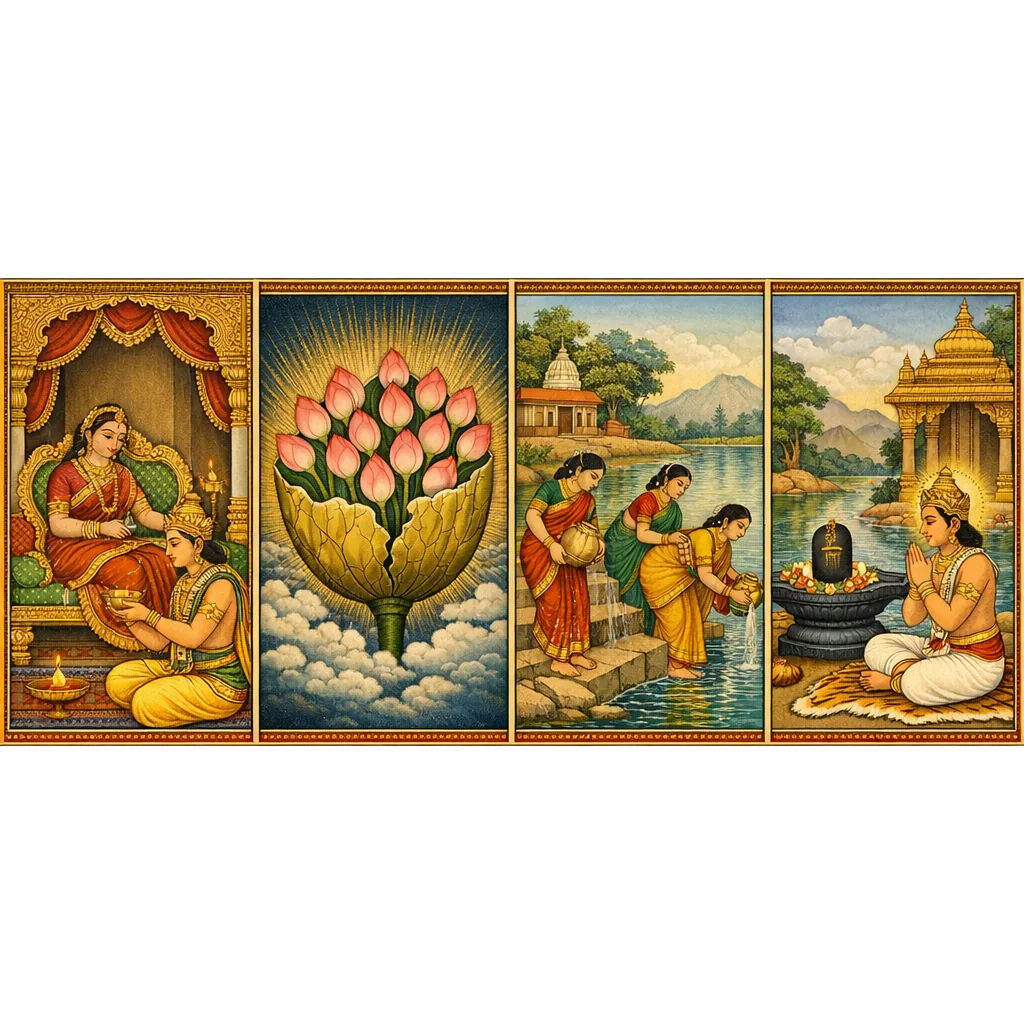
The sages ask about a tīrtha where Lakṣmaṇa and Indra are said to have been freed from the sin of svāmi-droha—treachery against a rightful superior. Sūta recounts its origin: through Dakṣa’s lineage and Kaśyapa’s two chief wives, Aditi and Diti, the devas are born, while the daityas grow stronger, and conflict arises. Diti undertakes a fierce vrata to obtain a son greater than the devas, and Śiva grants the boon. Fearing the prophesied child, Indra serves Diti and watches for a ritual lapse. When she falls asleep at the time of delivery, Indra enters her womb and cuts the fetus into seven, and then into seven again, producing forty-nine infants. After hearing Indra’s truthful confession, Diti transforms the outcome: the children become the Maruts, freed from daitya-status, allied to Indra, and entitled to shares in yajña offerings. The place is named Bālamaṇḍana (“adorned by children”), and it promises protection to pregnant women who bathe there and drink its water at childbirth. Seeking expiation for betrayal of mother/authority, Indra installs a Śiva-liṅga called Śakreśvara and worships it for a thousand years; Śiva removes Indra’s sin and extends the same benefit to human devotees who bathe and worship there. The phalaśruti adds that performing śrāddha from Āśvina śukla daśamī through pañcadaśī yields the fruit of bathing at all tīrthas, even Aśvamedha-like merit; Indra is present then, as though all tīrthas converge at this site. The chapter ends with two verses attributed to Nārada, praising release from sins through bathing at Bālamaṇḍana and beholding Śakreśvara during the Āśvina observance window.
Shlokas
Verse 1
। ऋषय ऊचुः । यदेतद्भवता प्रोक्तं तीर्थे शक्रसमुद्रवम् । स्वामिद्रोहकृतात्पापान्निर्मुक्तो यत्र लक्ष्मणः
The sages said: Concerning what you have spoken of—the tīrtha called Śakra-samudrava—where Lakṣmaṇa was freed from the sin born of betraying one’s master, please tell us further.
Verse 2
कथं तत्र पुरा शक्रः स्वामिद्रोहसमुद्भवात् । पातकादेव निर्मुक्तः कस्मिन्काले च सूतज
O son of Sūta, how was Śakra (Indra) in former times freed there from the very sin born of betraying his lord—and at what time did it occur?
Verse 3
कस्माद्दितेर्महेन्द्रेण कृतं कृत्यं तथाविधम् । येन संसूदितो गर्भः सर्वं विस्तरतो वद
Why did Mahendra (Indra) commit such a deed against Diti, by which her embryo was destroyed? Tell the whole matter in full detail.
Verse 4
सूत उवाच । ब्रह्मणो दक्षिणांगुष्ठाज्जज्ञे दक्षः प्रजापतिः । स च संजनयामास पचाशत्कन्यकाः शुभाः
Sūta said: From Brahmā’s right thumb was born Dakṣa Prajāpati. And in due course he begot fifty auspicious daughters.
Verse 5
ददौ च दश धर्माय कश्यपाय त्रयोदश । दिव्येन विधिना दक्षः सप्तविंशतिमिंदवे
Dakṣa, following a divine ordinance, gave ten (daughters) to Dharma, thirteen to Kaśyapa, and twenty-seven to the Moon (Soma).
Verse 6
अदितिश्च दितिश्चैव द्वे भार्ये मुख्यतां गते । कश्यपस्य द्विजश्रेष्ठाः प्राणेभ्योऽपि प्रिये सदा
Aditi and Diti became Kaśyapa’s two foremost wives, O best of the twice-born; ever were they dear to him, even more than his own life-breath.
Verse 7
ततः स जनयामास देवाञ्च्छक्रपुरःसरान् । अदित्यां चैव दैत्यांश्च दित्यां स बलवत्तरान्
Thereafter, from Aditi he begot the gods, led by Śakra (Indra); and from Diti he begot the Daityas, mighty in strength.
Verse 8
तेषां त्रैलोक्यराज्यार्थं मिथो जज्ञे महाहवः । तत्र शक्रेण ते दैत्याः संग्रामे विनिपातिताः
For sovereignty over the three worlds, a great war arose between them. In that battle, those Daityas were struck down by Śakra (Indra).
Verse 9
ततः शोकपरा चक्रे दितिर्व्रतमनुत्तमम् । पुत्रार्थं नियमोपेता क्षेत्रेऽत्रैव समाहिता
Then Diti, overcome with grief, undertook an unsurpassed vow. Seeking a son, she practiced strict discipline and remained concentrated in this very sacred kṣetra.
Verse 10
ततो वर्षसहस्रांते तस्यास्तुष्टो महेश्वरः । उवाच परितुष्टोऽस्मि वरं प्रार्थय वांछितम्
After a thousand years, Maheśvara became pleased with her and said, “I am fully satisfied—ask for the boon you desire.”
Verse 11
साऽब्रवीद्यदि मे तुष्टस्त्वं देव शशिशेखर । तत्पुत्रं देहि देवानां सर्वेषां बलवत्तरम् । यज्ञभागप्रभोक्तारं देवानां दर्पनाशनम्
She said: “If you are pleased with me, O God, O Moon-crested Lord (Śaśiśekhara), then grant me such a son—stronger than all the gods—one who will claim the sacrificial portions of the yajña and shatter the pride of the gods.”
Verse 12
अवध्यं संगरे पूर्वैः सर्वैदेवैः सवासवैः । स तथेति प्रतिज्ञाय जगामादर्शनं हरः
(She asked for a son) who would be unkillable in battle by all the gods of old, even with Vāsava (Indra). Hara assented, vowing, “So be it,” and then vanished from sight.
Verse 13
दितिश्चैवाऽदधाद्गर्भं कश्यपान्मुनिपुंगवात् । ततः शक्रो भयं चक्रे ज्ञात्वा तं गर्भसंभवम् । वदतो मुनिमुख्यस्य नारदस्य महात्मनः
And Diti conceived a child by Kaśyapa, the foremost among sages. Then Śakra (Indra) was seized by fear on learning of that pregnancy—having heard it from the great-souled Nārada, chief among seers.
Verse 14
ततो दुष्टां मतिं कृत्वा तस्य गर्भस्य नाशने । चक्रे तस्याः स शुश्रूषां दिवारात्रमतंद्रितः
Then, having formed a wicked resolve to destroy her pregnancy, he attended upon her in service unceasingly, day and night, so as to find an opportunity.
Verse 15
छिद्रमन्वेषमाणस्तु सुसूक्ष्ममपि च द्विजाः । न तस्या लभते क्वाऽपि गता मासा नवैव तु
But, O twice-born ones, though he searched for even the slightest opening, he could find no fault in her at all—until nine months had passed.
Verse 16
ततश्च दशमे मासि संप्राप्ते प्रसवोद्भवे । गर्भालसा निशावक्त्रे सुप्ता सा दक्षिणामुखी
Then, when the tenth month arrived and childbirth was imminent, she—wearied by pregnancy—fell asleep at night, lying with her face turned south.
Verse 17
निद्रावशं तु संप्राप्ता विसंज्ञा समपद्यत । शक्रहस्तावमर्दोत्थपादसौख्येन निश्चला
Overcome by sleep, she became unconscious and lay motionless—her feet at ease from the pressing and massage of Śakra’s hands.
Verse 18
तां विसंज्ञामथो वीक्ष्य त्यक्त्वा पादौ शतक्रतुः । प्रविवेशोदरं तस्यास्तीक्ष्णं शस्त्रं करे दधत् । तेनाऽसौ सप्तधा चके गर्भं शस्त्रेण देवपः
Seeing her unconscious, Śatakratu left her feet, entered her womb holding a sharp weapon in his hand, and with that weapon the god cut the fetus into seven parts.
Verse 19
अथाऽपश्यत्क्षणात्सप्त वालकान्पूर्णविग्रहान् । ततस्तानपि सप्तैव सप्तधा कृतवान्हरिः
At once he saw seven infants, each with a complete form; then Hari further divided those seven as well into seven parts.
Verse 20
जाता एकोनपञ्चाशदथ तत्रैव बालकाः । तान्दृष्ट्वा वृद्धिमापन्नांस्ततो भीतः शतक्रतुः । निश्चक्रामोदरातूर्णं दित्या यावन्न लक्षितः
Thus, there were forty-nine infants born there. Seeing them already grown strong, Śatakratu became afraid and hurried out from her womb—before Diti could notice him.
Verse 21
ततः प्रभाते विमले प्रोद्गते रविमंडले । दितिः संजनयामास सप्तधा सप्त बालकान्
Then, in the pure dawn, when the orb of the sun had risen, Diti gave birth to seven groups of seven children.
Verse 22
ततोऽभ्येत्य सहस्राक्षो दुर्गंधेन समावृतः । निस्तेजा म्लानवक्त्रश्च लज्जयाऽ धोमुखः स्थितः
Then Sahasrākṣa came forward, shrouded in a foul stench; his splendor had faded, his face was withered, and he stood with head bowed in shame.
Verse 23
तं दृष्ट्वा तादृशं शक्रं दितिः प्रोवाच सादरम् । प्रणतं संस्थितं पार्श्वे भयव्याकुलचेतसम्
Seeing Śakra in that condition, Diti addressed him with courtesy; he stood to the side, bowed in reverence, his mind shaken and troubled by fear.
Verse 24
किं त्वं शक्र निरु त्साहस्तेजोद्युतिविवर्जितः । शरीरात्तव दुर्गन्धः कस्मादीदृक्प्रजायते
“O Śakra, why are you now without courage, bereft of tejas—of brilliance and splendor? And why has such a foul odor arisen from your body?”
Verse 25
किं त्वया निहतो विप्रोगुरुर्वाबालकोऽथवा । नारी वा येन ते नष्टं तेजो गात्रसमुद्भवम्
“Have you slain a brāhmaṇa, or a guru, or perhaps a child—or a woman—so that the radiance born of your very limbs has been destroyed?”
Verse 26
हतो नखांभसा वा त्वं घृष्टः शूर्पानिलेन च । अजामार्जनिकोत्थैश्चरजोभिर्वा समाश्रितः
“Or were you struck by ‘nail-water’, or rubbed by the wind of a winnowing-fan? Or have you become covered with the dust raised by sweeping and cleaning?”
Verse 27
शक्र उवाच । सत्यमेतन्महाभागे यत्त्वयोक्तोऽस्मि सांप्रतम् । रात्रौ प्रविष्टः सुप्ताया जठरे तव पापकृत्
Śakra said: It is true, O noble lady, what you have just spoken to me. At night, while you slept, I—sinful in deed—entered your womb.
Verse 28
कृन्तश्चैकोनपञ्चाशत्कृत्वो गर्भो मया शुभे । तावन्मात्रास्ततो जाता बालकाः सर्व एव ते
O auspicious one, I cut the embryo forty-nine times; and from those portions, all of them became children.
Verse 29
ततो भीत्या विनिष्क्रान्तस्त्वया देवि न लक्षितः । एतस्मात्कारणाज्जाता तेजोहानिरनिन्दिते
Then, out of fear, I departed—unnoticed by you, O Goddess. From this very cause, O blameless one, my loss of radiance came to be.
Verse 30
दितिरुवाच । यस्मात्सत्यं त्वया प्रोक्तं पुरतो मम देवप । तस्मात्प्रार्थय मत्तस्त्वं वरं यन्मनसेप्सि तम्
Diti said: Since you have spoken the truth before me, O lord of the gods, therefore ask of me a boon—whatever you desire in your mind.
Verse 31
शक्र उवाच । एते तव सुता देवि च्छिद्यमाना मयासिना । रुदन्तो वारिता मन्दं मा रुदन्तु मुहुर्मुहुः
Śakra said: These sons of yours, O Goddess—though being cut by my sword—were gently restrained while crying; may they not weep again and again.
Verse 32
मरुतो नामविख्यातास्तस्मात्संतुजगत्रये । दैत्यभावविनिर्मुक्ता मद्विधेया मम प्रियाः
Therefore, let them be renowned in the three worlds by the name “Maruts”—freed from the nature of the Dānavas, obedient to me, and dear to me.
Verse 33
यज्ञभागभुजः सर्वे भविष्यंति मया सह । यस्मादेतन्मया तीर्थं बालकैस्तव मंडितम्
All of them shall partake of the sacrificial offerings together with me; for this sacred tīrtha has been adorned by me with your children.
Verse 34
बहुभिर्यास्यति ख्यातिं बालमंडनमित्यतः । या च स्त्री गर्भसंयुक्ता स्नानं भक्त्या करिष्यीत । न भविष्यंति छिद्राणि तस्या गर्भे कथंचन
Therefore it will become renowned among many as “Bālamaṇḍana.” And any woman who is with child, if she bathes here with devotion, will never suffer any harm or defect to her womb in any way.
Verse 35
प्राप्ते प्रसवकाले तु या जलं प्राशयिष्यति । तीर्थस्यास्य सुखेनैव प्रसविष्यति सा सुतम्
And when the time of delivery arrives, the woman who drinks this water of the tīrtha will give birth to her child with ease and comfort.
Verse 36
दितिरुवाच । तवोच्छेदाय देवेश याचितः प्राङ्मया हरः । एकं देव सुतं देहि सर्वदेवनिबर्हणम्
Diti said: “O Lord of the gods, earlier I begged Hara for your destruction. O God, grant me a single son who can subdue all the gods.”
Verse 37
त्वया चैकोनपंचाशत्प्रकारः स विनिर्मितः । यस्मादृतं त्वया प्रोक्तं तस्मादेतद्भविष्यति
By you he was fashioned in forty-nine forms. Since what you have spoken is true, therefore this shall surely come to pass.
Verse 38
सूत उवाच । ततः प्रभृति ते जाता मरुतो विबुधैः समम् । यज्ञभागस्य भोक्तारो दितेः शक्रस्य शासनात्
Sūta said: From that time onward those Maruts were born, equal in rank with the gods; and by Śakra’s command, though born of Diti, they became recipients of their share in the sacrifices.
Verse 39
अथ प्राह सहस्राक्षो देवाचार्यं बृहस्पतिम् । मातुर्द्रोहकृतं पापं कथं यास्यति संक्ष यम्
Then Sahasrākṣa (Indra) said to Bṛhaspati, the preceptor of the gods: “How will the sin incurred by betraying one’s mother be destroyed?”
Verse 42
सूत उवाच । ततस्तूर्णं सह साक्षः सहस्राक्षेशसंज्ञितम् । लिंगं संस्थापयामास स्वयमेव द्विजोत्तमाः
Sūta said: Then, swiftly, Sahasrākṣa (Indra) himself, O best of the twice-born, established a liṅga known as “Sahasrākṣeśa.”
Verse 43
त्रिकालं पूजयामासपुष्पधूपानुलेपनैः । तथान्यैर्बलिसत्का रैर्गीतैर्नृत्यैःपृथग्विधैः
He worshipped that liṅga at the three times of day with flowers, incense, and unguents; and also with other offerings and honors, together with songs and many kinds of dances.
Verse 44
ततो वर्षसहस्रांते तुष्टस्तस्य महेश्वरः । प्रोवाच वरदोऽस्मीति शक्र प्रार्थय वांछितम्
Then, at the end of a thousand years, Maheśvara (Śiva), pleased with him, spoke: “I am the bestower of boons. O Śakra, ask for what you desire.”
Verse 45
शक्र उवाच । मातुर्द्रोहकृतं पापं यातु मे त्रिपुरांतक । तथाऽन्येषां मनुष्याणां येऽत्र त्वां श्रद्धयान्विताः । पूजयिष्यंति सद्भक्त्या स्नानं कृत्वा समाहिताः
Śakra said: “O Tripurāntaka, may the sin I incurred by betraying my mother depart from me. And likewise, may the sins of other people too—who here, endowed with faith, will bathe, collect their minds, and worship you with true devotion—be removed.”
Verse 46
सूत उवाच । स तथेति प्रतिज्ञाय जगामादर्शनं हरः । शक्रोऽपि रहितः पापैर्जगाम त्रिदशालयम्
Sūta said: Having pledged, “So be it,” Hara (Śiva) vanished from sight. And Śakra (Indra) too—freed from sins—returned to the abode of the thirty gods (heaven).
Verse 47
एवं तत्र समुत्पन्नं तीर्थं तद्बालमंडनम् । स्वामिद्रोहकृतात्पापान्मुच्यंते यत्र मानवाः
Thus, there arose there the sacred tīrtha called Bālamaṇḍana—where human beings are released from the sins born of betraying one’s master (one’s rightful lord).
Verse 48
एतद्वः सर्वमाख्यातं बालमंडनसंभवम् । माहात्म्यं तु द्विज श्रेष्ठाः शृणुध्वमथ सादरम्
All this—the origin of Bālamaṇḍana—has been explained to you. Now, O best of the twice-born, listen attentively and with reverence to its sacred greatness (māhātmya).
Verse 49
आश्विनस्य सिते पक्षे दशम्यादि यथाक्रमम् । यस्तत्र कुरुते श्राद्धं यावत्पंचदशी तिथिः
In the bright fortnight of Āśvina, beginning in due order from the tenth lunar day—whoever performs śrāddha there up to the fifteenth tithi (the full moon)…
Verse 50
तीर्थानां स हि सर्वेषां स्नानजं लभते फलम् । श्राद्धस्य करणाद्वापि वाजिमेधफलं द्विजाः
He truly gains the fruit of bathing in all tīrthas. And by performing śrāddha as well, O twice-born, he attains merit equal to that of the Aśvamedha sacrifice.
Verse 51
तस्मिन्काले सहस्राक्षः समागच्छति भूतले । भागानां मर्त्यजातानां सेवनाय सदैव हि
At that time the thousand-eyed one (Indra) comes down to the earth—ever intent on partaking of the allotted shares (offerings/merit) of humankind.
Verse 52
यावद्भूमितले शक्रस्तिष्ठत्येवं द्विजोत्तमाः । तीर्थे तीर्थानि सर्वाणि तावत्तिष्ठन्ति तत्र वै
So long as Śakra remains on the earth, O best of the twice-born, for that very duration all tīrthas abide there within that one tīrtha.
Verse 53
तस्मात्सर्वप्रयत्नेन तस्मिन्काले विशेषतः । स्नात्वा तत्र शुभे तीर्थै शक्रेश्वरमथाऽर्चयेत्
Therefore, with every effort—especially at that time—having bathed there in that auspicious tīrtha, one should then worship Śakreśvara, the Lord of Śakra.
Verse 54
अत्र श्लोकौ पुरा गीतौ नारदैन सुर षिंणा । शृण्वंतु मुनयः सर्वे कीर्त्यमानौ मया हि तौ
Here, two verses were once sung by Nārada, the sage among the gods. Let all the munis listen, for I now recite those two.
Verse 55
बालमंडनके स्नात्वा शक्रेश्वरमथेक्षयेत् । यः पुमानाश्विने मासि प्राप्ते श्रवण पञ्चके । स पापैर्मुच्यते सर्वैराजन्ममरणाद्भुवि
Having bathed at Bālamaṇḍana, one should then behold Śakreśvara. Whoever does so in the month of Āśvina, when the Śravaṇa-pañcaka has arrived, is freed from all sins on earth—from birth until death.
Verse 56
प्रभावात्तस्य तीर्थस्य सत्यमेतद्द्विजोत्तमाः
O best of the twice-born, this is indeed true—such is the power and sanctifying greatness of that sacred tīrtha.