Adhyaya 219
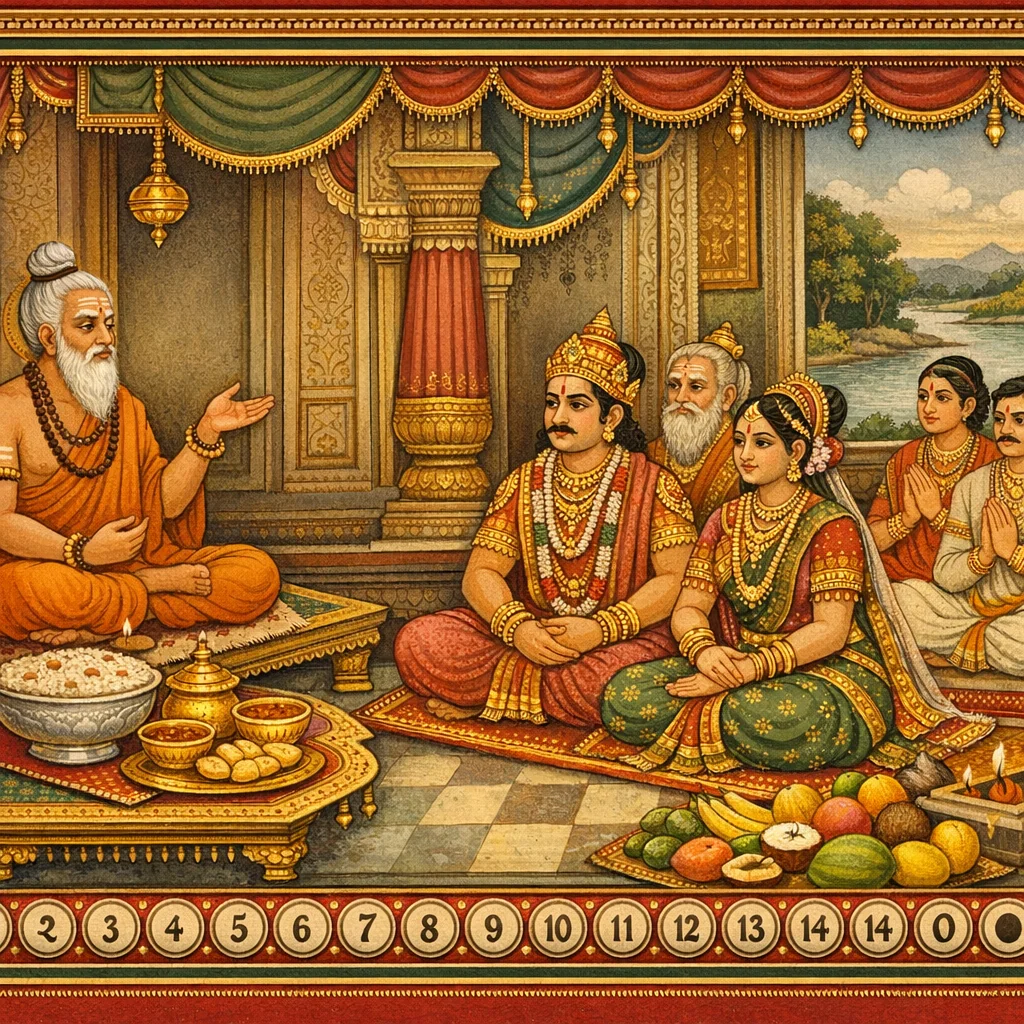
Chapter 219 offers a technical theological exposition on kāmya-śrāddha—ancestral śrāddha performed for specific aims—taught by Bhartṛyajña to a king. It lays out day-wise rules for the dark fortnight connected with the preta period (śrāddhīya-preta-pakṣa), assigning distinct results to śrāddha done on successive lunar days: prosperity, marriage prospects, gaining horses and cattle, success in agriculture and trade, well-being, royal favor, and general accomplishment. It then cautions about the thirteenth day (trayodaśī), declaring it unsuitable for those seeking progeny and linking it with inauspicious outcomes, while also noting a special observance involving payasa (rice pudding) with honey and ghee in a particular seasonal/astral conjunction (Maghā–trayodaśī). The chapter further distinguishes cases of unnatural or violent death (weapons, poison, fire, drowning, snake/animal attack, hanging), prescribing an ekoddiṣṭa rite on the fourteenth day (caturdaśī) for their satisfaction. It concludes by affirming that amāvāsyā-śrāddha grants all the aims previously listed, and ends with a phala statement: hearing and knowing this kāmya-śrāddha framework enables one to attain desired goals.
Shlokas
Verse 1
भर्तृयज्ञ उवाच । काम्यानि तेऽधुना वच्मि श्राद्धानि पृथिवीपते । यैः कृतैः समवाप्नोति मर्त्यो हृदयसंस्थितम्
Bhartṛyajña said: “O lord of the earth, I shall now declare to you the kāmya Śrāddhas, the wish-fulfilling rites; by performing them, a mortal attains what is cherished within the heart.”
Verse 2
यो नारीं वांछते क्ष्माप रूपाढ्यां शीलमण्डनाम् । इह लोके परे चैव तस्यार्हं प्रथमं दिनम्
O King, whoever longs for a woman endowed with beauty and adorned with noble character, in this world and the next, should perform the rite appointed for him on the first day.
Verse 3
श्राद्धीयप्रेतपक्षस्य मुख्यभूतं च यन्नृप । य इच्छेत्कन्यकां श्रेष्ठां सुशीलां रूपसंयु ताम् । द्वितीयादिवसे तेन श्राद्धं कार्यं महीपते
O King, in the Śrāddha rites of the Pitṛ fortnight (Pretapakṣa), this is regarded as a principal observance: whoever desires an excellent maiden, virtuous and beautiful, should perform the Śrāddha on the second day, O lord of the earth.
Verse 4
यो वांछति नरोऽश्वांश्च वायुवेगसमाञ्जवे । तृतीयादिवसे श्राद्धं तेन कार्यं विपश्चिता
The wise declare: a man who desires horses swift as the wind should perform the Śrāddha on the third day (of Pretapakṣa).
Verse 5
यो वांछति पशून्मुख्यान्कुप्याकुप्यधनानि च । चतुर्थ्यां तेन कर्तव्यं श्राद्धं पितृप्रतुष्टये
Whoever desires excellent livestock and wealth in valuables, both durable and perishable, should perform the Śrāddha on the fourth day, for the complete satisfaction of the ancestors (Pitṛs).
Verse 6
पुत्रान्वांछति योऽभीष्टान्सुशीलान्वंशमंडनान् । पञ्चम्यां तेन कर्तव्यं सदा श्राद्धं नराधिप
O ruler of men, whoever longs for sons who are beloved, virtuous, and an ornament to the lineage should always perform the Śrāddha on the fifth day of Pretapakṣa.
Verse 7
यः श्राद्धं वंशजैर्दत्तं परलोकगतो नृप । वांछते तेन कर्तव्यं षष्ठ्यां श्राद्धं विपश्चिता
O King, for one who has gone to the other world yet yearns for the Śrāddha offered by his descendants, the wise should perform the Śrāddha on the sixth day of Pretapakṣa.
Verse 8
कृषिसिद्धिं य इच्छेत ग्रैष्मिकीं शारदीमपि । सप्तम्यां युज्यते तस्य श्राद्धं कर्तुं न संशयः
Whoever seeks success in agriculture—whether the summer crop or the autumn harvest—should perform the Śrāddha on the seventh day; of this there is no doubt.
Verse 9
य इच्छेत्पण्यसंसिद्धिं व्यवहारसमुद्भवाम् । अष्टम्यां युज्यते श्राद्धं तस्य कर्तुं नराधिप
O lord of men, whoever desires success in trade and gain arising from commerce should perform the Śrāddha on the eighth day of Pretapakṣa.
Verse 10
नवम्यां श्राद्धकृन्नाना चतुष्पदगणाल्लंभेत् । सौभाग्यं रोगनाशं च तथा वल्लभसंगमम्
By performing the Śrāddha on the ninth day, one obtains many kinds of four-footed animals, as well as good fortune, the destruction of disease, and reunion with one’s beloved.
Verse 11
दशमीदिवसे श्राद्धं यः करोति समाहितः । तस्य स्याद्वांछिता सिद्धिः सर्वकृत्येषु सर्वदा
Whoever, with a composed mind, performs the Śrāddha on the tenth day attains the fulfillment of his desires in all undertakings, at all times.
Verse 12
एकादश्यां धनं धान्यं श्राद्धकर्ता लभेन्नरः । तथा भूपप्रसादं च यच्चान्यन्मनसि स्थितम्
On the eleventh day, the performer of Śrāddha gains wealth and grain; he also obtains royal favor, and whatever else he holds in his mind as a wish.
Verse 13
यः करोति च द्वादश्यां श्राद्धं श्रद्धासमन्वितः । पुत्रांस्तु प्रवरांश्चैव स पशून्वांछिताल्लंभेत्
Whoever performs the Śrāddha on Dvādaśī, the twelfth lunar day, endowed with sincere faith, obtains excellent sons and also the desired cattle—prosperity.
Verse 14
यो वांछति नरो मुक्तिं पितृभिः सह चात्मनः । असंतानश्च यस्तस्य श्राद्धे प्रोक्ता त्रयोदशी
For the man who seeks liberation (mokṣa) for himself together with his ancestors (Pitṛs), and who is without offspring, Trayodaśī—the thirteenth lunar day—is prescribed for his Śrāddha.
Verse 15
संतानकामो यः कुर्यात्तस्य वंशक्षयो भवेत् । न संतानविवृद्धयै च तस्य प्रोक्ता त्रयोदशी
If one who longs for progeny were to perform the Trayodaśī-Śrāddha, his lineage would decline. Therefore, for the increase of offspring, Trayodaśī is not prescribed for him.
Verse 16
श्राद्धकर्मणि राजेंद्र श्रुतिरेषा पुरातनी । अपि नः स कुले भूयाद्यो नो दद्यात्त्रयोदशीम्
O king, in the rite of śrāddha this is an ancient ordinance: may he not even be born in our lineage who would not offer us the observance of Trayodaśī.
Verse 17
पायसं मधुसर्पिर्भ्यां वर्षासु च मघासु च । मघात्रयोदशीयोगे पायसेन यजेत्पितॄन्
With pāyasa, rice-pudding prepared with honey and ghee—especially in the rainy season and under the Maghā nakṣatra—when Maghā coincides with Trayodaśī, one should worship the ancestors with pāyasa.
Verse 18
पितरस्तस्य नेच्छंति तद्वर्षं श्राद्धसत्क्रियाम् । पुण्यातिशयभीतेन पिंडदानं निराकृतम्
His ancestors do not accept the śrāddha observance for that year; fearing an excessive surge of merit (puṇya), the offering of piṇḍas is rejected.
Verse 19
शक्रेण तद्दिने पुत्रमरणं दर्शितं भयम् । येषां च शस्त्रमृत्युः स्यादपमृत्युरथापि वा
On that day Indra (Śakra) revealed the fearful danger of a son’s death; and for some there may be death by weapons, or even an untimely death (apamṛtyu).
Verse 20
उपसर्गमृतानां च विषमृत्युमुपेयुषाम् । वह्निना तु प्रदग्धानां जलमृत्यु मुपेयुषाम्
And for those who died of epidemics, or who met death by poison; for those burnt by fire, and for those who met death in water—(a special consideration is implied in the śrāddha context).
Verse 21
सर्पव्यालहतानां च शृंगैरुद्बन्धनैरपि । एकोद्दिष्टं प्रकर्तव्यं चतुर्दश्यां नराधिप
For those slain by serpents or wild beasts, and likewise for those who died by the goring of horns or by hanging, an ekoddiṣṭa-śrāddha should be performed on Caturdaśī (the fourteenth lunar day), O king.
Verse 22
तेषां तस्मिन्कृते तृप्तिस्ततस्तत्पक्षजा भवेत्
When that is performed, satisfaction (tṛpti) arises for them, and the corresponding fruit accrues within that very fortnight (pakṣa).
Verse 23
सर्वे कामाः पुरः प्रोक्ता युष्माकं ये मया नृप । अमावास्यादिने श्राद्धात्तानाप्नोति न संश यः
O King, all the desired aims that I previously declared to you are indeed attained by performing Śrāddha on the day of Amāvāsyā (the new-moon day); of this there is no doubt.
Verse 24
एतत्ते सर्वमाख्यातं काम्यश्राद्धफलं नृप । यच्छ्रुत्वा वांछितान्कामान्सर्वानाप्नोति मानवः
O King, I have fully explained to you the fruit of kāmya-śrāddha, the desire-fulfilling Śrāddha; hearing this, a person attains all wishes that are sought.
Verse 219
इति श्रीस्कांदे महापुराण एकाशीतिसाहस्र्यां संहितायां षष्ठे नागरखण्डे हाटकेश्वरक्षेत्रमाहात्म्ये श्राद्धकल्पे काम्यश्राद्धवर्णनंनामैकोनविंशोत्तरद्विशततमोऽ ध्यायः
Thus ends, in the Śrī Skanda Mahāpurāṇa—within the compendium of eighty-one thousand verses—within the sixth division, the Nāgara-khaṇḍa, in the Hāṭakeśvara-kṣetra-māhātmya, in the Śrāddha-kalpa section, the chapter entitled “Description of Desire-Fulfilling Śrāddha (kāmya-śrāddha),” being Chapter 219.