Adhyaya 216
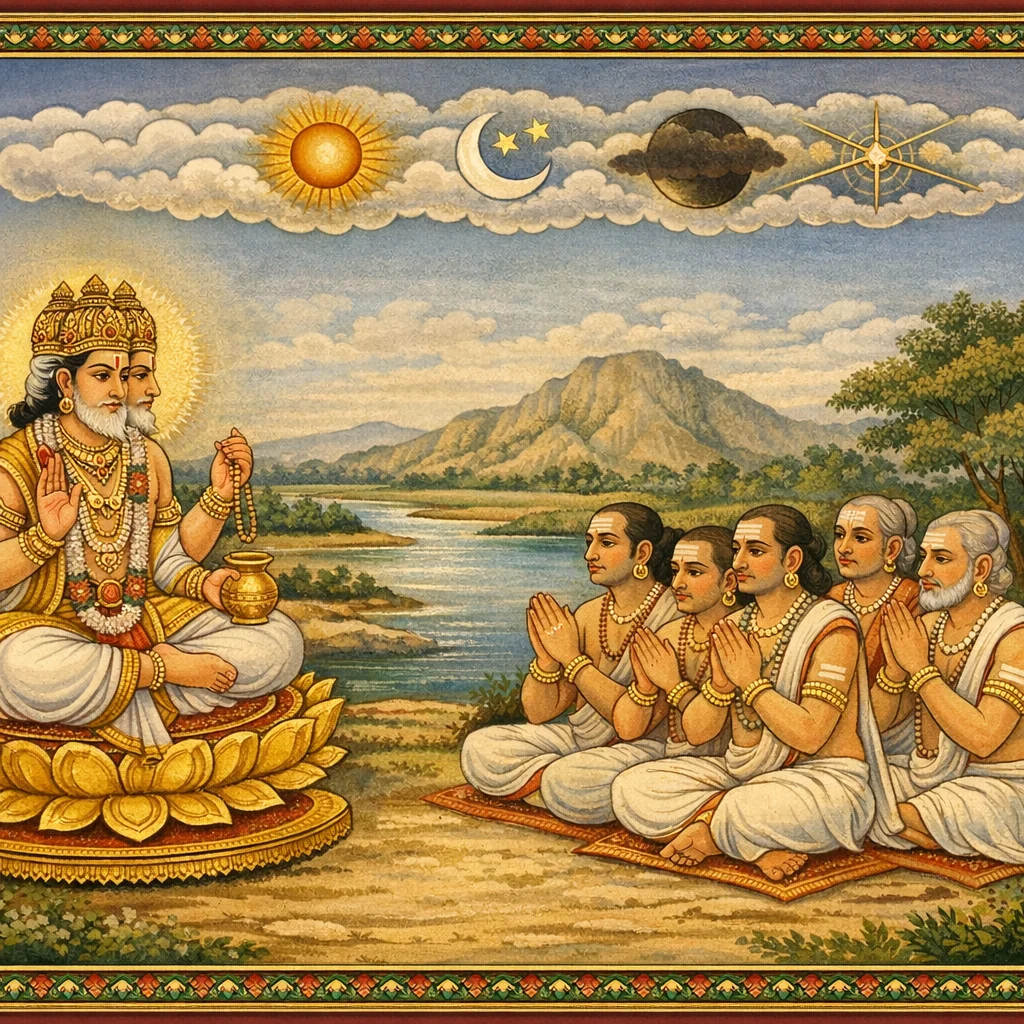
This chapter inquires why Śrāddha performed at the moon’s waning, on Amāvāsyā (indu-kṣaya), is regarded as especially authoritative. Anarta asks Bhartṛyajña about auspicious times for ancestral rites; Bhartṛyajña affirms many merit-bearing occasions—manvantara/yuga transitions, saṅkrānti, vyatīpāta, eclipses—and adds that Śrāddha may be done even outside the usual parvan days when worthy Brahmins or fitting offerings are available. Amāvāsyā is then explained through cosmological imagery: the moon is said to dwell in the sun’s radiance (ravi-raśmi), making dharma and pitṛ-kṛtya performed then akṣaya, of unfailing fruit. The text lists classes of pitṛs (Agniṣvātta, Barhiṣad, Ājyapa, Soma-pa), distinguishes Nandīmukha pitṛs, and situates ancestral satisfaction within a broader deva–pitṛ order. A narrative follows: when descendants fail to offer kavya, the pitṛs in svarga suffer hunger and thirst; they appeal to Indra’s assembly and then to Brahmā. Brahmā establishes practical remedies for declining yuga conditions—offerings to three generations (pitṛ, pitāmaha, prapitāmaha), recurring Amāvāsyā Śrāddha, an annual Śrāddha option (as phrased here: the fifth day of Āṣāḍha’s bright half when the sun is in Kanyā), and the supreme alternative of Śrāddha at Gayāśiras, granting liberation-benefits even in grievous states. The chapter ends with a phalāśruti: hearing or reciting this “śrāddhotpatti” account completes Śrāddha even when materially imperfect, exalting right intention, proper dedication to the pitṛs, and the stabilizing ethical role of ancestral rites.
Shlokas
Verse 1
आनर्त उवाच । अन्येऽपि विविधाः कालाः सन्ति पुण्यतमा द्विज । कस्माच्चेंदुक्षये श्राद्धं विशेषा त्समुदाहृतम्
Ānarta said: “O twice-born one, there are many other times as well that are supremely meritorious. Why, then, is the offering of Śrāddha especially praised at the waning of the Moon?”
Verse 2
एतन्मे सर्वमाचक्ष्व विस्तरेण महामुने
“Explain all of this to me in detail, O great sage.”
Verse 3
भर्तृयज्ञ उवाच । सत्यमेतन्महाराज श्राद्धार्हाः संति भूरिशः । कालाः पितृगणानां च तृप्तिदास्तुष्टिदाश्च ये
Bhartṛyajña said: “Indeed it is so, O great king. Many are the occasions fit for Śrāddha—times that bestow satisfaction and gladness upon the hosts of the Ancestors (Pitṛs).”
Verse 4
मन्वाद्या वा युगाद्याश्च तेषां संक्रांतयोऽपराः । व्यतीपातो गजच्छाया ग्रहणं सोम सूर्ययोः
“Such occasions include the beginnings of the Manus and the beginnings of the Yugas; their various saṅkrāntis, the solar transitions; the Vyatīpāta, the Gaja-chāyā, and eclipses of the Moon and the Sun.”
Verse 5
एतेषु युज्यते श्राद्धं प्रकर्तुं पितृतृप्तये । तथा तीर्थे विशेषेण पुण्य आयतने शुभे
“On these occasions it is proper to perform Śrāddha for the satisfaction of the Ancestors; and likewise it is especially fitting at a tīrtha—an auspicious, sacred seat and abode of merit.”
Verse 6
श्राद्धार्हैर्ब्राह्मणैः प्राप्तैर्द्रव्यैर्वा पितृवल्लभैः । अपर्वण्यपि कर्तव्यं सदा श्राद्धं विचक्षणैः
“When worthy brāhmaṇas fit for Śrāddha are at hand, or when one has offerings dear to the Ancestors, the wise should perform Śrāddha even on days that are not festival tithis; indeed, Śrāddha should be done whenever possible.”
Verse 7
सोमक्षये विशेषेण शृणुष्वैकमना नृप । अमा नाम रवे रश्मिसहस्रप्रमुखः स्थितः
“Now hear with single-minded attention, O king, the special teaching concerning the Moon’s waning. Within the Sun abides a power called Amā, foremost among thousands of rays.”
Verse 8
यस्य स्वतेजसा सूर्यः प्रोक्तस्त्रैलोक्यदीपकः । तस्मिन्वसति येनेन्दुरमावस्या ततः स्मृता
By his own radiance the Sun is proclaimed the lamp of the three worlds; when the Moon abides within that radiance/power, that day is remembered as Amāvasyā.
Verse 9
अक्षया धर्मकृत्ये सा पितृकृत्ये विशेषतः । अग्निष्वात्ता बर्हिषद आज्यपाः सोमपास्तथा
That Amāvasyā yields inexhaustible merit for works of dharma, most especially for rites for the Ancestors. On that occasion the Pitṛ-classes—Agniṣvāttas, Barhiṣads, Ājyapas, and Somapas—are particularly connected with the rite.
Verse 10
रश्मिपा उपहूताश्च तथैवायंतुनाः परे । तथा श्राद्धभुजश्चान्ये स्मृता नान्दीमुखा नृप
O King, the Pitṛs known as the Raśmipās, the Upahūtas, the Āyaṃtunās, and others called the Śrāddhabhujas are remembered as the Nandīmukha Pitṛs.
Verse 11
एते पितृगणाः ख्याता नव देवसमुद्भवाः । आदित्या वसवो रुद्रा नासत्यावश्विनावपि
These groups of Pitṛs are renowned as nine, born from the Devas—namely the Ādityas, the Vasus, the Rudras, and also the Nāsatyas (the Aśvins).
Verse 12
सन्तर्पयन्ति ते चैतान्मुक्त्वा नान्दीमुखान्पितॄन् । ब्रह्मणा ते समादिष्टाः पितरो नृपसत्तम
O best of kings, after setting aside the Nandīmukha Pitṛs, they satisfy these others with offerings (water and food); those Pitṛs were appointed for this by Brahmā.
Verse 13
तान्संतर्प्य ततः सृष्टिं कुरुते पद्मसंभवः
Having satisfied them, Padmasaṃbhava (Brahmā, the lotus-born) then proceeds to carry out creation.
Verse 14
पितरो अन्येऽपि मर्त्या निवसन्ति त्रिविष्टपे । द्विविधास्ते प्रदृश्यंते सुखिनोऽसुखिनः परे
Other Pitṛs too—once human—dwell in Triviṣṭapa (heaven). They are seen as of two kinds: some happy, and others unhappy.
Verse 15
येभ्यः श्राद्धानि यच्छंति मर्त्य लोके स्ववंशजाः । ते सर्वे तत्र संहृष्टा देववन्मुदिताः स्थिताः
Those to whom their own descendants offer śrāddha in the human world—all of them remain there delighted, joyful like the gods.
Verse 16
येषां यच्छन्ति ते नैव किंचित्किञ्चित्स्ववंशजाः । क्षुत्पिपासाकुला स्ते च दृश्यन्ते बहुदुःखिताः
But those for whom their own descendants offer nothing at all—they are seen afflicted by hunger and thirst, suffering greatly.
Verse 17
कस्यचित्त्वथ कालस्य पितरः सुरपूजिताः । अग्निष्वात्तादयः सर्वे त्रिदशेन्द्रमुपस्थिताः
Then, at a certain time, the Pitṛs—honored by the gods, beginning with the Agniṣvāttas—came in attendance upon the lord of the Thirty (Indra).
Verse 18
भक्त्या दृष्टा महाराज सहस्राक्षेण पूजिताः । तथान्यैर्विबुधैः सर्वैः प्रस्थिताः स्वे निकेतने
O great king, they were beheld with devotion and worshipped by Sahasrākṣa (Indra). Likewise honored by all the other gods, they departed to their own abode.
Verse 19
पितृलोकं महाराज दुर्लभं त्रिदशैरपि । तान्दृष्ट्वा प्रस्थितान्राजन्पितरो मर्त्यसंभवाः
O great king, Pitṛloka is difficult to attain even for the gods. Seeing them depart, the Pitṛs who had been born as mortals also turned their attention, deeply moved.
Verse 20
क्षुत्पिपासार्दिता ये च त ऊचुर्दैन्यमाश्रिताः । स्तुत्वाऽथ सुस्तवैर्दिव्यैः पितृसूक्तैश्च पार्थिव
O king, those afflicted by hunger and thirst spoke in a humbled state; then, after praising with excellent divine hymns and with the sacred Pitṛ-sūktas addressed to the Ancestors, they made their appeal.
Verse 21
वेदोक्तैरपरैश्चैव पितृतुष्टिकरैः परैः । ततः प्रोचुश्च संहृष्टाः पितरस्तान्सुरोद्भवाः
With other chants too—Veda-sanctioned, excellent, and bringing satisfaction to the Pitṛs—then the Pitṛs, sprung from the gods, delighted, spoke to them.
Verse 22
प्रसन्नाः स्मो वयं सर्वे युष्माकं शंसितव्रताः । तस्माद्ब्रूत वयं येन यच्छामो वो हृदि स्थितम्
‘We are all pleased,’ they said, ‘for your vows are praiseworthy. Therefore speak—by what means may we grant you what is held in your hearts?’
Verse 23
पितर ऊचुः । वयं हि पितरः ख्याता मनुष्याणामिहागताः । स्वर्गे स्वकर्मणा नित्यं निवसाम सुरैः सह
The Pitṛs said: “Truly, we are known as the Pitṛs; we have come here for the sake of humankind. In heaven, by the power of our own meritorious deeds, we dwell eternally together with the gods.”
Verse 24
विमानेषु विचित्रेषु संस्थिताः सर्वतोदिशम् । वांछितेषु च लोकेषु यामो ध्वजपताकिषु
“Stationed in wondrous celestial cars in every direction, we travel to the worlds we desire—adorned with banners and pennants.”
Verse 25
हंसबर्हिण जुष्टेषु संसेव्येष्वप्सरोगणैः । गन्धर्वैर्गीयमानाश्च स्तूयमानाश्च गुह्यकैः
“In places frequented by swans and peacocks, attended upon by hosts of Apsarases, sung of by Gandharvas, and praised by the Guhyakas, we abide in honor.”
Verse 26
परं सन्तिष्ठमानानामस्माकं त्रिदशैः सह । अत्यर्थं जायते तीव्रा क्षुत्पिपासा सुदारुणा
“Yet, even as we remain there together with the thirty gods, an exceedingly fierce and dreadful hunger and thirst arises within us.”
Verse 27
यस्या मन्यामहे चित्ते वह्निमध्यगता वयम् । भक्षयामः किमेतान्हि पक्षिणो विविधानपि । हंसादीन्मधुरालापान्किं वा चाप्सरसां गणान्
“So fierce is it that we feel in our minds as though we were in the midst of fire. What could we possibly eat—these various birds, even the sweet-voiced swans and the rest, or even the companies of Apsarases?”
Verse 28
यदि कश्चित्क्षुधाविष्टः कञ्चिदादाय पक्षिणम् । गुप्तो गृह्णाति भक्षार्थं हन्तुं शक्तोऽपि सोऽपि न
If someone, overcome by hunger, secretly seizes a bird for food—though he may be able, even he cannot bring himself to kill it.
Verse 29
अजराश्चामराश्चैव स्वर्गे ये स्वर्गगाः खगाः । तथा मनोरमा वृक्षा नन्दनादि वनेषु च
And the birds that move in heaven are ageless and deathless; likewise, the delightful trees in the forests such as Nandana are there.
Verse 30
फलिता ये प्रदृश्यंते प्राप्यांश्चापि मनोरमाः । तत्फलानि वयं सर्वे गृह्णीमः पितरो यदि
Those fruits appear fully ripened and wonderfully alluring to take; if only we all—the Pitṛs—could gather those lovely fruits for ourselves!
Verse 31
न त्रुटंत्यपि यत्नेन समाकृष्टानि तान्यपि । एतल्लेखापगातोयं तृषार्त्ता यदि यत्नतः । प्रपिबामो न हस्तेषु तच्च तोयं पुनः स्पृशेत्
Even when we strain to pull them, they do not break off. And when, tormented by thirst, we try with effort to drink the water of the Lekhā river, it will not remain in our hands—it slips away, and we touch it again in vain.
Verse 32
भुंजानश्च न कोऽप्यत्र दृश्यतेऽत्र पिबन्नपि । तस्मात्त्रिविष्टपावासो ह्यस्माकं घोरदारुणः
No one is seen here eating—nor even drinking. Therefore, our dwelling in Triviṣṭapa (heaven) itself has become dreadful and harsh.
Verse 33
एते सुरगणाः सर्वे ये चान्ये गुह्यकादयः । दृश्यंतेऽत्र विमानस्था सर्वे संहृष्टमानसाः
All these hosts of gods—and others such as the Guhyakas—are seen here, seated in their aerial vimānas, all with hearts brimming with joy.
Verse 34
क्षुत्पिपासापरित्यक्ता नानाभोगसमाश्रयाः । कदाचिच्च वयं सर्वे भवामस्तादृशा इव
Free from hunger and thirst, upheld by many enjoyments—at times we too, all of us, become as though like them, the gods.
Verse 35
क्षुत्पिपासापरित्यक्ताः सतोषं परमं गताः । तत्किं कारणमेतद्यत्क्षुत्पि पासा प्रजायते
Though we had cast off hunger and thirst and attained the highest contentment—what is the cause of this, that hunger and thirst arise again?
Verse 36
आकस्मिकी च बाधा नः कदाचिन्न प्रणश्यति । तथा कुरुत भद्रं वो यथा तुष्टिः प्रजायते
And this sudden affliction of ours never truly disappears. So act—may good befall you—in such a way that satisfaction may arise for us.
Verse 37
शाश्वती नो यथाऽन्येषां देवानां स्वर्गवासिनाम् । यूयं हि पितरो यस्माद्देवानां भावितात्मनाम्
May our condition become enduring, like that of other gods who dwell in heaven—for you are indeed the Pitṛs, the ancestral Fathers, of the gods whose souls are perfected.
Verse 38
वयं चैव मनुष्याणां तेन वः शरणं गताः । पितर ऊचुः । अस्माकमपि चैवैषा कष्टावस्था प्रजायते
And we, being the Pitṛs of humankind, have therefore come to you seeking refuge. The Pitṛs said: “For us too, this very painful condition arises.”
Verse 39
शक्राद्या विबुधा व्यग्राः श्राद्धं यच्छंति नो यदा । ततश्चागत्य तान्सर्वे देवान्संप्रार्थयामहे
When Indra and the other gods, though busied with their own affairs, bestow upon us the śrāddha-offerings, then we draw near and earnestly supplicate all those deities.
Verse 40
ततस्तृप्तिं प्रगच्छामस्तैर्देवैस्तर्पिता वयम् । युष्माकं वंशजा ये च प्रयच्छंति समाहिताः
Thereafter we attain full satisfaction, duly gratified by those deities through the rite of tarpana. And those born in your lineage who, with collected minds, offer the proper oblations—through them we are content.
Verse 41
कथं न तृप्तिमायातास्ते सर्वे तैः प्रतर्पिताः । यत्र प्रमादिभिर्वंश्यैर्न तर्प्यंते कथंचन
How could they all fail to attain satisfaction, when they have been duly gratified by them? But where negligent members of the lineage offer no satisfaction at all, there the ancestors can never be content.
Verse 42
क्षुत्पिपासाकुलाः सर्वे ते तदा स्युर्न संशयः । किं पुनर्नरकस्था ये धर्मराजनिवेशने
Then indeed all of them would be afflicted by hunger and thirst—of this there is no doubt. How much more so those who dwell in hell, within the abode of Dharmarāja!
Verse 43
एतद्धि कारणं प्रोक्तं युष्माकं च कथंचन । क्षुत्पिपासोद्भवं रौद्रं युष्माभिर्यदुदीरितम्
This indeed is declared to be the reason in your case as well. That fierce condition born of hunger and thirst, which you have spoken of, arises from neglecting the due offerings.
Verse 44
तदस्माकं विभागं चेद्यूयं यच्छत सत्तमाः । सर्वे कव्यस्य दत्तस्य तत्कुर्मो वै हितं शुभम्
Therefore, O best of beings, if you grant us our proper share, then we all shall bring about what is beneficial and auspicious in return for the kavya—the funeral offering that is given.
Verse 45
ब्रह्माणं प्रार्थयित्वा च स्वयं गत्वा तदंतिकम् । बाढमित्येव तैरुक्ते तत आदाय तानपि
Having entreated Brahmā and himself going into his presence—when they replied, “So be it,” then (he) took them along as well.
Verse 46
दिव्याः पितृगणाः प्राप्ता विधेः सदनमुत्तमम् । नांदीमुखान्पुरस्कृत्य पितॄन्यांस्तर्पयेद्विधिः
The divine hosts of the Pitṛs reached the excellent abode of Vidhī (Brahmā). Placing the Nāndīmukha ancestors in the forefront, Vidhī then offered tarpaṇa—rites of satisfaction—to the other Pitṛs.
Verse 47
सृष्टिकाले तु संप्राप्ते वृद्धिकामः सुरेश्वरः । अथ तैः सह ते सर्वे स्तुत्वा तं कमलासनम् । प्रणिपत्य स्थिताः सर्वे पितरो विनयान्विताः
When the time of creation arrived, the Lord of the gods, desiring increase and prosperity, then—together with them—praised the Lotus-seated One (Brahmā). All the Pitṛs, endowed with humility, bowed down and stood respectfully.
Verse 48
पितॄंस्तान्विनयोपेतान्प्रणिपातपुरःसरान् । विधिः प्रोवाच राजेंद्र सांत्वयञ्श्लक्ष्णया गिरा
O king, seeing those Pitṛs endowed with humility and led by prostration, Vidhī (Brahmā) addressed them, consoling them with gentle words.
Verse 49
ब्रह्मोवाच । किमर्थं पितरः सर्वे समायाता ममांतिकम् । देवतानां मया सार्धं संपूज्याः सर्वदा स्थिताः
Brahmā said: “For what purpose have all you Pitṛs come to my presence? By me you are ever established as worthy of worship, together with the deities.”
Verse 50
तथान्येऽपि च दृश्यंते युष्माभिः सह संगताः । य एते मानवा काराः स्वल्पतेजोन्विताः स्थिताः
“And others too are seen, gathered here along with you—these human beings who stand here, endowed with only a little radiance.”
Verse 51
पितर ऊचुः । पितरो मानवा ह्येते स्वर्गं प्राप्ताः स्वकर्मभिः । देवानां मध्यसंस्थाश्च पीड्यंते क्षुत्पिपासया
The Pitṛs said: “These are indeed human ancestors. By their own deeds they have attained heaven; yet, dwelling in the midst of the gods, they are afflicted by hunger and thirst.”
Verse 52
यदा यच्छंति नो वंश्याः कव्यं चैव प्रमादतः । तदा गच्छंति नो तृप्तिं यानैर्यांति यथा सुराः
“Whenever our descendants offer us the kavya—though only intermittently, through negligence—then we attain satisfaction, and we move in celestial conveyances like the gods.”
Verse 53
तदैतैः प्रार्थनाऽस्माकं कृता शाश्वततृप्तये । न च शक्ता वयं दातुं तेन त्वां समुपस्थिताः
Therefore, these have made a supplication to us for everlasting satisfaction. But we are not able to grant it; hence we have approached you.
Verse 54
यथा स्युर्देवता व्यग्रास्तदाऽस्माकमपि प्रभो कव्यं विना भवेदेषा दशा कष्टा सुरेश्वर
Just as the gods become distressed, so too, O Lord, do we. Without kavya, this painful condition comes upon us, O Lord of the gods.
Verse 55
तस्मात्कुरु प्रसादं नः समेमेतैः सुरेश्वर । यथा स्याच्छाश्वती तृप्तिः स्वस्थानस्थायिनामपि
Therefore, O Lord of the gods, show us grace—together with these—so that there may be everlasting satisfaction even for those who remain in their own realms.
Verse 56
एतेऽस्माकं प्रदास्यंति कव्यं यन्निजवंशजैः । प्रदत्तं तेन संप्राप्ता वयं देव त्वदन्तिकम्
These will give us the kavya that is offered by their own descendants; because of that gift, O God, we have come into your presence.
Verse 57
देवानां चैव यत्कव्यं तन्नास्माकं प्रतृ प्तये । यतः क्रियाविहीनं तन्न तेषां विद्यते क्रिया
And the kavya that is meant for the gods does not bring us satisfaction. For in our case it is devoid of the proper rite; that ritual action does not belong to them with respect to us.
Verse 58
पितॄनुद्दिश्य यत्कव्यं ब्राह्मणेभ्यः प्रदीयते । स्नातैर्धौतांबरैर्मर्त्यैस्तद्भवेत्तृप्तिदं महत्
That kavya (the śrāddha-offering) which is given to Brāhmaṇas with the Pitṛs in mind—by mortals who have bathed and wear clean garments—becomes a great gift that grants profound satisfaction to the Pitṛs.
Verse 59
पितॄणां सर्वदेवेश इत्येषा वैदिकी श्रुतिः । न स्नातस्याधिकारोऽस्ति देवानां च द्विजातिवत्
“For the Pitṛs one must act, O Lord of all the gods”—thus speaks the Vedic śruti. One who has not bathed has no ritual entitlement; so too in the worship of the gods, O dvija (twice-born).
Verse 60
पीयूषमपि तैर्दत्तं तेन नः स्यान्न तृप्तये
Even if those who are unfit were to offer nectar itself (pīyūṣa), it would still not bring satisfaction to us, the Pitṛs.
Verse 61
तस्मान्मानुषदत्तैर्नो यथा कव्ये प्रजायते । स्वर्गस्थानां परा तृप्तिः सममेतैस्तथा कुरु
Therefore, arrange it so that, through offerings given by human beings, our rightful share in the kavya of the śrāddha is brought forth; and by these very same rites, likewise secure the highest satisfaction of those who dwell in heaven.
Verse 62
भर्तृयज्ञ उवाच । तच्छ्रुत्वा सुचिरं ध्यात्वा ब्रह्मा लोकपितामहः । तानुवाच ततः सर्वान्पितॄन्पार्थिवसत्तम
Bhartṛyajña said: Having heard this and reflected for a long time, Brahmā—the grandsire of the worlds—then spoke to all those Pitṛs, O best of kings.
Verse 63
ब्रह्मोवाच । अस्मिंस्त्रेतायुगे संज्ञा हव्यकव्यसमुद्भवा । संप्रयाता युगे युग्मे कलौ न प्रभविष्यति
Brahmā said: In this Tretā-yuga, the sacred order connected with havya oblations to the gods and kavya offerings to the Pitṛs has arisen; but as the yugas pass in pairs, it will not flourish in Kali.
Verse 64
यथायथा युगानां च ह्रास एष भविष्यति । तथातथा जना दुष्टा भविष्यंत्यन्यभक्तिकाः
As the yugas steadily decline, so too will people grow ever more corrupt, devoted to alien and unwholesome paths and misplaced loyalties.
Verse 65
न दास्यंति यथोक्तानि ते कव्यानि कथंचन । ततः कष्टतराऽवस्था पितॄणां संभविष्यति
By no means will they give the kavya-offerings as prescribed; therefore an even more difficult condition will arise for the Pitṛs.
Verse 66
तस्मादहं करिष्यामि सुखोपायं शरीरिणाम् । येन सन्तर्पिता यूयं परां तृप्तिमवाप्स्यथ
Therefore I shall establish an easy means for embodied beings—by which you (Pitṛs), being duly satisfied, will attain the highest contentment.
Verse 67
पितुः पितामहस्यैव तत्पितुश्च ततः परम् । समुद्देशेन दत्तेन ब्राह्मणेभ्यः प्रभक्तितः
For one’s father, grandfather, and his father beyond—when a gift is given to Brāhmaṇas with sincere devotion, explicitly naming the intended ancestors in dedication—that offering reaches them.
Verse 68
सर्वेषां स्यात्परा तृप्तिर्यावन्मां पितरोऽधुना । तथा मातामहानां च पक्षे नास्त्यत्र संशयः
Thus all the Pitṛs (ancestors) shall attain the highest satisfaction, even now, up to my own line of forefathers; and likewise on the maternal-grandfather’s side as well—of this there is no doubt.
Verse 69
त्रिभिः सन्तर्पितास्तेऽपि तर्पिताः स्युर्ममावधि । युष्माकं तृप्तये यश्च सुखोपायो भविष्यति
When those three (in each line) are satisfied, then the rest as well—up to my own limit—are satisfied. And the easy means that will bring about your satisfaction shall be declared thus.
Verse 70
तं शृणुध्वं महाभागा गदतो मम सांप्रतम् । पितॄनन्नेन येनैव समुद्दिश्य द्विजोत्तमान्
Hear now, O fortunate ones, as I speak. By that very food-offering—dedicated to the Pitṛs and offered while addressing the foremost of the twice-born (brāhmaṇas)—the rite is to be performed.
Verse 71
तर्पयिष्यंति तेनैव पिण्डान्दास्यंति भक्तितः । तन्नाम्ना तेन वस्तृप्तिः शाश्वती संभविष्यति
By that same means they will satisfy the Pitṛs and, with devotion, they will offer piṇḍas. By that very name and rite, your satisfaction shall become enduring.
Verse 72
तस्माद्गच्छत सन्तुष्टाः स्वानि स्थानानि पूर्वजाः
Therefore, depart contented to your own abodes, O forefathers.
Verse 73
ततस्ते सहितास्तैस्तु स्वानि स्थानानि भेजिरे । विमानैः सूर्यसंकाशैर्गत्वा पार्थिवसत्तम
Then, accompanied by them, they attained their own abodes—having gone in aerial chariots radiant like the sun, O best of kings.
Verse 74
अथ संगच्छता राजन्कालेन महता ततः । तच्चापि न ददुः श्राद्धं मर्त्यास्त्रिपुरुषं च यत्
But as much time passed, O king, mortals did not give even that śrāddha—namely, the offering meant for the three generations.
Verse 75
नित्यं पितॄन्समुद्दिश्य बहवोऽत्र नराधिप । कव्यभागान्पुनस्तेषां तथा पूर्वं यथा नृप
Many here, O lord of men, regularly dedicate offerings to the Pitṛs; yet their ancestral portions (kavya-bhāga) were not received as before, O king.
Verse 76
क्षुत्पिपासोद्भवापीडा महती समजायत । तेषां च दैविकानां च पितॄणां नृपसत्तम
A great affliction born of hunger and thirst arose for those divine Pitṛs as well, O best of kings.
Verse 77
समेत्याथ पुनः सर्वे ब्रह्माणं शरणं गताः । प्रोचुश्च प्रणिपत्योच्चैः सुदीनाः प्रपितामहम्
Then all of them assembled again and sought refuge in Brahmā. In deep misery, bowing down, they cried aloud to the Prāpitāmaha (the great-grandfather).
Verse 78
भगवन्न प्रयच्छंति नित्यं नो वंशसंभवाः । श्राद्धानि दौःस्थ्यमापन्नास्तेन सीदामहे विभो
O Lord, those born in our lineage do not regularly offer our śrāddhas. Therefore we have fallen into hardship and languish, O mighty one.
Verse 79
यथा पूर्वं तथा देव तदुपायं प्रचिन्तय । कंचिद्येन दरिद्रा वै प्रीणयंति च ते पितॄन्
Therefore, O God, devise a means by which it may be as before—some method by which even the poor may gladden and satisfy their Pitṛs.
Verse 80
भर्तृयज्ञ उवाच । तेषां तद्वचनं श्रुत्वा तानाह प्रपितामहः । कृपाविष्टो महाराज सर्वान्पितृगणांस्तथा
Bhartṛyajña said: Hearing their words, the Prāpitāmaha—the great forefather—moved by compassion, addressed all those hosts of Pitṛs, O great king.
Verse 81
सत्यमेतन्महाभागा दौःस्थ्यं यांति दिनेदिने । जना यथायथा याति युगं श्रेष्ठं च पृष्ठतः
This is true, O fortunate ones: day by day beings fall into hardship. As people proceed in their conduct, the nobler age recedes behind them.
Verse 82
तथापि च करिष्यामि युष्मदर्थमसंशयम् । उपायं लघु सन्तृप्तिर्येन वोऽत्र भवि ष्यति
Even so, without doubt I shall act for your sake. I will provide a means by which, here itself, your satisfaction will be attained with ease.
Verse 83
अमानाम रवे रश्मिसहस्रप्रमुखः स्थितः । तस्मिन्वसति येनेन्दुरमावास्या ततः स्मृता
On the day called Amā, the Sun stands revealed with his thousand foremost rays; and because the Moon is said to dwell within him then, that day is remembered as Amāvāsyā.
Verse 84
तस्मिन्नहनि ये श्राद्धं पितॄनुद्दिश्य चात्मनः । करिष्यंति नरा भक्त्या ते भविष्यंति सुस्थिताः
On that day, those men who, with devotion, perform śrāddha—dedicating it to the Pitṛs and for their own spiritual welfare—shall become firmly established in well-being.
Verse 85
धनधान्यसमोपेता सर्वशत्रुविवर्जिताः । अपमृत्युपरित्यक्ता मम वाक्याद संशयम्
They will be endowed with wealth and grain, free from all enemies, and spared untimely death—this is assured by my word, without doubt.
Verse 86
भर्तृयज्ञ उवाच । तस्य तद्वचनं श्रुत्वा बभूवुर्हृष्टमानसाः । पितरः कव्यमासाद्य प्रहष्टेनांतरात्मना
Bhartṛyajña said: Hearing those words of his, the Pitṛs became glad at heart; attaining their due oblation (kavya), they rejoiced inwardly.
Verse 87
ययुः स्वानि निकेतानि प्रेषिताः पद्मयोनिना । अमावास्यादिनं प्राप्य श्राद्धं दत्तं स्ववंशजैः
Sent forth by the Lotus-born (Brahmā), they went to their own abodes; and when the day of Amāvāsyā arrived, śrāddha was offered by their own descendants.
Verse 88
संतृप्ता मासमात्रं च तस्थुः संतुष्टमानसाः । गच्छता त्वथकालेन दौःस्थ्यं प्राप्य नरा भुवि । दर्शेऽस्मिन्नपि नो श्राद्धं प्रायः कुर्वंति केचन
Satisfied and with minds at peace, they remained so for about a month. But as time passed, people on earth again fell into hardship; and even on the Darśa day (new moon), some generally do not perform śrāddha.
Verse 89
ततः पितृगणाः सर्वें ये दिव्या ये च मानुषाः । क्षुत्पिपासाकुला भूयो ब्रह्माणं शरणं गताः
Then all the hosts of the Pitṛs—both the divine and the human—afflicted again by hunger and thirst, went to Brahmā for refuge.
Verse 91
भगवन्निंदुक्षये श्राद्धं प्रोक्तं मासं त्वया विभो । अस्माकं प्रीणनार्थाय यत्करिष्यंति मानवाः
O Lord, O mighty one—when the moon wanes you have declared a whole month to be fit for śrāddha. It is for our satisfaction, so that human beings may perform rites that gladden the Pitṛs.
Verse 92
दौःस्थात्तदपि नो कुर्युः प्रायशस्तु पितामह । तेनास्माकं परा पीडा क्षुत्पिपासासमुद्भवा
Yet, because of poverty, they often do not perform even that, O Grandfather. From this arises for us intense suffering, born of hunger and thirst.
Verse 93
तस्मात्कुरु प्रसादं नो यथा पूर्वं सुरेश्वर । तथापि दुःस्थताभाजस्तर्पयिष्यंति नोऽधुना
Therefore, show us your grace as before, O Lord of the gods, so that even those burdened by poverty may now be able to satisfy us with offerings and tarpaṇa.
Verse 94
भर्तृयज्ञ उवाच । अथ ब्रह्मापि संचिन्त्य तानुवाच कृपान्वितः । युष्मदर्थं मयोपायश्चिंतितः पितरो लघुः
Bhartṛyajña said: Then Brahmā also, after reflecting, spoke to them with compassion: “O Pitṛs, for your sake I have devised an easy means.”
Verse 95
येन तृप्तिं परां यूयं गमिष्यथ पित्रीश्वराः । अमावास्योद्भवं श्राद्धमलब्ध्वापि च वत्सरम्
“By this, O lords among the Pitṛs, you will attain supreme satisfaction—even if for a whole year you do not obtain the śrāddha connected with the new-moon day (amāvāsyā).”
Verse 96
यथा मम प्रसादेन तच्छृणुध्वं समाहिताः । आषाढ्याः पंचमे पक्षे कन्यासंस्थे दिवाकरे
“So that it may be by my grace—listen with attention. In Āṣāḍha, in the fifth fortnight, when the sun is stationed in Kanyā (Virgo)…”
Verse 97
मृताहनि पुनर्यो वै श्राद्धं दास्यति मानवः । तस्य संवत्सरंयावतृप्ताः स्युः पितरो ध्रुवम्
“Whoever among men performs śrāddha again on the death-anniversary day—his Pitṛs will certainly remain satisfied for as long as a year.”
Verse 98
एवं ज्ञात्वा करिष्यंति प्रेतपक्षे नरा भुवि । श्राद्धं यूयं न संदेहो भविष्यथ सुतर्पिताः
“Knowing this, people on earth will perform śrāddha in the fortnight for the departed (Pretapakṣa). Without doubt, you will then be well satisfied.”
Verse 99
यावत्संवत्सरं तेन एकेनापि तु सत्तमाः । तस्मिन्नपि च यः श्राद्धं युष्माकं न प्रदास्यति
“O excellent ones, even by that single rite for a full year… yet even then, whoever will not offer śrāddha for you…”
Verse 100
शाकेनाऽपि दरिद्रोऽसावंत्यजत्वमुपेष्यति । आसनं शयनं भोज्यं स्पर्शं संभाषणं तथा
“Even though poor, even with mere vegetables he could have performed it; that man will fall into the condition of an outcaste. (People will deny him) a seat, a bed, food, touch, and even conversation.”
Verse 102
न सुखं धनधान्यं च तेषां भावि कथंचन । तस्माद्गच्छत चाव्यग्राः स्वस्थानं पितरो द्रुतम्
“For them there will be no happiness, nor any wealth or grain at all. Therefore go—without anxiety—quickly back to your own abode, O Pitṛs.”
Verse 103
कलिकालेऽपि संप्राप्ते दारुणे निर्धेने जने । वर्षांते श्राद्धमेकं हि प्रकरिष्यंति मानवाः
“Even when the dreadful age of Kali has arrived and people are impoverished, human beings will still perform at least one śrāddha at the end of the year.”
Verse 104
येनाखिलं भवेद्वर्षं युष्माकं प्रीतिरुत्तमा
“By which, throughout the entire year, your supreme satisfaction may arise.”
Verse 105
भर्तृयज्ञ उवाच । तच्छ्रुत्वा पितरो हृष्टा जग्मुः स्वंस्वं निकेतनम् । वर्षांतेऽपि समासाद्य श्राद्धं न स्युर्बुभुक्षिताः
Bhartṛyajña said: Hearing this, the Pitṛs rejoiced and went each to his own abode. And when the year’s end arrives, they will not remain hungry, for the śrāddha will be performed.
Verse 106
अथ येऽत्र दुरात्मानो निःशंकाः कृपणात्मकाः । कलिना मोहिताः श्राद्धं वत्सरांतेऽपि नो ददुः
But those who are wicked here—shameless and miserly in nature—deluded by Kali, do not give even a śrāddha at the year’s end.
Verse 107
तेषां तु पितरो भूयो दिव्यैःपितृभिरन्विताः । ब्रह्माणं शरणं जग्मुः प्रोचुस्ते दीनमानसाः
But the Pitṛs of those people, again accompanied by the divine Pitṛs, went to Brahmā for refuge; and with sorrowful hearts they spoke.
Verse 108
भगवन्वत्सरांतेऽपि कन्यासंस्थे दिवाकरे । नास्माकं वंशजाः श्राद्धं प्रयच्छंति दुरात्मकाः
“O Blessed Lord, even at the year’s end, when the Sun stands in Kanyā (Virgo), our descendants—evil-minded—do not offer us śrāddha.”
Verse 109
तेन संपीडिता देव क्षुत्पिपासा समाकुलाः । वयं शरणमापन्नास्तत्प्रतीकारमाचर
Afflicted by this, O God, tormented by hunger and thirst, we have taken refuge in you. Therefore enact a remedy for it.
Verse 110
यथा पूर्वं महाभाग वदोपायं लघूत्तमम् । एकाहिकेन श्राद्धेन येनास्माकं हि शाश्वती । प्रीतिः संजायते देव त्वत्प्रसादात्सुरेश्वर
As before, O greatly fortunate one, tell us the best and simplest means—by which, through a one-day śrāddha, our everlasting satisfaction may arise, O God, O Lord of the Devas, by your grace.
Verse 111
वंशक्षयेऽपि संजाते ह्यस्माकं पतनं भवेत्
Even if the lineage comes to an end, our downfall would occur.
Verse 112
भर्तृयज्ञ उवाच । तेषां तद्वचनं श्रुत्वा चिरं ध्यात्वा पितामहः । कृपया परयाविष्टस्ततः प्रोवाच सादरम्
Bhartṛyajña said: Having heard their words, the Grandsire (Brahmā) reflected for a long time. Then, filled with supreme compassion, he spoke to them with reverence.
Verse 113
ब्रह्मोवाच । अन्यो युष्मत्प्रतुष्ट्यर्थमुपायश्चिंतितो मया । स लघुर्येन वोऽत्यंतं तृप्तिर्भवति शाश्वती
Brahmā said: I have devised another means for your complete satisfaction—one that is simple—by which your fulfillment becomes absolute and everlasting.
Verse 114
गयाशिरः समासाद्य श्राद्धं दास्यंति येऽत्र वः । अप्येकं तत्प्रभावेन दिव्यां गतिमवाप्स्यथ
Having reached Gayāśiras, those who perform a śrāddha here for you—even a single one—by its very power, you will attain a divine state.
Verse 115
अपि पापात्मनः पुंसो ब्रह्मघ्नस्यापि देहिनः । अपि रौरवसंस्थस्य कुम्भीपाकगतस्य च
Even for a sinful man—even for an embodied being who has slain a brāhmaṇa—even for one dwelling in Raurava or fallen into Kumbhīpāka (hell)—it holds true.
Verse 116
प्रेतभावगतस्यापि यस्य श्राद्धं प्रदास्यति । गयाशिरसि वंशस्थस्तस्य मुक्तिर्भविष्यति
Even if one has fallen into the state of a preta, if a descendant of his lineage offers his śrāddha at Gayāśiras, liberation shall be his.
Verse 117
एतन्मम वचः श्रुत्वा सांप्रतं भुवि मानवाः । निःस्वा अपि करिष्यंति श्रादमेकं हि तत्र च । गयाशिरसि सुव्यक्तं युष्माकं मुक्तिदायकम्
Hearing these words of mine, people upon the earth—even the poor—will now perform there at least a single śrāddha. For at Gayāśiras it stands clearly revealed as the giver of your liberation.
Verse 118
भर्तृयज्ञ उवाच । तच्छ्रुत्वा पितरस्तस्य वचनं परमेष्ठिनः । अनुज्ञातास्ततस्तेन स्वानि स्थानानि भेजिरे
Bhartṛyajña said: Having heard that utterance of Parameṣṭhin (Brahmā), the Fathers (Pitṛs), granted leave by him, then returned to their own abodes.
Verse 119
ततःप्रभृति श्राद्धानि प्रवृत्तानि धरातले । पिंडदानसमे तानि यावदापुरुषत्रयम्
From that time onward, śrāddha rites came into practice upon the earth. They are regarded as equal to the offering of piṇḍa, and their benefit (and obligation) extends up to three generations.
Verse 120
पूर्वं ब्रह्मादितः कृत्वा ये केचित्पुरुषा गताः । परलोकं समुद्दिश्य तान्नराञ्छक्तितो नृप
O King, directing the rite toward the next world, men should, according to their capacity, perform it for all those who have departed before—beginning from Brahmā and onward.
Verse 121
तत्संख्यानां द्विजेंद्राणां दत्तवंतोऽपि वांछितम् । अदैवत्यमिदं श्राद्धं दरिद्राणां सुखावहम्
Even by giving offerings to that number of best-of-brāhmaṇas, one attains what is desired. This śrāddha is ‘without dependence on other deities’ and is a source of well-being for the poor.
Verse 122
पितॄणां देवतानां च मनुष्याणां सुतृप्ति दम् । तस्माच्छ्राद्धं प्रकर्तव्यं पुरुषेण विजानता
Śrāddha bestows full satisfaction upon the Pitṛs, the gods, and even human beings. Therefore, a wise person should certainly perform Śrāddha.
Verse 123
पितॄणां वांछता तृप्तिं कालेष्वेतेषु यत्नतः । गयायां च विशेषेण लोकद्वयमभीप्सता
One who seeks the satisfaction of the Pitṛs should diligently perform the rite at these proper times—especially at Gayā—if one desires welfare in both worlds (here and hereafter).
Verse 124
न ददाति नरः श्राद्धं पितॄणां चन्द्रसंक्षये । क्षुत्पिपासापरीतांगाः पितरस्तस्य दुःखिताः
If a man does not offer Śrāddha to the Pitṛs at the moon’s waning (new-moon period), his ancestors become distressed—overcome by hunger and thirst.
Verse 125
प्रेतपक्षं प्रतीक्षंते गुरुवांछासमन्विताः । कर्षुका जलदं यद्वद्दिवानक्तमतंद्रिताः
With intense longing they await the Pitṛ-pakṣa, the fortnight of the departed, just as farmers—ever watchful by day and night—wait for the rain-bearing cloud.
Verse 126
प्रेतपक्षे व्यतिक्रांते यावत्कन्यां गतो रविः । तावच्छ्राद्धं च वांछंति दत्तं स्वैः पितरः सुतैः
Even after the Pitṛ-pakṣa has passed, until the Sun enters Kanyā (Virgo), the Pitṛs still yearn for the Śrāddha offered by their own sons.
Verse 127
ततस्तुलागतेप्येके सूर्ये वांछंति पार्थिव । श्राद्धं स्ववंशजै र्दत्तं क्षुत्पिपासासमाकुलाः
And even when the Sun has entered Tulā (Libra), O king, some Pitṛs still long for the Śrāddha offered by their descendants, tormented by hunger and thirst.
Verse 128
तस्मिन्नपि व्यतिक्रांते काले चांलिं गते रवौ । निराशाः पितरो दीनास्ततो यांति निजालयम्
When that time too has passed and the Sun has moved onward, the Pitṛs—hopeless and dejected—then return to their own abode.
Verse 129
मासद्वयं प्रतीक्षंते गृहद्वारं समाश्रिताः । वायुभूताः पिपासार्ताः क्षुत्क्षामाः पितरो नृणाम्
For two months the Pitṛs of men wait, lingering at the doors of their homes—subtle as the wind—afflicted by thirst and weakened by hunger.
Verse 130
यावत्कन्यागतः सूर्यस्तुलास्थश्च महीपते । तथा दर्शदिने तद्वद्ब्रह्मणो वचनान्नृप
So long as the Sun has entered Kanyā (Virgo) and remains in Tulā (Libra), O lord of the earth—and likewise on the Darśa day (new moon)—so it is, O king, according to Brahmā’s word.
Verse 131
तस्माच्छ्राद्धं सदा कार्यं पितॄणां तृप्तिमिच्छता । तिलोदकं विशेषेण यथा ब्रह्मवचो नृप
Therefore, one who seeks the satisfaction of the Pitṛs should always perform Śrāddha—especially by offering tilodaka, sesame-water—for so declares Brahmā’s word, O king.
Verse 132
वित्ताभावेऽपि दर्शायां श्राद्धं देयं विपश्चिता । तदभावे च कन्यायां संस्थिते दिवसाधिपे
Even when wealth is lacking, a wise person should still offer Śrāddha on the Darśā day (new moon). If that is not possible, then it should be performed when the Sun—the lord of the day—is situated in Kanyā (Virgo).
Verse 133
तदभावे गयायां च सकृच्छ्राद्धं हि निर्वपेत् । येन नित्यं प्रदत्तस्य श्राद्धस्य फलमश्नुते
If even that is not possible, then at Gayā one should perform Śrāddha just once; by that, one partakes of the fruit of Śrāddha as though it had been offered daily.
Verse 134
एतत्ते सर्वमाख्यातं यत्पृष्टोऽस्मि नराधिप । येनैतत्क्रियते श्राद्धं जनैः पितृ परायणैः
O lord of men, I have explained to you everything that you asked of me—by this means Śrāddha is performed by people devoted to the Pitṛs, their ancestors.
Verse 135
अमावास्यां विशेषेण प्रेतपक्षे च पार्थिव
Especially on Amāvāsyā, the new-moon day, and also during Pretapakṣa, the fortnight of the departed, O king.
Verse 136
यश्चैतां शृणुयात्पुण्यां श्राद्धोत्पत्तिं पठेच्च वा । स सर्वदोषनिर्मुक्तः श्राद्धदानफलं लभेत्
Whoever hears this holy account of the origin of Śrāddha—or recites it—becomes free from all faults and obtains the fruit of offering Śrāddha.
Verse 137
श्राद्धकाले पठेद्यस्तु श्राद्धोत्पत्तिमिमां नरः । अक्षयं तद्भवेच्छ्राद्धं सर्वच्छिद्रविवर्जितम्
But the man who recites this account of Śrāddha’s origin at the time of Śrāddha—his Śrāddha becomes imperishable, complete, and free from every flaw.
Verse 138
असद्द्रव्येण वा चीर्णमनर्हैर्ब्राह्मणैरपि । अभुक्तं कामहीनं वा मन्त्रहीनमथापि वा
Even if it has been performed with improper materials, or even with unworthy brāhmaṇas; even if it remained uneaten, or was done without due intention, or even without mantras—
Verse 139
सर्वं संपूर्णतां याति कीर्तनात्पार्थिवोत्तम । अस्याः श्राद्धसमुत्पत्तेः कीर्तनाच्छ्रवणादपि
O best of kings, all of that attains completeness through recitation—indeed, by the recitation or even the hearing of this account of Śrāddha’s origin.
Verse 216
इति श्रीस्कांदे महापुराण एकाशीतिसाहस्र्यां संहितायां षष्ठे नागरखण्डे हाटके श्वरक्षेत्रमाहात्म्ये श्राद्धकल्पे श्राद्धोत्पत्तिवर्णनंनाम षोडशोत्तरद्विशततमोऽध्यायः
Thus ends the two-hundred-and-sixteenth chapter, called “The Description of the Origin of Śrāddha,” in the Śrāddha-kalpa, within the Hāṭakeśvara-kṣetra-māhātmya of the sixth Nāgara Khaṇḍa of the Skanda Mahāpurāṇa, in the Ekāśītisāhasrī Saṃhitā.