Adhyaya 215
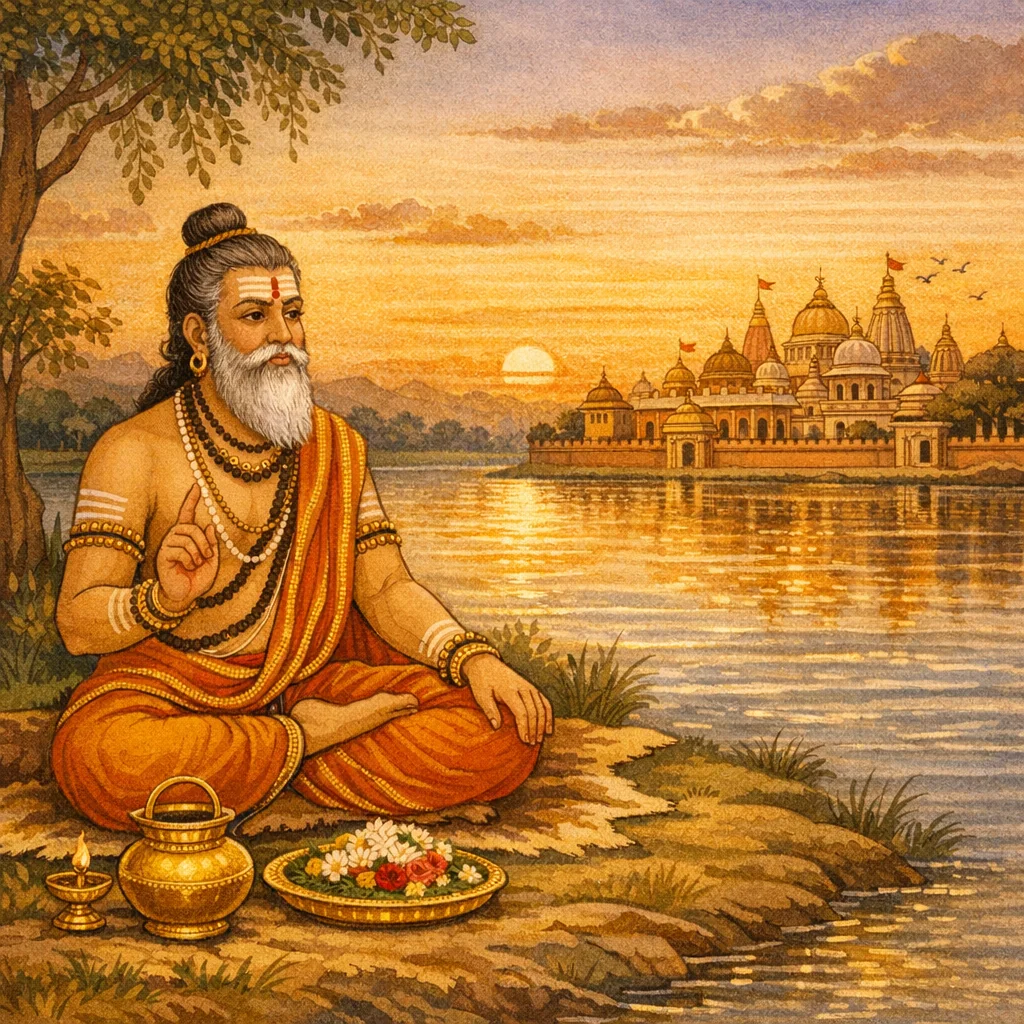
This chapter presents a layered instruction on śrāddha-kalpa—the proper procedure and rationale of Śrāddha that yields imperishable merit. The ṛṣis ask Sūta to explain the method that brings lasting results: the right time, worthy brāhmaṇas, and suitable offerings. Sūta recalls an earlier dialogue: the sage Mārkaṇḍeya reaches the Sarayū confluence and then Ayodhyā, where King Rohitāśva welcomes him. Testing the king’s dharmic prosperity, the sage asks what makes Veda, learning, marriage, and wealth “fruitful,” and answers with practical definitions—Veda is fulfilled by agnihotra; wealth by giving and proper use. When the king inquires about many kinds of śrāddha, Mārkaṇḍeya cites a precedent teaching in which Bhartṛyajña instructs the ruler of Ānarta. The core emphasis is that darśa/amāvāsyā (new-moon) śrāddha is especially obligatory: the pitṛs are portrayed as coming to the household threshold seeking offerings until sunset, grieving when neglected. The chapter also gives an ethical account of why descendants matter: beings reap karmic results in various realms, yet certain states are marked by hunger and thirst; continuity of lineage prevents a “fall” through loss of support. If there is no son, planting and tending an aśvattha tree is prescribed as a stabilizing substitute. The discourse concludes by insisting on regular anna (food) and udaka (water) offerings to the pitṛs; neglect is condemned as pitṛ-droha, while proper tarpaṇa and śrāddha grant desired aims and uphold the trivarga (dharma, artha, kāma) within a disciplined ritual order.
Shlokas
Verse 1
ऋषय ऊचुः । सांप्रतं वद नः सूत श्राद्धकल्पस्य यो विधिः । विस्तरेण महाभाग यथा तच्चाक्षयं भवेत्
The sages said: Now tell us, O Sūta, the procedure of the śrāddha rite. Explain it in detail, O fortunate one, so that its merit and result may become imperishable.
Verse 2
कस्मिन्काले प्रकर्तव्यं श्राद्धं पितृपरायणैः । कीदृशैर्ब्राह्मणैस्तच्च तथा द्रव्यैर्महामते
O wise one, at what time should those devoted to the Pitṛs perform the śrāddha? And with what kind of Brāhmaṇas should it be done, and with what offerings and materials?
Verse 3
सूत उवाच । एतदर्थं पुरा पृष्टो मार्कंडेयो महामुनिः । रोहिताश्वेन विप्रेंद्रा हरिश्चन्द्र सुतेन सः
Sūta said: On this very matter, long ago the great sage Mārkaṇḍeya was questioned, O best of Brāhmaṇas, by Rohitāśva, the son of Hariścandra.
Verse 4
हरिश्चन्द्रे गते स्वर्गं रोहिताश्वे नृपे स्थिते । तीर्थयात्राप्रसंगेन मार्कण्डो मुनिसत्तमः
When Hariścandra had gone to heaven and Rohitāśva was established as king, on the occasion of a pilgrimage to the sacred tīrthas, the foremost sage Mārkaṇḍa (Mārkaṇḍeya) came there.
Verse 5
सरय्वाः संगमे पुण्ये स्नानार्थं समुपस्थितः । तत्र स्नात्वा पितॄन्देवान्संतर्प्य विधिपूर्वकम्
He arrived at the holy confluence of the Sarayū to perform the sacred bath. Bathing there, he duly offered tarpaṇa and satisfied the Pitṛs and the Devas according to proper rite.
Verse 6
प्रविष्टस्तां पुरीं रम्यामयोध्यां सत्यनामिकाम् । रोहिताश्वोऽपि तं श्रुत्वा समायातं मुनीश्वरम् । पदातिः प्रययौ तूर्णं दूरदेशं तु सम्मुखम्
He entered that delightful city—Ayodhyā, renowned for truth. Hearing that the lordly sage had arrived, Rohitāśva too quickly set out on foot, going some distance to meet him face-to-face.
Verse 7
ततः प्रणम्य तं मूर्ध्ना कृतांजलिपुटः स्थितः । प्रोवाच मधुरं वाक्यं विनयेन समन्वि तः
Then, bowing with his head and standing with hands joined in reverence, he spoke sweet words, filled with humility.
Verse 8
स्वागतं ते मुनिश्रेष्ठ भूयः सुस्वागतं मुने । धन्योऽहं कृतपुण्योऽहं संप्राप्तः परमां गतिम् । यत्ते पादरजोभिर्मे मूर्द्धजा विमलीकृताः
Welcome to you, best of sages—again, most welcome, O muni. Blessed am I, rich in merit; I have attained the highest good, for the dust of your feet has purified my head.
Verse 9
एवमुक्त्वा गृहीत्वा तं स्वहस्तालंबनं तदा । ययौ तत्र सभास्थानं बृहत्सिंहासनाश्रयम्
Having spoken thus, he then took him by the hand as support and proceeded to the assembly-hall, furnished with a great throne.
Verse 10
सिंहासने निवेश्याथ तं मुनिं पार्थिवोत्तमः । उपविष्टो धरापृष्ठे कृतांजलिपुटः स्थितः
Seating the sage upon the throne, the best of kings sat upon the earth, remaining with palms joined in reverent homage.
Verse 11
ततः प्रोवाच मधुरं विनयावनतः स्थितः । निःस्पृहस्यापि विप्रेंद्र कि वाऽगमनकारणम्
Then, standing bowed in humility, he spoke gently: “O best of Brāhmaṇas, though you are free from desire, what indeed is the reason for your coming?”
Verse 12
तद्ब्रवीहि यथातथ्यं करोमि तव सांप्रतम् । अदेयमपि दास्यामि गृहायातस्य ते विभो
Therefore, speak the truth exactly as it is. I shall do as you say at once. Even what is ordinarily not to be given, I will give—since you, O mighty one, have come to my house.
Verse 13
मार्कंडेय उवाच । तीर्थयात्राप्रसंगेन वयमत्र समागताः । सरय्वाः संगमे पुण्ये कल्ये यास्याम्यहे पुनः
Mārkaṇḍeya said: “In the course of a pilgrimage to sacred tīrthas, we have assembled here. On the next auspicious day, I shall again go to the holy confluence of the Sarayū.”
Verse 14
निःस्पृहैरपि द्रष्टव्या धर्मवन्तो द्विजोत्तमाः । ततः प्रोक्तं पुराण ज्ञैर्ब्राह्मणैः शास्त्रदृष्टिभिः
Even those free from desire should seek out and behold the righteous best of the twice-born. Thereafter, this was declared by Brāhmaṇas—knowers of the Purāṇas—who see through the lens of the śāstras.
Verse 15
धर्मवन्तं नृपं दृष्ट्वा लिंगं स्वायंभुवं तथा । नदीं सागरगां चैव मुच्येत्पापाद्दिनोद्भवात्
By beholding a king established in dharma, likewise a self-manifest Liṅga, and also a river that flows to the ocean, one is freed from sins that arise day by day.
Verse 16
एवमुक्त्वा ततश्चक्रे पृच्छां स मुनिसत्तमः । तं दृष्ट्वा नृपशार्दूलं पुरःस्थं विनयान्वितम्
Having spoken thus, the best of sages then began to question him, seeing the tiger among kings standing before him, endowed with humility.
Verse 17
कच्चित्ते सफला वेदाः कच्चित्ते सफलं श्रुतम् । कच्चित्ते सफला दाराः कच्चित्ते सफलं धनम्
“Are your Vedas bearing fruit? Is your learning fruitful? Are your wife and household life fruitful? Is your wealth fruitful?”
Verse 18
रोहिताश्व उवाच । कथं स्युः सफला वेदाः कथं स्यात्सफलं श्रुतम् । कथं स्युः सफला दाराः कथं स्यात्सफलं धनम्
Rohitāśva said: “How do the Vedas become fruitful? How does learning become fruitful? How does household life become fruitful? How does wealth become fruitful?”
Verse 19
मार्कंडेय उवाच । अग्निहोत्रफला वेदाः शीलवृत्तफलं श्रुतम् । रतिपुत्रफला दारा दत्तभुक्तफलं धनम्
Mārkaṇḍeya said: “The Vedas bear fruit when they culminate in the Agnihotra. Learning bears fruit when it culminates in good character and right conduct. Household life bears fruit in love and worthy progeny. Wealth bears fruit when it is enjoyed rightly and also given in charity.”
Verse 20
एवं ज्ञात्वा महाराज नान्यथा कर्तुमर्हसि
Knowing it thus, O great king, you should not act otherwise.
Verse 21
चत्वार्येतानि कृत्यानि मयोक्तानि च तानि ते । यथा तानि प्रकृत्यानि लोकद्वयमभीप्सता
These four duties have been stated by me to you—duties that are to be practiced as one’s very nature by a person who seeks welfare in both worlds (here and hereafter).
Verse 22
एवमुक्त्वा ततश्चक्रे कथाश्चित्राश्च तत्पुरः । राजर्षीणां पुराणानां देवर्षीणां विशेषतः
Having spoken thus, he then narrated many wondrous accounts there before them—especially the ancient traditions concerning royal seers, and in particular those of the divine seers.
Verse 23
ततः कथावसाने च कस्मिंश्चिद्द्विजसत्तमाः । पप्रच्छ तं मुनिश्रेष्ठं रोहिताश्वो महीपतिः
Then, when the narration had concluded, O best of the twice-born, King Rohitāśva questioned that foremost of sages.
Verse 24
भगवञ्छ्रोतुमिच्छामि श्राद्धकल्पमहं यतः । दृश्यंते बहवो भेदा द्विजानां श्राद्धकर्मणि
O Blessed One, I wish to hear the proper procedure for śrāddha; for among the twice-born, many variations are seen in the performance of śrāddha rites.
Verse 25
मार्कंडेय उवाच । सत्यमेतन्महाभाग यत्पृष्टोऽस्मि नृपोत्तम । श्राद्धस्य बहवो भेदाः शाखाभेदैर्व्यवस्थिताः
Mārkaṇḍeya said: Truly so, O fortunate one, O best of kings, is what you have asked of me—for the śrāddha rite has many forms, set forth according to the differing Vedic śākhās.
Verse 26
तस्मात्ते निर्णयं वच्मि भर्तृयज्ञेन यत्पुरा । आनर्त्ताधिपतेः प्रोक्तं सम्यक्छ्राद्धस्य लक्षणम्
Therefore I shall declare to you the settled conclusion—the marks of proper śrāddha—as Bhartṛyajña formerly taught them to the lord of Ānarta.
Verse 27
भर्तृयज्ञं सुखासीनं निजाश्रमपदे नृपः । आनर्ताधिपतिर्गत्वा प्रणिपत्य ततोऽब्रवीत्
The king, lord of Ānarta, went to Bhartṛyajña as he sat at ease in his own hermitage; bowing down, he then spoke.
Verse 28
आनर्त उवाच । सांप्रतं वद मे ब्रह्मञ्छ्राद्धकल्पं पित्रीप्सितम् । येन मे तुष्टिमायांति पितरः श्राद्धतर्पिताः
Ānarta said: Tell me now, O Brahmin, the śrāddha procedure desired by the Pitṛs—by which my ancestors, satisfied through the śrāddha offerings, may attain contentment.
Verse 29
कः कालो विहितः श्राद्धे कानि द्रव्याणि मे वद । श्राद्धार्हाणि तथान्यानि मेध्यानि द्वि जसत्तम । यानि योज्यानि वांछद्भिः पितृणां तृप्तिमुत्तमाम्
What time is prescribed for śrāddha? Tell me what substances should be used—those fit for śrāddha and other pure (medhya) items, O best of the twice-born—by which seekers may secure the Pitṛs’ highest satisfaction.
Verse 30
कीदृशा ब्राह्मणा ब्रह्मञ्छ्राद्धार्हाः परिकीर्तिताः । कीदृशा वर्जनीयाश्च सर्वं मे विस्तराद्वद
O Brahmin, what kind of Brāhmaṇas are declared fit to receive śrāddha, and what kind are to be avoided? Tell me everything in full detail.
Verse 31
भर्तृयज्ञ उवाच । अहं ते कीर्तयिष्यामि श्राद्धकल्पमनुत्तमम् । यं श्रुत्वाऽपि महाराज लभेच्छ्राद्धफलं नरः
Bhartṛyajña said: I shall proclaim to you the unsurpassed procedure of śrāddha; by merely hearing it, O great king, a person attains the fruit of śrāddha.
Verse 32
श्राद्धमिदुक्षयेऽवश्यं सदा कार्यं विपश्चिता । यदि ज्येष्ठतमः सर्गः सन्तानं च तथा नृप
At the waning of the Moon (on the new-moon day), the wise should certainly perform śrāddha always; for this is the foremost ordinance for one’s lineage and for one’s progeny as well, O king.
Verse 33
शीतार्ता यद्वदिच्छंति वह्निं प्रावरणानि च । पितरस्तद्वदिच्छंति क्षुत्सामाश्चन्द्रसंक्षयम्
Just as those afflicted by cold long for fire and coverings, so too the Pitṛs, weakened by hunger and exhaustion, long for the Moon’s darkening—the time of the new moon.
Verse 34
दरिद्रोपहता यद्वद्धनं वांछंति मानवाः । पितरस्तद्वदिच्छंति क्षुत्क्षामाश्चन्द्रसं क्षयम्
Just as people struck by poverty yearn for wealth, so the Pitṛs likewise, worn down by hunger and want, yearn for the Moon’s waning—the occasion of the new moon.
Verse 35
यथा वृष्टिं प्रवांछन्ति कर्षुकाः सस्यवृद्धये । तथात्मप्रीतये तेऽपि प्रवांछन्तींदुसंक्षयम्
Just as farmers long for rain for the increase of their crops, so too the Pitṛs, for their own contentment, yearn for the Moon’s waning—amāvāsyā—as the proper time for offerings.
Verse 36
यथोषश्चक्रवाक्यश्च वांछन्ति रवि दर्शनम् । पितरस्तद्वदिच्छंति श्राद्धं दर्शसमुद्भवम्
Just as the dawn and the cakravāka bird long to behold the Sun, so the Pitṛs likewise long for the Śrāddha connected with Darśa, the new-moon observance.
Verse 37
जलेनापि च यः श्राद्धं शाकेनापि करोति वाः । दर्शस्य पितरस्तृप्तिं यांति पापं प्रण श्यति
Even if one performs Śrāddha with only water, or even with simple greens, on Darśa—the new-moon day—the Pitṛs attain satisfaction, and sin is destroyed.
Verse 38
अमावास्यादिने प्राप्ते गृहद्वारं समाश्रिता । वायुभूताः प्रवांछन्ति श्राद्धं पितृगणा नृणाम् । यावदस्तमयं भानोः क्षुत्पिपासास माकुलाः
When the new-moon day arrives, the hosts of Pitṛs—subtle as the wind—take their station at the doorways of people’s homes, longing for Śrāddha, and they remain there until the Sun sets, distressed by hunger and thirst.
Verse 39
ततश्चास्तं गते भानौ निराशा दुःखसंयुताः । निःश्वस्य सुचिरं यांति गर्हयंति स्ववंशजम्
Then, when the Sun has set, they depart hopeless and burdened with sorrow; sighing deeply, they go far away, censuring their own descendant who failed them.
Verse 40
आनर्त उवाच । किमर्थं क्रियते श्राद्धममावास्यादिने द्विज । विशेषेण ममाचक्ष्य विस्तरेण यथातथम्
Ānarta said: O brāhmaṇa, for what purpose is Śrāddha performed on the new-moon day (Amāvāsyā)? Explain it to me in particular—fully and in proper order.
Verse 41
मृताश्च पुरुषा विप्र स्वकर्मजनितां गतिम् । गच्छन्ति ते कथं तस्य सुतस्याश्रयमाययुः
And, O brāhmaṇa, since departed persons go to the destiny produced by their own deeds, how then do they come to depend upon the support of their son, through rites performed by him?
Verse 42
एष नः संशयो विप्र सुमहान्हृदि संस्थितः
O brāhmaṇa, this very great doubt has arisen and settled in our heart.
Verse 43
भर्तृयज्ञ उवाच । सत्यमेतन्महाभाग यत्त्वया व्याहृतं वचः । स्वकर्मार्हां गतिं यांति मृताः सर्वत्र मानवाः
Bhartṛyajña said: O noble one, what you have spoken is true—everywhere, when human beings die, they attain the course of existence that their own deeds deserve.
Verse 44
परं यथा समायांति वंशजस्याश्रयं प्रति । तथा तेऽहं प्रव क्ष्यामि न तथा संशयो भवेत्
But how they come to depend upon the support of their descendants—this I shall explain to you, so that no doubt remains.
Verse 45
मृता यांति तथा राजन्येऽत्र केचिन्महीतले । ते जायंते न मर्त्येऽत्र यावद्वंशस्य संस्थितिः
O king, some who die here upon the earth attain that state; and so long as their lineage endures, they are not reborn here among mortals.
Verse 46
परं शुभात्मका ये च ते तिष्ठंति सुरालये । पापात्मानो नरा ये च वैवस्वतनिवासिनः
Moreover, those of auspicious nature dwell in the abode of the gods; but sinful men become inhabitants of Vaivasvata’s realm, the world of Yama.
Verse 47
अन्यदेहं समाश्रित्य भुंजानाः कर्मणः फलम् । शुभं वा यदि वा पापं स्वयं विहितमात्मनः
Assuming another body, they experience the fruit of their actions—whether good or evil—deeds they themselves have performed.
Verse 48
यमलोके स्थितानां हि स्वर्गस्थानामपि क्षुधा । पिपासा च तथा राजंस्तेषां संजायतेऽधिका
For those who are in Yama’s world—and even for those abiding in heaven—hunger and thirst arise; O king, these become intense for them.
Verse 49
यावन्नरत्रयं राजन्मातृतः पितृतस्तथा । तेषां च परतो ये च ते स्वकर्म शुभाशुभम् । भुंजते क्षुत्पिपासा च न तेषां जायते क्व् चित्
O king, so long as the ‘three persons’ on the mother’s side and likewise on the father’s side remain as supports—and also for those beyond them—they undergo the good and bad of their own karma; and hunger and thirst do not arise for them anywhere.
Verse 50
तत्रापि पतनं तस्मात्स्थानाद्भवति भूमिप । वंशोच्छेदान्पुनः सर्वे निपतंति महीतले । त्रुटद्रज्जुनिबद्धं हि भांडं यद्वन्निराश्रयम्
Even from that state there is a fall from that station, O protector of the earth. When the lineage is cut off, all of them fall again to the earthly plane—like a vessel tied by a rope that snaps, left without support.
Verse 51
एतस्मात्कारणाद्यत्नः सन्तानाय विचक्षणैः । प्रकर्तव्यो मनुष्येंद्र वंशस्य स्थितये सदा
For this reason, O lord of men, the wise should always make earnest effort for progeny, for the steady continuance of the lineage.
Verse 52
अपि द्वादशधा राजन्नौरसादिसमु द्भवाः । तेषामेकतमोऽप्यत्र न दैवाज्जायते सुतः
O King, even though sons are spoken of as arising in twelve ways—beginning with the natural-born (aurasa)—here, not even one among them is obtained merely by fate (daiva).
Verse 53
पितॄणां गुप्तये तेन स्थाप्योऽश्वत्थः समाधिना । पुत्रवत्परिपाल्यश्च निर्विशेषं नराधिप
Therefore, for the protection and welfare of the Pitṛs, an aśvattha (sacred fig) should be established with focused resolve; and, O ruler of men, it should be cared for like one’s own son, without discrimination.
Verse 54
यावत्संधारयेद्भूमिस्तमश्वत्थं नराधिप । कृतोद्वाहं समं शम्या तावद्वंशोऽपि तिष्ठति
O king, as long as the earth upholds that aśvattha tree, so long does one’s lineage also endure—steadfast, as though duly established through proper rites and firm foundations.
Verse 55
अश्वत्थजनका मर्त्या निपत्य जगती तले । पापामुक्ताः समायांति योनिं श्रेष्ठां शुभान्विताः
Mortals who become ‘begetters’ of the aśvattha—by establishing it upon the earth—are freed from sins and attain an excellent, auspicious state of rebirth.
Verse 56
एतस्मात्कारणादन्नं नित्यं देयं तथोदकम् । समुद्दिश्य पितॄन्राजन्यतस्ते तन्मयाः स्मृताः
For this reason, food should be given daily, and likewise water, dedicating it to the Pitṛs; for, O king, they are remembered as being sustained through that very offering.
Verse 57
अदत्त्वा सलिलं सस्यं पितॄणां यो नराधिप । स्वयमश्नाति वा तोयं पिवेत्स स्यात्पितृद्रुहः । स्वर्गेऽपि च न ते तोयं लभंते नान्नमेव च
O king, one who, without first offering water and food to the Pitṛs, eats for himself or drinks water—such a person becomes a betrayer of the ancestors. Even in heaven, such people obtain neither water nor food.
Verse 58
न दत्तं वंशजैर्मर्त्यैश्चेद्व्यथां यांति दारुणाम् । क्षुत्पिपासासमुद्भूतां तस्मात्संतर्पयेत्पितॄन्
If offerings are not given by mortal descendants, the Pitṛs fall into terrible suffering arising from hunger and thirst; therefore one should satisfy (tarpay) the ancestors.
Verse 59
नित्यं शक्त्या नरो राजन्पयोऽन्नैश्च पृथग्विधैः । तथान्यैर्वस्त्रनैवेद्यैः पुष्पगन्धानुलेपनैः
O king, a person should, according to his capacity, daily (honor the Pitṛs) with milk and various kinds of foods, and also with other offerings—garments, naivedya, flowers, fragrances, and unguents.
Verse 60
पितृमेधादिभिः पुण्यैः श्राद्धैरुच्चावचैरपि । तर्पितास्ते प्रयच्छंति कामानिष्टान्हृदि स्थितान् । त्रिवर्गं च महाराज पितरः श्राद्धतर्पिताः
When the Pitṛs (ancestors) are satisfied by meritorious rites—such as pitṛ-medha and other forms of śrāddha, whether simple or elaborate—they grant the cherished wishes abiding in one’s heart. And, O great king, the ancestors, pleased by śrāddha, bestow the three aims of life (trivarga) as well: Dharma, Artha, and Kāma.
Verse 61
तर्पयंति न ये पापाः स्वपितॄन्नित्यशो नृप । पशवस्ते सदा ज्ञेया द्विपदाः शृंगवर्जिताः
O king, those sinful people who do not regularly satisfy their own ancestors through tārpaṇa are ever to be regarded as beasts—two-footed creatures, yet bereft of horns.
Verse 215
इति श्रीस्कांदे महापुराण एकाशीतिसाहस्र्यां संहितायां षष्ठे नागरखण्डे हाटकेश्वरक्षेत्रमाहात्म्ये श्राद्धकल्पे श्राद्धावश्यकताकारणवर्णनंनाम पञ्चदशोत्तरद्विशततमो ऽध्यायः
Thus ends, in the venerable Skanda Mahāpurāṇa—within the compendium of eighty-one thousand verses—within the sixth book, the Nāgara-khaṇḍa, in the glorification of the sacred Hāṭakeśvara region, in the section on the Śrāddha rite, the chapter entitled “Description of the Causes for the Necessity of Śrāddha,” being the two-hundred-and-fifteenth chapter.