Adhyaya 212
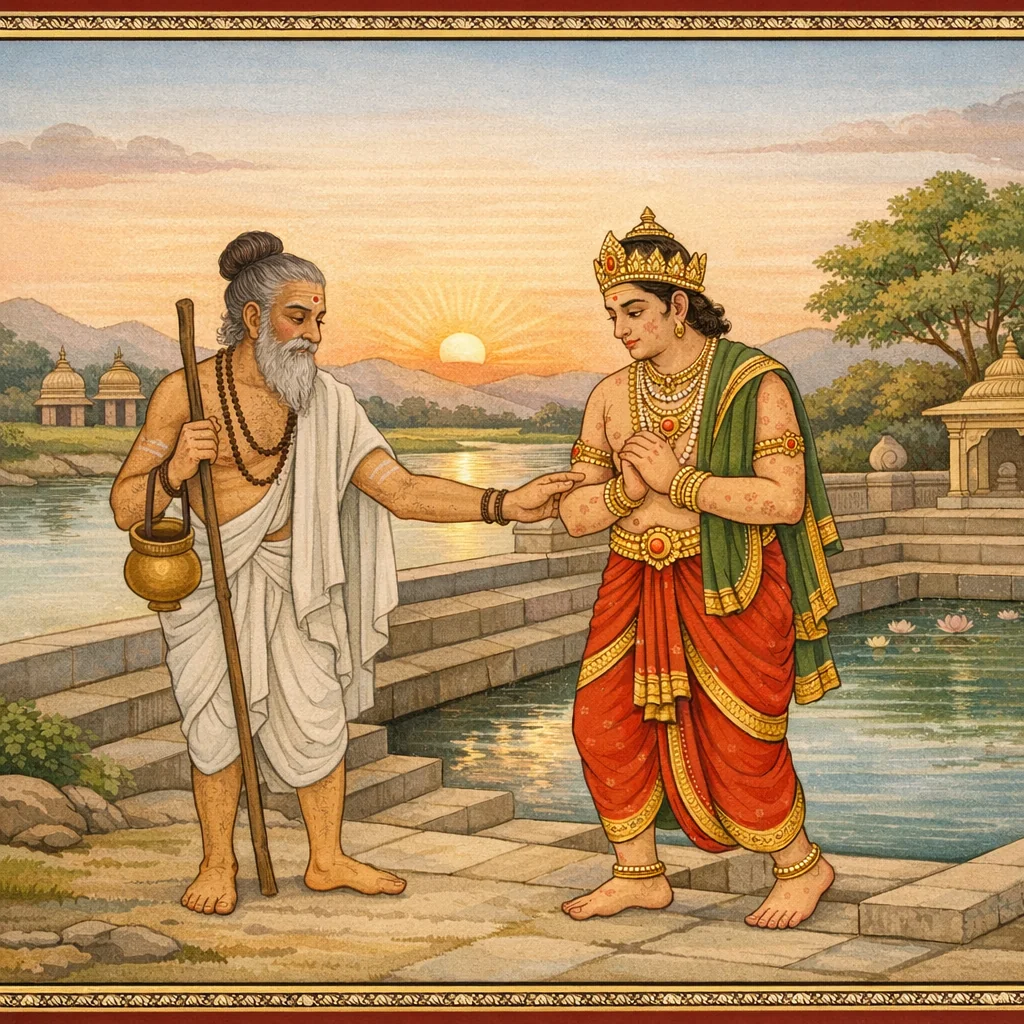
The chapter begins with sages asking Sūta to recount, within the Hāṭakeśvara-kṣetra setting, the tīrtha-glory connected with Viśvāmitra. Sūta praises Viśvāmitra’s extraordinary greatness, describes a kuṇḍa he created, and the advent of pure waters identified with Jāhnavī (Gaṅgā), stressing their power to destroy sin. A solar presence is then affirmed through the installation of Bhāskara as the deity of the site. A calendrical observance is prescribed: in Māgha, during the bright fortnight, when Saptamī falls on a Sunday, one should bathe there and worship the Sun with reverence; this is said to remove kuṣṭha (a severe skin disease) and moral defilement. The narrative also introduces a healing vāpī to the west–northwest, attributed to Dhanvantari; by his tapas, Bhāskara grants a boon that properly timed bathers gain immediate relief from illness. Human exempla follow: King Ratnākṣa of Ayodhyā, afflicted with incurable kuṣṭha, is guided by a wandering kārpaṭika to the tīrtha; he performs the prescribed bath, is instantly healed, and establishes a solar deity named Ratnāditya. Another account tells of an aged village herdsman with kuṣṭha who is cured incidentally when he enters the water while rescuing an animal, and later attains rare spiritual success through disciplined worship. The chapter closes with practice directives (snāna, pūjā, abundant Gāyatrī japa) and phalaśruti assurances of health and desired aims, liberation for the dispassionate, and protection of descendants from disease through faithful charity such as gifting a cow.
Shlokas
Verse 1
ऋषय ऊचुः । श्रुतं तीर्थत्रयं पुण्यं हाटकेश्वरसंज्ञिते । क्षेत्रेऽत्र यत्त्वया प्रोक्तमस्माकं सूतनंदन
The sages said: We have heard from you of the three sacred tīrthas in this holy region called Hāṭakeśvara—just as you have spoken of them to us, O son of Sūta.
Verse 2
विश्वामित्रीयमाहात्म्यं श्रोतुमिच्छामहे वयम् । सांप्रतं तत्समाचक्ष्व परं कौतूहलं हि नः
We wish to hear the Māhātmya connected with Viśvāmitra. Now, please relate it to us—our curiosity is exceedingly great.
Verse 3
सूत उवाच । समुद्रस्यापि पारोऽत्र लक्ष्यते च क्षितेरपि । तारकाणां मुनेस्तस्य न गुणानां द्विजोत्तमाः
Sūta said: “Here, O best of the twice-born, one may discern even the far shore of the ocean and the limits of the earth; but the virtues of that sage—surpassing even the stars—cannot be measured.”
Verse 4
लक्ष्यते केनचित्पारो गाधेः पुत्रस्य धीमतः । क्षत्रियोऽपि द्विजत्वं यः संप्राप्तो द्विजसत्तमाः
“Some may speak of discerning the ‘limit’ of that wise son of Gādhi; yet he—though born a kṣatriya—attained the state of a brāhmaṇa, O best of the twice-born.”
Verse 5
अंत्यजत्वं गतस्यापि त्रिशंकोः पृथिवीपतेः । यज्ञभागभुजो देवाः प्रत्यक्षेण विनिर्मिताः
“Even for Triśaṅku, the lord of the earth, who had fallen into the condition of an outcaste, the gods—receivers of sacrificial offerings—were manifested before one’s very eyes.”
Verse 6
ब्रह्मणः स्पर्धया येन पुरा सृष्टिर्द्विजोत्तमाः । प्रारब्धा च ततो देवैः प्रणिपत्य निवारितः
In rivalry with Brahmā, he once began a creation, O best of the twice-born; then the gods, bowing down to him, restrained that act.
Verse 7
तस्य तीर्थस्य माहात्म्यं साप्रतं वदतो मम । श्रूयतां ब्राह्मणश्रेष्ठाः सर्वपातकनाश नम्
Now hear from me the greatness of that sacred ford, O foremost brāhmaṇas—a tīrtha that destroys all sins.
Verse 8
तेन तत्र कृतं कुण्डं स्वहस्तेन महात्मना । शस्त्रं विनापि भूपृष्ठं प्रविदार्य समंततः
There, that great-souled one made a sacred pond with his own hand—splitting open the surface of the earth on every side, even without any weapon.
Verse 9
तत्र ध्यात्वा समानीता पातालाज्जाह्नवी नदी । मर्त्यलोके समायातं यस्यास्तोयं सुनिर्मलम्
There, by meditation, the Jāhnavī River was brought up from Pātāla; and in the world of mortals, her water—exceedingly pure—came to be present.
Verse 10
सुस्वादु च तथा स्नानात्सर्वपातकनाशनम् । तेनापि स्थापितस्तत्र भास्करो वारितस्करः
Its water is sweet to the taste, and bathing there destroys all sins. There too, Bhāskara (the Sun) was established by him as “Vāritaskara”, the warder-off of thieves and evils.
Verse 11
यः सप्तम्यां सूर्यवारे स्नात्वा तस्य हृदे शुभे । माघमासे सिते पक्षे नमस्यति दिवाकरम् । स कुष्ठैर्मुच्यते सर्वैस्तथा पापैर्द्विजो त्तमाः
Whoever, on the seventh lunar day that falls on a Sunday, bathes in the auspicious “heart” of that tīrtha and, in the bright fortnight of the month of Māgha, bows to Divākara, the Sun—he is freed from all leprosy and likewise from sins, O best of the twice-born.
Verse 12
पश्चिमोत्तरदिग्भागे तस्यास्ति जलसंभवा । धन्वंतरिकृता वापी सर्वरोगविनाशिनी
In its northwestern quarter there is a water-source—a well or pond made by Dhanvantari—destroyer of all diseases.
Verse 13
तत्र पूर्वं तपस्तेपे धन्वं तरिरुदारधीः । ववन्दे तपसा युक्तो ध्यायमानः समाहितः
There, in former times, the noble-minded Dhanvantari performed austerities (tapas). Disciplined by tapas, absorbed in meditation, and fully composed, he offered his reverent homage.
Verse 14
ततः कालेन महता संतुष्टस्तस्य भास्करः । उवाच वरदोऽस्मीति प्रार्थयस्व महामते
After a long time, Bhāskara (the Sun) became pleased with him and said, “I am a giver of boons—O great-minded one, ask what you desire.”
Verse 15
धन्वंतरिरुवाच । अत्र कुण्डे नरो भक्त्या यः स्नानं कुरुते विभो । तस्य स्यात्सर्वरोगाणां संक्षयः सुरसत्तम
Dhanvantari said: “O Lord, best among the gods, whoever bathes in this kuṇḍa with devotion shall attain the destruction of all diseases.”
Verse 16
श्रीभगवानुवाच । अद्य शस्ते दिने योऽत्र सप्तम्यां रविवासरे । सूर्योदये नरः स्नानं करिष्यति समाहितः । व्याधिग्रस्तः स नीरोगस्तत्क्षणात्संभविष्यति
The Blessed Lord said: “On this auspicious day—on the seventh lunar day (saptamī), a Sunday—whoever bathes here at sunrise with a steady, collected mind, even if afflicted by illness, will become free from disease at that very moment.”
Verse 18
एवमुक्त्वा सुरश्रे ष्ठोंऽतर्धानं स गतो रविः । धन्वन्तरिः प्रहृष्टात्मा स्वस्थानं च गतस्ततः
Having spoken thus, Ravi (the Sun), best among the gods, vanished from sight. Then Dhanvantari, his heart filled with joy, returned to his own abode.
Verse 19
कस्यचित्त्वथ कालस्य रत्नाक्षोऽथ महीपतिः । अयोध्याधि पतिः ख्यातः सूर्यवंशसमुद्भवः
After some time, there arose a king named Ratnākṣa—renowned as the ruler of Ayodhyā, born in the Solar dynasty.
Verse 20
कृतज्ञश्च वदान्यश्च स्वदारनिरतः सदा । शूरः परमतेजस्वी सर्वशत्रुनिषूदनः
He was grateful and generous, ever devoted to his own lawful wife; a hero of blazing splendor, a destroyer of all enemies.
Verse 21
पूर्वकर्मविपाकेन तस्य भूमिपतेर्द्विजाः । कुष्ठव्याधिरभूद्रौद्रो दुश्चिकित्स्यो जगत्त्रये
O twice-born ones, by the ripening of former deeds, that king was struck by a fierce leprosy (kuṣṭha), hard to cure in all the three worlds.
Verse 22
तदस्ति नौषधं लोके यत्तेन न कृतं द्विजाः । कुष्ठग्रस्तेन वा दानं यत्र दत्तं महात्मना
O brāhmaṇas, there was no medicine in the world that he did not try; nor any charity that that great-souled man, though afflicted with leprosy, did not give.
Verse 23
यथायथौषधान्येव स करोति ददाति च । तथातथा तस्य कायो व्याधिना क्षामितो भृशम्
Whatever medicines he employed and whatever gifts he gave, just so did his body, again and again, become severely wasted by the disease.
Verse 24
ततो वैराग्यमापन्नः स नृपो द्विजसत्तमाः । पुत्रं राज्येऽथ संस्थाप्य वांछयामास पावकम् । निषिद्धोऽपि हि तैः सर्वैः कलत्रैराप्तसेवकैः
Then that king, O best of the twice-born, fell into dispassion (vairāgya). Installing his son upon the throne, he desired the fire, to enter the pyre. Though restrained by all—by his wives and devoted attendants—he still longed for it.
Verse 25
दत्त्वा दानानि विप्रेभ्यः पूजयित्वा सुरोत्तमान् । संभाष्य च सुहृद्वर्गं शासयित्वा निजं सुतम्
Having given gifts to the brāhmaṇas, having worshipped the best of the gods, and having spoken with his circle of friends, he instructed his own son in the duties of rule.
Verse 26
एतस्मिन्नेव काले तु भ्रममाणे यदृच्छया । कश्चित्कार्पटिकः प्राप्तो दिव्यरूपवपुर्धरः
Just at that time, as he wandered by chance, a certain kārpaṭika (mendicant ascetic) arrived—one whose body bore a divine form.
Verse 27
अथासौ व्याकुलं दृष्ट्वा तत्सर्वं नृपतेः पुरम् । अपृच्छद्विस्मयाविष्टो दृष्ट्वा कञ्चिन्नरं द्विजाः
Then, seeing the king’s entire city in turmoil, he—filled with wonder—asked, after noticing a certain man there, O Brāhmaṇas.
Verse 28
कार्पटिक उवाच । किमेषा व्याकुला भद्रे सर्वा जाता महापुरी । निरानन्दाऽश्रुपूर्णाक्षैर्बालवृद्धैर्निषेविता
The kārpaṭika said: “Noble lady, why has this great city wholly fallen into distress—bereft of joy, and crowded with children and the aged, their eyes brimming with tears?”
Verse 29
सोऽब्रवीन्नृपतिश्चायं कुष्ठव्याधिसमन्वितः । साधयिष्यति सन्दीप्तं सुनिर्विण्णो हुताशनम्
He replied: “This king is afflicted with leprosy. Deeply despondent, he intends to enter the blazing fire.”
Verse 30
तेनेयं नगरी कृत्स्ना परं दुःखमुपागता । गुणैरस्य समाविष्टा नूनं मृत्युं प्रयास्यति
Because of him, this entire city has fallen into the deepest sorrow. Bound to him by his virtues, it seems they will surely follow him even unto death.
Verse 31
तच्छ्रुत्वा सत्वरं गत्वा नृपं कार्पटिकोऽब्रवीत्
Hearing this, the kārpaṭika quickly went to the king and spoke to him.
Verse 32
सर्वं जनं नरेन्द्रस्य मृतं जीवापयन्निव । मा नृपानेन दुःखेन व्याधिजेन हुताशनम् । प्रविश त्वं स्थिते तीर्थे सर्वव्याधिक्षयावहे
O king, it is as though you are restoring to life all your people who are dead, so dear are you to them. Do not, from sorrow born of this disease, enter the fire. Enter instead this established tīrtha, the destroyer of all ailments.
Verse 33
मदीयो भूपते देह ईदृगासीद्यथा तव । तत्र स्नातस्य सद्योऽथ जात ईदृक्पुनः प्रभो
O king, my own body was once like yours. But when I bathed there, at once I became like this again, restored, O lord.
Verse 34
सप्तम्यां सूर्यवारेण भास्करस्योदयं प्रति । यस्तत्र कुरुते स्नानं व्याधिग्रस्तो नरो भुवि
On the seventh lunar day, when it is Sunday, at the time of the Sun’s rising—whoever bathes there, even a man afflicted by disease in this world,
Verse 35
स व्याधिना विनि र्मुक्तस्तत्क्षणात्कल्पतां व्रजेत् । तथा पापविनिर्मुक्तो यथाहं नृपसत्तम
—is freed from disease that very instant and attains wholeness and well-being. So too is he released from sin, O best of kings, just as I myself was.
Verse 36
राजोवाच । कस्मिन्देशे महातीर्थं तादृशं वद मे द्रुतम्
The King said: “In which land is such a great tīrtha? Tell me quickly.”
Verse 37
कार्पटिकौवाच । अस्ति भूमितले ख्यातं नागरं क्षेत्रमुत्तमम् । कुष्ठव्याधिसमाक्रांतो गतोऽहं तत्र भूपते
Kārpaṭika said: “Upon the earth there is a famed and most excellent holy region called Nāgara. Stricken with the disease of leprosy, I went there, O king.”
Verse 38
तस्य सन्दर्शनार्थाय तीर्थयात्रापरायणः । तत्र मां दीनमालोक्य व्याधिग्रस्तं सुदुःखितम् । कश्चित्तत्राश्रयः प्राह तपस्वी कृपयान्वितः
Intent on pilgrimage to behold that holy place, I arrived there. Seeing me wretched—afflicted by disease and in great misery—one compassionate ascetic who dwelt there spoke to me.
Verse 39
पश्चिमोत्तरदिग्भागे देवस्य जलशायिनः । तीर्थमस्ति महापुण्यं विश्वामित्रजलावहम्
In the northwestern quarter, by the deity known as Jalaśāyin, there is a supremely meritorious sacred ford called Viśvāmitra-jalāvaha.
Verse 40
तत्र गत्वा कुरु स्नानं सप्तम्यां रविवासरे । माघमासे तु संप्राप्ते शुक्लपक्षे विशेषतः
Go there and bathe on Saptamī when it is Sunday—especially when the month of Māgha has arrived, and particularly in the bright fortnight.
Verse 41
येन निर्याति ते कुष्ठो भास्करस्योदयं प्रति । तच्छ्रुत्वाऽहं च तत्प्राप्तः सप्तम्यां सूर्यसंयुजि । ततश्च कृतवान्स्नानं निर्झरे तत्र शांभवे
“By this, your leprosy will depart—at the time of the Sun’s rising.” Hearing that, I reached the place on Saptamī joined with the Sun (Sunday), and then I performed the bath in the Śāmbhava spring-stream there.
Verse 42
ततस्तस्माद्विनिष्क्रांतो यावत्पश्याम्यहं तनुम् । तावन्नृपेदृशी जाता सत्यमेतत्तवोदितम्
Then, when I came forth from that water and beheld my body, in that very moment it became thus, O king. Truly, what was told to you is indeed true.
Verse 43
तस्मात्त्वमपि राजेंद्र तत्र स्नानं समाचर । सप्तम्यां सूर्यवारेण भास्करस्योदयं प्रति
Therefore you too, O lord of kings, should perform the sacred bathing there—on Saptamī, when it falls on a Sunday, at the time of the Sun’s rising.
Verse 44
येन ते नश्यति व्याधिर्विशेषमपि पातकम् । तच्छ्रुत्वा स नृपस्तूर्णं तेनैव सहितो ययौ
Hearing of that means by which his disease—and even a grievous sin—would be destroyed, the king at once set out, accompanied by that very man.
Verse 45
चकार स तथा स्नानं सप्तम्यां सूर्यवासरे । माघमासे तु संप्राप्ते विश्वामित्रजले शुभे
Accordingly, he performed the bathing rite on Saptamī, on a Sunday; and when the month of Māgha had arrived, he bathed in the auspicious waters of Viśvāmitra.
Verse 46
ततः कुष्ठविनिर्मुक्तस्तत्क्षणात्समपद्यत । दिव्यरूपवपुर्द्धारी कामदेव इवापरः
Then, freed from leprosy in that very instant, he was at once transformed—bearing a radiant, divine form, like another Kāma-deva.
Verse 47
अथ तुष्टो नरेंद्रस्तु तस्मै कार्पटिकाय च । ददौ कोटित्रयं हेम्नः प्रोवाच स ततो वचः
Then the king, well pleased, gave that mendicant three crores of gold; and thereafter he spoke these words.
Verse 48
त्वत्प्रसादाद्विमुक्तोऽस्मि रोगादस्मात्सुदारुणात् । तस्मात्त्वं गच्छ गेहं स्वं स्थास्येऽहं चात्र निर्भरम्
“By your favor I have been freed from this most dreadful disease. Therefore, go to your own home; I shall remain here, without anxiety.”
Verse 49
करिष्यामि तपो नित्यं स्वकलत्रसम न्वितः । राज्ये संस्थापितः पुत्रः समर्थो राज्यकर्मणि
“I shall practice austerity daily, together with my queen. I have installed my son in the kingdom; he is competent in the duties of governance.”
Verse 50
इत्युक्त्वा प्रेरयामास तं तथान्यान्समागतान् । सेवकास्वगृहायैव स्वयं तत्रैव संस्थितः
Having said this, he sent him back, and also the others who had gathered—along with the attendants—to their homes; he himself remained there.
Verse 51
कृत्वाऽश्रमपदं रम्यं स्वकलत्रसमन्वितः । संप्राप्तश्च परां सिद्धिं कालेन द्विजसत्तमाः
Having established a delightful hermitage together with his queen, he attained the highest spiritual accomplishment in due course, O best of the twice-born.
Verse 52
तस्य नाम्ना ततः ख्यातं तीर्थ मेतत्त्रिविष्टपे । सर्वव्याधिहरं रम्यं सर्वपातकनाशनम्
Thereafter this sacred ford became renowned in the three worlds by his name—delightful, removing all diseases, and destroying all sins.
Verse 53
तेन संस्थापितस्तत्र देवदेवो दिवाकरः । रत्नादित्य इति ख्यातो निजनाम्ना महा त्मना
There, the Sun—God of gods—was installed by him; and that great-souled one became renowned by his own name as Ratnāditya.
Verse 54
सप्तम्यां सूर्यवारेण तत्र स्नात्वा प्रपश्यति । यस्तु पापविनिर्मुक्तः सूर्यलोकं स गच्छति
Whoever bathes there on the seventh lunar day, when it is Sunday, becomes freed from sins and attains the world of the Sun (Sūryaloka).
Verse 55
यदन्यत्तत्र संवृत्तं क्षेत्रजातं द्विजो त्तमाः । तदहं कीर्तयिष्यामि शृणुध्वं सुसमाहिताः
O best of twice-born ones, I shall now relate what else occurred there—an event born of that sacred field (kṣetra). Listen with full attention.
Verse 56
आसीत्तत्र पुमान्कश्चिद्देशे ग्राम्यो जरात्मकः । कुष्ठी तथापि नित्यं स करोति पशु रक्षणम्
There lived in that region a certain villager, aged and infirm. Though afflicted with leprosy, he still tended cattle every day.
Verse 57
एकदा रक्षतस्तस्य पशूंस्तत्र गिरेरधः । एकः पशुर्विनिष्क्रांतः सत्पथात्तृणलोभतः
Once, as he guarded the cattle at the foot of the hill, one animal strayed from the proper path, lured by its craving for grass.
Verse 58
सप्तम्यां रविवारेण पतितस्तस्य निर्झरे । न च संलक्षितस्तेन गच्छमानः कथंचन
On Saptamī, when it was Sunday, that animal fell into a mountain stream (or waterfall pool); and as he went on his way, he did not notice it at all.
Verse 59
अथ यावद्गृहे सोऽथ भोजनाथं समुद्यतः । तावत्तस्य पशोः स्वामी भर्त्सयन्समुपागतः
Then, as he set out for home to take his meal, the owner of that animal arrived, scolding him.
Verse 60
नायातः स पशुः कस्मान्मदीयो मामके गृहे । तस्मादानय तं शीघ्रं नो चेत्प्राणान्हरामि ते
“Why has my animal not returned to my house? Therefore bring it quickly—otherwise I shall take your life!”
Verse 61
सूत उवाच । तच्छ्रुत्वा भय संत्रस्तः स कुष्ठी सत्वरं ययौ । तेन मार्गेण येनैव दिवा भ्रांतो महीतले
Sūta said: Hearing this, the leper, shaken with fear, hurried away—by the very path along which he had wandered upon the earth during the day.
Verse 62
अथ दूरात्स शुश्राव तस्य रावं पशोस्तदा । पतितस्य महागर्ते निशांते तमसि स्थिते
Then, from afar, he heard the cry of that animal—fallen into a great pit—at the night’s end, while darkness still remained.
Verse 63
ततो गत्वाऽथ तं गर्तं प्रविश्य जलमध्यतः । चकर्ष तं पशुं कृच्छ्रात्पंकमध्यात्सुदारुणात् । समादायाथ तं हर्म्यं प्रजगाम शनैःशनैः
Then he went to that pit; entering into the midst of the water, he dragged the animal out with great difficulty from the dreadful heart of the mire. Taking it up, he slowly made his way back to the house.
Verse 64
अर्पयित्वाथ तं तस्य स्वकीयं त्वाश्रमं गतः
Having handed it over to that person, he then returned to his own hermitage.
Verse 65
ततः सुप्तो महाभागाः स प्रबुद्धः पुनर्यदा । प्रभाते वीक्षते गात्रं यावत्कुष्ठविवर्जितम्
Then that fortunate man fell asleep; and when he awoke again at dawn, he looked upon his body and found it wholly free from leprosy.
Verse 66
शोभया परया युक्तं विस्मयोत्फुल्ललोचनः । चिंतयामास किं ह्येतदकस्माद्रोगसंक्षयः
Adorned with extraordinary radiance, his eyes widened in amazement; he pondered, “How has this sudden destruction of disease come about?”
Verse 67
नूनं तस्य प्रभावोऽयं तीर्थस्याद्य निशागमे । मयावगाहितं यच्च पशोरर्थं सुकर्द्दमम्
Surely this is the power of that sacred tīrtha, revealed this very night; for I entered even that pleasant muddy water for the sake of an animal.
Verse 68
ततश्च वीक्षयामास तेन गत्वा सुकौतुकात् । यावत्कंडूविनिर्मुक्तस्तेजसा परिवारितः
Then, out of eager curiosity, he went there and examined the place, and found himself freed from itching, as though surrounded by radiant energy.
Verse 69
तत्र स्थाने स्वयं गत्वा ज्ञात्वा च तीर्थमुत्तमम् । तपस्तेपे स तत्रैव ध्यायमानो दिवाकरम्
Going personally to that spot and recognizing it as an excellent tīrtha, he performed austerities right there, meditating upon Divākara, the Sun.
Verse 70
अरण्यवासिनं सम्यग्दिवारात्रमतंद्रितः । गतश्च परमां सिद्धिं दुर्लभां त्रिदशैरपि
Living properly as a forest-dweller, tirelessly by day and night, he attained the supreme spiritual accomplishment—one that is difficult even for the gods to obtain.
Verse 71
तस्मात्सर्वप्रयत्नेन तत्र स्नानं समाचरेत्
Therefore, with every effort, one should perform bathing at that sacred place.
Verse 72
पूजयेच्चापि तं देवं भास्करं वारितस्करम् । अद्यापि कलिकालेऽपि तत्र स्नातो नरः शुचिः
One should also worship that deity Bhāskara, the Sun, who removes the “water-thief” (sins and afflictions); even today, even in the Kali age, a man who bathes there becomes pure.
Verse 73
तत्र पुण्यजले कुण्डे सप्तम्यां सूर्यवासरे । यस्तं पूजयते भक्त्या सोऽपि पापैः प्रमुच्यते
There, in that pond of holy, meritorious water, on the seventh lunar day when it falls on Sunday, whoever worships Him with devotion is likewise released from sins.
Verse 74
गायत्र्यष्टसहस्रं यो जपेत्तत्पुरतः स्थितः । सोऽपि रोगविनिर्मुक्तो मुच्यते सर्वपातकैः
Whoever, standing before that sacred presence, recites the Gāyatrī eight thousand times—he too becomes free from disease and is released from all grave sins.
Verse 76
एतद्वः सर्वमाख्यातं मयादित्यस्य संभवम् । माहात्म्यं श्रवणाद्यस्य नरः पापाद्विमुच्यते
Thus I have fully related to you the origin of Āditya, the Sun. By hearing—and likewise by reciting and remembering—this greatness, a person is freed from sin.
Verse 117
नीरोगश्चेप्सितान्कामान्निष्कामो मोक्षमेष्यति
If one seeks worldly fruits, he becomes free from disease and gains the enjoyments he desires; but if desireless, he attains mokṣa—liberation.
Verse 212
इति श्रीस्कांदे महापुराण एकाशीतिसाहस्र्यां संहितायां षष्ठे नागरखण्डे हाटकेश्वरक्षेत्र माहात्म्ये रत्नादित्यमाहात्म्यवर्णनंनाम द्वादशोत्तरद्विशततमोऽध्यायः
Thus ends the two-hundred-and-twelfth chapter, called “The Description of the Greatness of Ratnāditya,” in the Hāṭakeśvara-kṣetra Māhātmya of the sixth Nāgarakhaṇḍa, within the Śrī Skanda Mahāpurāṇa, in the collection of eighty-one thousand verses.
Verse 785
तस्योद्देशेन यो दद्याद्धेनुं श्रद्धासमन्वितः । न तस्यान्वयजातोऽपि व्याधिना परिगृह्यते
Whoever, with faith, donates a cow in his name—for the sake of that sacred one—even one born in his lineage is not seized by disease.