Adhyaya 211
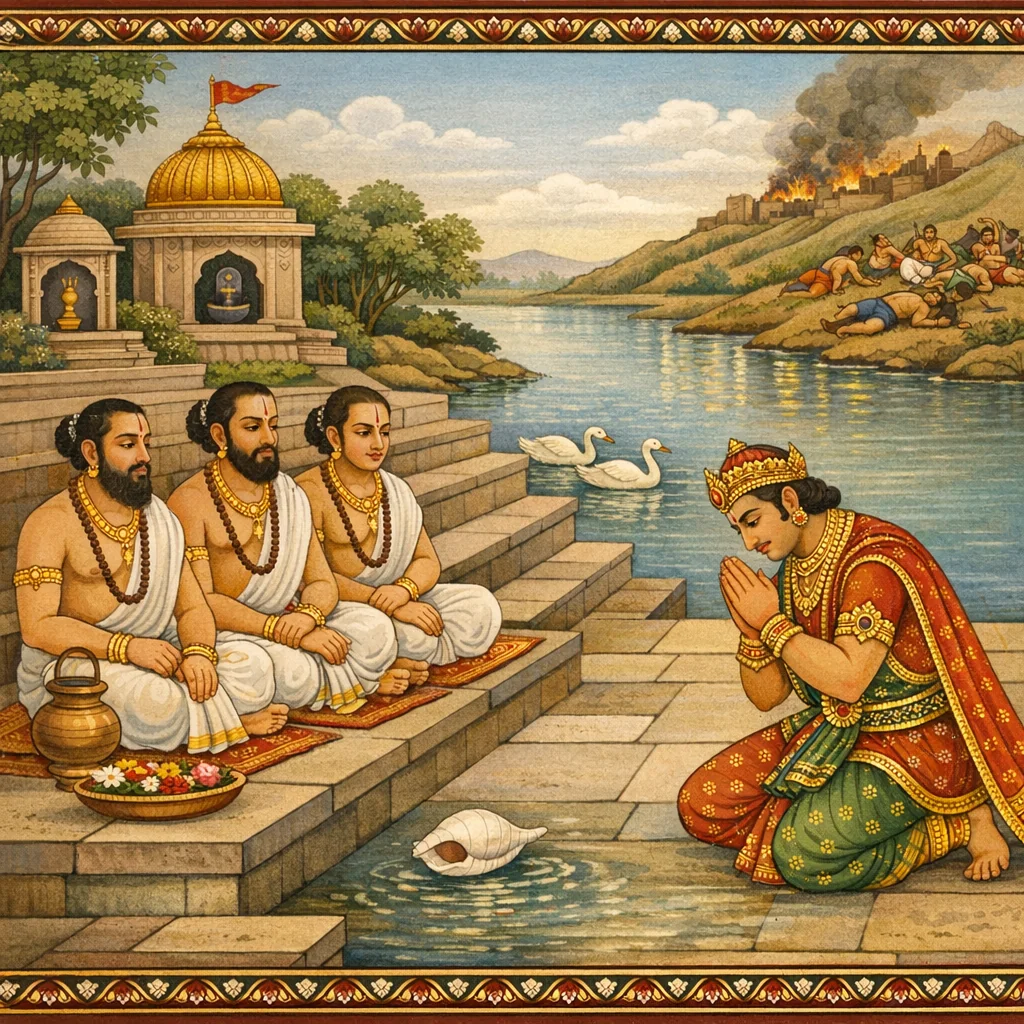
The chapter unfolds as a didactic dialogue. Viśvāmitra asks why a king suffers poverty (dāridrya), kuṣṭha disease, and military defeat. Nārada explains that the downfall arises from ethical and administrative failures focused on wronging brāhmaṇas: promising support but not giving it, humiliating petitioners, and suppressing or removing ancestral and paternal legal ordinances (śāsana) tied to brāhmaṇa rights and grants. This breach of dharma empowers the king’s enemies. The remedy is practical and place-centered. The king goes with devotion to Śaṅkhatīrtha, performs ritual bathing, gathers brāhmaṇas, washes their feet before Śaṅkhāditya, and issues many charters and gifts (including a specified set) to restore what was denied. The narrative ends with an immediate result: enemies present there die through the brāhmaṇas’ favor (prasāda), affirming the Purāṇic teaching that restitution and reverence stabilize both bodily well-being and political fortune.
Shlokas
Verse 1
विश्वामित्र उवाच । राज्ञो दारिद्र्यदोषस्य कुष्ठव्याधेश्च कारणम् । कथयित्वा पुनः प्राह नारदो मुनिसत्तमः
Viśvāmitra said: Having explained the cause of the king’s affliction—poverty and the disease of leprosy—the sage Nārada, best among seers, spoke again.
Verse 2
नारद उवाच । एतत्ते सर्वमाख्यातं राजन्कुष्ठस्य कारणम् । दारिद्र्यस्य च यत्सम्यग्ज्ञात्वा दिव्येन चक्षुषा
Nārada said: O king, all this has been explained to you—the cause of leprosy and of poverty—having rightly discerned it with divine sight.
Verse 3
अधुना संप्रवक्ष्यामि यथा तव पराभवः । शत्रुभ्यः संप्रजातोऽत्र द्विजानामपमानतः
Now I shall explain how your defeat at the hands of enemies arose here: it was born from your dishonoring of the twice-born (the Brāhmaṇas).
Verse 4
आनर्ताधिपतिर्योऽत्र कश्चिद्राज्येऽभिषिच्यते । स पूर्वं गच्छति ग्रामं नागराणां प्रभक्तितः
Whoever is anointed here as ruler of Ānarta first goes to the village of the Nāgaras, out of due devotion and reverent respect.
Verse 5
त्वया तत्कल्पितं राजन्नैव दत्तं प्रमादतः । पराभूता द्विजास्ते च याचमाना मुहुर्मुहुः
But you, O king—though it had been arranged—did not give it, out of negligence; and those Brāhmaṇas were humiliated, repeatedly begging again and again.
Verse 6
तथा कोपवशाद्यानि शासनानि द्विजन्मनाम् । लोपितानि त्वयान्यानि पितृपैतामहानि च
Likewise, swayed by anger, you have annulled the charters and grants of the twice-born; you have also caused to be lost those ancestral endowments inherited from fathers and forefathers.
Verse 7
तेन तेऽत्र पराभूतिः संजाता शत्रुसंभवा । एवं ज्ञात्वा द्विजेद्राणां शास नानि प्रयच्छ भोः
Therefore your defeat has arisen here, brought about through enemies. Knowing this, O king, restore and bestow again the rightful charters and grants belonging to the foremost among the twice-born.
Verse 8
गृहीतानि च यान्येव तेषां मोक्षं समाचर । तच्छ्रुत्वा पार्थिवः सोऽथ शंखतीर्थे प्रभक्तितः
And whatever you have seized, release it and duly restore it to them. Hearing this, that king—filled with devotion—then proceeded to act at Śaṅkhatīrtha.
Verse 9
स्नात्वा विप्रान्समा हूय मध्यगेन समन्वितान् । शंखादित्यस्य पुरतः प्रक्षाल्य चरणौ नृप
Having bathed, the king summoned the brāhmaṇas together with their leader. Before Śaṅkhāditya, he reverently washed their feet, O king.
Verse 10
ददौ च शासनशतं प्रक्षाल्य चरणांस्ततः । षड्विंशत्यधिकं राजा नागराणां महात्मनाम्
Then, after washing their feet, the king granted a hundred charters—indeed, a hundred and twenty-six—to the great-souled brāhmaṇas of the Nāgara community.
Verse 11
एतस्मिन्नंतरे तत्र शत्रवो ये च संस्थिताः । सर्वे मृत्युं समापन्ना ब्राह्मणानां प्रसादतः
In the meantime, the enemies stationed there all met with death—through the grace and favor of the brāhmaṇas.
Verse 12
विश्वामित्र उवाच । एतत्ते सर्वमाख्यातं शंखतीर्थसमुद्भवम् । प्रभावं पार्थिवश्रेष्ठ किं भूयः श्रोतुमिच्छसि
Viśvāmitra said: All this has been told to you—the greatness that arises from Śaṅkhatīrtha. O best of kings, what more do you wish to hear?
Verse 211
इति श्रीस्कांदे महापुराण एकाशीतिसाहस्र्यां संहितायां षष्ठे नागरखण्डे हाटकेश्वरक्षेत्रमाहात्म्ये शंखतीर्थमाहात्म्यवर्णनंनामैकादशोत्तरद्विशततमोऽध्यायः
Thus, in the Śrī Skanda Mahāpurāṇa, in the compilation of eighty-one thousand verses, in the sixth—Nāgara Khaṇḍa—within the Māhātmya of the sacred region of Hāṭakeśvara, ends Chapter 211, entitled “The Description of the Greatness of Śaṅkhatīrtha.”