Adhyaya 204
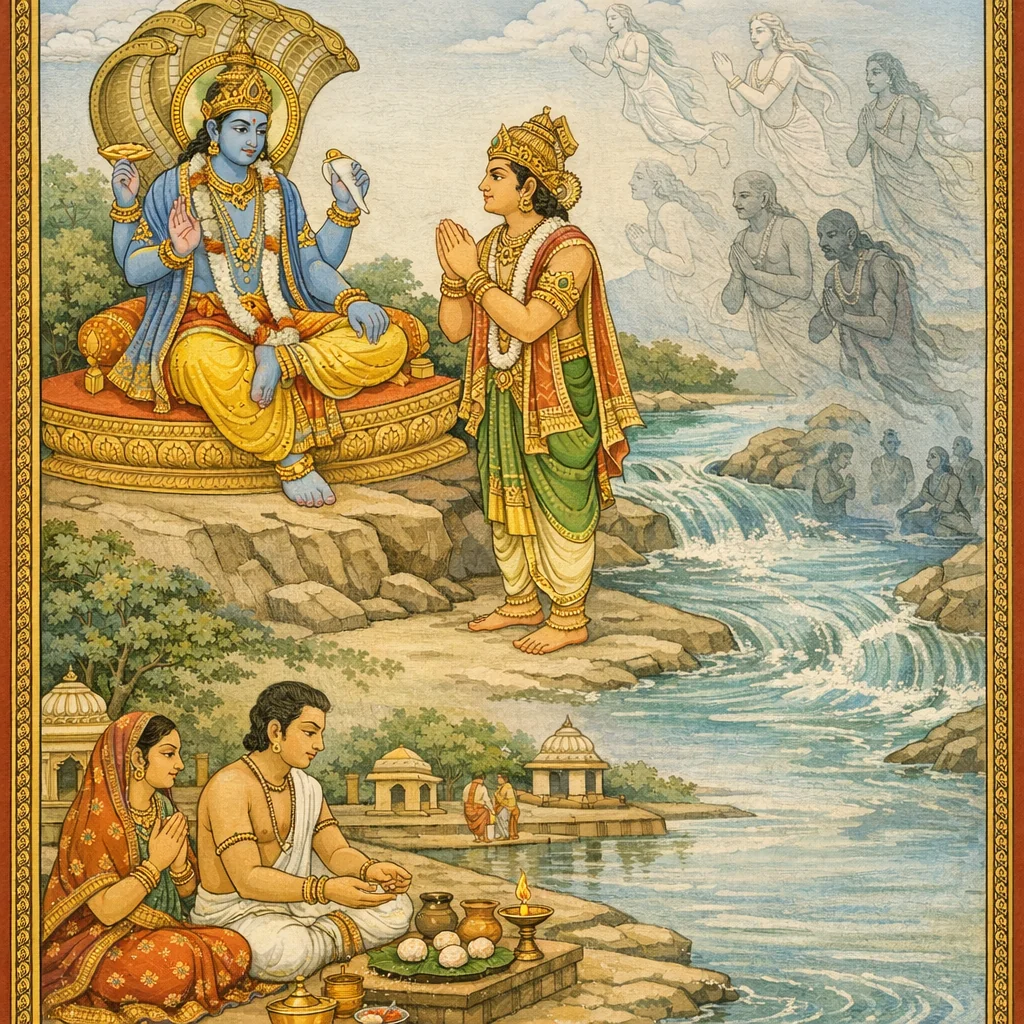
Adhyāya 204, set within the Tīrthamāhātmya, moves through two connected discussions. First comes a juridical and ethical inquiry about uncertain lineage: Ānarta asks how purification applies to one who claims Nāgara identity despite a “lost lineage” (naṣṭavaṃśa). Viśvāmitra recalls an earlier precedent involving Bhartṛyajña, who advises testing the person’s conduct (śīla) and conformity to Nāgara dharma and customary behavior; if these align, a formal purification is prescribed, restoring ritual eligibility, including fitness to perform śrāddha. The narrative then shifts to a theological dialogue between Śakra (Indra) and Viṣṇu, prompted by war deaths in the conflict with Hiraṇyākṣa. Viṣṇu distinguishes outcomes: those slain while facing the enemy in a sanctified setting (notably Dhārā-tīrtha) are said not to return to rebirth, whereas those killed while fleeing are assigned preta status. When Indra asks for a means of liberation, the reply prescribes śrāddha on Kṛṣṇa-pakṣa Caturdaśī in the month of Bhādrapada (Nabhāsya), when the sun is in Kanyā (Virgo), with special emphasis on performing it at Gayā according to ancestral injunction. The chapter closes by affirming the rite’s yearly satisfaction for the departed and warning that neglect leaves them in continuing distress.
Shlokas
Verse 1
आनर्त उवाच । प्रोक्ताऽस्माकं त्वया विप्र शुद्धिर्नागरसंभवा । वंशजा विस्तरेणैव यथा पृष्टोऽसि सुव्रत
Ānarta said: O brāhmaṇa, you have explained to us the Nāgara purification that arises from lineage, in full detail, just as you were asked, O you of excellent vows.
Verse 2
सांप्रतं शीलजां ब्रूहि नष्टवंशश्च यो भवेत् । पितामहं न जानाति न च मातामहीं निजाम् । तस्य शुद्धिः कथं कार्या नागरोऽस्मीति यो वदेत्
Now explain the purification grounded in conduct (śīla): if someone’s lineage is lost—he does not know his paternal grandfather nor his own maternal grandmother—how is purification to be done for one who declares, ‘I am a Nāgara’?
Verse 3
विश्वामित्र उवाच । एतदर्थं पुरा पृष्टो भर्तृयज्ञश्च नागरैः । नष्टवंशकृते राजन्यथा पृष्टोऽस्मि वै त्व या
Viśvāmitra said: For this very matter, in former times Bhartṛyajña too was questioned by the Nāgaras about a case of lost lineage—just as you now question me, O king.
Verse 4
भर्तृयज्ञ उवाच । नष्टवंशस्तु यो ब्रूयान्नागरोऽस्मीति संसदि । तस्य शीलं प्रविज्ञेयं ततः शुद्धिं समादिशेत्
Bhartṛyajña said: If one of lost lineage declares in the assembly, “I am a Nāgara,” then his śīla—his conduct—should be carefully ascertained; thereafter, the proper purification should be enjoined.
Verse 5
नागराणां तु ये धर्मा व्यवहाराश्च केवलाः । तेषु चेद्वर्तते नित्यं संभाव्यो नागरो हि सः
He who constantly lives according to the duties and proper social conduct distinctive to the Nāgaras is indeed to be regarded as a true and reputable Nāgara.
Verse 6
तस्य शुद्धिकृते देयं धटं ब्राह्मणसत्तमाः । धटे तु शुद्धिमापन्ने ततोऽसौ शुद्धतां व्रजेत्
For his purification, O best of brāhmaṇas, a dhaṭa is to be given. When that dhaṭa has become purified, then he himself attains purity.
Verse 7
श्राद्धार्हः कन्यकार्हश्च सोमार्हश्च विशेषतः । सामान्यपदयोग्यश्च समस्ते स्थानकर्मणि
He is fit to receive offerings in śrāddha, fit for rites concerning a maiden, and especially fit for Soma-related rites; and he is also eligible for common ceremonial roles in all place- and occasion-specific rituals.
Verse 8
एतत्ते सर्वमाख्यातं यत्पृष्टोऽस्मि नरोत्तम । द्वितीया जायते शुद्धिर्यथा नष्टान्वये द्विजे । तस्माद्वद महाराज यद्भूयः श्रोतुमर्हसि
I have told you all that you asked, O best of men—how a second purity arises even for a twice-born whose lineage has become obscured. Therefore, O great king, speak on: what more do you wish to hear?
Verse 9
आनर्त उवाच । तस्मात्ते नागरा भूत्वा विप्राश्चाष्टकुलोद्भवाः । सर्वेषामुत्तमा जाताः प्राधान्येन व्यवस्थिताः
Ānarta said: ‘Therefore, having become Nāgaras, those brāhmaṇas—born from eight lineages—became the best among all and were established in preeminence.’
Verse 10
तपसः किं प्रभावः स तेषां वा यजनोद्भवः । विद्योद्भवोऽथवा विप्र किं वा दानसमुद्भवः
Is their eminence the result of austerity, or born from sacrifice? Or does it arise from learning, O brāhmaṇa—or is it produced by acts of charity?
Verse 11
विश्वामित्र उवाच । ते सर्वे गुणसंपन्ना यथान्ये नागरास्तथा । विशेषश्चापरस्तेषां ते शक्रेण प्रतिष्ठिताः
Viśvāmitra said: ‘They are all endowed with virtues, just as other Nāgaras are. Yet they have a further distinction: they were established by Śakra (Indra).’
Verse 12
तेन ते गौरवं प्राप्ताः सर्वेषां तु द्विजन्मनाम्
By that divine establishment, they attained honor among all the twice-born.
Verse 13
आनर्त उवाच । कस्मिन्काले तु ते विप्राः शक्रे णात्र प्रतिष्ठिताः । किमर्थं च वदास्माकं विस्तरेण महामते
Ānarta said: “At what time did Śakra (Indra) establish those brāhmaṇas here, and for what reason? Tell us in full detail, O great-minded one.”
Verse 14
विश्वामित्र उवाच । हिरण्याक्ष इति ख्यातः पुराऽसीद्दानवो त्तमः । अभवत्तस्य संग्रामः शक्रेण सह दारुणः
Viśvāmitra said: “In former times there was an excellent Dānava famed as Hiraṇyākṣa. A dreadful battle arose between him and Śakra (Indra).”
Verse 15
तत्र देवासुरे युद्धे मृता भूरिदिवौकसः । दानवाश्च महाराज परस्परजिगीषवः
In that war between the Devas and the Asuras, many dwellers of heaven were slain; and the Dānavas too, O great king, fell—each side striving to conquer the other.
Verse 16
अथ ते दानवाः संख्ये शक्रेण विनिपातिताः । विद्याबलेन ताञ्छुक्रः सजीवान्कुरुते पुनः
Then those Dānavas, struck down in battle by Śakra (Indra), were restored to life again by Śukra through the power of his sacred knowledge.
Verse 17
देवाश्च निधनं प्राप्ता न जीवंति कथंचन । कस्यचित्त्वथ कालस्य विष्णुं प्रोवाच वृत्रहा
But the Devas who met their death did not return to life in any way. After some time, Vṛtrahā (Indra) addressed Viṣṇu.
Verse 18
धारातीर्थमृतानां च प्रहारैः सन्मुखैः प्रभो । या गतिश्च समादिष्टा तां मे वद जनार्दन
O Lord—tell me, O Janārdana: what destiny has been ordained for those who die at Dhārātīrtha, struck down in the great battle while facing the blows upon the front line?
Verse 19
पराङ्मुखा मृता ये च पलायनपरायणाः । तेषामपि गतिं ब्रूहि यादृग्जायेतवाच्युत
And those who die with their backs turned, intent only on flight—tell me their destiny too, O Acyuta: what state do they attain?
Verse 20
विष्णुरुवाच । धारातीर्थमृतानां च सन्मुखानां महाहवे । यथा चोच्छिन्नबीजानां पुनर्जन्म न विद्यते
Viṣṇu said: For those who die at Dhārātīrtha, facing the foe in the great battle, there is no rebirth—just as seeds that have been cut off do not sprout again.
Verse 21
ये पुनः पृष्ठदेशे तु हन्यते भयविक्लवाः । भुज्यमानाः परैस्ते च प्रेताः स्युस्त्रिदशाधिप
But those who are slain from behind, trembling with fear and overpowered by others—such ones become pretas (restless spirits), O lord of the Thirty (Indra).
Verse 22
इन्द्र उवाच । केचिद्देवा मृता युद्धे युध्यमानाश्च सन्मुखाः । तथैवान्ये मया दृष्टा हन्यमानाः पराङ्मुखाः । प्रेतत्वं दानवानां च सर्वेषां स्यान्न वा प्रभो
Indra said: Some Devas died in battle while fighting face-to-face; likewise I saw others being slain while turned away. And as for the Dānavas—will all of them become pretas, or not, O Lord?
Verse 23
विष्णुरुवाच । असंशयं सहस्राक्ष हता युद्धे पराङ्मुखाः । प्रेतत्वे यांति ते सर्वे देवा वा मानुषा यदि
Viṣṇu said: “Without doubt, O Thousand-eyed one, those who are slain in battle while turned away all go to the state of pretas—whether they are Devas or humans.”
Verse 24
विषादग्नेः कुलघ्नानां तया चैवात्मघातिनाम् । दंष्ट्रिभिर्हतदेहानां शृंगिभिश्च सुरेश्वर । प्रेतत्वं जायते नूनं सत्यमेतदसंशयम्
For those consumed by the fire of despair, for killers of their lineage, and likewise for self-slayers; for those whose bodies are killed by tusked beasts and by horned creatures—preta-hood surely arises, O lord of the gods. This is true, without doubt.
Verse 25
इन्द्र उवाच । कथं तेषां भवेन्मुक्तिः प्रेतत्वाद्दारुणाद्विभो । एतन्मे सर्वमाचक्ष्व येन यत्नं करोम्यहम्
Indra said: “O all-pervading Lord, how can they attain liberation from the dreadful state of being a preta? Tell me everything about this, so that I may strive accordingly.”
Verse 26
श्रीभगवानुवाच । तेषां संयुज्यते श्राद्धं कन्यासंस्थे दिवाकरे । कृष्णपक्षे चतुर्दश्यां नभस्यस्य सुरेश्वर
The Blessed Lord said: “For them, the śrāddha is to be duly performed when the Sun is in Kanyā (Virgo), on the fourteenth lunar day (caturdaśī) of the dark fortnight of the month Nabhasya (Bhādrapada), O lord of the gods.”
Verse 27
गयायां भक्तिपूर्वं तु पितामहवचो यथा । ततः प्रयांति ते मोक्षं सत्यमेतदसंशयम्
But when it is done at Gayā with devotion, in accordance with the ordinance of Pitāmaha (Brahmā), then they proceed to liberation—this is true, without doubt.
Verse 28
इन्द्र उवाच । कस्मात्तत्र दिने श्राद्धं क्रियते मधुसूदन । शस्त्रैर्विनिहतानां च सर्वं मे विस्तराद्वद
Indra said: “O Madhusūdana, why is śrāddha performed on that particular day? And especially for those slain by weapons—tell me all of it in detail.”
Verse 29
श्रीभगवानुवाच । भूतप्रेतपिशाचैश्च कूष्मांडै राक्षसैरपि । पुरा संप्रार्थितः शंभुर्दिने तत्र समागते । अद्यैकं दिवसं देव कन्यासंस्थे दिवाकरे
The Blessed Lord said: “Formerly, when that day arrived, Śambhu was earnestly supplicated by bhūtas, pretas, piśācas, kūṣmāṇḍas, and rākṣasas: ‘O Deva, today—when the Sun is in Kanyā—grant us a single day…’”
Verse 30
अस्माकं देहि येन स्यात्तृप्तिर्वर्षसमुद्भवा । प्रदत्ते वंशजैः श्राद्धे दीनानां त्वं दयां कुरु
“Grant us that by which our satisfaction may arise for the whole year. When śrāddha is offered by our descendants, show compassion to us who are wretched.”
Verse 31
श्रीभगवानुवाच । यः करिष्यति वै श्राद्धमस्मिन्नहनि संस्थिते । कृष्णपक्षे चतुर्दश्यां नभस्यस्य च वंशजः । भविष्यति परा प्रीतिर्यावत्संवत्सरः स्थितः
The Blessed Lord said: “Whichever descendant performs śrāddha on this very day—on the caturdaśī of the dark fortnight of Nabhasya (Bhādrapada)—there will be supreme satisfaction for the departed for as long as the year lasts.”
Verse 32
यः पुनस्तु गयां गत्वा युष्मद्वंशसमुद्भवः । करिष्यति तथा श्राद्धं तेन मुक्तिमवाप्स्यथ
“But if, again, a descendant born in your lineage goes to Gayā and performs śrāddha there in that manner, then through that you will attain liberation.”
Verse 33
शस्त्रेण निहतानां च स्वर्गस्थानामपि ध्रुवम् । न करिष्यति यः श्राद्धं तस्मिन्नहनि संस्थिते
And as for those slain by weapons—even if they are surely established in heaven—whoever does not perform śrāddha when that day has arrived…
Verse 34
क्षुत्पिपासार्तदेहाश्च पितरस्तस्य दुःखिताः । स्थास्यंति वत्सरं यावदेतदाह पितामहः
His ancestors, afflicted in body by hunger and thirst, will remain in suffering for as long as a year—so declared Pitāmaha (Brahmā).
Verse 35
तस्मात्सर्वप्रयत्नेन तस्मिन्नहनि कारयेत् । अन्यमुद्दिश्य तत्सर्वं प्रेतानामिह जायते
Therefore, with every effort one should have the rite performed on that very day; for whatever is done here intending it for someone else becomes, in effect, for the pretas (departed spirits) alone.
Verse 36
ततो भगवता दत्ता तेषां चैव तु सा तिथिः श्रा । द्धकर्मणि संजाते विना शस्त्रहतं जनम्
Then the Blessed Lord assigned that very lunar day (tithi) for them; when the śrāddha-rite is undertaken, it is to be done accordingly—excluding the person slain by a weapon (who is governed by a distinct rule).
Verse 37
संमुखस्यापि संग्रामे युध्यमानस्य देहिनः । कदाचिच्चलते चित्तं तीक्ष्णशस्त्रहतस्य च
Even for a warrior fighting face-to-face in battle, the mind may sometimes waver—especially for one struck down by a sharp weapon.
Verse 204
इति श्रीस्कांदे महापुराण एकाशीतिसाहस्र्यां संहितायां षष्ठे नागरखण्डे श्रीहाटकेश्वरक्षेत्र माहात्म्ये शक्रविष्णुसंवादे प्रेतश्राद्धकथनंनाम चतुरधिकद्विशततमोऽध्यायः
Thus ends, in the revered Skanda Mahāpurāṇa—within the Ekāśīti-sāhasrī Saṃhitā, in the sixth book, the Nāgara Khaṇḍa—within the Māhātmya of Śrī Hāṭakeśvara-kṣetra, in the dialogue of Śakra and Viṣṇu, the two-hundred-and-fourth chapter entitled “The Account of Preta-Śrāddha.”