Adhyaya 200
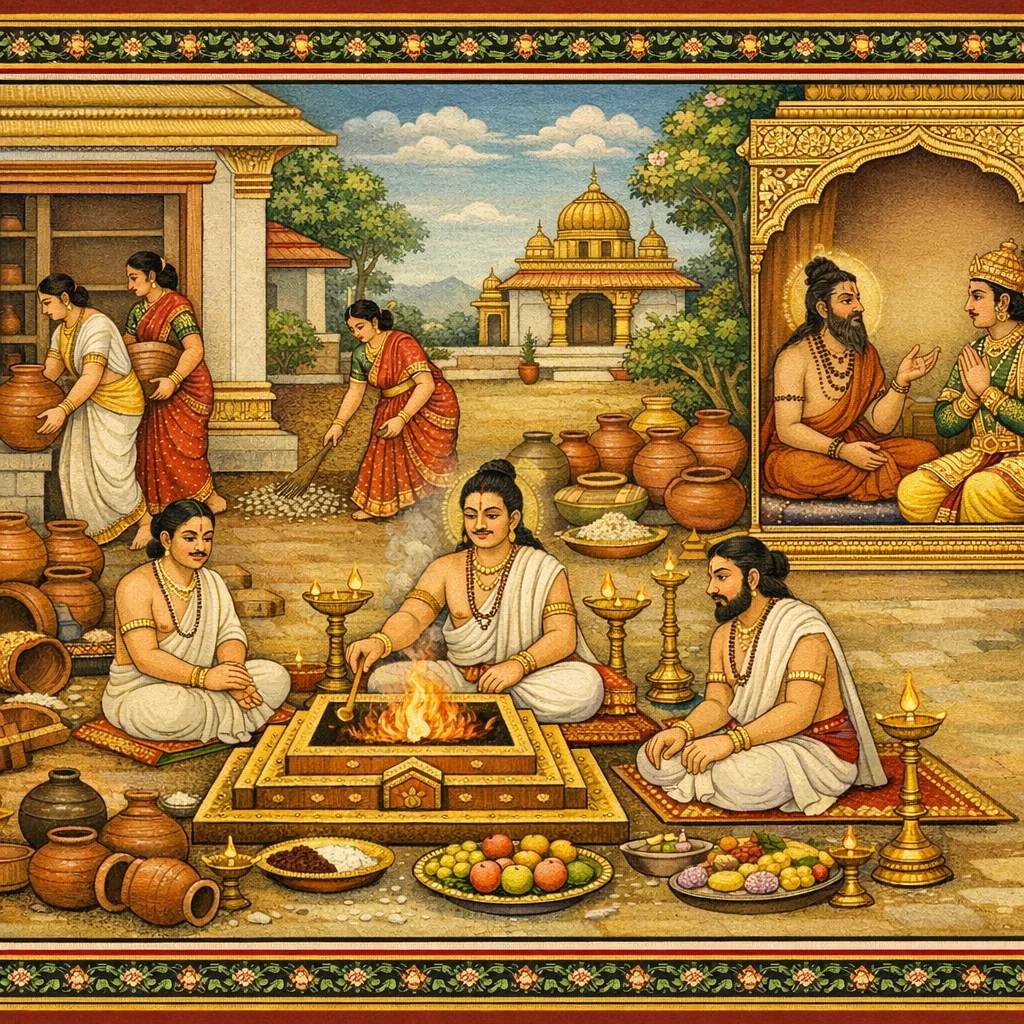
This chapter sets forth a juridical-theological teaching on ritual pollution (aśauca) caused by concealed social identity and by eating and drinking together within a strictly regulated ritual community. At dawn, the daughter of Subhadra—an initiated householder (dīkṣita, āhitāgni)—laments that she has been given to an antyaja and declares she will enter the fire, shocking the household. Brahmins then report that Candraprabha, long appearing as a dvija, has been exposed as a caṇḍāla after extended participation in rites for the gods and ancestors; through saṃsarga (defiling contact), the place and its people are said to be affected, including those who ate or drank in the house or received food brought from it. The presiding dīkṣita consults smṛti-śāstra and issues graded prāyaścitta: rigorous Cāndrāyaṇa observances for Subhadra, abandonment of household stores, re-establishment of the sacred fires, and large homa rites to purify the house, with penances proportioned to the number of meals eaten and water drunk. Those tainted by touch-contact are assigned separate prājāpatya rites, reduced for women, śūdras, children, and elders; clay vessels are to be discarded. A wider purification is prescribed through koṭi-homa at the brahmasthāna, funded by the locality’s wealth. The chapter further codifies Nāgara boundary rules for śrāddha and related rites: bypassing Nāgara procedure renders rituals fruitless, and annual purification of one’s place is urged. It closes with Viśvāmitra affirming to the king that this is the established order by which Nāgaras are deemed śrāddha-worthy and regulated through norms grounded in bhartṛyajña.
Shlokas
Verse 1
विश्वामित्र उवाच । ततः प्रभाते संजाते प्रोद्गते रविमण्डले । सा चापि दुहिता तस्य दीक्षितस्य महात्मनः
Viśvāmitra said: Then, when morning had dawned and the orb of the Sun had risen, his daughter too—the daughter of that great-souled man who had undertaken dīkṣā (consecration)—was present.
Verse 2
रोरूयमाणाऽभ्यगमत्पितरं मातरं प्रति । प्रोवाच गद्गदं वाक्यं बाष्पव्याकुललोचना
Weeping bitterly, she approached her father and mother; her eyes distressed by tears, she spoke words choked with emotion.
Verse 3
ताताम्ब किमिदं पापं युवाभ्यां समनुष्ठितम् । अन्त्यजस्य प्रदत्ताऽहं यत्पापस्य दुरात्मनः
“Father, Mother—what sinful deed have you two performed? For I have been given in marriage to an antyaja (outcaste), a sinner of evil soul.”
Verse 4
स नष्टो रजनीवक्त्रे ममावेद्य निजं कुलम् । तस्मादहं प्रवेक्ष्यामि प्रदीप्ते हव्यवाहने
“That man has vanished, O moon-faced one, without revealing to me his true lineage. Therefore I shall enter the blazing fire.”
Verse 5
तस्यास्तद्वचनं श्रुत्वा दीक्षितः स सुभद्रकः । निश्चेष्टः पतितो भूमौ वातभग्न इव द्रुमः
Hearing her words, Subhadraka—who had received dīkṣā—fell senseless to the ground, like a tree broken by the wind.
Verse 6
ततः स शीततोयेन संसिक्तश्च पुनःपुनः । लब्ध्वाशु चेतनां कृच्छ्रात्स्वजनैः परिवारितः । प्रलापान्विविधांश्चक्रे ताडयन्स्वशिरो मुहुः
Then he was repeatedly sprinkled with cold water. Regaining consciousness with difficulty, surrounded by his kinsmen, he uttered many kinds of lamentations, again and again striking his own head.
Verse 7
अथ ते ब्राह्मणाः सर्वे तस्य संपर्कदूषिताः । भर्तृयज्ञं समासाद्य तेनैव सहितास्ततः
Then all those brāhmaṇas—tainted by association with him—approached the husband’s sacrifice, and thereafter remained together with him.
Verse 8
प्रोचुर्विनयसंयुक्ताः प्रोच्चैस्तत्सुतया सह । सुभद्रेण निजे हर्म्ये सुतां दत्त्वा निवेशितः
Together with his daughter, they spoke aloud with due humility. Subhadra, having given his daughter (in marriage), settled him in his own mansion.
Verse 9
चण्डालो द्विजरूपोत्र चंद्रप्रभ इति स्मृतः
Here, an outcaste—though in the form of a brāhmaṇa—is known by the name Candraprabha.
Verse 10
यावत्संवत्सरं सार्धं दैवे पित्र्ये च योजितः । पापकर्मा न विज्ञातः सोऽधुना प्रकटोऽभवत्
For a year and a half he was engaged in rites for the gods and the ancestors; his sinful conduct was not recognized—until now, when he has become manifest.
Verse 11
सुभद्रस्यानुषंगेण स्थानं सर्वं प्रदूषितम् । अन्त्यजेन महाभाग तत्कुरुष्व विनिग्रहम्
Through association with Subhadrā, this entire place has been defiled by an outcaste. O noble one, restrain it and deal with that offense.
Verse 12
कैश्चित्तस्य गृहे भुक्तं जलं पीतं तथा परैः । अन्यैश्च गृहमानीय प्रदत्तं भोजनं तथा
Some ate food in his house; others drank water. Still others brought food to their own homes and gave it out as well.
Verse 13
किं वा ते बहुनोक्तेन न स कोऽस्ति द्विजोत्तम । संकरो यस्य नो जातस्तस्य पापस्य संभवः
What need is there to say much, O best of the twice-born? There is none in whom such a taint of mixture has not arisen; from that, the possibility of sin comes to be.
Verse 14
त्वया स्थानमिदं पुण्यं कृतं पूर्वं महामते । सर्वेषां च गुरुस्त्वं हि तस्माच्छुद्धिं वदस्व नः
By you, O great-minded one, this place was formerly made holy. Indeed you are the teacher of all; therefore tell us the means of purification.
Verse 15
ततः संचिन्त्य सुचिरं स्मृतिशास्त्राण्यनेकशः । प्रायश्चित्तं ददौ तेषां सर्वेषां स द्विजन्मनाम्
Then, after reflecting for a long time and consulting many Smṛti texts again and again, he prescribed prāyaścitta—atonements—for all those twice-born persons.
Verse 16
चांद्रायणशतं प्रादात्सुभद्रायाहिताग्नये । सर्वभंडपरित्यागं पुनराधानमेव च
He prescribed for Subhadrā, who maintained the sacred fires, a hundred Cāndrāyaṇa observances; and he also enjoined the renunciation of all household vessels and the re-establishing of the fires anew.
Verse 17
लक्षहोमविधानं च गृहमध्यविशुद्धये । वह्निप्रवेशनं तस्यास्तत्सुतायाः प्रकीर्तितम्
For the purification of the interior of the house, he prescribed the performance of a hundred-thousand oblations (lakṣa-homa). And for her daughter, entry into fire was also declared.
Verse 18
येन यावंति भोज्यानि तस्य भुक्तानि मंदिरे । तस्य तावंति कृच्छ्राणि तेनोक्तानि महात्मना
As many eatables as were eaten in his house by someone, so many Kṛcchra penances were prescribed for that person by the great-souled one.
Verse 19
यैर्जलानि प्रपीतानि यावन्मात्राणि तद्गृहे । प्राजापत्यानि दत्तानि तेभ्यस्तावंति पार्थिव
And as many measures of water as were drunk in that house by them, so many Prājāpatya penances were assigned to those people, O king.
Verse 20
ब्राह्मणानां तथान्येषां तत्र स्थाने निवासिनाम् । तत्स्पर्शदूषितानां च प्राजापत्यं पृथक्पृथक्
For the brāhmaṇas and for others dwelling in that place as well, and also for those defiled by contact with it, a separate Prājāpatya penance was prescribed for each.
Verse 21
स्त्रीशूद्राणां तदर्धं च तदर्ध बालवृद्धयोः । मृन्मयानां च भांडानां परित्यागो निवेदितः
For women and śūdras, half of that penance was declared; and half of that again for children and the aged. The casting away of earthen vessels was also enjoined.
Verse 22
सर्वेषामेव लोकानां रसत्यागस्तथैव च । कोटिहोमस्तु निर्दिष्टो ब्रह्मस्थाने यथोदितः । सर्वस्थानविशुद्ध्यर्थं स्थानवित्तेन केवलम्
For all people, abstaining from “rasa”—sensual enjoyments and choice delicacies—was likewise enjoined. And, as stated, a koṭi-homa (ten million oblations) was prescribed at the Brahma-sthāna. For the purification of all places, it is to be performed solely with the resources belonging to that very place.
Verse 23
अथोवाच पुनर्विप्रान्स कृत्वा चोच्छ्रितं भुजम । तारनादेन महता सर्वांस्तान्नागरोद्भवान्
Then he addressed the brāhmaṇas again; raising his arm aloft, with a great call that carried far, he summoned all those who were natives of Nāgara.
Verse 24
सुभद्रेण च सर्वस्वं देयं विप्रेभ्य एव च । चतुर्थांशश्च यैर्भुक्तं तद्गृहे स्वधनस्य च
And with auspicious intent, one should give over one’s entire property to the brāhmaṇas. Those who had already enjoyed their share should, in their own houses, give a fourth part of their wealth.
Verse 25
अष्टांशं यैर्जलं पीतं गोदानं स्पर्शसंभवम् । शेषाणामपि लोकानां यथाशक्त्या तु दक्षिणा
Those who drank the water should give an eighth share, and also perform go-dāna—the gifting of a cow—arising from the rite of touch. For the remaining people, dakṣiṇā and gifts should be offered according to one’s capacity.
Verse 26
दीक्षितेन जपः कार्यो लक्षगायत्रिसंभवः । शेषैर्विप्रैर्यथा वित्तं तथा कार्यो जपोऽखिलः
One who has been duly initiated should perform japa, completing one hundred thousand repetitions of the Gāyatrī. The remaining brāhmaṇas likewise should undertake the full japa according to their means.
Verse 27
अहं चैव करिष्यामि प्राणायामशतत्रयम् । नित्यमेव द्विजश्रेष्ठाः षष्ठकालकृताशनः
And I myself shall perform three hundred prāṇāyāmas. O best of the twice-born, I shall do so daily, taking food only at the sixth time-period, with regulated restraint.
Verse 28
यावत्संवत्सरस्यांतं ततः शुद्धिर्भविष्यति । जन संपर्कसंजाता सैवं तस्य दुरात्मनः
Until the end of the year; thereafter purification will arise. Such is the defilement born of contact with people—thus is the remedy for that wicked-minded man.
Verse 29
एवमुक्त्वा ततो भूयः स प्रोवाच द्विजोत्तमान् । अथाऽद्यान्मध्यगास्येन ब्रह्मस्थानसमाश्रयान्
Having spoken thus, he again addressed the foremost brāhmaṇas. Then, from this very day—speaking in their midst—he instructed those who had taken refuge in the sacred Brahma-sthāna.
Verse 30
अद्यप्रभृति यः कन्यामविदित्वा तु नागरम् । नागरो दास्यति क्वापि पतितः स भविष्यति
From this day onward, whoever gives a maiden in marriage without first ascertaining that she is of Nāgara, wherever he may do so—he shall become fallen (patita).
Verse 31
अश्राद्धेयो ह्यपांक्तेयो नागराणां विशेषतः
He is unfit to receive the offerings of śrāddha and unfit to be seated in the dining row—especially among the Nāgaras.
Verse 32
यः श्राद्धं नागरं मुक्त्वा ह्यन्यस्मै संप्रदास्यति । विमुखास्तस्य यास्यंति पितरो विबुधैः सह
Whoever, abandoning a Nāgara recipient, gives the śrāddha instead to someone else—his ancestors will turn away from him and depart, along with the gods.
Verse 33
नागरेण विना यस्तु सोमपानं करिष्यति । स करिष्यत्यसंदिग्धं मद्यपानं तु नागरः । तन्मतेन विना यस्तु श्राद्धकर्म करिष्यति
Whoever performs the Soma-drinking rite without a Nāgara as authority and guide—that Nāgara will, without doubt, be led into liquor-drinking (a fall into impure conduct). And whoever performs the śrāddha rite without following that established Nāgara rule and tradition…
Verse 34
ततः सर्वं वृथा तस्य भविष्यति न संशयः । विशुद्धिरहितं यस्तु नागरं भोजयिष्यति
Then all of it becomes fruitless for him—of this there is no doubt. And whoever feeds a Nāgara who is lacking in purification (ritual cleanliness)…
Verse 35
श्राद्धे तस्यापि तत्सर्वं व्यर्थतां संप्रयास्यति । सर्वेषां नागराणां च मर्यादेयं कृता मया
Even in his śrāddha, all of that will likewise come to nothing. This boundary of right conduct (maryādā) for all Nāgaras has been laid down by me.
Verse 36
तस्मात्सर्वप्रयत्नेन शुद्धिः कार्या द्विजोत्तमैः । वर्षेवर्षे तु संप्राप्ते स्वस्थानस्य विशुद्धये
Therefore, with every effort, the best of the twice-born should perform purification—year after year, when the appointed time arrives—for the cleansing of their own place and abode.
Verse 37
विश्वामित्र उवाच । एतत्ते सर्वमाख्यातं यत्पृष्टोऽस्मि नृपोत्तम । श्राद्धार्हा नागरा येन नागराणां व्यवस्थिताः । भर्तृयज्ञेन मर्यादा कृता तेषां यथा पुरा
Viśvāmitra said: O best of kings, I have explained all this to you, as you asked—how the Nāgaras are deemed fit for śrāddha and how the Nāgaras are duly regulated. Their boundary of conduct was established through Bhartṛyajña, as in former times.