Adhyaya 198
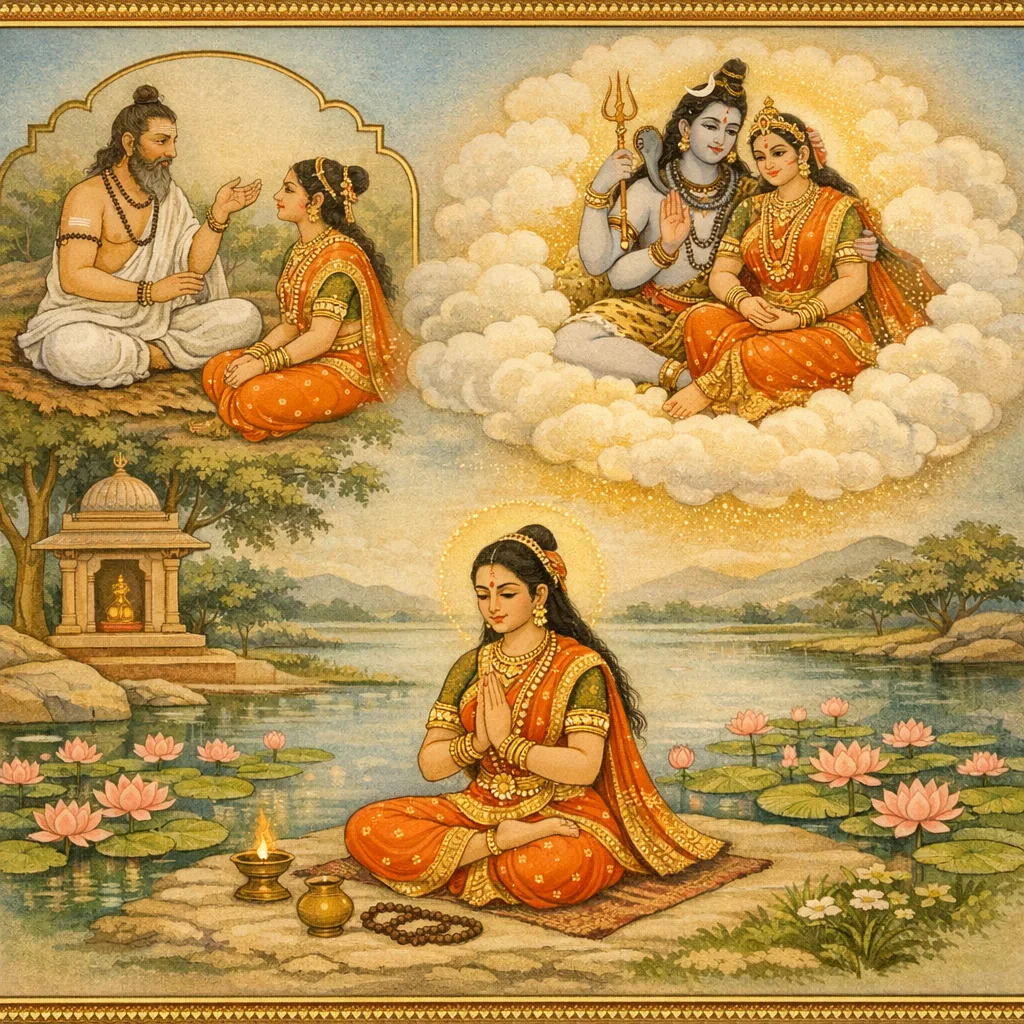
The chapter begins with a royal marriage negotiation that collapses into a moral‑legal dispute over purity and marital eligibility. The Daśārṇa ruler withdraws on hearing Ratnāvatī’s circumstances, calling her “punarbhū” and warning of lineage‑fall consequences. Ratnāvatī rejects other suitors, upholding the dharma of single, irrevocable commitment, and argues that inner intention and spoken dedication create a binding marital reality even without the formal hand‑taking rite. Choosing ascetic discipline over remarriage, she resolves on severe tapas; her mother tries to dissuade her with new arrangements, but Ratnāvatī refuses and vows self‑harm rather than compromise. A Brāhmaṇī companion discloses her own predicament tied to puberty and social‑ritual constraints, and decides to join Ratnāvatī in tapas. The teacher Bhartṛyajña sets out graded austerities—cāndrāyaṇa, kṛcchra, sāntapana, sixth‑hour eating, tri‑rātra, ekabhakta, and more—stressing inner equanimity and warning that anger destroys ascetic merit. Ratnāvatī performs long austerities through the seasons with ever stricter dietary limits, culminating in extraordinary tapas. Śiva (Śaśiśekhara), with Gaurī, appears and grants a boon. Through the Brāhmaṇī’s intercession and Ratnāvatī’s request, a lotus‑filled water‑body becomes a named tīrtha complex paired with another tīrtha, and a self‑manifest Māheśvara liṅga rises from the earth. Śiva proclaims the twin tīrthas’ and liṅga’s power: bathing with faith, taking clean water/lotus, and worship—especially on the calendrical conjunction of Caitra, Śukla Caturdaśī, Monday—brings longevity and sin‑removal. The narrative adds cosmic tension as Yama laments empty hells and Indra is charged to obscure the tīrthas with dust, yet Kali‑age practice is affirmed: using the site’s clay for purification marks and performing śrāddha on the same timing, equal to Gayā‑śrāddha. The closing phalāśruti promises freedom from sins for hearing/reciting and exceptional success through liṅga worship.
Shlokas
Verse 1
सूत उवाच । एतस्मिन्नेव काले तु दशार्णाधिपतिस्तदा । रत्नवत्या विवाहार्थं तत्र स्थाने समागतः
Sūta said: At that very time, the lord of Daśārṇa arrived at that place, having come for the purpose of marrying Ratnavatī.
Verse 2
स श्रुत्वा तत्र वृत्तांतं रत्नवत्याः समुद्भवम् । विरक्तिं परमां कृत्वा प्रस्थितः स्वपुरं प्रति
But after hearing there the account of Ratnavatī’s situation and origin, he became deeply dispassionate and set out toward his own city.
Verse 4
अथाब्रवीच्च तं प्राप्य कस्मात्त्वं प्रस्थितो नृप । पाणिग्रहमकृत्वा तु मम कन्यासमुद्भवम्
Then, approaching him, someone said: “O king, why have you departed without performing the hand-taking marriage rite (pāṇigraha) with my daughter?”
Verse 5
दशार्ण उवाच । दूषितेयं तव सुता कन्यकात्वविवर्जिता । यस्याः पीतोऽधरोऽन्येन मर्दितौ च तथा स्तनौ
The king of Daśārṇa said: “Your daughter has been violated and is no longer a maiden; for another has kissed her lip, and her breasts too have been pressed.”
Verse 6
पुनर्भूरिति संज्ञा सा सञ्जाता दुहिता तव । पुनर्भूर्जनयेत्पुत्रं यं कदाचित्कथंचन
“Therefore she has come to bear the designation ‘punarbhū’—a woman returned to marriage. A punarbhū may, at some time and in some manner, bear a son.”
Verse 7
स पातयत्यसंदिग्धं दश पूर्वान्दशापरान् । एकविंशतिमं चैव तथैवात्मानमेव च
“Such a person surely brings ruin upon ten ancestors and ten descendants, and also upon the twenty-first—himself as well.”
Verse 8
न वरिष्याम्यहं तेन सुतां तेऽहं नरसिप । निर्दाक्षिण्यमिति प्रोच्य दशार्णाधिपतिस्तदा
“Therefore I will not marry your daughter, O lord of men.” Saying, “This would be lack of propriety and rightness,” the Daśārṇa king spoke thus at that time.
Verse 9
छंद्यमानोऽपि विविधैर्हस्त्यश्वरथपूर्वकैः । अवज्ञाय महीपालं प्रस्थितः स्वपुरं प्रति
Even though he was being appeased with various gifts—elephants, horses, and chariots—he disregarded the king and departed for his own city.
Verse 10
अथानर्त्तो गृहं प्राप्य मृगावत्याः समाकुलः । तद्वृत्तं कथयामास यदुक्तं तेन भूभुजा । स्वभार्यायाः सुतायाश्च मन्त्रिणां दुःखसंयुतः
Then Ānarta, having reached his home, was distressed about Mṛgāvatī. In sorrow he related to his wife, his daughter, and his ministers the entire matter—just as that king had spoken.
Verse 11
ते प्रोचुः संति भूपालाः संख्याहीना महीतले । रूपाढ्या यौवनोपेता हस्त्यश्वरथसंयुताः
They said: “Upon the earth there are countless kings—endowed with beauty, in the bloom of youth, and furnished with elephants, horses, and chariots.”
Verse 12
तेषामेकतमस्य त्वं देहि कन्यां निजां विभो । मा विषादे मनः कृत्वा दुःखस्य वशगो भव
O mighty one, give your own daughter to one among them. Do not set your mind upon despair; do not become ruled by sorrow.
Verse 13
आनर्तोऽपि च तच्छ्रुत्वा तेषां वाक्यं सुदुःखितम् । ततः प्राह प्रहृष्टात्मा तान्सर्वान्मन्त्रिपूर्वकान्
King Ānarta too, having heard their words heavy with sorrow, then spoke—his heart uplifted—to them all, beginning with his ministers.
Verse 14
तां च कन्यां स्थितां तत्र साम्ना परमवल्गुना । पुत्रि दृष्टा महीपालाः सर्वे चित्रगतास्त्वया
And seeing that maiden standing there—addressed with exceedingly gentle words—O daughter, all the kings, on beholding you, were as though struck into a painted stillness.
Verse 15
तेषां मध्यान्नृपं चान्यं कञ्चिद्वरय शोभने । यस्ते चित्तस्य सन्तोषं कुरुते दृक्पथं गतः
O lovely one, choose some other king from among them—one who, coming within your sight, brings satisfaction to your heart.
Verse 16
रत्नावत्युवाच । न चाहं वरयिष्यामि पतिमन्यं कथंचन । दशार्णाधिपतिं मुक्त्वा श्रूयतामत्र कारणम्
Ratnāvatī said: I will not choose any other husband in any way, leaving aside the lord of Daśārṇa. Let the reason for this be heard here.
Verse 17
सकृज्जल्पंति राजानः सकृज्जल्पंति च द्विजाः । सकृत्कन्याः प्रदीयंते त्रीण्येतानि सकृत्सकृत्
Kings speak but once; Brahmins too speak but once; daughters are given but once—these three are, each, only once.
Verse 18
एवं ज्ञात्वा न मां तात त्वमन्यस्मिन्महीपतौ । दातुमर्हसि धर्मोऽयं न भवेच्छाश्वतो यतः
Knowing this, O father, you should not give me to another king. This is the rule of dharma—otherwise it would not remain enduring.
Verse 19
आनर्त उवाच । वाङ्मात्रेण प्रदत्ता त्वं दशार्णाधिपतेर्मया । न ते हस्तग्रहं प्राप्तो विप्राग्निगुरुसन्निधौ
Ānarta said: You were given by me to the lord of Daśārṇa only by words alone. Your hand was not taken in marriage in the presence of Brahmins, the sacred fire, and the elders and teachers.
Verse 20
तत्कथं स पतिर्जातस्तवः पुत्रि वदस्व मे
Then how did he become your husband, O daughter? Tell me.
Verse 21
रत्नावत्युवाच । मनसा चिंत्यते कार्यं सकृत्तातपुरा यतः । वाचया प्रोच्यते पश्चात् कर्मणा क्रियते ततः
Ratnāvatī said: First, O father, an undertaking is conceived once in the mind; afterwards it is spoken by speech; and then it is carried out through action.
Verse 22
तन्मया मनसा दत्तस्तस्यात्माऽयं पुरा किल । त्वया च वाचया चास्मै प्रदत्तास्मि तथा विभो । तत्कथं न पतिर्मे स्याद्ब्रूहि वा यदि मन्यसे
Formerly, with my mind I gave my very self to him; and you too, O mighty one, by your word have given me to him. How then should he not be my husband? Tell me, if you think otherwise.
Verse 23
साहं तपश्चरिष्यामि कौमारव्रतधारिणी । नान्यं पतिं करिष्यामि निश्चयोऽयं मया कृतः
Therefore I shall undertake austerities, observing the maiden’s vow. I will accept no other husband—this resolve has been made by me.
Verse 24
तच्छ्रुत्वा वचनं रौद्रं माता तस्या मृगावती । अश्रुपूर्णेक्षणा दीना वाक्यमेतदुवाच ह
Hearing those fierce words, her mother Mṛgāvatī—eyes filled with tears, distressed—spoke this reply.
Verse 25
मा पुत्रि साहसं कार्षीस्तपोऽर्थं त्वं कथञ्चन । बाला त्वं सुकुमारांगी सदैव सुखभागिनी
O daughter, do not commit any rash act for the sake of austerity. You are still a young girl, tender-limbed, ever meant to partake of comfort.
Verse 26
कथं तपः समर्थासि विधातुं त्वमनिंदिते । कन्दमूलफलाहारा चीरवल्कलधारिणी
How could you, blameless one, be capable of undertaking such austerity—living on roots, tubers, and fruits, and wearing rags and bark-garments?
Verse 27
तस्मान्मुख्यस्य भूपस्य कस्यचित्वां ददाम्यहम्
Therefore, I shall give you in marriage to some eminent king.
Verse 28
एषा ते ब्राह्मणीनाम सखी परमसंमता । प्रतीक्षते विवाहं ते कौमारं भावमाश्रिता
This dear friend of yours, a brāhmaṇī by name, greatly approved by all, is awaiting your marriage—abiding in a maidenly state.
Verse 29
यस्य भूपस्य त्वं हर्म्ये प्रयास्यसि विवाहि ता । पुरोधास्तस्य यो राज्ञो भार्येयं तस्य भाविनी
To whichever king’s palace you go as a bride, the royal priest (purohita) of that king—this woman is to become his wife.
Verse 30
रत्नावत्युवाच । न च भूयस्त्वया वाच्यं वाक्यमेवंविधं क्वचित् । मदर्थे यदि मे प्राणास्त्वं वांछसि सुतैषिणी
Ratnāvatī said: “And never again should you speak such words anywhere. If, desiring offspring, you truly wish my life for your sake—”
Verse 31
अथवा त्वं हठार्थं च तपोविघ्नं करिष्यसि
“Otherwise, out of sheer obstinacy, you will end up obstructing my austerity.”
Verse 32
ततस्त्यक्ष्याम्यहं देहं भक्षयित्वा महद्विषम् । खंडयिष्याम्यहं जिह्वां प्रवेक्ष्यामि च वा जलम्
“Then I shall cast off this body—having swallowed a deadly poison; I shall cut off my tongue, or else I shall enter the water.”
Verse 33
एवं सा निश्चयं कृत्वा प्रोच्य तां जननीं तदा
“Having thus formed her resolve, she then spoke to that mother.”
Verse 34
ततः प्रोवाच तां कन्यां ब्राह्मणीं संमतां सखीम् । कृतांजलिपुटा भूत्वा समालिंग्य च सादरम्
“Then she addressed that maiden—her respected Brāhmaṇa friend; with palms joined in reverence, and embracing her with affection.”
Verse 35
गच्छ त्वं स्वपितुर्हर्म्यं प्रेषितासि मया शुभे । येन ते यच्छति पिता नागराय महात्मने
Go, auspicious one, to your father’s mansion; I have sent you there, so that your father may give you to the noble Nāgara, the great-souled one.
Verse 36
क्षमस्व यन्मया प्रोक्ता कदाचित्परुषं वचः । त्वयापि यन्मम प्रोक्तं क्षांतं चैतन्मया ध्रुवम्
Forgive whatever harsh words were at times spoken by me; and whatever was spoken by you against me—know that I have certainly forgiven that as well.
Verse 37
ब्राह्मण्युवाच । अष्टवर्षा भवेद्गौरी नववर्षा तु रोहिणी । दशवर्षा भवेत्कन्या अत ऊर्ध्वं रजस्वला
The Brāhmaṇa woman said: “At eight years she is called Gaurī; at nine, Rohiṇī; at ten, she is termed a maiden; beyond that, she becomes a menstruating girl (rajāsvalā).”
Verse 38
कौमार्यं च प्रणष्टं मे त्वत्संपर्काद्वरानने । जातं षोडशकं वर्षं स्त्रीधर्मेण समन्वितम्
O fair-faced one, my maidenhood has been lost through contact with you; I have reached my sixteenth year, endowed with the conditions of womanhood (strī-dharma).
Verse 39
न मे पाणिग्रहं कश्चिन्नागरोऽत्र करिष्यति । बुध्यमानस्तु स्मृत्यर्थं वक्ष्य माणं वरानने
No Nāgara here will perform the rite of taking my hand in marriage (pāṇigraha). Yet, O fair-faced one, when he understands, he will speak, so that this matter may be remembered as a precedent.
Verse 40
रजस्वलां च यः कन्यामुद्वाहयति निर्घृणः । तस्याः सन्तानमासाद्य पातयेत्पुरुषान्दश
Whoever, without compassion, marries a maiden while she is menstruating—upon begetting offspring from her, causes ten men of his lineage to fall into ruin.
Verse 41
रजस्वला तु यः कन्यां पिता यच्छति निर्घृणः । स पातयेदसंदिग्धं दश पूर्वान्दशापरान्
But if a father, without compassion, gives a menstruating maiden in marriage, he certainly causes the fall of ten ancestors and ten descendants.
Verse 42
तस्मादहं करिष्यामि त्वया सार्धं तपः शुभे । पित्रा नैव हि मे कार्यं न च मात्रा कथंचन
Therefore, O auspicious one, I shall undertake sacred austerity (tapas) together with you. I have no concern at all with my father, nor in any way with my mother.
Verse 43
तं श्रुत्वा प्रस्थितं भूपमानर्तः स्वपुरं प्रति । पृष्ठतोऽनुययौ तस्य व्याघो टनकृते तदा
Hearing this, the king of Ānarta set out toward his own city; then, from behind, a tiger followed him at that time, as if to harass him in mischief.
Verse 44
स्थितो वास्तुपदे रम्ये सर्वतीर्थमये शुभे । तस्य तपःप्रभावेन जातु कोपो न दृश्यते
He remained established upon that delightful and auspicious sacred ground, filled with the essence of all tīrthas; through the power of his austerity, anger is never seen in him.
Verse 46
कस्यचित्क्वापि मर्त्यस्य तिर्यग्योनिग तस्य च । क्रीडंति नकुलाः सर्पैर्मार्जाराः सह मूषकैः
Somewhere, for a certain mortal—and likewise for those born in animal wombs—mongooses play with serpents, and cats with mice.
Verse 47
ब्राह्मण्युवाच । अहं सख्या समं याता ह्यनया राजकन्यया । तपोऽर्थे तव पादांते तद्ब्रूहि तपसो विधिम्
The Brāhmaṇī said: “I have come with my friend, this princess, to your feet for the sake of tapas. Therefore, tell us the proper method of austerity.”
Verse 48
वदस्व येन तत्कृत्स्नं प्रकरोमि महामते
“Speak, O great-minded one, by what means I may perform it completely.”
Verse 49
भर्तृयज्ञ उवाच । अहं ते कथयिष्यामि तपश्चर्याविधिं पृथक् । येन संप्राप्यते मोक्षः कि पुनस्त्रिदशालयः
Bhartṛyajña said: “I shall explain to you, distinctly, the method of austerity—by which liberation (mokṣa) is attained; how much more, then, the abode of the gods.”
Verse 50
चांद्रायणानि कृच्छ्राणि तथा सांतपनानि च । षष्ठे काले तथा भोज्यं दिनांतरितमेव च
“Perform the Cāndrāyaṇa observances, the Kṛcchra penances, and also the Sāṁtapana penances; likewise, eat at the sixth appointed time, and also eat on alternate days.”
Verse 51
ब्रह्मकूर्चं त्रिरात्रं च एकभक्तमयाचितम् । तपोद्वाराणि सर्वाणि कृतान्येतानि वेधसा
(Also) the Brahmakūrca penance, the three-night observance, and the one-meal vow taken without begging—these all are “gateways of tapas,” established by the Creator, Vedhas.
Verse 52
स्वशक्त्या चैव कार्याणि रागद्वेषविवर्जितैः । वांछितव्यं फलं चैव सर्वेषामेव पुत्रिके । ततः सिद्धिमवाप्नोति या सदा मनसि स्थिता
These should indeed be undertaken according to one’s capacity, free from attachment and aversion. And, O daughter, the desired fruit for all is to be sought; then one attains the fulfillment that remains ever established in the mind.
Verse 53
समत्वं शत्रुमित्राभ्यां तथा पा षाणरत्नयोः । यदा संजायते चित्ते तदा मोक्षमवाप्नुयात्
When, within the mind, there arises true evenness toward enemy and friend alike, and likewise toward a mere stone and a precious gem, then one attains liberation (mokṣa).
Verse 54
यो लिंगग्रहणं कृत्वा ततः कोपपरो भवेत् । तस्य वृथा हि तत्सर्वं यथा भस्महुतं तथा
If one takes up the liṅga, the religious mark, and then becomes devoted to anger, all of that becomes futile for him—like an offering poured into ashes.
Verse 55
सूत उवाच । सा तथेतिप्रतिज्ञाय ब्राह्मणी सहिता तया । रत्नावत्या जगामाथ किंचिच्चैव जलाशयम्
Sūta said: Having pledged, “So be it,” that brāhmaṇa woman, accompanied by Ratnāvatī, then went to a certain water-reservoir nearby.
Verse 56
स्वच्छोदकेन संपूर्णं पद्मिनीषंडमंडितम् । ततश्चांद्रायणं चक्रे तपसः प्रथमं व्रतम्
It was filled with clear, pure water and adorned with clusters of lotus-plants. There she performed the Cāndrāyaṇa, her first vow of austerity.
Verse 57
ततः कृच्छ्रव्रतं चक्रे ततः सांतपनं च सा । षष्ठान्नकालभोज्या च सा चाभूद्वत्सरत्रयम्
Then she undertook the Kṛcchra vow, and after that the Sāṃtapana vow. She also lived for three years taking food only at the time of the sixth meal, under severe restraint.
Verse 58
त्रिरात्रोपोषणं पश्चाद्यावद्वर्षत्रयं तथा । एकान्तरोपवासैश्च साऽनयद्वत्सरत्रयम्
After that, she observed three-night fasts, continuing so for three years; and by fasting on alternate days as well, she passed another three-year period.
Verse 59
हेमंते जलमध्यस्था सा बभूव तपस्विनी । पंचाग्निसाधका ग्रीष्मे सा बभूव यशस्विनी
In winter she remained immersed in water, living as an ascetic; in summer she practiced the five-fire austerity (pañcāgni), becoming renowned.
Verse 60
निराश्रयाऽभवत्साध्वी वर्षाकाल उपस्थिते । ध्यायमाना दिवानक्तं देवदेवं जनार्दनम्
When the rainy season arrived, the virtuous woman remained without shelter, meditating day and night upon Janārdana, the God of gods.
Verse 61
यद्यद्व्रतं पुरा चक्रे ब्राह्मणी सा च सुव्रता । अन्यं जलाशयं प्राप्य सा तच्चक्रे नृपात्मजा । प्रीत्या परमया युक्ता तदा सा द्विजस त्तमाः
Whatever vow that well-vowed brāhmaṇa woman had performed before—having reached another water-reservoir, the king’s daughter performed that very vow again, endowed with supreme devotion, O best of the twice-born.
Verse 62
ततो वर्षशतं सार्धं फलाहारा बभूव सा । शीर्णपर्णाशना पश्चात्तावन्मात्रं व्यवस्थिता
Then for a hundred and fifty years she lived on fruits alone; afterward, for the same length of time, she sustained herself by eating fallen leaves.
Verse 63
ततश्चैव जलाहारा यावद्वर्षशतानि षट् । वायुभक्षा बभूवाथ सहस्रं परिवत्सरान्
Thereafter she lived only on water for six hundred years; and then, subsisting on air alone, she continued for a full thousand years.
Verse 64
यथायथा तपश्चक्रे सा कुमारी द्विजोत्तमाः । तथातथाऽभवत्तस्यास्तेजोवृद्धिरनुत्तमा
O best of the twice-born, as that maiden performed austerities again and again, so too her incomparable spiritual radiance increased more and more.
Verse 65
एतस्मिन्नेव काले तु भगवाञ्छशिशेखरः
At that very time, the Blessed Lord—Śaśiśekhara, the Moon-crested One—
Verse 66
गौर्या सह प्रसन्नात्मा तस्या गोचरमागतः । मेघगंभीरया वाचा ततोवचनमब्रवीत्
Accompanied by Gaurī, serene in heart, he came within her sight; then, in a voice deep as thunderclouds, he spoke these words.
Verse 67
वत्से तपोनिवृत्तिं त्वं कुरुष्व वचनान्मम । प्रार्थयस्व मनोऽभीष्टं येन सर्वं ददामि ते
“Dear child, cease your austerities at my word. Ask for whatever your heart desires, for by that boon I shall grant you all.”
Verse 68
ब्राह्मण्युवाच । अभीष्टमेतदेवं मे यत्त्वं दृष्टोऽसि शंकर । स्वप्नेऽपि दर्शनं देव दुर्लभं ते नृणां यतः
The Brahmin woman said: “This alone is my cherished desire—that I have seen you, O Śaṅkara. For even in a dream, O Lord, your vision is hard for people to obtain.”
Verse 69
भगवानुवाच । न मे स्याद्दर्शनं व्यर्थं कथंचित्सुतपस्विनि । तस्माद्वरय भद्रं ते वरं येन ददाम्यहम्
The Lord said: “O noble ascetic, my appearing before you shall not be in vain. Therefore choose a boon—good be to you—by which I may grant (your request).”
Verse 70
ब्राह्मण्युवाच । एषा मे सुसखी साध्वी राजपुत्री यशस्विनी । ख्याता रत्नावतीनाम प्राणेभ्योऽपिगरीयसी
The Brahmin woman said: “This is my dear friend—virtuous, a king’s daughter, and renowned. She is known as Ratnāvatī, and to me she is dearer even than my own life-breath.”
Verse 71
मम तुल्यं तपश्चक्रे शूद्रयोनावपि स्थिता । निवर्तते तु यद्येषा तपसस्तु निवर्तनम् । करोम्यद्य जगन्नाथ तदहं संशयं विना
“Though born in a Śūdra womb, she has performed austerities equal to mine. If she now turns back from her penance, then, O Lord of the world, I shall today withdraw from my own austerity as well—without any doubt.”
Verse 72
अस्याः स्नेहेन संत्यक्तो मया भर्ता सुरेश्वर । तस्माद्देव वरं देहि त्वमस्या मनसि स्थितम्
“Out of love for her, O Lord of the gods, I abandoned my husband. Therefore, O God, grant her the boon that abides in her heart.”
Verse 73
सूत उवाच । तस्यास्तद्वचनं श्रुत्वा भगवाञ्छशिशेखरः । अब्रवीद्राजपुत्रीं तां मेघगंभीरया गिरा । वत्से मद्वचनादद्य तपस्त्वं त्यक्तुमर्हसि
Sūta said: Hearing her words, the Blessed Lord Śaśiśekhara spoke to that princess in a voice deep as thunder-clouds: “Child, by my command today, you should now cease your austerities.”
Verse 74
वरं वरय कल्याणि नित्यं मनसि संस्थितम् । अदेयमपि दास्यामि सांप्रतं तव भामिनि
“Choose a boon, auspicious one—whatever has long been held in your heart. Even what is considered ‘not to be granted’, I shall give you now, O radiant lady.”
Verse 75
रत्नावत्युवाच । एतज्जलाशयं पुण्यं पद्मिनीषण्ड मण्डितम्
Ratnāvatī said: “May this sacred water-reservoir, adorned with clusters of lotus-plants, be holy.”
Verse 76
यत्रैषा ब्राह्मणी साध्वी नित्यं च तपसि स्थिता । अस्या नाम्ना च विख्यातिं तीर्थमेतत्प्रपद्यताम्
Since in this place a virtuous brāhmaṇī ever abides in tapas, let this spot become a tīrtha renowned by her very name.
Verse 77
अत्र यः कुरुते स्नानं श्रद्धया परया युतः । तस्य भूयात्सदा वासो देवदेव त्रिविष्टपे औ
Whoever bathes here with supreme faith—may that person ever dwell in Triviṣṭapa (heaven), O God of gods.
Verse 78
मदीयं मम नाम्ना तु शूद्रासंज्ञं तु जायताम् । तस्य तुल्यप्रभावं तु तीर्थस्य प्रतिपद्यताम्
And let another tīrtha arise bearing my own name, known as “Śūdrā,” and let it possess power equal to that tīrtha.
Verse 79
आवाभ्यां नित्यशः कार्यं कुमारत्वे महत्तपः । आराध्यस्त्वं सुरश्रेष्ठो वाङ्मनःकर्मभिस्तथा
By us both, in our youth, great tapas should be undertaken continually; and you, O best of gods, should be worshipped with speech, mind, and deeds.
Verse 80
एतस्मिन्नेव काले तु निर्भिद्य धरणीतलम् । लिंगं माहेश्वरं विप्रा निष्क्रांतं सूर्यसंनिभम्
At that very moment, splitting open the surface of the earth, a Māheśvara liṅga emerged—O brāhmaṇas—radiant like the sun.
Verse 81
ततः प्रोवाच ते देवः स्वयमेव महेश्वरः । ताभ्यां सुतपसा तुष्टः सादरं भक्तवत्सलः
Then that God—Maheśvara himself—spoke in person, pleased with the excellent austerities of those two, tenderly and with honor, for he is ever affectionate to his devotees.
Verse 82
एतत्तीर्थद्वयं ख्यातं त्रैलोक्येपि भविष्यति । शूद्रीनाम त्वदीयं तु ब्राह्मणी च सखी तव
“These two tīrthas shall become renowned even throughout the three worlds. One shall bear your name as ‘Śūdrī’, and the brāhmaṇī shall be your companion (and lend her name to the other).”
Verse 83
तीर्थद्वयेऽपि यः स्नात्वा एतस्मिञ्छ्रद्धयाऽन्वितः । त्वत्तः पद्मानि संगृह्य अस्यास्तोयं च निर्मलम् । एतच्च मामकं लिंगं स्नापयित्वाऽर्चयिष्यति
Whoever bathes in this pair of sacred fords with faith, then gathers lotus-flowers from you and this pure water from her, and bathes and worships this liṅga of Mine—such a devotee truly performs the rite that pleases Me.
Verse 84
पश्चात्पद्मैश्चतुर्दश्यां शुक्लायां सोमवासरे । चैत्रे मासि च संप्राप्ते चिरायुः स भविष्यति
Thereafter, when the bright fortnight’s fourteenth day comes on a Monday in the month of Caitra, offering lotuses—he will become long-lived.
Verse 85
सर्वपापविनिर्मुक्तो यद्यपि स्यात्सुपापकृत्
Even if he were a grievous sinner, he becomes completely freed from all sins.
Verse 86
एवमुक्त्वा स भगवांस्ततश्चादर्शनं गतः । तत्र नित्यं च तपसि स्थिते सख्यावुभावपि
Having spoken thus, that Blessed Lord then vanished from sight. There, both friends remained ever established in tapas, steadfast in austerity.
Verse 87
यावत्कल्पशतं तावज्जरामरणवर्जि ते । अद्यापि गगने ते च दृश्येते तारकात्मके
For a hundred kalpas they were free from old age and death. Even today they are seen in the sky, appearing in the form of stars.
Verse 88
ततःप्रभृति तत्ख्यातं तीर्थयुग्मं धरातले । आगत्याथ नरो दूरात्ताभ्यां कृत्वा निमज्जनम्
From that time onward, that pair of tīrthas became renowned upon the earth. Then a man, coming even from afar, immersed himself in both—
Verse 89
पूजयित्वा तु तल्लिंगं ततो याति दिवालयम् । महापातकयुक्तोऽपि तत्प्रभावादसंशयम्
And having worshiped that liṅga, he then goes to the divine abode. Even one burdened with great sins attains this by its power, without doubt.
Verse 90
एतस्मिन्नंतरे मर्त्ये नष्टा धर्मस्य च क्रिया । यज्ञदानकृता या च देवार्चनसमुद्भवा
In the meantime, among mortals, the practice of dharma was lost. The acts born of yajña (sacrifice) and dāna (charity), and those arising from the worship of the gods, likewise faded away.
Verse 91
व्याप्तस्तथाखिलः स्वर्गो मानवैः स्पर्धयान्वितैः । सार्धं देवैर्विमानस्थैरप्सरोगणसेवितैः
Thus all of heaven was filled with humans, stirred by rivalry—together with the gods abiding in aerial vimānas, attended by hosts of apsarases.
Verse 92
एतस्मिन्नेव काले तु धर्मराजः समाययौ । यत्र वेदध्वनिर्ब्रह्मा ब्रह्मलोकं समाश्रितः
At that very time Dharmarāja arrived—there where Brahmā, amid the resonance of the Vedas, was abiding in Brahmaloka.
Verse 93
अब्रवीद्दुःखितो दीनः क्षिप्त्वाग्रे पत्रकद्वयम् । एकं पापसमुद्भूतमन्यद्धर्मसमुद्भवम्
Wretched and sorrowful, he spoke, casting before him two written leaves: “One has arisen from sin, and the other has arisen from dharma.”
Verse 94
चित्रेण लिखितं यच्च विचित्रेण तथा परम् । हाटकेश्वरजे क्षेत्रे देवतीर्थयुगं स्थितम्
And what was written in varied and wondrous form declared this: in the sacred field of Hāṭakeśvara there exists a pair of divine tīrthas.
Verse 95
शूद्राख्यं ब्राह्मणीनाम तथान्यत्पद्ममंडितम् । तथा तत्रास्ति लिंगं च पुण्यं माहेश्वरं महत्
One tīrtha is called ‘Śūdrā’, and another is named ‘Brāhmaṇī’, adorned with lotus-forms; and there too stands a great, holy Māheśvara liṅga.
Verse 96
त्रयाणामथ तेषां च प्रभावात्सर्वमानवाः । अपि पापसमायुक्ताः प्रयांति त्रिदशालयम्
By the power of those three, all people—even those burdened with sin—go to the abode of the thirty gods (heaven).
Verse 97
शून्या मे नरका जाताः सर्वे ते रौरवादयः
“My hells have become empty—every one of them, beginning with Raurava.”
Verse 98
न कश्चिद्यजनं चक्रे न दानं न च तर्पणम् । देवतानां पितॄणां च मनुष्याणां विशेषतः
“No one performed worship, nor charity, nor offerings of satisfaction—whether for the gods, for the ancestors, and especially for human beings.”
Verse 99
तस्मान्मुक्तो मया सर्वो योऽधिकारस्तवोद्भवः । नियोजयस्व तत्रान्यं कञ्चिच्छक्ततमं ततः
“Therefore I have been released from every duty that arose from you; appoint there someone else, someone most capable, in my place.”
Verse 100
अप्रमाणं स्थितं सर्वमेतत्पत्रद्वयं मम । तच्छ्रुत्वा पद्मजः प्राह समानीय शतक्रतुम्
“All this pair of records of mine has become invalid.” Hearing that, the Lotus-born (Brahmā) spoke, having summoned Śatakratu (Indra).
Verse 101
गत्वा शीघ्रतमं मर्त्ये त्वं शक्र वचनान्मम । हाटकेश्वरजे क्षेत्रे तीर्थद्वयमनुत्तमम्
“Go at once to the mortal world, O Śakra, at my command—go to the Hāṭakeśvara region, to the unsurpassed pair of tīrthas.”
Verse 102
शूद्र्याख्यं ब्राह्मणीत्येव यच्च लिंगमनुत्तमम् । तत्रस्थं नाशय क्षिप्रं कृत्वा पांसुप्रवर्षणम्
“The tīrtha called Śūdrā, and that called Brāhmaṇī, and also that unsurpassed liṅga—destroy what stands there quickly, by causing a shower of dust.”
Verse 103
सूत उवाच । तच्छ्रुत्वा सत्वरं शक्रो गत्वा भूमितलं ततः । पांसुभिः पूरयामास ते तीर्थे लिंगमेव च
Sūta said: “Hearing that, Śakra (Indra) hurriedly went down to the surface of the earth; and at that very tīrtha he filled it up with earth and dust, covering the liṅga as well.”
Verse 104
अद्यापि कलिकालेऽस्मिन्द्वाभ्यां गृह्य सुमृत्तिकाम् । स्नात्वा च तिलकं कार्यं सर्वपापविशुद्धये
Even now, in this age of Kali, taking the excellent sacred earth with both hands, one should bathe and then apply it as a tilaka—for the complete purification of all sins.
Verse 105
चतुर्दशीदिने प्राप्ते सोमवारे च संस्थिते । द्वाभ्यां यः कुरुते श्राद्धं श्रद्धया परया युतः । गयाश्राद्धेन किं तस्य मनुः स्वायंभुवोऽब्रवीत्
When the fourteenth lunar day arrives and it falls on a Monday, whoever performs śrāddha there with both hands (using that sacred earth) and with supreme faith—of what need is the Gayā-śrāddha for him? Thus declared Svāyambhuva Manu.
Verse 106
एतद्वः सर्वमाख्यातं यत्पृष्टोऽस्मि द्विजोत्तमाः । यथा सा ब्राह्मणी जाता शूद्री चापि तथापरा
O best of the twice-born, I have declared to you all that I was asked—how that woman became a brāhmaṇī, and how another likewise became a śūdrī.
Verse 107
यश्चैतच्छृणुयाद्भक्त्या पठेद्वा द्विजसत्तमाः । सोऽपि तद्दिनजात्पापान्मुच्यते नात्र संशयः
And whoever hears this with devotion—or recites it, O best of the twice-born—he too is freed from the sins accrued up to that very day; of this there is no doubt.
Verse 108
एवं नरो न कः सिद्धस्तस्य लिंगस्य पूजनात् । चिरायुश्च तथा जातो यथान्यो नात्र विद्यते
Thus, what man would not attain success through the worship of that liṅga? And he becomes long-lived in such a way that none other is comparable here.