Adhyaya 195
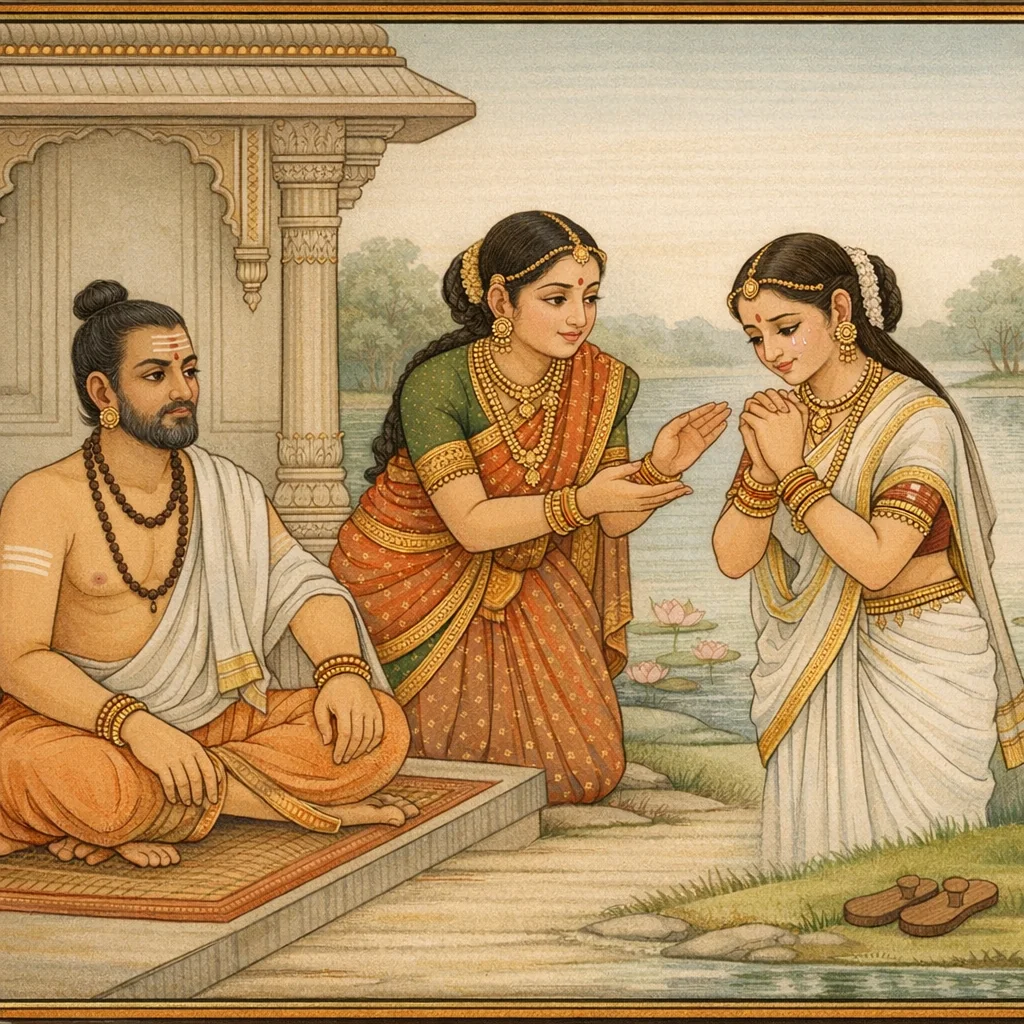
Chapter 195 begins with the sages asking about the previously mentioned Śūdrī and Brāhmaṇī, and about an unsurpassed pair of tīrthas in Hāṭakeśvara-kṣetra—their origin, construction, and a tradition of manifestation linked to pādukā imagery (sacred sandals/footprints). Sūta replies by introducing Chāndogya, a brāhmaṇa of the Nāgara community, learned in the Sāmaveda and steadfast in the householder’s dharma. In his later years a daughter is born with auspicious marks, named Brāhmaṇī; her birth is said to bring radiance and joy. Another girl, Ratnavatī, is also mentioned with similarly luminous symbolism. The two become inseparable companions, sharing food and resting places, and their bond becomes the pivot of the narrative. When marriage arrangements arise, fear of separation turns into crisis: Brāhmaṇī refuses to marry without her companion and threatens self-harm if forced, casting marriage as an ethical question of agency and relational duty. Her mother proposes a remedy—arranging the companion’s marriage within the same household network—but Chāndogya refuses, citing community norms and calling such a transfer socially blameworthy. Thus the chapter stages a conflict between social regulation, parental authority, personal vow, and the preservation of intimate ties, setting the background for the tīrtha account the sages seek.
Shlokas
Verse 1
ऋषय ऊचुः । शूद्री च ब्राह्मणी चापि ये त्वया परिकीर्तिते । हाटकेश्वरजे क्षेत्रे तीर्थद्वयमनुत्तमम्
The sages said: “The Śūdrī tīrtha and the Brāhmaṇī tīrtha that you have mentioned—these two unsurpassed holy fords in the Hāṭakeśvara sacred region…”
Verse 2
तत्कथं तत्र संजातं केन वा तद्विनिर्मितम् । एतच्च सर्वमाचक्ष्व विस्तरेण महामते
“How did it arise there, and by whom was it established? Explain all of this in detail, O great-minded one.”
Verse 3
पादुकाभ्यां समुत्पत्तिः श्रुताऽस्माभिः पुरा तव । वद तच्चापि माहात्म्यं ताभ्यां चैव समुद्भवम्
“We previously heard from you that an origin arose in connection with the two Pādukās. Tell us also their greatness, and what came forth from them.”
Verse 4
सूत उवाच । पुरासीन्नागरो विप्रश्छांदोग्य इति विश्रुतः । यस्याऽन्वयेऽपि विप्रेन्द्राश्छान्दोग्या इति विश्रुताः
Sūta said: “Long ago there lived a Nāgara brāhmaṇa renowned as Chāndogya. Even the foremost brāhmaṇas of his lineage were famed by the name ‘Chāndogya’.”
Verse 5
सामवेदविदस्तस्य गृहस्थाश्रमधर्मिणः । पश्चिमे वयसि प्राप्ते कन्या जाता सुशोभना
“He was a knower of the Sāma Veda and faithful to the duties of the householder’s stage of life. When he had reached later age, a splendid daughter was born to him.”
Verse 6
सर्वैरपि गुणैर्युक्ता सर्वलक्षण लक्षिता । सप्तरक्ता त्रिगंभीरा पञ्चसूक्ष्माऽबृहत्कटिः
“She was endowed with every virtue and marked by all auspicious signs of excellence—possessing the seven ‘red’ beauties, the three noble depths, the five subtle features, and a waist that was not broad.”
Verse 7
पद्मपत्रविशालाक्षी लंबकेशी सुशोभना । बिंबोष्ठी ह्रस्वलोमा च पूर्णचन्द्रसमप्रभा
“Her eyes were large like lotus petals; her hair flowed long; she was radiant and beautiful—her lips like the bimba fruit, her body with fine, short hair, and her glow equal to the full moon.”
Verse 8
तस्या नाम पिता चक्रे ब्राह्मणीति द्विजोत्तमाः । यस्मात्सा ब्राह्मणैर्दत्ता मण्डपान्ते सुपूजितैः
Her father gave her the name “Brāhmaṇī”, O best of the twice-born, because she had been bestowed by venerable brāhmaṇas—duly honored with worship—within a pavilion (maṇḍapa).
Verse 9
पश्चिमे वयसि प्राप्ते अपत्यरहितस्य च । ववृधे सा च तन्वङ्गी चन्द्रलेखा यथा तथा
When he had reached the later stage of life and yet remained without offspring, she—the slender-limbed one—grew forth like a delicate streak of moonlight.
Verse 10
शुक्लपक्षे तु संप्राप्ते जनलोचनतुष्टिदा । यस्मिन्नहनि संजाता छान्दोग्यस्य महात्मनः । आनर्ताधिपतेस्तस्मिंस्तादृग्रूपा सुताऽभवत्
When the bright fortnight arrived, she—delighting the eyes of all people—was born on that very day to the great-souled Chāndogya; and to the lord of Ānarta was born a daughter of such wondrous beauty.
Verse 11
यस्याः कायप्रभौघेण सर्वं तत्सूतिकागृहम् । निशागमेऽपि संजातं रत्नौघैरिव सुप्रभम् । ततस्तस्याः पिता नाम चक्रे रत्नवतीति च
By the flood of radiance from her very body, the entire lying-in chamber shone—though night had come—as if illuminated by heaps of jewels. Therefore her father gave her the name “Ratnavatī” as well.
Verse 12
अथ सख्यं समापन्ना ब्राह्मण्या सह सा शुभा । नैरन्तर्येण ताभ्यां च वियोगो नैव जायते
Then that auspicious girl entered into friendship with Brāhmaṇī; and because they were continually together, separation between the two never arose.
Verse 13
एकाशनं तथा शय्या एकान्नेन च भोजनम् । अष्टमेऽब्दे च संजाते पिता तस्या द्विजोत्तमाः
They shared one seat and one bed, and ate the same food. Then, when her eighth year had come, her father—O best of the twice-born—began to consider her future.
Verse 14
विवाहं चिन्तयामास प्रदानाय वरे तथा । सा ज्ञात्वा चेष्टितं तस्य पितुर्दुःखसमन्विता
Her father began to ponder her marriage and to give her to a worthy bridegroom. Learning her father’s intention, she was filled with sorrow.
Verse 15
सख्या वियोगभीता च प्रोचे रत्नवती तदा । अश्रुपूर्णेक्षणा दीना बाष्पगद्गदया गिरा
Then Ratnavatī, fearing separation from her friend, spoke—her eyes brimming with tears, downcast, her voice choked with sobs.
Verse 16
सखि तातो विवाहं मे प्रकरिष्यति सांप्रतम् । विवाहितायाश्च सख्यं न भविष्यति कर्हिचित्
She said, “O friend, my father is arranging my marriage even now. And once I am married, our friendship will never again be as it was.”
Verse 17
वज्रपातोपमं वाक्यं तस्याः श्रुत्वा सखी च सा । रुरोद कण्ठमाश्लिष्य स्नेहव्याकुलितेन्द्रिया
Hearing her words—like a thunderbolt’s blow—the friend embraced her about the neck and wept, her senses overwhelmed by affection.
Verse 18
अथ तद्रुदितं श्रुत्वा माता तस्या मृगावती । ससंभ्रमा समागत्य वाक्यमेतदुवाच ह
Then, hearing that weeping, her mother Mṛgāvatī hurried to them and spoke these words.
Verse 19
किमर्थं रुद्यते पुत्रि केन ते विप्रियं कृतम् । करोमि निग्रहं येन तस्याद्यैव दुरात्मनः
“My daughter, why do you weep? Who has wronged you? Tell me, that even today I may punish that wicked one.”
Verse 21
अनया रहिताहं च न जीवामि कथंचन । एतस्मात्कारणाद्देवि प्ररोदिमि सुदुःखिता
“Without her I cannot live in any way. For this reason, O lady, I weep—utterly distressed.”
Verse 22
मृगावत्युवाच । यद्येवं पुत्रि यत्र त्वं प्रयास्यसि पतेर्गृहे । तस्य राज्ञस्तु यो विप्रः पौरोहित्ये व्यवस्थितः
Mṛgāvatī said: “If so, my daughter—when you go to your husband’s house—there is a Brahmin of that king, established as the royal priest (purohita).”
Verse 23
तस्य पुत्राय दास्यामि सखीमेनां तव प्रियाम् । तत्रापि येन ते संगो भविष्यत्यनया सह
“I will give this dear friend of yours to that priest’s son, so that even there you may continue to have her companionship.”
Verse 24
एवमुक्त्वा ततो राज्ञी छादोग्यं द्विजसत्तमम् । समानीयाब्रवीदेनं विनयावनता स्थिता
Having spoken thus, the queen summoned Chādogya, the foremost of Brahmins, and—standing with humble courtesy—addressed him.
Verse 26
तथा तव सुतायाश्च सुतेयं मम सुप्रिया । तस्मात्कुरु वचो मह्यं यच्च वक्ष्यामि सुव्रत
Likewise, this maiden is exceedingly dear to me, as a daughter is dear to you. Therefore do as I ask—O man of good vows—and act according to what I shall propose.
Verse 27
यस्य मे दीयते कन्या कदाचिन्नृपतेरियम् । पुरोधास्तस्य यो विप्रस्तस्मै देया निजा सुता
Whomever the king may someday give this maiden of mine in marriage—whichever Brahmin is his royal priest (purohita)—to that very Brahmin my own daughter should also be given in marriage.
Verse 28
येन न स्यान्मिथो भेदस्ताभ्यां द्विजवरोत्तम । एकस्थाने स्थिताभ्यां च प्रसा दात्तव सत्तम
O best among the twice-born, grant your favor so that no mutual discord may arise between those two; and let them dwell together in one place, O noble one.
Verse 29
छांदोग्य उवाच । नागरो नागरं मुक्त्वा योऽन्यस्मै संप्रयच्छति । कन्यकां यः प्रगृह्णाति विवाहार्थं कथंचन
Chāndogya said: If a Nāgara, setting aside a Nāgara match, gives (his daughter) to another; or if someone, by any means, takes a maiden for the sake of marriage—
Verse 30
स पंक्तिदूषकः पापान्नागरो न भवेदिह । तस्मान्नाहं प्रदास्यामि कथंचिन्निजकन्यकाम् । अन्यस्मै नागरं मुक्त्वा निश्चयोऽयं मया कृतः
He becomes a sinner, a “defiler of the dining line,” and is not regarded here as a true Nāgara. Therefore I will not, by any means, give my own daughter elsewhere, abandoning a Nāgara match; this resolve has been made by me.
Verse 31
ब्राह्मण्युवाच । नाहं पतिं प्रयास्यामि कुमारी ब्रह्मचारिणी । देया प्रिया सखी यत्र तावद्यास्यामि तत्र च
The brāhmaṇa maiden said: I will not go to a husband—I am a maiden vowed to chastity. Wherever my beloved friend is, I shall go there and remain with her.
Verse 32
यदि तात बलान्मह्यं विवाहं त्वं करिष्यसि । विषं वा भक्षयिष्यामि साधयिष्यामि पावकम्
If, father, you force a marriage upon me, then I will either consume poison or enter the fire.
Verse 33
शस्त्रेण वा हनिष्यामि स्वदेहं तात निश्चयम् । एवं ज्ञात्वा तु तात त्वं यत्क्षमं तत्समाचर
Or I will certainly slay my own body with a weapon. Knowing this, father, do what is right and fitting.
Verse 34
सूत उवाच । तस्यास्तं निश्चयं ज्ञात्वा स विप्रो दुःखसंयुतः । स्त्रीहत्यापाप भीतस्तु तां त्यक्त्वा स्वगृहं ययौ
Sūta said: Knowing her firm resolve, that brāhmaṇa, filled with sorrow and fearing the sin of woman-slaying, left her and went back to his own house.
Verse 35
सापि रेमे तया सार्धं रत्नवत्या द्विजोत्तमाः । संहृष्टहृदया नित्यं संत्यक्तपितृसौहृदा
She too lived joyfully with Ratnavatī, O best of twice-born; ever cheerful at heart, having set aside attachment to her father’s affection.
Verse 36
यौवनं सा तु संप्राप्ता रूपेणाप्रतिमा भुवि
In due course she attained youth, and in beauty she was unmatched upon the earth.
Verse 195
इति श्रीस्कांदे महापुराण एकाशीतिसाहस्र्यां संहितायां षष्ठे नागरखण्डे हाटकेश्वरक्षेत्रमाहात्म्ये छान्दोग्यब्राह्मणकन्यावृत्तान्तवर्णनंनाम पञ्चनवत्युत्तरशततमोऽध्यायः
Thus ends, in the revered Skanda Mahāpurāṇa—within the eighty-one-thousand-verse compilation, in the sixth Nāgara-khaṇḍa, in the Māhātmya of the sacred Hāṭakeśvara region—the one-hundred-and-ninety-fifth chapter, called “The Description of the Account of the Chāndogya Brāhmaṇa’s Daughter.”
Verse 258
इयं तव सुता ब्रह्मन्सुताया मम सुप्रिया । न वियोगं सहत्यस्या मुहूर्तमपि भामिनी
“O Brahman, this daughter of yours is exceedingly dear to my own daughter. That radiant maiden cannot endure separation from her—not even for a single moment.”