Adhyaya 193
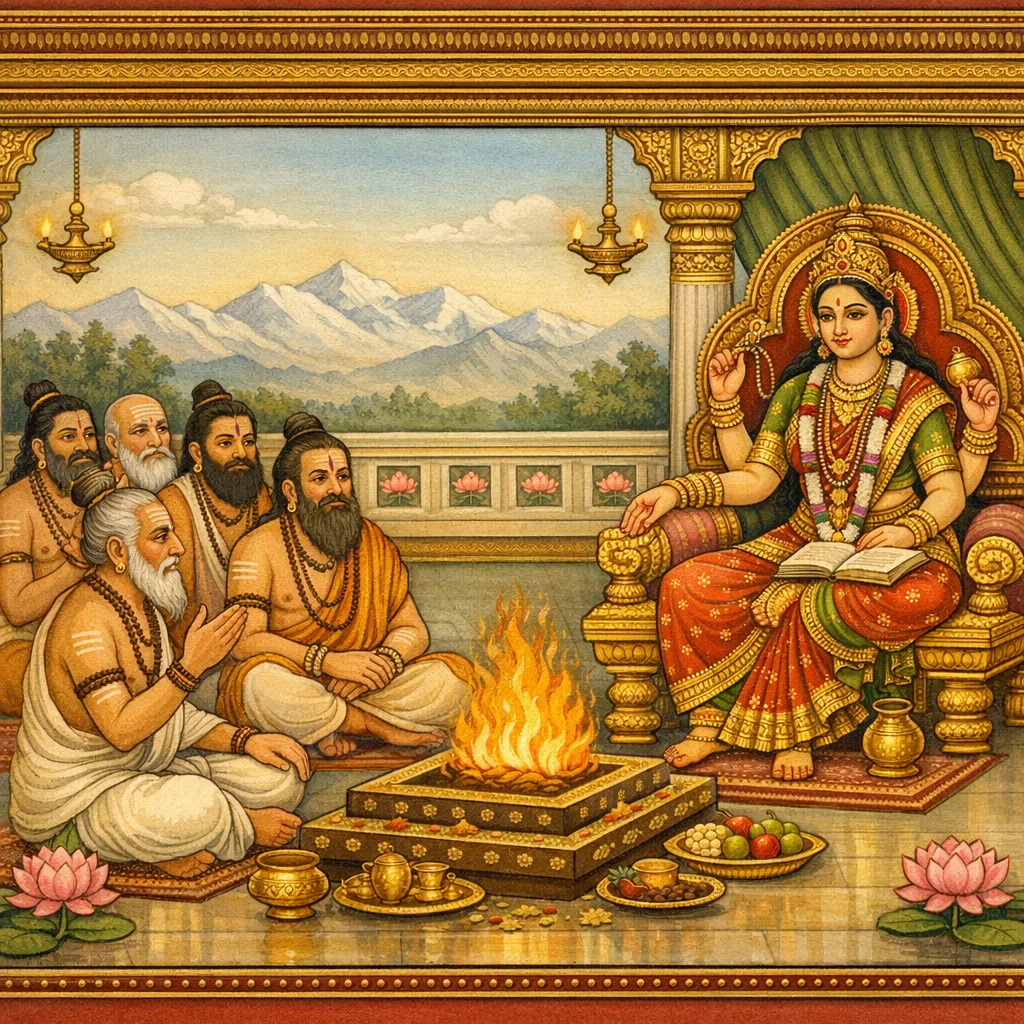
Chapter 193 unfolds as a question-led theological dialogue. The Ṛṣis ask Sūta what followed after Sāvitrī departed in anger and uttered curses, and how the gods could still remain seated in the ritual hall though bound by those words. Sūta relates that Gāyatrī rose to reply, affirming the irreversible authority of Sāvitrī’s speech—no deva or anti-deva can alter it—while also proposing a compensatory order through boons. Praising Sāvitrī as a foremost pativratā and a venerable senior goddess, Gāyatrī explains why her utterance must bind. She then sets forth adjustments: Brahmā’s worship-status and ritual centrality are established—works do not reach completion without Brahmā in Brahmā-sthānas—and the darśana of Brahmā is declared to yield multiplied merit, especially on parvan days. The discourse also casts its effects into future mythic history: Viṣṇu’s future births and roles are described (including dual forms and service as a charioteer), Indra’s foretold imprisonment and release through Brahmā, Agni’s purification and restoration of eligibility for worship, and Śiva’s marital reconfiguration culminating in a superior spouse, Gaurī, daughter of Himācala. Thus the chapter models a Purāṇic mechanism: curses remain theologically valid, yet are ethically and ritually integrated through boons, reassigned functions, and merit-doctrines tied to place and worship.
Shlokas
Verse 1
ऋषय ऊचुः । एवं गतायां सावित्र्यां सकोपायां च सूतज । किं कृतं तत्र गायत्र्या ब्रह्माद्यैश्चापि किं सुरैः
The sages said: O son of Sūta, when Sāvitrī had departed in anger, what was done there by Gāyatrī? And what, too, was done by Brahmā and the other gods?
Verse 2
एतत्सर्वं समाचक्ष्व परं कौतूहलं हि नः । कथं शापान्विता देवाः संस्थितास्तत्र मण्डपे
Tell us all this in full, for our curiosity is great. How did the gods, bearing the burden of a curse, remain assembled there in that pavilion?
Verse 3
सूत उवाच । गतायामथ सावित्र्यां शापं दत्त्वा द्विजोत्तमाः । गायत्री सहसोत्थाय वाक्यमेतदुदैरयत्
Sūta said: When Sāvitrī had departed after uttering the curse, O best of the twice-born, Gāyatrī at once rose and spoke these words.
Verse 4
सावित्र्या यद्वचः प्रोक्तं तन्न शक्यं कथंचन । अन्यथा कर्तुमेवाथ सर्वैरपि सुरासुरैः
The words spoken by Sāvitrī cannot be altered in any way—not even by all the gods and demons together.
Verse 5
महासती महाभागा सावित्री सा पतिव्रता । पूज्या च सर्वदेवानां ज्येष्ठा श्रेष्ठा च सद्गणैः
Sāvitrī is a great, chaste, and blessed lady, steadfast in her wifely vow. She is worthy of worship by all the gods, honored as foremost and best among the noble assemblies.
Verse 6
परं स्त्रीणां स्वभावोऽयं सर्वासां सुरसत्तमाः । अपि सह्यो वज्रपातः सपत्न्या न पुनः कथा
Yet, O best among the gods, this is the nature of all women: even the blow of a thunderbolt may be endured, but not the matter of a co-wife.
Verse 7
मत्कृते येऽत्र शपिता सावित्र्या ब्राह्मणाः सुराः । तेषामहं करिष्यामि शक्त्या साधारणां स्वयम्
Those Brāhmaṇas and gods who have here been cursed by Sāvitrī on my account—I myself shall, by my power, make their condition ‘common’, mitigated and shareable.
Verse 8
अपूज्योऽयं विधिः प्रोक्तस्तया मंत्रपुरःसरः । सर्वेषामेव वर्णानां विप्रादीनां सुरो त्तमाः
O best of gods, she has declared—preceded by sacred utterance—that this Brahmā (Vidhi) is unworthy of worship for all the social orders, beginning with the Brāhmaṇas.
Verse 9
ब्रह्मस्थानेषु सर्वेषु समये धरणीतले । न ब्रह्मणा विना किंचित्कृत्यं सिद्धिमुपैष्यति
At every Brahmā-sanctified place upon the earth, at the proper time, no undertaking whatsoever attains success without Brahmā’s sanction.
Verse 10
कृष्णार्चने च यत्पुण्यं यत्पुण्यं लिंग पूजने । तत्फलं कोटिगुणितं सदा वै ब्रह्मदर्शनात् । भविष्यति न सन्देहो विशेषात्सर्वपर्वसु
Whatever merit arises from worship of Kṛṣṇa, and whatever merit arises from worship of the Liṅga—by the mere darśana of Brahmā that fruit becomes multiplied a crore-fold, always; of this there is no doubt, especially on all sacred festival days.
Verse 11
त्वं च विष्णो तया प्रोक्तो मर्त्यजन्म यदाऽप्स्यसि । तत्रापि परभृत्यत्वं परेषां ते भविष्यति
And you too, O Viṣṇu—she has declared that when you obtain a mortal birth, even there you will take on the role of serving another.
Verse 12
तत्कृत्वा रूपद्वितयं तत्र जन्म त्वमाप्स्यसि । यत्तया कथितो वंशो ममायं गोपसंज्ञितः । तत्र त्वं पावनार्थाय चिरं वृद्धिमवाप्स्यसि
Assuming two forms, you will be born there. The lineage she has spoken of is mine, known as the Gopa clan; and there, for the purification of the world, you will flourish and increase for a long time.
Verse 13
एकः कृष्णाभिधानस्तु द्वितीयोऽर्जुनसंज्ञितः । तस्यात्मनोऽर्जुनाख्यस्य सारथ्यं त्वं करिष्यसि
One will bear the name Kṛṣṇa, and the second will be called Arjuna; and you will serve as the charioteer of that very Arjuna—your own self in that form.
Verse 14
तेनाकृत्येऽपि रक्तास्ते गोपा यास्यंति श्लाघ्यताम् । सर्वेषामेव लोकानां देवानां च विशेषतः
By that divine presence, those Gopas—though untrained in formal duties—will be filled with devotion and will attain renown and praise among all worlds, and especially among the gods.
Verse 15
यत्रयत्र च वत्स्यंति मद्वं शप्रभवानराः । तत्रतत्र श्रियो वासो वनेऽपि प्रभविष्यति
Wherever people born of my lineage dwell, there and there the abode of Śrī—prosperity and auspicious fortune—will arise, even in the forest.
Verse 16
भोभोः शक्र भवानुक्तो यत्तया कोपयुक्तया । पराजयं रिपोः प्राप्य कारा गारे पतिष्यति
O Śakra, you have been told by her in anger: having met defeat at the hands of an enemy, you will fall into imprisonment.
Verse 17
तन्मुक्तिं ते स्वयं ब्रह्मा मद्वाक्येन करिष्यति
By my word, Brahmā himself will secure your release from that.
Verse 18
ततः प्रविष्टः संग्रामे न पराजयमाप्स्यसि । त्वं वह्ने सर्वभक्षश्च यत्प्रोक्तो रुष्टया तया
Thereafter, when you enter battle, you will not meet defeat. And you, O Fire, are the all-devouring one—so you were spoken of by her in wrath.
Verse 19
तदमेध्यमपि प्रायः स्पृष्टं तेऽर्च्चिर्भिरग्रतः । मेध्यतां यास्यति क्षिप्रं ततः पूजामवाप्त्यसि
Even that which is generally considered impure, having been touched before you by your sacred rays, will quickly become purified; and then you shall duly receive worship.
Verse 21
यद्रुद्र प्रियया सार्धं वियोगः कथितस्तया । तस्याः श्रेष्ठ तरा चान्या तव भार्या भविष्यति । गौरीनामेति विख्याता हिमाचलसुता शुभा
O Rudra, as she has spoken of separation from her beloved, know this: another, even more excellent than she, will become your wife—she will be famed as Gaurī, the auspicious daughter of Himācala.
Verse 193
इति श्रीस्कांदे महापुराण एकाशीतिसाहस्र्यां संहितायां षष्ठेनागरखण्डे हाटकेश्वरक्षेत्रमाहात्म्ये गायत्रीवरप्रदानोनाम त्रिनवत्युत्तरशततमोऽध्यायः
Thus ends, in the Śrī Skanda Mahāpurāṇa—within the Ekāśītisāhasrī Saṃhitā, in the Sixth book, the Nāgarakhaṇḍa—within the Māhātmya of Hāṭakeśvara Kṣetra, the chapter entitled “The Bestowal of Boons by Gāyatrī,” being Chapter 193.