Adhyaya 189
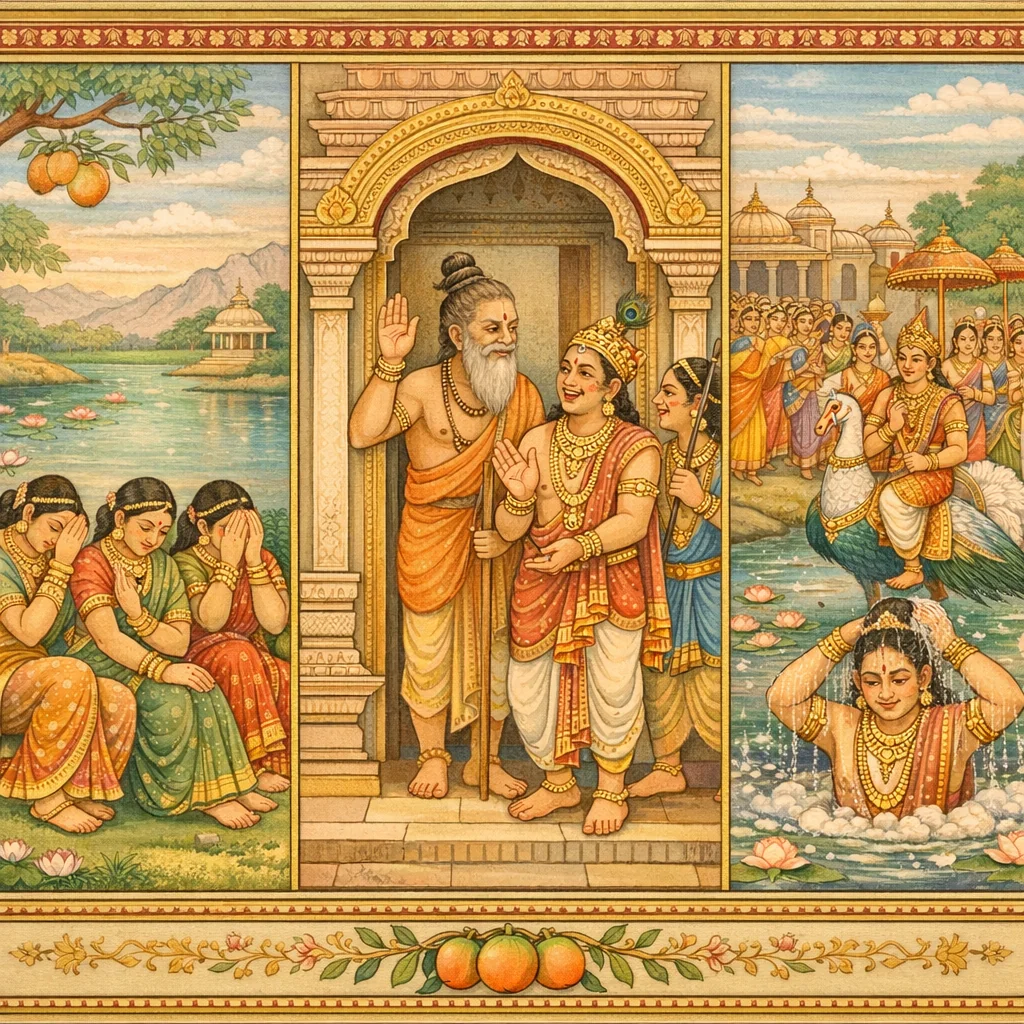
Chapter 189 unfolds through dialogue as cursed, afflicted Gandharva-women approach the goddess Audumbarī in lamentation, seeking a practicable path to welfare. They confess their dependence on nocturnal song and dance and the social contempt they endure. Audumbarī acknowledges the unalterable force of Savitrī’s curse, yet recasts it as a protective boon: the women are assigned sanctioned roles within specified lineages (said to be “sixty-eight gotras”) and are promised recognition through orderly, place-based worship. The chapter then sets out a civic-temple custom: when a household experiences a particular increase of prosperity (linked with a maṇḍapa), it should perform the prescribed offering and observance, including a women’s rite at the city gate marked by laughter, gesture, and bali-like offerings. Observance yields satisfaction akin to participation in sacrifice (yajña), while neglect is associated with misfortune such as loss of offspring and illness. The narrative turns to Devasharmā and his wife, connecting Nārada’s earlier curse and Audumbarī’s descent into human embodiment, thereby explaining the goddess’s presence and ritual authority. It concludes with festival and avabhṛtha (post-sacrificial bath) motifs, proclaiming the site as possessing the character of all tīrthas and emphasizing the exceptional fruit of full-moon observances, especially when performed by women.
Shlokas
Verse 1
सूत उवाच । अथ यावच्च ताः शप्ता मातरो द्विजसत्तमाः । सावित्र्या तास्तु गंधर्व्यः प्राप्ताः सा यत्र तिष्ठति
Sūta said: “Then, O best of the twice-born, as soon as those Mothers were cursed by Sāvitrī, those Gandharva-women went and reached the place where she was staying.”
Verse 2
ततः प्रणम्य ता ऊचुः सर्वा दीनतरं वचः । वयं समागता देवि सर्वास्तव मखे यतः
Then, having bowed down, they all spoke with deeper humility: “O Goddess, we have all come, for we belong to your yajña, your sacrificial rite.”
Verse 3
यज्ञभागं लभिष्याम औदुंबर्याः प्रसादतः । न चास्माभिः परिज्ञाता सावित्री चात्र तिष्ठति
“We were to receive a share of the yajña by the grace of Audumbarī; yet we did not recognize that Sāvitrī herself was staying here.”
Verse 4
दौर्भाग्यदोषसंपन्ना नागरीभिः समावृता । अस्माकं सुखमार्गोऽयं नृत्यगीतसमुद्भवः
Surrounded by the women of the city and marked by the fault of ill fortune, she said: “This is our path to pleasure—born of dance and song.”
Verse 5
तत्कुर्वाणास्ततो रात्रौ शप्ता गांधर्वसत्तमे । स्त्रीणां दुःखेन दुःखार्ता जायंते सर्वयोषितः
While doing that, in the night they were cursed, O best of Gandharvas; and all those women are born afflicted with sorrow, through the sorrow of women itself.
Verse 6
यूयमानंदिताः सर्वाः सपत्न्या मम चोत्सवे । तां प्रणम्य प्रपूज्याद्य नाहं संभाषितापि च
“All of you rejoiced—together with my co-wife—at my festival. Yet today, though you bowed to her and honored her, you did not even speak with me.”
Verse 7
विशेषान्नृत्यगीतं च प्रारब्धं मम चाग्रतः । तस्माद्व्योमगति र्नैव भवतीनां भविष्यति
And pointedly, dance and song were begun right before me. Therefore, for you there will certainly be no passage through the sky, no celestial freedom.
Verse 8
अस्मिन्स्थाने सदा दीनास्तथाऽश्रयविवर्जिताः । संतिष्ठध्वं न वः पूजां करिष्यंति च मानवाः
In this very place, remain always—poor and without refuge; and human beings will not perform worship in your honor.
Verse 9
दीनानामसमर्थानां यात्राकृत्येषु सर्वदा । तस्यास्तद्वचनं देवि नान्यथा संभविष्यति
For the poor and the powerless, in matters of pilgrimage-duties at all times—O Goddess—her words will not turn out otherwise; they will surely come to pass.
Verse 10
औदुम्बर्याः पूजनाय गत्वा तस्यै निवेद्यताम् । सा हि व्यपनयेद्दुःखं ध्रुवं सा हि प्रकामदा
Go to worship Audumbarī and present your offering to her. For she surely removes sorrow; indeed, she is certainly the giver of desired blessings.
Verse 11
तेनाऽत्र सहसा प्राप्ता यावन्नष्टमनोरथाः
By that instruction, they swiftly arrived here—until their hopes were lost and they fell into despair.
Verse 12
तस्मात्कुरुष्व कल्याणि यथास्माकं गतिर्भवेत् । माहात्म्यं तव वर्द्धेत त्रैलोक्येऽपि चराचरे
Therefore, O auspicious one, do what must be done so that a good course may be ours; and may your greatness increase throughout the three worlds, among all moving and unmoving beings.
Verse 13
औदुम्बर्युवाच । का शक्तिर्विद्यतेऽस्माकं कृतं सावित्रिसंभवम् । अन्यथा कर्तुमेवाद्य सर्वैरपि सुरासुरैः
Audumbarī said: “What power is there in us to alter what has arisen from Sāvitrī’s ordinance? Even all the gods and asuras together cannot make it otherwise today.”
Verse 14
तथापि शक्तितो देव्यो यतिष्यामि हिताय वः । अष्टषष्टिषु गोत्रेषु भवत्यः संनियोजिताः
Even so, O goddesses, to the best of my power I shall strive for your welfare. You shall be duly assigned among the sixty‑eight lineages (gotras).
Verse 15
पितामहेन तुष्टेन तत्र पूजामवाप्स्यथ । यूयं रात्रौ च संज्ञाभिर्हास्यपूर्वाभिरेव च
There, when the Grandfather (Brahmā) is pleased, you shall receive worship. And you shall be approached at night as well—through agreed signs and with laughter as a prelude.
Verse 16
अद्यप्रभृति यस्यात्र नागरस्य तु मंदिरे । वृद्धिः संपत्स्यते काचिद्वि शेषान्मंडपोद्भवा
From today onward, in whatever citizen’s house here some increase arises—especially an increase born from building or consecrating a maṇḍapa (pavilion)—
Verse 17
तथा या योषितः काश्चित्पुरद्वारं समेत्य च । अदृष्टहास्यमाध्याय क्षपिष्यंति बलिं ततः
Likewise, certain women, coming to the city-gate and taking hidden laughter as their guise, will then offer the bali (ritual oblation).
Verse 18
तेन वो भविता तृप्तिर्देवानां च यथा मखैः । याः पुनर्न करिष्यंति पूजामेतां मयोदिताम्
By that, you will be satisfied—just as the gods are satisfied by sacrifices. But those who will not perform this worship spoken by me—
Verse 19
युष्माकं नगरे तासां सुपुत्रो नाशमाप्स्यति । युष्माकमपमाने न सदा रोगी भविष्यति
In your city, the good sons of those (who perform it) will not meet destruction. And when you are dishonored, they will not become perpetually afflicted with disease.
Verse 20
तस्मात्तिष्ठध्वमत्रैव रक्षार्थं नगरस्य च । शापव्याजेन युष्माकं वरोऽयं समुपस्थितः
Therefore remain right here, for the protection of the city. Under the pretext of a curse, this boon has come to you.
Verse 21
एतस्मिन्नंतरे प्राप्तो देवशर्मा द्विजोत्तमाः । गंधर्वः पर्वतो जातः स्वपत्न्या सहितस्तदा
Meanwhile, Devaśarmā, the best of the twice-born, arrived. At that time the Gandharva named Parvata was also present, together with his wife.
Verse 22
यदा चौदुम्बरी शप्ता नारदेन सुरर्षिणा । मानुषी भव क्रुद्धेन तदा संप्रार्थितस्तया
When Caudumbarī was cursed by Nārada, the divine seer, who in anger declared, “Become human!”, she then entreated him in supplication.
Verse 23
मदर्थं मानुषो भूत्वा तता त्वं चानया सह । सृज मां मानुषीं चेव येन गच्छामि नो भुवि
She said, “For my sake, O father, become human—and you too, together with her. And bring me forth as a human woman as well, so that I may go and dwell upon the earth.”
Verse 24
विण्मूत्रसंयुते गर्भे सर्वदोषसमन्विते । ततः सा कृपया तस्याः सत्पत्न्या देवशर्मणः
Within a womb mingled with impurity, filth and urine, fraught with every defect, she then—out of compassion—turned her heart toward the virtuous wife of Devaśarman.
Verse 25
अवतीर्णा धरापृष्ठे वानप्रस्थाश्रमे ततः । एवं सा पञ्चमी रात्रिस्तस्य यज्ञस्य सत्तमाः
Then she descended upon the surface of the earth, into the hermitage of the forest-dweller (vānaprastha). Thus passed the fifth night of that excellent sacrifice.
Verse 26
उत्सवेन मनोज्ञेन चौदुम्बर्या व्यतिक्रमात् । प्रत्यूषे च ततो जाते यदा तेन विसर्जिता
After the delightful festival of Audumbarī had concluded, and when dawn arrived, she was dismissed by him.
Verse 27
औदुम्बरी तदा प्राह पर्वतं जनकं निजम् । कल्येऽत्रावभृथो भावी विधियज्ञसमुद्भवः
Then Audumbarī spoke to the mountain—her own father: “Tomorrow, here, there shall be the avabhṛtha, the concluding bath, arising from the sacrifice duly performed.”
Verse 28
सर्वतीर्थमयस्तस्मिन्स्नानं न स्यात्ततः परम् । यास्यामः स्वगृहान्भूयः सर्वैर्देवैः समन्विताः
In that place, which embodies all tīrthas, there is no bath superior to bathing there. Then, accompanied by all the gods, we shall return again to our own abodes.
Verse 30
अनेनैव विमानेन त्रयो वापि यथासुखम् । ममापि च वरो जातो यः शापान्नारदोद्भवात् । यज्ञभागो मया प्राप्तो देवानामपि दुर्लभः । पौर्णमासीदिने प्राप्ते विशेषात्स्त्रीजनैः कृतः
“By this very aerial chariot, the three of us may travel as we please. And for me too a boon has arisen—because of the curse that came from Nārada: I have obtained a share in the sacrifice, something difficult to gain even for the gods—especially when, on the day of the full moon, it is performed by women.”
Verse 189
इति श्रीस्कांदे महापुराण एकाशीतिसाहस्र्यां संहितायां षष्ठे नागरखण्डे हाटकेश्वरक्षेत्रमाहात्म्य औदुंबर्युत्पत्तिपूर्वकतत्प्राग्जन्मवृत्तांतवर्णनंनामैकोननवत्युत्तरशततमोऽध्यायः
Thus, in the Śrī Skanda Mahāpurāṇa, in the Ekāśītisāhasrī Saṃhitā, in the sixth division, the Nāgara Khaṇḍa—within the Māhātmya of Hāṭakeśvara-kṣetra—ends the chapter entitled “The account of the former-life narrative preceding the manifestation of Audumbarī,” being Chapter 189.