Adhyaya 188
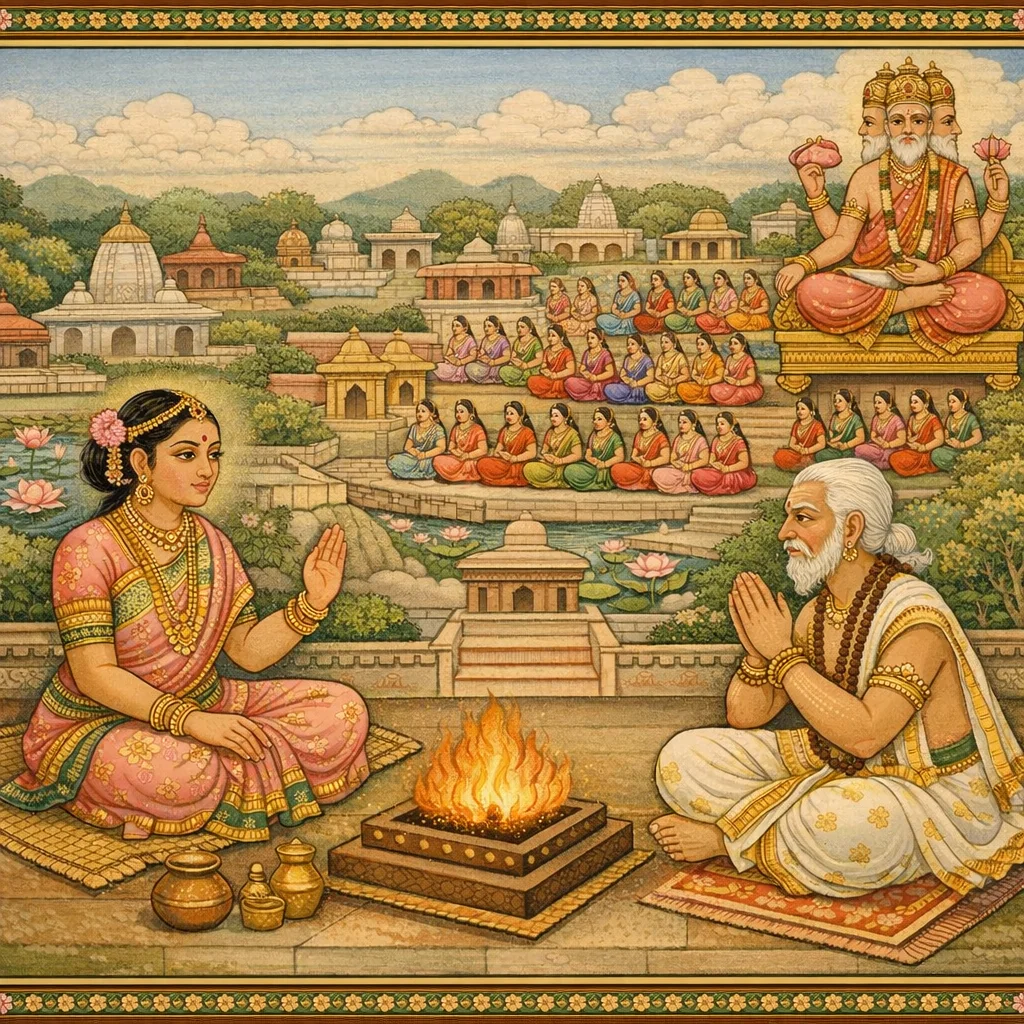
This adhyāya unfolds within a Vedic yajña setting—sadas, selection of ṛtvij priests, and the ordered homa sequence—stressing that ritual procedure must be exact, as guided by the adhvaryu and enacted by the udgātṛ through sāman-linked rites. Audumbarī, daughter of the Gandharva Parvata and described as jāti-smarā (one who remembers former births), is drawn by the sāmagīti and the rite’s śaṅku markers. She corrects the udgātṛ and commands an immediate homa at the southern fire, declaring precision in yajña to be salvific and non-negotiable. Her earlier curse is then disclosed: Nārada, mocked over musical technicalities (tāna/mūrcchanā), condemns her to human birth, with release promised only if she speaks at the decisive moment in the pitāmaha-yajña and is acknowledged “in the assembly of all gods,” tying mokṣa to a public, communal ritual arena. Audumbarī asks for a lasting ordinance: in every future yajña her image must be installed at the center of the sadas and worshiped before any śaṅku-related procurement or progression proceeds. The udgātṛ and the devas ratify this as binding protocol and specify the phala—offerings to her of fruits, garments, ornaments, and unguents yield multiplied merit. A civic scene follows as the city’s women approach with curiosity and devotion to worship her; her human parents arrive too, but she limits their prostration to safeguard her heavenly destiny. The narrative then widens: a great host of deities and the 86 Mothers (mātṛgaṇa) arrive seeking seats and recognition; Brahmā (Padmaja) directs a learned representative “born in the city” to assign territorial places to each group, turning divine influx into an ordered sacred geography. Tension arises with Sāvitrī, who, distressed at seeing honor bestowed while she feels neglected, utters a curse that restricts the Mothers’ movement and foretells hardship—exposure to seasonal extremes and lack of civic patronage (no worship, no mansions). Thus the chapter functions as a layered charter: exact yajña procedure, sanctioned installation of a feminine sacred form (Audumbarī) as prerequisite, administrative settlement of divine collectives into local space, and an ethical warning that mismanaged ritual honor and social recognition can create enduring constraints through śāpa.
Shlokas
Verse 1
सूत उवाच । ततस्तु पंचमे चाह्नि संजाते ते द्विजोत्तमाः । श्वेतधौतांबराः सर्वे सुस्नाताः शुचयः स्थिताः
Sūta said: Then, when the fifth day arrived, those best of twice-born men stood ready—each well-bathed, inwardly and outwardly pure, and all clad in freshly washed white garments.
Verse 2
चक्रुः सर्वाणि कर्माणि पुलस्त्येन प्रबोधिताः । सदोमध्ये गताश्चैव ऋत्विग्वरणपूर्वकाः
Instructed by Pulastya, they performed all the prescribed rites; and then, having first chosen the officiating priests, they proceeded into the midst of the sacrificial hall.
Verse 3
अध्वर्युणा समादिष्टान्प्रैषान्प्रोचुर्यथा क्रमम् । होमार्थं दीप्तवह्नौ च ऋत्विग्भिः सुसमाहितैः
As the Adhvaryu directed, the ritual summons (praiṣa) were proclaimed in due sequence; and for the offering, the well-collected priests performed the homa into the blazing fire.
Verse 4
एतस्मिन्नेव काले तु ह्युद्गात्रा कर्म योजितम् । शंकुभिः क्रियते यच्च साम गीतिप्रसूचितम्
At that very time, the Udgātṛ set the ritual act in motion—the rite performed with śaṃku markers and signaled by the melodies of the Sāman chants.
Verse 5
सप्तावर्तं द्विजश्रेष्ठाः सदोमध्यगतेन च । यत्राऽगच्छंति ते सर्वे देवा यज्ञांशलालसाः
O best of brāhmaṇas, at the seven-circuited rite within the heart of the sacrificial hall, all the gods come there—eager for their share of the sacrifice.
Verse 6
सोमपानकृते चैव विशेषेण मुदान्विताः । प्रारब्धे सोमभक्ष्येऽथ गीते चोद्गातृनिर्मिते
And, for the sake of Soma-drinking, they were filled with special joy. When the Soma portion was set in motion and the Udgātṛ’s chant began, the rite gathered its full auspicious force.
Verse 7
आगता कन्यका चैका सामगीतिसमुत्सुका । शंकुकर्णनजं चित्रं वांछमाना विचक्षणा
Then a certain maiden arrived, eager for the Sāma-chant; discerning and intelligent, she longed to behold the wondrous form born from Śaṃku and Karṇa.
Verse 8
छन्दोगस्य सुता श्रेष्ठा देवशर्माभिधस्य च । औदुम्बरीति नाम्ना सा सामश्रवणलालसा
She was the excellent daughter of the Chāndoga named Devaśarman; her name was Audumbarī, and she was ardently desirous of hearing the Sāman chants.
Verse 9
उद्गातारं च सदसि वचनं व्याजहार सा । यथायथा प्रवर्तंते शंकवः सामसूचिताः
And in the assembly she addressed the Udgātṛ with sacred speech, explaining how, step by step, the śaṃku pegs—just as the Sāman chants indicate—are set in motion within the rite.
Verse 10
दक्षिणाग्नौ द्रुतं गत्वा कुरु होमं यथोदितम् । येन त्वं मुच्यसे पापान्न चेद्व्यर्थो भविष्यति
Hurry to the southern fire and perform the homa exactly as enjoined; by that you will be freed from sins—otherwise, it will all come to nothing.
Verse 11
तस्यास्तद्वचनं श्रुत्वा साभिप्रायं द्विजोत्तमाः । ततः स चिन्तयामास यावत्तद्व्याहृतं वचः
Hearing her words and discerning their inner intent, the best of the twice-born paused; then for a time he reflected upon what she had spoken.
Verse 12
ततः पप्रच्छ तां कन्या मुद्गाता विस्मयान्वितः । कुतस्त्वमसि चाऽयाता सुता कस्य वदस्व मे
Then, filled with wonder, Mudgāta questioned the maiden: “From where have you come? Whose daughter are you? Tell me.”
Verse 13
औदुम्बर्युवाच । पर्वतस्य सुता चास्मि विख्याता देवशर्मणः । जातिस्मरा महाभाग प्राप्ता गन्धर्वलोकतः
Audumbarī said: “I am the daughter of Parvata, renowned, O noble one, by the name Devaśarmā. I remember my former births (jātismara), and I have come from the world of the Gandharvas.”
Verse 14
उद्गातोवाच । गन्धर्वस्य सुता कस्य केन शप्तासि पुत्रिके । कदा ते भविता मोक्षो मानुषत्वस्य कीर्त्तय
Udgāta said: “Dear girl, whose daughter among the Gandharvas are you? By whom were you cursed? And when will you attain mokṣa, release from this human state—tell me.”
Verse 15
औदुम्बर्युवाच । नारदः पर्वतश्चैव गन्धर्वौ विदितौ जनैः । पर्वतस्य सुता चास्मि शप्ताहं नारदेन हि
Audumbarī said: “Nārada and Parvata are Gandharvas famed among people. I am Parvata’s daughter, and indeed it was Nārada who cursed me.”
Verse 16
विपंचीं वादयन्स्वैरं दृष्टः स मुनिसत्तमः । अजानंत्या च तानानां विशेषं मूर्च्छनोद्भवम् । मया स हसितोऽतीव तानभंगतया गतः
“I saw that best of sages, freely playing the vipaṃcī. Not knowing the subtle distinctions of the notes born of proper mūrcchanā (modulation), I laughed at him excessively, thinking his tones were ‘broken’.”
Verse 17
ततः स कुपितो मह्यं ददौ शापं द्विजोत्तमः । मिथ्यापहसितो यस्मादहं शापमतोऽर्हसि
“Then, angered with me, that foremost of the twice-born pronounced a curse: ‘Since you have mocked me falsely, therefore you deserve a curse.’”
Verse 18
मानुषाणामयं धर्मस्तस्मात्त्वं मानुषी भव । मया प्रसादितः सोऽथ पित्रा सार्धं मुनीश्वरः
“‘This is the dharma of humans; therefore become human.’ Then that lordly sage was appeased—by me and by my father together.”
Verse 19
शापांतं कुरु मे नाथ बालिशाया विशेषतः । मानुषत्वं च मे भूयात्सुस्थाने सुकुले विभो
O Lord, bring my curse to its end—especially since I acted in folly. And may I be born as a human in a good place and in a noble family, O Mighty One.
Verse 20
सुस्थाने चांतकालश्च ब्राह्मणस्य निवेशने । ततोऽहं तेन संप्रोक्ता चमत्कारपुरें शुभे
(He granted) that my final hour would come in a good place, in the dwelling of a Brāhmaṇa. Thereafter he directed me to the auspicious city called Camatkārapura.
Verse 21
देवशर्मा तु विप्रेंद्रः कुलीनः सर्वशास्त्रवित् । तस्य तु ब्राह्मणी नाम्ना सत्यभामेति विश्रुता
There was a foremost Brāhmaṇa named Devaśarmā—noble by lineage and learned in all the śāstras. His wife, a brāhmaṇī renowned by the name Satyabhāmā, was widely known.
Verse 22
तस्या गर्भं समासाद्य मानुषत्वं समाचर । यदा पैतामहो यज्ञस्तस्मिन्क्षेत्रे भविष्यति
“Enter her womb and take up human birth. When the ‘Paitāmaha’ sacrifice is to be performed in that sacred kṣetra, (then the destined event will occur).”
Verse 23
उद्गातुः समये तस्य शंकोश्चैव विपर्यये । तदा तु स त्वया वाच्यो ह्यस्थाने शंकुराहितः । सर्वदेवसभा मध्ये तदा मोक्षो भविष्यति
“At the appointed time for the udgātṛ (the Sāma-vedic chanter), and when Śaṅku acts contrary to proper order, you must declare: ‘The śaṅku, the stake, has been set in the wrong place.’ In the midst of the assembly of all the gods, then liberation will come to pass.”
Verse 24
इमां मे दैविकीं कांतां तनुं पश्य द्विजोत्तम । विमानं पश्य चायातं पित्रा संप्रेषितं मम
“O best of brāhmaṇas, behold this divine, radiant body of mine. And behold the celestial vimāna that has arrived, sent by my father.”
Verse 25
उद्गातोवाच । तुष्टोऽहं ते विशालाक्षि यज्ञस्याऽविघ्नकारके । न वृथा दर्शनं मे स्याद्विशेषाद्देवसंभवे । वरं वरय मत्तस्त्वं तस्मादौदुम्बरीप्सितम्
The Udgātṛ said: “O large-eyed one, remover of obstacles to the sacrifice, I am pleased with you. Especially since you are of divine origin, my appearance to you should not be in vain. Therefore, O Audumbarī, ask from me the boon you desire.”
Verse 26
औदुम्बर्युवाच । यदि मे यच्छसि वरं सन्तुष्टो ब्राह्मणोत्तम । सर्वेषामेव देवानां पुरतश्च ददस्व तम्
Audumbarī said: “If you, O best of brāhmaṇas, being pleased, grant me a boon—then bestow it upon me in the very presence of all the gods.”
Verse 27
अद्यप्रभृति यः कश्चिद्यज्ञं भूमौ समाचरेत् । तस्मिन्सदसि मध्यस्था मूर्तिः कार्या यथा मम
“From this day onward, whoever performs a sacrifice upon the earth—within that sacrificial hall (sadas), an image should be made and placed in the center, in my likeness.”
Verse 28
ततो मत्पुरतश्चैव कार्यं शकुप्रचारणम् । स्वर्गस्थाया भवेत्तुष्टिर्मम तेन कृतेन च
“Then, in front of me as well, the ‘śaku-pracāraṇa’ should be performed. By that act, I—dwelling in heaven—shall be satisfied.”
Verse 29
सूत उवाच । तस्यास्तद्वचनं श्रुत्वा उद्गाता तामथाब्रवीत् । अद्यप्रभृति यः कश्चिद्यज्ञमत्र करिष्यति
Sūta said: Having heard her words, the Udgātṛ replied to her: “From this day onward, whoever shall perform a sacrifice (yajña) here…”
Verse 30
सदोमध्ये तु तां स्थाप्य पूजयित्वा विलेपनैः । वस्त्रैराभरणैश्चैव गन्धपुष्पानुलेपनैः
“…having installed her in the midst of the sacrificial hall, one should worship her with unguents and adornments—offering garments and ornaments, and anointing her with fragrances and flowers.”
Verse 31
ततः शंकुप्रचारं तु करिष्यति तदग्रतः । एतद्वाक्यं मया प्रोक्तं सर्वदेवसमा गमे
“Then, in your very presence, the rite of śaṅku-pracāra (the ceremonial measuring and marking with a stake) will be performed. This statement was spoken by me in the assembly where all the gods are gathered.”
Verse 32
नान्यथा भावि भद्रं ते त्वं संतोषं परं व्रज । त्वया विरहितं भद्रे सदःकर्म करिष्यति
“It will not be otherwise—may it be auspicious for you. Go now to supreme contentment. O blessed one, even in your absence the rite of the assembly (sadaḥ-karma) will be duly carried out.”
Verse 33
वृथा भावि च तत्सर्वं यथा भस्महुतं तथा । या नारी सदसो मध्ये फलैस्त्वां पूजयिष्यति
“Otherwise, all of that will become futile—like an offering poured into ashes. But the woman who, in the midst of the assembly, will worship you with fruits…”
Verse 34
फलेफले कोटिगुणं तस्याः श्रेयो भविष्यति । सफलाश्च दिशः सर्वा भविष्यंति न संशयः
For each and every fruit that is offered, her welfare and blessed merit shall become a millionfold. All directions for her shall become fruitful—of this there is no doubt.
Verse 35
वस्त्रमाभरणं या च पुष्पधूपादिकं तथा । तुभ्यं दास्यति तत्सर्वं तस्याः कोटिगुणं फलम्
And whichever woman gives you garments and ornaments, and likewise flowers, incense, and such offerings—whatever she gives, the fruit for her shall be a millionfold.
Verse 36
परं तावत्प्रतीक्षस्व मा विमानं समारुह । देवि केनापि कार्येण तव पूजां समाचरे
But for now, wait a little—do not ascend the celestial chariot. O Goddess, by some means or pretext, let your worship be performed.
Verse 37
देवा ऊचुः । युक्तं त्वया द्विजश्रेष्ठ वचनं समुदाहृतम् । अस्माकमपि वाक्येन सत्यमेतद्भविष्यति
The gods said: “Well-spoken indeed is the word you have uttered, O best of the twice-born. By our own declaration as well, this shall certainly prove true.”
Verse 38
सूत उवाच । उद्गात्रा सैतमुक्ता च तिष्ठतिष्ठेत्यथोदिता । देवी वरविमानेन गृहीता सांऽबरे स्थिता
Sūta said: “Thus addressed by the udgātṛ, the Sāma-chanter, and then told, ‘Stay, stay!’, the Goddess was taken up by a splendid celestial chariot and remained poised in the sky.”
Verse 39
एतस्मिन्नेव काले तु देवशर्मसुताऽभवत् । देवी नगरमध्यस्थां सर्वा नार्यो द्विजोत्तमाः
At that very time, the daughter of Devaśarman appeared. The Goddess stood in the midst of the city, and all the women (and the noble twice-born)…
Verse 40
कुतूहलात्समायातास्तस्या दर्शनलालसाः । काचित्फलानि चादाय काचिद्वस्त्राणि भक्तितः । यथार्हं पूजिता ताभिः सर्वाभिश्च द्विजोत्तमाः
Out of wonder they gathered, longing for her darśana. One brought fruits, another brought garments in devotion. Thus, as was fitting, she was worshipped by them all, O best of the twice-born.
Verse 41
श्रुत्वा स्वदुहितुः सोऽपि देवशर्मा समाययौ । सपत्नीकः प्रहृष्टात्मा विस्मयोत्फुल्ललोचनः
Hearing the news of his own daughter, Devaśarmā too arrived there—together with his wife—his heart filled with joy, his eyes widened in astonishment.
Verse 42
सोऽपि यावत्प्रणामं च तस्याश्चक्रे द्विजो त्तमाः । सपत्नीकस्तदा प्रोक्त्वा निषिद्धस्तु तथा तया
And as that excellent brāhmaṇa was about to bow to her, standing there with his wife, she addressed him and forbade him to do so.
Verse 43
ताततात नमस्कारं मा मे कुरु सहांबया । प्राप्ता स्वर्गगतिर्नाम मम नाशं प्रया स्यति
She said: “Father, father—do not bow to me, not even together with mother. I have attained the path to heaven; if you do this, my very attainment will be ruined.”
Verse 44
तिष्ठात्रैव सपत्नीको यावदद्य दिनं विभो । त्वामादाय सपत्नीकं यास्यामि त्रिदिवालयम् । अनेनैव शरीरेण याचयित्वा सुरो त्तमान्
“Stay here with your wife, O revered one, for the rest of this day. Taking you—together with your wife—I shall go to the abode of the gods, and with this very body I shall petition the most excellent of the deities.”
Verse 45
ततस्तौ हर्षितौ तत्र पितरौ हि व्यवस्थितौ । प्रेक्षमाणौ सुतायास्तां पूजां जनविनिर्मिताम् । मन्यमानौ तदात्मानमधिकं सर्व देहिनाम्
Then the two parents stood there, delighted, watching the worship the people had arranged for their daughter, thinking her state to be superior to that of all embodied beings.
Verse 46
तस्य ये स्वजनाः केचित्सर्वे तेऽपि द्विजोत्तमाः । शंसमाना सुतां तां तु तत्समीपं व्यवस्थिताः
And whatever relatives of his were present—those excellent brāhmaṇas as well—stood near her, praising that daughter.
Verse 47
एतस्मिन्नंतरे प्राप्तो भृगुर्यत्र पितामहः । निष्क्रम्य सदसस्तस्मात्कृताञ्जलिरुवाच तम्
Just then Bhṛgu arrived at the place where the Grandsire (Brahmā) was. Coming out from that assembly, he spoke to him with hands folded in reverence.
Verse 48
उद्गात्रा देव चात्मीयो मार्गः श्रुतिविवर्जितः । विहितः कन्यकां धृत्वा सदोमध्ये सुरेश्वर
“O Lord, an Udgātṛ-priest has instituted a practice of his own, devoid of Vedic authority—placing a maiden in the midst of the assembly, O ruler of the gods.”
Verse 49
देवत्वं जल्पितं तस्या नागर्याः सुरसंनिधौ । सोमपानं तथा कुर्मो वयं तत्र तया सह
In the presence of the gods, that city-maiden spoke of her own divinity; and there we, together with her, partook of the sacred Soma-drink.
Verse 51
सोऽब्रवीच्छापभ्रष्टेयं गन्धर्वी ब्राह्मणालये । अवतीर्णा विधेर्यज्ञे मुक्ति रस्याः प्रकीर्तिता
He said: “This Gandharvī, cast down from her state by a curse, has descended into a brāhmaṇa’s household. In Brahmā’s (Vidhi’s) sacrifice, her liberation has been proclaimed.”
Verse 52
नारदेन पुरा देव कोपेन च तथा मुदा । तस्या देव वरो दत्तो मया तुष्टेन सांप्रतम्
O Deva, long ago—through Nārada’s agency, amid both anger and rejoicing—I, being pleased, have now bestowed upon her a divine boon.
Verse 53
शंकुप्रचारं नो बाह्यं तव संपत्स्यते क्वचित् । देवैः सर्वैः समानीता प्रतिष्ठां प्रपितामह
Your movement beyond the bounds marked by the measuring stake shall never occur at any time; for all the gods have duly brought about the consecrated establishment, O Prapitāmaha, Forefather.
Verse 54
एतस्मिन्नंतरे प्राप्ताः कैलासाच्च द्विजोत्तमाः । श्रुत्वा चौदुंबरीजातं माहात्म्यं धरणीतले
Just then, the foremost among the twice-born arrived from Kailāsa; and upon the earth they heard of the great glory of that which had arisen from the Udumbara (fig tree).
Verse 55
यज्ञे पैतामहे चैव हाटकेश्वरसंभवे । क्षेत्रे पुण्यतमे तत्र पूजार्थं द्विजसत्तमाः
O best of the twice-born, in that supremely holy kṣetra—at the Paitāmaha yajña, in the place bound to Hāṭakeśvara’s manifestation—they came there to offer worship.
Verse 56
हृष्टा मातृगणा ये च अष्टषष्टिप्रमाणतः । पूज्यंते ये च गन्धर्वैः सिद्धैः साध्यैर्मरुद्गणैः
Rejoicing were those hosts of the Mothers—sixty-eight in number—who are worshipped by Gandharvas, Siddhas, Sādhyas, and the companies of the Maruts.
Verse 57
पृथक्पृथग्विधै रूपैर्लोकविस्मयकारकैः । नृत्यंत्यश्च हसंत्यश्च गायंत्यश्च तथापराः
Assuming manifold forms that filled the worlds with wonder, some danced, some laughed, and others likewise sang.
Verse 58
तासां कोलाहलं श्रुत्वा ब्रह्मविष्णुपुरःसराः । विस्मयं परमं प्राप्ताः सर्वे देवाः सवासवाः
Hearing their great uproar, all the gods—led by Brahmā and Viṣṇu, together with Indra—were seized by the highest astonishment.
Verse 59
किमेतदिति जल्पंतः प्रोत्थिता यज्ञमंडपात् । एतस्मिन्नंतरे प्राप्ताः सर्वास्ता यत्र पद्मजः
Saying, “What is this?”, they rose up from the sacrificial pavilion; and at that very moment all of them arrived where Padmaja (Brahmā) was.
Verse 60
प्रणम्य शिरसा हृष्टास्ततः प्रोचुस्तु सादरम् । वयमेवं समायाताः श्रुत्वा ते यज्ञमुत्तमम्
Bowing their heads in gladness, they then spoke with reverence: “Thus have we come, having heard of your most excellent sacrifice (yajña).”
Verse 61
आमंत्रिताश्च देवेश वायुना जगदायुना । यज्ञभागा न चास्माकं विद्यंते यज्ञकर्मणि
We too have been invited, O Lord of the gods, by Vāyu—the life-breath of the world. Yet in this sacrificial rite no share of the offering is allotted to us.
Verse 62
एतान्येव दिनानीह नायातास्तेन पद्मज । औदुंबरीं वयं श्रुत्वा ह्यपूर्वां तेन संगताः
“O Lotus-born (Brahmā), only a few days have passed since then. Having heard of the wondrous, unprecedented Audumbarī, we have accordingly gathered and come.”
Verse 63
सा दृष्ट्वा पूजिताऽस्माभिः प्रणिपातपुरःसरम् । पर्वतस्य सुता यस्माद्गन्धर्वस्य महात्मनः
“Upon seeing her, we worshipped her—beginning with prostration—for she is the daughter of the noble Gandharva named Parvata.”
Verse 64
सर्वकामप्रदा स्त्रीणां सर्वदेवैः प्रतिष्ठिता । स्थानं दर्शय चास्माकं त्वं देव प्रपितामह
“She grants women all desired blessings and is established as sacred by all the gods. O divine Great-Grandfather (Brahmā), show us the proper place.”
Verse 65
अष्टषष्टिप्रमाणश्च गणोऽस्माकं व्यवस्थितः । तच्छ्रुत्वा पद्मजो ज्ञात्वा संकीर्णं यतमंडपम् । व्याप्तं देवगणैः सर्वैस्त्रयस्त्रिंशत्प्रमाणकैः
“Our host is duly arrayed in the number of sixty-eight. Hearing this, the Lotus-born (Brahmā) understood that the assembly-hall had grown crowded—filled on every side with all the divine hosts, counted as thirty-three classes.”
Verse 66
ततो मध्यगमाहूय स तदा नगरोद्भवम् । श्रुताध्ययनसंपन्नं वृहस्पतिमिवापरम् । अब्रवीच्छ्लक्ष्णया वाचा त्यक्ता मौनं पितामहः
“Then he called to the center one born among the Nāgaras—accomplished in sacred hearing and study, like another Bṛhaspati. Thereupon Grandfather Brahmā, breaking his silence, spoke in a gentle voice.”
Verse 67
त्वं गत्वा मम वाक्येन विप्रान्नागरसंभवान् । प्रब्रूहि गोत्रमुख्यांश्च ह्यष्टषष्टिप्रमाणतः
“Go, bearing my word, and address the Brāhmaṇas born among the Nāgaras; proclaim also the foremost men of the gotras, according to the count of sixty-eight.”
Verse 68
एते मातृगणाः प्राप्ता अष्टषष्टिप्रमाणकाः । एकैक गोत्रमुख्याश्च एकैकस्य प्रमाणतः
“These groups of the Mothers (Mātṛ-gaṇa) have arrived, numbering sixty-eight; and likewise the chief of each gotra is present—one for each, in due measure.”
Verse 69
स्वेस्वे भूमिविभागे च स्थानं यच्छतु सांप्रतम् । एतत्साहाय्यकं कार्यं भवद्भिर्मम नागराः । प्रसादं प्रचुरं कृत्वा येन तुष्टिं प्रयांति च
“Now, in each respective division of land, let a fitting place be allotted at once. This work of support must be done by you, my Nāgaras—making abundant offerings and generous arrangements, by which they attain satisfaction.”
Verse 70
ततः स सत्वरं गत्वा तान्समाहूय नागरान् । प्रोवाच विनयोपेतः प्रणिपत्य ततः परम्
Then he quickly went, summoned those Nāgaras, and—endowed with humility—first bowed down and then addressed them.
Verse 71
तच्छ्रुत्वा नागराः सर्वे संतोषं परमं गताः । एकैकस्य गणस्यैव ददुः स्थानं निजं तदा
Hearing that message, all the Nāgaras became supremely pleased. Then each group was given its own proper place.
Verse 72
ततस्ताः मातरः सर्वाः प्रणिपत्य पितामहम् । तदनन्तरमेवाथ गायत्रीं भक्तिपूर्वकम्
Then all those Divine Mothers bowed down to Pitāmaha (Brahmā). Immediately thereafter, with devotion, they approached and honored Gāyatrī.
Verse 73
विप्रसंसूचिते स्थाने सर्वाश्चैव व्यवस्थिताः । पूजितास्तर्पिताश्चैव बलिभिर्विविधैरपि
At the place indicated by the brāhmaṇa, they all took their positions. They were duly worshipped and satisfied with offerings, including various bali-oblations.
Verse 74
ततो गायन्ति ता हृष्टा नृत्यंति च हसंति च । तर्पिता ब्राह्मणेन्द्रैश्च प्रोचुश्च तदनन्तरम्
Then, delighted, they began to sing, dance, and laugh. Satisfied by the foremost brāhmaṇas, they spoke immediately afterward.
Verse 75
न यास्यामो परं स्थानं स्थास्यामोत्रैव सर्वदा । ईदृशा यत्र विप्रेन्द्राः सर्वे भक्तिसमन्विताः
“We shall not go to any other place; we will dwell here always—where such foremost brāhmaṇas are all endowed with devotion.”
Verse 76
ईदृशं च महाक्षेत्रं हाटकेश्वरसंभवम् । एतस्मिन्नेव काले तु सावित्री तत्र संस्थिता
“Such, indeed, is this great sacred field—arising from the power and presence of Hāṭakeśvara. At that very time, Sāvitrī was present there.”
Verse 77
प्रणिपत्य द्विजैः सर्वैर्गच्छमाना निवारिता । मा देवयजनं गच्छ सावित्रि पतिवल्लभे
“As she was departing, all the brāhmaṇas bowed and restrained her, saying: ‘O Sāvitrī, beloved of your husband—do not go to the place of sacrifice (devayajana).’”
Verse 78
ब्रह्मणा परिणीतास्ति गायत्रीति वरांगना
“That noble lady, Gāyatrī, has been wedded by Brahmā.”
Verse 79
तच्छ्रुत्वा वचनं तेषां सावित्री भ्रांतलोचना । दुःखशोकसमोपेता बाष्पव्याकुललोचना
“Hearing their words, Sāvitrī’s eyes grew bewildered; overcome with sorrow and grief, her gaze became troubled with tears.”
Verse 80
दृष्ट्वा ता नृत्यमानाश्च गायमानास्तथैव च । उत्कूर्दतीर्धरापृष्ठे संतोषं परमं गताः
Seeing them dancing and likewise singing, leaping upon the earth’s surface, they attained the highest contentment.
Verse 81
शशापाथ च सावित्री बाष्पगद्गदया गिरा । सपत्न्या मम यत्पूजां कृत्वा वै सुसमागताः
Then Sāvitrī, speaking with a voice choked by tears, uttered a curse: “Because you have performed my worship along with my co-wife and have come together in accord…”
Verse 82
न प्रणामः कृतोऽस्माकं मम दुःखेन दुःखिताः । तस्मान्नैवापरं स्थानं गमिष्यथ कथंचन
“You did not offer obeisance to us, nor did you grieve in sympathy with my sorrow. Therefore, you shall never go to any other place—by no means at all.”
Verse 83
नागराणां च नो पूजा कदाचित्प्रभविष्यति । न प्रासादोऽथ युष्माकं कदाचित्संभविष्यति
“And among the Nāgaras, our worship shall never arise. Nor shall any temple-shrine of yours ever come to be.”
Verse 84
शीतकाले तु शीतेन ह्युष्णकाले च रश्मिभिः । वर्षाकाले तु तोयेन क्लेशं यास्य थ भूरिशः
“In winter you will suffer from cold; in the hot season, from the sun’s rays; and in the rains, from water—thus you will meet abundant hardship.”
Verse 85
एवमुक्त्वा ततो देवी सा तत्रैव व्यवस्थिता । नागराणां वरस्त्रीभिः सर्वाभिः परिवारिता
Thus having spoken, the Goddess remained there itself, surrounded on every side by all the noble women of the Nāgaras.
Verse 86
संबोध्यमाना सततं सुस्त्रीणां चेष्टितेन च । एतस्मिन्नेव काले तु भगवांस्तीक्ष्णदीधितिः
Constantly being addressed and attended by the conduct of virtuous women, at that very time the Blessed One, the sharp-rayed (Sun), …
Verse 87
अस्तं गतो महाञ्छब्दः प्रस्थितो यज्ञमंडपे । याज्ञिकानां तु विप्राणां सुमहाञ्छास्त्रसंभवः
As the Sun went to its setting, a great sound subsided and the activity moved toward the sacrificial pavilion; and among the officiating brāhmaṇa priests there arose a very great, scripture-born ritual recitation.
Verse 188
इति श्रीस्कांदे महापुराण एकाशीतिसाहस्र्यां संहितायां षष्ठे नागरखण्डे हाटकेश्वरक्षेत्रमाहात्म्ये मातृगणगमनसावित्रीदत्त मातृगणशापवर्णनंनामाष्टाशीत्युत्तरशततमोऽध्यायः
Thus, in the Śrī Skanda Mahāpurāṇa, in the Ekāśītisāhasrī Saṃhitā, in the sixth Nāgara-khaṇḍa, within the Hāṭakeśvara-kṣetra-māhātmya, ends the one-hundred-and-eighty-eighth chapter, entitled “The Departure of the Mātṛgaṇas and the Description of the Curse on the Mātṛgaṇas given by Sāvitrī.”