Adhyaya 187
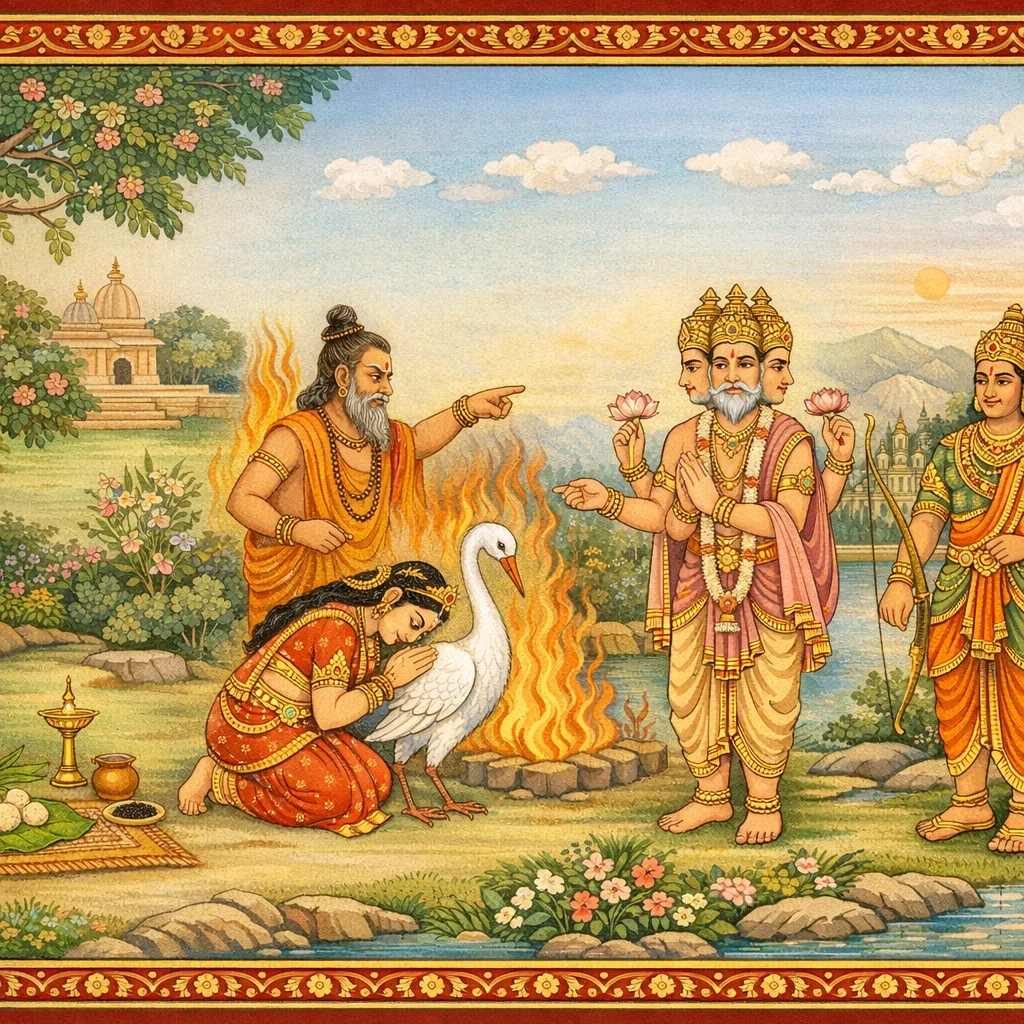
Sūta recounts an incident on the fourth day of a yajña. A prastātṛ sets aside a portion of the sacrificial animal (guda) for the homa, but a young brāhmaṇa, driven by hunger, eats it, thereby defiling the intended offering and causing a ritual obstruction (yajña-vighna). The prastātṛ pronounces a curse, and the youth is transformed into a grotesque rākṣasa. The assembled ritualists respond with protective recitations and prayers to the deities. The afflicted one is identified as Viśvāvasu, son of Pulastya, of learned lineage, who seeks relief from Brahmā (Lokapitāmaha), confessing that the act was unknowing yet desire-driven. Brahmā requests that the curse be withdrawn for the yajña’s completion, but the prastātṛ declares his word irrevocable; a compromise is set: Viśvāvasu is stationed in the west near Cāmatkārapura and given authority over other malevolent beings, serving as a regulating guardian for Nāgara’s welfare. The chapter then lays out a cautionary ethic of śrāddha: defective or improperly performed śrāddhas—lacking dakṣiṇā, tilas/darbha, proper eligibility, cleanliness, suitable vessels, correct timing, and procedural decorum—are assigned to the rākṣasa as his “share,” warning devotees to uphold ritual discipline and correctness.
Shlokas
Verse 1
सूत उवाच । चतुर्थे दिवसे प्राप्ते ततो यज्ञसमुद्भवे । ऋत्विग्भिर्याज्ञिकं कर्म प्रारब्धं तदनंतरम्
Sūta said: When the fourth day arrived, in that sacrifice that had been undertaken, the priests then began the ritual actions immediately thereafter.
Verse 2
सोमपानादिकं सर्वं पशोर्हिंसादिकं तथा । पशोर्गुदं समादाय प्रस्थाता च व्यधारयत्
All the rites such as the drinking of Soma, and likewise the acts involving the animal—its slaughter and the rest—were carried out; and the Prasthātṛ, taking the animal’s entrails, set them apart for the rite.
Verse 3
एकांते सदसो मध्ये होमार्थं द्विजसत्तमाः । तस्मिन्व्याकुलतां याते ब्राह्मणः कश्चिदागतः
In a secluded place, in the midst of the sacrificial hall, the best of the twice-born were preparing for the homa. At that moment, when commotion arose there, a certain brāhmaṇa arrived.
Verse 4
युवा तत्र प्रविष्टस्तु मांस भक्षणलालसः । ततो गुदं पशोर्दृष्ट्वा भक्षयामास चोत्सुकं
A young man entered there, eager to eat meat. Then, seeing the animal’s entrails, he eagerly began to devour them.
Verse 5
एतस्मिन्नंतरे प्राप्तः प्रस्थाता तस्य संनिधौ । भक्षमाणं समालोक्य तं शशाप ततः परम्
Just then the officiating priest arrived near him; seeing him eating, the priest thereupon pronounced a curse upon him.
Verse 6
धिग्धिक्पापसमाचार होमार्थं यद्गुदं धृतम् । तत्त्वया दूषितं लौल्याद्यज्ञविघ्नकरं कृतम्
“Shame, shame—O doer of sinful conduct! The jaggery kept for the fire-offering has been defiled by you out of greed, and you have made it an obstruction to the sacrifice.”
Verse 7
उच्छिष्टेन मया होमः कर्तव्यो नैव सांप्रतम् । राक्षसानामिदं कर्म यत्त्वया समनुष्ठितम्
“Now I cannot perform the fire-offering with what has become defiled. This is the kind of deed done by rākṣasas—what you have carried out.”
Verse 8
तस्मात्त्वं मम वाक्येन राक्षसो भव मा चिरम्
Therefore, by my word, become a rākṣasa—without delay.
Verse 9
एतस्मिन्नेव काले तु ह्यूर्ध्वकेशोऽभवद्धि सः । रक्ताक्षः शंकुकर्णश्च कृष्णदन्तोऽतिभैरवः
At that very moment he indeed became one with hair standing upright—red-eyed, spike-eared, black-toothed, and exceedingly terrifying.
Verse 10
लम्बोष्ठो विकरालास्यो मांसमेदोविवर्जितः । त्वगस्थिस्नायुशेषश्च ।चामुण्डाकृतिरेव च
With drooping lips and a gaping, hideous mouth, devoid of flesh and fat—left only with skin, bones, and sinews—he took on the very form of a Cāmuṇḍā-like apparition.
Verse 11
स च विश्वावसुर्नाम पुलस्त्यस्य सुतो मुनिः । मंत्रपूतस्य मांसस्य भक्षणार्थं समागतः
And he was the sage named Viśvāvasu, the son of Pulastya, who had come for the purpose of eating meat that had been sanctified by mantras.
Verse 12
वेदवेदांगतत्त्वजः पौत्रस्तु परमेष्ठिनः । तं दृष्ट्वा राक्षसाकारं वित्रेसुः सर्वतो द्विजाः
He was a knower of the true principles of the Vedas and their auxiliaries, and a grandson of Parameṣṭhin; yet on seeing him in a rākṣasa-like form, the brāhmaṇas everywhere were struck with fear.
Verse 13
राक्षोघ्नानि च सूक्तानि जजपुश्चापरे तथा । केचिच्छरणमापन्ना विष्णो रुद्रस्य चापरे
Some recited sacred hymns meant to destroy the rākṣasas; others likewise chanted. Some sought refuge in Viṣṇu, and others in Rudra.
Verse 14
पितामहस्य चान्ये तु गायत्र्याः शरणं गताः । रक्षरक्षेति जल्पन्तो भयसंत्रस्तमानसाः
Others sought refuge in the Grandfather (Brahmā), and others in Gāyatrī; their minds shaken by fear, they kept crying, “Protect, protect!”
Verse 15
सोऽपि दृष्ट्वा तदात्मानं गतं राक्षसतां द्विजाः । बाष्पपूर्णेक्षणो दीनः पितामहमुपाद्रवत्
Seeing himself fallen into the state of a rākṣasa, the brāhmaṇa became wretched; with eyes filled with tears, he ran to Pitāmaha for refuge.
Verse 16
स प्रणम्य ततो वाक्यं कृतांजलिरुवाच तम्
Having bowed down, and with hands joined in reverence, he then spoke these words to him.
Verse 17
पौत्रोऽहं तव देवेश पुलस्त्यस्य सुतो द्विजः । नीतो राक्षसतामद्य प्रस्थात्रा कोपतो विभो
“O Lord of the gods, I am your grandson—Pulastya’s son, a brāhmaṇa. Today, through the wrath of Prasthātṛ, I have been driven into the state of a rākṣasa, O mighty one.”
Verse 18
जिह्वालौल्येन देवेश पशोर्गुदमजानता । भक्षितं तन्मया देव होमार्थं यत्प्रकल्पितम्
O Lord of the gods, through greed of the tongue, not knowing it was the animal’s rectum, I ate, O Lord, what had been prepared for the homa.
Verse 19
तस्मान्मानुषताप्राप्त्यै मम देहे दयां कुरु । राक्षसत्वं यथा याति तथा नीतिर्विधीयताम्
Therefore, have compassion on me, that I may regain human status. Ordain the means by which this rākṣasa-nature may depart.
Verse 20
तच्छ्रुत्वा जल्पितं तस्य दयां कृत्वा पितामहः । प्रतिप्रस्थातरं सामवाक्यमेतदुवाच ह
Hearing his plea, Pitāmaha, moved by compassion, addressed Prasthātṛ with conciliatory words and said this:
Verse 21
बालोऽयं मम पौत्रस्तु कृत्याकृत्यं न वेत्ति च । तस्मात्त्वं राक्षसं भावं हरस्वास्य द्विजोत्तम
This is my grandson, still a child, and he does not know what ought and ought not to be done. Therefore, O best of brāhmaṇas, remove from him this rākṣasa-nature.
Verse 22
तच्छ्रुत्वा स मुनिः प्राह प्रायश्चित्तं मखे तव । अनेन जनितं देव गुदं दूषयता विभो
Hearing that, the sage said: “In your sacrifice, O Lord, a prāyaścitta (rite of expiation) has been incurred, for this one has defiled the animal’s rectum—the portion appointed for the rite—O mighty one.”
Verse 23
तस्मादेष मया शप्तो यज्ञविघ्नकरो मम । नाहमस्य हरिष्यामि राक्षसत्वं कथंचन
Therefore I have cursed him as one who obstructs my sacrifice (yajña); and in no way shall I remove his rākṣasa-state.
Verse 24
नर्मणापि मया प्रोक्तं कदाचिन्नानृतं वचः
Even in jest, at no time have I ever uttered a false word.
Verse 25
ब्रह्मोवाच । प्रायश्चित्तं करिष्येऽहं यज्ञस्यास्य प्रसिद्धये । दक्षिणा गौर्यथोक्ता च कृत्वा होमं विधानतः । त्वमस्य राक्षसं भावं हरस्व मम वाक्यतः
Brahmā said: “To ensure the successful renown of this yajña, I shall perform the prescribed expiation (prāyaścitta). And, having duly given the dakṣiṇā to Gaurī as instructed and completed the homa according to rite, you—by my command—must remove from him this rākṣasa-nature.”
Verse 26
सोऽब्रवीच्छीतलो वह्निर्यदि स्यादुष्णगुः शशी । तन्मे स्यादन्यथा वाक्यं व्याहृतं प्रपितामह
He replied: “Only if fire were cool and the moon were heat-giving would my spoken word prove otherwise, O Great-Grandfather.”
Verse 27
तस्य तद्वचनं श्रुत्वा ज्ञात्वा चैव तु निश्चितम् । विश्वावसुं विधिः प्राह ततो राक्षसरूपिणम्
Having heard his words and understood the matter with certainty, Brahmā, the Ordainer, then spoke to Viśvāvasu, who was in a rākṣasa-form.
Verse 28
त्वं वत्सानेन रूपेण तिष्ठ तावद्वचो मम । कुरुष्व ते प्रयच्छामि येन स्थानमनुत्तमम्
“For now, remain in the form with a calf’s face, according to my word. Do as I command; by that I shall grant you an unsurpassed station.”
Verse 29
चमत्कारपुरस्यास्य पश्चिमस्थानमाश्रिताः । सन्त्यन्ये राक्षसास्तत्र मर्यादायां व्यवस्थिताः
“On the western side of this Camatkārapura dwell other rākṣasas; there they remain stationed within the bounds of order.”
Verse 31
तत्र प्रभुत्वमातिष्ठ नागराणां हिते स्थितः । राक्षसा बहवः संति कूष्मांडाश्च पिशाचकाः
“There, assume authority, remaining intent on the welfare of the citizens. Many rākṣasas are present, as well as kūṣmāṇḍas and piśācas.”
Verse 32
ये चान्ये राक्षसाः केचिद्दुष्टभावसमाश्रिताः । तत्र गच्छंति ये सर्वे निगृह्णंति च तत्क्षणात्
“And whatever other rākṣasas, if any, who cling to wicked intent—those who go there are all subdued at that very moment.”
Verse 33
भूताः प्रेताः पिशाचाश्च कूष्मांडाश्च विशेषतः । नागरं तु पुरो दृष्ट्वा तद्भयाद्यांति दूरतः
“Bhūtas, pretas, piśācas, and especially kūṣmāṇḍas—on seeing Nāgara before them—flee far away out of fear of it.”
Verse 34
तद्गच्छ पुत्र तत्र त्वं सर्वेषामधिपो भव । राक्षसानां मया दत्तं तव राज्यं च सांप्रतम्
Therefore go, my son. There you shall become the lord of them all. I now grant you kingship over the rākṣasas.
Verse 35
राक्षस उवाच । आधिपत्ये स्थितस्यैवं राक्षसानां पितामह । किं मया तत्र भोक्तव्यं तेभ्यो देयं च किं वद
The rākṣasa said: “O Pitāmaha, when I am thus established in sovereignty over the rākṣasas, what may I partake of there, and what should be given to them? Tell me.”
Verse 36
राज्ञा चैव यतो देयं भृत्यानां भोजनं विभो । तन्ममाचक्ष्व देवेश दयां कृत्वा ममोपरि
O Lord, since it is indeed incumbent upon a king to provide food for his servants and dependents, tell me this clearly, O Lord of the gods—show compassion toward me.
Verse 37
न करोति च यो राजा ।भृत्यवर्गस्य पोषणम् । रौरवं नरकं याति स एवं हि श्रुतं मया
That king who does not provide sustenance for the body of his servants goes to the hell called Raurava—so indeed have I heard.
Verse 38
ब्रह्मोवाच । यच्छ्राद्धं दक्षिणाहीनं तिलैर्दर्भैर्विवर्जितम् । तत्सर्वं ते मया दत्तं यद्यपि स्यात्सुतीर्थगम्
Brahmā said: Whatever śrāddha is performed without the priestly fee (dakṣiṇā), and devoid of sesame and darbha grass—of all that, I have granted you the full result, even if it was done at an excellent sacred ford (sutīrtha).
Verse 39
यच्छ्राद्धं सूकरः पश्येन्नारी वाथ रजस्वला । कौलेयकोऽथ वालेयस्तत्सर्वं ते भविष्यति
Any śrāddha that is seen by a boar, or by a menstruating woman, or by a dog (whether low-bred or stray)—all that defect will accrue to your śrāddha.
Verse 40
विधिहीनं तु यच्छ्राद्धं दर्भेर्वा मूलवर्जितैः । वितस्तेरधिकैर्वापि तत्सर्वं ते भविष्यति
Any śrāddha performed without proper rule, or with darbha grass lacking its roots, or with arrangements exceeding the prescribed measure (vitasti)—all those faults will attach to your śrāddha.
Verse 41
तिलं वा तैलपक्वं वा शूकधान्यमथापि वा । न यत्र दीयते श्राद्धे तत्ते श्राद्धं भविष्यति
If in a śrāddha there is no offering of sesame (tila), or food cooked in oil, or even grains with husk (śūkadhānya), then that śrāddha becomes defective for you.
Verse 42
अस्नातैर्यत्कृतं श्राद्धं यच्चाधौतांबरैः कृतम् । तैलाभ्यंगयुतैश्चैव तत्ते सर्वं भविष्यति
Any śrāddha performed by those who have not bathed, or performed wearing unwashed garments, and also performed while smeared with massage oil—of all that, the defect will accrue to your rite.
Verse 43
यद्वा माहिषिको भुंक्ते श्वित्री वा कुनखोऽपि वा । कुष्ठी वाथ द्विजो भुंक्ते तत्ते श्राद्धं भविष्यति
Or if a māhiṣika, or one afflicted with leucoderma, or one with diseased nails, or a leper (kuṣṭha)—even if a dvija—eats the śrāddha meal, then that fault will attach to your śrāddha.
Verse 44
हीनांगो वाऽथ यद्भुंक्तेऽधिकांगो वाथ निंदितः । महाव्याधिगृहीतो वा चौरो वार्द्धुषिकोऽपि वा । यत्र भुंक्तेऽथवा श्राद्धे तत्ते श्राद्धं भविष्यति
If, at the śrāddha, one who is maimed, or one with an extra limb, or one censured, or one seized by grievous disease, or a thief, or even a usurer partakes of the meal, then that fault will cling to your śrāddha.
Verse 45
श्यावदन्तस्तु यद्भुंक्ते यद्भुंक्ते वृषलीपतिः । विनग्नो वाथ यद्भुंक्ते तत्ते श्राद्धं भविष्यति
If, at the śrāddha, one with blackened teeth eats, or the husband of a śūdra woman (vṛṣalī) eats, or one who is improperly unclothed eats, then that fault will cling to your śrāddha.
Verse 46
यो यज्ञो दक्षिणाहीनो यश्चाशौचयुतैः कृतः । ब्रह्मचर्यविहीनस्तु तत्फलं ते भविष्यति
Any yajña performed without the prescribed dakṣiṇā, or carried out by those tainted with aśauca (ritual impurity), or done without the discipline of brahmacarya—its very fruit shall fall to your share.
Verse 47
यस्मिन्नैवातिथिः पूज्यः श्राद्धे वा यज्ञकर्मणि । संप्राप्ते वैश्वदेवांते तत्ते सर्वं भविष्यति
In any śrāddha or sacrificial rite where the arriving guest (atithi) is not honored—especially when one reaches the concluding offering to the Viśvedevas—all of that merit shall become yours.
Verse 48
आवाहनात्परं यत्र मौनं न श्राद्धदश्चरेत् । ब्राह्मणो वाऽथ भोक्ता च तत्ते श्राद्धं भविष्यति
Where, after the formal āvāhana (invocation), the prescribed silence of the śrāddha is not observed—whether by the officiating brāhmaṇa or by the eater—that śrāddha shall become yours.
Verse 49
मृन्मयेषु च पात्रेषु यः श्राद्धं कुरुते नरः । भिन्नपात्रेषु वा यच्च तत्ते सर्वं भविष्यति
Whatever śrāddha a man performs using earthen vessels, or using cracked and broken vessels—all of that shall accrue to you.
Verse 50
प्रत्यक्षलवणं यत्र तक्रं वा विकृतं भवेत् । जातीपुष्पप्रदानं च तत्ते सर्वं भविष्यति
Where salt is served openly in an improper manner, or buttermilk is offered spoiled or altered, and where jasmine flowers are given as an unfit offering in that context—all of that shall become yours.
Verse 51
यजमानो द्विजो वाथ ब्रह्मचर्यविवर्जितः । तच्छ्राद्धं ते मया दत्तं त्रिपात्रेण विवर्जितम्
If the sponsoring sacrificer (yajamāna)—whether a twice-born (dvija) or another—lacks the discipline of brahmacarya, then that śrāddha, bereft of the proper arrangement of the ‘three vessels’, is deemed as given by me to you.
Verse 52
आयसेन तु पात्रेण यत्रान्नं च प्रदीयते । तच्छ्राद्धं ते मया दत्तं तथान्यदपि हीयते
Where food is served in an iron vessel, that śrāddha is deemed by me to be given to you; and in that manner other merits too are diminished.
Verse 53
मंत्रक्रियाभ्यां यत्किचिद्रात्रौ दत्तं हुतं तथा । सक्रांतिसोमपर्वभ्यां व्यति रिक्तं तु कुत्सितम्
Whatever is given or offered into fire at night—even with mantra and ritual action—if done outside the occasions of Saṅkrānti and the Soma-parvan, is indeed censurable.
Verse 54
इत्युक्त्वा विररामाशु ब्रह्मा लोकपितामहः । राक्षसः सोऽपि तत्रापि लेभे स्थानं तु राक्षसम्
Having spoken thus, Brahmā, the Grandfather of the worlds, fell silent at once; and that rākṣasa, there itself, obtained a rākṣasa’s station.
Verse 187
इति श्रीस्कांदे महापुराण एकाशीतिसाहस्र्यां संहितायां षष्ठ नागरखण्डे हाटकेश्वरक्षेत्रमाहात्म्ये राक्षसप्राप्यश्राद्धवर्णनंनाम सप्ताशीत्युत्तरशततमोऽध्यायः
Thus ends, in the Śrī Skanda Mahāpurāṇa—within the eighty-one-thousand-verse corpus, in the sixth book, the Nāgara Khaṇḍa—within the Māhātmya of the Hāṭakeśvara sacred region, the one-hundred-and-eighty-seventh chapter entitled “The Description of the Śrāddha Obtained by a Rākṣasa.”