Adhyaya 185
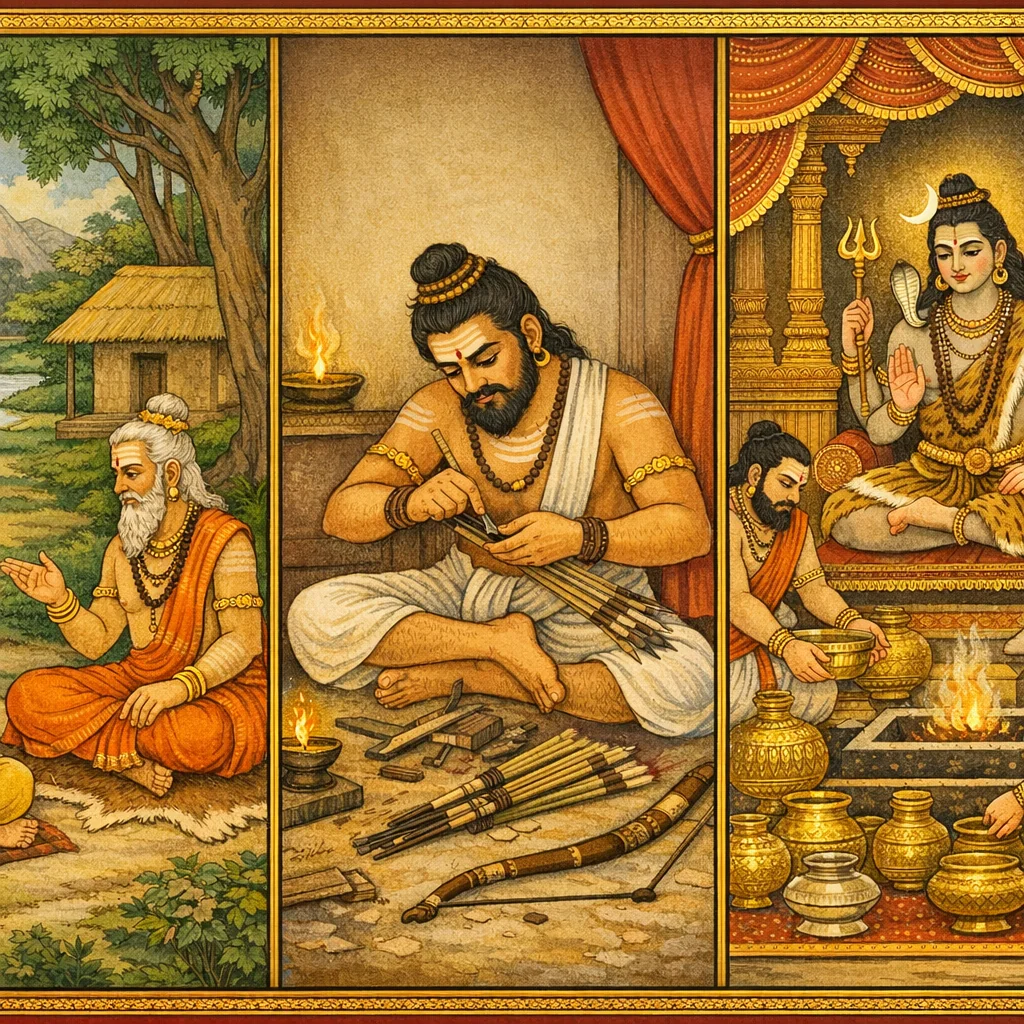
The chapter opens as a didactic autobiography spoken by an Atithi (guest-ascetic/teacher) to assembled Brāhmaṇas, and then continues in Sūta’s frame with the rise of a divine council. The Atithi teaches that attachment to wealth brings social harassment and inner exhaustion; learning from the kurara (osprey) that conflict ends when the coveted object is abandoned, he distributes his riches to his kin and attains peace. He then learns from the snake (ahi/sarpa) that house-building and possessive identity with property create suffering and bind one to family-driven actions; he states the marks of a true yati (restricted residence, madhukarī-style alms, equanimity) and notes common causes of ascetic decline. From the bee (bhramara) he learns to draw out the “essence,” like compiling doctrinal sāra from many śāstras; from the arrow-maker (iṣukāra) he learns one-pointed attention (ekacittatā) as the gateway to brahma-jñāna, and he adopts inward concentration on the indwelling solar/viśvarūpa reality. The lesson of the maiden’s bangles—many make constant noise, two still clash, but one is quiet—moves him toward solitary wandering and deeper knowledge. Next, gods and sages arrive, grant boons, and a debate arises about receiving divinity without a yajña-share. Mahādeva establishes a rule: in future śrāddhas (for gods or ancestors), Yajñapuruṣa—identified with Hari—must be invoked and honored at the conclusion, otherwise the rite becomes fruitless. The Atithi also identifies his tīrtha in Hāṭakeśvara-kṣetra and declares that bathing there on a Caturthī joined with Aṅgāraka yields the comprehensive merit of all tīrthas. The chapter ends with ritual preparations as the yajña begins.
Shlokas
Verse 1
। अतिथिरुवाच । एतद्वः सर्वमाख्यातं यथा मे पिंगला गुरुः । संजाता कुररो जातो यथा तत्प्रवदान्यहम्
Atithi said: “All this I have told you, just as Piṅgalā, my guru, taught me. Now I shall relate how the kurara (osprey) came to be, and by what cause it happened.”
Verse 2
ममासीद्द्रविणं भूरि पितृपैतामहं महत्
I possessed abundant wealth—great riches inherited from my father and grandfather.
Verse 3
येऽथ पुत्राश्च दायादा बांधवा अपि । ते मां सर्वे प्रबाधन्ते द्रव्यसस्यकृते सदा
Even my sons, heirs, and other relatives continually trouble me, always for the sake of wealth and property.
Verse 4
यस्याहं न प्रयच्छामि स मां चैव प्रबाधते । सीदमानस्तु सुभृशं दर्शयन्प्राणसंक्षयम्
Whomever I do not give to, he too harasses me; and I, sinking deeply, seem to be showing the very wasting away of my life-breath.
Verse 5
एक साम्ना प्रयाचंते वित्तं भेदेन चापरे । भयदानेन चान्येऽपि केचिद्दंडेन च द्विजाः
Some beg for money with flattery; others by sowing division; still others by instilling fear; and some—even brāhmaṇas—by threats of punishment.
Verse 6
एवं नाहं क्वचित्सौख्यं तेषां पार्श्वाल्लभामि भोः । चिन्तयानो दिवानक्तं क्लेशस्य परि संक्षयम् । उपायं न च पश्यामि येन शांतिः प्रजायते
Thus, O sir, I find no happiness anywhere in their company. Day and night I brood over how to bring my misery to an end, yet I see no means by which peace may arise.
Verse 7
अन्यस्मिन्दिवसे दृष्टः कृतमांसपरिग्रहः । कुररश्चंचुना व्योम्नि गच्छमानस्त्वरान्वितः
On another day I saw an osprey, having seized a piece of meat in its beak, flying through the sky in great haste.
Verse 8
हन्यमानः समंताच्च मांसार्थे विविधैः खगैः । अथ तेन परिक्षिप्तं तन्मांसं पक्षिजाद्भयात्
Attacked from all sides by various birds eager for the meat, it then dropped that meat out of fear of the other birds.
Verse 9
यावत्तावत्सुखी जातस्तेऽपिसर्वे समुज्झिताः । मयापि क्लिश्यमानेन तद्वच्च निजबांधवैः
For just that long it became happy, and all those birds withdrew. In the same way, I too am tormented by my own relatives.
Verse 10
सामिषं कुररं दृष्ट्वा वध्यमानं निरामिषैः । आमिषस्य परित्यागात्कुररः सुखमेधते
Seeing the meat-bearing osprey being attacked by those without meat, one understands that by abandoning the meat the osprey thrives in happiness.
Verse 11
एवं निश्चित्य मनसा सर्वानानीय बांधवान् । पुत्रान्पौत्रांस्ततः सर्वान्पुरस्तेषां निवेदितम्
Having thus resolved in his mind, he summoned all his relatives—sons and grandsons—and declared it before them all.
Verse 12
त्रिःसत्यं शपथं कृत्वा नान्यदस्तीति मे गृहे । विभज्यार्थं यथान्यायं यूयं गृह्णीत बान्धवाः
Having sworn thrice in truth, he said: “There is nothing else in my house. Divide the property according to what is just, and take it, O relatives.”
Verse 13
ततःप्रभृति तैर्मुक्तः सुखं तिष्ठाम्यहं द्विजाः । एतस्मात्कारणाज्जातो ममासौ कुररो गुरुः
From that time onward, freed from those entanglements, I dwell in peace, O brāhmaṇas. For this very reason, that kurara-bird became my teacher.
Verse 14
अर्थसंपद्विमोहाय विमोहो नरकाय च । तस्मादर्थमनर्थं तं मोक्षार्थी दूरतस्त्यजेत्
Wealth and prosperity lead to delusion, and delusion leads to hell. Therefore, the seeker of liberation should abandon from afar that “wealth” which is truly misfortune.
Verse 15
यथामिषं जले मत्स्यैर्भक्ष्यते श्वापदैर्भुवि । आकाशे पक्षिभिश्चैव तथा सर्वत्र वित्तवान्
Just as bait is eaten by fish in water, by beasts upon the earth, and by birds in the sky, so too everywhere the wealthy person becomes prey.
Verse 16
दोषहीनोऽपि धनवान्भूपाद्यैः परिताप्यते । दरिद्रः कृतदोषोऽपि सर्वत्र निरुपद्रवः
Even when faultless, a wealthy man is harassed by kings and the powerful; but a poor man—even if he has committed faults—remains, everywhere, comparatively free from trouble.
Verse 17
आलंबिताः परैर्यांति प्रस्खलंति पदेपदे । गद्गदानि च जल्पंते धनिनो मद्यपा इव
Leaning on others, they go; they stumble at every step; and they speak in stammering tones—like drunkards—such are the wealthy, enslaved by their riches.
Verse 18
भक्ते द्वेषो बहिः प्रीती रुचितं गुरुलघ्वपि । मुखे च कटुता नित्यं धनिनां ज्वरिणामिव
Toward a devotee they feel hatred, though outwardly they show affection; they take pleasure in what is heavy or light as suits them. And in their mouths there is constant bitterness—like those burning with fever—such are the wealthy.
Verse 19
अर्थानामर्जने दुःखमर्जितानां च रक्षणे । नाशे दुःखं व्यये दुःखं धिगर्थो दुःखभाजनम्
In acquiring wealth there is suffering; in guarding what is acquired there is suffering; in its loss there is suffering; in spending it there is suffering. Fie upon wealth—it is a vessel of sorrow.
Verse 20
अर्थार्थी जीव लोकोऽयं स्मशानमपि सेवते । जनितारमपि त्यक्त्वा निःस्वं यांति सुता अपि
This living world, craving wealth, will even resort to cremation grounds. Even sons, abandoning their own father, go away from one who has become penniless.
Verse 21
सुतस्य वल्लभस्तावत्पिता पुत्रोऽपि वै पितुः । यावन्नार्थस्य संबन्धस्ताभ्यां भावी परस्परम् । संबन्धे वित्तजे जाते वैरं संजायते मिथः
A father is dear to his son, and a son likewise to his father, only so long as a bond of wealth endures between them. When relationship is born of money, enmity arises between them.
Verse 22
एतस्मात्कारणाद्वित्तं मया त्यक्तं तपोधनाः । तेन सौख्येन तिष्ठामि कुररस्योपदेशतः
For this reason I have cast away wealth, O treasures of austerity. By the bliss of that renunciation I abide in happiness, following the counsel of the kurara bird.
Verse 23
शृणुध्वं च महाभागा यथा मेऽहिर्गुरुः स्थितः
Listen, O noble and fortunate ones, to how the serpent has stood before me as a guru, a spiritual preceptor.
Verse 24
यथा मया गृहं त्यक्तं दृष्ट्वा सर्पविचेष्टितम् । गृहारंभः सुदुःखाय सुखाय न कदाचन
Seeing the serpent’s conduct, I abandoned the house; for founding and maintaining a household leads to great sorrow, never to true happiness.
Verse 25
सर्पः परकृतं वेश्म प्रविश्य सुखमेधते । उषित्वा तत्र सौख्येन भूयोऽन्यत्तादृशं व्रजेत्
A serpent enters a house built by another and thrives in ease; having dwelt there pleasantly, it goes again to another place of the same kind.
Verse 26
मम त्वं कुरुते नैव ममेदं गृहमित्यसौ । न गृहं जायते तस्य न स्वयं हि कृतं यतः
It never thinks, “You are mine,” nor, “This house is mine.” For it has no house of its own—since it did not build one by itself.
Verse 27
यः पुनः कुरुते हर्म्यं स्वयं क्लेशैः पृथग्विधैः । न तस्य याति तत्पश्चान्मृत्युकालेऽपि संस्थिते
But one who builds a grand house by himself through many kinds of hardships—none of that goes with him afterward, even when death has arrived.
Verse 28
गृहात्संजायते भार्या ततः पुत्रश्च कन्यका । तेषामर्थे करोति स्म कृत्याकृत्यं ततः परम्
From the house comes a wife; then a son and a daughter. For their sake one goes on to do both what should be done and what should not be done thereafter.
Verse 30
पुत्रदारगृहक्षेत्रसक्ताः सीदंति जंतवः । लोभपंकार्णवे मग्ना जीर्णा वनगजा इव
Creatures sink down, attached to children, spouse, house, and land—submerged in the muddy ocean of greed, like aged elephants in the forest.
Verse 31
एकः पापानि कुरुते फलं भुंक्ते महाजनः । भोक्तारो विप्रमुच्यंते कर्ता दोषेण लिप्यते
One person commits the sins, while the “great crowd” enjoys the fruits; the enjoyers are released, but the doer is stained by the fault.
Verse 32
एतस्मात्कारणाद्धर्म्यं मया त्यक्तं द्विजोत्तमाः । मोक्षमार्गार्गला भूतं दृष्ट्वा सर्पविचेष्टितम्
For this very reason, O best of the twice-born, I abandoned that “respectable” household life—having seen the serpent’s activity, which had become a bolt barring the path to liberation.
Verse 33
एकरात्रं वसेद्ग्रामे त्रिरात्रं पत्तने वसेत् । यो याति स यतिः प्रोक्तो योऽन्यो योगविडंबकः
One should stay one night in a village and three nights in a town; he who keeps moving is called a true renunciant—any other is merely a pretender to yoga.
Verse 34
विधूमे च प्रशांताग्नौ यस्तु माधुकरीं चरेत् । गृहे च विप्रमुख्यानां यतिः स नेतरः स्मृतः
He alone is remembered as a true renunciant (yati)—and not otherwise—who, with the household fire free of smoke and fully calmed, lives by the ‘bee-like’ way of alms (mādhukarī), seeking sustenance at the homes of foremost brāhmaṇas.
Verse 35
दण्डी भिक्षां च वा कुर्यात्तदेव व्यसनं विना । यस्तिष्ठति न वैराग्यं याति नैव यतिर्हि सः
Even if one bears the staff and goes for alms—doing so without (worldly) addiction or vice—if he does not abide in dispassion (vairāgya), he does not truly become a yati.
Verse 36
दिवा स्वप्नं वृथान्नं च स्त्रीकथाऽलोक्यमेव च । श्वेतवस्त्रं हिरण्यं च यतीनां पतनानि षट्
Sleeping by day, eating food obtained in vain (without need or purpose), indulging in talk about women and looking upon them, wearing white garments, and possessing gold—these six are declared the causes of a renunciant’s downfall.
Verse 37
समः शत्रौ च मित्रे च समलोष्टाश्मकांचनः । सुहृत्पुत्र उदासीनः स यतिर्नेतरः स्मृतः
He alone is remembered as a true yati—none other—who is equal toward enemy and friend, to whom clod, stone, and gold are the same, and who remains unattached even toward a friend’s son, abiding in serene indifference.
Verse 38
समौ मानापमानौ च स्वदेशे परिकेपि वा । यो न हृष्यति न द्वेष्टि स यतिर्नेतरः स्मृतः
He alone is remembered as a true yati—none other—who regards honor and dishonor alike, whether in his own country or elsewhere, and who neither exults nor hates.
Verse 39
यस्मिन्गृहे विशेषेण लभेद्भिक्षा च वाशनम् । तत्र नो याति यो भूयः स यतिर्नेतरः स्मृतः
He alone is remembered as a true yati—none other—who, even when he receives alms and lodging with special favor in a certain house, does not go there again and again.
Verse 40
एवं ज्ञात्वा मया विप्र दृष्ट्वा सर्पविचेष्टितम् । सर्वसंगपरित्यागो मोक्षार्थं परिकल्पितः
Thus, O brāhmaṇa, having understood (this truth) by observing the conduct of a serpent, I have adopted the abandonment of all attachments as the path aimed at liberation.
Verse 41
एवं ममाहिः संजातो गुरुर्ब्राह्मणसत्तमाः । तत्प्रभावान्महत्तेजः संजातं विग्रहे मम
Thus, O best of brāhmaṇas, that serpent became my guru; and by its influence, a great spiritual radiance arose within my very person.
Verse 42
यथा मे भ्रमरो जातो गुरुस्तद्वद्वदामि च । कस्मिन्वृक्षे मया दृष्टो भ्रमरः कोऽपि संगतः
Just as a bee became my guru, so too shall I speak. Upon which tree did I behold that bee—somehow encountered there?
Verse 43
शाखाय तु समाश्रित्य कृतपूर्वनिबंधनम् । वसंतसमये प्राप्ते पुष्पवंतश्च ये द्रुमाः
Taking refuge upon a branch—having made a fastening there beforehand—when the season of spring arrived, trees laden with blossoms stood all around.
Verse 44
सुगन्धफलपुष्पाश्च सुगन्धदलसंयुताः । तेषामणुं समादाय श्रेष्ठश्रेष्ठतमं रसम्
Those trees bore fragrant fruits and blossoms, and leaves rich with perfume. (The bee) takes from them only a tiny portion, yet draws forth the finest, most excellent essence.
Verse 45
नियोजयति शाखाग्रे तरोरस्य सदैव हि । अनिर्विण्णतया हृष्टस्तदा सम्यङ्निरीक्षितः
Indeed, it continually applies itself to the very tip of the tree’s branch; and, never growing weary, it remains delighted, ever carefully observing its aim.
Verse 46
मधुजालं ततो जातं कालेन महता महत् । येनान्ये मधुना तृप्तिं प्राप्ताः शतसहस्रशः
In time, a vast store of honey came into being; by that honey, countless others—hundreds and thousands—attained satisfaction.
Verse 47
तच्चेष्टितं मया वीक्ष्य शास्त्राण्यन्यानि भूरिशः । ततस्तेषां समादाय सारभूतं पृथक्पृथक् । कृतानि भूरिशास्त्राणि वेदांतानि च कृत्स्नशः
Observing that activity, I examined many other śāstras. Then, taking from each its essential substance, separately and distinctly, I composed numerous treatises—and also the Vedāntas in their full scope.
Verse 48
उपजीवंति यान्यन्ये यथा भृङ्गास्तथा द्विजाः
As bees live by gathering from many flowers, so too do the twice-born live by drawing upon those teachings and means.
Verse 49
एवं मे मधुपो जातो गुरुत्वे च द्विजोत्तमाः । तेनाहं तेजसा युक्तो नान्यदस्तीह कारणम्
Thus did I become a “honey-bee” in the matter of spiritual authority, O best of the twice-born. By that, I am endowed with radiance; there is no other cause for it here.
Verse 50
वेदांतवादिनो येऽत्र प्रभवंति व्रतान्विताः । निर्लोभा गततृष्णाश्च ते भवंति सुतेजसः
Those here who flourish as teachers of Vedānta—disciplined in vows, free from greed, and beyond craving—become possessed of excellent spiritual radiance.
Verse 51
एकेनापि विहीना ये प्रभवंति कुबुद्धयः । लोभमोहान्विताः पापा जायंते ते विचेतसः
But those of poor understanding who flourish even while lacking even one of these virtues become sinful—joined with greed and delusion—and they are born devoid of right discernment.
Verse 52
वेदांतानि सुभूरीणि मया दृष्ट्वा विचार्य च । समरूपाः कृता ग्रन्था मर्त्यलोकहितार्थिना
Having seen and reflected upon the many excellent Vedāntic teachings, I composed treatises in a harmonized form, seeking the welfare of the human world.
Verse 53
एवं मे गुरुतां प्राप्तो मधुपो द्विजसत्तमाः । इषुकारो यथा जातस्तथा चैव ब्रवीमि वः
Thus I attained the weight of authority—like a honey-bee gathering sweetness, O best of the twice-born; and just as the fletcher became skilled, so too I declare this principle to you.
Verse 54
आत्मावलोकनार्थाय मया दृष्टाः सहस्रशः । योगिनो ज्ञानसंपन्नास्तैः प्रोक्तं च स्वशक्तितः
Seeking the direct vision of the Self, I met thousands of yogins endowed with true knowledge; and each of them, according to his own capacity, taught me what he knew.
Verse 55
आत्मावलोकनं भावि सुशिष्याय यथा तथा । स समाधिजद्वारेण चतुराशीतिकेन च
They said that the vision of the Self would indeed arise for a worthy disciple—through the gateway of samādhi and through the discipline taught in the eighty-fourfold manner.
Verse 56
आसनैस्तत्प्रमाणैश्च पद्मासनप्रपूर्वकैः । असंख्यैः कारणैश्चैव ह्यध्यात्मपठनैस्तथा । ततोपि लक्षितो नैव मयाऽत्मा च कथंचन
Even after adopting postures in due measure—beginning with padmāsana—along with countless methods and the study of spiritual teachings, I still could not perceive the Self in any way.
Verse 57
ततो वैराग्यमापन्नः प्रभ्रमामि धरातले । गुर्वर्थे न च लेभेऽहं गुरुमात्मावलोकने
Then, seized by dispassion (vairāgya), I wandered upon the earth; yet, for the realization of the Self (Ātman), I did not obtain a true guru.
Verse 58
अन्यस्मिन्नहनि प्राप्ते राजमार्गेण गच्छता । मया दृष्टो महीपालः सैन्येन महता वृतः
On another day, as I traveled along the royal road, I saw a king surrounded by a great army.
Verse 59
ततोऽहं मार्गमुत्सृज्य संमुखस्य महीपतेः । उटजद्वारमाश्रित्य किंचिदूर्ध्वोपि संस्थितः
Then I left the road and, facing the king, took shelter at the doorway of a hermitage; I stood there on slightly higher ground.
Verse 60
तत्रापि च स्थितः कश्चित्पुरुषः कांडकारकः । ऋजुकर्मणि संयुक्तः शराणां नतपर्वणाम्
There too stood a certain man, a maker of arrow-shafts, intent on careful work—preparing arrows with bent joints.
Verse 61
तस्मिन्दूरगते भूपे तथान्यः सेवकोऽभ्यगात्
When the king had gone some distance away, another attendant approached.
Verse 62
तं पप्रच्छ त्वरायुक्तः शृण्वतोऽपि मम द्विजाः । कांडकर्मणि संसक्तमृजुत्वेन स्थितं तदा
Hastening, he questioned him—while I too listened, O twice-born—him who at that time stood absorbed in the making of arrow-shafts, with steady, focused care.
Verse 63
कियती वर्तते वेला गतस्य पृथिवीपतेः । मार्गेणानेन मे ब्रूहि येन गच्छामि पृष्ठतः
“How much time has passed since the king departed? Tell me along this route, so that I may go after him from behind.”
Verse 64
सोऽब्रवीत्तं तदा विप्रा अधोवक्त्रः स्थितो नरः । अनेन राजमार्गेण गच्छमानो महीपतिः
Then, O brāhmaṇas, that man—standing with his face lowered—said to him: “The king is passing along this royal highway.”
Verse 65
न मया वीक्षितः कश्चिदिदानीं राजसेवक । तदन्यं पृच्छ चेत्कार्यं तवानेन ब्रवीतु सः
“O servant of the king, I have not seen anyone just now. If you have some task, ask someone else—let him speak to you about it.”
Verse 66
शरकर्मणि संसक्तस्त्वहमत्र व्यवस्थितः । तच्छ्रुत्वा वचनं तस्य स्वचित्ते चिन्तितं मया
“I remain here, engaged in the work of making arrows. Hearing his words, I reflected upon them within my own mind.”
Verse 67
एकचित्ततया योगो ब्रह्मज्ञानसमुद्भवः । नान्यथा भविता मे स ततश्चित्तनिरोधनम् । करोमि ब्रह्मसंसिद्ध्यै ततो मेऽसौ भविष्यति
Yoga arises from the knowledge of Brahman through one-pointedness of mind; it will not come to me otherwise. Therefore I practice the restraint of the mind for the attainment of Brahman—then that realization will surely be mine.
Verse 68
ततःप्रभृति चित्ते स्वे धारयामि सदैव तु । विश्वरूपं तथा सूर्यं हृत्पंकजनिवासिनम्
From that time onward, I constantly hold within my own mind the Sun of universal form, dwelling in the lotus of the heart.
Verse 69
ततो दिक्षु दिगन्तेषु गगने धरणीतले । तमेकं चैव पश्यामि नान्यत्किंचिद्द्विजोत्तमाः
Thereafter, in all directions and at their horizons—in the sky and upon the earth—I behold only Him, the One; nothing else at all, O best of the twice-born.
Verse 70
अहं च तेजसा युक्तस्तत्प्रभावेण संस्थितः
And I too, endowed with radiance, abide established by His very power.
Verse 71
एवं मे स गुरुर्जातः शरकारो द्विजोत्तमाः । शृणुध्वं कन्यका जाता गुरुत्वे मे यथा पुरा
Thus, O best of brāhmaṇas, that arrow-maker became my guru. Now listen how, as before, a young maiden came to be my teacher as well.
Verse 72
सर्वसंगपरित्यागी यदाहं निर्गतो गृहात् । ममानुपृष्ठतश्चैव ततो भार्या विनिर्गता
“When I left my home, renouncing all attachments, my wife too came out, following behind me.”
Verse 73
शिशुं पुत्रं समादाय कन्यामेकां च शोभनाम् । ततोऽहं भार्यया प्रोक्तो वानप्रस्थाश्रमे स्थितः
“Taking along our infant son and one lovely daughter, my wife then addressed me; and I took my place in the vānaprastha stage of life.”
Verse 74
कुरु मे वचनं मुक्तिरत्रैव हि भविष्यति । ब्रह्मचारी गृहस्थो वा वानप्रस्थोऽथवा यतिः । यदि स्यात्संयतात्मा स नूनं मुक्तिमवाप्नुयात्
“Do as I say—liberation will indeed be attained right here. Whether one is a celibate student, a householder, a forest-dweller, or a renunciant: if one is self-controlled, one surely reaches liberation through this holy place.”
Verse 75
अथवा मां परित्यज्य यदि यास्यसि चान्यतः । तदहं च मरिष्यामि सत्यमेतदसंशयम्
“But if, abandoning me, you go elsewhere, then I too will die—this is the truth, without any doubt.”
Verse 76
मृतायां मयि ते बालावेतावनुमरिष्यतः । कुमारी च कुमारश्च तस्मान्नाथ दयां कुरु
“If I die, these two children of yours will die after me as well—your daughter and your son. Therefore, O lord, show compassion.”
Verse 77
मा व्रजस्व परं तीर्थं परिजानन्नपि स्वयम् । हाटकेश्वरजं क्षेत्रमेतत्पुण्यतरं स्मृतम्
Do not go to another supreme tīrtha, even though you yourself know the tīrthas. This sacred kṣetra of Hāṭakeśvara is remembered as still more meritorious.
Verse 78
सर्वेषामेव तीर्थानां श्रुतमेतन्मया विभो । वदतां ब्राह्मणेन्द्राणां तथान्येषां तपस्विनाम्
O mighty one, I have heard this teaching concerning all the tīrthas, as spoken by the best of brāhmaṇas and by other ascetics as well.
Verse 79
श्लोकोऽयं बहुधा नाथ कीर्त्यमानो मया विभो । विश्वामित्रस्य वक्त्रेण सन्मुनेः सत्यवादिनः
O lord, O mighty one—this very verse I have repeated many times, as it came from the mouth of Viśvāmitra, the noble sage who speaks truth.
Verse 81
ततः कृच्छ्रात्प्रतिज्ञातं मयाश्रमनिषेवणम् । वानप्रस्थोद्भवं वा स्यात्ततोऽहं तत्र संस्थितः
Then, with difficulty, I vowed to undertake the discipline of an āśrama, a regulated stage of life. It may have been the way of the vānprastha, the forest-dweller; and so I took my station there in that observance.
Verse 82
तत्रस्थस्य हि मे कन्या क्रीडते परतः स्थिता । वलयापूरिताभ्यां च प्रकोष्ठाभ्यां ततस्ततः
While I was staying there, my daughter—standing a little apart—would play, her forearms filled with bangles, moving here and there.
Verse 83
यथायथा सा कुरुते कन्दमूलफलाशनम् । तनुत्वं याति कायेन तथा चैव दिनेदिने
As she continued to live on bulbs, roots, and fruits alone, so day by day her body grew ever more slender.
Verse 84
ततो मे जायते दुःखं तेषां पतन संभवम् । कस्यचित्त्वथ कालस्य संजातं वलयत्रयम् । तस्या हस्ते ततस्ताभ्यां शब्दः संजायते मिथः
Then sorrow arose within me, fearing their possible fall. After some time, three bangles remained upon her hand; and as they struck one another, a sound began to arise.
Verse 85
ततः कालेन महता ताभ्यामेकं व्यवस्थितम् । न संघर्षो न शब्दश्च तत्रस्थस्य च जायते
After a long passage of time, only one of those remained; thus there was neither friction nor sound. For one who abides alone in this way, conflict does not arise.
Verse 86
तद्विचिन्त्य मया सोऽपि ह्याश्रमः परिवर्जितः । चिन्तितं च मया चित्ते कृत्वा चैवं सुनिश्चयम्
Reflecting thus, I abandoned even that āśrama, that mode of life. I pondered it within my heart and so formed a firm resolve.
Verse 87
बहुभिः कलहो नित्यं द्वाभ्यां संघर्षणं तथा । एकाकी विचरिष्यामि कुमारीवलयं यथा
With many there is constant quarrel; with two there is likewise friction. Therefore I shall wander alone—like a maiden’s bangle upon the wrist, which, when solitary, makes no clashing sound.
Verse 88
ततः सुप्तां परित्यज्य तां भार्यां शिशुसंयुताम् । गतोऽहं दूरमध्वानं यत्र नो वेत्ति सा च माम्
Then, leaving my wife asleep with the child, I set out on a far journey—going to a place where she would not know of me, nor I of her.
Verse 89
यत्राऽस्तमितशायी च यलब्धकृतभोजनः । भ्रमामि मेदिनीपृष्ठे त्यक्त्वा संसारबन्धनम्
Wherever I am, I lie down when the sun has set, and I eat only what I happen to obtain. Thus I wander upon the face of the earth, having cast off the bonds of worldly life.
Verse 90
ततो मे ज्ञानमापन्नमेवं विप्राः शनैःशनैः । अतीतानागतं चैव वर्तमानं विशेषतः
Then, O brāhmaṇas, knowledge gradually dawned in me in this manner—of the past and the future, and especially of the present.
Verse 91
एवं मे कन्यका जाता गुरुत्वे द्विजसत्तमाः
Thus, O best of the twice-born, a maiden was born to me—destined for venerable stature, as a guiding authority.
Verse 92
एतद्वः सर्वमाख्यातं यत्पृष्टोऽस्मि गुरोः कृते । न युष्माकं पुरो मिथ्या कीर्तयामि कथंचन
All this I have narrated to you, since I was questioned for the sake of the guru. I do not, in any way, proclaim falsehood in your presence.
Verse 93
एवं मे ज्ञानमुत्पन्नं प्रकारैः षड्भिरेव च । एभिर्लोकोत्तरं ज्ञानं युष्मत्प्रत्ययकारकम्
Thus, knowledge arose in me through precisely six modes. By these, a supramundane knowledge—one that brings forth firm conviction in you—has been established.
Verse 94
सूत उवाच । ततस्ते ब्राह्मणाः सर्वे पप्रच्छुस्तं द्विजोत्तमाः । वानप्रस्थाश्रमं त्यक्त्वा भार्यां शिशुसमन्विताम् । क्व गतस्त्वं तदाचक्ष्व कियत्कालं च संस्थितः
Sūta said: Then all those brāhmaṇas, the best among the twice-born, questioned him: “Having abandoned the vānaprastha āśrama and your wife with a child, where did you go? Tell us that, and for how long did you remain there?”
Verse 95
अतिथिरुवाच । अहं भीतः सहस्राणि ग्रामाणां च शतानि च । यत्रास्तमितशायी सन्ननेकानि द्विजोत्तमाः । संख्यया रहितान्येव वर्षाणां च शतानि च
Atithi said: “In fear, I wandered through thousands of villages and hundreds more—places where many excellent brāhmaṇas lay down at sunset. Indeed, I passed hundreds of years, beyond counting.”
Verse 96
दृष्टानि मुख्यतीर्थानि तथैवायतनानि च । दृष्टाश्च पर्वताः श्रेष्ठा नद्यश्च विमलोदकाः
“I have seen the foremost sacred fords (tīrthas), and likewise the holy shrines. I have also seen excellent mountains and rivers whose waters are pure.”
Verse 97
स्वयमेव मया ज्ञातो वाराणस्यां स्थितेन च । यज्ञः पैतामहो भावी स्थानेऽस्मिन्मामके यतः
“While staying in Vārāṇasī, I came to know of it myself: in this very place of mine, a ‘paitāmaha’ sacrifice—an ancient rite associated with the grandsire and the ancestors—will take place.”
Verse 98
ततोऽहं सत्वरं प्राप्तः कौतुकेन द्विजोत्तमाः । कीदृशः स मखो भावी यत्र यज्वा पितामहः
Therefore I came swiftly, O best of the twice-born, out of curiosity: what kind of sacrifice will it be, where the Grandsire Brahmā himself is the officiating sacrificer (yajvā)?
Verse 99
सूत उवाच । एतस्मिन्नंतरे प्राप्ताः सर्वे देवाः सवासवाः । वासुदेवं पुरस्कृत्य तथा चैव महेश्वरम्
Sūta said: “Meanwhile all the gods arrived—together with Indra—placing Vāsudeva in the forefront, and likewise Maheśvara.”
Verse 100
कमान्तरं समासाद्य पुलस्त्याद्यास्तथर्त्विजः । ब्रह्मापि स्वयमायातो मृगचर्मधरस्तथा
When the appointed time was reached, Pulastya and the other officiating priests (ṛtvij) arrived; Brahmā himself also came, clad in a deer-skin.
Verse 101
ततस्ते तुष्टिमापन्नास्तस्य ज्ञानेन तेन च । प्रोचुश्च वरदास्तुभ्यं सर्व एव दिवौकसः
Then all the dwellers of heaven, pleased by that knowledge of his, spoke to you—every one of them—as bestowers of boons.
Verse 102
तस्माद्वरय भद्रं ते प्रार्थयस्व यथेप्सितम् । अवश्यं तव दास्यामो यद्यपि स्यात्सुदुर्लभम्
Therefore choose a boon—may it be auspicious for you. Ask for whatever you desire; we shall surely grant it, even if it is exceedingly difficult to obtain.
Verse 103
अतिथिरुवाच । यदि तुष्टाः सुरा मह्यं प्रयच्छंति वरं मम । अनेनैव शरीरेण देवत्वं प्रार्थयाम्यहम्
Atithi said: “If the gods, being pleased, grant me my boon, then I ask for godhood—while retaining this very body.”
Verse 105
देवा ऊचुः । नूनं त्वं विबुधो भूत्वा देवलोके निवत्स्यसि । अनेनेव शरीरेण यज्ञभागविवर्जितः
The gods said: “Indeed, becoming a celestial being, you will dwell in the world of the gods—yet with this same body you will be deprived of a share in sacrificial offerings.”
Verse 106
यच्छामो यदि ते विप्र यज्ञांशं मानुषस्य भोः । अप्रामाण्यं श्रुतेर्भावि तव दत्तेन तेन च
“O Brāhmaṇa, if we grant you a human being’s share of the sacrifice, then—because of what you have given—there would arise a troubling consequence: the authority of the Vedic revelation itself would be undermined.”
Verse 107
अतिथिरुवाच । देवत्वेन न मे कार्यं यज्ञांशरहितेन च । तदहं साधयिष्यामि यथा मुक्तिर्भविष्यति
The Guest said: “I have no need of divinity that is without a sacrificial share. I shall instead accomplish that by which liberation will come to pass.”
Verse 109
यज्ञभागसमोपेतं तथान्येषां दिवौकसाम् । विशेषेण सुरश्रेष्ठाः स्थानं चोपरि संस्थितम्
“Endowed with due portions in sacrifice—so too for the other dwellers in heaven—yet, O best of the gods, a higher station is established especially for those who are rightly honored.”
Verse 110
प्रतिज्ञातस्तथा सर्वैर्वरोऽस्य विबुधैर्यतः । तस्मात्प्रदीयतामस्मै यदभीष्टं सुरोत्तमाः
Since a boon has thus been promised to him by all the gods, therefore, O foremost of the celestials, let what he desires be granted to him.
Verse 111
महेश्वर उवाच । यथाऽस्य जायते तृप्तिर्यज्ञभागाधिका सदा । तथाहं कथयिष्यामि शृण्वंतु विबुधोत्तमाः
Maheśvara said: “How his satisfaction may ever become greater than (mere) sacrificial portions—I shall explain that. Let the foremost of the gods listen.”
Verse 112
य एष क्रियते यज्ञस्तस्य नाथो हरिः स्मृतः । एतस्मात्कारणात्प्रोक्तः स देवो यज्ञपूरुषः
Of this sacrifice that is performed, Hari is remembered as the Lord. For this very reason, that deity is spoken of as the Yajñapuruṣa—the very Person of the sacrifice.
Verse 113
अद्यप्रभृति यत्किंचिच्छ्राद्धं मर्त्ये भविष्यति । दैवं वा पैतृकं वाऽपि तस्य चांते व्यवस्थितः
From today onward, whatever śrāddha will be performed among mortals—whether offered to the gods or to the ancestors—he stands established at its conclusion.
Verse 114
एतस्य नाम संकीर्त्य पश्चाच्च यज्ञपूरुषम् । संकीर्त्य भोजनं देयं ब्राह्मणस्य द्विजोत्तमाः
After reciting his Name—and then invoking the Yajñapuruṣa—food should be given to a Brāhmaṇa, O best of the twice-born, with that same reverent utterance.
Verse 115
तेनास्य भविता तृप्तिर्यज्ञांताऽभ्यधिका सदा । अदत्त्वास्य कृतं श्राद्धं यत्किंचित्प्रभविष्यति
By this, his satisfaction will ever be greater than what is gained merely at the close of a sacrifice. But any śrāddha performed without giving this due offering/invocation comes to nothing of real effect.
Verse 116
तद्यास्यत्यखिलं व्यर्थं तथा भस्महुतं यथा । वैश्वदेवांतमासाद्य यश्चैनं पूजयिष्यति
All of that becomes wholly futile—like an offering poured into ashes. But whoever, having reached the conclusion of the Vaiśvadeva rite, duly worships him… that worship is the effective completion.
Verse 117
विष्णुनामसमोपेतं भविष्यति तदक्षयम् । दत्तं स्वल्पमपि प्रायः श्रद्धापूतेन चेतसा
Whatever gift is offered accompanied by the Name of Viṣṇu becomes imperishable. Even a small donation, when given with a mind purified by faith, generally yields unfailing merit.
Verse 118
श्राद्धे वा वैश्वदेवे वा यश्चैनं नार्चयिष्यति । संप्राप्तं व्यर्थतां तस्य तच्च सर्वं भविष्यति
Whether at a śrāddha rite or at the Vaiśvadeva offering, whoever fails to worship him—everything that person has obtained and performed becomes fruitless.
Verse 119
अस्मिंस्तुष्टिं गते सर्वे सुरा यास्यंति संमुदम् । पितरश्च तमायांति विमुखे संमुखे तथा
When he is satisfied, all the gods depart rejoicing; and the Pitṛs too come toward him, turning from being averted to being favorably facing him.
Verse 120
तच्छ्रुत्वा विबुधाः सर्वे महेश्वरवचस्तदा । तथेति मुदिताः प्रोचुर्ब्रह्मविष्णुपुरस्सराः
Hearing those words of Maheśvara, all the gods then joyfully replied, “So be it,” with Brahmā and Viṣṇu at their head.
Verse 121
ततःप्रभृति संजाता पूजा चातिथिसंभवा । तस्मात्सर्वप्रयत्नेन पूजा कार्याऽतिथेः सदा । यज्ञे पूरुषयज्ञस्य न चैकस्य कथंचन
From that time onward, worship (pūjā) arose in connection with honoring the guest (Atithi). Therefore, with every effort one should always perform worship of the guest—within sacrifice, as part of the ‘pūruṣa-yajña’, and never neglect it in any circumstance.
Verse 122
अतिथिरुवाच । अत्रास्ति मामकं तीर्थं मया यत्र तपः कृतम् । हाटकेश्वरजे क्षेत्रे पुरुकाले द्विजोत्तमाः
Atithi said: “Here there is a tīrtha of mine, where I performed austerities—within the holy region of Hāṭakeśvara, in ancient times, O best of the twice-born.”
Verse 123
अंगारकेण संयुक्ता चतुर्थी स्याद्यदा तिथिः । सांनिध्यं तत्र कार्यं च सर्वैर्देवैश्च तद्दिने
When the Caturthī lunar day coincides with Aṅgāraka (Tuesday), then on that day all the gods should establish their presence there, at that tīrtha.
Verse 124
कुर्यात्तत्रैव यः स्नानं तस्मिन्नहनि संस्थिते । सर्वतीर्थफलं तस्य जायतां वः प्रसादतः
Whoever performs a ritual bath there on that very day obtains the fruit of all tīrthas; may that be granted to him by your grace (prasāda).
Verse 125
तथास्त्विति ततः सर्वेऽतिथिं प्रोचुः सुरोत्तमाः । एतस्मिन्नंतरे प्राह पुलस्त्यर्षिः पितामहम्
Then all the foremost gods said to Atithi, “So be it.” Meanwhile, the sage Pulastya spoke to Pitāmaha (Brahmā).
Verse 126
पुलस्त्य उवाच । ऋत्विजः सकला देवाः संस्थिताः कौतुकान्विताः । उत्तिष्ठंतु च ते शीघ्रं यज्ञकर्मप्रसिद्धये
Pulastya said: “The officiating priests (ṛtvij) and all the gods are assembled, filled with eager anticipation. Let them rise quickly, so that the sacrificial rites (yajña) may proceed to completion.”
Verse 127
एतस्मिन्नंतरे सर्वे तस्य वाक्यप्रणोदिताः । उत्थिता ऋत्विजो ये च स्वानि स्थानानि भेजिरे । ततः प्रववृते यज्ञः सपुनर्द्विजसत्तमाः । कुर्वता यज्ञकर्माणि होमपूर्वाणि यानि च
Meanwhile, all of them—urged on by his words—rose up, and the officiating priests (ṛtvij) took their respective seats. Then the sacrifice (yajña) began again, as the best of the twice-born resumed the sacrificial duties, beginning with the fire-offerings (homa) and the rites that follow.
Verse 129
कोशकारमिवात्मानं वेष्टयन्नावबुध्यते
Wrapping himself up like a silkworm in its cocoon, he fails to understand his own Ātman, his true Self.