Adhyaya 184
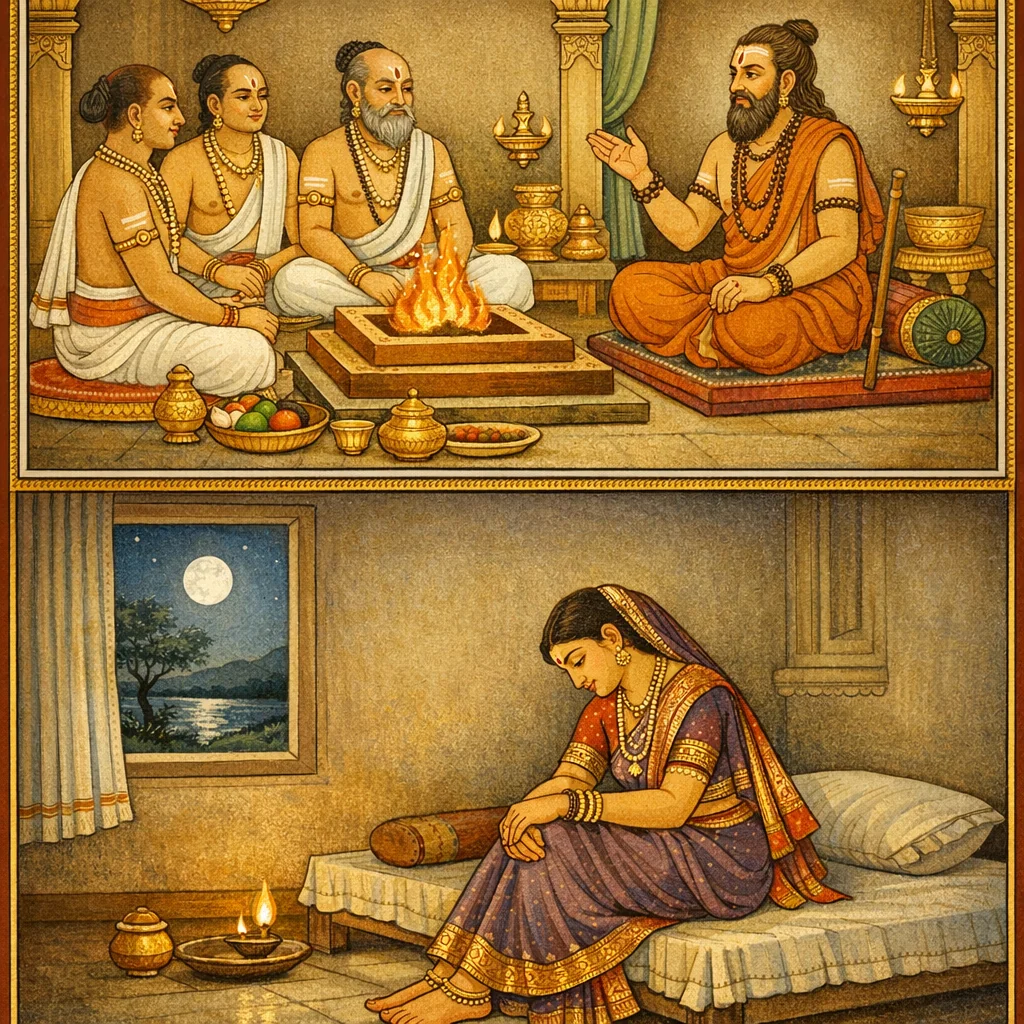
On the third day of the Brahmayajña (with the trayodaśī setting noted), the ṛtvij priests perform their appointed rites amid a lavish yajña: cooked foods abound, ghee and milk are said to flow as if in streams, and wealth is plentiful for gifts. Ritual prosperity thus forms the backdrop for an inquiry into higher knowledge. A learned guest (jñānī atithi), portrayed as discerning past, present, and future, arrives and is honored. When the priests, astonished, ask how such insight arose, he recounts his life and names six “gurus” gained through observation: Piṅgalā (a courtesan), a kurara bird, a serpent, a deer (sāraṅga), an arrow-maker (iṣu-kāra), and a maiden—teaching that contemplative wisdom can be learned from attentive witnessing, not only from a single human preceptor. The chapter then highlights Piṅgalā’s lesson: sorrow is born of craving bound to hope, while peace follows the relinquishing of expectation. Piṅgalā abandons anxious waiting, ceases competitive display, and sleeps content; the narrator adopts the same renunciatory stance, linking inner calm to bodily well-being—rest, digestion, and strength. It closes with a practical ethic: desire tends to expand with acquisition, so one should act by day in a way that allows untroubled sleep at night, regulating longing even within ritual life.
Shlokas
Verse 1
। सूत उवाच । तृतीये च दिने प्राप्ते त्रयोदश्यां द्विजोत्तमाः । प्रातःसवनमादाय ऋत्विजः सर्व एव ते । स्वेस्वे कर्मणि संलग्ना यज्ञकृत्यसमुद्भवे
Sūta said: When the third day arrived—on the thirteenth lunar day—O best of the twice-born, all those priests, having undertaken the morning rite (prātaḥ-savana), became absorbed, each in his own duty arising from the sacrificial proceedings.
Verse 2
ततः प्रवर्तते यज्ञस्तदा पैतामहो महान् । सर्वकामसमृद्धस्तु सर्वैः समुदितो गुणैः
Then the great ancestral sacrifice (paitāmaha) began—abounding in every desired good and endowed with all excellences.
Verse 3
दीयतां दीयतां तत्र भुज्यतां भुज्यतामिति । एकः संश्रूयते शब्दो द्वितीयो द्विजसंभवः
There one sound was heard: “Let it be given, let it be given!” and a second: “Let it be eaten, let it be eaten!”—a clamour born among the twice-born.
Verse 4
नान्यस्तत्र तृतीयस्तु यज्ञे पैतामहे शुभे । यो यं कामयते कामं हेमरत्नसमुद्भवम्
In that auspicious ancestral sacrifice there was no third cry. Whatever desire anyone wished for—born of gold and jewels (that is, worldly prosperity)—
Verse 5
स तत्प्राप्नोत्यसंदिग्धं वांछिताच्च चतुर्गुणम् । पक्वान्नस्य कृतास्तत्र दृश्यंते पर्वताः शुभाः
He attains it without doubt—fourfold beyond what he desired. There, auspicious heaps of cooked food were seen, like mountains.
Verse 6
घृतक्षीर महानद्यो दानार्थं वित्तराशयः । एतस्मिन्नंतरे प्राप्तः कश्चिज्ज्ञानी द्विजोत्तमाः
Great rivers of ghee and milk seemed to flow, and heaps of wealth stood ready for charity. In the midst of this, O best of the twice-born, a certain wise man arrived.
Verse 7
अतीतानागतान्वेत्ति वर्तमानं च यः सदा । स ब्रह्माणं नमस्कृत्य निविष्टश्च तदग्रतः
He who ever knows the past and the future, and also the present—having bowed to Brahmā, he sat down before him.
Verse 8
कर्मांतरेषु विप्राणां स सर्वेषां द्विजोत्तमाः । कथयामास यद्वृत्तं बाल्यात्प्रभृति कृत्स्नशः
While the brāhmaṇas were engaged in their respective rites, that best of the twice-born recounted in full all that had happened, from childhood onward.
Verse 9
ततस्त ऋत्विजः सर्वे कौतुकाविष्टचेतसः । पप्रच्छुर्ज्ञानिनं तं च विस्मयोत्फुल्ललोचनाः
Then all the officiating priests, their minds seized by wonder, questioned that knower—eyes widened in amazement.
Verse 10
विस्मृतानि स्मरंतस्ते निजकृत्यानि वै ततः । प्रोक्तानि गर्हणीयानि ह्यसंख्यातानि सर्वशः
Then, as they recalled their own deeds that had been forgotten, they spoke of countless blameworthy acts, of every kind.
Verse 11
ततस्ते पुनरेवाथ पप्रच्छुर्ज्ञानिनं च तम् । लोकोत्तरमिदं ज्ञानं कथं ते संस्थितं द्विज
Then again they questioned that knower: “O twice-born, how has this otherworldly knowledge become established in you?”
Verse 12
को गुरुस्ते समाचक्ष्व परं कौतूहलं हि नः । अहोज्ञानमहो ज्ञानं नैतद्दृष्टं श्रुतं च न
“Tell us—who is your guru? For our curiosity is great. Ah, what knowledge! Such knowledge has neither been seen nor even heard of by us.”
Verse 13
यादृशं ते द्विजश्रेष्ठ दृश्यते पार्थसंस्थितम् । किं ब्रह्मणा स्वयं विप्र त्वमेवं प्रतिबोधितः
“O best of the twice-born, the steadfastness seen in you—like a mountain firmly set—O brāhmaṇa, were you instructed thus by Brahmā himself?”
Verse 14
किं वा हरेण तुष्टेन किं वा देवेन चक्रिणा । नान्यप्रबोधितस्यैवं ज्ञानं संजायते स्फुटम्
“Or was it by Hari, pleased with you, or by the discus-bearing Lord? For unless one is awakened by another, such clear knowledge does not arise.”
Verse 15
अतिथिरुवाच । पिंगला कुररः सर्पः सारंगश्चैव यो वने । इषुकारः कुमारी च षडेते गुरवो मम
The guest-sage said: “Piṅgalā, the kurara bird, the serpent, and the deer that dwells in the forest; the fletcher and the maiden—these six are my teachers.”
Verse 16
एतेषां चेष्टितं दृष्ट्वा ज्ञानं मे समुपस्थितम्
Having observed the conduct of these six, knowledge arose and became present in me.
Verse 17
ब्राह्मणा ऊचुः । कथयस्व महाभाग कथं ते गुरवः स्थिताः । कीदृशं च त्वया दृष्टं तेषां चैव विचेष्टितम्
The brāhmaṇas said: “O greatly fortunate one, tell us—how are your teachers situated? What did you yourself observe in them, and what manner of conduct and activity did they display?”
Verse 18
कस्मिन्देशे त्वमुत्पन्नः कस्मिन्स्थाने वदस्व नः । किंनामा किं नु गोत्रश्च सर्वं विस्तरतो वद
“In what country were you born, and in what place? Tell us. What is your name, and what indeed is your gotra? Relate everything to us in detail.”
Verse 19
अतिथिरुवाच । आसन्नव पुरे विप्राश्चत्वारो ये विवासिताः । शुनःशेपोऽथ शाक्रेयो बौद्धो दांतश्चतुर्थकः
The guest (Atithi) said: “In the city of Āsannava there were four brāhmaṇas who had been banished—Śunaḥśepa, Śākreya, Bauddha, and the fourth, Dāṃta.”
Verse 20
तेषां मध्ये तु यो बौद्धः शांतो दांत इति स्मृतः । छन्दोगगोत्रविख्यातो वेदवेदांगपारगः
Among them, one named Bauddha was remembered as “Śānta” and “Dāṃta”—renowned as of the Chāndoga gotra, and fully versed in the Vedas and their auxiliary disciplines (vedāṅgas).
Verse 21
नागरेषु समुत्पन्नः पश्चिमेवयसि स्थितः । तस्याहं प्रथमः पुत्रः प्राणेभ्योऽपि सुहृत्प्रियः
He was born among the Nāgaras and was established in later age. I am his first son—dear to him even more than his own life-breath, beloved as a trusted companion.
Verse 22
ततोऽहं यौवनं प्राप्तो यदा द्विजवरोत्तम तदा मे दयितस्तातः पंचत्वं समुपागतः
Then, when I had reached youth, O best of brāhmaṇas, at that very time my beloved father attained pañcatva—returning to the five elements, that is, he passed away.
Verse 23
एतस्मिन्नंतरे राजा ह्यानर्ताधिपतिर्द्विजाः । सुतपास्तेन निर्दिष्टोऽहं तु कंचुकिकर्मणि
In the meantime, O brāhmaṇas, the king—the ruler of Ānarta—through Sutapās appointed me to the duty of a kañcukin, an attendant of the inner palace quarters.
Verse 24
शांतं दांतं समालोक्य विश्वस्तेन महात्मना । तस्य चांतःपुरे ह्यासीत्पिंगलानाम नायिका
Seeing him as peaceful and disciplined—“Śānta” and “Dāṃta”—that great-souled king placed his trust in him. And in his inner palace there was a chief lady named Piṅgalā.
Verse 25
दौर्भाग्येण समोपेता रूपेणापि समन्विता । अथान्याः शतशस्तस्य भार्याश्चांतःपुरे स्थिताः
She was burdened with ill-fortune, yet endowed with beauty. And besides her, that king had hundreds of other wives residing within the inner palace.
Verse 26
ताः सर्वा रजनीवक्त्रे व्याकुलत्वं प्रयांति च । आहरंति परान्गन्धान्धूपांश्च कुसुमानि च
All those women, when night came, grew restless; and they would bring exquisite fragrances, incense, and flowers.
Verse 27
विलेपनानि मुख्यानि सुरभीणि तथा पुरः । पुष्पाणि च विचित्राणि ह्यन्याः सूक्ष्मांबराणि च
In front were placed choice fragrant unguents; and also many kinds of variegated flowers, along with other delicate garments.
Verse 28
तावद्यावत्स्थितः कालः शयनीयसमुद्भवः । मन्मथोत्साहसं युक्ताः पुलकेन समन्विताः
For as long as the time lasted that arose from the couch of dalliance, they were filled with the ardor of Kāma and were accompanied by thrills of excitement.
Verse 29
एका जानाति मां सुप्तां नूनमाकारयिष्यति । अन्या जानाति मां चैव परस्परममर्षतः
One woman knows that I am asleep and will surely try to rouse me; another also knows it—and they resent one another.
Verse 30
स्पर्धयन्ति प्रयुध्यन्ति विरूपाणि वदन्ति च । तासां मध्यात्ततश्चैका प्रयाति नृपसंनिधौ
They vie and quarrel, speaking harsh and ugly words; then, from among them, one steps forth and goes into the king’s presence.
Verse 31
शेषा वै लक्ष्यमासाद्य निःश्वस्य प्रस्वपन्ति च । दुःखार्ता न लभन्ति स्म ताश्च निद्रां पराभवात्
The others, having reached their aim, sigh and lie down; yet, stricken with sorrow, they do not truly find sleep, because of their defeat.
Verse 32
कामेन पीडितांगाश्च बाष्पपूर्णेक्षणाः स्थिताः
Their bodies were tormented by desire, and they stood with eyes brimming with tears.
Verse 33
आशा हि परमं दुःखं निराशा परमं सुखम् । आशानिराशां कृत्वा च सुखं स्वपिति पिंगला
Hope, indeed, is the greatest sorrow; freedom from hope and expectation is the highest happiness. Having made herself free of hope and expectation, Piṅgalā sleeps in bliss.
Verse 34
न करोति च शृंगारं न स्पर्धां च कदाचन । न व्याकुलत्वमापेदे सुखं स्वपिति पिंगला
She no longer indulges in adornment, nor ever in rivalry. She does not fall into agitation—Piṅgalā sleeps happily.
Verse 35
ततो मयापि तद्दृष्ट्वा तस्याश्चेष्टितमुत्तमम् । आशाः सर्वाः परित्यक्ताः स्वपिमीह ततः सुखी
Then I too, having seen her excellent conduct, abandoned all hopes; and so here I sleep—thereafter content.
Verse 36
ये स्वपंति सुखं रात्रौ तेषां कायाग्निरिध्यते । आहारं प्रतिगृह्णाति ततः पुष्टिकरं परम्
Those who sleep happily at night—their bodily fire is kindled. Then the body properly receives nourishment, and from that arises the highest strengthening (well-being).
Verse 37
तदेत्कारणं जातं मम तेजो भिवृद्धये । गुरुत्वे पिंगला जाता तेन सा मे द्विजोत्तमाः
For this very reason it came about—for the increase of my spiritual radiance. Piṅgalā became weighty with true gravity (of understanding); therefore, O best of the twice-born, she became my teacher.
Verse 38
आशापाशैः परीतांगा ये भवन्ति नरो र्दिताः । ते रात्रौ शेरते नैव तदप्राप्तिविचिन्तया
Men whose limbs are bound all around by the nooses of hope—thus afflicted—do not sleep at night, tormented by thoughts of not attaining what they seek.
Verse 39
नैवाग्निर्दीप्यते तेषां जाठरश्च ततः परम् । आहारं वांछते नैव तन्न तेजोभिवर्धनम्
Their fire does not blaze—indeed, even the digestive fire thereafter. They do not even desire food; and thus their vitality and radiance do not increase.
Verse 40
सर्वस्य विद्यते प्रांतो न वांछायाः कथंचन
Everything has an end; desire alone has no end whatsoever.
Verse 41
यथायथा भवेल्लाभो वांचितस्य नृणामिह । हविषा कृष्णवर्त्मेव वृद्धिं याति तथातथा
As men gain more and more of what they desire here, so too does craving grow correspondingly—like a fire that swells when fed with oblations.
Verse 42
यथा शृंगं रुरोः काये वर्धमानस्य वर्धते । एवं तृष्णापि यत्नेन वर्धमानेन वर्धते
Just as the horn on a deer’s body grows as it grows, so too craving grows—growing through one’s own striving after it.
Verse 43
एवं ज्ञात्वा महाभागः पुरुषेण विजानता । दिवा तत्कर्म कर्तव्यं येन रात्रौ सुखं स्वपेत्
Knowing this, the fortunate and discerning person should act by day in such a way that at night he may sleep in peace.
Verse 184
इति श्रीस्कांदे महापुराण एकाशीतिसाहस्र्यां संहितायां षष्ठे नागरखण्डे हाटकेश्वरक्षेत्रमाहात्म्ये ब्रह्मयज्ञे तृतीयदिवसे पिंगलोपाख्यानवर्णनंनाम चतुरशीत्युत्तरशततमोऽध्यायः
Thus, in the holy Skanda Mahāpurāṇa—within the eighty-one-thousand-verse compilation—ends the one-hundred-and-eighty-fourth chapter, called “The Description of the Piṅgalā Episode,” in the sixth, the Nāgara-khaṇḍa, in the Māhātmya of the Hāṭakeśvara sacred region, on the third day of the Brahma-yajña.