Adhyaya 182
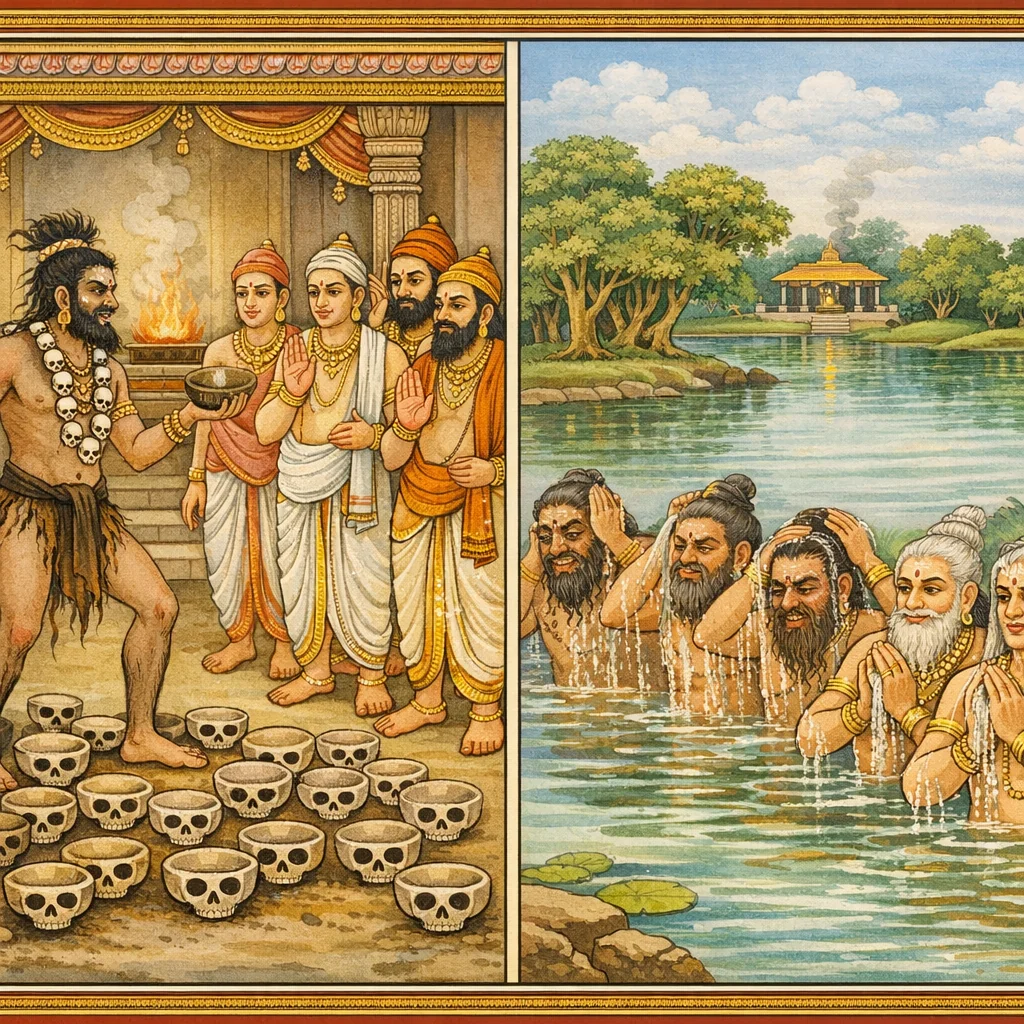
Chapter 182 presents a ritual-theological episode within a yajña. Brahmā, accompanied by Gāyatrī, enters the sacrificial pavilion in a human-mode demeanor as the rite is set with orthodox signs—staff, skin, girdle, and the observance of silence. During the pravargya, a disruptive ascetic named Jālma appears naked, bearing a kapāla (skull-bowl) and demanding food; when refused, his kapāla is cast away, yet it mysteriously multiplies, filling the yajña enclosure and threatening the sacrifice. Brahmā meditatively perceives a Śaiva dimension in the disturbance and appeals to Maheśvara. Śiva declares the kapāla his favored vessel and censures the omission of offerings to him; he commands that oblations be made through the kapāla and explicitly dedicated to Rudra, whereby the sacrifice can be completed. Brahmā secures a liturgically acceptable settlement: future yajñas should include Rudra-oriented recitation (especially the Śatarudrīya) and offerings in earthen kapālas, while Śiva becomes locally manifest as Kapāleśvara, guardian of the kṣetra. A phala tradition follows: bathing in Brahmā’s three kuṇḍas and worshipping the liṅga yields exalted spiritual results, and a vigil on Kārttika śukla caturdaśī promises release from life-born faults. The narrative then turns to southern-path sages and ṛtviks who, after the midday heat, bathe in a nearby waterbody; their grotesque features transform into beauty, leading them to name the place Rūpatīrtha and proclaim its benefits—beauty across births, strengthened ancestral rites, and royal prosperity through gifts. The chapter closes with their return and all-night technical debates on sacrificial procedure, underscoring that ritual order endures when right theological recognition and correct dedication align.
Shlokas
Verse 1
सूत उवाच । एवं पत्नीं समासाद्य गायत्रीं चतुराननः । संप्रहृष्टमना भूत्वा प्रस्थितो यज्ञमण्डपम्
Sūta said: Having thus obtained Gāyatrī as his wife, the Four-faced Lord (Brahmā), his heart filled with joy, set forth for the sacrificial pavilion.
Verse 2
गायत्र्यपि समादाय मूर्ध्नि तामरणिं मुदा । प्रतस्थे संपरित्यज्य गोपभावं विगर्हितम्
Gāyatrī too, joyfully placing that araṇi upon her head, set out—casting off the censured guise of a cowherd woman.
Verse 3
वाद्यमानेषु वाद्येषु ब्रह्मघोषे दिवंगते । कलं प्रगायमानेषु गन्धर्वेषु समंततः
As instruments resounded, as sacred Vedic acclamations rose heavenward, and as Gandharvas all around sang in sweet melody—
Verse 4
सर्वदेवद्विजोपेतः संप्राप्तो यज्ञमण्डपे । गायत्र्या सहितो ब्रह्मा मानुषं भावमाश्रितः
Accompanied by all the gods and the twice-born, Brahmā arrived at the sacrificial pavilion together with Gāyatrī, having assumed a human manner.
Verse 5
एतस्मिन्नंतरे चक्रे केशनिर्वपणं विधेः । विश्वकर्मा नखानां च गायत्र्यास्तदनंतरम्
Meanwhile, Viśvakarmā performed for Brahmā the rite of shaving and sacred grooming, and immediately thereafter attended to the trimming of Gāyatrī’s nails.
Verse 6
औदुम्बरं ततो दण्डं पुलस्त्योऽस्मै समाददे । एणशृंगान्वितं चर्म मन्त्रवद्विजसत्तमाः
Then Pulastya gave him a staff of udumbara wood; and the finest among the twice-born, reciting mantras, also bestowed a deer-hide furnished with horns.
Verse 7
पत्नीशालां गृहीत्वा च गायत्रीं मौनधारिणीम् । मेखलां निदधे चान्यां कट्यां मौंजीमयीं शुभाम्
Taking up the patnīśālā and Gāyatrī, who observed the vow of silence, he then bound upon his waist another auspicious girdle made of muñja-grass.
Verse 8
ततश्चक्रे परं कर्म यदुक्तं यज्ञमंडपे । ऋत्विग्भिः सहितो वेधा वेदवाक्यसमादृतः
Then, in the sacrificial pavilion, he performed the higher rite exactly as enjoined—Brahmā, the Ordainer, accompanied by the officiating priests, honoring the words of the Veda.
Verse 9
प्रवर्ग्ये जायमाने च तत्राश्चर्यमभून्महत् । जाल्मरूपधरः कश्चिद्दिग्वासा विकृताननः
And as the pravargya rite was being performed, a great wonder occurred there: someone appeared in the form of a rogue—naked to the directions, with a distorted face.
Verse 10
कपालपाणिरायातो भोजनं दीयतामिति । निषेध्यमानोऽपि च तैः प्रविष्टो याज्ञिकं सदः । स कृत्वाऽटनमन्याय्यं तर्ज्यमानोऽपि तापसैः
A skull-bearer came, crying, “Give me food!” Though they tried to restrain him, he entered the sacrificial hall; and, roaming about in an unlawful manner, he was rebuked by the ascetics as well.
Verse 11
सदस्या ऊचुः । कस्मात्पापसमेतस्त्वं प्रविष्टो यज्ञमण्डपे । कपाली नग्नरूपो यो यज्ञकर्मविवर्जितः
The members of the assembly said: “Why have you, tainted with sin, entered the pavilion of the yajña—O skull-bearer, naked in form, one who has forsaken sacrificial duty?”
Verse 12
तस्माद्गच्छ द्रुतं मूढ यावद्ब्रह्मा न कुप्यति । तथाऽन्ये ब्राह्मणश्रेष्ठास्तथा देवाः सवासवाः
Therefore go quickly, fool—before Brahmā grows wrathful; and likewise before the other foremost brāhmaṇas, and the gods together with Indra, are enraged.
Verse 13
जाल्म उवाच । ब्रह्मयज्ञमिमं श्रुत्वा दूरादत्र समागतः । बुभुक्षितो द्विजश्रेष्ठास्तत्किमर्थं विगर्हथ
Jālma said: “Hearing of this Brahmayajña, I have come here from far away. I am hungry, O best of the twice-born—why then do you condemn me?”
Verse 14
दीनांधैः कृपणैः सवैर्स्तर्पितैः क्रतुरुच्यते । अन्यथाऽसौ विनाशाय यदुक्तं ब्राह्मणैर्वचः
A sacrifice is called “fulfilled” when the poor, the blind, and the destitute are all satisfied; otherwise it inclines toward ruin—such is the saying spoken by the brāhmaṇas.
Verse 15
अन्नहीनो दहेद्राष्टं मन्त्रहीनस्तु ऋत्विजः । याज्ञिकं दक्षिणा हीनो नास्ति यज्ञसमो रिपुः
A yajña lacking food burns up the kingdom; a priest lacking mantras ruins the rite; and a sacrificer lacking dakṣiṇā—there is no enemy equal to a defective yajña.
Verse 16
ब्राह्मणा ऊचुः । यदि त्वं भोक्तुकामस्तु समायातो व्रज द्रुतम् । एतस्यां सत्रशालायां भुञ्जते यत्र तापसाः । दीनान्धाः कृपणाश्चैव ततः क्षुत्क्षामकंठिताः
The brāhmaṇas said: “If you have come desiring to eat, go quickly. In this satraśālā the ascetics eat—along with the poor, the blind, and the destitute, their throats parched and weakened by hunger.”
Verse 17
अथवा धनकामस्त्वं वस्त्रकामोऽथ तापस । व्रज वित्तपतिर्यत्र दानशालां समाश्रितः
Or, O ascetic—if you desire wealth, or if you desire garments—go to that place where the Lord of riches abides in the hall of charity (dānaśālā).
Verse 18
अनिंद्योऽयं महामूर्ख यज्ञः पैतामहो यतः । अर्चितः सर्वतः पुण्यं तत्किं निन्दसि दुर्मते
This sacrifice is not to be censured, O great fool, for it is the ancient rite of the Grandfather (Brahmā). It is honored everywhere as meritorious—why then do you revile it, O evil-minded one?
Verse 19
सूत उवाच । एवमुक्तः कपालं स परिक्षिप्य धरातले । जगामादर्शनं सद्यो दीपवद्द्विजसत्तमाः
Sūta said: Thus addressed, he cast the skull-bowl upon the ground; and instantly he vanished from sight—like a lamp going out, O best of the twice-born.
Verse 20
ऋत्विज ऊचुः । कथं यज्ञक्रिया कार्या कपाले सदसि स्थिते । परिक्षिपथ तस्मात्तु एवमूचुर्द्विजोत्तमाः
The officiating priests said: 'How can the sacrificial rites be performed while a skull lies in the assembly? Therefore, cast it out!'—thus spoke the best of the twice-born.
Verse 21
अथैको बहुधा प्रोक्तः सदस्यैश्च द्विजोत्तमैः । दण्डकाष्ठं समुद्यम्य प्रचिक्षेप बहिस्तथा
Then one man—urged repeatedly by the venerable Brahmin members of the assembly—lifted up a staff of wood and hurled it outside.
Verse 22
अथान्यत्तत्र संजातं कपालं तादृशं पुनः । तस्मिन्नपि तथा क्षिप्ते भूयोऽन्यत्समपद्यत
Then, right there, another skull of the same kind appeared again. Even when that too was cast away in the same manner, yet another arose once more.
Verse 23
एवं शतसहस्राणि ह्ययुतान्यर्बुदानि च । तत्र जातानि तैर्व्याप्तो यज्ञवाटः समंततः
In this way hundreds of thousands—tens of thousands, even crores—of skulls arose there; and by them the entire sacrificial enclosure was filled on all sides.
Verse 24
हाहाकारस्ततौ जज्ञे समस्ते यज्ञमण्डपे । दृष्ट्वा कपालसंघांस्तान्यज्ञ कर्मप्रदूषकान्
A great cry of alarm spread throughout the entire sacrificial pavilion, on seeing those masses of skulls that were defiling the work of the sacrifice.
Verse 25
अथ संचिंतयामास ध्यानं कृत्वा पितामहः । हरारिष्टं समाज्ञाय तत्सर्वं हृष्टरूपधृक्
Then the Grandfather (Brahmā) reflected, entering meditation; and, knowing that the danger had arisen from Hara (Śiva), he assumed a countenance of gladness toward it all.
Verse 26
कृतांजलिपुटो भूत्वा ततः प्रोवाच सादरम् । महेश्वरं समासाद्य यज्ञवाटसमाश्रितम्
Then, forming his hands into a reverent añjali, he spoke with respect—approaching Maheśvara, who was present within the sacrificial enclosure.
Verse 27
किमिदं युज्यते देव यज्ञेऽस्मिन्कर्मणः क्षतिः । तस्मात्संहर सर्वाणि कपालानि सुरेश्वर
“O Deva, how can this be fitting? In this sacrifice the rite itself is being harmed. Therefore, O Lord of the gods, withdraw and gather back all these skull-bowls.”
Verse 28
यज्ञकर्मविलोपोऽयं मा भूत्त्वयि समागते
“Let there not be any disruption of the sacrificial rite, now that you have arrived.”
Verse 29
ततः प्रोवाच संक्रुद्धो भगवाञ्छशिशेखरः । तन्ममेष्टतमं पात्रं भोजनाय सदा स्थितम्
Then the Blessed Lord, the Moon-crested One (Śaśiśekhara), spoke in anger: “That is my most cherished vessel, ever kept ready for my own eating.”
Verse 30
एते द्विजाधमाः कस्माद्विद्विषंतिपितामह । तथा न मां समुद्दिश्य जुहुवुर्जातवेदसि
“O Grandfather Pitāmaha (Brahmā), why do these vile brāhmaṇas bear hatred? They have poured oblations into Jātavedas (Agni) without dedicating them to me.”
Verse 31
यथान्यादेवता स्तद्वन्मन्त्रपूतं हविर्विधे । तस्माद्यदि विधे कार्या समाप्तिर्यज्ञकर्मणि
“Just as oblations are offered to other deities, so too, O Vidhe (Brahmā), let the ghee-offering purified by mantra be offered with proper dedication. Therefore, if the sacrifice is to be duly concluded, O Ordainer, its completion must be performed according to the rite.”
Verse 32
तत्कपालाश्रितं हव्यं कर्तव्यं सकलं त्विदम् । तथा च मां समु द्दिश्य विशषाज्जातवेदसि
“All this offering should be performed with the oblation placed upon that skull-vessel; and likewise, intending me, make the special offering into Jātavedas (Agni).”
Verse 33
होतव्यं हविरेवात्र समाप्तिं यास्यति क्रतुः । नान्यथा सत्यमेवोक्तं तवाग्रे चतुरानन
“Here the oblation alone must be offered; by that the sacrifice will reach completion—never otherwise. This is the truth I speak before you, O Four-faced One (Brahmā).”
Verse 34
पितामह उवाच । रूपाणि तव देवेश पृथग्भूतान्यनेकशः । संख्यया परिहीनानि ध्येयानि सकलानि च
Pitāmaha (Brahmā) said: “O Devēśa, Lord of the gods, your forms are manifold, differentiated in many ways—beyond counting. All of them are to be contemplated in fullness.”
Verse 35
एतन्महाव्रतं रूपमाख्यातं ते त्रिलोचन । नैवं च मखकर्म स्यात्तत्रैव च न युज्यते
O Three-eyed One, you have declared this form of the Mahāvrata. Yet the sacrificial procedure cannot proceed in this manner; within the established order of the yajña it is not fitting.
Verse 36
अद्यैतत्कर्म कर्तुं च श्रुतिबाह्यं कथंचन । तव वाक्यमपि त्र्यक्ष नान्यथा कर्तुमु त्सहे
To perform this act today would, in some way, fall outside the Vedic ordinance of śruti. Yet, O Three-eyed One, even so I do not dare to act otherwise than according to your command.
Verse 37
मृन्मयेषु कपालेषु हविः श्राप्यं सुरेश्वर । अद्यप्रभृति यज्ञेषु पुरोडाशात्मिकं द्विजैः । तवोद्देशेन देवेश होतव्यं शतरुद्रि यम्
O Lord of the gods, the havis offered in earthen kapālas (skull-bowls) shall, from this day onward, be regarded as consecrated. Therefore, in sacrifices, the twice-born shall offer to you—O Lord, O Deva—an oblation in the form of puroḍāśa, and also perform the Śatarudrīya rite, expressly dedicating it to you.
Verse 38
विशेषात्सर्वयज्ञेषु जप्यं चैव विशेषतः । कपालानां तु द्वारेण त्वया रूपं निजं कृतम्
Especially in all sacrifices, this is to be recited in japa with particular emphasis; for through the very medium of the kapālas (skull-bowls), you have manifested your own form.
Verse 39
प्रकटं च सुरश्रेष्ठ कपाले श्वरसंज्ञितः । तस्मात्त्वं भविता रुद्र क्षेत्रेऽस्मिन्द्वादशोऽपरः
O best among the gods, you have become manifest here under the name “Kapāleśvara.” Therefore, O Rudra, in this sacred field you shall be another—an additional—twelfth manifestation.
Verse 40
अत्र यज्ञं समारभ्य यस्त्वां प्राक्पूजयिष्यति । अविघ्नेन मख स्तस्य समाप्तिं प्रव्रजिष्यति
Whoever begins a yajña here and first worships you, his sacrificial rite will proceed without obstacles and reach completion.
Verse 41
एवमुक्ते ततस्तेन कपालानि द्विजोत्तमाः । तानि सर्वाणि नष्टानि संख्यया रहितानि च
When he had spoken thus, O best of the twice-born, those kapālas vanished entirely, so that they could no longer be counted.
Verse 42
ततो हृष्टश्चतुर्वक्त्रः स्थापयामास तत्क्षणात् । लिगं माहेश्वरं तत्र कपालेश्वरसंज्ञितम्
Then Caturvaktra (Brahmā), delighted, established at that very moment a Maheśvara-liṅga there, known by the name Kapāleśvara.
Verse 43
अब्रवीच्च ततो वाक्यं यश्चैतत्पूजयिष्यति । मम कुण्डत्रये स्नात्वा स यास्यति परां गतिम्
Then he spoke these words: “Whoever worships this (Kapāleśvara) and bathes in my three sacred ponds shall attain the supreme state.”
Verse 44
शुक्लपक्षे चतुर्दश्यां कार्तिके जागरं तु यः । करिष्यति पुनश्चास्य लिंगस्य सुसमाहितः । आजन्मप्रभवात्पापात्स विमुक्तिमवाप्स्यति
Whoever, with steady concentration, keeps vigil (jāgara) on the fourteenth lunar day of the bright fortnight in Kārttika, and again devoutly performs this observance for this liṅga, will obtain release from sins accumulated since birth.
Verse 45
एवमुक्तेऽथ विधिना प्रहृष्टस्त्रिपुरांतकः । यज्ञमण्डपमासाद्य प्रस्थितो वेदिसंनिधौ
When this was spoken, Tripurāntaka (Śiva), delighted in accord with Brahmā’s ordinance, approached the sacrificial pavilion and set forth toward the altar’s side.
Verse 46
ब्राह्मणैश्च ततः कर्म प्रारब्धं यज्ञसम्भवम् । विस्मयोत्फुल्लनयनैर्नमस्कृत्य महेश्वरम्
Then the Brāhmaṇas began the sacrificial rites; and, with eyes widened in wonder, they bowed in reverence to Maheśvara (Śiva).
Verse 47
सूत उवाच । एवं च यज तस्तस्य चतुर्वक्त्रस्य तत्र च । ऋषीणां कोटिरायाता दक्षिणापथवासिनाम्
Sūta said: Thus, while the four-faced one (Brahmā) was performing sacrifice there, a crore of sages—dwellers of the southern region (Dakṣiṇāpatha)—arrived at that place.
Verse 49
कीदृक्क्षेत्रं च तत्पुण्यं हाटकेश्वरसंज्ञितम् । कीदृशास्ते च विप्रेन्द्रा ऋत्विजस्तत्र ये स्थिताः
What is that sacred field, that holy place known as Hāṭakeśvara? And what are those eminent Brāhmaṇas—the ṛtviks, the priests who dwell there—like?
Verse 50
अथ ते सुपरिश्रांता मध्यंदिनगते रवौ । रविवारेण संप्राप्ते नक्षत्रे चाश्विसंस्थिते
Then, when the sun had reached midday, they grew exceedingly weary; and when Sunday arrived, with the asterism Aśvinī prevailing,
Verse 51
वैवस्वत्यां तिथौ चैव प्राप्ता घर्मपीडिताः । कंचिज्जलाशयं प्राप्य प्रविष्टाः सलिलं शुभम्
And on the Vaivasvatī tithi too, tormented by the scorching heat, they reached a certain water-reservoir and entered its auspicious waters.
Verse 52
शंकुकर्णा महाकर्णा वकनासास्तथापरे । महोदरा बृहद्दन्ता दीर्घोष्ठाः स्थूलमस्तकाः
Some had cone-like ears, others huge ears; some had crooked noses. They had great bellies, large teeth, long lips, and massive heads.
Verse 53
चिपिटाक्षास्तथा चान्ये दीर्घग्रीवास्तथा परे । कृष्णांगाः स्फुटितैः पादैर्नखैर्दीर्घैः समुत्थितैः
Others had sunken eyes; others had long necks. Their bodies were dark, their feet cracked, and long nails rose up prominently.
Verse 54
ततो यावद्विनिष्क्रांताः प्रपश्यन्ति परस्परम् । तावद्वैरूपस्यनिर्मुक्ताः संजाताः कामसन्निभाः
Then, as soon as they came out and looked at one another, at that very moment they were freed from deformity and became beautiful—like Kāma, the god of love.
Verse 55
ततो विस्मयमापन्ना मिथः प्रोचुः प्रहर्षिताः । रूपव्यत्ययमालोक्य ज्ञात्वा तीर्थं तदुत्तमम् । अत्र स्नानादिदं रूपमस्माभिः प्राप्तमुत्तमम्
Amazed and delighted, they spoke among themselves. Seeing the change in their appearance and recognizing that tīrtha as supreme, they said: ‘By bathing here, we have obtained this excellent form.’
Verse 56
यस्मात्तस्मादिदं तीर्थं रूपतीर्थं भविष्यति । त्रैलोक्ये सकले ख्यातं सर्वपातकनाशनम्
Therefore, for this reason, this sacred ford shall be known as Rūpatīrtha—renowned throughout the three worlds and the destroyer of all sins.
Verse 57
येऽत्र स्नानं करिष्यन्ति श्रद्धया परया युताः । सुरूपास्ते भविष्यंति सदा जन्मनि जन्मनि
Those who bathe here, endowed with supreme faith, will become beautiful in form—always, in birth after birth.
Verse 58
पितॄंश्च तर्पयिष्यन्ति य त्र श्रद्धासमन्विताः । जलेनापि गयाश्राद्धात्ते लप्स्यन्ते धिकं फलम्
Those who, filled with faith, offer libations (tarpaṇa) to the ancestors at this sacred place—even using only its water—gain a fruit greater than that obtained from the śrāddha performed at Gayā.
Verse 59
येऽत्र रत्नप्रदानं च प्रकरिष्यन्ति मानवाः । भविष्यंति न संदेहो राजानस्ते भवेभवे
The people who perform the gift of jewels here shall, without doubt, become kings again and again in successive births.
Verse 60
स्थास्यामो वयमत्रैव सांप्रतं कृतनिश्चयाः । न यास्यामो वयं तीर्थं यद्यपि स्यात्सुशोभनम्
“We shall stay right here—now firmly resolved. We will not go to any other tīrtha, even if it be exceedingly beautiful.”
Verse 61
एवमुक्त्वाऽथ व्यभजंस्तत्सर्वं मुनयश्च ते । यज्ञोपवीतमात्राणि स्वानि तीर्थानि चक्रिरे
Having spoken thus, those sages then apportioned all of it, and—using only their sacred threads (yajñopavīta) as their means—established their own tīrthas, the ritual bathing-spots.
Verse 62
सूत उवाच । अद्यापि च द्विजश्रेष्ठास्तत्र तीर्थे जगद्गुरुः । प्रथमं स्पृशते तोयं नित्यं स्याद्दयितं शुभम्
Sūta said: “Even today, O best of the twice-born, at that tīrtha the Jagadguru first touches the water; it is ever dear and auspicious.”
Verse 63
निष्कामस्तु पुनर्मर्त्यो यः स्नानं तत्र श्रद्धया । कुरुते स परं श्रेयः प्राप्नुयात्सिद्धिलक्षणम्
But the mortal who, free of selfish desire, bathes there with faith attains the highest good and reaches the marks of siddhi, spiritual accomplishment.
Verse 64
एवं ते मुनयः सर्वे विभज्य तन्महत्सरः । सायंतनं च तत्रैव कृत्वा कर्म सुविस्तरम्
Thus all those sages, having apportioned that great lake, performed there itself the evening rites in full detail.
Verse 65
ततो निशामुखे प्राप्ता यत्र देवः पितामहः । दीक्षितस्त्वथ मौनी च यज्ञमण्डपसंश्रितः
Then, as nightfall arrived, they reached the place where the god Pitāmaha (Brahmā) was consecrated for sacrifice—observing silence and abiding within the sacrificial pavilion.
Verse 66
तं प्रणम्य ततः सर्वे गता यत्रर्त्विजः स्थिताः । उपविष्टाः परिश्रान्ता दिवा यज्ञियकर्मणा
After bowing to him, they all went to where the officiating priests (ṛtvij) were. The priests sat down, weary from the day’s sacrificial duties.
Verse 67
इन्द्रादिकैः सुरैर्भक्त्या मृद्यमानाङ्घ्रयः स्थिताः । अभिवाद्याथ तान्सर्वानुपविष्टास्ततो ग्रतः
With devotion, the gods headed by Indra stood there, massaging his feet. Then, having respectfully greeted them all, they sat down thereafter.
Verse 68
चक्रुश्चाथ कथाश्चित्रा यज्ञकर्मसमुद्भवाः । सोमपानस्य संबन्धो व्यत्ययं च समुद्भवम्
Then they spun many varied discussions arising from the procedures of the sacrifice—debating the proper connection of Soma-drinking and also the contrary deviations that can arise.
Verse 69
उद्गातुः प्रभवं चैव तथाध्वर्योः परस्परम् । प्रोचुस्ते तत्त्वमाश्रित्य तथान्ये दूषयन्ति तत्
They spoke about the proper basis of the Udgātṛ’s role and likewise the mutual relation of the Adhvaryu and the others—stating what they held to be the truth; yet some others criticized that view.
Verse 70
अन्ये मीमांसकास्तत्र कोपसंरक्तलोचनाः । हन्युस्तेषां मतं वादमाश्रिता वाग्विचक्षणाः
There, other Mīmāṃsakas—with eyes reddened by anger—took up disputation and sought to strike down the opponents’ position, being skilled in sharp speech.
Verse 71
परिशिष्टविदश्चान्ये मध्यस्था द्विजसत्तमाः । प्रोचुर्वादं परित्यज्य साभिप्रायं यथोदितम्
Other excellent brāhmaṇas, learned in the Pariśiṣṭas and standing as impartial mediators, spoke—setting aside contentious debate—and explained the intended meaning as it ought to be stated.
Verse 72
महावीरपुरोडाशचयनप्रमुखांस्तथा । विवादांश्चक्रिरे चान्ये स्वंस्वं पक्षं समाश्रिताः
Others, each clinging to his own side, stirred up further controversies—about the Mahāvīra offering, the Puroḍāśa cake, the laying out of the altar (cayana), and other such principal matters.
Verse 73
एवं सा रजनी तेषामतिक्रान्ता द्विजन्मनाम्
Thus that night passed for those twice-born, absorbed in these matters.
Verse 182
इति श्रीस्कान्दे महापुराण एकाशीतिसाहस्र्यां संहितायां षष्ठे नागरखण्डे हाटकेश्वरक्षेत्रमाहात्म्ये रूपतीर्थोत्पत्तिपूर्वकप्रथमयज्ञदिवसवृत्तान्तवर्णनंनाम द्व्यशीत्युत्तरशततमोऽध्यायः
Thus ends, in the Śrī Skanda Mahāpurāṇa—within the Ekāśītisāhasrī Saṃhitā, in the Sixth (Nāgara) Khaṇḍa, in the Māhātmya of the sacred region of Hāṭakeśvara—the chapter entitled “Account of the First Day of the Sacrifice, preceded by the origin of Rūpatīrtha,” being Chapter 182.
Verse 488
श्रुत्वा पैतामहं यज्ञं कौतुकेन समन्विताः । कीदृशो भविता यज्ञो दीक्षितो यत्र पद्मजः
Hearing of the Paitāmaha sacrifice, they were filled with eager wonder: “What will that yajña be like, in which the Lotus-born (Brahmā) himself is the consecrated performer (dīkṣita)?”