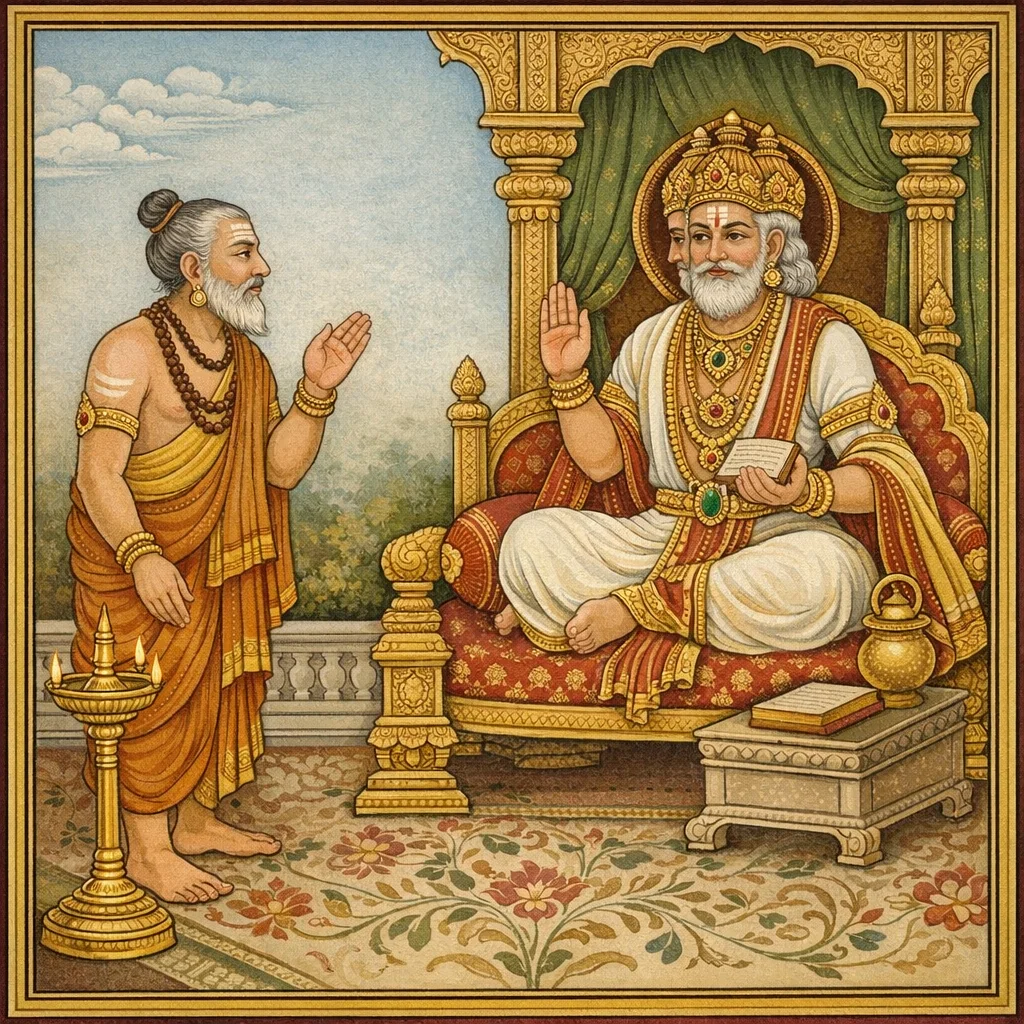
Adhyaya 181
Adhyāya 181 (Nāgara Khaṇḍa) recounts a juridical and theological dispute over ritual legitimacy within Hāṭakeśvara-kṣetra. The Nāgara brāhmaṇas, angered at being bypassed, send Madhyaga as an emissary to confront Brahmā (Padmajā), who is conducting a yajña with non-local ṛtviks. The Nāgaras assert hereditary rights: rites performed while excluding them are void, grounded in an earlier kṣetra-dāna that defined the sacred boundaries. Brahmā replies conciliatorily, admits a procedural fault, and establishes a rule: yajña/śrāddha done here without the Nāgaras becomes fruitless; likewise, Nāgara rites performed outside the kṣetra are also ineffective—creating reciprocal jurisdiction. The narrative then turns to the urgency of completing the sacrifice. Savitrī delays, and emissaries (Nārada, then Pulastya) are sent to bring her. With time pressing, Indra brings a gopa-kanyā (milkmaid), who is ritually purified and transformed as a fit bride for Brahmā. Deities and authorities (including Rudra and the brāhmaṇas) sanction her as Gāyatrī, and the marriage is performed to secure the yajña’s completion. The chapter closes with tīrtha-phalāśruti praise: the site is auspicious and prosperity-giving, and acts such as handfasting, piṇḍa-dāna, and kanyā-dāna performed there yield greatly increased merit.
Shlokas
Verse 1
सूत उवाच । एतस्मिन्नंतरे सर्वेर्नागरैर्ब्राह्मणोत्तमैः । प्रेषितो मध्यगस्तत्र गर्तातीर्थसमुद्भवः
Sūta said: Meanwhile, all the eminent brāhmaṇas of that city sent Madhyaga—who had arisen from the sanctity of Gartā-tīrtha—there as their emissary.
Verse 2
रेरे मध्यग गत्वा त्वं ब्रूहि तं कुपितामहम् । विप्रवृत्ति प्रहंतारं नीतिमार्गविवर्जितम्
Go, go, O Madhyaga—tell him that I am enraged: he is a destroyer of brāhmaṇical conduct, one who has forsaken the path of righteous nīti, restraint, and right order.
Verse 3
एतत्क्षेत्रं प्रदत्तं नः पूर्वेषां च द्विजन्मनाम् । महेश्वरेण तुष्टेन पूरिते सर्पजे बिले
This sacred field was granted to us and to our forefathers, the twice-born—by Maheśvara, who, being pleased, filled in the serpent-born cavern and made the land secure and fit.
Verse 4
तस्य दत्तस्य चाद्यैव पितामहशतं गतम् । पंचोत्तरमसन्दिग्धं यावत्त्वं कुपितामह
For that gift, even today, a full hundred and five generations of ancestors have surely attained release—so long as you, O angry forefather, remain appeased.
Verse 5
न केनापि कृतोऽस्माकं तिरस्कारो यथाऽधुना । त्वां मुक्त्वा पापकर्माणं न्यायमार्गविवर्जितम्
Never has anyone treated us with contempt as is being done now—except you, a doer of sinful deeds, who has abandoned the path of justice.
Verse 6
नागरैर्ब्राह्मणैर्बाह्यं योऽत्र यज्ञं समाचरेत् । श्राद्धं वा स हि वध्यः स्यात्सर्वेषां च द्विजन्मनाम्
Whoever here performs a sacrifice—or even a śrāddha—while excluding the Nāgara brāhmaṇas, he is indeed fit to be punished by all the twice-born.
Verse 7
न तस्य जायते श्रेयस्तत्समुत्थं कथंचन । एतत्प्रोक्तं तदा तेन यदा स्थानं ददौ हि नः
From that improper act, no auspicious merit arises in any way. This he declared at that time, when he granted this place to us.
Verse 8
तस्माद्यत्कुरुषे यज्ञं ब्राह्मणैर्नागरैः कुरु । नान्यथा लप्स्यसे कर्तुं जीवद्भिर्नागरैर्द्विजैः
Therefore, whatever sacrifice (yajña) you undertake, perform it with the Nāgara brāhmaṇas. Otherwise, so long as the Nāgara twice-born yet live, you will not be permitted to carry it out.
Verse 9
एवमुक्तस्ततो गत्वा मध्यगो यत्र पद्मजः । यज्ञमण्डपदूरस्थो ब्राह्मणैः परिवारितः
Thus addressed, he went to the central place where Padmaja (Brahmā) was—standing a little away from the sacrificial pavilion, surrounded by brāhmaṇas.
Verse 10
यत्प्रोक्तं नागरैः सर्वैः सविशेषं तदा हि सः । तच्छ्रुत्वा पद्मजः प्राह सांत्वपूर्वमिदं वचः
Hearing in full detail what all the Nāgaras had stated, Padmaja (Brahmā) then spoke these words, first offering conciliation.
Verse 11
मानुषं भावमापन्न ऋत्विग्भिः परिवारितः । त्वया सत्यमिदं प्रोक्तं सर्वं मध्यगसत्तम
Though I have assumed a human manner and am surrounded by ṛtvij (officiating priests), all that you have said is true in every respect, O best of those at the center.
Verse 12
किं करोमि वृताः सर्वे मया ते यज्ञकर्मणि । ऋत्विजोऽध्वर्यु पूर्वा ये प्रमादेन न काम्यया
“What am I to do? For all those priests—beginning with the adhvaryu—have already been engaged by me for the sacrificial rite, through oversight, not from deliberate intent.”
Verse 13
तस्मादानय तान्सर्वानत्र स्थाने द्विजोत्तमान् । अनुज्ञातस्तु तैर्येन गच्छामि मखमण्डपे
“Therefore bring all those best of brāhmaṇas here to this place; once I am granted permission by them, I shall proceed to the sacrificial pavilion.”
Verse 14
मध्यग उवाच । त्वं देवत्वं परित्यज्य मानुषं भावमाश्रितः । तत्कथं ते द्विजश्रेष्ठाः समागच्छंति तेंऽतिकम्
Madhyaga said: “You have set aside the state of a god and have taken on the human condition. How then do those excellent brāhmaṇas come and gather near you?”
Verse 15
श्रेष्ठा गावः पशूनां च यथा पद्मसमुद्भव । विप्राणामिह सर्वेषां तथा श्रेष्ठा हि नागराः
O Lotus-born (Brahmā), just as cows are foremost among beasts, so too, among all the brāhmaṇas here, the Nāgara brāhmaṇas are indeed the foremost.
Verse 16
तत्माच्चेद्वांछसि प्राप्तिं त्वमेतां यज्ञसंभवाम् । तद्भक्त्यानागरान्सर्वान्प्रसादय पितामह
Therefore, if you desire to attain this success born of sacrifice, then with devotion, O Grandfather (Brahmā), win the gracious favor of all the Nāgaras.
Verse 17
सूत उवाच । तच्छ्रुत्वा पद्मजो भीत ऋत्विग्भिः परिवारितः । जगाम तत्र यत्रस्था नागराः कुपिता द्विजाः
Sūta said: Hearing this, the Lotus-born (Brahmā), fearful and surrounded by the officiating priests, went to the place where the Nāgara brāhmaṇas stood, angered.
Verse 18
प्रणिपत्य ततः सर्वान्विनयेन समन्वितः । प्रोवाच वचनं श्रुत्वा कृतांजलिपुटः स्थितः
Then, bowing down to them all with humility, he stood with hands folded in reverence and, having listened, spoke his words.
Verse 19
जानाम्यहं द्विजश्रेष्ठाः क्षेत्रेऽस्मिन्हाट केश्वरे । युष्मद्बाह्यं वृथा श्राद्धं यज्ञकर्म तथैव च
“I know, O best of brāhmaṇas, that in this sacred field of Hāṭakeśvara, any śrāddha and likewise any sacrificial rite performed without you is fruitless.”
Verse 20
कलिभीत्या मयाऽनीतं स्थानेऽस्मिन्पुष्करं निजम् । तीर्थं च युष्मदीयं च निक्षेपोऽ यंसमर्पितः
“Out of fear of Kali, I have brought my own Puṣkara to this place; and this deposit—this entrusting of the tīrtha—has been offered over to you as yours.”
Verse 21
ऋत्विजोऽमी समानीता गुरुणा यज्ञसिद्धये । अजानता द्विजश्रेष्ठा आधिक्यं नागरात्मकम्
“These officiating priests were brought by my preceptor for the accomplishment of the sacrifice—without knowing, O best of brāhmaṇas, the superior prerogative that belongs to the Nāgaras.”
Verse 22
तस्माच्च क्षम्यतां मह्यं यतश्च वरणं कृतम् । एतेषामेव विप्राणामग्निष्टोमकृते मया
Therefore, forgive me, for I made the selection of priests for the Agniṣṭoma sacrifice from among these very brāhmaṇas.
Verse 23
एतच्च मामकं तीर्थं युष्माकं पापनाशनम् । भविष्यति न सन्देहः कलिकालेऽपि संस्थिते
And this sacred ford of mine will become a destroyer of your sins—there is no doubt—remaining efficacious even in the age of Kali.
Verse 24
ब्राह्मणा ऊचुः । यदि त्वं नागरैर्बाह्यं यज्ञं चात्र करिष्यसि । तदन्येऽपि सुराः सर्वे तव मार्गानुयायि नः । भविष्यन्ति तथा भूपास्तत्कार्यो न मखस्त्वया
The Brāhmaṇas said: “If you perform a sacrifice here while excluding the Nāgaras, then all the other gods too will follow your precedent. Likewise, kings will do the same. Therefore, such a sacrifice ought not to be undertaken by you.”
Verse 25
यद्येवमपि देवेश यज्ञकर्म करिष्यसि । अवमन्य द्विजान्सर्वाक्षिप्रं गच्छास्मदंतिकात्
“Even so, O Lord of the gods, if you insist on performing the sacrificial rite, then—having dishonoured all the Brāhmaṇas—depart quickly from our presence.”
Verse 26
ब्रह्मोवाच । अद्यप्रभृति यः कश्चिद्यज्ञमत्र करिष्यति । श्राद्धं वा नागरैर्बाह्यं वृथा तत्संभविष्यति
Brahmā said: “From this day onward, whoever performs a sacrifice here—or a śrāddha—while excluding the Nāgaras, that act will become fruitless.”}]}}
Verse 27
नागरोऽपि च यो न्यत्र कश्चिद्यज्ञं करिष्यति । एतत्क्षेत्रं परित्यज्य वृथा तत्संभविष्यति
Even if one be a Nāgara—should anyone perform a yajña elsewhere, forsaking this sacred kṣetra—then that sacrifice too shall be in vain.
Verse 28
मर्यादेयं कृता विप्रा नागराणां मयाऽधुना । कृत्वा प्रसादमस्माकं यज्ञार्थं दातुमर्हथ । अनुज्ञां विधिवद्विप्रा येन यज्ञं करोम्यहम्
O Brāhmaṇas, I have now established this boundary-rule for the Nāgaras. Therefore, show us your favour and grant what is needed for the yajña. And, O Brāhmaṇas, bestow your formal permission according to due rite, so that I may perform the sacrifice.
Verse 29
सूत उवाच । ततस्तैर्ब्राह्मणैस्तुष्टैरनुज्ञातः पितामहः । चकार विधिवद्यज्ञं ये वृता ब्राह्मणाश्च तैः
Sūta said: Then Pitāmaha (Brahmā), granted permission by those satisfied Brāhmaṇas, performed the yajña according to rule, together with the Brāhmaṇas they had engaged for the rite.
Verse 30
विश्वकर्मा समागत्य ततो मस्तकमण्डनम् । चकार ब्राह्मणश्रेष्ठा नागराणां मते स्थितः
Then Viśvakarmā arrived and fashioned the head-ornamentation—the ceremonial crown. O best of Brāhmaṇas, he acted in accordance with the Nāgaras’ accepted custom.
Verse 31
ब्रह्मापि परमं तोषं गत्वा नारदमब्रवीत् । सावित्रीमानय क्षिप्रं येन गच्छामि मण्डपे
Brahmā too, filled with supreme delight, said to Nārada: “Bring Sāvitrī quickly, so that I may proceed to the sacrificial maṇḍapa.”
Verse 32
वाद्यमानेषु वाद्येषु सिद्धकिन्नरगुह्यकैः । गन्धर्वैर्गीतसंसक्तैर्वेदोच्चारपरैर्द्विजैः । अरणिं समुपादाय पुलस्त्यो वाक्यमब्रवीत्
As instruments were played by Siddhas, Kinnaras, and Guhyakas; as Gandharvas were absorbed in song; and as Brāhmaṇas intent on Vedic recitation filled the air—Pulastya, taking up the araṇi fire-sticks, spoke these words.
Verse 33
पत्नी ३ पत्नीति विप्रेन्द्राः प्रोच्चैस्तत्र व्यवस्थिताः
There the foremost Brāhmaṇas, standing in their places, loudly cried out: “Patnī! Patnī!” (“The wife! The wife!”).
Verse 34
एतस्मिन्नंतरे ब्रह्मा नारदं मुनिसत्तमम् । संज्ञया प्रेषयामास पत्नी चानीयतामिति
Meanwhile, Brahmā signaled to Nārada, the best of sages, and dispatched him with the instruction: “Have my Patnī (consort) brought here.”
Verse 35
सोऽपि मंदं समागत्य सावित्रीं प्राह लीलया । युद्धप्रियोंऽतरं वांछन्सावित्र्या सह वेधसः
He too approached gently and, playfully, spoke to Sāvitrī—seeking an opening to stir conflict between the war-inclined spirit and Sāvitrī, alongside Vedhas (Brahmā).
Verse 36
अहं संप्रेषितः पित्रा तव पार्श्वे सुरेश्वरि । आगच्छ प्रस्थितः स्नातः सांप्रतं यज्ञमण्डपे
“O queen of the gods, I have been sent by your pati (lord and husband) to your side. Come—he has bathed and already set out, and is now in the yajnamaṇḍapa, the sacrificial pavilion.”
Verse 37
परमेकाकिनी तत्र गच्छमाना सुरेश्वरि । कीदृग्रूपा सदसि वै दृश्यसे त्वमनाथवत्
O queen of the gods, if you go there all alone, how will you appear in that assembly, as though without support or protector?
Verse 38
तस्मादानीयतां सर्वा याः काश्चिद्देवयोषितः । याभिः परिवृता देवि यास्यसि त्वं महामखे
Therefore, let all the celestial ladies be brought. Surrounded by them, O goddess, you shall go to the great sacrifice.
Verse 39
एवमुक्त्वा मुनिश्रेष्ठो नारदो मुनिसत्तमः । अब्रवीत्पितरं गत्वा तातांबाऽकारिता मया
Having spoken thus, Nārada—the foremost of sages—went to his father and said: “Father, Mother has been summoned by me.”
Verse 41
पुलस्त्यं प्रेषयामास सावित्र्या सन्निधौ ततः । गच्छ वत्स त्वमानीहि स्थानं सा शिथिलात्मिका । सोमभारपरिश्रांतं पश्य मामूर्ध्वसंस्थितम्
Then, in Sāvitrī’s presence, he dispatched Pulastya: “Go, my child—bring her to her place. Her heart is faint. See me, exhausted under the burden of Soma, standing above at the rite.”
Verse 42
एष कालात्ययो भावि यज्ञकर्मणि सांप्रतम् । यज्ञयानमुहूर्तोऽयं सावशेषो व्यवस्थितः
Even now, a delay is about to arise in the sacrificial rite. This auspicious moment for proceeding to the yajña still remains—only a little is left.
Verse 43
तस्य तद्वचनं श्रुत्वा पुलस्त्यः सत्वरं ययौ । सावित्री तिष्ठते यत्र गीतनृत्यसमाकुला
Hearing his words, Pulastya hurried away to the place where Sāvitrī was staying—amid a throng of song and dance.
Verse 44
ततः प्रोवाच किं देवि त्वं तिष्ठसि निराकुला । यज्ञयानोचितः कालः सोऽयं शेषस्तु तिष्ठति
Then he said: “Why, O Goddess, do you remain unhurried and at ease? The proper time to proceed to the yajña is now—only a little remains.”
Verse 45
तस्मादागच्छ गच्छामस्तातः कृच्छ्रेण तिष्ठति । सोमभारार्द्दितश्चोर्ध्वं सर्वैर्देवैः समावृतः
“Therefore come—let us go. Your father is standing there with difficulty, weighed down by the burden of Soma, and above him all the gods are gathered around.”
Verse 46
सावित्र्युवाच । सर्वदेववृतस्तात तव तातो व्यवस्थितः । एकाकिनी कथं तत्र गच्छाम्यहमनाथवत्
Sāvitrī said: “Beloved, your father stands there, surrounded by all the gods. How can I go there alone, like one without support?”
Verse 47
तद्ब्रूहि पितरं गत्वा मुहूर्तं परिपाल्यताम्
“So go and tell your father this: let one muhūrta—a brief while—be waited for.”
Verse 48
यावदभ्येति शक्राणी गौरी लक्ष्मीस्तथा पराः । देवकन्याः समाजेऽत्र ताभिरेष्याम्यह८द्रुतम्
“Until Śakrāṇī (Indrāṇī), Gaurī, Lakṣmī, and the other divine maidens arrive here in this assembly, I shall come swiftly along with them.”
Verse 49
सर्वासां प्रेषितो वायुर्निमत्रणकृते मया । आगमिष्यन्ति ताः शीघ्रमेवं वाच्यः पिता त्वया
“I have sent Vāyu to all of them as an invitation. They will arrive quickly—this you should tell your father.”
Verse 50
सूत उवाच । सोऽपि गत्वा द्रुतं प्राह सोमभारार्दितं विधिम् । नैषाभ्येति जगन्नाथ प्रसक्ता गृहकर्मणि
Sūta said: “He too went quickly and spoke to Brahmā, pressed by the burden of the Soma-rite: ‘O Lord of the world, she is not coming—she is occupied with household duties.’”
Verse 51
सा मां प्राह च देवानां पत्नीभिः सहिता मखे । अहं यास्यामि तासां च नैकाद्यापि प्रदृश्यते
“And she told me: ‘In the sacrifice I will go together with the wives of the gods; yet not even one of them is seen here so far.’”
Verse 52
एवं ज्ञात्वा सुरश्रेष्ठ कुरु यत्ते सुरोचते । अतिक्रामति कालोऽयं यज्ञयानसमुद्रवः । तिष्ठते च गृहव्यग्रा सापि स्त्री शिथिलात्मिका
“Knowing this, O best of gods, do what you deem proper. Time is passing, and the preparations for the sacrificial conveyance are in commotion. And she too remains, busy with household affairs—indeed that woman is slack in resolve.”
Verse 53
तच्छ्रुत्वा वचनं तस्य पुलस्त्यस्य पितामहः । समीपस्थं तदा शक्रं प्रोवाच वचनं द्विजाः
Hearing his words, Pitāmaha (Brahmā), Pulastya’s grandsire, then addressed Śakra (Indra) who stood nearby, O twice-born ones.
Verse 54
ब्रह्मोवाच । शक्र नायाति सावित्री सापि स्त्री शिथिलात्मिका । अनया भार्यया यज्ञो मया कार्योऽयमेव तु
Brahmā said: “Śakra, Sāvitrī is not coming; she too is a woman slack in resolve. Therefore this very sacrifice must be performed by me with this wife who is present here.”
Verse 55
गच्छ शक्र समानीहि कन्यां कांचित्त्वरान्वितः । यावन्न क्रमते कालो यज्ञयानसमुद्भवः
“Go, O Śakra, and quickly bring some maiden, before the auspicious moment—born of the sacrificial rite—passes away.”
Verse 56
पितामहवचः श्रुत्वा तदर्थं कन्यका द्विजाः । शक्रेणासादिता शीघ्रं भ्रममाणा समीपतः
O best of the twice-born, having heard Pitāmaha’s (Brahmā’s) word, Śakra swiftly approached a maiden for that very purpose, as she was wandering nearby.
Verse 57
अथ तक्रघटव्यग्रमस्तका तेन वीक्षिता । कन्यका गोपजा तन्वी चंद्रास्या पद्मलोचना
Then he noticed a slender cowherd-maiden, her head intent on the pot of buttermilk—moon-faced and lotus-eyed.
Verse 58
सर्वलक्षणसंपूर्णा यौवनारंभमाश्रिता । सा शक्रेणाथ संपृष्टा का त्वं कमललोचने
Perfect in every auspicious mark and newly entered into youth, she was then questioned by Śakra: “Who are you, O lotus-eyed one?”
Verse 59
कुमारी वा सनाथा वा सुता कस्य ब्रवीहि नः
“Are you unmarried, or are you under someone’s protection? Whose daughter are you? Tell us.”
Verse 60
कन्यो वाच । गोपकन्यास्मि भद्रं ते तक्रं विक्रेतुमागता । यदि गृह्णासि मे मूल्यं तच्छीघ्रं देहि मा चिरम्
The maiden said: “Blessings to you. I am a cowherd’s daughter, come to sell buttermilk. If you will take it, then quickly give me my price—do not delay.”
Verse 61
तच्छ्रुत्वा त्रिदिवेन्द्रोऽपि मत्वा तां गोपकन्यकाम् । जगृहे त्वरया युक्तस्तक्रं चोत्सृज्य भूतले
Hearing this, the lord of the three worlds (Indra), taking her to be a cowherd-maiden, hastily seized her—after casting the buttermilk down upon the ground.
Verse 62
अथ तां रुदतीं शक्रः समादाय त्वरान्वितः । गोवक्त्रेण प्रवेश्याथ गुह्येनाकर्षयत्ततः
Then Śakra, taking up the weeping girl in haste, made her enter through the cow’s mouth, and drew her out from there through the secret passage.
Verse 63
एवं मेध्यतमां कृत्वा संस्नाप्य सलिलैः शुभैः । ज्येष्ठकुण्डस्य विप्रेन्द्राः परिधाय्य सुवाससी
Thus, having made her most pure and fit for sacred rites, and bathing her with auspicious waters, O best of brāhmaṇas, at the Jyeṣṭha-kuṇḍa they clothed her in fine garments.
Verse 64
ततश्च हर्षसंयुक्तः प्रोवाच चतुराननम् । द्रुतं गत्वा पुरो धृत्वा सर्वदेवसमागमे
Then, filled with joy, he spoke to Caturānana (Brahmā): “Go swiftly, and place her in the forefront at the great assembly of all the gods.”
Verse 65
कन्यकेयं सुरश्रेष्ठ समानीता मयाऽधुना । तवार्थाय सुरूपांगी सर्वलक्षणलक्षिता
“O best among the gods, I have now brought this maiden here for your sake—fair-limbed and endowed with every auspicious mark.”
Verse 66
गोपकन्या विदित्वेमां गोवक्त्रेण प्रवेश्य च । आकर्षिता च गुह्येन पावनार्थं चतुर्मुख
“Knowing her to be a cowherd maiden, she was made to enter through a cow’s mouth and then drawn out through the hidden passage—O four-faced one—for the sake of purification.”
Verse 67
श्रीवासुदेव उवाच । गवां च ब्राह्मणानां च कुलमेकं द्विधा कृतम् । एकत्र मंत्रास्तिष्ठंति हविरन्यत्र तिष्ठति
Śrī Vāsudeva said: “The lineage of cows and that of brāhmaṇas is one, though it appears divided into two: in one abide the mantras, and in the other abides the sacrificial oblation.”
Verse 68
धेनूदराद्विनिष्क्रांता तज्जातेयं द्विजन्मनाम् । अस्याः पाणिग्रहं देव त्वं कुरुष्व मखाप्तये
She has come forth from the belly of a cow; therefore she belongs to the twice-born. O God, perform the rite of handfasting (marriage) for her, that the sacrifice may attain its rightful fruition.
Verse 69
यावन्न चलते कालो यज्ञयानसमुद्भवः
So long as time does not move on—the course arising from the sacrificial rite…
Verse 70
रुद्र उवाच । प्रविष्टा गोमुखे यस्मादपानेन विनिर्गता । गायत्रीनाम ते पत्नी तस्मादेषा भविष्यति
Rudra said: “Because she entered through the cow’s mouth and came out by the downward passage, therefore this one shall become your wife, named Gāyatrī.”
Verse 71
ब्रह्मोवाच । वदन्तु ब्राह्मणाः सर्वे गोपकन्याप्यसौ यदि । संभूय ब्राह्मणीश्रेष्ठा यथा पत्नी भवेन्मम
Brahmā said: “Let all the brāhmaṇas declare—if she is indeed a cowherd maiden—so that, assembled together, you may affirm her as the foremost brāhmaṇī, fit to become my wife.”
Verse 72
ब्राह्मणा ऊचुः । एषा स्याद्ब्राह्मणश्रेष्ठा गोपजातिविवर्जिता । अस्मद्वाक्याच्चतुर्वक्त्र कुरु पाणिग्रहं द्रुतम्
The brāhmaṇas said: “Let her be regarded as the foremost among the brāhmaṇas, free from the cowherd caste. On our word, O four-faced one, perform the rite of handfasting swiftly.”
Verse 73
सूत उवाच । ततः पाणिग्रहं चक्रे तस्या देवः पितामहः । कृत्वा सोमं ततो मूर्ध्नि गृह्योक्तविधिना द्विजाः
Sūta said: “Then the divine Grandsire (Brahmā) performed her rite of hand-taking in marriage. Thereafter the twice-born, in accordance with the gṛhya ordinances, placed Soma upon her head.”
Verse 74
संतिष्ठति च तत्रस्था महादेवी सुपावनी । अद्यापि लोके विख्याता धनसौभाग्यदायिनी
And that supremely purifying Mahādevī remains established there; even today she is renowned in the world as the bestower of wealth and good fortune.
Verse 76
कन्या हस्तग्रहं तत्र याऽप्नोति पतिना सह । सा स्यात्पुत्रवती साध्वी सुखसौभाग्यसंयुता
A maiden who, at that sacred place, obtains the rite of hand-taking together with her husband becomes blessed with sons, established in virtue, and endowed with happiness and marital good fortune.
Verse 77
पिंडदानं नरस्तस्यां यः करोति द्विजोत्तमाः । पितरस्तस्य संतुष्टास्तर्पिताः पितृतीर्थवत्
O best of the twice-born, the man who performs the piṇḍa-offering there satisfies his ancestors; they become duly gratified, as though at a renowned Pitṛ-tīrtha itself.
Verse 79
यस्तस्यां कुरुते मर्त्यः कन्यादानं समाहितः । समस्तं फलमाप्नोति राजसूयाश्वमेधयोः
The mortal who, with focused mind, performs the gift of a maiden there gains the entire fruit of the Rājasūya and the Aśvamedha sacrifices.
Verse 181
इति श्रीस्कादे महापुराण एकाशीतिसाहस्र्यां संहितायां षष्ठे नागरखण्डे हाटकेश्वरक्षेत्रमाहात्म्ये गायत्रीविवाहे गायत्रीतीर्थमाहात्म्यवर्णनंनामैकाशीत्युत्तरशततमोअध्यायः
Thus ends the one-hundred-and-eighty-first chapter, called “The Description of the Greatness of Gāyatrī-tīrtha,” within the account of Gāyatrī’s marriage in the Hāṭakeśvara-kṣetra Māhātmya, in the sixth Nāgara Khaṇḍa of the venerable Skanda Mahāpurāṇa, in the Ekāśīti-sāhasrī Saṃhitā.